Tag Archives: Psalms

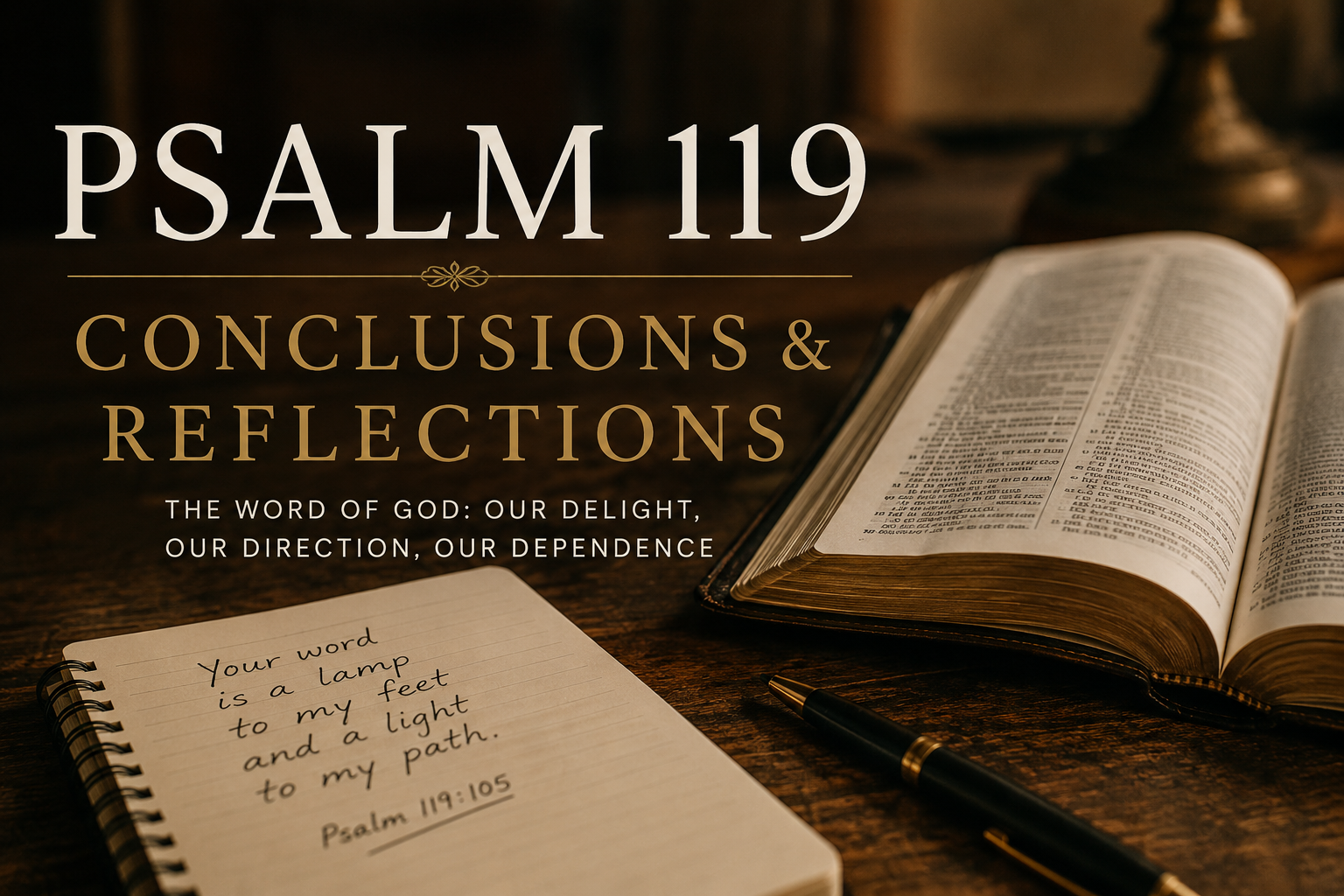
On Psalm 119.145-152 (Qoph)

145 I call with all my heart; answer me, Lord.
I will obey your statutes.
146 I call to you; save me,
and I will keep your decrees.
147 I rise before dawn and cry out for help;
I put my hope in your word.
148 I am awake through each watch of the night
to meditate on your promise.
149 In keeping with your faithful love, hear my voice.
Lord, give me life in keeping with your justice.
150 Those who pursue evil plans come near;
they are far from your instruction.
151 You are near, Lord,
and all your commands are true.
152 Long ago I learned from your decrees
that you have established them forever.

It has been a while since I have continued my work through Psalm 119, but we now come to the nineteenth stanza (ק/Qoph). Immediately in the opening verses, we are met with the heartfelt cry of the psalmist. He rises before the dawn and cries out; he watches through the night and longs for deliverance. There is a desperation and urgency in his prayers that is all too familiar to the people of God. And yet, what grounds the psalmist in the midst of his anxieties is a profound confidence in God and in his Word. In other words, even amid the uncertainties of his circumstances, there remains a quiet confidence, a sure and certain foundation upon which he can stand, namely the faithfulness of God to his promises. Even as he waits for God to intervene in his particular situation, he does so with the expectation that God will do what he has said he will do. He will keep his promises; he will remain true to his Word.

This is perhaps why the psalmist’s prayers are so heartfelt and sincere. He cries out “with all my heart.” This is not empty emotionalism or emotion for emotion’s sake; rather, it is the full orientation of the whole self toward God in utter dependence upon him and his promises. It is only from this posture of dependence that we are truly able to express our deepest fears, longings, and vulnerabilities before God. This is one of the great comforts of covenant relationship with him, namely that we can entrust even our most personal anxieties and desperations into his hands because he hears the cries of his people. At the same time, the psalmist balances his cries for deliverance with his own commitment to walk in obedience and faithfulness. This is not a kind of tit-for-tat arrangement in which obedience earns God’s favor. Rather, it is the logic of covenant itself. God has promised to remain faithful to his word, and the psalmist responds with trust expressed through obedience. In other words, true dependence upon God does not produce passivity, but faithful perseverance. It is a radical dependence that issues forth in both trust and obedience.

It is this covenant relationship that also strengthens the psalmist’s perseverance; he rises before the dawn and watches through the night. These actions express hopeful expectation even in the midst of waiting. The fact of the matter is that we simply do not know how long the psalmist has been observing these rhythms of prayer and longing. Perhaps he has been crying out for deliverance for a very long time. And yet he persists in the offering because he remains confident that God will one day answer his prayers. Of course, waiting is a common season in the Christian life. We have all experienced moments in which we long for God’s intervention and yet it does not seem to be forthcoming. It is precisely this kind of hopeful expectation that provides the strength necessary to persevere through such seasons. Indeed, this is how waiting itself can be transformed into worship, namely when it is sustained by confidence in the promises of God. The dawn has not yet come, but hope keeps the people of God awake in the darkness.

Because, let’s face it, we do live in the midst of pervasive darkness. The psalmist puts it this way in verse 150: “Those who pursue evil plans come near; they are far from your instruction.” And yet, in the very next line, he says, “You are near, Lord.” This is one of the great comforts of covenant relationship with God, namely that the nearness of affliction does not negate the nearness of God himself. The psalmist appears to be experiencing real oppression. He is pursued by those who would do him harm and likely lives under the constant threat of suffering and hostility. And yet, his confidence does not rest in the immediate resolution of his circumstances, but in the character and presence of God. This is an incredibly important insight because we are often tempted to interpret suffering as evidence of divine distance or absence. But Scripture repeatedly teaches us otherwise. Indeed, it is often in our deepest pains and afflictions that the nearness of God becomes most precious to his people. The psalmist knows this because his confidence is grounded not in changing circumstances, but in the sure and steadfast promises of God. The darkness may draw near, but the Lord is nearer still.

The psalmist knows this truth because, as he says in verse 152, “Long ago I learned from your decrees that you have established them forever.” This is an important statement because, in the midst of a stanza filled with emotional weight and longing, the psalmist ultimately grounds his confidence in the objective certainty of God’s Word. He is not led by his emotions, nor is he controlled by the instability of his circumstances. Rather, he is anchored in the enduring faithfulness of God and his promises. This is because God’s Word is not only true, but eternally true. In the midst of the shifting seasons of life, the highs and lows of our emotions, and the ever-changing nature of our trials and afflictions, the promises of God remain fixed and unchanging. The Lord himself is the same yesterday, today, and forever, and therefore his faithfulness does not fluctuate with the changing tides of human experience. This is why the people of God are able to persevere with expectant hope, because our confidence ultimately rests not in ourselves or our circumstances, but in the unchanging certainty of the Word of God.

In the end, then, the Qoph stanza of Psalm 119 teaches us what it means to persevere in hopeful dependence upon God. The psalmist cries out, waits, watches, suffers, and longs for deliverance, and yet the dominant note throughout the stanza is not despair, but confidence. Though darkness surrounds him and affliction draws near, he remains convinced that the Lord is nearer still. This is often the shape of the Christian life as well. We pray before the dawn; we wait through long nights of uncertainty; we trust God before deliverance finally comes. And yet, in all of these seasons, the people of God continue to hope because our confidence rests not in ourselves or in the stability of our circumstances, but in the unchanging faithfulness of God and his Word. The darkness may linger through the night, but the people of God continue to hope because the God who speaks remains near, and his word remains forever true.

For further study:
Introduction
Psalm 119.1-8
Psalm 119.9-16
Psalm 119.17-24
Psalm 119.25-32
Psalm 119.33-40
Psalm 119.41-48
Psalm 119.49-56
Psalm 119.57-64
Psalm 119.65-72
Psalm 119.73-80
Psalm 119.81-88
Psalm 119.89-96
Psalm 119.97-104
Psalm 119.105-112
Psalm 119.113-120
Psalm 119.121-128
Psalm 119.129-136
Psalm 119.137-144


On Thinking Theologically (Weekend Vlog)


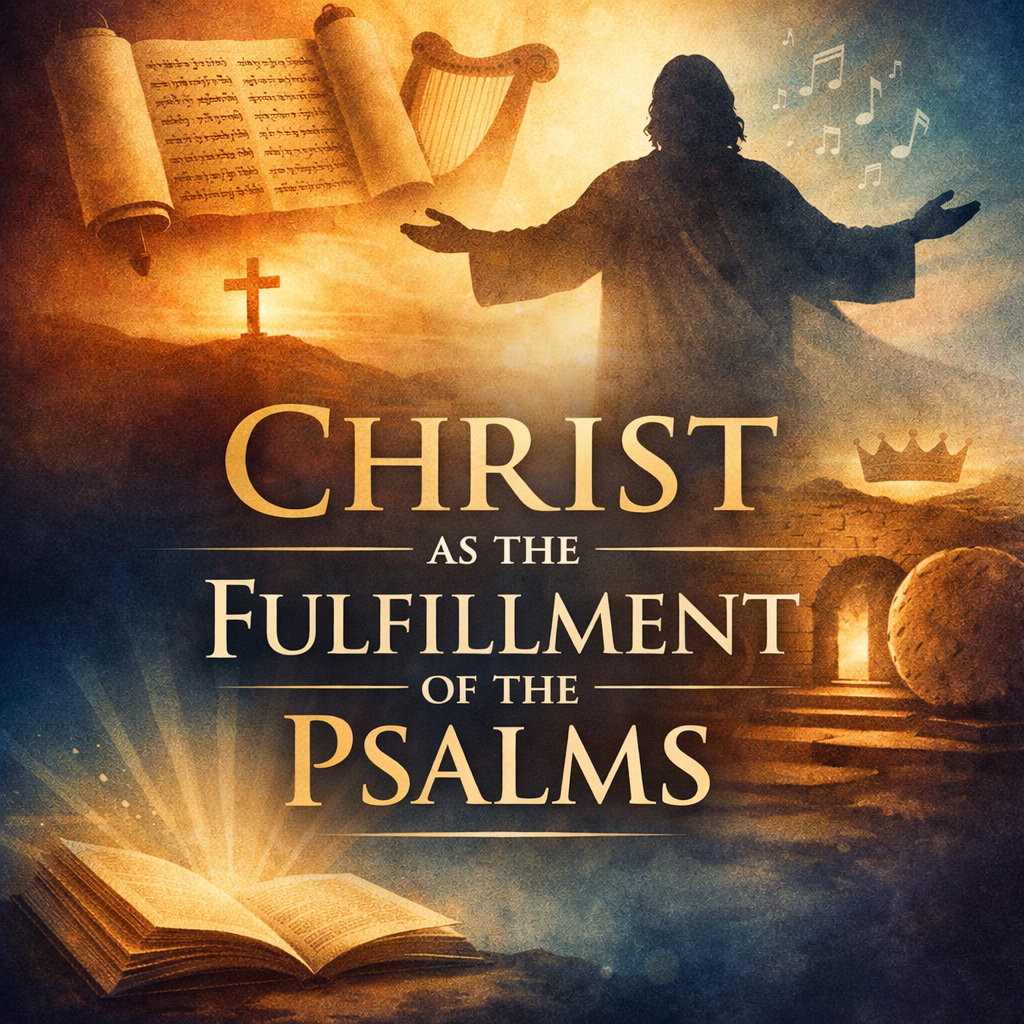
On Christ as the Fulfillment of the Psalms

One of the richest books in the Old Testament, in my opinion, is the Book of Psalms. It is a collection filled with the prayers and songs of Israel throughout her history, and it holds immense value for the devotional life of the church today. When we read the Psalms, we are drawn into the devotional, emotional, and personal experience of faith in ways that touch every part of our lives. And this is good and right. But the Psalms are not only expressions of faith, whether Israel’s or our own. They are also filled with expectations that reach beyond themselves. The Book of Psalms gives voice to Israel’s experience, to her covenant relationship with God, and to the life of faith more broadly, but it also creates categories that are not fully resolved within Israel’s history. In other words, the Psalms cry out for fulfillment, and it is my thesis that that fulfillment is ultimately found in and through the person and work of Jesus Christ.

In terms of the Old Testament canon, the Book of Psalms consists of prayers and songs that reflect the people, events, and experiences of Israel’s history. They provide a kind of covenantal reflection and royal theology that flows directly out of that historical context. However, the Psalms consistently reach beyond their immediate setting to realities that are eschatological in nature and central to God’s redemptive purposes. For example, in Psalm 22, we encounter the figure of the righteous sufferer—one who endures deep emotional and physical suffering through no fault of his own. While the superscript attributes the psalm to David, the experience described surpasses anything we can clearly identify in his life. Similarly, Psalms 2 and 110 present a vision of Israel’s ideal king: one who is anointed by God, victorious over his enemies, and who reigns with perfect righteousness and justice. Yet no king in Israel’s history, David included, fully embodies this portrait. Likewise, Psalm 1 sets forth a picture of perfect obedience that distinguishes the righteous from the wicked—an ideal never fully realized in Israel or in our own experience. The point is that the realities these psalms describe extend far beyond any one historical figure. They are not exhausted by the past; they point forward. This is why we can say that they cry out for fulfillment.

What I am saying is that the Psalms present us with a kind of tension; they describe ideals that are a far cry from the lived experience of the faithful, both then and now. The righteous sufferer suffers, but he is ultimately vindicated. The ideal king reigns, yet the nations still rage against his authority. The faithful worshiper trusts in God’s covenant promises, but the world remains broken and filled with sin. In other words, these themes are not fully resolved within the Psalter itself; they point beyond its pages and look forward to the decisive intervention of God. Or to put it differently, the Psalms do not simply describe reality as it is; they long for its restoration. There is a deep and persistent yearning throughout the Psalms for God to act on behalf of his people, to fulfill his promises, to judge the wicked, and to vindicate the righteous. This has been the cry of God’s people from the time of the fall until today. We know that something is wrong with the world as it is, and we long for the day when God will set things right and restore creation to what it was always meant to be. This is the heart of the Psalms.

Of course, it is clear in the Gospels that Jesus knew the Psalms well; no doubt he had read, heard, and memorized many of them throughout his life. But Jesus does not merely quote from the Psalms; he inhabits the realities that they describe. For example, when he is hanging on the cross, he cries out in quotation of Psalm 22.1, even as he bears the weight of his work in making atonement for sin. (On the cry of dereliction, see here.) This is not simply a cry of anguish, but an identification with the righteous sufferer whose vindication is anticipated in that psalm. Or again, in his debates with the religious leaders, he quotes Psalm 110.1 in reference to the identity of the Messiah (Matt. 22.41–46). But this is not merely an abstract theological question; it cuts to the very heart of Jesus’s identity as David’s Lord and the one who shares in the authority of God himself. Likewise, after telling the parable of the vineyard owner, Jesus quotes Psalm 118.22–23 about the stone the builders rejected, applying it directly to his own rejection by the religious leaders (Matt. 21.42–46). Many commentators suggest that these quotations function in a way similar to the Jewish practice of remez, where a single verse evokes the broader context of the entire psalm. The point is that Jesus read the Psalms as speaking about himself and his mission. He is not merely borrowing their language; he is revealing their fulfillment, embodying in his own life, death, and resurrection the realities toward which they ultimately point.

This is most clearly seen in the accounts of Jesus’s passion. I have already mentioned his quotation of Psalm 22, but he also alludes to Psalm 31.5, “Into your hands I entrust my spirit.” In addition to this, the Gospel writers present Jesus as inhabiting the experience of the righteous sufferer described in Psalm 69—one who is mocked, rejected, and consumed with zeal for the house of God. Even in the details of his crucifixion, we see the Psalms shaping the narrative, as John notes that not one of his bones was broken, in keeping with Psalm 34.20. These are not random correspondences; they are theological claims. The cross is the place where the unresolved tensions of the Psalms converge. The suffering of the righteous one, the apparent triumph of the wicked, and the trust of the faithful all meet in this moment. And yet, even here, lament is not the final word. In the midst of suffering, there is trust; in the midst of humiliation, there is the promise of vindication. In other words, what the Psalms anticipated, the cross of Jesus embodies. The cries of the Psalter are not silenced at Calvary; they are fulfilled there, as Jesus bears the full weight of suffering while entrusting himself completely to the Father.

And these kinds of connections between the person and work of Jesus and the Psalms are not unique to the Gospels; they are found throughout the New Testament. The apostles consistently interpret the Psalms in light of Christ. For example, in Acts 2, Peter quotes Psalm 16 in defense of Jesus’s resurrection, arguing that David’s words, “You will not abandon my soul to Hades or allow your Holy One to see decay,” cannot ultimately refer to David himself, since his tomb remained among them. Rather, the psalm finds its true fulfillment in the resurrection of Jesus. Likewise, in Acts 4, when the early church faces opposition, they quote Psalm 2 to interpret the raging of the nations against Jesus as the outworking of God’s sovereign plan. And again, in Acts 4:11, Peter cites Psalm 118.22 about the stone the builders rejected and applies it directly to Christ, a move he likely learned from Jesus himself. The author of Hebrews goes even further, repeatedly drawing from the Psalms to establish the superiority of the Son over angels, priests, and kings (e.g., Psalms 2, 8, and 110 among others). These examples could be multiplied, but the point is clear: the New Testament does not treat the Psalms merely as background; it treats them as prophetic and forward-looking. This fulfillment is not always a matter of direct prediction, but often of pattern and typology. The apostles read the Psalms as finding their true meaning in Christ, a hermeneutic grounded in Jesus’s own words that “everything written about me in the Law of Moses, the Prophets, and the Psalms must be fulfilled” (Luke 24:44).

In other words, Christ is the true singer of the Psalms. He is the true righteous one of Psalm 1; he is the true king of Psalm 2. He is the true suffering servant of Psalm 22, and on and on we could go through all 150 psalms. What the Psalter describes in part and in shadow, Christ embodies in fullness and in reality. He fulfills the Psalms both perfectly, in himself, and representatively, for us. That is to say, he is not only the one who perfectly lives out the life of trust, obedience, and righteousness described in the Psalms, but he is also the one who does so on behalf of his people. He stands in our place as the faithful worshiper, the obedient son, and the righteous sufferer who entrusts himself fully to the Father. This means that the Psalms ultimately belong to Christ before they belong to us. We do not begin with our own experience and read ourselves into the Psalms; rather, we begin with Christ and understand the Psalms through him. Only then, as those united to him by faith, do we find our place within their words.

This means that we must read the Psalms as Christians. Yes, we should still read them devotionally; yes, we should still make them our own in the discipline of prayer as we pray through the Scriptures. But we pray them as those who are united to Christ by faith; we pray them in him and through him. This means that our laments are joined to his laments; our cries of suffering are not isolated expressions, but echoes of the righteous sufferer who has gone before us. Likewise, our hope for vindication and deliverance is not grounded in uncertain circumstances, but in the sure reality of his resurrection. When we pray the Psalms, we are not merely expressing our own emotions; we are participating in the life of Christ himself. He gives shape to our prayers, depth to our suffering, and certainty to our hope. This is why we do not outgrow the Psalms; rather, we grow into them. We learn to read them more deeply in, with, and through Christ, finding that what once seemed distant or unresolved now finds clarity and fulfillment in him.

So, yes, the Psalms cry out for fulfillment, and Christ is the answer to their call. They give voice to the longings, tensions, and expectations of God’s people—longings for justice, for deliverance, for a righteous king, for the vindication of the faithful. Yet these cries are not left unresolved. They are not left hanging in the pages of the Old Testament. Rather, they find their resolution in Jesus. In his life, death, resurrection, and exaltation, the realities anticipated in the Psalms come to their fullness. The righteous sufferer is vindicated, the true king is enthroned, and the faithful worshiper is perfected. What the Psalms express in hope, Christ accomplishes in reality. To read the Psalms rightly, then, is not only to hear the voice of Israel, but to hear the voice of Christ—and to see that what they longed for, he has fulfilled.

For further study:
Ash, Christopher. The Psalms: A Christ-Centered Commentary. Four Volumes. Wheaton, IL: Crossway, 2024.


On Resurrection and De-dustification

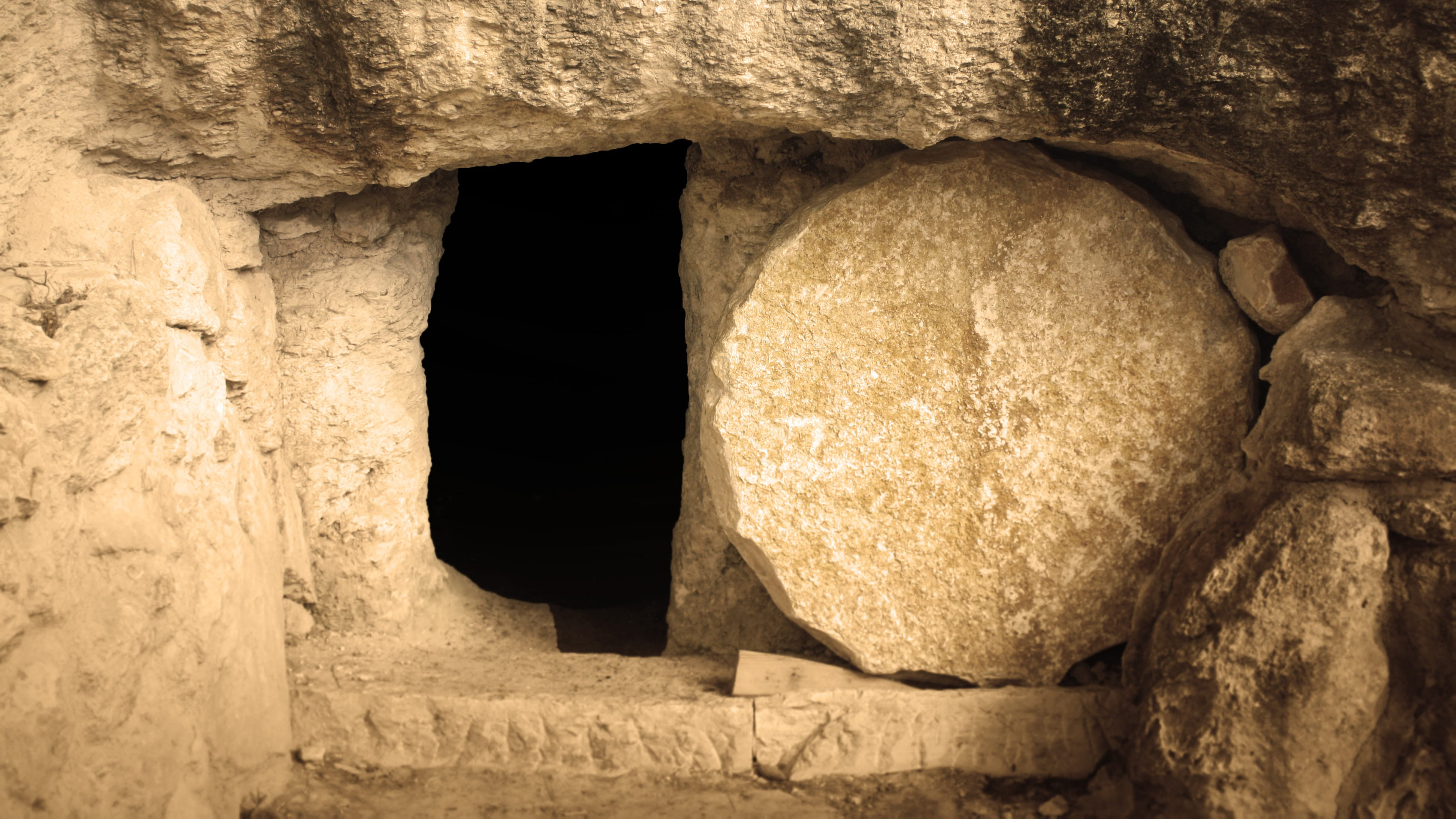
It is common in Biblical studies to suggest that the doctrine of the resurrection is a late development in Old Testament theology. Of course, the clearest Old Testament affirmation of this belief is found in Daniel 12.2, where we read, “Many who sleep in the dust of the earth will awake, some to eternal life, and some to disgrace and eternal contempt.” While the dating of Daniel is a much debated question, this verse certainly stands as a clear affirmation of the doctrine of a general resurrection possibly from as early as the exilic period. But is it possible that the doctrine of resurrection has a much longer presence in the Old Testament. I would suggest that it does, and I would base this suggestion, at least in part, on the words of David in Psalm 16, verse 10, where we read, “For you will not abandon me to Sheol; you will not allow your faithful one to see decay.” In this psalm, David is  seeking divine protection because he has remained loyal to God, and he is praising God for his rich blessings with full confidence God will vindicate him and deliver him from death.

Now, this particular verse is quoted twice in the in the Book of Acts in defense of the resurrection of Jesus, once by Peter in Acts 2.27, and once again by Paul in Acts 13.35. Of course, their appeal to this verse raises all kinds of questions regarding the interpretive methods of Luke and the other apostles, but suffice it to say here that there is no need to suggest that they have misinterpreted it. They haven’t read something into it that wasn’t actually there in the first place. No, they have rightly understood the implications of David’s words, and by way of typological prediction, they have applied these words to the Messianic Son of David, Jesus the Christ. David genuinely believed that that God could and would deliver him even from death, so while the doctrine of resurrection is not spelled out explicitly, we have ample reason to believe that David held some conception of physical life after death. This is why he says, “you will not allow your faithful one to see decay.”

However, Peter’s explanation here deserves our attention. In Acts 2.29, he says, “Brothers and sisters, I can confidently speak to you about the patriarch David: He is both dead and buried, and his tomb is with us to this day.” Likewise, Paul explains similarly in Acts 13.36-37, “For David, after serving God’s purpose in his own generation, fell asleep, was buried with his fathers, and decayed, but the one God raised up did not decay.” Jesus was only in the grave for three days; there simply wasn’t enough time for his physical body to see decay. But David’s bones turned to dust a long time ago, as it is written, “All are going to the same place; all come from dust, and all return to dust.” (Ecclesiastes 3.20) This dusty fate is part of God’s curse on human sin, as we read in Genesis 3.19, “For you are dust, and you will return to dust.” It is a fate that awaits us all. So, we must ask the question: was David wrong in his expectation that his body would not see decay? Was he wrong in his hope for a bodily resurrection?

The answer to these questions must be a resounding, “May it never be.” David was not wrong to believe that God could and would deliver him even from the depths of death itself, and even though his physical body has long returned to the dust from whence it came, one day, his body will be raised new, perfectly whole and completely glorified. This is the hope of resurrection; it is the hope of de-dustification. As the Apostle Paul writes in Romans 8.11, “And if the Spirit of him who raised Jesus from the dead lives in you, then he who raised Christ from the dead will also bring your mortal bodies to life through his Spirit who lives in you.” Or again, in Philippians 3.21, “He will transform the body of our humble condition into the likeness of his glorious body, by the power that enables him to subject everything to himself.” If God can create man from the dust and breath the breath (the Hebrew word is the same word sometimes translated Spirit) of life into him so that he becomes a living soul, then he can certainly raise our bodies from the dust and give them eternal physical life by His Spirit.

In other words, far from being some late postulate in Old Testament theology, the idea of resurrection has a long standing place in Old Testament thought. It goes back at least to the time of David and the monarchy, some 1000 years before the time of Daniel and the exile, and it possibly goes back farther than that (but that is a topic for another time.) The point here is simply the Christian hope, nay, the biblical hope, is for nothing less than the perfected glory of bodily resurrection. As Jesus himself says, “a time is coming when all who are in the graves will hear his voice and come out—those who have done good things, to the resurrection of life, but those who have done wicked things, to the resurrection of condemnation.” (John 5.28-29) Maranatha!

For further study, see:
On the Logic of the Resurrection
On Christian Hope: Heaven or Resurrection
On Resurrection and the Path of Glory

See also,
Chase, Mitchell L. Resurrection Hope and the Death of Death. Short Studies in Biblical Theology. Wheaton, IL: Crossway, 2022.


On Psalm 119.129-136 (Pe)

129 Your decrees are wondrous;
therefore I obey them.
130 The revelation of your words brings light
and gives understanding to the inexperienced.
131 I open my mouth and pant
because I long for your commands.
132 Turn to me and be gracious to me,
as is your practice toward those who love your name.
133 Make my steps steady through your promise;
don’t let any sin dominate me.
134 Redeem me from human oppression,
and I will keep your precepts.
135 Make your face shine on your servant,
and teach me your statutes.
136 My eyes pour out streams of tears
because people do not follow your instruction.

The next stanza of the acrostic begins with the letter פ/pe (pronounced like pay), and at this point, it would be tempting to think that our psalmist is beginning to be a little repetitive. After all, hasn’t he said what he needed to say in the first 130 verses of this Psalm? But no, there are five more stanzas after this one containing some 40 more verses. Let’s be honest with ourselves, the sheer length of this chapter is intimidating, especially in a culture that prefers 240 character soundbites. We have lost the capacity for sustained reflection; we simply have no taste for prolonged meditation on the scriptures. And as Christians, this is much to our shame. The Bible invites us into the life of the mind, to the disciplines of reading, study, and meditation. We must read and reread, we must ponder and linger over the scriptures, if we truly desire to be transformed by them. A 240 character nugget simply cannot provide the soul sustaining nourishment our life in Christ requires. It is clear that our psalmist has learned what it means to linger over the Word of God, to nourish himself on its inexhaustible depths. This psalm, 22 stanzas, 176 verses, is an invitation to linger, to pause, to meander slowly in the perfections of God’s sufficient Word.

Another reason that this psalm intimidates us as modern readers is that not only have we lost the ability to appreciate sustained reflection, but we have also lost the ability to appreciate beauty for the sake beauty. Of course, the psalms are not the only poetry that is found in the Bible, but they do represent a whole collection of hymns, prayers, and songs that speak to the human soul in ways that are unique and distinct from other portions of Holy Scripture. One of these ways is through their beauty. This psalm, in particular, is a masterpiece in poetic form and verse. We should be enraptured by its majesty, caught up in its elegance; it should capture our soul’s imagination and transport us to the pristine presence of God himself. In a world that is filled with ugliness and horrors and the sheer grossness of sin, we desperately need to reminded of what is beautiful, what is praiseworthy, what is lovely, what is good and righteous and true (Philippians 4.8). As our psalmist himself writes, “The revelation of your words brings light and gives understanding to the inexperienced.” (Verse 130) Interestingly enough, that last word could also be translated as “thoughtless”.

Speaking of beauty, there are two lines that stand out to me in this stanza; the first is verse 132, which reads, “Turn to me and be gracious to me, as is your practice toward those who love your name.” Here again, in a psalm where almost every line contains some synonym for God’s Word, this verse stands out from the pattern, although “those who love your name” could be taken as a loose reference to obeying God’s Word. In the Old Testament, and in Deuteronomy in particularly, love of God is synonymous with obedience. After all, Jesus himself said, “If you love me, you will keep my commands.” (John 14.15) But we must be clear in affirming that this verse does not condition our reception of God’s grace upon our obedience. Love for God is much more than simply obedience; it is obedience that grows out of the soil of faith. Obedience apart from faith is nothing more than dead works. Faith in the ground of obedience resulting in our love for God. And grace is simply God’s response to those that come to Him in genuine repentance and faith.

The second verse that stands out is verse 136, which reads, “My eyes pour out streams of tears because people do not follow your instruction.” In other words, the disobedience and sin around him causes our psalmist great and deep mourning. Of course, we have seen similar sentiments throughout the psalm, and just a couple of stanzas back, our psalmist confessed his hate for the double-minded (verse 113), a statement that is somewhat startling to modern sensibilities. (For more on this verse, see my post here.) But here, we see that this hate is not malicious or malevolent in any way; rather, it issues forth in tears of sorrow and genuine grief. We live in a culture of outrage; in fact, there was a book recently published by Ed Stetzer entitled Christians in the Age of Outrage. When we are faced with the sin and disobedience of this world, it is easier to scoff, to respond in anger and outrage, but we should respond in mourning, in deep grief and sorrow over the corruption of God’s good creation, over the enslavement of human beings made in the image of God to the world, the flesh, and the devil. Our psalmist loves the Word of God so much; he is convicted by the goodness and righteousness of God’s ways so deeply that the disobedience of his fellow human being drives him to real grief.

But, of course, we have seen that our psalmist’s tears are not the end of the story; no, he is looking forward to a day when God will judge the living and the dead, when he will establish his righteousness on the earth forever, when God’s people will be perfected in holiness. This is the hope; this is the silver lining. This is the light at the end of the darkness. It is the grace of redemption. As our psalmist prays, “Redeem me from human oppression and I will keep your precepts (verse 134), or again, “Make your face shine on your servant, and teach me your statutes (verse 135). Even when we are confronted with the total depravity of the world we live in, we can maintain our hope, because God has promised to right every wrong, to heal every wound, to deliver and vindicate his people. We stand firm in this promise by faith, even as our dear psalmist did so many centuries ago.

For further study:
Introduction
Psalm 119.1-8
Psalm 119.9-16
Psalm 119.17-24
Psalm 119.25-32
Psalm 119.33-40
Psalm 119.41-48
Psalm 119.49-56
Psalm 119.57-64
Psalm 119.65-72
Psalm 119.73-80
Psalm 119.81-88
Psalm 119.89-96
Psalm 119.97-104
Psalm 119.105-112
Psalm 119.113-120
Psalm 119.121-128


On Psalm 119:113-120 (Samek)

113 I hate those who are double-minded,
but I love your instruction.
114 You are my shelter and my shield;
I put my hope in your word.
115 Depart from me, you evil ones,
so that I may obey my God’s commands.
116 Sustain me as you promised, and I will live;
do not let me be ashamed of my hope.
117 Sustain me so that I can be safe
and always be concerned about your statutes.
118 You reject all who stray from your statutes,
for their deceit is a lie.
119 You remove all the wicked on earth
as if they were dross from metal;
therefore, I love your decrees.
120 I tremble in awe of you;
I fear your judgments.

The fifteenth stanza of Psalm 119 begins with the Hebrew letter ס/samek, and in this stanza, we read some lines that are quite startling to our modern sensibilities. Right out of the gate, we read, “I hate those who are double-minded” (Verse 113), and a couple of verses later, we read, “Depart from me, you evil ones” (Verse 115). Again, to our moderns ears, these lines seem unduly harsh. But I think we have to look at where our psalmist ends in verse 120, “I tremble in awe of you; I fear your judgments”; in the King’s English, the line reads, “My flesh trembleth for fear of thee; and I am afraid of thy judgments” (KJV). The word for “tremble” here only occurs in the Hebrew Bible in one other place, that being Job 4:15, and the context there clearly implies trepidation (see Job 4:13-15). So likewise, here the word implies that our psalmist is feeling fear, healthy trepidation, a holy terror, at the authority of God and His Word. And it is this fear, this holy terror, that drives him to pursue obedience and submission to the Word of God.

Likewise, it is this intense sense of fear and respect, of submission and devotion to the Word of the one true and living God, that motivates our psalmist’s statements regarding the wicked. Our psalmist understands that God rejects all who stray from His statutes (verse 118) and that He removes all the wicked on the earth (verse 119). So, in verse 115, he says, “Depart from me, you evil ones so that I may obey my God’s commands.” He doesn’t want anything, or anyone for that matter, to prevent him from obeying the laws and statutes of God. I will say more about his obedience in a moment, but suffice it say here that he is so devoted to God and to His word, that he “hates” those who are “double-minded.” The NET Bible renders the line this way, “I hate people with divided loyalties.” The word in question refers to those who are split in their allegiances, those who are two faced or hypocritical in their intentions. They are those who say one thing and yet do another; their verbal confession and their actual behavior are not consistent. “Their deceit is a lie.” (Verse 118). They lack integrity, and in the face of the authority and gravity of God and His word, this kind of attitude is wholly unthinkable for our psalmist.

However, it is imperative that we understand that our psalmists submission to God and His word is not simply motivated by fear of punishment. On the contrary, it comes from a place of deep conviction and faith regarding the goodness of God and His commands. His commands are not burdensome; they are not dull drudgery meant to keep us from enjoying the pleasures of life. No, they are the only path that leads to ultimate fulfillment and genuine human flourishing. This is why our psalmist writes, “You are my shelter and my shield; I put my hope in your word.” It is also why he says, “I love your instruction.” (Verse 113). There is nothing that is more delightful, nothing that is more empowering, nothing that is more fulfilling for our psalmist than obeying the Word of God. By committing himself to God and to keeping His word, he has entrusted his entire self to the goodness and grace of the law-giving God. His obedience is nor forced; it is not against his will. No, his entire will is submitted to the one before whom he stands in awe.

He expresses his faith further when he prays, “Sustain me as you promised, and I will live; do not let me be ashamed of my hope. Sustain me so that I can be safe and always be concerned about your statutes.” (Verse 116-117). It is interesting, though, that this would be his prayer. He has already committed himself to obey God Word. Why, then, would he need to ask God to sustain him? I think there are two reasons. First, he is asking God to sustain him in his obedience. Our psalmist is not naive; he knows the power of temptation, he knows the weakness of his own heart. He knows how easily and how quickly he would abandon his obedience if he were left to himself. So he prays that God would sustain him in his obedience. But secondly, I think he prays for God’s sustaining power because he understands that obedience before God cannot be motivated purely by what we might get out of it. We don’t obey God, so that he will in turn bless us. This tit for tat reckoning is in many ways alien to the economy of God. Our psalmist understands that we obey God because it is right in and of itself to do so; we obey God because that is what we owe Him as creatures. But, as creatures, we are completely dependent upon his sustaining grace every moment of every day for every need that we have. Without Him, we can do nothing. So he prays, “O God, sustain me.”

Sadly, for many Christians in the world today, this attitude of holy terror coupled with desperate faith is somewhat of an oxymoron. On the one hand, we have domesticated God and diminished his authority in our lives to the extent that we treat Him like an elderly grandparent who might give us a piece of candy if we behave, and on the other, we are so self-reliant and comfortable that we have forgotten just how weak and needy we truly are. In this light then, the attitude of our psalmist in this stanza is both a rebuke and an invitation. It is a rebuke of our selfishness and pride, and it is an invitation to rediscover the greatness and the grace of the God that we serve. As C.S. Lewis puts it, “‘Course he isn’t safe. But he’s good. He’s the King, I tell you.”

For further study:
Introduction
Psalm 119.1-8
Psalm 119.9-16
Psalm 119.17-24
Psalm 119.25-32
Psalm 119.33-40
Psalm 119.41-48
Psalm 119.49-56
Psalm 119.57-64
Psalm 119.65-72
Psalm 119.73-80
Psalm 119.81-88
Psalm 119.89-96
Psalm 119.97-104
Psalm 119.105-112


On Psalm 119.105-112 (Nun)

105 Your word is a lamp for my feet
and a light on my path.
106 I have solemnly sworn
to keep your righteous judgments.
107 I am severely afflicted;
Lord, give me life according to your word.
108 Lord, please accept my freewill offerings of praise,
and teach me your judgments.
109 My life is constantly in danger,
yet I do not forget your instruction.
110 The wicked have set a trap for me,
but I have not wandered from your precepts.
111 I have your decrees as a heritage forever;
indeed, they are the joy of my heart.
112 I am resolved to obey your statutes
to the very end.

The fourteenth stanza of Psalm 119 starts with the letter נ (nun/pronounced like noon). Yes, that is right; the fourteenth stanza out of twenty-two. Remember, Psalm 119 is an acrostic psalm in which every stanza starts with the next letter of the Hebrew alphabet. It truly is a wonder of our psalmist could write 22 stanzas, 186 verses, extolling the perfections of God’s Word. There is no repetition, no redundancies; no, every stanza addresses some new or different aspect of God’s Law than the one before. His heart was clearly enamored – no, that’s not right – it was consumed with love, affection, devotion for the precepts of God. They were his very life, the only nourishment that could satisfy the pangs of his soul. This attitude should challenge and convict us. Modern Christians struggle to devote 15 minutes of their day to reading the bible; I know, because I am one of them. Why do our souls not hunger and thirst for the nourishment, the soul satisfying pleasures of the Word of God? This is the question that Psalm 119 is asking us.

In this stanza, our psalmist begins with those famous words, “Thy word is a lamp unto my feet, and a light unto my path” (verse 105, KJV). If you were raised in church like I was, then you probably just sang the lyrics to yourself. The fact that someone set these words to music captures the right sentiment, I think. The Psalms were originally prayers and songs that were meant for Israel’s corporate worship, so in singing them, we are no doubt emulating the practice of our psalmist. However, the connection between song and lyric and the affections of the heart is one that is often so underappreciated in modern worship services. Music has a way of touching us, of forming us, in the most vulnerable recesses of our hearts. What we sing, what we shout, these are the things that are planted in the memory of our hearts. This is why we should sing songs that are biblically faithful. As our psalmist goes on to write here, “I have solemnly sworn to keep your righteous judgments.” (verse 106). He is clear in these verses that his greatest affection, his first and foremost guiding principle for life, is the revelation of God in his Word.

And it would appear that he is in particular need of this guidance, as he goes on to write, “I am severely afflicted” (verses 107), and again, “My life is constantly in danger” (verse 109). And in the next verse, “The wicked have set a trap for me” (verse 110). Of course, we do not know the nature of this particular psalmists troubles; we have no narrative of his life to appeal to for background information. But it would appear that he is deeply troubled; he is facing some kind of opposition, some kind of persecution or threat, possibly even up to and including his very life. There are several occasions in the Book of Psalms where David faces similar circumstances, so we may reasonably infer that this was no light or temporary concern for our psalmist. And yet, in the midst of this trail, he continues to affirm his allegiance to the commands and ordinances of God. “I do not forget your instruction” (verse 109); I have not wandered from your precepts” (verse 110). In fact, he goes on to say in the last verse of the stanza, “I am resolved to obey your statutes to the very end” (verse 112). Here again, we don’t know if the persecution he was facing was directly caused by his commitment to the God and His Word, but we do know that he was resolved, committed, and steadfast in keeping that Word until the very end, no matter what opposition he may face.

Where does a person find this kind of strength, this kind of steadfast loyalty to keeping the Word of God? I think we have our psalmists answer in verse 111, “I have your decrees as a heritage forever; indeed, they are the joy of my heart.” The word “heritage,” or perhaps “possession,” implies the idea of an inheritance; it is a surety of future prosperity. It is the reward that awaits the firstborn. And for our psalmist, the inheritance that he is anticipating is nothing less than the promises of the Word of God. It is the words of Lord Jesus, when he says, “Well done good and faithful servant, enter into the joy of your master.” It is a certainty, a sure and firm hope, of future glories, even in the midst of present difficulties and hardships. The Word of God is our hope, and it is the joy of our hearts. Hope and joy; two out of three of the great triad of Christian virtues. These are the defining characteristics of those who trust in God’s word – unshakable hope, indomitable joy. Clearly, our psalmist had these in his heart, and no matter what troubles or heartaches may come, he was able to persevere because of he found his hope and his joy in the abiding Words of the living God.

This stanza, nay this entire psalm for that matter, is a wonder to me. It challenges and convicts my soul in ways that I am still trying to define even after writing on these first fourteen stanzas. I wonder why God would put a psalm like this one in the Bible; it seems somewhat self-congratulatory – 186 verses on the soul satisfying perfections of His own Word. But perhaps, he put it here because he know that in it he has provided the salve for every every need of the human heart. So often, we look for our comfort, our peace, our security, our hop, our joy in all the wrong places. This is sin. But if we could learn to emulate the attitude and affections of our psalmist, if we would truly begin to hide his Word in our hearts, then we might be able say with the psalmist, “I have not wandered from your precepts.” In His goodness, God has provided the solution to every problem, the cure for every heartache, the peace and comfort for every trial. It is Him, God himself; He is the only one who can answer the deepest longings of our souls. And he has done this in His Word. May we learn to emulate the conviction of our psalmist and find our peace, our hope, and our comfort in His Word.

For further study:
Introduction
Psalm 119.1-8
Psalm 119.9-16
Psalm 119.17-24
Psalm 119.25-32
Psalm 119.33-40
Psalm 119.41-48
Psalm 119.49-56
Psalm 119.57-64
Psalm 119.65-72
Psalm 119.73-80
Psalm 119.81-88
Psalm 119.89-96
Psalm 119.97-104


On Praying through Psalm 3

TEXT

A psalm of David when he fled from his son Absalom.

Lord, how my foes increase!
There are many who attack me.
Many say about me,
“There is no help for him in God.” Selah

But you, Lord, are a shield around me,
my glory, and the one who lifts up my head.
I cry aloud to the Lord,
and he answers me from his holy mountain. Selah

I lie down and sleep;
I wake again because the Lord sustains me.
I will not be afraid of thousands of people
who have taken their stand against me on every side.

Rise up, Lord!
Save me, my God!
You strike all my enemies on the cheek;
you break the teeth of the wicked.
Salvation belongs to the Lord;
may your blessing be on your people. Selah

~Psalm 3

Series: Praying through the Psalms
Text: Psalm 3.1-8
Church: South Caraway Baptist Church, Jonesboro, AR
Date: April 12, 2023


On Praying Through Psalm 2

TEXT

Why do the nations rage
and the peoples plot in vain?
The kings of the earth take their stand,
and the rulers conspire together
against the Lord and his Anointed One:
“Let’s tear off their chains
and throw their ropes off of us.”

The one enthroned in heaven laughs;
the Lord ridicules them.
Then he speaks to them in his anger
and terrifies them in his wrath:
“I have installed my king
on Zion, my holy mountain.”

I will declare the Lord’s decree.
He said to me, “You are my Son;
today I have become your Father.
Ask of me,
and I will make the nations your inheritance
and the ends of the earth your possession.
You will break them with an iron scepter;
you will shatter them like pottery.”

10 So now, kings, be wise;
receive instruction, you judges of the earth.
11 Serve the Lord with reverential awe
and rejoice with trembling.
12 Pay homage to the Son or he will be angry
and you will perish in your rebellion,
for his anger may ignite at any moment.
All who take refuge in him are happy.

~Psalm 2

Series: Praying through the Psalms
Text: Psalm 2.1-12
Church: South Caraway Baptist Church, Jonesboro, AR
Date: April 5, 2023


On How the Death of Jesus Changed Everything

TEXT

44 It was now about noon, and darkness came over the whole land until three, 45 because the sun’s light failed. The curtain of the sanctuary was split down the middle. 46 And Jesus called out with a loud voice, “Father, into your hands I entrust my spirit.” Saying this, he breathed his last.

47 When the centurion saw what happened, he began to glorify God, saying, “This man really was righteous!” 48 All the crowds that had gathered for this spectacle, when they saw what had taken place, went home, striking their chests. 49 But all who knew him, including the women who had followed him from Galilee, stood at a distance, watching these things.

~Luke 23.44-49

Title: On How the Death of Jesus Changed Everything
Text: Luke 23.44-49
Series: Who is Jesus? A Study of the Gospel of Luke
Church: South Caraway Baptist Church, Jonesboro, AR
Date: January 1, 2023


Slow To Write

"let every person be quick to hear, slow to speak, slow to anger."

lovegavehope

Just another WordPress.com site

Jared Cornutt

Pastor | Speaker | Writer

Denny Burk

A commentary on theology, politics, and culture

G3 Ministries

Events + Resources for the Local Church

Biblical Reasoning

Biblical and Systematic Theology According to the Scriptures

RetroChristianity

Reclaiming the Forgotten Faith

SBC Voices

Southern Baptist News & Opinion

Lucid Theology

Thoughts on words, books, theology, and life.

Baptist21

A pastor-led voice for Baptists in the 21st century

Center For Baptist Renewal

The Personal and Professional Blog of Phillip Powers

The Pastor's Well - Pastor Well

The Personal and Professional Blog of Phillip Powers

Articles - AlbertMohler.com

The Personal and Professional Blog of Phillip Powers

The Gospel Coalition

The Personal and Professional Blog of Phillip Powers