Tag Archives: Old Testament

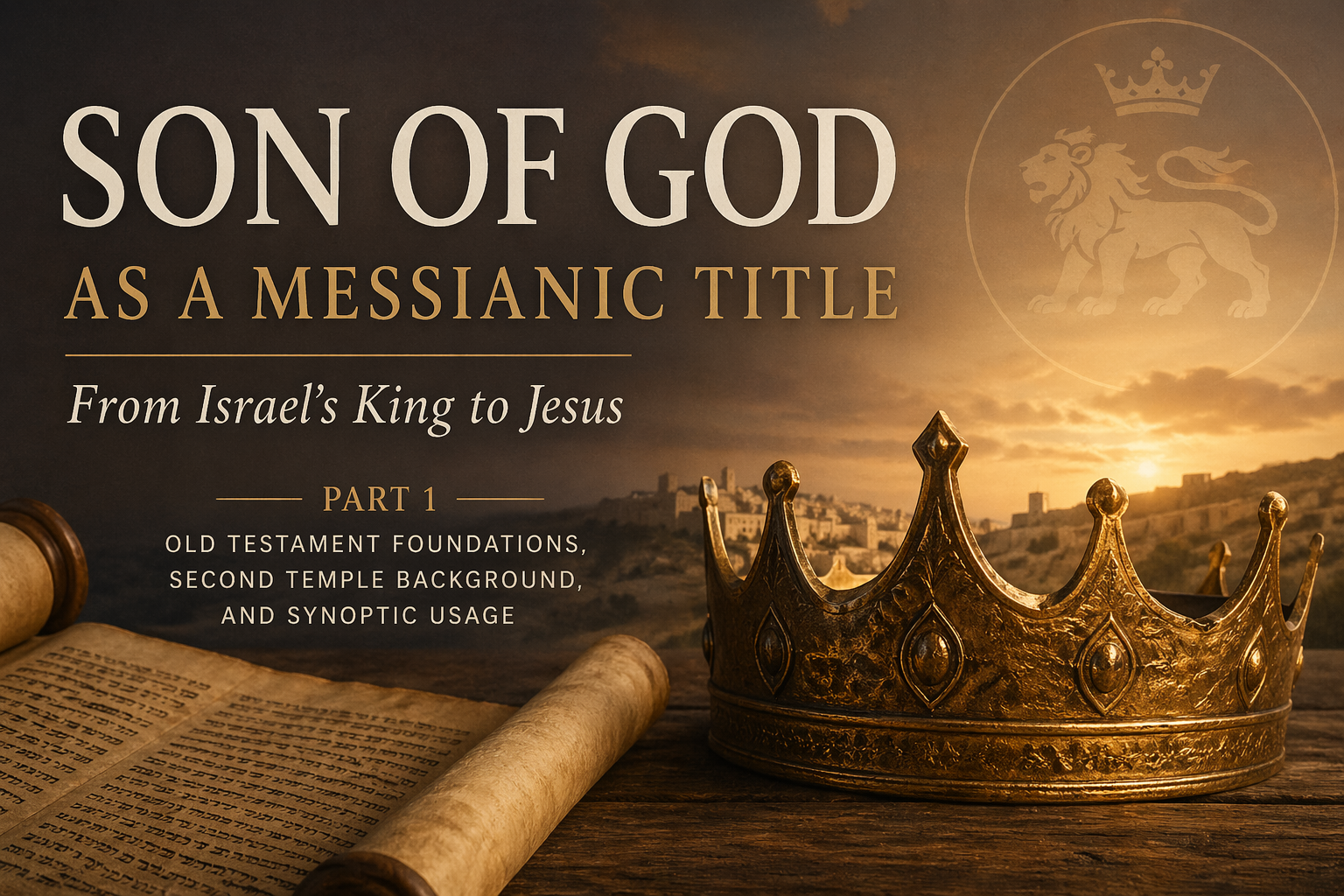
On Son of God as a Messianic Title

When Christians confess that Jesus is the Son of God, we are usually affirming something of his divinity. In other words, the title “Son of God” is typically understood in doctrinal terms as an affirmation that Jesus is the second person of the Trinity come incarnate. This understanding reaches back to the formulation of the First Council of Nicaea in AD 325. In that creed, we confess that Jesus is “the only begotten Son of God, born of the Father before all ages, God from God, Light from Light, true God from true God, begotten, not made, consubstantial with the Father.” These are beautiful words that faithfully express the truth of Christ’s divinity. However, they also risk skipping the story. In Scripture, the term “Son of God” first emerges as a royal, messianic title before it is developed into a fuller theological claim about his divine identity. Its meaning is shaped by covenant, kingship, and expectation, and only later expanded in light of who Jesus truly is.

The idea of sonship appears early in the Old Testament. As early as Exodus 4.22, God declares that “Israel is my firstborn son,” identifying the nation as his covenant people, set apart to represent him among the nations. Later, in the Davidic covenant, God speaks of the king in similar terms: “I will be his father, and he will be my son” (2 Sam. 7.14). Here, sonship is tied directly to kingship and divine appointment. The king stands as God’s representative, ruling on his behalf and under his authority. This same idea is expressed in Psalm 2, where, in the context of royal coronation, the king declares, “He said to me, ‘You are my Son; today I have begotten you.'” The language is not biological or metaphysical, but covenantal and functional. It marks the king as the one chosen and installed by God to exercise his rule. The point, then, is that in these texts divine sonship refers to representative, covenantal identity. It speaks of relational authority, divine election, and royal vocation rather than transcendent metaphysical realities. To be called ‘Son of God’ in this context is to be appointed as God’s king, entrusted with the responsibility of embodying his rule among his people.

The problem, however, is that these “sons of God” consistently fail to live up to the height of their calling. As God’s son, Israel was called to be a kingdom of priests, a light to the nations, and a visible reflection of God’s character in the world. Yet instead of faithfulness, they fell into sin and idolatry, broke the terms of the covenant, and were ultimately sent into exile under its curses. The same pattern emerges in the Davidic line. The kings of Israel and Judah, who were called to mediate God’s rule over his people, likewise failed through disobedience and compromise. This tension is reflected within the Psalms themselves. In Psalm 2, the authority of the Lord’s anointed king is met with resistance as the nations rage against him. In Psalm 89, the psalmist recalls God’s covenant promises to David, only to lament that those promises appear to stand in contradiction to present reality. The result is that the category of “son of God” begins to carry forward-looking weight. It no longer simply describes a present reality; it generates expectation. There emerges a longing for a faithful son, a greater son, who will succeed where Israel and her kings have failed, a hope captured in texts like Isaiah 9.6–7, where the promised son will finally bear the government in righteousness and peace. In other words, the Scriptures create space for a future Son who will succeed where others failed.

This hope for a greater Son of God becomes more clearly defined in the Second Temple period. Of course, these texts are not inspired Scripture, but they do provide important insight into the expectations and categories that were alive at the time of Jesus. What we see is a growing anticipation of deliverance increasingly framed in royal and messianic terms. While these expectations are diverse, there remains a significant continuity with Old Testament categories, especially the idea of the “Son of God.” For example, among the Dead Sea Scrolls, texts like 4Q174 (the Florilegium) link the Davidic covenant and the language of sonship in 2 Samuel 7.14 with the expectation of a coming royal Messiah. Likewise, 4Q246 explicitly uses the titles “Son of God” and “Son of the Most High” in reference to a future ruler. Another text, 1QSa (often cited as 1Q28a), appears to echo Psalm 2.7 with language of divine begetting applied to the Messiah. These examples could be multiplied, but the point is clear: in the Second Temple period, the concept of divine sonship is not abandoned or redefined, but carried forward and intensified. It remains closely tied to the Davidic king, even as it takes on heightened expectation in anticipation of the one who will finally fulfill that role. Or to put it another way, the term “Son of God” was already a loaded, expectation-filled term before Jesus appeared.

In the Synoptic Gospels, “Son of God” language appears at key moments in the life and ministry of Jesus. Most notably, at his baptism and again at his transfiguration, a voice from heaven declares, “This is my beloved Son,” marking him out as the one uniquely appointed and affirmed by God. The demons, too, recognize Jesus as the Son of God, a recognition that underscores his authority and signals his messianic identity, even when others fail to perceive it clearly. This comes into sharper focus at Caesarea Philippi. When Jesus asks his disciples, “Who do you say that I am?”, Peter responds, “You are the Messiah, the Son of the living God.” The grammar of this confession is particularly significant. The predicate nominative “Messiah” and the phrase “Son of the living God” stand in apposition, meaning that the second expression defines and clarifies the first. In other words, to confess Jesus as the Messiah is to confess him as the Son of God. In this context, divine sonship is directly tied to his mission, obedience, and kingship. At the same time, Jesus redefines contemporary messianic expectations. He rejects the political and nationalistic ambitions often associated with the Messiah and instead frames his identity around suffering, obedience, and ultimately his death. The point, then, is that throughout the Synoptic Gospels, the title “Son of God” functions primarily as a messianic designation, identifying who Jesus is and what he has come to do.

Even at his crucifixion, the language of sonship is front and center. The religious leaders mock him, saying, “If you are the Son of God, come down from the cross” (Matt. 27.40), and again, “He is the King of Israel! Let him come down now from the cross, and we will believe in him” (Matt. 27.42). The parallelism in these statements is striking. “Son of God” and “King of Israel” function as equivalent titles, reinforcing the connection between divine sonship and messianic kingship. And yet, this is the tension: the one who claims to be the Son of God appears to be defeated. He does not come down from the cross; he remains and suffers. But this apparent contradiction is precisely the point. Jesus does not abandon his identity as the Son; he fulfills it through obedience and suffering. His sonship is not negated at the cross; it is revealed there. The resurrection then serves as the divine vindication of his claims. As Paul writes in Romans 1.4, he was “appointed Son of God in power… by the resurrection from the dead.” That is, the resurrection publicly confirms what was already true of him, now revealed in power. The cross is not the denial of his kingship, but the path to it. As even the Roman centurion confesses at his death, “Truly this man was the Son of God.”

The early apostolic witness continues this same pattern by interpreting Jesus’s sonship in light of his resurrection and exaltation. In the book of Acts, the apostles repeatedly draw from the Psalms to explain what God has accomplished in Christ. For example, in Acts 13, Paul cites Psalm 2.7—“You are my Son; today I have begotten you”—and applies it to the resurrection of Jesus. In this context, the language of “begetting” is not about origin, but about installation. The resurrection marks the public declaration and vindication of Jesus as the Son of God, the one who now reigns in power. Similarly, Psalm 110 is used throughout the New Testament to describe Christ’s exaltation to the right hand of God, a position of authority, kingship, and rule over all things. The point is that the apostles read the Psalms as speaking directly to the identity and mission of Jesus, particularly as they relate to his enthronement. His sonship is not merely a title attached to his earthly ministry; it is confirmed and displayed in his exaltation. In other words, Jesus is revealed to be the Son of God in power as the risen and reigning king, fulfilling the royal and covenantal expectations embedded in the Psalter. (On Christ as the fulfillment of the Psalms, see here.)

Bringing all of this together, the title “Son of God” in Scripture carries a rich and layered meaning that is rooted in covenant, kingship, and ultimately fulfillment in Christ. It is a title that begins with Israel as God’s son, is focused and intensified in the Davidic king, and then expands into a forward-looking expectation for a faithful Son who will succeed where all others have failed. In Jesus, that expectation is finally realized. He is the true Son who embodies what Israel was called to be, the true King who fulfills the promises made to David, and the obedient Son who accomplishes the will of the Father. His sonship is not defined by abstract speculation, but by his mission—his life of perfect obedience, his suffering on the cross, his resurrection from the dead, and his exaltation to the right hand of God. To confess Jesus as the Son of God, then, is to confess him as the promised Messiah, the one in whom God’s purposes for his people and his world are brought to completion. And yet, as full and glorious as this picture is, the story does not end here. The New Testament, particularly in the Gospel of John, will press even further, showing that Jesus’s sonship is not only messianic, but also reveals something deeper about his identity. But that is a discussion for another time.


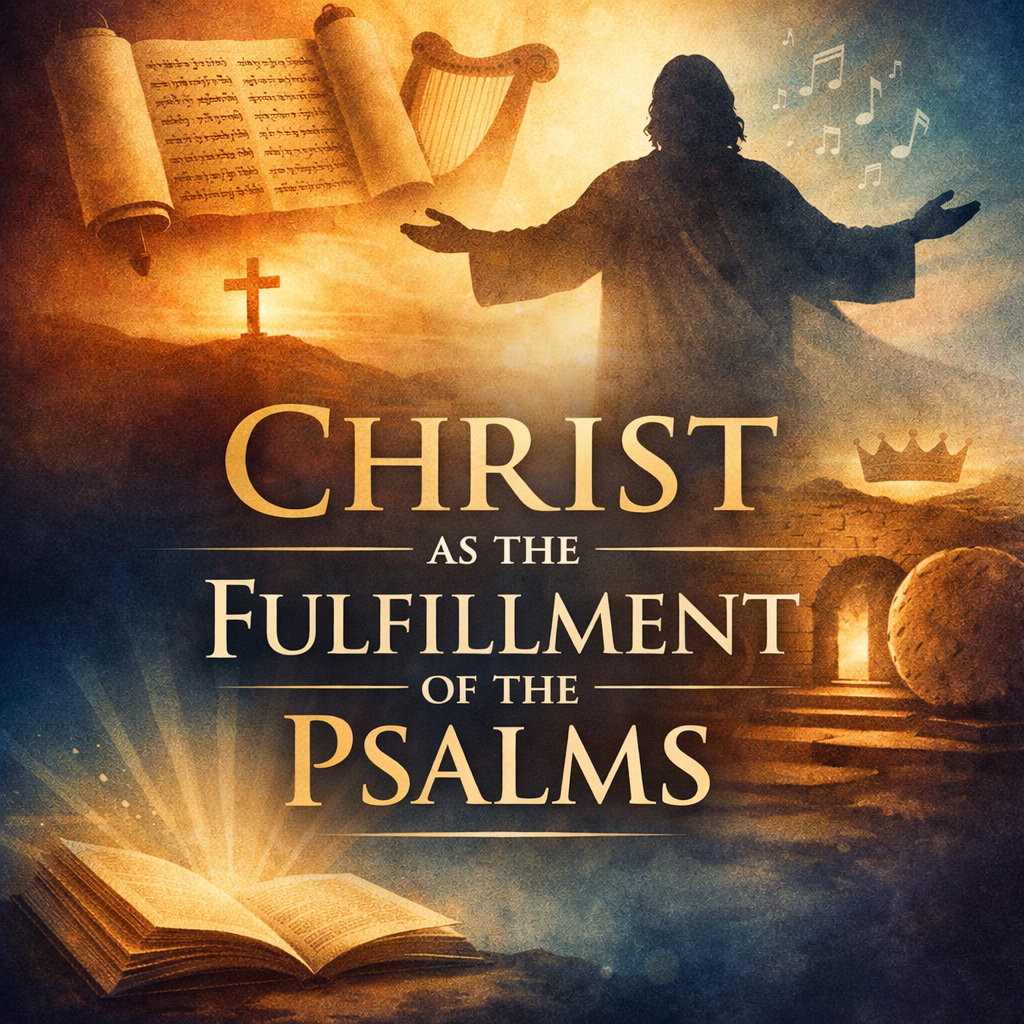
On Christ as the Fulfillment of the Psalms

One of the richest books in the Old Testament, in my opinion, is the Book of Psalms. It is a collection filled with the prayers and songs of Israel throughout her history, and it holds immense value for the devotional life of the church today. When we read the Psalms, we are drawn into the devotional, emotional, and personal experience of faith in ways that touch every part of our lives. And this is good and right. But the Psalms are not only expressions of faith, whether Israel’s or our own. They are also filled with expectations that reach beyond themselves. The Book of Psalms gives voice to Israel’s experience, to her covenant relationship with God, and to the life of faith more broadly, but it also creates categories that are not fully resolved within Israel’s history. In other words, the Psalms cry out for fulfillment, and it is my thesis that that fulfillment is ultimately found in and through the person and work of Jesus Christ.

In terms of the Old Testament canon, the Book of Psalms consists of prayers and songs that reflect the people, events, and experiences of Israel’s history. They provide a kind of covenantal reflection and royal theology that flows directly out of that historical context. However, the Psalms consistently reach beyond their immediate setting to realities that are eschatological in nature and central to God’s redemptive purposes. For example, in Psalm 22, we encounter the figure of the righteous sufferer—one who endures deep emotional and physical suffering through no fault of his own. While the superscript attributes the psalm to David, the experience described surpasses anything we can clearly identify in his life. Similarly, Psalms 2 and 110 present a vision of Israel’s ideal king: one who is anointed by God, victorious over his enemies, and who reigns with perfect righteousness and justice. Yet no king in Israel’s history, David included, fully embodies this portrait. Likewise, Psalm 1 sets forth a picture of perfect obedience that distinguishes the righteous from the wicked—an ideal never fully realized in Israel or in our own experience. The point is that the realities these psalms describe extend far beyond any one historical figure. They are not exhausted by the past; they point forward. This is why we can say that they cry out for fulfillment.

What I am saying is that the Psalms present us with a kind of tension; they describe ideals that are a far cry from the lived experience of the faithful, both then and now. The righteous sufferer suffers, but he is ultimately vindicated. The ideal king reigns, yet the nations still rage against his authority. The faithful worshiper trusts in God’s covenant promises, but the world remains broken and filled with sin. In other words, these themes are not fully resolved within the Psalter itself; they point beyond its pages and look forward to the decisive intervention of God. Or to put it differently, the Psalms do not simply describe reality as it is; they long for its restoration. There is a deep and persistent yearning throughout the Psalms for God to act on behalf of his people, to fulfill his promises, to judge the wicked, and to vindicate the righteous. This has been the cry of God’s people from the time of the fall until today. We know that something is wrong with the world as it is, and we long for the day when God will set things right and restore creation to what it was always meant to be. This is the heart of the Psalms.

Of course, it is clear in the Gospels that Jesus knew the Psalms well; no doubt he had read, heard, and memorized many of them throughout his life. But Jesus does not merely quote from the Psalms; he inhabits the realities that they describe. For example, when he is hanging on the cross, he cries out in quotation of Psalm 22.1, even as he bears the weight of his work in making atonement for sin. (On the cry of dereliction, see here.) This is not simply a cry of anguish, but an identification with the righteous sufferer whose vindication is anticipated in that psalm. Or again, in his debates with the religious leaders, he quotes Psalm 110.1 in reference to the identity of the Messiah (Matt. 22.41–46). But this is not merely an abstract theological question; it cuts to the very heart of Jesus’s identity as David’s Lord and the one who shares in the authority of God himself. Likewise, after telling the parable of the vineyard owner, Jesus quotes Psalm 118.22–23 about the stone the builders rejected, applying it directly to his own rejection by the religious leaders (Matt. 21.42–46). Many commentators suggest that these quotations function in a way similar to the Jewish practice of remez, where a single verse evokes the broader context of the entire psalm. The point is that Jesus read the Psalms as speaking about himself and his mission. He is not merely borrowing their language; he is revealing their fulfillment, embodying in his own life, death, and resurrection the realities toward which they ultimately point.

This is most clearly seen in the accounts of Jesus’s passion. I have already mentioned his quotation of Psalm 22, but he also alludes to Psalm 31.5, “Into your hands I entrust my spirit.” In addition to this, the Gospel writers present Jesus as inhabiting the experience of the righteous sufferer described in Psalm 69—one who is mocked, rejected, and consumed with zeal for the house of God. Even in the details of his crucifixion, we see the Psalms shaping the narrative, as John notes that not one of his bones was broken, in keeping with Psalm 34.20. These are not random correspondences; they are theological claims. The cross is the place where the unresolved tensions of the Psalms converge. The suffering of the righteous one, the apparent triumph of the wicked, and the trust of the faithful all meet in this moment. And yet, even here, lament is not the final word. In the midst of suffering, there is trust; in the midst of humiliation, there is the promise of vindication. In other words, what the Psalms anticipated, the cross of Jesus embodies. The cries of the Psalter are not silenced at Calvary; they are fulfilled there, as Jesus bears the full weight of suffering while entrusting himself completely to the Father.

And these kinds of connections between the person and work of Jesus and the Psalms are not unique to the Gospels; they are found throughout the New Testament. The apostles consistently interpret the Psalms in light of Christ. For example, in Acts 2, Peter quotes Psalm 16 in defense of Jesus’s resurrection, arguing that David’s words, “You will not abandon my soul to Hades or allow your Holy One to see decay,” cannot ultimately refer to David himself, since his tomb remained among them. Rather, the psalm finds its true fulfillment in the resurrection of Jesus. Likewise, in Acts 4, when the early church faces opposition, they quote Psalm 2 to interpret the raging of the nations against Jesus as the outworking of God’s sovereign plan. And again, in Acts 4:11, Peter cites Psalm 118.22 about the stone the builders rejected and applies it directly to Christ, a move he likely learned from Jesus himself. The author of Hebrews goes even further, repeatedly drawing from the Psalms to establish the superiority of the Son over angels, priests, and kings (e.g., Psalms 2, 8, and 110 among others). These examples could be multiplied, but the point is clear: the New Testament does not treat the Psalms merely as background; it treats them as prophetic and forward-looking. This fulfillment is not always a matter of direct prediction, but often of pattern and typology. The apostles read the Psalms as finding their true meaning in Christ, a hermeneutic grounded in Jesus’s own words that “everything written about me in the Law of Moses, the Prophets, and the Psalms must be fulfilled” (Luke 24:44).

In other words, Christ is the true singer of the Psalms. He is the true righteous one of Psalm 1; he is the true king of Psalm 2. He is the true suffering servant of Psalm 22, and on and on we could go through all 150 psalms. What the Psalter describes in part and in shadow, Christ embodies in fullness and in reality. He fulfills the Psalms both perfectly, in himself, and representatively, for us. That is to say, he is not only the one who perfectly lives out the life of trust, obedience, and righteousness described in the Psalms, but he is also the one who does so on behalf of his people. He stands in our place as the faithful worshiper, the obedient son, and the righteous sufferer who entrusts himself fully to the Father. This means that the Psalms ultimately belong to Christ before they belong to us. We do not begin with our own experience and read ourselves into the Psalms; rather, we begin with Christ and understand the Psalms through him. Only then, as those united to him by faith, do we find our place within their words.

This means that we must read the Psalms as Christians. Yes, we should still read them devotionally; yes, we should still make them our own in the discipline of prayer as we pray through the Scriptures. But we pray them as those who are united to Christ by faith; we pray them in him and through him. This means that our laments are joined to his laments; our cries of suffering are not isolated expressions, but echoes of the righteous sufferer who has gone before us. Likewise, our hope for vindication and deliverance is not grounded in uncertain circumstances, but in the sure reality of his resurrection. When we pray the Psalms, we are not merely expressing our own emotions; we are participating in the life of Christ himself. He gives shape to our prayers, depth to our suffering, and certainty to our hope. This is why we do not outgrow the Psalms; rather, we grow into them. We learn to read them more deeply in, with, and through Christ, finding that what once seemed distant or unresolved now finds clarity and fulfillment in him.

So, yes, the Psalms cry out for fulfillment, and Christ is the answer to their call. They give voice to the longings, tensions, and expectations of God’s people—longings for justice, for deliverance, for a righteous king, for the vindication of the faithful. Yet these cries are not left unresolved. They are not left hanging in the pages of the Old Testament. Rather, they find their resolution in Jesus. In his life, death, resurrection, and exaltation, the realities anticipated in the Psalms come to their fullness. The righteous sufferer is vindicated, the true king is enthroned, and the faithful worshiper is perfected. What the Psalms express in hope, Christ accomplishes in reality. To read the Psalms rightly, then, is not only to hear the voice of Israel, but to hear the voice of Christ—and to see that what they longed for, he has fulfilled.

For further study:
Ash, Christopher. The Psalms: A Christ-Centered Commentary. Four Volumes. Wheaton, IL: Crossway, 2024.


On Deborah, Barak, and the “Failure of Men” Hypothesis

I was recently reading through the Book of Judges as part of my Bible reading plan, and I had the opportunity to revisit the story of Deborah and Barak (Judges 4–5). It is a remarkable account of how God delivered his people from Canaanite oppression and remained faithful to his covenant promises even when Israel was not faithful to him. At the same time, this passage often becomes a flashpoint in debates concerning gender roles in the home and in the church, particularly regarding the role of women. On the one hand, egalitarians point to Deborah as a paradigm for female leadership that should be emulated in the church today. On the other hand, complementarians often explain her leadership as the result of male failure, i.e. that God raised Deborah because no man was willing to step forward. It is this latter claim that I would like to examine in this post. While the “failure of men” hypothesis may resonate with certain instincts and seems to account for Barak’s initial hesitation, it ultimately goes beyond what the text itself supports. Deborah’s role is not presented as a corrective to male absence, nor as a structural shift in leadership patterns. Rather, Judges 4–5 presents a more complex picture of divine deliverance, prophetic authority, and covenant faithfulness.

Textually, the “failure of men” hypothesis is built on Barak’s apparent hesitation. In Judges 4.8, when Deborah instructs Barak to gather the tribes in preparation for battle, he responds, “If you will go with me, I will go. But if you will not go with me, I will not go.” Deborah agrees to accompany him, but she also declares that the honor of the victory will not go to Barak. From this, the argument is often made that Barak’s hesitation reveals a lack of courage or leadership, and that Deborah steps in to fill the resulting gap. The conclusion, then, is that God raises up women to lead when men fail. While it is certainly true that Barak hesitates and that Deborah plays a central leadership role, this conclusion goes beyond what the text itself actually supports. It does not arise from the narrative so much as it is imposed upon it. The issue is not whether Deborah leads—the text clearly affirms that she does—but whether her leadership is presented as a response to male absence or failure.

A close and careful reading of the text reveals that Deborah is introduced first, and she is already functioning in a leadership role before Barak even appears in the narrative. In Judges 4:4–5, we are told that “Deborah, a prophetess and the wife of Lappidoth, was judging Israel at that time,” and that the people of Israel came to her for judgment. This indicates that Deborah was already established as both a prophetess and a judge. She is not raised up in response to Barak; she is already exercising leadership within Israel. Moreover, it is Deborah who summons Barak and speaks with divine authority as she relays the Lord’s command (4:6–7). In other words, the initiative in the narrative belongs to God through Deborah, not to a vacuum created by men. As for Barak, as noted above, he does appear to hesitate in response to the Lord’s command. However, this is not an outright refusal to lead, but a form of conditional obedience. He expresses a desire for the Lord’s prophet to accompany him in the task. Importantly, Deborah does not rebuke or condemn him for this response. Instead, she simply declares that the honor of the victory will go to a woman. This is a prophetic statement of outcome, not a moral indictment. Deborah supports Barak in his role; she does not portray him as a failed leader.

The key to understanding this narrative comes in chapter 5. Judges 5 is a poetic retelling of the events of chapter 4, and as such, it functions as the inspired interpretation of those events. In the song, Deborah is praised as “a mother in Israel” (5:7), but just as importantly, Barak is also commended. He is included among the military leaders who participated in the Lord’s deliverance, and nowhere in the song is he criticized or portrayed as a failed or reluctant figure. The narrative simply does not frame Barak as a man who failed to lead. In fact, the only explicit condemnation in the song appears in verse 23, which reads “Curse Meroz,” says the angel of the Lord, “bitterly curse her inhabitants, for they did not come to help the Lord, to help the Lord with the warriors.” Meroz, likely a nearby town expected to join the battle, is condemned precisely because it failed to respond. This is significant. If the narrator intended to highlight male failure in Barak, he had the language and categories to do so—and he uses them elsewhere in the text. But Barak is never cursed, rebuked, or condemned. Instead, he is remembered as one who participated in the Lord’s victory. The silence of the text where we might expect condemnation is itself interpretively significant.

Stepping back from the story of Deborah and Barak, the broader pattern of the Book of Judges is that Israel’s history follows a predictable cycle. The people fall into sin, God punishes them with oppression, they cry out for deliverance, and the Lord raises up a judge to rescue them. Yet this cycle does not simply repeat—it spirals downward. As the narrative progresses, the judges themselves become increasingly flawed, and the moral and spiritual condition of Israel deteriorates. We need only consider figures like Gideon, Jephthah, and Samson to see that the author of Judges knows how to highlight the failures of male leadership when he intends to do so. Their weaknesses are not subtle; they are central to their stories. But Deborah’s narrative does not function in this way. She is presented as a faithful and effective leader, and Barak is not portrayed as a cautionary figure. In other words, the text does not present Deborah as a divine workaround for male incompetence, but as a legitimate agent of God’s deliverance within a broader pattern of imperfect yet usable leaders.

So, what do we do with Deborah? The fact of the matter is that Deborah does lead. She is a prophetess and a judge, and she is used powerfully by God in the deliverance of his people. However, her role must be understood within its narrative and redemptive context, not abstracted into a universal principle. On the one hand, we should not use Deborah to overturn broader biblical patterns of leadership and authority. This is the well-known distinction between what is descriptive and what is prescriptive. In this narrative, Deborah is described as a faithful and effective leader through whom God works; she is not explicitly presented as a paradigm for leadership structures in the home or the church. On the other hand, we must also resist the impulse to minimize or dismiss her role. Deborah is not an anomaly to be explained away. She is a genuine agent of God’s deliverance, and her story is preserved in Scripture as part of God’s inspired revelation. Her leadership is real, authoritative, and significant. Yet the text itself does not frame her role as establishing a normative pattern for ecclesial or domestic leadership. Rather, it highlights the sovereignty of God, who works through whom he wills to accomplish his purposes.

The point of all this is to say that the story of Deborah and Barak is not about gender polemics. This is a concern that is external to the text and often imposed upon it by modern debates. This does not mean that those debates are unimportant; they are all the more pressing in this current cultural moment. But, the question is not what Deborah means for our debates, but what this text reveals about how God works in the history of his people. The narrative of Deborah and Barak directs our attention elsewhere. This story is about God’s faithfulness to his promises, his sovereignty over his people and their circumstances, and his willingness to use unexpected agents to accomplish his purposes in the world. Throughout the Book of Judges, Israel repeatedly proves unfaithful, yet God remains steadfast. He raises up deliverers, not because of their inherent greatness, but because of his covenant commitment. Deborah and Barak are no exception. Their story highlights the fact that God is not limited by human expectations, conventions, or categories. He works through whom he wills and accomplishes his purposes in ways that often surprise us. The emphasis of Judges 4–5 is not that men failed, but that God delivers his people often in ways that subvert human expectations and call us to trust in his sovereign power rather than our own assumptions.

In the end, this discussion brings us back to a matter of method. We must let the text speak for itself rather than imposing our own categories and concerns upon it. The “failure of men” hypothesis ultimately reads more into the narrative than it draws out of it, importing assumptions that the text itself does not explicitly support. Deborah is neither an anomaly to be explained away nor a weapon to be deployed in broader ideological debates. She is a faithful servant of the Lord, raised up within a particular moment in Israel’s history to accomplish God’s purposes for his people. Her story reminds us that God is both sovereign and free in the instruments he chooses to use. At the same time, it calls us to read Scripture carefully, attentively, and humbly. Faithful interpretation requires that we resist the urge to make the text serve our frameworks, and instead allow it to shape them, even when it refuses to fit neatly into our categories.


On Resurrection and De-dustification

It is common in Biblical studies to suggest that the doctrine of the resurrection is a late development in Old Testament theology. Of course, the clearest Old Testament affirmation of this belief is found in Daniel 12.2, where we read, “Many who sleep in the dust of the earth will awake, some to eternal life, and some to disgrace and eternal contempt.” While the dating of Daniel is a much debated question, this verse certainly stands as a clear affirmation of the doctrine of a general resurrection possibly from as early as the exilic period. But is it possible that the doctrine of resurrection has a much longer presence in the Old Testament. I would suggest that it does, and I would base this suggestion, at least in part, on the words of David in Psalm 16, verse 10, where we read, “For you will not abandon me to Sheol; you will not allow your faithful one to see decay.” In this psalm, David is  seeking divine protection because he has remained loyal to God, and he is praising God for his rich blessings with full confidence God will vindicate him and deliver him from death.

Now, this particular verse is quoted twice in the in the Book of Acts in defense of the resurrection of Jesus, once by Peter in Acts 2.27, and once again by Paul in Acts 13.35. Of course, their appeal to this verse raises all kinds of questions regarding the interpretive methods of Luke and the other apostles, but suffice it to say here that there is no need to suggest that they have misinterpreted it. They haven’t read something into it that wasn’t actually there in the first place. No, they have rightly understood the implications of David’s words, and by way of typological prediction, they have applied these words to the Messianic Son of David, Jesus the Christ. David genuinely believed that that God could and would deliver him even from death, so while the doctrine of resurrection is not spelled out explicitly, we have ample reason to believe that David held some conception of physical life after death. This is why he says, “you will not allow your faithful one to see decay.”

However, Peter’s explanation here deserves our attention. In Acts 2.29, he says, “Brothers and sisters, I can confidently speak to you about the patriarch David: He is both dead and buried, and his tomb is with us to this day.” Likewise, Paul explains similarly in Acts 13.36-37, “For David, after serving God’s purpose in his own generation, fell asleep, was buried with his fathers, and decayed, but the one God raised up did not decay.” Jesus was only in the grave for three days; there simply wasn’t enough time for his physical body to see decay. But David’s bones turned to dust a long time ago, as it is written, “All are going to the same place; all come from dust, and all return to dust.” (Ecclesiastes 3.20) This dusty fate is part of God’s curse on human sin, as we read in Genesis 3.19, “For you are dust, and you will return to dust.” It is a fate that awaits us all. So, we must ask the question: was David wrong in his expectation that his body would not see decay? Was he wrong in his hope for a bodily resurrection?

The answer to these questions must be a resounding, “May it never be.” David was not wrong to believe that God could and would deliver him even from the depths of death itself, and even though his physical body has long returned to the dust from whence it came, one day, his body will be raised new, perfectly whole and completely glorified. This is the hope of resurrection; it is the hope of de-dustification. As the Apostle Paul writes in Romans 8.11, “And if the Spirit of him who raised Jesus from the dead lives in you, then he who raised Christ from the dead will also bring your mortal bodies to life through his Spirit who lives in you.” Or again, in Philippians 3.21, “He will transform the body of our humble condition into the likeness of his glorious body, by the power that enables him to subject everything to himself.” If God can create man from the dust and breath the breath (the Hebrew word is the same word sometimes translated Spirit) of life into him so that he becomes a living soul, then he can certainly raise our bodies from the dust and give them eternal physical life by His Spirit.

In other words, far from being some late postulate in Old Testament theology, the idea of resurrection has a long standing place in Old Testament thought. It goes back at least to the time of David and the monarchy, some 1000 years before the time of Daniel and the exile, and it possibly goes back farther than that (but that is a topic for another time.) The point here is simply the Christian hope, nay, the biblical hope, is for nothing less than the perfected glory of bodily resurrection. As Jesus himself says, “a time is coming when all who are in the graves will hear his voice and come out—those who have done good things, to the resurrection of life, but those who have done wicked things, to the resurrection of condemnation.” (John 5.28-29) Maranatha!

For further study, see:
On the Logic of the Resurrection
On Christian Hope: Heaven or Resurrection
On Resurrection and the Path of Glory

See also,
Chase, Mitchell L. Resurrection Hope and the Death of Death. Short Studies in Biblical Theology. Wheaton, IL: Crossway, 2022.


On the Errors of Full Preterism

Full preterism, or consistent eschatology as it is sometimes called, is the belief that all of the Bible’s prophecies regarding the consummation of God’s plan for the redemption of humanity, including but not limited to the second coming of Jesus, the resurrection, final judgment, and the establishment of the new heavens and the new earth, occurred in 70 AD when the Romans destroyed the temple in Jerusalem. This event in their understanding marked the eschatological transition from the Old Covenant to the New Covenant, meaning that no further fulfillment is necessary. The new has come; it is really and truly here to its fullest extent. There is no need for any further act of God to complete his redemptive purposes in the world.

Now, let me be clear, this position is complete and utter heresy. It is a false gospel, because it denies the essential orthodox belief that “He will come again to judge the living and the dead” (Apostle’s Creed). It denies “the resurrection of the dead and the life of the world to come” (Nicene Creed). These denials among others put the views of full preterism wholly outside the boundaries of historic Christian orthodoxy. In the space that remains here, I would simply like to outline a few of the methodological and theological errors that are typical of this view, and then I will conclude by reaffirming the orthodox Christian hope.

The first error of full preterism is that they have a conspiracy theory view of hermeneutical method. In other words, their interpretations are based on a string of loosely related or even unrelated texts that are tied together by the occurrence of similar words. Of course, they would claim that they are following the principle of sola scriptura, namely that “scripture interprets scripture,” but I would submit that this is a theological conviction for biblical interpretation not a hermeneutical method for biblical interpretation. (See my post here). In stringing texts together the way that they do, they completely disregard concerns for the text’s historical and theological context and the author’s flow of thought. Instead, they flatten out the distinctive emphases of particular texts by smashing them together to say that same thing. More often than not, their exegesis comes across like someone throwing paint against a wall and then concluding they’ve painted Mona Lisa.

A second error of full preterism is that they hold to a gnostic view of the human person. Gnosticism is a heresy from the second century CE that suggests that Christ came to save us from this evil material world so that we could throw off the limits of our physical bodies and exist eternally as pure spirit. Of course, there is much more to it than this simple definition, but its weakness is that it disregards God’s design for human beings as embodied souls. We were made with a body and a soul, and to exist without either one of these is to be incomplete from the biblical point of view. This is why the resurrection of the body is such a primary doctrine; we are not merely transformed spiritually, we will be transformed physically when He comes again. Full preterism denies the future bodily resurrection of both the righteous and the wicked, and they suppose that when we die, we either go to heaven or hell to continue on as a “spiritual” being for eternity.

Thirdly, full preterism has an adoptionistic view of the incarnation. Adoptionism, or dynamic monarchianism, is a heresy from the third century CE that suggests that the divine logos came upon the man Jesus as his baptism, left him at his crucifixion, but then came upon him again at his resurrection. In other words, the man Jesus was “adopted” by God at his resurrection. The view of full preterism is not unlike adoptionistic Christology because they seem to believe the body of Jesus was only necessary during his earthly life. Often they suggest that his body was burnt up, or maybe it disappeared, at His ascension, so that He no longer has a body in heaven now. In other words, the son “adopted” a body for as long as he needed it, but then, when he no longer needed it, he discarded it. Along with the gnostic notions discussed above, this position negates the necessity of the resurrection. Why did Jesus even have to be resurrected from the dead with a body? Why not just rise as pure spirit? Here again, this view cannot explain the glorified body of Jesus, because it makes the incarnation temporary.

A fourth error that is part of the full preterist view is that they seem to have a fatalistic view of human history. Since they view this world as it is now as the “new heavens and new earth,” they have no expectation for any kind of renewal or transformation of the created order. According to this view, sin, death, disease, heartache, and the like will continue in perpetuity, eternally, without end. The only escape from the harsh realities of this world is when we die and go to heaven. But a renewed earth free of the corruption of sin and death is not in the purview of full preterism. This is fatalistic, because it essentially says that this is how the world is and this is how it will be. Nothing will ever get better, paradise will never be restored. Among others problems, this perspective denies the original purity and goodness of God’s creation and God’s intent to restore creation to that state of purity and goodness.

The final error that I see with full preterism, and perhaps the greatest, is that it offers a hopeless view of the Gospel. The reason for this is that it does not offer a final and full defeat of sin. Sure, the penalty of sin has been paid on the cross, and Satan has been defeated. But according to the full preterists, Satan and sin continue to run free forever. There is no final end to sin; there is no final defeat of Satan, no final judgment of the wicked. These things continue into perpetuity. The fact of the matter is that this is not the Gospel. Christ came, yes to pay the penalty for our sin, but also to free us from sin, and not only us, but the entirety of His creation. This is why the creation groans with yearning for the revelation of the sons of God (Romans 8.19-22). We look forward to a world that will be free of the domination and corruption of sin, free of the decay of death, where there will be no more tears, no more pains, no more heartaches. This is hope. This is the Gospel. And so we say, “Amen! Come, Lord Jesus!” (Revelation 22.20)

For further study:
On Christian Hope: Heaven or Resurrection
On Eschatology and the Gospel


On Psalm 119.97-104 (Mem)

97 How I love your instruction!
It is my meditation all day long.
98 Your command makes me wiser than my enemies,
for it is always with me.
99 I have more insight than all my teachers
because your decrees are my meditation.
100 I understand more than the elders
because I obey your precepts.
101 I have kept my feet from every evil path
to follow your word.
102 I have not turned from your judgments,
for you yourself have instructed me.
103 How sweet your word is to my taste—
sweeter than honey in my mouth.
104 I gain understanding from your precepts;
therefore I hate every false way.

The question of the Law and its relevance for New Testament believers is a question that has boggled the minds of Christians ever since the first disciples. As New Covenent believers, we understand that Christ has fulfilled the Law, and this in every way. No part of the Law has been left unfulfilled by Christ. Paul even says that the Law has been “abolished” in the work of Christ (Eph 2.15). And yet, we also understand that the Law, as part of the Old Testament Scriptures, is profitable and valuable for “training in righteousness.” (2 Tim 3.16) Genuine believers love the Word of God, and they yearn to be transformed by its truths. The Law, however, appears to be so difficult, so out of touch, so unrelated to life in Christ, we naturally wonder what transformative relevance it might still have.

More than that, we are well aware of what the New Testament says about the Law, particularly in the Pauline Epistles. For example, we understand that “the letter [of the Law] kills, but the Spirit gives life” (2 Cor 3.6), and that “[we] are not under the law but under grace.” (Rom 6.14) We all stand condemned by the law, for “it is clear that no one is justified before God by the law.” (Gal 3.11) We have been taught that the purpose of the Law is to expose our failures to live up the righteous standards of God, to convicts us of our sin, and to reveal our need for a savior. In other words, if the Law has a role in the faith of New Testament believers, then it is largely negative, convicting, and condemning.

But this does not seem to be the attitude of our psalmist here in Psalm 119; he views the law positively and with deep adoration and affection. In this stanza, he writes “How I love your instruction” (verse 97), and “How sweet your word is to my taste—sweeter than honey in my mouth.” (verse 103) Of course, we could simply conclude that this psalmist is writing before the advent of Christ, and so perhaps his words are no longer relevant for how we should relate to the Old Testament Law. For Old Testament believers, the Law was the basis for their covenant relationship with God. It was the gift of God’s grace to make them His people and enter into a covenant with them. Clearly, we have something greater. We are under the Law of Christ. (1 Cor 9:21)

But I believe this perspective would fail to do justice to the words of our psalmist. Believers in both the Old and the New Testament are united by the principle of faith; they are a part of us. So, the attitude of our psalmist throughout Psalm 119, but especially here in the mem (מ, pronounced maym) stanza, is particularly instructive for us. We too should learn to love God’s Law, to meditate upon it all day long. We should find in it words of wisdom and life and understanding about the ways of right and wrong as they are determined by the one who gave it. We should read Old Testament books like Leviticus and Deuteronomy, and let them be like sweet honey in the mouths of our soul, because they reveal the one whom our soul loves.

The bottom line is this, that the Old Testament, especially the Law, is good and valuable and profitable and transformative for God’s people of all times. It does not merely convict us and condemn us and reveal to us that we deserve hell and need salvation; it also reveals the character, the virtues, and perfections of the one who is true and pure and holy. We must learn to appreciate these positive aspects of the Law’s role in our lives as Christians, because if we do not, we cut ourselves off from the sustaining and nourishing benefits that come through its pages. No, we are not bound under the covenant mediating authority of the Law; it is not the basis of our relationship with God in Christ by the Spirit. But it is part of God’s revelation of himself, and as such, it continues to have value and relevance for those of who are in Christ, much as the writer of Psalm 119 affirms.

For further study:
Introduction
Psalm 119.1-8
Psalm 119.9-16
Psalm 119.17-24
Psalm 119.25-32
Psalm 119.33-40
Psalm 119.41-48
Psalm 119.49-56
Psalm 119.57-64
Psalm 119.65-72
Psalm 119.73-80
Psalm 119.81-88
Psalm 119.89-96


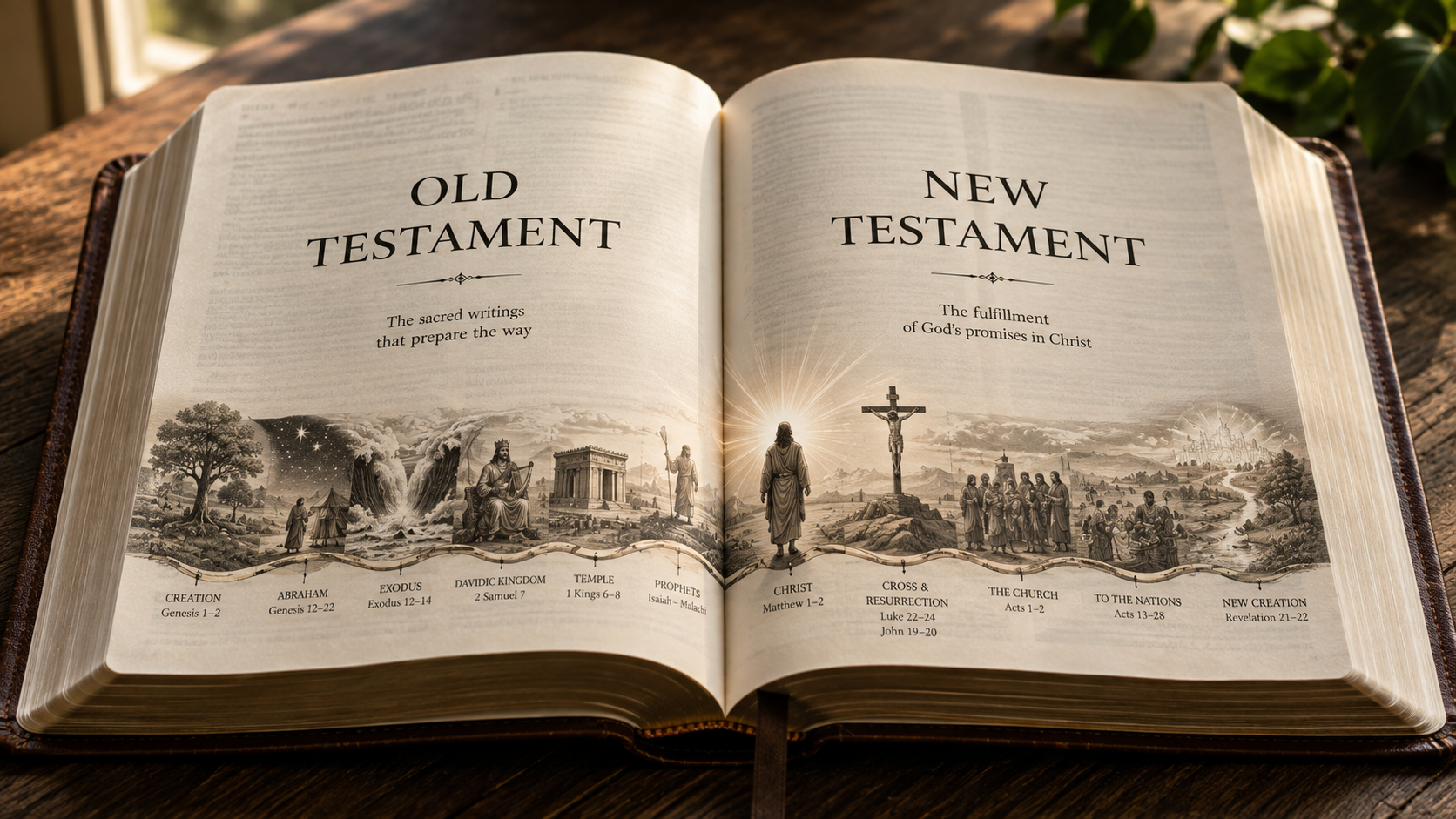
On the Old Testament’s Relevance for New Testament Believers

TEXT
“Are these things true?” the high priest asked.

“Brothers and fathers,” he replied, “listen: The God of glory appeared to our father Abraham when he was in Mesopotamia, before he settled in Haran, and said to him: Leave your country and relatives, and come to the land that I will show you. “Then he left the land of the Chaldeans and settled in Haran. From there, after his father died, God had him move to this land in which you are now living. He didn’t give him an inheritance in it—not even a foot of ground—but he promised to give it to him as a possession, and to his descendants after him, even though he was childless. God spoke in this way: His descendants would be strangers in a foreign country, and they would enslave and oppress them for four hundred years. I will judge the nation that they will serve as slaves, God said. After this, they will come out and worship me in this place. And so he gave Abraham the covenant of circumcision. After this, he fathered Isaac and circumcised him on the eighth day. Isaac became the father of Jacob, and Jacob became the father of the twelve patriarchs.

“The patriarchs became jealous of Joseph and sold him into Egypt, but God was with him 10 and rescued him out of all his troubles. He gave him favor and wisdom in the sight of Pharaoh, king of Egypt, who appointed him ruler over Egypt and over his whole household. 11 Now a famine and great suffering came over all of Egypt and Canaan, and our ancestors could find no food. 12 When Jacob heard there was grain in Egypt, he sent our ancestors there the first time. 13 The second time, Joseph revealed himself to his brothers, and Joseph’s family became known to Pharaoh. 14 Joseph invited his father Jacob and all his relatives, seventy-five people in all, 15 and Jacob went down to Egypt. He and our ancestors died there, 16 were carried back to Shechem, and were placed in the tomb that Abraham had bought for a sum of silver from the sons of Hamor in Shechem.

17 “As the time was approaching to fulfill the promise that God had made to Abraham, the people flourished and multiplied in Egypt 18 until a different king who did not know Joseph ruled over Egypt. 19 He dealt deceitfully with our race and oppressed our ancestors by making them abandon their infants outside so that they wouldn’t survive. 20 At this time Moses was born, and he was beautiful in God’s sight. He was cared for in his father’s home for three months. 21 When he was put outside, Pharaoh’s daughter adopted and raised him as her own son. 22 So Moses was educated in all the wisdom of the Egyptians and was powerful in his speech and actions.

23 “When he was forty years old, he decided to visit his own people, the Israelites. 24 When he saw one of them being mistreated, he came to his rescue and avenged the oppressed man by striking down the Egyptian. 25 He assumed his people would understand that God would give them deliverance through him, but they did not understand. 26 The next day he showed up while they were fighting and tried to reconcile them peacefully, saying, ‘Men, you are brothers. Why are you mistreating each other?’ 27 “But the one who was mistreating his neighbor pushed Moses aside, saying: Who appointed you a ruler and a judge over us? 28 Do you want to kill me, the same way you killed the Egyptian yesterday?

29 “When he heard this, Moses fled and became an exile in the land of Midian, where he became the father of two sons. 30 After forty years had passed, an angel appeared to him in the wilderness of Mount Sinai, in the flame of a burning bush. 31 When Moses saw it, he was amazed at the sight. As he was approaching to look at it, the voice of the Lord came: 32 I am the God of your ancestors—the God of Abraham, of Isaac, and of Jacob. Moses began to tremble and did not dare to look. 33 “The Lord said to him: Take off the sandals from your feet, because the place where you are standing is holy ground. 34 I have certainly seen the oppression of my people in Egypt; I have heard their groaning and have come down to set them free. And now, come, I will send you to Egypt. 35 “This Moses, whom they rejected when they said, Who appointed you a ruler and a judge?—this one God sent as a ruler and a deliverer through the angel who appeared to him in the bush. 36 This man led them out and performed wonders and signs in the land of Egypt, at the Red Sea, and in the wilderness for forty years.

37 “This is the Moses who said to the Israelites: God will raise up for you a prophet like me from among your brothers. 38 He is the one who was in the assembly in the wilderness, with the angel who spoke to him on Mount Sinai, and with our ancestors. He received living oracles to give to us. 39 Our ancestors were unwilling to obey him. Instead, they pushed him aside, and in their hearts turned back to Egypt. 40 They told Aaron: Make us gods who will go before us. As for this Moses who brought us out of the land of Egypt, we don’t know what’s happened to him. 41 They even made a calf in those days, offered sacrifice to the idol, and were celebrating what their hands had made. 42 God turned away and gave them up to worship the stars of heaven, as it is written in the book of the prophets: House of Israel, did you bring me offerings and sacrifices for forty years in the wilderness? 43 You took up the tent of Moloch and the star of your god Rephan, the images that you made to worship. So I will send you into exile beyond Babylon.

44 “Our ancestors had the tabernacle of the testimony in the wilderness, just as he who spoke to Moses commanded him to make it according to the pattern he had seen. 45 Our ancestors in turn received it and with Joshua brought it in when they dispossessed the nations that God drove out before them, until the days of David. 46 He found favor in God’s sight and asked that he might provide a dwelling place for the God of Jacob. 47 It was Solomon, rather, who built him a house, 48 but the Most High does not dwell in sanctuaries made with hands, as the prophet says: 49 Heaven is my throne, and the earth my footstool. What sort of house will you build for me? says the Lord, or what will be my resting place? 50 Did not my hand make all these things?

51 “You stiff-necked people with uncircumcised hearts and ears! You are always resisting the Holy Spirit. As your ancestors did, you do also. 52 Which of the prophets did your ancestors not persecute? They even killed those who foretold the coming of the Righteous One, whose betrayers and murderers you have now become. 53 You received the law under the direction of angels and yet have not kept it.”

~Acts 7.1-53

Title: On the Value and Relevance of the Old Testament
Text: Acts 7.1-53
Series: The Book of Acts
Church: Redeemer Baptist Church, Jonesboro, AR
Date: April 7, 2024


On Something Old, Something New (Part 1)

Question: How do we connect the Old and New Testaments?
Series: Wednesday Night Bible Study – Q & A
Church: South Caraway Baptist Church, Jonesboro, AR
Date: July 13, 2022


Slow To Write

"let every person be quick to hear, slow to speak, slow to anger."

lovegavehope

Just another WordPress.com site

Jared Cornutt

Pastor | Speaker | Writer

Denny Burk

A commentary on theology, politics, and culture

G3 Ministries

Events + Resources for the Local Church

Biblical Reasoning

Biblical and Systematic Theology According to the Scriptures

RetroChristianity

Reclaiming the Forgotten Faith

SBC Voices

Southern Baptist News & Opinion

Lucid Theology

Thoughts on words, books, theology, and life.

Baptist21

A pastor-led voice for Baptists in the 21st century

Center For Baptist Renewal

The Personal and Professional Blog of Phillip Powers

The Pastor's Well - Pastor Well

The Personal and Professional Blog of Phillip Powers

Articles - AlbertMohler.com

The Personal and Professional Blog of Phillip Powers

The Gospel Coalition

The Personal and Professional Blog of Phillip Powers