Tag Archives: Hermeneutics

On Christ as the Fulfillment of the Psalms

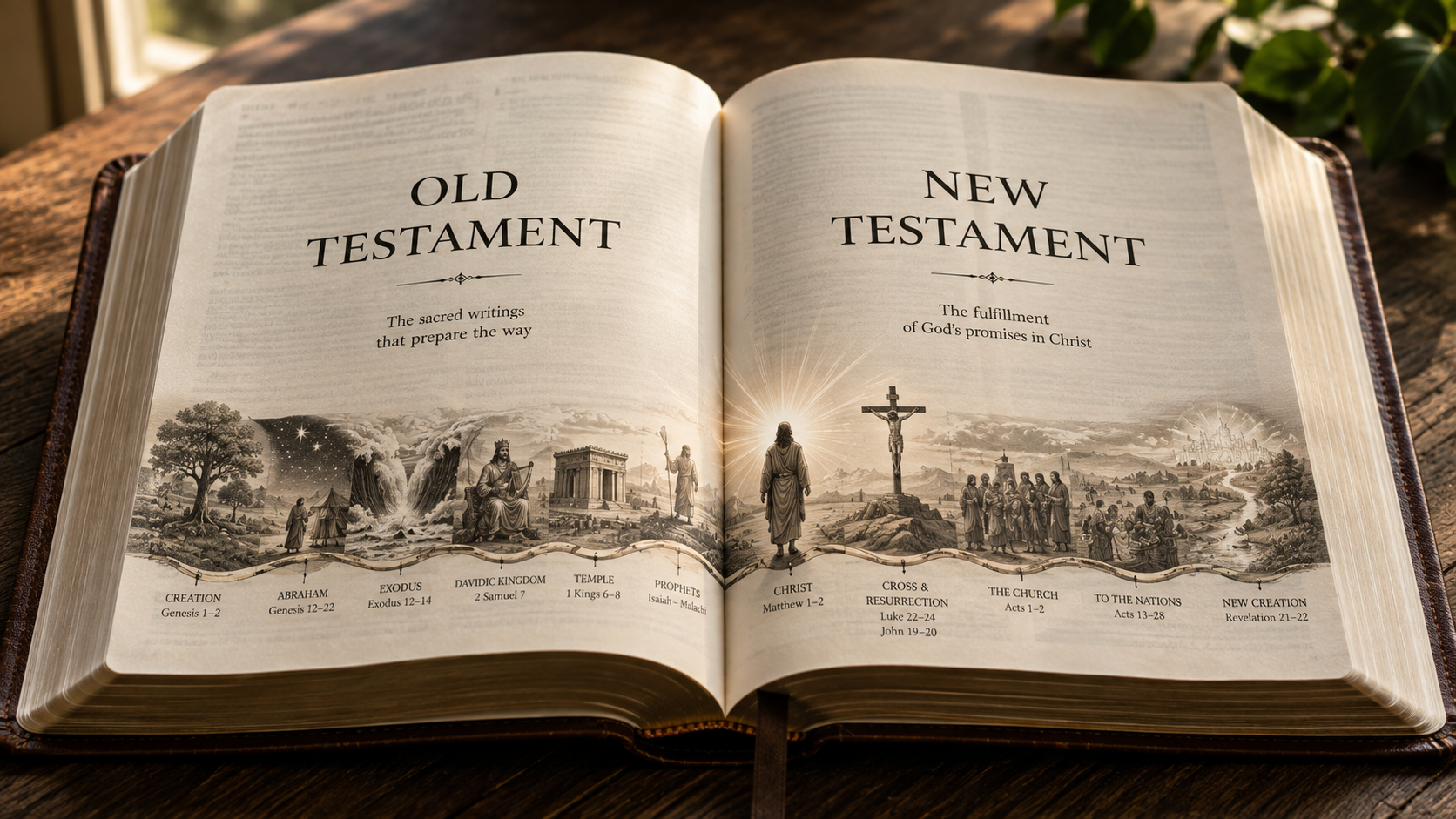
One of the richest books in the Old Testament, in my opinion, is the Book of Psalms. It is a collection filled with the prayers and songs of Israel throughout her history, and it holds immense value for the devotional life of the church today. When we read the Psalms, we are drawn into the devotional, emotional, and personal experience of faith in ways that touch every part of our lives. And this is good and right. But the Psalms are not only expressions of faith, whether Israel’s or our own. They are also filled with expectations that reach beyond themselves. The Book of Psalms gives voice to Israel’s experience, to her covenant relationship with God, and to the life of faith more broadly, but it also creates categories that are not fully resolved within Israel’s history. In other words, the Psalms cry out for fulfillment, and it is my thesis that that fulfillment is ultimately found in and through the person and work of Jesus Christ.

In terms of the Old Testament canon, the Book of Psalms consists of prayers and songs that reflect the people, events, and experiences of Israel’s history. They provide a kind of covenantal reflection and royal theology that flows directly out of that historical context. However, the Psalms consistently reach beyond their immediate setting to realities that are eschatological in nature and central to God’s redemptive purposes. For example, in Psalm 22, we encounter the figure of the righteous sufferer—one who endures deep emotional and physical suffering through no fault of his own. While the superscript attributes the psalm to David, the experience described surpasses anything we can clearly identify in his life. Similarly, Psalms 2 and 110 present a vision of Israel’s ideal king: one who is anointed by God, victorious over his enemies, and who reigns with perfect righteousness and justice. Yet no king in Israel’s history, David included, fully embodies this portrait. Likewise, Psalm 1 sets forth a picture of perfect obedience that distinguishes the righteous from the wicked—an ideal never fully realized in Israel or in our own experience. The point is that the realities these psalms describe extend far beyond any one historical figure. They are not exhausted by the past; they point forward. This is why we can say that they cry out for fulfillment.

What I am saying is that the Psalms present us with a kind of tension; they describe ideals that are a far cry from the lived experience of the faithful, both then and now. The righteous sufferer suffers, but he is ultimately vindicated. The ideal king reigns, yet the nations still rage against his authority. The faithful worshiper trusts in God’s covenant promises, but the world remains broken and filled with sin. In other words, these themes are not fully resolved within the Psalter itself; they point beyond its pages and look forward to the decisive intervention of God. Or to put it differently, the Psalms do not simply describe reality as it is; they long for its restoration. There is a deep and persistent yearning throughout the Psalms for God to act on behalf of his people, to fulfill his promises, to judge the wicked, and to vindicate the righteous. This has been the cry of God’s people from the time of the fall until today. We know that something is wrong with the world as it is, and we long for the day when God will set things right and restore creation to what it was always meant to be. This is the heart of the Psalms.

Of course, it is clear in the Gospels that Jesus knew the Psalms well; no doubt he had read, heard, and memorized many of them throughout his life. But Jesus does not merely quote from the Psalms; he inhabits the realities that they describe. For example, when he is hanging on the cross, he cries out in quotation of Psalm 22.1, even as he bears the weight of his work in making atonement for sin. (On the cry of dereliction, see here.) This is not simply a cry of anguish, but an identification with the righteous sufferer whose vindication is anticipated in that psalm. Or again, in his debates with the religious leaders, he quotes Psalm 110.1 in reference to the identity of the Messiah (Matt. 22.41–46). But this is not merely an abstract theological question; it cuts to the very heart of Jesus’s identity as David’s Lord and the one who shares in the authority of God himself. Likewise, after telling the parable of the vineyard owner, Jesus quotes Psalm 118.22–23 about the stone the builders rejected, applying it directly to his own rejection by the religious leaders (Matt. 21.42–46). Many commentators suggest that these quotations function in a way similar to the Jewish practice of remez, where a single verse evokes the broader context of the entire psalm. The point is that Jesus read the Psalms as speaking about himself and his mission. He is not merely borrowing their language; he is revealing their fulfillment, embodying in his own life, death, and resurrection the realities toward which they ultimately point.

This is most clearly seen in the accounts of Jesus’s passion. I have already mentioned his quotation of Psalm 22, but he also alludes to Psalm 31.5, “Into your hands I entrust my spirit.” In addition to this, the Gospel writers present Jesus as inhabiting the experience of the righteous sufferer described in Psalm 69—one who is mocked, rejected, and consumed with zeal for the house of God. Even in the details of his crucifixion, we see the Psalms shaping the narrative, as John notes that not one of his bones was broken, in keeping with Psalm 34.20. These are not random correspondences; they are theological claims. The cross is the place where the unresolved tensions of the Psalms converge. The suffering of the righteous one, the apparent triumph of the wicked, and the trust of the faithful all meet in this moment. And yet, even here, lament is not the final word. In the midst of suffering, there is trust; in the midst of humiliation, there is the promise of vindication. In other words, what the Psalms anticipated, the cross of Jesus embodies. The cries of the Psalter are not silenced at Calvary; they are fulfilled there, as Jesus bears the full weight of suffering while entrusting himself completely to the Father.

And these kinds of connections between the person and work of Jesus and the Psalms are not unique to the Gospels; they are found throughout the New Testament. The apostles consistently interpret the Psalms in light of Christ. For example, in Acts 2, Peter quotes Psalm 16 in defense of Jesus’s resurrection, arguing that David’s words, “You will not abandon my soul to Hades or allow your Holy One to see decay,” cannot ultimately refer to David himself, since his tomb remained among them. Rather, the psalm finds its true fulfillment in the resurrection of Jesus. Likewise, in Acts 4, when the early church faces opposition, they quote Psalm 2 to interpret the raging of the nations against Jesus as the outworking of God’s sovereign plan. And again, in Acts 4:11, Peter cites Psalm 118.22 about the stone the builders rejected and applies it directly to Christ, a move he likely learned from Jesus himself. The author of Hebrews goes even further, repeatedly drawing from the Psalms to establish the superiority of the Son over angels, priests, and kings (e.g., Psalms 2, 8, and 110 among others). These examples could be multiplied, but the point is clear: the New Testament does not treat the Psalms merely as background; it treats them as prophetic and forward-looking. This fulfillment is not always a matter of direct prediction, but often of pattern and typology. The apostles read the Psalms as finding their true meaning in Christ, a hermeneutic grounded in Jesus’s own words that “everything written about me in the Law of Moses, the Prophets, and the Psalms must be fulfilled” (Luke 24:44).

In other words, Christ is the true singer of the Psalms. He is the true righteous one of Psalm 1; he is the true king of Psalm 2. He is the true suffering servant of Psalm 22, and on and on we could go through all 150 psalms. What the Psalter describes in part and in shadow, Christ embodies in fullness and in reality. He fulfills the Psalms both perfectly, in himself, and representatively, for us. That is to say, he is not only the one who perfectly lives out the life of trust, obedience, and righteousness described in the Psalms, but he is also the one who does so on behalf of his people. He stands in our place as the faithful worshiper, the obedient son, and the righteous sufferer who entrusts himself fully to the Father. This means that the Psalms ultimately belong to Christ before they belong to us. We do not begin with our own experience and read ourselves into the Psalms; rather, we begin with Christ and understand the Psalms through him. Only then, as those united to him by faith, do we find our place within their words.

This means that we must read the Psalms as Christians. Yes, we should still read them devotionally; yes, we should still make them our own in the discipline of prayer as we pray through the Scriptures. But we pray them as those who are united to Christ by faith; we pray them in him and through him. This means that our laments are joined to his laments; our cries of suffering are not isolated expressions, but echoes of the righteous sufferer who has gone before us. Likewise, our hope for vindication and deliverance is not grounded in uncertain circumstances, but in the sure reality of his resurrection. When we pray the Psalms, we are not merely expressing our own emotions; we are participating in the life of Christ himself. He gives shape to our prayers, depth to our suffering, and certainty to our hope. This is why we do not outgrow the Psalms; rather, we grow into them. We learn to read them more deeply in, with, and through Christ, finding that what once seemed distant or unresolved now finds clarity and fulfillment in him.

So, yes, the Psalms cry out for fulfillment, and Christ is the answer to their call. They give voice to the longings, tensions, and expectations of God’s people—longings for justice, for deliverance, for a righteous king, for the vindication of the faithful. Yet these cries are not left unresolved. They are not left hanging in the pages of the Old Testament. Rather, they find their resolution in Jesus. In his life, death, resurrection, and exaltation, the realities anticipated in the Psalms come to their fullness. The righteous sufferer is vindicated, the true king is enthroned, and the faithful worshiper is perfected. What the Psalms express in hope, Christ accomplishes in reality. To read the Psalms rightly, then, is not only to hear the voice of Israel, but to hear the voice of Christ—and to see that what they longed for, he has fulfilled.

For further study:
Ash, Christopher. The Psalms: A Christ-Centered Commentary. Four Volumes. Wheaton, IL: Crossway, 2024.


On Thinking Theologically (Weekend Vlog)


On Deborah, Barak, and the “Failure of Men” Hypothesis

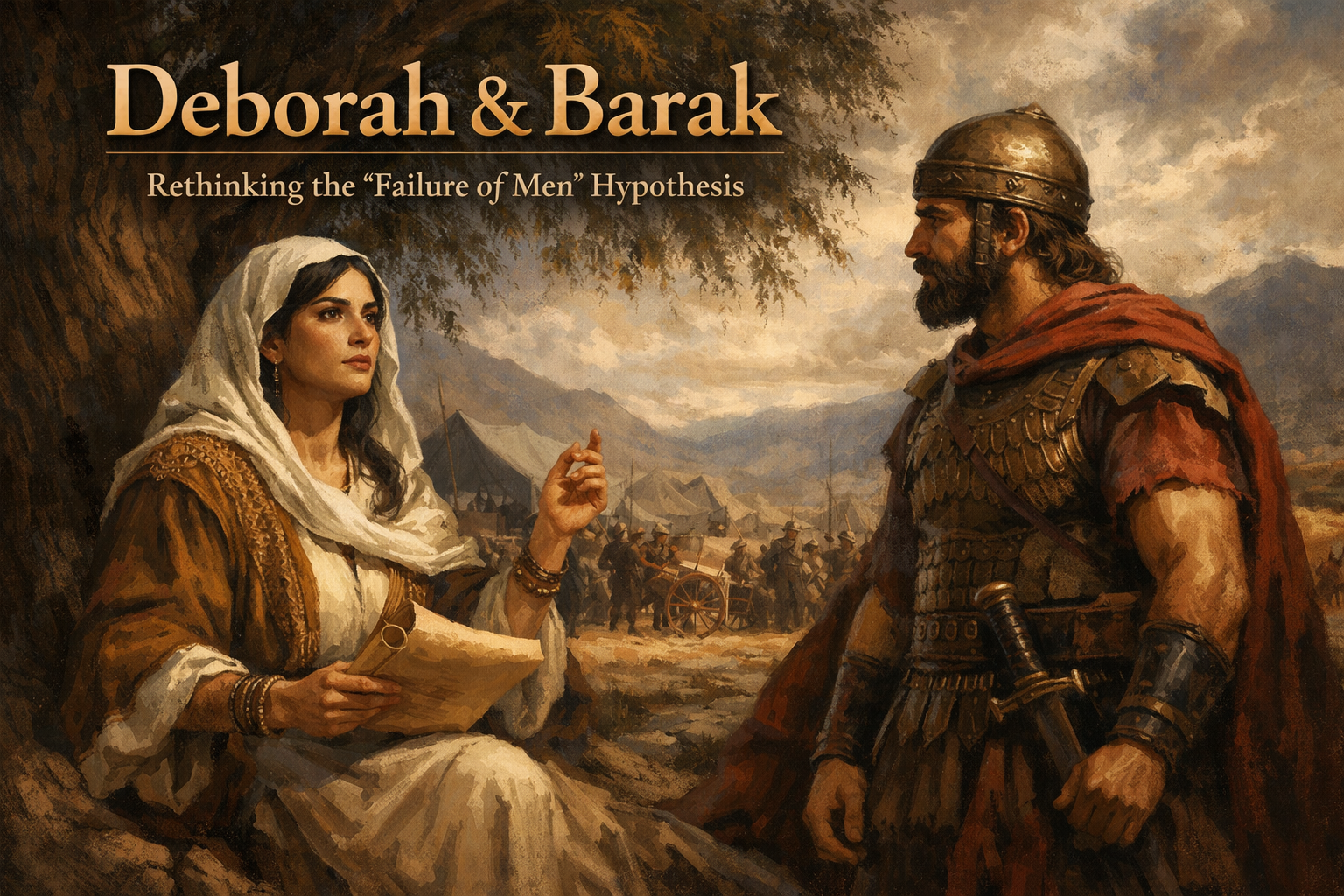
I was recently reading through the Book of Judges as part of my Bible reading plan, and I had the opportunity to revisit the story of Deborah and Barak (Judges 4–5). It is a remarkable account of how God delivered his people from Canaanite oppression and remained faithful to his covenant promises even when Israel was not faithful to him. At the same time, this passage often becomes a flashpoint in debates concerning gender roles in the home and in the church, particularly regarding the role of women. On the one hand, egalitarians point to Deborah as a paradigm for female leadership that should be emulated in the church today. On the other hand, complementarians often explain her leadership as the result of male failure, i.e. that God raised Deborah because no man was willing to step forward. It is this latter claim that I would like to examine in this post. While the “failure of men” hypothesis may resonate with certain instincts and seems to account for Barak’s initial hesitation, it ultimately goes beyond what the text itself supports. Deborah’s role is not presented as a corrective to male absence, nor as a structural shift in leadership patterns. Rather, Judges 4–5 presents a more complex picture of divine deliverance, prophetic authority, and covenant faithfulness.

Textually, the “failure of men” hypothesis is built on Barak’s apparent hesitation. In Judges 4.8, when Deborah instructs Barak to gather the tribes in preparation for battle, he responds, “If you will go with me, I will go. But if you will not go with me, I will not go.” Deborah agrees to accompany him, but she also declares that the honor of the victory will not go to Barak. From this, the argument is often made that Barak’s hesitation reveals a lack of courage or leadership, and that Deborah steps in to fill the resulting gap. The conclusion, then, is that God raises up women to lead when men fail. While it is certainly true that Barak hesitates and that Deborah plays a central leadership role, this conclusion goes beyond what the text itself actually supports. It does not arise from the narrative so much as it is imposed upon it. The issue is not whether Deborah leads—the text clearly affirms that she does—but whether her leadership is presented as a response to male absence or failure.

A close and careful reading of the text reveals that Deborah is introduced first, and she is already functioning in a leadership role before Barak even appears in the narrative. In Judges 4:4–5, we are told that “Deborah, a prophetess and the wife of Lappidoth, was judging Israel at that time,” and that the people of Israel came to her for judgment. This indicates that Deborah was already established as both a prophetess and a judge. She is not raised up in response to Barak; she is already exercising leadership within Israel. Moreover, it is Deborah who summons Barak and speaks with divine authority as she relays the Lord’s command (4:6–7). In other words, the initiative in the narrative belongs to God through Deborah, not to a vacuum created by men. As for Barak, as noted above, he does appear to hesitate in response to the Lord’s command. However, this is not an outright refusal to lead, but a form of conditional obedience. He expresses a desire for the Lord’s prophet to accompany him in the task. Importantly, Deborah does not rebuke or condemn him for this response. Instead, she simply declares that the honor of the victory will go to a woman. This is a prophetic statement of outcome, not a moral indictment. Deborah supports Barak in his role; she does not portray him as a failed leader.

The key to understanding this narrative comes in chapter 5. Judges 5 is a poetic retelling of the events of chapter 4, and as such, it functions as the inspired interpretation of those events. In the song, Deborah is praised as “a mother in Israel” (5:7), but just as importantly, Barak is also commended. He is included among the military leaders who participated in the Lord’s deliverance, and nowhere in the song is he criticized or portrayed as a failed or reluctant figure. The narrative simply does not frame Barak as a man who failed to lead. In fact, the only explicit condemnation in the song appears in verse 23, which reads “Curse Meroz,” says the angel of the Lord, “bitterly curse her inhabitants, for they did not come to help the Lord, to help the Lord with the warriors.” Meroz, likely a nearby town expected to join the battle, is condemned precisely because it failed to respond. This is significant. If the narrator intended to highlight male failure in Barak, he had the language and categories to do so—and he uses them elsewhere in the text. But Barak is never cursed, rebuked, or condemned. Instead, he is remembered as one who participated in the Lord’s victory. The silence of the text where we might expect condemnation is itself interpretively significant.

Stepping back from the story of Deborah and Barak, the broader pattern of the Book of Judges is that Israel’s history follows a predictable cycle. The people fall into sin, God punishes them with oppression, they cry out for deliverance, and the Lord raises up a judge to rescue them. Yet this cycle does not simply repeat—it spirals downward. As the narrative progresses, the judges themselves become increasingly flawed, and the moral and spiritual condition of Israel deteriorates. We need only consider figures like Gideon, Jephthah, and Samson to see that the author of Judges knows how to highlight the failures of male leadership when he intends to do so. Their weaknesses are not subtle; they are central to their stories. But Deborah’s narrative does not function in this way. She is presented as a faithful and effective leader, and Barak is not portrayed as a cautionary figure. In other words, the text does not present Deborah as a divine workaround for male incompetence, but as a legitimate agent of God’s deliverance within a broader pattern of imperfect yet usable leaders.

So, what do we do with Deborah? The fact of the matter is that Deborah does lead. She is a prophetess and a judge, and she is used powerfully by God in the deliverance of his people. However, her role must be understood within its narrative and redemptive context, not abstracted into a universal principle. On the one hand, we should not use Deborah to overturn broader biblical patterns of leadership and authority. This is the well-known distinction between what is descriptive and what is prescriptive. In this narrative, Deborah is described as a faithful and effective leader through whom God works; she is not explicitly presented as a paradigm for leadership structures in the home or the church. On the other hand, we must also resist the impulse to minimize or dismiss her role. Deborah is not an anomaly to be explained away. She is a genuine agent of God’s deliverance, and her story is preserved in Scripture as part of God’s inspired revelation. Her leadership is real, authoritative, and significant. Yet the text itself does not frame her role as establishing a normative pattern for ecclesial or domestic leadership. Rather, it highlights the sovereignty of God, who works through whom he wills to accomplish his purposes.

The point of all this is to say that the story of Deborah and Barak is not about gender polemics. This is a concern that is external to the text and often imposed upon it by modern debates. This does not mean that those debates are unimportant; they are all the more pressing in this current cultural moment. But, the question is not what Deborah means for our debates, but what this text reveals about how God works in the history of his people. The narrative of Deborah and Barak directs our attention elsewhere. This story is about God’s faithfulness to his promises, his sovereignty over his people and their circumstances, and his willingness to use unexpected agents to accomplish his purposes in the world. Throughout the Book of Judges, Israel repeatedly proves unfaithful, yet God remains steadfast. He raises up deliverers, not because of their inherent greatness, but because of his covenant commitment. Deborah and Barak are no exception. Their story highlights the fact that God is not limited by human expectations, conventions, or categories. He works through whom he wills and accomplishes his purposes in ways that often surprise us. The emphasis of Judges 4–5 is not that men failed, but that God delivers his people often in ways that subvert human expectations and call us to trust in his sovereign power rather than our own assumptions.

In the end, this discussion brings us back to a matter of method. We must let the text speak for itself rather than imposing our own categories and concerns upon it. The “failure of men” hypothesis ultimately reads more into the narrative than it draws out of it, importing assumptions that the text itself does not explicitly support. Deborah is neither an anomaly to be explained away nor a weapon to be deployed in broader ideological debates. She is a faithful servant of the Lord, raised up within a particular moment in Israel’s history to accomplish God’s purposes for his people. Her story reminds us that God is both sovereign and free in the instruments he chooses to use. At the same time, it calls us to read Scripture carefully, attentively, and humbly. Faithful interpretation requires that we resist the urge to make the text serve our frameworks, and instead allow it to shape them, even when it refuses to fit neatly into our categories.


On the Value and Wisdom of Seminary Training for Pastors

When I surrendered my life to God’s calling for vocational ministry at the age of 15, I always knew that that path would eventually take me to seminary, and now, as I am more than halfway through my PhD in Biblical Studies (New Testament) at The Southern Baptist Theological Seminary in Louisville, KY (pictured above), I can’t help but reflect on the value and benefits it has brought to my life and to my ministry. However, down here in the good ole’ “Bible Belt”, formal theological education is often viewed with a measure of skepticism and distrust. On the one hand, many people know faithful pastors who have influenced their lives who have never gone to seminary. On other hand, there is a lingering suspicion of academia that is left over from the historical influence of the Fundamentalist movement. So, it is understandable that in many churches, formal theological education can feel unnecessary at best and spiritually dangerous at worst. However, the real question is not simply whether theological education is necessary, but what kind of formation is required to faithfully know, teach, and live the truth of Scripture. Therefore, it is the thesis of this post that while formal theological education is not strictly necessary for faithful ministry, it is profoundly valuable because it cultivates the habits of careful thinking, deep reading, and disciplined reflection on the things of God.

Those who are leery of formal theological education point to several reasons why seminary is sometimes less than helpful. Some suggest that going to seminary kills spiritual passion, that academic theological knowledge can choke out personal devotion and piety. Seminary becomes a cemetery. And let’s be honest, this can happen. There is a real temptation in academia that one’s experience of faith can become utterly cerebral and lacking in spiritual pathos. However, I would suggest that this temptation is not unique to the seminary setting, and that it has more to do with the student than with the institution. Another objection that is sometimes heard is that “all we need is the Bible and the Spirit,” that the Scriptures are sufficient, and that the Spirit leads us into all truth. I have addressed this question in another post, but suffice it to say here that we do not download biblical understanding from the Spirit. His work has more to do with confirming and applying the truths of Scripture in our lives than with the transmission of content. Interpretation still requires care and study. Some also object that education can lead to pride and liberalism, and here again, these are legitimate concerns. And while discernment must be exercised in selecting an institution, it is up to the student to maintain their own humility and faithfulness. Lastly, as mentioned above, scores of pastors throughout the history of the church have served faithfully without formal theological training, and I praise God for those individuals. Let me say it clearly: seminary is not necessary for pastoral faithfulness. It is not a matter of necessity, but a matter of wisdom. The concerns I’ve listed here are not imaginary; they reflect real temptations and dangers. But they are dangers of misuse, not arguments against the value of theological training itself.

So, in the interest of clarity, it is important at this point to distinguish what theological education is and what it is not. First, theological education is not mere information transfer; it is not primarily about the mastery of content, though that is certainly a component of it. The fact is that we live in an information age, and theological content is available at the click of a button. Of course, not all of it is of the same quality, but it is true that taking in theological content is easier today than it has ever been. There are literally tons of resources both digital and in print that are available to the pastor who wants to grow in theological knowledge. And pastors should be taking it in; they should read and read widely and deeply, but seminary is not just about the transfer of information. Secondly, it is not a substitute for a person’s spiritual or devotional life. This I think is the misconception that undergirds a lot of the objections mentioned above, namely that seminary cannot replace personal piety and devotion. It is not a substitute for prayer, for holiness, for obedience, or for involvement in the local church. These are vital for spiritual life, and seminaries are not primarily focused on training these personal disciplines. Seminary is focused training in how to read carefully, how to think clearly, and how to serve faithfully throughout the course of one’s life. It is not about knowing more things; it is about learning how to think rightly about God and his Word.

This is exactly the point, namely that the Scriptures require careful and attentive reading. We must be taught the importance of historical and literary context, of genre and authorial intent, of words and sentences and paragraphs and how they communicate textual meaning. Ideally, these hermeneutical principles are modeled in the pulpit and Sunday school classroom. However, mastery requires focused and intensive didactic formation, because it is this kind of training that guards us from interpretive error. We must be taught how to rightly divide the Word of truth, so that we do not misuse Scripture for our own aims and ends or read our assumptions back into the text. Understanding the literary and historical intricacies and complexities of the Bible keeps us from falling into the arrogance of overconfidence, where familiarity is mistaken for understanding. It forces us to slow down, to wrestle with difficult passages, and to recognize that Scripture does not always yield its meaning at a glance. And in this way, it teaches us the discipline of slowness, how to let the text speak on its own terms and to listen carefully rather than forcing quick conclusions. What I am saying is that formal theological training teaches us not just what the Bible says, but how to listen to it well—and that is a skill that serves both the church and the individual believer for a lifetime.

In addition to learning to read carefully, formal theological training also helps us to develop theological depth in our understanding of the Word. It helps us to see the whole Bible, to understand the metanarrative of Scripture, and to locate particular books and passages within that unfolding storyline. We learn to follow themes and their development through the canon, and we come to appreciate both the continuity and the discontinuity between the Testaments. In doing so, we begin to see that the Bible is not a loose collection of disconnected texts, but a unified and coherent witness to God’s redemptive work in history. We also develop a certain measure of doctrinal coherence, in that we begin to understand how themes and concepts relate to one another, and we avoid fragmented theological reflections that isolate passages from the larger framework of Scripture. Questions of Christology, salvation, covenant, and kingdom are no longer treated in isolation, but are understood in relation to the whole counsel of God. Formal theological training also helps us to learn from the history of the church; it teaches us to see tradition as a resource rather than as a threat. (On the Use and Benefit of Tradition, see here.) To put it rather bluntly, we are not the first to read the Bible, and we won’t be the last. thankfully, this is a gift, not a limitation. It is an invitation to listen, to learn, and to be shaped by the wisdom of those who have gone before us.

Lastly, formal theological education helps us to develop intellectual humility. It exposes us to the difficult questions of the faith that have been asked throughout church history, and it forces us to wrestle with issues that do not admit of easy or immediate answers. It requires us to read and engage hard texts, both biblical and extrabiblical, and it immerses us in the real debates that continue to shape theological reflection even today. In doing so, it helps us develop a rightly calibrated confidence, one that is rooted in strong convictions, yet carried with a softer ego. We come to see that clarity is often hard-won, and that many of the questions we face have been carefully considered by thoughtful believers long before us. And as a result, we learn not only how to argue well, but how to disagree well. This is perhaps one of the greatest challenges in our present moment, and formal theological training can teach us to treat our interlocutors with patience, precision, and grace, even when we disagree deeply. In other words, theological education does not simply make you smarter; it makes you more aware of your limits. It reveals our strengths, exposes our weaknesses, and teaches us to value the insights of others, even when they do not fully align with our own.

However, even with all these benefits, formal theological education has its limits and dangers, and it is important that we are clear on what they are. For one, seminary training cannot produce spiritual life. And while many schools are now attempting to incorporate more spiritual life components into their curricula, it will always be true that knowledge simply does not equal transformation. True transformation is a work of the Spirit in us, and it is up to each individual to work with the Spirit through the classic spiritual disciplines in order to experience transformation. (On the Spiritual Disciplines, see here.) Second, seminary education can foster pride. This is a real danger. As the Scriptures remind us, “Knowledge puffs up, but love builds up.” (1 Corinthians 8.1) This is an ever-present temptation for those who are well informed in the study of the Scriptures. And lastly, seminary education can drift from the primary importance of the local church. At present, there is an ever-growing movement to reconnect seminary education with the local church, and this is to be celebrated. But seminaries must always orient their purpose and mission toward the service of the church, because it is the church that is Christ’s bride. However, in all three of these, the problem is not theological education itself, but theological education disconnected from the life of the church and the work of the Spirit.

This is why it is so important that head, heart, and ministry remain inherently intertwined. Pastors must always make sure that their thinking about God and their love for God remain together. There should be no head/heart divisions, as though theological precision and spiritual devotion were somehow in competition with one another. Rather, careful thinking about God should deepen our love for him, and our love for him should drive us to think more carefully about his Word. Further, pastors must remember that we do theology for the sake of the church, not for publications, not for CV development, not for accolades or recognition. All theology must be oriented toward the teaching, preaching, and discipleship ministries of the local church. “For the Church” must be more than an institutional mantra or a tagline; it must be the driving motivation in all of our theological efforts. Theology that does not serve the church ultimately fails in its purpose. And finally, we must remember that theological education is primarily about formation and faithfulness. We are seeking to develop the knowledge, skills, and habits that will sustain long-term ministry stability, presentational clarity, and faithful endurance. The goal is not to produce scholars detached from the church, but servants equipped to build it up, men who can think clearly, love deeply, and labor faithfully for the good of God’s people.

In the end, we must say this carefully: formal theological education is not necessary, but it is wise. God has used, and will continue to use, many faithful pastors and teachers who have never set foot in a seminary classroom. Again, thank God for his grace in this! The power of ministry has never rested in credentials, but in the faithful proclamation of the Word and the work of the Spirit. And yet, when pursued rightly, theological education is a gift. It strengthens the church by equipping its leaders to handle Scripture with greater care, to think with greater clarity, and to teach with greater depth and precision. It forms habits that serve a lifetime of ministry, not just a moment of preparation. To study theology carefully is not to move away from God, but to learn how to think about him rightly. That is a task worthy of our best effort.


On the Errors of Full Preterism

Full preterism, or consistent eschatology as it is sometimes called, is the belief that all of the Bible’s prophecies regarding the consummation of God’s plan for the redemption of humanity, including but not limited to the second coming of Jesus, the resurrection, final judgment, and the establishment of the new heavens and the new earth, occurred in 70 AD when the Romans destroyed the temple in Jerusalem. This event in their understanding marked the eschatological transition from the Old Covenant to the New Covenant, meaning that no further fulfillment is necessary. The new has come; it is really and truly here to its fullest extent. There is no need for any further act of God to complete his redemptive purposes in the world.

Now, let me be clear, this position is complete and utter heresy. It is a false gospel, because it denies the essential orthodox belief that “He will come again to judge the living and the dead” (Apostle’s Creed). It denies “the resurrection of the dead and the life of the world to come” (Nicene Creed). These denials among others put the views of full preterism wholly outside the boundaries of historic Christian orthodoxy. In the space that remains here, I would simply like to outline a few of the methodological and theological errors that are typical of this view, and then I will conclude by reaffirming the orthodox Christian hope.

The first error of full preterism is that they have a conspiracy theory view of hermeneutical method. In other words, their interpretations are based on a string of loosely related or even unrelated texts that are tied together by the occurrence of similar words. Of course, they would claim that they are following the principle of sola scriptura, namely that “scripture interprets scripture,” but I would submit that this is a theological conviction for biblical interpretation not a hermeneutical method for biblical interpretation. (See my post here). In stringing texts together the way that they do, they completely disregard concerns for the text’s historical and theological context and the author’s flow of thought. Instead, they flatten out the distinctive emphases of particular texts by smashing them together to say that same thing. More often than not, their exegesis comes across like someone throwing paint against a wall and then concluding they’ve painted Mona Lisa.

A second error of full preterism is that they hold to a gnostic view of the human person. Gnosticism is a heresy from the second century CE that suggests that Christ came to save us from this evil material world so that we could throw off the limits of our physical bodies and exist eternally as pure spirit. Of course, there is much more to it than this simple definition, but its weakness is that it disregards God’s design for human beings as embodied souls. We were made with a body and a soul, and to exist without either one of these is to be incomplete from the biblical point of view. This is why the resurrection of the body is such a primary doctrine; we are not merely transformed spiritually, we will be transformed physically when He comes again. Full preterism denies the future bodily resurrection of both the righteous and the wicked, and they suppose that when we die, we either go to heaven or hell to continue on as a “spiritual” being for eternity.

Thirdly, full preterism has an adoptionistic view of the incarnation. Adoptionism, or dynamic monarchianism, is a heresy from the third century CE that suggests that the divine logos came upon the man Jesus as his baptism, left him at his crucifixion, but then came upon him again at his resurrection. In other words, the man Jesus was “adopted” by God at his resurrection. The view of full preterism is not unlike adoptionistic Christology because they seem to believe the body of Jesus was only necessary during his earthly life. Often they suggest that his body was burnt up, or maybe it disappeared, at His ascension, so that He no longer has a body in heaven now. In other words, the son “adopted” a body for as long as he needed it, but then, when he no longer needed it, he discarded it. Along with the gnostic notions discussed above, this position negates the necessity of the resurrection. Why did Jesus even have to be resurrected from the dead with a body? Why not just rise as pure spirit? Here again, this view cannot explain the glorified body of Jesus, because it makes the incarnation temporary.

A fourth error that is part of the full preterist view is that they seem to have a fatalistic view of human history. Since they view this world as it is now as the “new heavens and new earth,” they have no expectation for any kind of renewal or transformation of the created order. According to this view, sin, death, disease, heartache, and the like will continue in perpetuity, eternally, without end. The only escape from the harsh realities of this world is when we die and go to heaven. But a renewed earth free of the corruption of sin and death is not in the purview of full preterism. This is fatalistic, because it essentially says that this is how the world is and this is how it will be. Nothing will ever get better, paradise will never be restored. Among others problems, this perspective denies the original purity and goodness of God’s creation and God’s intent to restore creation to that state of purity and goodness.

The final error that I see with full preterism, and perhaps the greatest, is that it offers a hopeless view of the Gospel. The reason for this is that it does not offer a final and full defeat of sin. Sure, the penalty of sin has been paid on the cross, and Satan has been defeated. But according to the full preterists, Satan and sin continue to run free forever. There is no final end to sin; there is no final defeat of Satan, no final judgment of the wicked. These things continue into perpetuity. The fact of the matter is that this is not the Gospel. Christ came, yes to pay the penalty for our sin, but also to free us from sin, and not only us, but the entirety of His creation. This is why the creation groans with yearning for the revelation of the sons of God (Romans 8.19-22). We look forward to a world that will be free of the domination and corruption of sin, free of the decay of death, where there will be no more tears, no more pains, no more heartaches. This is hope. This is the Gospel. And so we say, “Amen! Come, Lord Jesus!” (Revelation 22.20)

For further study:
On Christian Hope: Heaven or Resurrection
On Eschatology and the Gospel


On Ordinary Means for Interpreting the Bible

TEXT

6. The whole counsel of God concerning everything essential for his own glory and man’s salvation, faith, and life is either explicitly stated or by necessary inference contained in the Holy Scriptures. Nothing is ever to be added to the Scriptures, either by new revelation of the Spirit or by human traditions.

Nevertheless, we acknowledge that the inward illumination of the Spirit of God is necessary for a saving understanding of what is revealed in the Word. We recognize that some circumstances concerning the worship of God and government of the church are common to human actions and organizations and are to be ordered by the light of nature and Christian wisdom, following the general rules of the Word, which must always be observed.

7. Some things in Scripture are clearer than others, and some people understand the teachings more clearly than others. However, the things that must be known, believed, and obeyed for salvation are so clearly set forth and explained in one part of Scripture or another that both the educated and uneducated may achieve a sufficient understanding of them by properly using ordinary measures.

~Second London Baptist Confession (1689), 1.6, 1.7

Series: The 1689 Baptist Confession of Faith
Church: South Caraway Baptist Church, Jonesboro, AR
Date: October 11, 2023


On Hosea, Matthew, and Authorial Intent

In my previous post, I argued that our hermeneutic for interpreting the Bible must be grounded in the conviction that what God intended to say in the Scriptures is accurately and faithfully conveyed in what the human authors actually wrote, and for most of the Bible, this seems to be rather clear. The question, however, arises when we come to texts in the New Testament that seem to interpret the Old Testament against the grain of the author’s intent. If we believe that “scripture interprets scripture” (see my post, here), then it would makes sense to suggest that we should follow the interpretive principles of the Apostles, and if they were not bound by a strict conception of authorial intent, then perhaps we should jettison this hermeneutical ground in our interpretive efforts as well. This then is the point that must be proven, namely that the New Testament authors did in fact disregard the human author’s intent when they interpreted the Old Testament. Of course, to examine every place where the New Testament author’s quote from or allude to the Old Testament would require far more space than is available here, and this work has already been done by many fine scholars in the field. I recommend Commentary on the New Testament use of the Old Testament, edited by G.K. Beale and D.A. Carson. But in lieu of that, I would like to explore one text as a test case for the thesis that the New Testament authors ignored the principle of authorial intent in their use of the Old Testament, that being Matthew’s use of Hosea 11.1 in chapter 2, verse 15 of his Gospel.

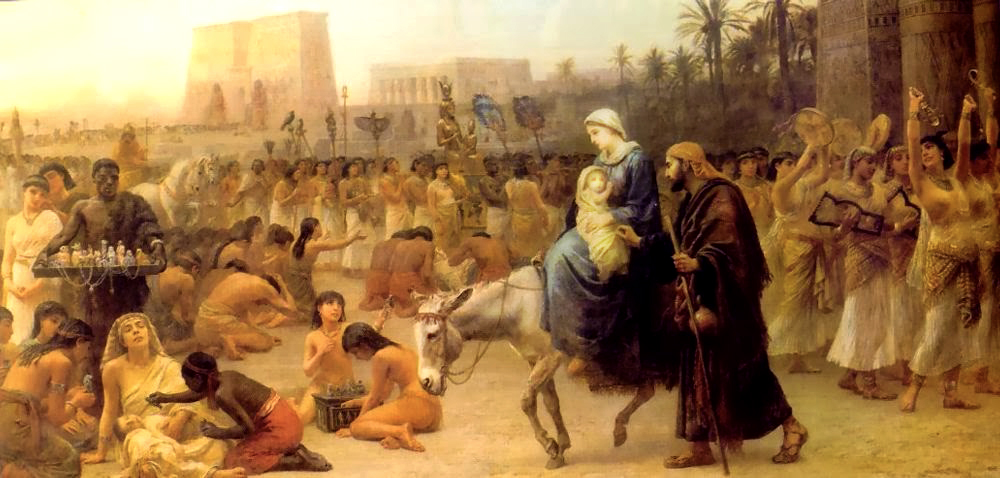
After they were gone, an angel of the Lord appeared to Joseph in a dream, saying, “Get up! Take the child and his mother, flee to Egypt, and stay there until I tell you. For Herod is about to search for the child to kill him.” So he got up, took the child and his mother during the night, and escaped to Egypt. He stayed there until Herod’s death, so that what was spoken by the Lord through the prophet might be fulfilled: Out of Egypt I called my Son.

~Matthew 2.13-15

The book of the prophet Hosea is a story of love and betrayal; set against the backdrop of Hosea’s own marriage to the adulteress Gomer, throughout the book, God repeatedly rebukes the northern Kingdom of Israel for scorning His grace, rejecting His love, forgetting His covenant, and playing the whore with the false gods of Baal. And so, in chapter 11, and verse 1, we read, “When Israel was a child, I loved him, and out of Egypt I called my son.” In these verses, God is looking back on the Exodus experience of His people as the initial overture of His love for Israel; as He goes on to say in verse 4 of that chapter, “I led them with human cords, with ropes of love. To them I was like one who eases the yoke from their jaws; I bent down to give them food.” It is clear that these verses are operating on the paternal imagery of parenthood. In the same way that parents nurture their newborn children, so also God nurtured His “son” Israel by bringing them out of Egyptian slavery, providing for them in the wilderness, and leading them into a land flowing with milk and honey. Even in spite of their repeated betrayal, God goes on to say in verse 8, “How can I give you up, Ephraim? How can I surrender you, Israel? How can I make you like Admah? How can I treat you like Zeboiim? I have had a change of heart; my compassion is stirred!” This chapter is a beautiful picture of the tenderness and mercy of God toward His rebellious son, and even though, the people of Israel will suffer His discipline, it holds out the hope that God has not ceased loving His people.

Now, in chapter 2 of the first canonical Gospel, Matthew connects the flight of the Holy family to Egypt to the words of Hosea 11.1, “so that what was spoken by the Lord through the prophet might be fulfilled: Out of Egypt I have called my Son (quoting Hosea 11.1b). But if the prophet Hosea wasn’t making a direct messianic prediction in the text in question, as we saw above, then how can the Egyptian flight of Mary, Joseph, and Jesus properly be considered a fulfillment? The answer is that this is a fulfillment by way of typology not prediction. Part of Matthew’s portrayal of Jesus is to show that He is the long awaited “prophet like Moses” (c.f. Deut 18.15-19), and he demonstrates this by highlighting the ways that Jesus recapitulates the story of Moses. A few examples should suffice. When Moses was born, Pharaoh killed all the Hebrew boys; when Jesus was born, Herod killed all the Jewish boys. According to 1 Corinthians 10.1-2, Moses had a baptism experience in the Red Sea, and Jesus was baptized in the Jordan River. Moses and the Israelites spent forty years in the wilderness; Jesus spent forty days in the wilderness. Moses went up on Mount Sinai to receive the Law; Jesus went up on a mountain to give the law (Sermon on the Mount). There are five books of Moses (Pentateuch); there are five discourses of Jesus’ sermons in the Gospel of Matthew. And “out of Egypt, I called my Son.” Based on this evidence, it is reasonably clear that the fulfillment that Matthew sees in the text of Hosea 11.1 is typological. Even as Israel was God’s typological “son”, Jesus is the true and better messianic Son of God.

In the final analysis, rather than violating the principle of authorial intent in his use of Hosea 11.1, the typological connection drawn by Matthew actually affirms the authorial intent of Hosea. And still, the question remains, “what of God’s intent in Hosea 11.1? When He inspired Hosea to write “out of Egypt, I called my son,” did he know that Matthew would take it in a different direction?” Of course, it is a theological truism to say that God knew the theological connections that Matthew would draw when He inspired Hosea to write, and so it is not wrong to say God “intended” more than Hosea understood at the time. However, this doesn’t mean that His intent stands in contradiction to or competition with the intent of Hosea. We must assume that God’s intent in Hosea 11 was to spark His people to repentance by reminding them of the great depths of His love that was demonstrated in the events of the Exodus, especially because the words of Hosea 11 are reported by the prophet as the very words spoken by God. (This is the Lord’s declaration, Hosea 11.11) Whatever “fuller sense” that we may understand from Hosea’s words, it must be grounded in the inspired intent of the human author, and this is exemplified in Matthew’s use of the text to explain the flight to Egypt.

But there is something that Matthew’s use of the Old Testament can teach us about our own interpretive efforts, namely that our hermeneutic for understanding of the Old Testament must reckon with the person and work of Christ. As Jesus himself affirms, “everything written about me in the Law of Moses, the Prophets, and the Psalms must be fulfilled.” (Luke 24.44) In other words, we have not done our full interpretive work in the Old Testament if we fail to consider how the text points to or is fulfilled in Jesus. If our understanding of the Old Testament would be accepted in a Jewish synagogue, then we haven’t understood the text Christianly. However, this does not mean that we can disregard the principle of authorial intent; we must still labor within the boundaries of literary and historical context before we can consider the broader canonical and theological implications. At the very least, our understanding of the human author’s intent must function as the true and necessary foundation upon which we stand as we seek the illumination of the Spirit in understanding the theological and applicational implications of the text for our lives in Christ. This is a thoroughly Christian understanding of how to interpret the Bible.


On Inspiration and Authorial Intent

Despite the claims of postmodern literary critics, it is reasonably certain that the meaning of any given document or literary work is grounded in and governed by its author. To put it another way, the meaning of the text is limited by the message that the writer of that text intended to communicate. This principle has been the foundation of biblical interpretation for most of the modern period, and rightly so. The Word of God comes to us through human authors who were writing to historical audiences, so we must work within the boundaries of literary and historical context in order to understand it. The problem, however, is that an overemphasis on authorial intent could relegate our interpretive efforts to nothing more than an exercise in historical investigation. But, the Word of God is more than a historical artifact; it is living and active, and its truths are just as relevant today as they were when they were first written. Over the last twenty years or so, more and more emphasis has been given to the intent of the divine author in an attempt to arrive at a more robustly theological interpretation.

However, this too has led to certain hermeneutical problems, particularly when the supposed divine intent in a given text is set in competition with or in contradiction to the human intent. This appears to be the underlying assumption of a question that was posed on Twitter a few days ago (pictured above). A pastor on Twitter recently asked, “Did the human authors have perfect/sinless intentions while writing Scripture?” Of course, Twitter polls are probably not the best resource for scholarly research, but the results are nevertheless concerning. Some 73% of respondents answered the question in the negative, meaning that almost three quarters of those who answered the poll believe that the human authors of the Bible had sinful intentions when they wrote the words of Holy Scripture. While the relationship between the human and the divine in the writing of Holy Scripture may be complex, we must conclude that this answer is out of bounds for those who believe that the Bible is the Word of God. How can sinful words be received as the Word of a sinless and righteous God? This is a contradiction in terms. As we read in Second Peter, chapter 1, verse 21, “instead men spoke from God as they were carried along by the Holy Spirit.”

Based on this text, we must affirm that there is no divine intent apart from the words of the human author. In other words, our interpretive efforts must deal directly with the words of Holy Scripture; we must labor to understand the genre, the syntax, the vocabulary, the grammatical relationships, and the literary flow of thought of the documents themselves. This is the fundamental work of biblical interpretation. There is no such thing as meaning that is separate from the text; there is no mystical or hidden Word that may be sought apart from the words on the page. Whatever the timeless supernatural theological implications of the text may be, these truths must be grounded in and derived from the actual words of Holy Scripture. In theology, this doctrine is known as verbal plenary inspiration, meaning that the quality of inspiration extends to very words that comprise the text and not just the ideas that stand behind those words. In the act of inspiration, God so worked in through and with the human authors of Holy Scripture, such that their words are His very words, thus they are without error in every way.

If their words are His words, then we may conclude that their intent is His intent as well. The difficulty, however, lies in the reality that the God of the Bible is infinite in His understanding, that He sees more and knows more than the human authors could possibly comprehend when they were writing. So, there is a sense in which the divine intent is so much more than what the human authors could understand; some have referred to this as the sensus plenior, or the fuller sense of the text. In their book Introduction to Biblical Interpretation, Klein, Blomberg, and Hubbard identify the problem with this idea, namely that “we have no objective criteria to posit the existence of a sensus, or to determine where it might exist, or how one might proceed to unravel its significance. In other words, if the human author of a text did not intend and was unaware of a deeper level of meaning, how can we be confident today that we can detect it?” To put it another way, if we understand textual meaning as something that is grounded in authorial intent, then we must assume a certain amount of similitude, if not even near identity, between the intent of both the Divine and the human author. Otherwise, we would never be able to understand what God is saying to us in any real or meaningful way.

In the final analysis, we must conclude that there is no competition or contradiction between the intent of the human the divine authors of Holy Scripture. While it is possible that the Spirit intended more than human authors, He certainly did not intend less than what they intended to communicate to their audiences through the words that they wrote. In other words, authorial intent in the Bible must be viewed as finely woven tapestry in which the human and divine is so interlaced and knitted together, such that any attempts to divide or separate them would in effect destroy its beauty and grandeur. As interpreters, we must hold these facets of the text in harmony and proceed with conviction the Bible is the very Word of God. B.B. Warfield puts it this way in his book The Inspiration and Authority of the Bible, “The Scriptures, in other words, are conceived by the writers of the New Testament as through and through God’s book, in every part expressive of His mind, given through men after a fashion which does no violence to their nature as men, and constitutes the book also men’s book as well as God’s, in every part expressive of the mind of its human authors.”

For further study, see:
Warfield, B.B. “The Divine and the Human in the Bible.” Pages 542-548 in Selected Shorter Writings, 2 Vols.


On Historical Context and Purpose in the Book of Revelation

It is commonly accepted wisdom among most Christians that the Book of Revelation is the hardest book of the Bible to interpret and understand, and it certainly does stand out as one of the most unique books of the New Testament. Those who do attempt to read it are immediately confronted by literary forms, images and symbols, and pastoral concerns that are so unlike their own lived experiences that they tend to put it down faster than they picked it up. Couple this with the myriad of disagreements that exist over the meaning of all these details, and it seems easier to simply leave this book of the Bible to the domain of trained Biblical scholars. However, the book itself affirms, “Blessed is the one who reads aloud the words of this prophecy, and blessed are those who hear the words of this prophecy and keep what is written in it, because the time is near.” (Revelation 1.3) So, when we neglect and ignore this final book of the Bible, we miss out on the blessing that it very clearly promises. But how do we overcome the intimidating and off-putting obstacles that keep us from drinking deeply from its pages?

When we are met with an interpretive challenge like the Book of Revelation, we must return to our basic hermeneutical convictions, those fundamental interpretive principles that help us navigate the Scriptural waters. And one of those rules that is particularly helpful for understanding the Book of Revelation is this: A text without a context is a pretext for a proof text. In other words, when we understand who the biblical author is writing to and why he is writing to them, we are in a better position to understand what he is saying. Or to put it another way, the meaning of the text must be grounded in the inspired intention of the biblical author. He is writing to real people with real needs, and he intends for his message to truly address those needs. If we come up with an interpretation that would make zero sense for the original audience, then we must reevaluate our understanding of the text. Of course, any reconstruction of the historical audience must begin with the details in the text, but historical sources from the time period can add additional detail to our understanding of the audience and their situation.

Fortunately for us, John identifies his intended audience directly; in chapter 1, verse 11, we read, “Write on a scroll what you see and send it to the seven churches: Ephesus, Smyrna, Pergamum, Thyatira, Sardis, Philadelphia, and Laodicea.” We must affirm that these were seven real churches that were located in the Roman province of Asia Minor, or what we would call modern day Turkey. Each one of these seven churches is addressed directly in the letters of chapters 2 and 3, but the author’s concern for these churches cannot be limited to these first few chapters, even if they are primary for understanding the particular needs of these churches. The entire book was written to and for the members of these seven churches of Asia Minor. As to the date of writing, there are two views that are held by biblical scholars. The majority view holds that the book was written during the reign of the Emperor Domitian (81-96 CE); the minority view suggests that the book was written during the reign of the Emperor Nero (54-68 CE). Either of these dates is possible for the book’s composition, but a review of the historical evidence slightly favors the later date, meaning that the Book of Revelation was probably written sometime around 95 CE.

Regardless of which date is preferred, it is clear that these seven churches were facing challenges both internally and externally. These Christians were living in a world that was openly hostile to their faith in Christ, and while there was no official imperial policy of persecution at this time, they were facing intense social pressure in their local communities to compromise their convictions and conform to the Roman way of life. Culturally, they simply had no where to belong. The Jews had rejected them, and the Gentiles would not accept them. They were ostracized marginalized outsiders who did not belong to the world they lived in. And Jesus is writing to them through John to encourage them to persevere in faithfulness, to hold on to the blessed hope that is His appearing. The Revelation is a reminder that they are part of something bigger than themselves, that the victory and vindication that they long for is ahead of them, and that there will be a day when all oppression shall cease. This is the message of Revelation. It is not about beasts and bowls; rather, it is about Christ, our King, who is coming again in glory and power to do away with sin once and for all and establish His perfect Kingdom on earth.

Of course, there are those who would disagree with this assessment of the message of Revelation. Some, particularly those who hold to an early date for the book, would suggest that part or perhaps all of the book was fulfilled in the destruction of Jerusalem in 70 AD. Problems with the early date notwithstanding, it is not clear how this understanding addresses the needs of Christians living in the Roman province of Asia Minor. As noted above, they were facing persecution from the Jews living in those cities, but Jerusalem was not the primary enemy that they were facing. In fact, the Book of Revelation makes it clear that while earthly enemies may affect us, they are not our ultimate foe anyway. Therefore, the destruction Jerusalem would hold little promise for bringing their persecution to an end and accomplishing the victory that the book promises. Further, it isn’t clear how the book’s descriptions of “all the nations”, “all those who live on the face of the earth”, and “the whole earth” can refer only to the people of Israel or the citizens of Jerusalem. So, while this view attempts to maintain the book’s relevance for the original audience by positing all fulfillment in the first century, in actuality, it does the exact opposite. In fact, it completely undercuts the hope and blessing that the book promises its readers, both in the first century and today.

The Book of Revelation paints a glorious and beautiful picture of the hope that is ours in Christ Jesus. It is the promise of a world that is free from the contamination of sin, free from the heavy burden of the curse, free from all opposition to Christ and His people. As Christians, we must remember that this is our blessed hope. This world’s troubles and difficulties are not the end of our story; no, we are part of something that is bigger than ourselves, an eternal story that far surpasses our momentary lives here on earth. Moreover, the Book of Revelation teaches us that our sufferings, our difficulties, our heartaches, they matter deeply to God. He takes note of every wrong, every insult that we suffer, and one day, He will right those wrongs and vindicate His people. This is the central message of Revelation. Of course, the difference is in the details as they say, and there are still many details within the pages of Revelation that we must wrestle with. But this is the point, we must wrestle with them. We cannot ignore or neglect this last book of the Bible simply because it is too challenging, too difficult, too different. We must explore with our minds and our hearts what the Spirit is saying to His church. We must pray that He will give us ears to hear, and when we engage this book in earnest, we may be confident that we will find the strength to persevere and hold fast in hope.

For further study, see
Osborne, Grant R. Revelation. Baker Exegetical Commentary on the New Testament. Grand Rapids, MI: Baker Academic, 2002.


On Something Old, Something New (Part 1)

Question: How do we connect the Old and New Testaments?
Series: Wednesday Night Bible Study – Q & A
Church: South Caraway Baptist Church, Jonesboro, AR
Date: July 13, 2022


Slow To Write

"let every person be quick to hear, slow to speak, slow to anger."

lovegavehope

Just another WordPress.com site

Jared Cornutt

Pastor | Speaker | Writer

Denny Burk

A commentary on theology, politics, and culture

G3 Ministries

Events + Resources for the Local Church

Biblical Reasoning

Biblical and Systematic Theology According to the Scriptures

RetroChristianity

Reclaiming the Forgotten Faith

SBC Voices

Southern Baptist News & Opinion

Lucid Theology

Thoughts on words, books, theology, and life.

Baptist21

A pastor-led voice for Baptists in the 21st century

Center For Baptist Renewal

The Personal and Professional Blog of Phillip Powers

The Pastor's Well - Pastor Well

The Personal and Professional Blog of Phillip Powers

Articles - AlbertMohler.com

The Personal and Professional Blog of Phillip Powers

The Gospel Coalition

The Personal and Professional Blog of Phillip Powers