Tag Archives: Spiritual Formation

On Psalm 119.169-176 (Taw)
169 Let my cry reach you, Lord;
give me understanding according to your word.
170 Let my plea reach you;
rescue me according to your promise.
171 My lips pour out praise,
for you teach me your statutes.
172 My tongue sings about your promise,
for all your commands are righteous.
173 May your hand be ready to help me,
for I have chosen your precepts.
174 I long for your salvation, Lord,
and your instruction is my delight.
175 Let me live, and I will praise you;
may your judgments help me.
176 I wander like a lost sheep;
seek your servant,
for I do not forget your commands.

Well, we have finally come to the last stanza of Psalm 119 (ת/taw), and it is fitting that our psalmist opens with a prayer. In verses 169–170, he petitions the Lord, “Let my cry reach you, Lord; give me understanding according to your word. Let my plea reach you; rescue me according to your promise.” After nearly 170 verses extolling the beauty, perfection, and life-giving power of God’s Word, he is still asking for understanding. In other words, his extensive knowledge of Holy Scripture has not diminished his dependence upon God. In the language of systematic theology, this truth is often described as the doctrine of illumination. Illumination is the gracious work of the Holy Spirit whereby he enlightens our minds and hearts to understand and receive God’s Word as he intended. (For a more extended discussion of this doctrine, see On Biblical Interpretation and the Holy Spirit.) The point is that a right understanding of Scripture is ultimately a gift of God. It certainly comes through careful study and diligent reflection, but our study must always be accompanied by humble dependence upon the Spirit who inspired the Scriptures in the first place. Throughout Psalm 119, we have repeatedly seen that God’s Word imparts wisdom, yet wisdom comes as God illumines the heart. The mature believer, therefore, never outgrows the need to pray, “Give me understanding according to your word.”
He also prays for deliverance when he says, “Rescue me according to your promise.” Once again, we are reminded that our psalmist continues to face hardship and opposition. Throughout Psalm 119 he has repeatedly cried out for God’s intervention, and here the same prayer rises once more from his lips. Yet what is particularly striking is the basis upon which he asks for deliverance. He does not appeal to his own merit, his own worthiness, or even his own obedience. Rather, he appeals to God’s promise. In other words, his confidence rests not in himself but in God’s covenant faithfulness. Or to put it another way, even after all his devotion to God’s Word, he still depends entirely upon divine grace. As D. Martyn Lloyd-Jones wisely observed, “Everything is of grace in the Christian life from the very beginning to the very end.” Apart from God’s grace we have nothing and are nothing. Even our most faithful obedience must be sustained and empowered by the God who first called us to himself. This is why the promises of Scripture are such a source of comfort for the believer. They remind us that God’s faithfulness does not fluctuate with our circumstances or our performance. Rather, his promises are rooted in his unchanging character. It is these gracious promises that become the foundation of confident prayer, enabling us to approach the throne of grace with boldness because we know that the God who has spoken is always faithful to his Word.
In verses 171–172, our psalmist moves from prayer to praise when he says, “My lips pour out praise, for you teach me your statutes. My tongue sings about your promise, for all your commands are righteous.” Notice here the motivation for his praise: it is that God has taught him his righteous commands and statutes. In other words, the purpose of Holy Scripture is not merely information. Our study of God’s Word should produce praise, obedience, and delight. Or, to put it another way, theology should produce doxology. God’s commands are righteous; therefore, praise is the fitting response. This has been one of the dominant themes throughout Psalm 119. The psalmist has repeatedly reminded us that God’s Word is sweeter than honey, more valuable than gold, a lamp to his feet, and a source of wisdom, comfort, hope, and peace. Yet all of these blessings ultimately direct his attention back to the God who has spoken. Scripture never terminates upon itself. It reveals the character, faithfulness, wisdom, and holiness of the Lord, and as we behold these divine perfections, our hearts are moved to worship. This is why genuine knowledge of God can never remain merely intellectual. The more deeply God’s truth takes root within us, the more naturally praise flows from our lips. If our study of Scripture produces greater knowledge without greater love for God, then we have missed the very purpose for which the Scriptures were given. True biblical understanding always culminates in joyful worship, because the ultimate goal of God’s Word is not simply that we know about him, but that we know him, delight in him, and glorify him with our lives.
In verses 173–174, our psalmist continues this theme of dependence when he prays, “May your hand be ready to help me, for I have chosen your precepts. I long for your salvation, Lord, and your instruction is my delight.” At first glance, these two statements may seem contradictory. On the one hand, he declares that he has chosen God’s precepts. On the other hand, he immediately asks for God’s help. Yet this is precisely the balance that runs throughout the Christian life. Genuine obedience is never independent of divine grace. Our willingness to follow the Lord is itself sustained by his continual presence and power. The psalmist recognizes that choosing God’s ways does not eliminate his need for God’s help; rather, it deepens his awareness of that need. Likewise, his longing for God’s salvation reminds us that he continues to look forward in hope. Though he delights in God’s instruction, he still awaits the full realization of God’s saving purposes. Throughout Psalm 119 we have repeatedly encountered this tension between present obedience and future expectation. God’s Word teaches us how to live faithfully today while at the same time directing our hope toward the salvation that God has promised to complete. The Christian life, therefore, is one of continual dependence upon the Lord, trusting that the God who calls us to walk in his ways is also the God who strengthens us to persevere until his work of redemption is brought to completion.
The final verses of Psalm 119 bring us to one of the most surprising conclusions in all of Scripture. After extolling the beauty, wisdom, and sufficiency of God’s Word for 175 verses, our psalmist concludes with this remarkable confession: “Let me live, and I will praise you;
may your judgments help me. I wander like a lost sheep; seek your servant, for I do not forget your commands.” At first glance, this seems almost out of place. Has not our psalmist repeatedly affirmed his love for God’s law, his delight in God’s commandments, and his commitment to walk in God’s ways? Why, then, does he end by describing himself as a wandering sheep? The answer is that this is not a confession of apostasy but of humble dependence. He recognizes that even the most faithful believer remains vulnerable apart from the preserving grace of God. Yet his wandering is immediately balanced by a profound affirmation: “I do not forget your commands.” Though he stumbles, he still belongs to the Lord. His hope rests not in his own ability to remain faithful but in the God who faithfully seeks and restores his servants. It is difficult to read these words without thinking of the Good Shepherd who came “to seek and to save the lost” (Luke 19.10), or of Jesus’ parable of the shepherd who leaves the ninety-nine sheep to search for the one that has wandered (Luke 15.4–7). Indeed, Isaiah had already declared, “We all went astray like sheep; we all have turned to our own way; and the Lord has punished him for the iniquity of us all” (Isa. 53.6). Thus, the final note of Psalm 119 is not one of self-confidence but of grace. The believer’s security ultimately rests not in the strength of his obedience but in the faithfulness of the Shepherd who continually seeks, preserves, and restores his wandering sheep.
As Psalm 119 draws to a close, we discover that its final emphasis is not human achievement but divine faithfulness. Throughout these twenty-two stanzas, our psalmist has celebrated the beauty, wisdom, sufficiency, and life-giving power of God’s Word. He has endured persecution, wrestled with suffering, delighted in God’s commandments, longed for deliverance, and found peace amid adversity. Yet the final word of the psalm is not self-confidence but humble dependence. Even after a lifetime devoted to God’s Word, he still cries out for understanding, seeks God’s help, and confesses his need for the Shepherd who alone can preserve him. In this way, Psalm 119 reminds us that the purpose of Scripture is never merely to increase our knowledge but to deepen our dependence upon the God who has spoken. The more faithfully we walk according to God’s Word, the more clearly we recognize our continual need for his sustaining grace. It is this gracious God who teaches, strengthens, seeks, and restores his people. And that, perhaps, is the greatest lesson of Psalm 119: the written Word continually directs us to the living God, whose truth, presence, and faithfulness are the sure foundation of the believer’s life.
For further study:
Introduction
Psalm 119.1-8
Psalm 119.9-16
Psalm 119.17-24
Psalm 119.25-32
Psalm 119.33-40
Psalm 119.41-48
Psalm 119.49-56
Psalm 119.57-64
Psalm 119.65-72
Psalm 119.73-80
Psalm 119.81-88
Psalm 119.89-96
Psalm 119.97-104
Psalm 119.105-112
Psalm 119.113-120
Psalm 119.121-128
Psalm 119.129-136
Psalm 119.137-144
Psalm 119.145-152
Psalm 119.153-160
Psalm 119.161-168
Share this:

On the Value and Wisdom of Seminary Training for Pastors
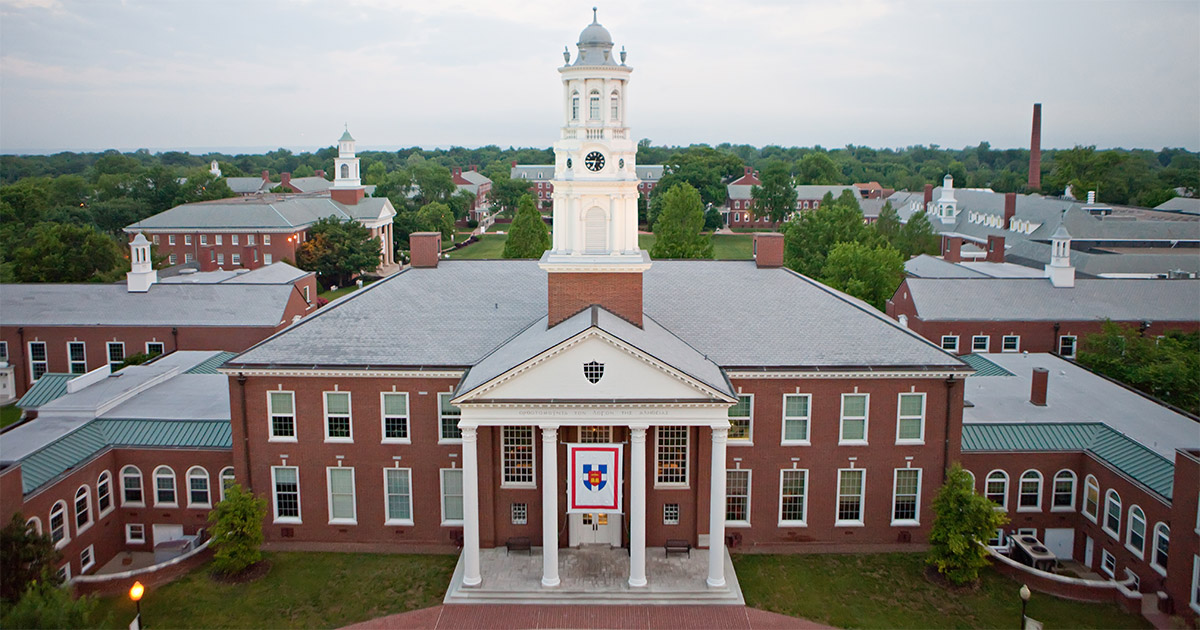
When I surrendered my life to God’s calling for vocational ministry at the age of 15, I always knew that that path would eventually take me to seminary, and now, as I am more than halfway through my PhD in Biblical Studies (New Testament) at The Southern Baptist Theological Seminary in Louisville, KY (pictured above), I can’t help but reflect on the value and benefits it has brought to my life and to my ministry. However, down here in the good ole’ “Bible Belt”, formal theological education is often viewed with a measure of skepticism and distrust. On the one hand, many people know faithful pastors who have influenced their lives who have never gone to seminary. On other hand, there is a lingering suspicion of academia that is left over from the historical influence of the Fundamentalist movement. So, it is understandable that in many churches, formal theological education can feel unnecessary at best and spiritually dangerous at worst. However, the real question is not simply whether theological education is necessary, but what kind of formation is required to faithfully know, teach, and live the truth of Scripture. Therefore, it is the thesis of this post that while formal theological education is not strictly necessary for faithful ministry, it is profoundly valuable because it cultivates the habits of careful thinking, deep reading, and disciplined reflection on the things of God.
Those who are leery of formal theological education point to several reasons why seminary is sometimes less than helpful. Some suggest that going to seminary kills spiritual passion, that academic theological knowledge can choke out personal devotion and piety. Seminary becomes a cemetery. And let’s be honest, this can happen. There is a real temptation in academia that one’s experience of faith can become utterly cerebral and lacking in spiritual pathos. However, I would suggest that this temptation is not unique to the seminary setting, and that it has more to do with the student than with the institution. Another objection that is sometimes heard is that “all we need is the Bible and the Spirit,” that the Scriptures are sufficient, and that the Spirit leads us into all truth. I have addressed this question in another post, but suffice it to say here that we do not download biblical understanding from the Spirit. His work has more to do with confirming and applying the truths of Scripture in our lives than with the transmission of content. Interpretation still requires care and study. Some also object that education can lead to pride and liberalism, and here again, these are legitimate concerns. And while discernment must be exercised in selecting an institution, it is up to the student to maintain their own humility and faithfulness. Lastly, as mentioned above, scores of pastors throughout the history of the church have served faithfully without formal theological training, and I praise God for those individuals. Let me say it clearly: seminary is not necessary for pastoral faithfulness. It is not a matter of necessity, but a matter of wisdom. The concerns I’ve listed here are not imaginary; they reflect real temptations and dangers. But they are dangers of misuse, not arguments against the value of theological training itself.
So, in the interest of clarity, it is important at this point to distinguish what theological education is and what it is not. First, theological education is not mere information transfer; it is not primarily about the mastery of content, though that is certainly a component of it. The fact is that we live in an information age, and theological content is available at the click of a button. Of course, not all of it is of the same quality, but it is true that taking in theological content is easier today than it has ever been. There are literally tons of resources both digital and in print that are available to the pastor who wants to grow in theological knowledge. And pastors should be taking it in; they should read and read widely and deeply, but seminary is not just about the transfer of information. Secondly, it is not a substitute for a person’s spiritual or devotional life. This I think is the misconception that undergirds a lot of the objections mentioned above, namely that seminary cannot replace personal piety and devotion. It is not a substitute for prayer, for holiness, for obedience, or for involvement in the local church. These are vital for spiritual life, and seminaries are not primarily focused on training these personal disciplines. Seminary is focused training in how to read carefully, how to think clearly, and how to serve faithfully throughout the course of one’s life. It is not about knowing more things; it is about learning how to think rightly about God and his Word.
This is exactly the point, namely that the Scriptures require careful and attentive reading. We must be taught the importance of historical and literary context, of genre and authorial intent, of words and sentences and paragraphs and how they communicate textual meaning. Ideally, these hermeneutical principles are modeled in the pulpit and Sunday school classroom. However, mastery requires focused and intensive didactic formation, because it is this kind of training that guards us from interpretive error. We must be taught how to rightly divide the Word of truth, so that we do not misuse Scripture for our own aims and ends or read our assumptions back into the text. Understanding the literary and historical intricacies and complexities of the Bible keeps us from falling into the arrogance of overconfidence, where familiarity is mistaken for understanding. It forces us to slow down, to wrestle with difficult passages, and to recognize that Scripture does not always yield its meaning at a glance. And in this way, it teaches us the discipline of slowness, how to let the text speak on its own terms and to listen carefully rather than forcing quick conclusions. What I am saying is that formal theological training teaches us not just what the Bible says, but how to listen to it well—and that is a skill that serves both the church and the individual believer for a lifetime.
In addition to learning to read carefully, formal theological training also helps us to develop theological depth in our understanding of the Word. It helps us to see the whole Bible, to understand the metanarrative of Scripture, and to locate particular books and passages within that unfolding storyline. We learn to follow themes and their development through the canon, and we come to appreciate both the continuity and the discontinuity between the Testaments. In doing so, we begin to see that the Bible is not a loose collection of disconnected texts, but a unified and coherent witness to God’s redemptive work in history. We also develop a certain measure of doctrinal coherence, in that we begin to understand how themes and concepts relate to one another, and we avoid fragmented theological reflections that isolate passages from the larger framework of Scripture. Questions of Christology, salvation, covenant, and kingdom are no longer treated in isolation, but are understood in relation to the whole counsel of God. Formal theological training also helps us to learn from the history of the church; it teaches us to see tradition as a resource rather than as a threat. (On the Use and Benefit of Tradition, see here.) To put it rather bluntly, we are not the first to read the Bible, and we won’t be the last. thankfully, this is a gift, not a limitation. It is an invitation to listen, to learn, and to be shaped by the wisdom of those who have gone before us.
Lastly, formal theological education helps us to develop intellectual humility. It exposes us to the difficult questions of the faith that have been asked throughout church history, and it forces us to wrestle with issues that do not admit of easy or immediate answers. It requires us to read and engage hard texts, both biblical and extrabiblical, and it immerses us in the real debates that continue to shape theological reflection even today. In doing so, it helps us develop a rightly calibrated confidence, one that is rooted in strong convictions, yet carried with a softer ego. We come to see that clarity is often hard-won, and that many of the questions we face have been carefully considered by thoughtful believers long before us. And as a result, we learn not only how to argue well, but how to disagree well. This is perhaps one of the greatest challenges in our present moment, and formal theological training can teach us to treat our interlocutors with patience, precision, and grace, even when we disagree deeply. In other words, theological education does not simply make you smarter; it makes you more aware of your limits. It reveals our strengths, exposes our weaknesses, and teaches us to value the insights of others, even when they do not fully align with our own.
However, even with all these benefits, formal theological education has its limits and dangers, and it is important that we are clear on what they are. For one, seminary training cannot produce spiritual life. And while many schools are now attempting to incorporate more spiritual life components into their curricula, it will always be true that knowledge simply does not equal transformation. True transformation is a work of the Spirit in us, and it is up to each individual to work with the Spirit through the classic spiritual disciplines in order to experience transformation. (On the Spiritual Disciplines, see here.) Second, seminary education can foster pride. This is a real danger. As the Scriptures remind us, “Knowledge puffs up, but love builds up.” (1 Corinthians 8.1) This is an ever-present temptation for those who are well informed in the study of the Scriptures. And lastly, seminary education can drift from the primary importance of the local church. At present, there is an ever-growing movement to reconnect seminary education with the local church, and this is to be celebrated. But seminaries must always orient their purpose and mission toward the service of the church, because it is the church that is Christ’s bride. However, in all three of these, the problem is not theological education itself, but theological education disconnected from the life of the church and the work of the Spirit.
This is why it is so important that head, heart, and ministry remain inherently intertwined. Pastors must always make sure that their thinking about God and their love for God remain together. There should be no head/heart divisions, as though theological precision and spiritual devotion were somehow in competition with one another. Rather, careful thinking about God should deepen our love for him, and our love for him should drive us to think more carefully about his Word. Further, pastors must remember that we do theology for the sake of the church, not for publications, not for CV development, not for accolades or recognition. All theology must be oriented toward the teaching, preaching, and discipleship ministries of the local church. “For the Church” must be more than an institutional mantra or a tagline; it must be the driving motivation in all of our theological efforts. Theology that does not serve the church ultimately fails in its purpose. And finally, we must remember that theological education is primarily about formation and faithfulness. We are seeking to develop the knowledge, skills, and habits that will sustain long-term ministry stability, presentational clarity, and faithful endurance. The goal is not to produce scholars detached from the church, but servants equipped to build it up, men who can think clearly, love deeply, and labor faithfully for the good of God’s people.
In the end, we must say this carefully: formal theological education is not necessary, but it is wise. God has used, and will continue to use, many faithful pastors and teachers who have never set foot in a seminary classroom. Again, thank God for his grace in this! The power of ministry has never rested in credentials, but in the faithful proclamation of the Word and the work of the Spirit. And yet, when pursued rightly, theological education is a gift. It strengthens the church by equipping its leaders to handle Scripture with greater care, to think with greater clarity, and to teach with greater depth and precision. It forms habits that serve a lifetime of ministry, not just a moment of preparation. To study theology carefully is not to move away from God, but to learn how to think about him rightly. That is a task worthy of our best effort.
Share this:

On the Spiritual Disciplines of Submission and Service
43 But it is not so among you. On the contrary, whoever wants to become great among you will be your servant, 44 and whoever wants to be first among you will be a slave to all. 45 For even the Son of Man did not come to be served, but to serve, and to give his life as a ransom for many.”
~Mark 10.43-45
Topic: Submission and Service
Series: Spiritual Disciplines of the Christian Life
Church: South Caraway Baptist Church, Jonesboro, AR
Date: March 08, 2023
Share this:

On the Spiritual Disciplines of Silence and Solitude
Quote
There is the view which misinterprets silence as a ceremonial gesture, as a mystical desire to get beyond the Word. This is to miss the essential relationship of silence to the Word. Silence is the simple stillness of the individual under the Word of God. Silence is nothing else but waiting for God’s Word and coming from God’s word with a blessing. … Silence before the Word leads to right hearing and thus also right speaking of the Word of God at the right time. … Let none expect from silence anything but a direct encounter with the Word of God, for the sake of which he has entered into silence.
~Dietrich Bonhoeffer, Life Together
Topic: Silence and Solitude
Series: Spiritual Disciplines of the Christian Life
Church: South Caraway Baptist Church, Jonesboro, AR
Date: February 08, 2023
Share this:

On the Spiritual Disciplines: An Introduction
TEXT
For this very reason, make every effort to supplement your faith with goodness, goodness with knowledge, knowledge with self-control, self-control with endurance, endurance with godliness, godliness with brotherly affection, and brotherly affection with love. For if you possess these qualities in increasing measure, they will keep you from being useless or unfruitful in the knowledge of our Lord Jesus Christ.
~2 Peter 1.5-8
Topic: Introduction and Overview
Series: Spiritual Disciplines of the Christian Life
Church: South Caraway Baptist Church, Jonesboro, AR
Date: January 11, 2023
Share this:

On Psalm 119.57-64 (Heth)

57 The Lord is my portion;
I have promised to keep your words.
58 I have sought your favor with all my heart;
be gracious to me according to your promise.
59 I thought about my ways
and turned my steps back to your decrees.
60 I hurried, not hesitating
to keep your commands.
61 Though the ropes of the wicked
were wrapped around me,
I did not forget your instruction.
62 I rise at midnight to thank you
for your righteous judgments.
63 I am a friend to all who fear you,
to those who keep your precepts.
64 Lord, the earth is filled with your faithful love;
teach me your statutes.
The eight stanza of Psalm 119 (ח/heth – sounds like the ch in Bach, you have to get a little phlegm in the back of your throat when you say it), but this stanza begins with the line “The Lord is my portion.” This is an image that occurs frequently throughout the Old Testament, and especially in the Book of Psalms. The word typically refers to a share or a portion of land received by inheritance. In an agrarian society like ancient Israel, owning land was a source of economic, political, and societal security. Those who owned land had standing and influence. But here, our psalmist affirms that the Lord is his portion. “The Lord” here (printed in all caps on most versions) represents the personal covenant name of God, i.e. יהוה, Yahweh; this is the name that He revealed to Moses from the burning bush, “I am who I am” (Exodus 3.14). In other words, our psalmist understands that Yahweh, the one true and living God, the personal covenant keeping God, is the only one in whom we may find safety, security, stability, satisfaction, and contentment in this life. As the old hymn goes, “All other ground is sinking sand.”
This principle is not unlike that famous slogan of pastor and author John Piper, “God is most glorified in us when we are most satisfied in Him.” Or as question 1 of the Westminster Shorter Catechism states, “Man’s chief end is to glorify God, and to enjoy Him forever.” This is the point, namely that glad and joyful obedience to the Word of God springs forth from a heart that is perfectly satisfied and wholly content in Him. This is why our psalmist says in verse 57, “I have promised to keep your words.” And again in verse 60, “I hurried, not hesitating to keep your commands.” And again in verse 62, “I rise at midnight to thank you for your righteous judgments.” Of course, the counter point is equally true, that when we begin to look for sources of satisfaction and contentment outside of Him, we quickly fall into sin. The world we live in is constantly offering us a plethora of competing products and services intended to satisfy and fulfill; this is the essence of an advertisement rich consumeristic society. But, these options overpromise and under deliver, because nothing can satisfy and fill the deepest longings of the human heart like the God who made it. This is why our psalmist writes in verse 59, “I thought about my ways and turned my steps back to your decrees.” Or again in verse 61, “Though the ropes of the wicked were wrapped around me, I did not forget your instruction.“
But not only does this inner contentment in God free us from the allure of sinful temptations, but its also changes our entire outlook on life, as our psalmist writes in verse 64, “Lord, the earth is filled with your faithful love; teach me your statutes.” Of course, this world is polluted, even overrun, by sin everywhere we turn, such that even the stoutest of hearts might be shaken with fear, but when our hearts are completely secure in God, then we may have that rest which Jesus promised His disciples. Then, we may have confidence that sin is not the end of the story, that evil will not win the day, because we know that where sin abounds grace abounds even more, that where the darkness seems to consume, there the light of God’s grace and love can still shine through. And this hopeful confidence energizes the desire to live in faithful obedience. But more than that, it also empowers us to live in authentic community with others. As our psalmist puts it in verse 63, “I am a friend to all who fear you, to those who keep your precepts.” In other words, when we our hearts are completely whole in God, then we are set free to love others without the need to receive anything in return. We can love others for their sake and nor for our own, because we are complete in the love of Christ. This is the essential foundation for Christian community, that we love each other even as Christ loves us, and we can only do this when are completely satisfied and wholly loved in Christ by God.
Only that life which is lived in willing and fervent obedience to God’s Word can experience genuine human flourishing to the fullest degree, and this kind of obedience can only come from a heart that is perfectly content and satisfied in God and Him alone. As our psalmist writes in verse 58, “I have sought your favor with all my heart; be gracious to me according to your promise.” This is no works based attempt to merit God’s grace. Rather, it is the reflection of a heart that understands and trusts in the promise of God. It is the perspective of a soul that is perfectly at rest in the good news of the Gospel, that pursues faithful obedience to God and His Word from the wholeness that is only available by His grace. It is by grace because Christ has already completely fulfilled God’s law; He lived a life of perfect obedience to the Father. The good news of the gospel is that He has taken our disobedience upon himself, and in a glorious exchange, He has given us His obedient righteousness. And this is why He says, “Come to me, all of you who are weary and burdened, and I will give you rest. Take up my yoke and learn from me, because I am lowly and humble in heart, and you will find rest for your souls. For my yoke is easy and my burden is light.” (Matthew 11.28-30)
For further study:
Introduction
Psalm 119.1-8
Psalm 119.9-16
Psalm 119.17-24
Psalm 119.25-32
Psalm 119.33-40
Psalm 119.41-48
Psalm 119.49-56
Share this:

On Common Objections to the Observation of Lent
Well, as they say, it is that time of year again. No, I am not talking about tax season; I am talking about the season in the traditional Christian calendar which is set aside for the purpose of self-reflection, examination, confession, and repentance. I am talking about that time of the year when we are asked to set aside the creature comforts that we are so dependent on and to cultivate that pure and singular dependence upon Christ through His Spirit. It is that time of year when Christians from all around the world from many varied theological and cultural backgrounds are invited to set their gaze on the cross of our Lord Jesus and the price that He paid for our sin, even as they begin to anticipate that victorious day when we will celebrate His resurrection from the dead. I am talking about the season of Lent. (For more on this season and its usefulness in the Christian life, see my post here.)
However, in most non-liturgical, low-church traditions, especially down here in the good ole’ Bible belt, the idea of observing the season of Lent is most often met with hostility and a host of objections as to why Christians should not observe this ancient practice. In this post, I would like to consider just a few of these, so that we may perhaps have a clearer understanding as to the benefits and the dangers of observing the season of Lent.
One of the primary objections that is most often given against the practice of Lent, as well as any other practice that might remotely be considered liturgical, is that it comes to us from the traditions of the Roman Catholic Church. There is a deep seated antipathy, an unstated but ever present aversion to any and all things Roman Catholic, that lives just under the surface in many Protestant denominations, and this is much to our shame. (This may be a symptom of a wider problem, i.e. the hubris of denominational tribalism that treats all those outside of our own tradition with skepticism and disdain.) Now, I will be the first to admit that there are many facets of Roman Catholic theology that I find troublesome and concerning, many aspects of their belief and practice that are hard to square with the teaching of the Bible, but we do ourselves a great disservice when we dismiss their contributions to the Christian faith altogether.
After all, the Roman Catholic Church was the only church for the first 1500 years of Christian history, and though they might have gone astray along the way, they actually got many things right. From their centuries long faithfulness comes classic formulations of doctrines like the trinity, the hypostatic union, etc., and for these we must be ever grateful. But not only in matters of doctrinal orthodoxy, but in the details of faithful orthopraxy, their contributions must be considered, and not merely dismissed. They have given us a rich and beautiful liturgical tradition which we would do well to consider in our own attempts to be faithful worshippers of Christ. Practices like the lectionary and the calendar are just some of the contributions that come to us from that tradition. I believe the season of Lent to be one of these contributions from which our faith and practice could benefit deeply. In other words, we don’t have to throw the baby out with the bathwater, so to speak.
A second objection that is somewhat connected with the first has do with the purpose of the season of Lent. In some traditions, Lent is presented as a way of “earning” God’s forgiveness, as a meritorious act by which we might deserve God’s grace, even as a kind of penance. In this light, the observance of Lent is made to be a mandatory practice for all of those who call themselves Christians. Clearly, this flies in the face of the clear teaching of the Bible. Our sins were once and for all completely forgiven when we placed our faith in Christ. This is what it means to be justified. There are no actions that we can take to earn or deserve more grace from God, because He has already poured out grace upon grace to us through the person and work of Jesus Christ. We are not required to do any works of penance for our sins, because the once and for all punishment for our sins fell on the shoulders of Jesus Christ as He was nailed to the cross to die. The payment for sin has been made in full; nothing more is necessary.
However, the repentance that God requires is more than a one time event; on the contrary, it is the lifelong discipline of a follower of Christ as we turn from our sin daily. This is the first of Martin Luther’s 95 Theses, that “When our Lord and Master Jesus Christ said, “Repent” (Mt 4:17), he willed the entire life of believers to be one of repentance.” Repentance is a habit, and setting aside a season for intentional reflection and cultivation of that habit can be quite beneficial in the life of the Christian. Especially as we prepare ourselves for the festivities of Holy Week, which culminate in the events of Good Friday and Easter Sunday, this season can aid us in our sanctification by exposing our sin and then reminding us anew of the wonder of the atoning work of our Savior and the victory that we have over sin through His resurrection. So, while the season of Lent should not be observed as a means to earning God’s grace, it can help us to understand and appreciate the grace that we have already received in new and fresh ways.
A final objection that is often raised in this conversation is that the practice of Lent is nowhere explicitly commanded in Holy Scripture. And if I am being honest, this is the strongest objection to be considered, because we all want to be biblical in the practice and expression of our faith. This is often expressed as a formulation of the regulative principle for worship (RPW), which states, “The acceptable way of worshiping the true God, is instituted by himself, and so limited by his own revealed will, that he may not be worshiped according to the imagination and devices of men, nor the suggestions of Satan, under any visible representations, or any other way not prescribed in the Holy Scriptures.” (2nd London Baptist Confession, 1689) Anyone who believes that the Bible is the inspired inerrant Word of the one true and living God must affirm this as being true. And so, if lent is nowhere commanded in Holy Scripture, then why would we concern ourselves with observing it. Aren’t the Scriptures sufficient for all matters of faith and practice?
We are required to answer this question in the affirmative. (2 Timothy 3.16-17) YES, the Scriptures are sufficient. But just because something is not expressly commanded in Scripture does not mean that it is not beneficial for our faith and practice. There are many things we do in the practice of our faith, both personally and corporately, that are not directly commanded in Scripture. For example, the Scriptures do not command us to have Vacation Bible Schools during the summer, but almost every church I know and have been a part of has a VBS. The point is simply that no one follows the RPW absolutely; in fact, to do so would be impossible. The Scriptures give us general guidelines, and we are called to use our Holy Spirit guided Biblically informed wisdom in the specific applications of those guidelines. (cf. Romans 12.1-2) In the case of Lent, the Bible clearly emphasizes the importance and priority of repentance, and it is up to us, with the help of Scripture and tradition, to cultivate repentance in our lives.
In the final analysis, we must conclude that the decision to observe the season of Lent, whether that observance is personal or corporate, it must remain at the level of Christian freedom. For those who have come out of liturgically rigorous traditions bordering on the legalistic, where observing Lent was a matter of obligation, then I would advise against it. Instead, I would encourage you to relish in the finished work of Christ. However, for others, and I would surmise that this is most of my readers, observing Lent can be an opportunity to cultivate the spiritual discipline of repentance, to intentionally reflect on the condition of our souls, to identify those unacknowledged and unadmitted sins, and to turn again toward Christ in faithful obedience. We are hardly in danger of taking our repentance too seriously, and the season of Lent can help us appreciate anew the reality and significance of sin and its ongoing power in our lives, even as we anticipate the day when we will finally be set free from its very presence. And oh, how we long for that day! Even so, Lord Jesus, come quickly!
Share this:

On the Practice of Holiness (1 Timothy 3.14-4.10)
Text
14 I write these things to you, hoping to come to you soon. 15 But if I should be delayed, I have written so that you will know how people ought to conduct themselves in God’s household, which is the church of the living God, the pillar and foundation of the truth. 16 And most certainly, the mystery of godliness is great:
He was manifested in the flesh,
vindicated in the Spirit,
seen by angels,
preached among the nations,
believed on in the world,
taken up in glory.
4 Now the Spirit explicitly says that in later times some will depart from the faith, paying attention to deceitful spirits and the teachings of demons, 2 through the hypocrisy of liars whose consciences are seared. 3 They forbid marriage and demand abstinence from foods that God created to be received with gratitude by those who believe and know the truth. 4 For everything created by God is good, and nothing is to be rejected if it is received with thanksgiving, 5 since it is sanctified by the word of God and by prayer.
6 If you point these things out to the brothers and sisters, you will be a good servant of Christ Jesus, nourished by the words of the faith and the good teaching that you have followed. 7 But have nothing to do with pointless and silly myths. Rather, train yourself in godliness. 8 For the training of the body has limited benefit, but godliness is beneficial in every way, since it holds promise for the present life and also for the life to come. 9 This saying is trustworthy and deserves full acceptance. 10 For this reason we labor and strive, because we have put our hope in the living God, who is the Savior of all people, especially of those who believe.
Title: On the Practice of Holiness
Series: All I Want for Christmas
Church: South Caraway Baptist Church, Jonesboro, AR
Date: December 27, 2020
Share this:

On the Season of Advent
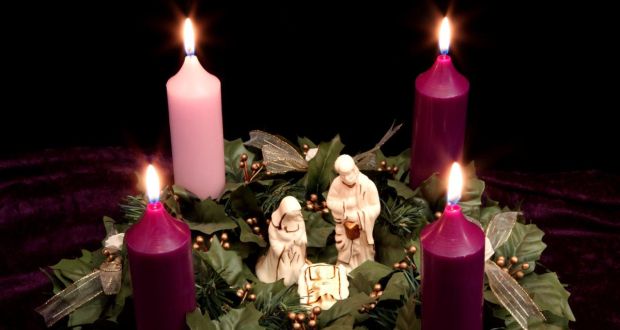
Well, it is that time of year again. ‘Tis the season, and all that jazz. Now that Thanksgiving has come and gone, the sights and sounds and smells of Christmas have begun to fill the air. However, with the month of December comes another season that sometimes gets lost in the hustle and bustle of the holidays. I am talking about the Christian season of Advent. Advent, that time of year, according to the Christian calendar, when followers of Jesus prepare themselves to celebrate the incarnation of the Savior at Christmas. Of course, the season of Advent, which consists of the four Sundays leading up to Christmas, stands at the beginning of the church year, and as such, it brings with it a sense of renewal and hope.
The name Advent comes from a Latin word that simply means “coming”, which itself is a translation of the Greek word parousia, meaning “coming”. And in the New Testament, this word almost always refers to the Second Coming of our Lord Jesus when He will return to the earth in glory and power. In other words, the season of Advent is a time when Christians reflect on the Second Coming of our Lord Jesus Christ, even as we prepare to celebrate His first coming. We look back, so that we may look forward. We look back into the hope and longing of Israel for the coming of Messiah, even as we look forward with hope and longing for the return of Messiah. And we let their expectations inform our expectation.
This sentiment is captured best in the well known hymn, O Come, O Come, Emmanuel, which begins, “O come, o come, Emmanuel, and ransom captive Israel that mourns in lonely Exile here until the Son of God appears.” The chorus follows, “Rejoice! Rejoice! Emmanuel shall come to you, O Israel.” Or again, in the hymn Come, thou long expected Jesus,” where we sing, “Come, thou long expected Jesus, born to set thy people free; from our fears and sins release us, let us find our rest in thee. Israel’s strength and consolation, hope of all the earth thou art; dear desire of every nation, joy of every longing heart.” And so, it is understandable that the corresponding lectionary readings for this season emphasize the prophetic expectation that is fulfilled in the coming of Jesus as Messiah.
For the follower of Jesus, then, I believe the season of Advent teaches us three things in preparation for the celebration of Christmas. First, it teaches us to wait. When we look back into the hopes of Israel for the coming of Messiah, we are reminded that they had to wait for quite some time. The last messianic prophecy is given in the Book of Malachi, and it was some 400 years or so after those words were spoken that the Christ-child was born. Even as Israel had to wait, so also we have been waiting for some 2000 years for the return of our King. And as long as He should tarry, we will continue to wait. Sadly, the notion of waiting well has been lost in our fast-paced, instant society, but Advent teaches us to wait patiently.
Secondly, Advent teaches us to hope. It is in the season of Advent that we are reminded that our hope has only partially been fulfilled. And even as we anticipate the celebration of Christmas, we are reminded that the incarnation is only half of the Gospel story. Our Lord Jesus came to this earth the first time as a baby in a manger, and He grew into a man who died on a cross for our sin and then rose again. And after His resurrection, He ascended unto the Father with a promise, that in the same way that He departed, so also would He return one day. He will come a second time with glory and power, and He will finally and permanently establish the kingdom of God on the earth in peace and righteousness. And we should long deeply for that day!
And lastly, Advent teaches us to be faithful. In other words, even as we wait, we are not waiting passively. We are not merely sitting back on our hands looking to the sky for His return. No, we have been given a commission, a Great Commission, to go into all the world making disciples of our Lord Jesus the Christ. We are called to be faithful, to serve, and love, and live in Christ-likeness, until that time when we will meet Him in the air. As the Apostle Paul puts it in the Letter to Titus, chapter 2, verses 11-13,
“For the grace of God has appeared, bringing salvation for all people, instructing us to deny godlessness and worldly lusts and to live in a sensible, righteous, and godly way in the present age, while we wait for the blessed hope, the appearing of the glory of our great God and Savior, Jesus Christ.”
This Advent season, I pray that you all will be filled with this blessed hope.
For Further Study, see:
On the Use and Benefit of the Christian Calendar
See also:
On the Epiphany of Our Lord Jesus Christ
On the Season of Lent
On the Season of Easter


