Tag Archives: Grace

On the Pericope Adulterae (John 7.53-8.11)

It is a familiar scene. The Jewish religious leaders bring a woman who has been caught in adultery before Jesus, seeking to trap him with the requirements of the Mosaic Law. Yet rather than immediately condemning her, Jesus responds, “The one without sin among you should be the first to throw a stone at her” (John 8.7). With their scheme exposed, the accusers depart one by one until only Jesus and the woman remain. He then tells her, “Neither do I condemn you. Go, and from now on do not sin anymore” (8.11). It is a beautiful picture of the compassion and grace of Jesus toward a guilty sinner. There is only one problem: a footnote in virtually every modern English translation informs us that “the earliest manuscripts do not include John 7.53–8.11.” Whether through brackets, footnotes, or some other notation, all modern translations alert readers that there is considerable doubt about whether this beloved story originally belonged to the Gospel of John. What, then, should Christians who believe in the inspiration and inerrancy of Scripture do with this passage? How should we think about a story about Jesus that may be historically ancient but was probably not written by John? In what follows, I would like to consider these questions by arguing that although the manuscript, internal, and patristic evidence strongly suggests that the Pericope Adulterae was not originally part of the Gospel of John, its textual status need not threaten Christian confidence in Scripture. Rather, the passage provides an important opportunity to distinguish between the possible historical authenticity of an ancient tradition about Jesus and the canonical authority of the inspired text.

Of course, our English Bibles are based upon a manuscript tradition that stretches back nearly two thousand years. Although we no longer possess the autographs—the original documents actually written by the New Testament authors—we have thousands of Greek manuscripts and manuscript fragments dating from the second century through the invention of the printing press in the fifteenth century. Through the process known as textual criticism, scholars compare these manuscripts with one another, alongside evidence from ancient translations, lectionaries, and quotations preserved in the church fathers in an effort to determine the earliest recoverable form of the text and, ultimately, reconstruct the original words of the inspired authors. (On the process of textual criticism, see my post here.) Importantly, however, textual criticism is not simply a matter of counting manuscripts. The evidence must be weighed according to such factors as age, provenance, textual relationships, and the character of the individual readings. A thousand late manuscripts containing a particular reading do not necessarily outweigh a handful of significantly earlier witnesses. This brings us to the problem of the Pericope Adulterae: the earliest and strongest manuscript evidence does not include the story at John 7.53–8.11. For this reason, most modern translations bracket the passage, place it in a footnote, or otherwise alert readers that its originality to the Gospel of John is seriously disputed.

The earliest extant Greek manuscript to include the story is Codex Bezae (D), a fifth-century diglot containing the text in both Greek and Latin. This is significant because the early textual reception of the passage appears to have been particularly strong in the Western church, where Latin increasingly became the primary ecclesiastical language. Moreover, although the story eventually appears in the majority of manuscripts from the medieval period, there is considerable discrepancy over where it should be located. It can be found in its familiar location after John 7.52, but in other manuscripts it appears after John 7.36, 7.44, or 21.25, while another textual tradition places it after Luke 21.38. In other words, this looks like a story looking for a home, so to speak. The early patristic evidence is similarly complicated. The Greek Fathers generally do not comment upon the passage, while in the West it appears in writers such as Ambrose of Milan, Augustine, and Jerome, all from the fourth century. Significantly, these Western witnesses themselves reflect awareness that the passage was absent from some manuscripts. Jerome nevertheless included it in the Latin Vulgate, after which the story became increasingly established within the Western textual and ecclesiastical tradition. However, the late appearance of the passage in extant Greek manuscripts, its unstable location within the manuscript tradition, and its uneven early reception provide substantial external evidence for concluding that it was probably not part of the original text of John’s Gospel.

There are still other reasons for doubting the story’s originality to the Gospel of John. For one, the passage contains some fourteen words that appear nowhere else in the Fourth Gospel—almost one distinctive word per verse. For example, John 8:3 is the only place in the Gospel where we encounter “the scribes” as a distinct group. John has several other ways of referring to Israel’s religious leaders, but he never refers to the scribes in this manner outside the Pericope Adulterae. Significantly, several of these words that are otherwise absent from John are quite common in the Synoptic Gospels (Matthew, Mark, and Luke), giving the story a linguistic character somewhat different from its surrounding Johannine context. This may also help explain why one manuscript tradition eventually placed the story after Luke 21:38. In addition to this linguistic evidence, the story appears to interrupt the natural flow of John’s narrative. At the end of chapter 7, Jesus is teaching in the temple precincts during the festival, culminating in his proclamation concerning “streams of living water.” Then, in John 8:12, Jesus continues his public teaching with the declaration, “I am the light of the world.” The Pericope Adulterae, however, interrupts this sequence with the statement that “each one went to his own house, but Jesus went to the Mount of Olives” (7:53–8:1). Read without the disputed passage, the narrative moves quite naturally from 7:52 to 8:12. When this internal evidence is considered alongside the external evidence discussed above, the cumulative case against the Pericope Adulterae being original to the Gospel of John appears very strong.

However, the textual question is quite separate from the historical question. It is entirely possible that this is an authentic story about Jesus that was passed down orally and only later written down and incorporated into the manuscript tradition. After all, the characterization of Jesus and the religious leaders is consistent with what we see elsewhere in the Gospel traditions, and the themes and principles of the story are consistent with what we know of Jesus’s teaching from the rest of the New Testament. In his A Textual Commentary on the Greek New Testament, Bruce Metzger concludes that “the story has all the earmarks of historical veracity.” In other words, even though the story may be textually secondary, this does not mean that it is historically late or fictitious. It is entirely possible that the Pericope Adulterae preserves an authentic tradition about the historical Jesus that circulated independently before eventually finding its way into copies of the Gospels. Nevertheless, we must carefully distinguish between saying, “Jesus may actually have done this,” and saying, “John wrote this under the inspiration of the Holy Spirit.” Historical authenticity does not by itself establish canonical authority. The early church undoubtedly preserved many true memories and traditions concerning Jesus that were never included in the canonical Gospels; indeed, John himself acknowledges that Jesus did “many other things” that were not written in his Gospel (John 21:25). The question of canonicity, therefore, is not merely whether an event actually happened, but whether the account of that event belongs to the text given through the inspired biblical authors. And that distinction has important implications for how Christians should read, teach, and preach the Pericope Adulterae.

Our doctrines of inspiration and inerrancy are specifically tied to the autographic text, that is to say, the documents that the biblical authors actually wrote are the locus of biblical authority. This is the text that we preach; this is the text that holds authority for our theology and doctrine. Therefore, if the Pericope Adulterae was not part of that original text, then we should not base any doctrinal claims upon it or preach it as though we know it possesses canonical authority. We can certainly discuss it as a potentially authentic tradition about the historical Jesus; we can also demonstrate how its principles and themes are consistent with what canonical Scripture teaches elsewhere. But we should be careful about preaching it as Holy Scripture. After all, consistency with Scripture does not make something Scripture. Many statements found in the writings of the early church fathers are thoroughly consistent with biblical teaching, but we do not therefore regard them as divinely inspired or canonically authoritative. The same distinction should guide our treatment of the Pericope Adulterae. Nothing essential to Christian doctrine is lost by recognizing its uncertain textual status: the grace and compassion of Jesus toward sinners, the universal reality of human sinfulness, the necessity of repentance, and the call to holiness are all abundantly taught in undisputed passages of the New Testament. We therefore lose nothing by allowing the textual evidence to determine the passage’s canonical status rather than our affection for the story. Indeed, a high view of Scripture requires us not merely to defend the Bible we have received, but to seek as carefully as possible the text that the inspired authors actually wrote.

In the final analysis, the textual questions surrounding the Pericope Adulterae should not weaken our confidence in Scripture. If anything, they demonstrate why the discipline of textual criticism is so important. Modern translations do not place brackets or footnotes around John 7.53–8.11 because translators have decided to remove an inconvenient passage from the Bible; they do so because they are attempting to be transparent about the manuscript evidence and recover as faithfully as possible the text that John actually wrote. The remarkable number of surviving New Testament manuscripts allows scholars to identify places where later additions, omissions, or other textual variations entered the tradition and to evaluate them openly. The Pericope Adulterae may preserve an ancient and even authentic memory of Jesus, and its beautiful portrayal of his grace toward sinners explains why Christians have cherished it for centuries. Yet our confidence in Scripture must rest not upon our attachment to a particular story, but upon the God who inspired his Word and has providentially preserved it through the manuscript tradition. Christians committed to the inspiration and inerrancy of Scripture should therefore have nothing to fear from textual criticism. Our desire should simply be to know, preserve, proclaim, and obey as faithfully as possible the words God actually inspired his servants to write.

See also:
On the Ending(s) of the Gospel of Mark


On Thinking Theologically (Weekend Vlog)


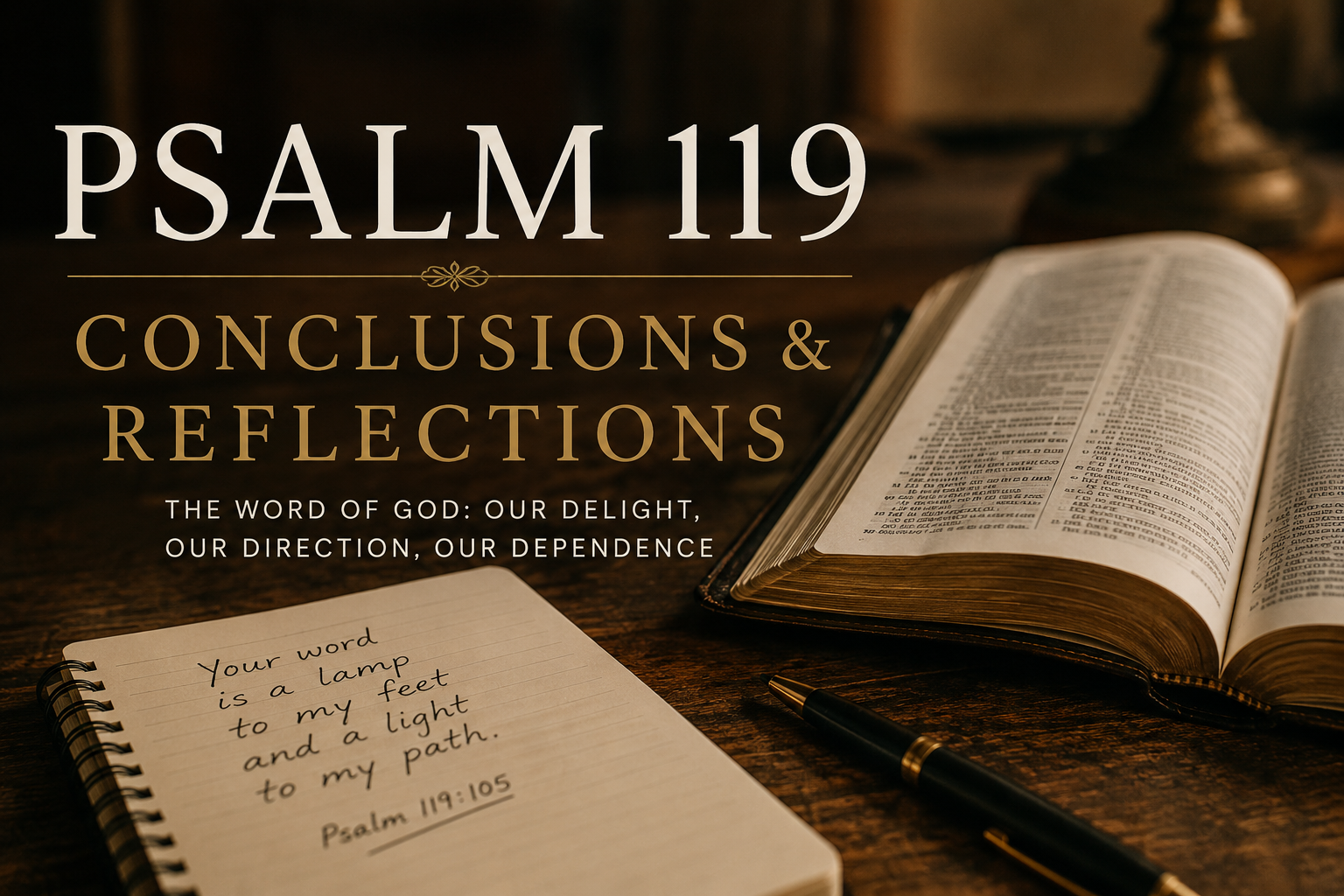
On Psalm 119: A Conclusion and Reflection

Well, we have now come to the end of our journey through Psalm 119. Twenty-two stanzas. One hundred and seventy-six verses. The longest chapter in the Bible. At first glance, reading through this psalm from beginning to end can feel somewhat repetitive. Yet, if our journey has revealed anything, it is that sustained meditation upon its lines uncovers remarkable depth. Each stanza approaches God’s Word from a distinct perspective, and each verse contributes another facet to the psalm’s rich theological portrait of Scripture. What initially appears repetitive gradually proves to be profoundly complementary, as the psalmist returns again and again to the same central theme with fresh insight and renewed appreciation. After spending the past several years working through this magnificent chapter, I would like to conclude our study by reflecting on some of the primary theological themes and practical lessons that have emerged along the way. While these observations certainly do not exhaust the riches of Psalm 119, they represent some of the truths that have most profoundly shaped my own understanding of God’s Word and its indispensable place in the life of every believer.

Of course, the primary lesson of Psalm 119 is immediately evident, and that is the absolute centrality of God’s Word. Nearly every verse contains some reference to or synonym for divine revelation—law, statutes, precepts, commandments, testimonies, judgments, ordinances, promises, etc. Regardless of what is happening in the psalmist’s life, whether he is rejoicing, suffering, praying, or pleading for deliverance, he continually returns to God’s revelation as the foundation of his faith and the source of his hope. Yet, in doing so, the psalmist reminds us that God’s Word is far more than a collection of sacred information. It is God’s self-revelation, through which He makes Himself known to His people. Through His Word, God instructs, corrects, comforts, warns, and sustains those who belong to Him. Every encounter with God’s Word is ultimately an encounter with the living God who still addresses His covenant people through the Scriptures He has breathed out. In that sense, Psalm 119 is not ultimately a celebration of the Bible as an end in itself, but of the God who graciously reveals Himself through His Word. The psalmist delights in Scripture because, through it, he encounters the living God.

Closely related to the centrality of God’s Word is another theme that has surfaced repeatedly throughout our study: the covenantal nature of the psalmist’s relationship with God. The Word is never presented as an impersonal code of conduct or a collection of detached religious obligations. Rather, it is the covenant document through which God reveals His character, declares His promises, and defines what covenant faithfulness looks like for His people. To delight in God’s Word, therefore, is to delight in the God who has graciously entered into relationship with His people. This covenantal perspective also explains why the psalm is so thoroughly saturated with prayer. Again and again the psalmist cries, “Teach me,” “Give me understanding,” “Revive me,” “Strengthen me,” and “Sustain me.” These are not the prayers of someone attempting to earn God’s favor through obedience, but of one who already belongs to God and longs to live faithfully within that covenant relationship. His obedience is never portrayed as self-generated moral achievement; it is the grateful response of a servant who desires to know his Lord more fully and to walk in the path that God Himself has graciously revealed. Throughout Psalm 119, studying God’s Word and communing with God are inseparable realities, for the believer encounters the covenant God precisely through the covenant Word He has given.

Another theme that emerged with surprising frequency throughout our study is the reality of affliction. At first glance, many readers approach Psalm 119 expecting a lengthy meditation on the beauty and benefits of God’s Word. While it is certainly that, it is also a psalm written in the midst of suffering. References to enemies, reproach, persecution, oppression, and distress appear again and again, particularly in the latter portions of the psalm. The psalmist is rarely speaking from a position of comfort or ease. More often than not, he is crying out to God in the midst of hardship, pleading for deliverance while clinging to the promises of His Word. This observation is significant because it reveals one of the primary purposes of Scripture in the life of the believer. God’s Word is not merely given to increase our knowledge or deepen our understanding during seasons of peace; it is given to sustain our faith when life is hardest. Again and again, the psalmist finds hope in God’s promises, strength in God’s commandments, and comfort in God’s faithfulness precisely because suffering has stripped away every other source of security. Affliction, rather than diminishing his confidence in God’s Word, drives him back to it with even greater urgency. Psalm 119 therefore reminds us that Scripture is not simply a companion for life’s brightest moments, but an anchor for its darkest ones. It is in the crucible of suffering that the enduring sufficiency of God’s Word is most clearly displayed.

Closely connected to this theme of affliction is another characteristic of Psalm 119 that is often overlooked: its persistent spirit of prayer. Although the psalm is rightly celebrated for its exaltation of God’s Word, it is equally a sustained conversation with the God who gave that Word. Throughout its twenty-two stanzas, the psalmist repeatedly prays, “Teach me,” “Give me understanding,” “Revive me,” “Sustain me,” “Strengthen me,” and “Rescue me.” Nearly every meditation upon God’s revelation naturally gives rise to another petition for God’s gracious work in his life. This reminds us of an important spiritual truth. Knowledge of Scripture is never intended to produce self-sufficiency. Rather, it cultivates ever-deepening dependence upon God. The more clearly the psalmist understands God’s holiness, the more aware he becomes of his own weakness. The more he delights in God’s commandments, the more earnestly he prays for grace to obey them. The more he meditates upon God’s promises, the more confidently he casts himself upon God’s faithfulness. In this way, Scripture and prayer are inseparable companions. God’s Word reveals His will, while prayer expresses our continual dependence upon His power to accomplish it. Far from fostering spiritual independence, Psalm 119 teaches us that genuine maturity is marked by an ever-growing reliance upon the God who speaks through His Word and graciously enables His people to live according to it.

Perhaps the most compelling feature of Psalm 119 is that the psalmist’s relationship with God’s Word is characterized not merely by obedience, but by delight. Throughout the psalm he repeatedly speaks of loving God’s law, rejoicing in His testimonies, delighting in His commandments, meditating upon His precepts, and treasuring His promises. These are not the words of someone reluctantly fulfilling religious obligations. They are the language of deep affection, revealing a heart that has come to cherish God’s Word as one of life’s greatest treasures. This emphasis offers an important corrective for many Christians today. We often approach Scripture primarily as a duty to perform or a discipline to maintain, measuring success by how consistently we complete our daily reading plans. While faithful discipline certainly has its place, Psalm 119 calls us to something far deeper. The ultimate goal is not simply external conformity to God’s commands, but an inward delight in the God who has spoken. Obedience reaches its fullest expression when it flows from love rather than mere obligation, when God’s Word becomes not simply something we read but something we long for. The psalmist reminds us that genuine spirituality is measured not only by what we know or even by what we do, but by what we love. A heart captivated by God’s Word is ultimately a heart captivated by God Himself.

As we come to the close of Psalm 119, we discover that the psalmist’s final words are not a declaration of victory but a confession of dependence: “I have gone astray like a lost sheep; seek your servant, for I do not forget your commandments” (v. 176). After 176 verses celebrating God’s Word, he does not conclude by boasting in his obedience but by casting himself upon God’s grace. In many ways, this final prayer gathers together every major theme of the psalm. The Word has revealed the covenant God. Affliction has driven the psalmist to His promises. Prayer has expressed continual dependence upon His strength. Delight has cultivated a heart that loves His ways. Yet all of these themes ultimately lead to the recognition that God’s people never outgrow their need for the Shepherd who seeks, sustains, and preserves them. Indeed, the One who perfectly delighted in the Father’s will is also the Good Shepherd who came “to seek and to save the lost.” It is therefore fitting that Psalm 119 ends not with human achievement, but with divine grace. Ultimately, this magnificent psalm teaches us that the goal of God’s Word is not merely that we know His commandments, but that we know and love the God who speaks, trust His promises, delight in His ways, and depend upon His grace until the end.

For further study:
Introduction
Psalm 119.1-8
Psalm 119.9-16
Psalm 119.17-24
Psalm 119.25-32
Psalm 119.33-40
Psalm 119.41-48
Psalm 119.49-56
Psalm 119.57-64
Psalm 119.65-72
Psalm 119.73-80
Psalm 119.81-88
Psalm 119.89-96
Psalm 119.97-104
Psalm 119.105-112
Psalm 119.113-120
Psalm 119.121-128
Psalm 119.129-136
Psalm 119.137-144
Psalm 119.145-152
Psalm 119.153-160
Psalm 119.161-168
Psalm 119.169-176


On Thinking Theologically (Weekend Vlog)


On Psalm 119.169-176 (Taw)

169 Let my cry reach you, Lord;
give me understanding according to your word.
170 Let my plea reach you;
rescue me according to your promise.
171 My lips pour out praise,
for you teach me your statutes.
172 My tongue sings about your promise,
for all your commands are righteous.
173 May your hand be ready to help me,
for I have chosen your precepts.
174 I long for your salvation, Lord,
and your instruction is my delight.
175 Let me live, and I will praise you;
may your judgments help me.
176 I wander like a lost sheep;
seek your servant,
for I do not forget your commands.

Well, we have finally come to the last stanza of Psalm 119 (ת/taw), and it is fitting that our psalmist opens with a prayer. In verses 169–170, he petitions the Lord, “Let my cry reach you, Lord; give me understanding according to your word. Let my plea reach you; rescue me according to your promise.” After nearly 170 verses extolling the beauty, perfection, and life-giving power of God’s Word, he is still asking for understanding. In other words, his extensive knowledge of Holy Scripture has not diminished his dependence upon God. In the language of systematic theology, this truth is often described as the doctrine of illumination. Illumination is the gracious work of the Holy Spirit whereby he enlightens our minds and hearts to understand and receive God’s Word as he intended. (For a more extended discussion of this doctrine, see On Biblical Interpretation and the Holy Spirit.) The point is that a right understanding of Scripture is ultimately a gift of God. It certainly comes through careful study and diligent reflection, but our study must always be accompanied by humble dependence upon the Spirit who inspired the Scriptures in the first place. Throughout Psalm 119, we have repeatedly seen that God’s Word imparts wisdom, yet wisdom comes as God illumines the heart. The mature believer, therefore, never outgrows the need to pray, “Give me understanding according to your word.”

He also prays for deliverance when he says, “Rescue me according to your promise.” Once again, we are reminded that our psalmist continues to face hardship and opposition. Throughout Psalm 119 he has repeatedly cried out for God’s intervention, and here the same prayer rises once more from his lips. Yet what is particularly striking is the basis upon which he asks for deliverance. He does not appeal to his own merit, his own worthiness, or even his own obedience. Rather, he appeals to God’s promise. In other words, his confidence rests not in himself but in God’s covenant faithfulness. Or to put it another way, even after all his devotion to God’s Word, he still depends entirely upon divine grace. As D. Martyn Lloyd-Jones wisely observed, “Everything is of grace in the Christian life from the very beginning to the very end.” Apart from God’s grace we have nothing and are nothing. Even our most faithful obedience must be sustained and empowered by the God who first called us to himself. This is why the promises of Scripture are such a source of comfort for the believer. They remind us that God’s faithfulness does not fluctuate with our circumstances or our performance. Rather, his promises are rooted in his unchanging character. It is these gracious promises that become the foundation of confident prayer, enabling us to approach the throne of grace with boldness because we know that the God who has spoken is always faithful to his Word.

In verses 171–172, our psalmist moves from prayer to praise when he says, “My lips pour out praise, for you teach me your statutes. My tongue sings about your promise, for all your commands are righteous.” Notice here the motivation for his praise: it is that God has taught him his righteous commands and statutes. In other words, the purpose of Holy Scripture is not merely information. Our study of God’s Word should produce praise, obedience, and delight. Or, to put it another way, theology should produce doxology. God’s commands are righteous; therefore, praise is the fitting response. This has been one of the dominant themes throughout Psalm 119. The psalmist has repeatedly reminded us that God’s Word is sweeter than honey, more valuable than gold, a lamp to his feet, and a source of wisdom, comfort, hope, and peace. Yet all of these blessings ultimately direct his attention back to the God who has spoken. Scripture never terminates upon itself. It reveals the character, faithfulness, wisdom, and holiness of the Lord, and as we behold these divine perfections, our hearts are moved to worship. This is why genuine knowledge of God can never remain merely intellectual. The more deeply God’s truth takes root within us, the more naturally praise flows from our lips. If our study of Scripture produces greater knowledge without greater love for God, then we have missed the very purpose for which the Scriptures were given. True biblical understanding always culminates in joyful worship, because the ultimate goal of God’s Word is not simply that we know about him, but that we know him, delight in him, and glorify him with our lives.

In verses 173–174, our psalmist continues this theme of dependence when he prays, “May your hand be ready to help me, for I have chosen your precepts. I long for your salvation, Lord, and your instruction is my delight.” At first glance, these two statements may seem contradictory. On the one hand, he declares that he has chosen God’s precepts. On the other hand, he immediately asks for God’s help. Yet this is precisely the balance that runs throughout the Christian life. Genuine obedience is never independent of divine grace. Our willingness to follow the Lord is itself sustained by his continual presence and power. The psalmist recognizes that choosing God’s ways does not eliminate his need for God’s help; rather, it deepens his awareness of that need. Likewise, his longing for God’s salvation reminds us that he continues to look forward in hope. Though he delights in God’s instruction, he still awaits the full realization of God’s saving purposes. Throughout Psalm 119 we have repeatedly encountered this tension between present obedience and future expectation. God’s Word teaches us how to live faithfully today while at the same time directing our hope toward the salvation that God has promised to complete. The Christian life, therefore, is one of continual dependence upon the Lord, trusting that the God who calls us to walk in his ways is also the God who strengthens us to persevere until his work of redemption is brought to completion.

The final verses of Psalm 119 bring us to one of the most surprising conclusions in all of Scripture. After extolling the beauty, wisdom, and sufficiency of God’s Word for 175 verses, our psalmist concludes with this remarkable confession: “Let me live, and I will praise you;
may your judgments help me. I wander like a lost sheep; seek your servant, for I do not forget your commands.”
At first glance, this seems almost out of place. Has not our psalmist repeatedly affirmed his love for God’s law, his delight in God’s commandments, and his commitment to walk in God’s ways? Why, then, does he end by describing himself as a wandering sheep? The answer is that this is not a confession of apostasy but of humble dependence. He recognizes that even the most faithful believer remains vulnerable apart from the preserving grace of God. Yet his wandering is immediately balanced by a profound affirmation: “I do not forget your commands.” Though he stumbles, he still belongs to the Lord. His hope rests not in his own ability to remain faithful but in the God who faithfully seeks and restores his servants. It is difficult to read these words without thinking of the Good Shepherd who came “to seek and to save the lost” (Luke 19.10), or of Jesus’ parable of the shepherd who leaves the ninety-nine sheep to search for the one that has wandered (Luke 15.4–7). Indeed, Isaiah had already declared, “We all went astray like sheep; we all have turned to our own way; and the Lord has punished him for the iniquity of us all” (Isa. 53.6). Thus, the final note of Psalm 119 is not one of self-confidence but of grace. The believer’s security ultimately rests not in the strength of his obedience but in the faithfulness of the Shepherd who continually seeks, preserves, and restores his wandering sheep.

As Psalm 119 draws to a close, we discover that its final emphasis is not human achievement but divine faithfulness. Throughout these twenty-two stanzas, our psalmist has celebrated the beauty, wisdom, sufficiency, and life-giving power of God’s Word. He has endured persecution, wrestled with suffering, delighted in God’s commandments, longed for deliverance, and found peace amid adversity. Yet the final word of the psalm is not self-confidence but humble dependence. Even after a lifetime devoted to God’s Word, he still cries out for understanding, seeks God’s help, and confesses his need for the Shepherd who alone can preserve him. In this way, Psalm 119 reminds us that the purpose of Scripture is never merely to increase our knowledge but to deepen our dependence upon the God who has spoken. The more faithfully we walk according to God’s Word, the more clearly we recognize our continual need for his sustaining grace. It is this gracious God who teaches, strengthens, seeks, and restores his people. And that, perhaps, is the greatest lesson of Psalm 119: the written Word continually directs us to the living God, whose truth, presence, and faithfulness are the sure foundation of the believer’s life.

For further study:
Introduction
Psalm 119.1-8
Psalm 119.9-16
Psalm 119.17-24
Psalm 119.25-32
Psalm 119.33-40
Psalm 119.41-48
Psalm 119.49-56
Psalm 119.57-64
Psalm 119.65-72
Psalm 119.73-80
Psalm 119.81-88
Psalm 119.89-96
Psalm 119.97-104
Psalm 119.105-112
Psalm 119.113-120
Psalm 119.121-128
Psalm 119.129-136
Psalm 119.137-144
Psalm 119.145-152
Psalm 119.153-160
Psalm 119.161-168


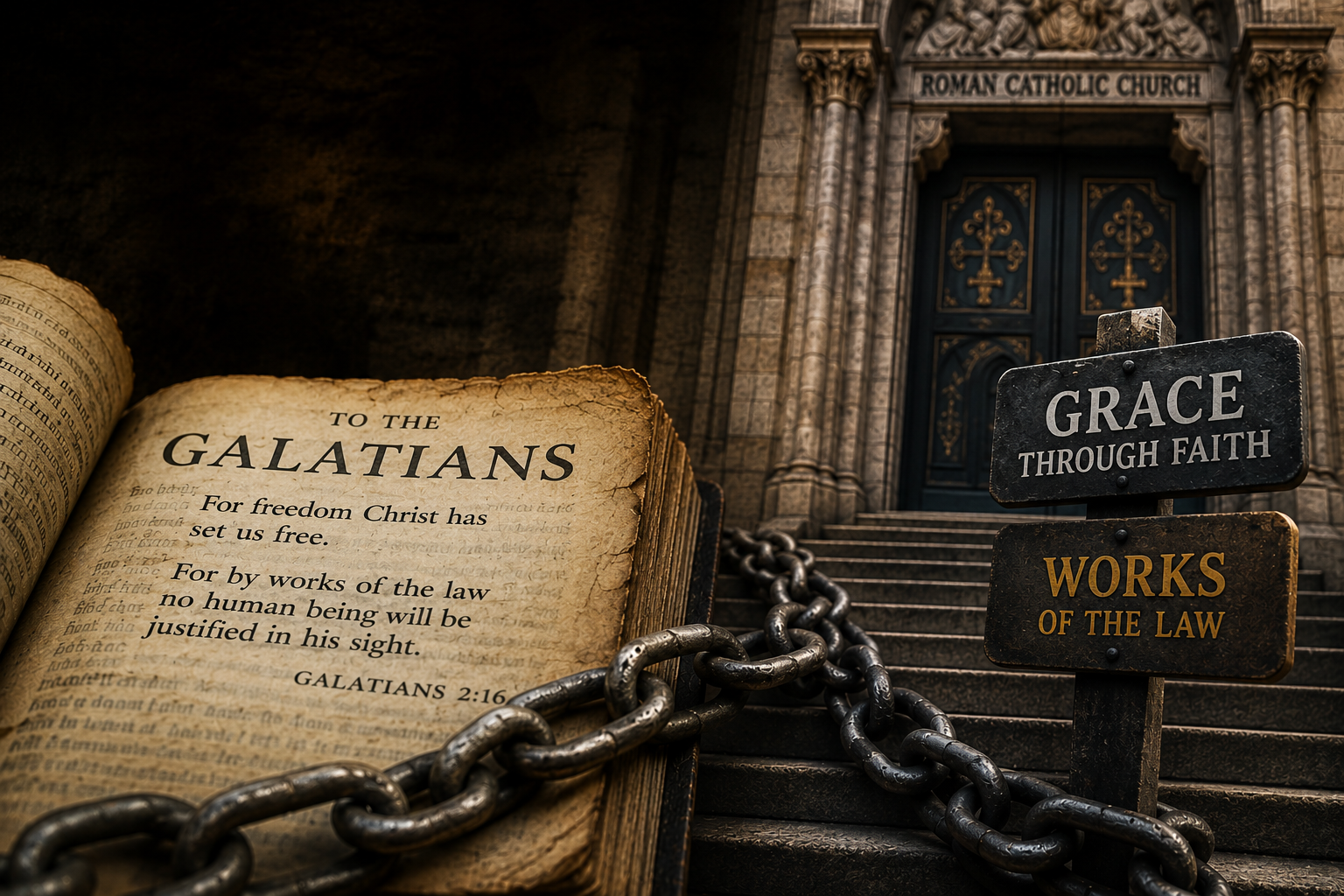
On Justification and the Roman Catholic Church

Some time ago, I reviewed a debate between Allen S. Nelson IV, pastor of Providence Baptist Church, and Father Stephen Hart of Sacred Heart Church on the question of whether the Roman Catholic Church is a gospel-denying church. (See my review here.) This debate centered on the doctrine of justification and exposed the fundamental differences between Protestant and Roman Catholic understandings of how a person is made right before God. Of course, justification stands at the very center of the gospel itself; it is not merely a secondary disagreement between theological traditions. A distorted understanding of justification necessarily distorts the good news because it touches the question of how sinners are reconciled to God through Christ. And this is precisely the issue that the Apostle Paul takes up in the Epistle to the Galatians. In Galatians, Paul argues with remarkable force that justification is by faith apart from works of the law and warns that any alteration of the gospel strikes at the heart of Christian truth. In this post, then, I would like to consider how Paul’s argument in Galatians relates to the Roman Catholic understanding of justification, because if the message of Galatians is taken seriously, it forces us to ask whether justification can, in any sense, be grounded in works without compromising the gospel itself.

The situation addressed in the Epistle to the Galatians is relatively well known, but it is worth reviewing briefly for the sake of clarity. Sometime after Paul’s first missionary journey, it appears that a group of Jewish Christians came into the churches of Galatia and began teaching that Gentile believers needed to be circumcised and adopt the Torah in order to be fully included among the people of God. (On the timeline of events in Galatia, see here.) These teachers are often described as “Judaizers,” though the issue at stake is frequently misunderstood. They were not simply advocating for moral effort or “legalism” in the modern sense of the term. Rather, they were challenging the basis upon which Gentiles could belong to the covenant community. Was faith in Christ sufficient, or did covenant membership require obedience to the Mosaic law as well? In other words, the issue was not whether obedience mattered in the Christian life. Paul himself repeatedly affirms the necessity of holiness and faithful living. The question, rather, was whether obedience to the law contributed in any sense to justification and covenant inclusion. And it is precisely at this point that Paul responds with extraordinary urgency, because for him the integrity of the gospel itself was at stake.

Against this backdrop, Paul’s central claim is that “no one is justified before God by the law, because the righteous will live by faith” (3.11). The question, of course, revolves around what Paul means by the term “justified.” However, the qualifying phrase “before God” is especially revealing. Paul is not speaking primarily about inward moral transformation or spiritual renewal, important as those realities are elsewhere in his theology. Rather, he is speaking about a person’s standing before the divine judge. Justification, then, is fundamentally forensic in nature. It is a legal declaration in which the believer is counted righteous before God on the basis of faith rather than works of the law. This is why Paul consistently contrasts justification with human obedience throughout Galatians. If righteousness could be obtained through the law, then there would be no need for Christ’s death (2.21). The issue is not whether good works follow genuine faith; Paul clearly believes that they do. The issue is whether those works contribute in any sense to the believer’s right standing before God. Paul’s answer is emphatic and uncompromising: sinners are justified by faith in Christ apart from the works of the law. Their acceptance before God rests not in their own obedience, but in the saving work of Christ received through faith.

However, the question must still be asked: what exactly does Paul mean by “works of the law”? In recent decades, the so-called “New Perspective on Paul,” especially in the work of James D. G. Dunn, has argued that these “works” refer primarily to Jewish socio-religious boundary markers such as circumcision, Sabbath observance, and food laws. On this reading, Paul’s concern is chiefly horizontal. The issue is how Jews and Gentiles can exist together within the same covenant community without the Torah functioning as a barrier between them. There is certainly truth in this observation, especially given the prominence of circumcision in Galatians itself. However, this understanding is ultimately too narrow because it does not fully account for Paul’s repeated emphasis on justification “before God.” Paul’s concern is not merely social fellowship, but a person’s standing before the divine judge. Therefore, “works of the law” cannot be reduced simply to ceremonial observances or ethnic boundary markers. Rather, the phrase must encompass any attempt to establish righteousness before God through obedience to the law. This is precisely why Paul contrasts law and promise, works and faith, curse and blessing. For Paul, the law cannot justify because fallen humanity cannot keep it perfectly. Faith, by contrast, receives what God promises in Christ rather than attempting to achieve righteousness through human obedience.

This is made clear by the way that Paul builds his argument in Galatians, namely on a series of theological contrasts that structure his understanding of the gospel itself. Central to his reasoning is the example of Abraham. Long before the giving of the law, Abraham “believed God, and it was credited to him for righteousness” (3.6). This point is crucial because it demonstrates that justification by faith precedes the Mosaic covenant altogether. The promise given to Abraham was received through faith, not through obedience to the law. The law, therefore, cannot function as the basis of justification because it was never the foundation of God’s covenant promises to begin with. Rather, Paul argues that the law was temporary, added “because of transgressions” until the coming of Christ (3.19). This is why Paul consistently contrasts promise and law, Spirit and flesh, faith and works throughout the letter. These are not complementary paths to justification, but fundamentally different principles. The law demands obedience and pronounces a curse upon those who fail to keep it perfectly, whereas faith receives the promise of God fulfilled in Christ. This is why Paul reacts so strongly to the Galatian error. The law does not complete what faith begins—it belongs to a different order altogether. To return to the law as the ground of justification is not spiritual maturity; it is, in Paul’s view, a departure from the very logic of the gospel itself.

This is perhaps why Paul speaks with such force in the opening of the Epistle to the Galatians. In 1:9, he writes, “As we have said before, I now say again: If anyone is preaching to you a gospel contrary to what you received, a curse be on him!” For Paul, this is not rhetorical exaggeration or emotional overstatement; it is covenantal seriousness. The gospel is not infinitely flexible or open to revision. It is the announcement of what God has accomplished in Christ for the salvation of sinners, and therefore to alter the basis of justification is to alter the gospel itself. This is precisely why Paul reacts so strongly to the teaching of the Judaizers. In his view, adding obedience to the law as a condition of justification does not merely supplement the gospel—it fundamentally changes its character. The issue is not whether circumcision or obedience have value in themselves; the issue is whether they contribute to a person’s right standing before God. Once works are introduced as part of the ground of justification, faith in Christ alone is no longer sufficient. And for Paul, that is not a small theological mistake, but a corruption of the gospel itself.

At this point, it is worth bringing Paul’s argument into conversation with the Roman Catholic understanding of justification, especially as articulated at the Council of Trent. To be clear, the Roman Catholic position is not identical to the error confronted in Galatia. The Judaizers were specifically requiring circumcision and Torah observance for covenant inclusion, whereas Roman Catholic theology affirms the necessity of grace and the centrality of Christ’s work. Nevertheless, there are important structural similarities that raise serious theological concerns. According to Trent, justification is not merely the forgiveness of sins, but also “the sanctification and renewal of the inward man” (Session 6, Chapter 7). Likewise, Trent teaches that the justified “through the observance of the commandments of God and of the Church, faith cooperating with good works, increase in that justice received through the grace of Christ” (Session 6, Chapter 10). In other words, justification in Roman Catholic theology includes transformative righteousness and can increase through obedience. But this is precisely where the tension with Galatians emerges. Paul consistently treats justification as a forensic declaration received through faith apart from works of the law. The question, then, is unavoidable: if justification is maintained or increased through works, even grace-enabled works, does this not reintroduce the very dynamic Paul rejects? Put differently, does the Roman Catholic system preserve the sufficiency of faith in Christ alone, or does it ultimately ground final justification, at least in part, in human obedience? At the very least, Trent’s understanding of justification is horribly confused and differs significantly from Paul’s argument in Galatians.

Now, in the interest of completeness, it is equally important to consider how the message of the Epistle to the Galatians might speak to those of us on the Protestant side of the aisle as well. As I noted in my original review, Protestants often have a tendency to underemphasize the importance—indeed, even the necessity—of good works in the Christian life. In some circles, the gospel is reduced to little more than a kind of “get out of hell free” card: simply believe in Jesus and secure your eternal destiny. But this reductionistic understanding of salvation severely minimizes the transforming power of grace and the necessity of Spirit-empowered obedience. Paul himself never makes this mistake. While he fiercely rejects works as the basis of justification, he equally insists that genuine faith necessarily produces obedience. This is why he can say in Galatians 5.6 that “what matters is faith working through love.” For Paul, obedience is not opposed to faith; rather, obedience is the fruit of true faith. The problem, then, is not works in themselves, but works placed in the wrong category. Works cannot justify the sinner before God, but they are the inevitable result of union with Christ and the indwelling work of the Spirit. Grace does not merely forgive; it transforms.

In theological categories, this process is known as sanctification, that is, the lifelong work of growing in conformity to the character of Christ through the power of the Holy Spirit. In the language of the Epistle to the Galatians, this is described as “walking by the Spirit” and cultivating the “fruit of the Spirit,” namely “love, joy, peace, patience, kindness, goodness, faithfulness, gentleness, and self-control” (5.22–23). The point is that while sanctification is logically distinct from justification, it is not altogether separate from it. The faith that justifies is never barren or inactive. We are justified by faith alone, but the person who is truly justified by faith will necessarily grow in holiness and produce the good works of Christlike character. This is why Paul can reject works as the basis of justification while simultaneously insisting upon obedience as the necessary fruit of life in the Spirit. Indeed, this is essentially the same point made by the Epistle of James in its discussion of faith and works, a point Paul himself would affirm wholeheartedly. Works do not secure our standing before God; rather, they demonstrate that our faith is living and genuine. Grace not only pardons the sinner, it transforms him.

What emerges from Galatians, then, is a clear theological order that must not be confused or reversed. First comes faith, and through faith comes justification, that once-for-all declaration in which the sinner is counted righteous before God on the basis of Christ alone. Then comes the gift of the Spirit, through whom the believer is progressively transformed into the image of Christ. Finally, obedience follows as the fruit of this new life in the Spirit. In other words, the imperatives of the Christian life flow out of the indicatives of the gospel. We obey because we have been accepted in Christ, not in order to be accepted by him. This is precisely why Paul can simultaneously reject justification by works while insisting upon the necessity of holiness. The Christian life is not opposed to obedience; it is grounded in grace-enabled obedience that flows from faith. But the order matters immensely. To place works before justification, or to make obedience part of the ground of our acceptance before God, is to reverse Paul’s entire theological structure and, in doing so, distort the very nature of the gospel itself.

In conclusion, then, we must affirm that the question of justification as it relates to faith and works is a foundational question when it comes to the clarity of the gospel itself. As Paul warns in the Epistle to the Galatians, to distort the gospel is to come under the curse of God. And while I do not think that the Roman Catholic Church falls under this curse in a simplistic or one-to-one sense, I do believe that the formulations of the Council of Trent are deeply confused on the question of justification and, in important ways, structurally parallel the very concerns Paul raises in Galatians. At the same time, Protestants must also resist the temptation to reduce the gospel to mere intellectual assent divorced from holiness and obedience. Paul rejects both legalism and moral indifference. The gospel he proclaims is one in which sinners are justified by faith alone and then transformed by the power of the Spirit into lives of joyful obedience. Faithful theology, then, requires more than loyalty to tradition or theological systems. It requires that we let Paul define the gospel on his own terms—and then have the courage to examine our systems in light of that definition.


On Training in Godliness

TEXT

If you point these things out to the brothers and sisters, you will be a good servant of Christ Jesus, nourished by the words of the faith and the good teaching that you have followed. But have nothing to do with pointless and silly myths. Rather, train yourself in godliness. For the training of the body has limited benefit, but godliness is beneficial in every way, since it holds promise for the present life and also for the life to come. This saying is trustworthy and deserves full acceptance. 10 For this reason we labor and strive, because we have put our hope in the living God, who is the Savior of all people, especially of those who believe.

~1 Timothy 3.14-16

Title: On Our Training for Godliness
Text: 1 Timothy 4.6-10
Series: 1 Timothy: God’s Design for a Healthy Church
Church: Redeemer Baptist Church, Jonesboro, AR
Date: October 19, 2025


On Psalm 119.137-144 (Tsade)

137 You are righteous, Lord,
and your judgments are just.
138 The decrees you issue are righteous
and altogether trustworthy.
139 My anger overwhelms me
because my foes forget your words.
140 Your word is completely pure,
and your servant loves it.
141 I am insignificant and despised,
but I do not forget your precepts.
142 Your righteousness is an everlasting righteousness,
and your instruction is true.
143 Trouble and distress have overtaken me,
but your commands are my delight.
144 Your decrees are righteous forever.
Give me understanding, and I will live.

In keeping with the Hebrew alphabet acrostic form, the next stanza of Psalm 119 begins with the Hebrew letter tsade (צ), and it revolves around the Hebrew word for righteousness (צֶדֶק/ṣeḏeq). The word itself occurs in one form another some five times in these eight verses. It is a word that is rich with significance, both for our understanding of God and our relationship with Him, and for our our understanding of ourselves and our relationships with one another. Literally, it refers to something that is straight, like “straight paths” (Psalm 23.3, where the same word is used), but more often than not, it also carries the figurative sense of upright, true, normal, and just. Clearly, it is in this sense that we read, “You are righteous, Lord, and your judgments are just.” (Verse 137) There are few statements that define the character of God in this way, e.g. God is holy, God is perfect, God is Spirit, God is love. So also, here, we read that God is righteous. In other words, righteousness is a perfection of his being; it is essential to His essence. It is an attribute of His divine character. He is righteous, i.e. morally perfect and true, in every way, in what He thinks, in what He feels, in what He says, in what He does. It is impossible for Him to be otherwise, it is who He is. He is righteous. Of course, this is why His judgments are just, where the word used is a synonym for the word in question.

Of course, righteousness is more than simply who He is in himself; His righteousness extends to everything that He does. “Your decrees are righteous forever. Give me understanding, and I will live.” (Verse 144) This is an important affirmation especially in the context of the Old Testament. The Old Testament is filled with divine actions and events that make no sense to our modern minds, that stand as an affront to our modern sensibilities. The most often cited example of this is God’s command to the Israelites to exterminate the Canaanites in the conquest of the Promised Land. According to our Psalmist, even this deed of God is righteous. Of course, we may immediately ask, “how can this be?” I think it is important that we understand that we cannot understand the rightness of God’s ways by our own standards. Our perception of right and wrong and fundamentally flawed by sin. This is why our psalmist prays, “Give me understanding.” The only way we can hope to understand the righteousness of God and His ways is by divine illumination. This comes as a result of the Holy Spirit’s indwelling. As the Apostle Paul puts it in 1 Corinthians 2.14,  But the person without the Spirit does not receive what comes from God’s Spirit, because it is foolishness to him; he is not able to understand it since it is evaluated spiritually.”

Of course, the question for our psalmist remains, “how can we, as fallen individuals, experience or participate in the righteousness of God?” As our psalmist confesses, “I am insignificant and despised, but I do not forget your precepts.” (Verse 141) Compared to God’s righteousness, our righteousness is nothing more than “filthy rags” (Isaiah 64.6). We are sinners, and even our best attempts at cultivating our own righteousness fall short of the standard of righteousness that God is in himself (Romans 3.23). For our psalmist, however, the answer to this question is simple; it is to live in submission before and obedience to the Word of God. As he says in verse 140, “Your word is completely pure, and your servant loves it.” Now, we must be careful here, because this answer could come across as a legalistic effort to earn righteousness. I don’t believe that is what our psalmist is saying. As we have already seen, even our best efforts at attaining righteousness are tinged with sin. No, our psalmist understands that righteousness is something that is imputed from God to us. This is why he says in verse 144, “Your decrees are righteous forever. Give me understanding, and I will live.” In other words, he understands that the righteousness of God comes to us by the transformative revelation of God. This is why he prays for understanding.

As New Testament believers, we know that that ultimate revelation of God’s righteousness came to earth in the person and work of Jesus Christ; He was God incarnate in all the fullness of His being. “He made the one who did not know sin to be sin for us, so that in him we might become the righteousness of God.” (2 Corinthians 5.21) Ours is an alien righteousness; it is not our own. It is imputed to us by grace through faith because of Christ’s death and resurrection. This is why the Apostle Paul could write,

For I am not ashamed of the gospel, because it is the power of God for salvation to everyone who believes, first to the Jew, and also to the Greek. For in it the righteousness of God is revealed from faith to faith, just as it is written: The righteous will live by faith. (Romans 1.16-17)

Our justification, our right standing before God, is by grace alone through faith alone in Christ alone. And I think even our psalmist knew that. Old Testament saints were made righteous in the same way that New Testament believers are made righteous, that is by faith. This principle is confirmed in the example of Abraham, “Abram believed the Lord, and he credited it to him as righteousness .” (Genesis 15.6, c.f. Romans 4 and Galatians 3) The point of all this is to say that righteousness is a perfection of God’s eternal being, and by grace we who believe in Christ have been covered in that same righteousness. This is the beauty of the Gospel. “It is from him that you are in Christ Jesus, who became wisdom from God for us—our righteousness, sanctification, and redemption— in order that, as it is written: Let the one who boasts, boast in the Lord. (1 Corinthians 1.30-31)

For further study:
Introduction
Psalm 119.1-8
Psalm 119.9-16
Psalm 119.17-24
Psalm 119.25-32
Psalm 119.33-40
Psalm 119.41-48
Psalm 119.49-56
Psalm 119.57-64
Psalm 119.65-72
Psalm 119.73-80
Psalm 119.81-88
Psalm 119.89-96
Psalm 119.97-104
Psalm 119.105-112
Psalm 119.113-120
Psalm 119.121-128
Psalm 119.129-136


On Psalm 119.121-128 (Ayin)

121 I have done what is just and right;
do not leave me to my oppressors.
122 Guarantee your servant’s well-being;
do not let the arrogant oppress me.
123 My eyes grow weary looking for your salvation
and for your righteous promise.
124 Deal with your servant based on your faithful love;
teach me your statutes.
125 I am your servant; give me understanding
so that I may know your decrees.
126 It is time for the Lord to act,
for they have violated your instruction.
127 Since I love your commands
more than gold, even the purest gold,
128 I carefully follow all your precepts
and hate every false way.

The sixteenth stanza of Psalm 119 (ע/ayin) deals with the age old dilemma of faith; it is a question that the people of God have been asking for four millenia. “How long, O Lord?” How long will the wicked prosper? How long will sin and evil endure? How long until you come again to judge the wicked and vindicate the righteous, O Lord? Is it all worth it? Is my obedience and my faithfulness and my suffering worthwhile in the grand scheme of your eternal plan, O Lord? These are the perennial questions of faith. In the face of ever growing evil and the ongoing glorification of sin and wickedness, we are left to wonder if our struggles to walk in faith and obedience are worth it? If we are honest with ourselves, these are questions that even the most faithful of Christians have asked themselves at some point or another. Our psalmist puts it this way: “My eyes grow weary looking for your salvation and for your righteous promise.” (Verse 123)

This is perhaps what is most refreshing about the Word of God, especially in the Psalms but equally so throughout the canon of Scripture, namely that it is real and honest about the human predicament. The Scriptures do not whitewash the ugly and painful realities of human experience; rather, they acknowledge them with an honesty that is both brutal and refreshing. Moreover, they speak to the complexities of maintaining faith and hope in the face of such realities that would otherwise drive us to depression and despair. This is why our psalmist can say, “It is time for the Lord to act, for they have violated your instruction.” (Verse 126) Even though he feels the weariness and the temptations to despair, our psalmist holds on to his hope that God will act, that He will judge those who have violated His instruction. Our psalmist sees this hope as both good and right; it is both good and right that the wicked should finally be punished.

And it is this hope that drives our psalmist to maintain his faith in steadfast obedience to God and His word. He says, “I have done what is just and right; do not leave me to my oppressors,” (Verse 121) and he says, “I carefully follow all your precepts and hate every false way.” (Verse 128) His hope in God and his justice drives his perseverance in faith and obedience. He is convinced that his obedience is not meaningless, that the persecution and suffering that he has endured in not random or without purpose. No, our every effort to walk by faith and obedience, our every difficulty and heartache for the sake of God and His Word, will be ultimately vindicated and rewarded. We look forward to those gracious words of our Lord Jesus, when He will say, “Well done, good and faithful servant! Enter into your master’s joy.” This is why our psalmist can pray, “Deal with your servant based on your faithful love; teach me your statutes.” (Verse 124)

The word here translated “faithful love” is a central and primary concept in the Old Testament’s conception of God. It’s closest New Testament equivalent is the word “grace.” This attribute of God’s character is enshrined in the covenantal formula,

The Lord—the Lord is a compassionate and gracious God, slow to anger and abounding in faithful love and truth, maintaining faithful love to a thousand generations, forgiving iniquity, rebellion, and sin. But he will not leave the guilty unpunished, bringing the consequences of the fathers’ iniquity on the children and grandchildren to the third and fourth generation. (Exodus 34:6-7)

This covenantal formula is the basis for all of the Old Testament’s theology, and it forms the foundation of our psalmist’s faith in this stanza of Psalm 119. The God of the Bible is a God who is longsuffering and gracious toward those who submit to Him in faith, but He is just and holy toward those who reject His sovereign rule over their lives.

And it is this faith that leads him to pray, “Guarantee your servant’s well-being; do not let the arrogant oppress me.” (Verse 122) Literally translated, the line reads, “Be surety for your servant for good.” The idea is that God himself is the surety, the earnest money, the down payment, of good for his servant. In other words, our good, our blessing, our prosperity and human flourishing flows only from God and His promises. This is why we must trust in Him and walk in His ways. As our psalmist puts it, “Since I love your commands more than gold, even the purest gold, I carefully follow all your precepts.” Our fulfillment, our purpose, our joy and happiness is only available when we submit ourselves to God Word, when we walk in God’s ways, even if when it feels like everyone is going in the other direction. Christian perseverance is driven by a faith full of hope. When and only when we walk in this hope will we experience genuine human flourishing and fulfillment.

For further study:
Introduction
Psalm 119.1-8
Psalm 119.9-16
Psalm 119.17-24
Psalm 119.25-32
Psalm 119.33-40
Psalm 119.41-48
Psalm 119.49-56
Psalm 119.57-64
Psalm 119.65-72
Psalm 119.73-80
Psalm 119.81-88
Psalm 119.89-96
Psalm 119.97-104
Psalm 119.105-112
Psalm 119.113-120


On Psalm 119:113-120 (Samek)

113 I hate those who are double-minded,
but I love your instruction.
114 You are my shelter and my shield;
I put my hope in your word.
115 Depart from me, you evil ones,
so that I may obey my God’s commands.
116 Sustain me as you promised, and I will live;
do not let me be ashamed of my hope.
117 Sustain me so that I can be safe
and always be concerned about your statutes.
118 You reject all who stray from your statutes,
for their deceit is a lie.
119 You remove all the wicked on earth
as if they were dross from metal;
therefore, I love your decrees.
120 I tremble in awe of you;
I fear your judgments.

The fifteenth stanza of Psalm 119 begins with the Hebrew letter ס/samek, and in this stanza, we read some lines that are quite startling to our modern sensibilities. Right out of the gate, we read, “I hate those who are double-minded” (Verse 113), and a couple of verses later, we read, “Depart from me, you evil ones” (Verse 115). Again, to our moderns ears, these lines seem unduly harsh. But I think we have to look at where our psalmist ends in verse 120, “I tremble in awe of you; I fear your judgments”; in the King’s English, the line reads, “My flesh trembleth for fear of thee; and I am afraid of thy judgments” (KJV). The word for “tremble” here only occurs in the Hebrew Bible in one other place, that being Job 4:15, and the context there clearly implies trepidation (see Job 4:13-15). So likewise, here the word implies that our psalmist is feeling fear, healthy trepidation, a holy terror, at the authority of God and His Word. And it is this fear, this holy terror, that drives him to pursue obedience and submission to the Word of God.

Likewise, it is this intense sense of fear and respect, of submission and devotion to the Word of the one true and living God, that motivates our psalmist’s statements regarding the wicked. Our psalmist understands that God rejects all who stray from His statutes (verse 118) and that He removes all the wicked on the earth (verse 119). So, in verse 115, he says, “Depart from me, you evil ones so that I may obey my God’s commands.” He doesn’t want anything, or anyone for that matter, to prevent him from obeying the laws and statutes of God. I will say more about his obedience in a moment, but suffice it say here that he is so devoted to God and to His word, that he “hates” those who are “double-minded.” The NET Bible renders the line this way, “I hate people with divided loyalties.” The word in question refers to those who are split in their allegiances, those who are two faced or hypocritical in their intentions. They are those who say one thing and yet do another; their verbal confession and their actual behavior are not consistent. “Their deceit is a lie.” (Verse 118). They lack integrity, and in the face of the authority and gravity of God and His word, this kind of attitude is wholly unthinkable for our psalmist.

However, it is imperative that we understand that our psalmists submission to God and His word is not simply motivated by fear of punishment. On the contrary, it comes from a place of deep conviction and faith regarding the goodness of God and His commands. His commands are not burdensome; they are not dull drudgery meant to keep us from enjoying the pleasures of life. No, they are the only path that leads to ultimate fulfillment and genuine human flourishing. This is why our psalmist writes, “You are my shelter and my shield; I put my hope in your word.” It is also why he says, “I love your instruction.” (Verse 113). There is nothing that is more delightful, nothing that is more empowering, nothing that is more fulfilling for our psalmist than obeying the Word of God. By committing himself to God and to keeping His word, he has entrusted his entire self to the goodness and grace of the law-giving God. His obedience is nor forced; it is not against his will. No, his entire will is submitted to the one before whom he stands in awe.

He expresses his faith further when he prays, “Sustain me as you promised, and I will live; do not let me be ashamed of my hope. Sustain me so that I can be safe and always be concerned about your statutes.” (Verse 116-117). It is interesting, though, that this would be his prayer. He has already committed himself to obey God Word. Why, then, would he need to ask God to sustain him? I think there are two reasons. First, he is asking God to sustain him in his obedience. Our psalmist is not naive; he knows the power of temptation, he knows the weakness of his own heart. He knows how easily and how quickly he would abandon his obedience if he were left to himself. So he prays that God would sustain him in his obedience. But secondly, I think he prays for God’s sustaining power because he understands that obedience before God cannot be motivated purely by what we might get out of it. We don’t obey God, so that he will in turn bless us. This tit for tat reckoning is in many ways alien to the economy of God. Our psalmist understands that we obey God because it is right in and of itself to do so; we obey God because that is what we owe Him as creatures. But, as creatures, we are completely dependent upon his sustaining grace every moment of every day for every need that we have. Without Him, we can do nothing. So he prays, “O God, sustain me.”

Sadly, for many Christians in the world today, this attitude of holy terror coupled with desperate faith is somewhat of an oxymoron. On the one hand, we have domesticated God and diminished his authority in our lives to the extent that we treat Him like an elderly grandparent who might give us a piece of candy if we behave, and on the other, we are so self-reliant and comfortable that we have forgotten just how weak and needy we truly are. In this light then, the attitude of our psalmist in this stanza is both a rebuke and an invitation. It is a rebuke of our selfishness and pride, and it is an invitation to rediscover the greatness and the grace of the God that we serve. As C.S. Lewis puts it, “‘Course he isn’t safe. But he’s good. He’s the King, I tell you.”

For further study:
Introduction
Psalm 119.1-8
Psalm 119.9-16
Psalm 119.17-24
Psalm 119.25-32
Psalm 119.33-40
Psalm 119.41-48
Psalm 119.49-56
Psalm 119.57-64
Psalm 119.65-72
Psalm 119.73-80
Psalm 119.81-88
Psalm 119.89-96
Psalm 119.97-104
Psalm 119.105-112


Slow To Write

"let every person be quick to hear, slow to speak, slow to anger."

lovegavehope

Just another WordPress.com site

Jared Cornutt

Pastor | Speaker | Writer

Denny Burk

A commentary on theology, politics, and culture

G3 Ministries

Events + Resources for the Local Church

Biblical Reasoning

Biblical and Systematic Theology According to the Scriptures

RetroChristianity

Reclaiming the Forgotten Faith

SBC Voices

Southern Baptist News & Opinion

Lucid Theology

Thoughts on words, books, theology, and life.

Baptist21

A pastor-led voice for Baptists in the 21st century

Center For Baptist Renewal

The Personal and Professional Blog of Phillip Powers

The Pastor's Well - Pastor Well

The Personal and Professional Blog of Phillip Powers

Articles - AlbertMohler.com

The Personal and Professional Blog of Phillip Powers

The Gospel Coalition

The Personal and Professional Blog of Phillip Powers