Tag Archives: Textual Criticism

On the Pericope Adulterae (John 7.53-8.11)

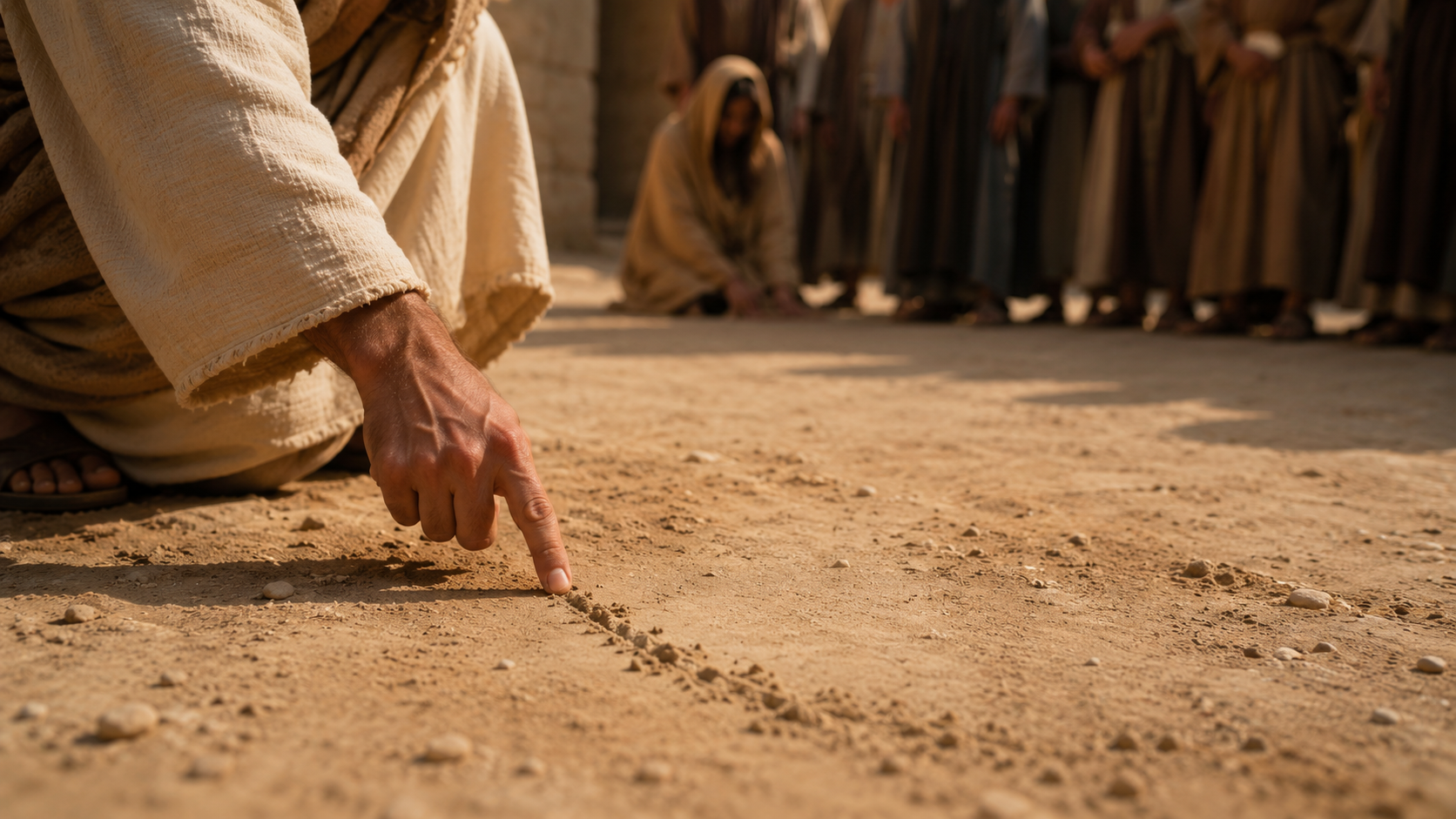
It is a familiar scene. The Jewish religious leaders bring a woman who has been caught in adultery before Jesus, seeking to trap him with the requirements of the Mosaic Law. Yet rather than immediately condemning her, Jesus responds, “The one without sin among you should be the first to throw a stone at her” (John 8.7). With their scheme exposed, the accusers depart one by one until only Jesus and the woman remain. He then tells her, “Neither do I condemn you. Go, and from now on do not sin anymore” (8.11). It is a beautiful picture of the compassion and grace of Jesus toward a guilty sinner. There is only one problem: a footnote in virtually every modern English translation informs us that “the earliest manuscripts do not include John 7.53–8.11.” Whether through brackets, footnotes, or some other notation, all modern translations alert readers that there is considerable doubt about whether this beloved story originally belonged to the Gospel of John. What, then, should Christians who believe in the inspiration and inerrancy of Scripture do with this passage? How should we think about a story about Jesus that may be historically ancient but was probably not written by John? In what follows, I would like to consider these questions by arguing that although the manuscript, internal, and patristic evidence strongly suggests that the Pericope Adulterae was not originally part of the Gospel of John, its textual status need not threaten Christian confidence in Scripture. Rather, the passage provides an important opportunity to distinguish between the possible historical authenticity of an ancient tradition about Jesus and the canonical authority of the inspired text.

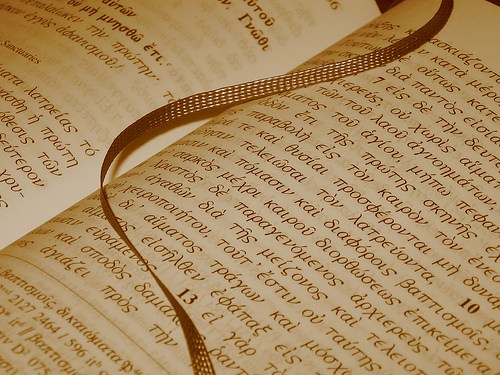
Of course, our English Bibles are based upon a manuscript tradition that stretches back nearly two thousand years. Although we no longer possess the autographs—the original documents actually written by the New Testament authors—we have thousands of Greek manuscripts and manuscript fragments dating from the second century through the invention of the printing press in the fifteenth century. Through the process known as textual criticism, scholars compare these manuscripts with one another, alongside evidence from ancient translations, lectionaries, and quotations preserved in the church fathers in an effort to determine the earliest recoverable form of the text and, ultimately, reconstruct the original words of the inspired authors. (On the process of textual criticism, see my post here.) Importantly, however, textual criticism is not simply a matter of counting manuscripts. The evidence must be weighed according to such factors as age, provenance, textual relationships, and the character of the individual readings. A thousand late manuscripts containing a particular reading do not necessarily outweigh a handful of significantly earlier witnesses. This brings us to the problem of the Pericope Adulterae: the earliest and strongest manuscript evidence does not include the story at John 7.53–8.11. For this reason, most modern translations bracket the passage, place it in a footnote, or otherwise alert readers that its originality to the Gospel of John is seriously disputed.

The earliest extant Greek manuscript to include the story is Codex Bezae (D), a fifth-century diglot containing the text in both Greek and Latin. This is significant because the early textual reception of the passage appears to have been particularly strong in the Western church, where Latin increasingly became the primary ecclesiastical language. Moreover, although the story eventually appears in the majority of manuscripts from the medieval period, there is considerable discrepancy over where it should be located. It can be found in its familiar location after John 7.52, but in other manuscripts it appears after John 7.36, 7.44, or 21.25, while another textual tradition places it after Luke 21.38. In other words, this looks like a story looking for a home, so to speak. The early patristic evidence is similarly complicated. The Greek Fathers generally do not comment upon the passage, while in the West it appears in writers such as Ambrose of Milan, Augustine, and Jerome, all from the fourth century. Significantly, these Western witnesses themselves reflect awareness that the passage was absent from some manuscripts. Jerome nevertheless included it in the Latin Vulgate, after which the story became increasingly established within the Western textual and ecclesiastical tradition. However, the late appearance of the passage in extant Greek manuscripts, its unstable location within the manuscript tradition, and its uneven early reception provide substantial external evidence for concluding that it was probably not part of the original text of John’s Gospel.

There are still other reasons for doubting the story’s originality to the Gospel of John. For one, the passage contains some fourteen words that appear nowhere else in the Fourth Gospel—almost one distinctive word per verse. For example, John 8:3 is the only place in the Gospel where we encounter “the scribes” as a distinct group. John has several other ways of referring to Israel’s religious leaders, but he never refers to the scribes in this manner outside the Pericope Adulterae. Significantly, several of these words that are otherwise absent from John are quite common in the Synoptic Gospels (Matthew, Mark, and Luke), giving the story a linguistic character somewhat different from its surrounding Johannine context. This may also help explain why one manuscript tradition eventually placed the story after Luke 21:38. In addition to this linguistic evidence, the story appears to interrupt the natural flow of John’s narrative. At the end of chapter 7, Jesus is teaching in the temple precincts during the festival, culminating in his proclamation concerning “streams of living water.” Then, in John 8:12, Jesus continues his public teaching with the declaration, “I am the light of the world.” The Pericope Adulterae, however, interrupts this sequence with the statement that “each one went to his own house, but Jesus went to the Mount of Olives” (7:53–8:1). Read without the disputed passage, the narrative moves quite naturally from 7:52 to 8:12. When this internal evidence is considered alongside the external evidence discussed above, the cumulative case against the Pericope Adulterae being original to the Gospel of John appears very strong.

However, the textual question is quite separate from the historical question. It is entirely possible that this is an authentic story about Jesus that was passed down orally and only later written down and incorporated into the manuscript tradition. After all, the characterization of Jesus and the religious leaders is consistent with what we see elsewhere in the Gospel traditions, and the themes and principles of the story are consistent with what we know of Jesus’s teaching from the rest of the New Testament. In his A Textual Commentary on the Greek New Testament, Bruce Metzger concludes that “the story has all the earmarks of historical veracity.” In other words, even though the story may be textually secondary, this does not mean that it is historically late or fictitious. It is entirely possible that the Pericope Adulterae preserves an authentic tradition about the historical Jesus that circulated independently before eventually finding its way into copies of the Gospels. Nevertheless, we must carefully distinguish between saying, “Jesus may actually have done this,” and saying, “John wrote this under the inspiration of the Holy Spirit.” Historical authenticity does not by itself establish canonical authority. The early church undoubtedly preserved many true memories and traditions concerning Jesus that were never included in the canonical Gospels; indeed, John himself acknowledges that Jesus did “many other things” that were not written in his Gospel (John 21:25). The question of canonicity, therefore, is not merely whether an event actually happened, but whether the account of that event belongs to the text given through the inspired biblical authors. And that distinction has important implications for how Christians should read, teach, and preach the Pericope Adulterae.

Our doctrines of inspiration and inerrancy are specifically tied to the autographic text, that is to say, the documents that the biblical authors actually wrote are the locus of biblical authority. This is the text that we preach; this is the text that holds authority for our theology and doctrine. Therefore, if the Pericope Adulterae was not part of that original text, then we should not base any doctrinal claims upon it or preach it as though we know it possesses canonical authority. We can certainly discuss it as a potentially authentic tradition about the historical Jesus; we can also demonstrate how its principles and themes are consistent with what canonical Scripture teaches elsewhere. But we should be careful about preaching it as Holy Scripture. After all, consistency with Scripture does not make something Scripture. Many statements found in the writings of the early church fathers are thoroughly consistent with biblical teaching, but we do not therefore regard them as divinely inspired or canonically authoritative. The same distinction should guide our treatment of the Pericope Adulterae. Nothing essential to Christian doctrine is lost by recognizing its uncertain textual status: the grace and compassion of Jesus toward sinners, the universal reality of human sinfulness, the necessity of repentance, and the call to holiness are all abundantly taught in undisputed passages of the New Testament. We therefore lose nothing by allowing the textual evidence to determine the passage’s canonical status rather than our affection for the story. Indeed, a high view of Scripture requires us not merely to defend the Bible we have received, but to seek as carefully as possible the text that the inspired authors actually wrote.

In the final analysis, the textual questions surrounding the Pericope Adulterae should not weaken our confidence in Scripture. If anything, they demonstrate why the discipline of textual criticism is so important. Modern translations do not place brackets or footnotes around John 7.53–8.11 because translators have decided to remove an inconvenient passage from the Bible; they do so because they are attempting to be transparent about the manuscript evidence and recover as faithfully as possible the text that John actually wrote. The remarkable number of surviving New Testament manuscripts allows scholars to identify places where later additions, omissions, or other textual variations entered the tradition and to evaluate them openly. The Pericope Adulterae may preserve an ancient and even authentic memory of Jesus, and its beautiful portrayal of his grace toward sinners explains why Christians have cherished it for centuries. Yet our confidence in Scripture must rest not upon our attachment to a particular story, but upon the God who inspired his Word and has providentially preserved it through the manuscript tradition. Christians committed to the inspiration and inerrancy of Scripture should therefore have nothing to fear from textual criticism. Our desire should simply be to know, preserve, proclaim, and obey as faithfully as possible the words God actually inspired his servants to write.

See also:
On the Ending(s) of the Gospel of Mark


On the Ending(s) of the Gospel of Mark
d38a6db3-bd4e-4462-b587-5e0764af14dd-mark-16

In the Sunday School class that I am a part of, we have recently been studying the history and meaning of the cross, and as a part of that study, I suggested that while the historical specifics and the theological significance of the cross are important, to truly understand the cross, we must understand it narratively as the climax of the Passion of our Lord and Savior Jesus Christ. This led the class’s facilitator to ask me to walk us through the Passion narrative, an invitation that I was more than willing to accept, and so, for more than two months, we followed in the steps of Jesus as He made his way toward the cross. And we did this by focusing specifically on Mark’s version of these events, which is recorded in chapters 11-16 of his Gospel.

It has been said that Mark’s Gospel is simply a “passion narrative with an extended introduction.” And whether that is an accurate description or not, Mark does allocate a disproportionate amount of space to the final week of Jesus’ life as compared with the first three plus years of His public ministry or, even, the thirty-some years that Jesus had lived beforehand. To be specific, Mark dedicates six entire chapters of his Gospel, some 38% if you are doing the math, to the events leading up and following Jesus’ death on the cross. Obviously, he thought that these events were of supreme significance. And so, typical of Mark’s style, these final six chapters tell the story of Jesus’ passion with such action and drama as to constantly leave the reader on the edge of their seat waiting to see what might happen next.

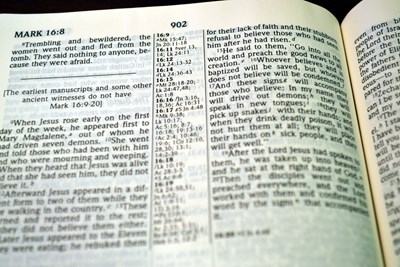
However, all throughout this study of Jesus’ passion week, I found myself feeling somewhat more afraid with every step we took as we moved closer and closer to the ending of Mark’s Gospel. You see, I already knew that there is a text critical question regarding Mark’s Ending, but the vast majority of the members of the class, being King James faithful, were very likely unaware of this issue. I was terrified of how they might react when I explained that Mark, chapter 16, verses 9-20, as they appear in their Bibles, are most likely secondary in nature. Well, I am glad to report that my brothers and sisters in Christ were more than gracious in accepting my explanation of the issue, which, as I had presumed, most of them had never been exposed to. But, the vast ignorance of this issue among so many Christians, especially down here in the Bible Belt, breaks my heart, so in the space that follows I would like to give a brief overview of the issues related to Mark’s ending(s).

The fact of the matter is that there are actually four endings to the Gospel of Mark which are extant in the manuscript tradition. They are as follows:

  1. No ending, as is indicated in most modern translations, the earliest and most reliable manuscripts, particularly B and א, end the text of the second Gospel at verse 8.
  2. The Short Ending, immediately following 16:8, “But they reported briefly to Peter and those with him all that they had been told. And after these things Jesus himself sent out through them, from east to west, the sacred and imperishable proclamation of eternal salvation.”
  3. The Long ending (otherwise known as 16:9-20), which is included in all Bible translations that are available today, though usually with brackets, footnotes, and/or other indicators of its questionable authenticity.
  4. The Expanded ending, which expands the Long ending after verse 14, saying, “This age of lawlessness and unbelief is under Satan, who does not allow the truth and power of God to prevail over the unclean things of the spirits [or, does not allow what lies under the unclean spirits to understand the truth and power of God]. Therefore reveal your righteousness now’ – thus they spoke to Christ. And Christ replied to them, ‘The term of years of Satan’s power has been fulfilled, but other terrible things draw near. And for those who have sinned I was handed over to death, that they may return to the truth and sin no more, in order that they may inherit the spiritual and incorruptible glory of righteousness that is in heaven.”

Now, I am not here to argue the merits for or against any particular one of these four endings, but suffice it to say that the overwhelming consensus of New Testament textual scholarship has concluded that all of the endings that we have (numbers 2-4 above) are inherently secondary, and that, whether intentionally or unintentionally, the Gospel of Mark as we know it ends at 16:8. Based on both external and internal evidence considerations, this much seems reasonably certain.

However, what is important is not one’s conclusion regarding the original ending of the Gospel of Mark, but what conclusions should be drawn in light of the textual question. First, we must maintain our belief in the fundamental trustworthiness and historical reliability of the Bible in general, and of the Gospel accounts in particular. Just because the last twelve verses of the second Gospel as we know it are in question, this does not mean that the rest of the Gospel of Mark, or the other three Gospels for that matter, are inherently false. In fact, all of the events in the so-called Long Ending are attested in the other accounts, especially in Luke and Acts. Further, we must remember that we do not build theological conclusions based on the testimony of one verse in isolation. As important as scriptural citations are in establishing the Biblical basis for our theological conclusions, individual verses must be understood within the context of the whole of Holy Scripture.

Second, this does not mean that translations of the Bible which lack any indication of the textual issue, e.g. some editions of the King James Version, are fundamentally in error, or that the are trying to lead people astray. The history of the Bible in English is long and complex, and conclusions that are based on the presence and/or omission of this particular issue, or others like it, are simplistic and reductionistic. To the extent that any English translation of the Bible faithfully reflects the original text of the autographs, then it can be read with great spiritual benefit. As Jesus promised, the Spirit will lead us into all truth through His Holy Word. Ultimately, He is the one who inspired the original  biblical authors, He is the one who has providentially preserved the text, and He is the one who gives understanding of its truths and applies them to our hearts to make us more like Christ.


On Modern Translations of the Bible and Missing Verses

bible_greek

One of the primary complaints that is most often levied against modern translations of the Bible into English by the King James Version faithful is that modern translations of the Bible omit some verses. Of course, it is typically the New International Version (NIV) that bears the brunt of these critiques, but the truth is that all modern translations omit some verses that are otherwise included in the Authorized Version (AV/KJV). Surprisingly, that point is actually not up for debate. There are verses that are found in the King James Version of the Bible that are generally not found in modern translations. There are other verses where the text is shortened as compared with their KJV counterparts, and there are still others where words and phrases are modified. The question, then, is not whether there are differences in modern translations as compared with the KJV; rather, the more important question is why there are differences.

And we cannot get too far into the consideration of this question without running headlong in the discipline of textual criticism. However, the problem is that most of the people who sit in the pews week in and week out have very little, or even no, understanding of this important discipline; they have no conception of how the text of Holy Scripture was transmitted from the pen of the original authors to the Bibles that we hold in our hands today. And whether it is due to the negative connotations associated with the word “criticism” or other presuppositions about the way that modern translations came to be, this crucial science is usually met with skepticism, fear, and denial. And this simply should not be.

Simply defined, textual criticism is “the process of attempting to ascertain the original wording of a text.” In other words, the Biblical authors of Holy Scripture were the ones who were inspired by God; therefore, it is their words that are the words of God. The challenge, though, for modern translators is that none of the documents that they produced actually exist. These original documents, called the autographs, have passed into the dust of history. Nevertheless, what we do have are copies of those autographs that have been passed down through time, called manuscripts. Of course, before the invention of the printing press by Johannes Gutenberg in the 15th century CE, these copies had to be made manually by the hands of scribes.

Yet, what is perhaps rather obvious but is sometimes forgotten is that these scribal copyists were humans, and as humans, they sometimes made mistakes in the duplication process. Whether in spelling or word order, whether by omission of words, phrases, and verses or by the addition of words, phrases, and verses, the reality is that no inerrant copy of scripture exists. So, when manuscripts from different places and from different times in the history of the church are compared, the truth is that there are incongruities and discrepancies in the manuscript tradition; no one manuscript agrees with every other manuscript in every instance. But this is where the role of textual criticism comes into the discussion. It is the textual critics role to compare these manuscripts with each other, along with evidence from patristic citations and other ancient versions, in an effort to reconstruct the original inspired wording of the Biblical authors.

And the result of this very tedious and time consuming endeavor is referred to as a critical edition. A critical edition represents what textual scholars, after much analysis and research, believe to be the earliest form of the text, the closest reproduction of the autographs, the most accurate reconstruction of the actual words of the inspired biblical authors. This critical edition, then, is used as the basis for translations into other languages like English. Of course, bible translators don’t just take the critical edition at its face value. Where a textual discrepancy makes significant difference in translation, I am sure they analyze the evidence for themselves, but, for the most part, the latest critical edition, usually Nestle/Aland or UBS, is what is translated into English in our modern translations.

Now, going back to the original question regarding omitted and modified verses in modern versions of the Bible as compared to the KJV, the reality is that the KJV, first published in 1611, is not based on the best and most reliable manuscripts that are available today. Of course, for its time, it was the epitome of textual scholarship and translation, but since then, many additional discoveries of biblical manuscripts have been made around the world that are both older and more reliable. Therefore, when there is a difference in the modern translations, rather than jumping to the conclusion that bad people are trying to change the Bible, we must entertain the possibility that they are simply translating a more accurate version of the text.

In the final analysis, the simple fact of the matter is that textual issues cannot simply be ignored in the teaching ministry of the local church. The sheer proliferation of footnotes, asteri, and other such indications in the vast majority of modern translations begs the question as to their meaning and significance. So, whether it is in small group bible studies, e.g. Sunday School, women’s groups, men’s groups, etc., or in the large group preaching/teaching setting, eventually this issue will demand our attention, and both pastors/teachers and members must be willing to have an open and honest discussion about these things.

For further study:
Metzger, Bruce M., and Bart D. Ehrman. The Text of the New Testament: Its Transmission, Corruption, and Restoration. 4th ed. New York: Oxford University Press, 2005.


Slow To Write

"let every person be quick to hear, slow to speak, slow to anger."

lovegavehope

Just another WordPress.com site

Jared Cornutt

Pastor | Speaker | Writer

Denny Burk

A commentary on theology, politics, and culture

G3 Ministries

Events + Resources for the Local Church

Biblical Reasoning

Biblical and Systematic Theology According to the Scriptures

RetroChristianity

Reclaiming the Forgotten Faith

SBC Voices

Southern Baptist News & Opinion

Lucid Theology

Thoughts on words, books, theology, and life.

Baptist21

A pastor-led voice for Baptists in the 21st century

Center For Baptist Renewal

The Personal and Professional Blog of Phillip Powers

The Pastor's Well - Pastor Well

The Personal and Professional Blog of Phillip Powers

Articles - AlbertMohler.com

The Personal and Professional Blog of Phillip Powers

The Gospel Coalition

The Personal and Professional Blog of Phillip Powers