Tag Archives: Gospel of Mark

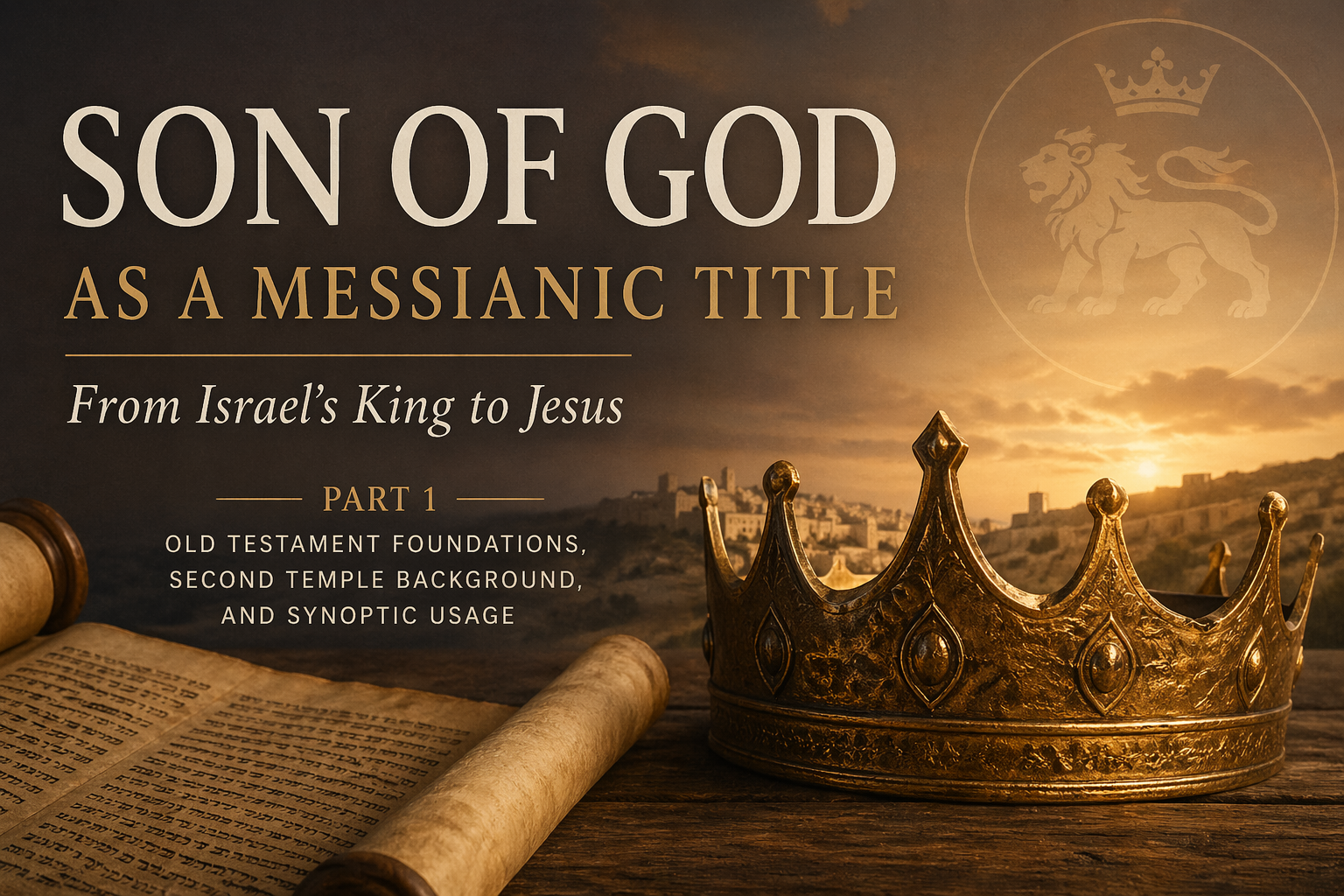
On Son of God as a Messianic Title

When Christians confess that Jesus is the Son of God, we are usually affirming something of his divinity. In other words, the title “Son of God” is typically understood in doctrinal terms as an affirmation that Jesus is the second person of the Trinity come incarnate. This understanding reaches back to the formulation of the First Council of Nicaea in AD 325. In that creed, we confess that Jesus is “the only begotten Son of God, born of the Father before all ages, God from God, Light from Light, true God from true God, begotten, not made, consubstantial with the Father.” These are beautiful words that faithfully express the truth of Christ’s divinity. However, they also risk skipping the story. In Scripture, the term “Son of God” first emerges as a royal, messianic title before it is developed into a fuller theological claim about his divine identity. Its meaning is shaped by covenant, kingship, and expectation, and only later expanded in light of who Jesus truly is.

The idea of sonship appears early in the Old Testament. As early as Exodus 4.22, God declares that “Israel is my firstborn son,” identifying the nation as his covenant people, set apart to represent him among the nations. Later, in the Davidic covenant, God speaks of the king in similar terms: “I will be his father, and he will be my son” (2 Sam. 7.14). Here, sonship is tied directly to kingship and divine appointment. The king stands as God’s representative, ruling on his behalf and under his authority. This same idea is expressed in Psalm 2, where, in the context of royal coronation, the king declares, “He said to me, ‘You are my Son; today I have begotten you.'” The language is not biological or metaphysical, but covenantal and functional. It marks the king as the one chosen and installed by God to exercise his rule. The point, then, is that in these texts divine sonship refers to representative, covenantal identity. It speaks of relational authority, divine election, and royal vocation rather than transcendent metaphysical realities. To be called ‘Son of God’ in this context is to be appointed as God’s king, entrusted with the responsibility of embodying his rule among his people.

The problem, however, is that these “sons of God” consistently fail to live up to the height of their calling. As God’s son, Israel was called to be a kingdom of priests, a light to the nations, and a visible reflection of God’s character in the world. Yet instead of faithfulness, they fell into sin and idolatry, broke the terms of the covenant, and were ultimately sent into exile under its curses. The same pattern emerges in the Davidic line. The kings of Israel and Judah, who were called to mediate God’s rule over his people, likewise failed through disobedience and compromise. This tension is reflected within the Psalms themselves. In Psalm 2, the authority of the Lord’s anointed king is met with resistance as the nations rage against him. In Psalm 89, the psalmist recalls God’s covenant promises to David, only to lament that those promises appear to stand in contradiction to present reality. The result is that the category of “son of God” begins to carry forward-looking weight. It no longer simply describes a present reality; it generates expectation. There emerges a longing for a faithful son, a greater son, who will succeed where Israel and her kings have failed, a hope captured in texts like Isaiah 9.6–7, where the promised son will finally bear the government in righteousness and peace. In other words, the Scriptures create space for a future Son who will succeed where others failed.

This hope for a greater Son of God becomes more clearly defined in the Second Temple period. Of course, these texts are not inspired Scripture, but they do provide important insight into the expectations and categories that were alive at the time of Jesus. What we see is a growing anticipation of deliverance increasingly framed in royal and messianic terms. While these expectations are diverse, there remains a significant continuity with Old Testament categories, especially the idea of the “Son of God.” For example, among the Dead Sea Scrolls, texts like 4Q174 (the Florilegium) link the Davidic covenant and the language of sonship in 2 Samuel 7.14 with the expectation of a coming royal Messiah. Likewise, 4Q246 explicitly uses the titles “Son of God” and “Son of the Most High” in reference to a future ruler. Another text, 1QSa (often cited as 1Q28a), appears to echo Psalm 2.7 with language of divine begetting applied to the Messiah. These examples could be multiplied, but the point is clear: in the Second Temple period, the concept of divine sonship is not abandoned or redefined, but carried forward and intensified. It remains closely tied to the Davidic king, even as it takes on heightened expectation in anticipation of the one who will finally fulfill that role. Or to put it another way, the term “Son of God” was already a loaded, expectation-filled term before Jesus appeared.

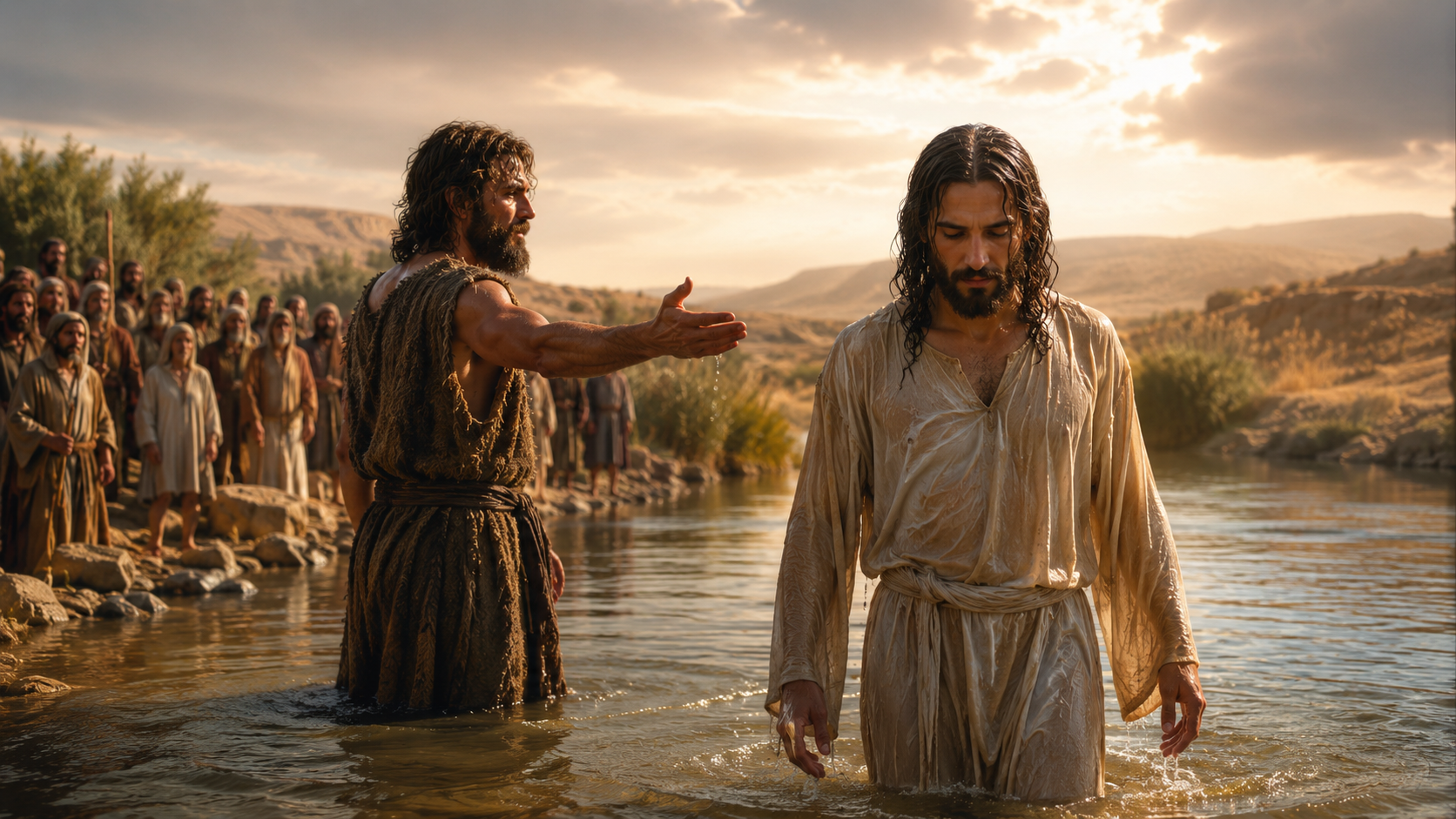
In the Synoptic Gospels, “Son of God” language appears at key moments in the life and ministry of Jesus. Most notably, at his baptism and again at his transfiguration, a voice from heaven declares, “This is my beloved Son,” marking him out as the one uniquely appointed and affirmed by God. The demons, too, recognize Jesus as the Son of God, a recognition that underscores his authority and signals his messianic identity, even when others fail to perceive it clearly. This comes into sharper focus at Caesarea Philippi. When Jesus asks his disciples, “Who do you say that I am?”, Peter responds, “You are the Messiah, the Son of the living God.” The grammar of this confession is particularly significant. The predicate nominative “Messiah” and the phrase “Son of the living God” stand in apposition, meaning that the second expression defines and clarifies the first. In other words, to confess Jesus as the Messiah is to confess him as the Son of God. In this context, divine sonship is directly tied to his mission, obedience, and kingship. At the same time, Jesus redefines contemporary messianic expectations. He rejects the political and nationalistic ambitions often associated with the Messiah and instead frames his identity around suffering, obedience, and ultimately his death. The point, then, is that throughout the Synoptic Gospels, the title “Son of God” functions primarily as a messianic designation, identifying who Jesus is and what he has come to do.

Even at his crucifixion, the language of sonship is front and center. The religious leaders mock him, saying, “If you are the Son of God, come down from the cross” (Matt. 27.40), and again, “He is the King of Israel! Let him come down now from the cross, and we will believe in him” (Matt. 27.42). The parallelism in these statements is striking. “Son of God” and “King of Israel” function as equivalent titles, reinforcing the connection between divine sonship and messianic kingship. And yet, this is the tension: the one who claims to be the Son of God appears to be defeated. He does not come down from the cross; he remains and suffers. But this apparent contradiction is precisely the point. Jesus does not abandon his identity as the Son; he fulfills it through obedience and suffering. His sonship is not negated at the cross; it is revealed there. The resurrection then serves as the divine vindication of his claims. As Paul writes in Romans 1.4, he was “appointed Son of God in power… by the resurrection from the dead.” That is, the resurrection publicly confirms what was already true of him, now revealed in power. The cross is not the denial of his kingship, but the path to it. As even the Roman centurion confesses at his death, “Truly this man was the Son of God.”

The early apostolic witness continues this same pattern by interpreting Jesus’s sonship in light of his resurrection and exaltation. In the book of Acts, the apostles repeatedly draw from the Psalms to explain what God has accomplished in Christ. For example, in Acts 13, Paul cites Psalm 2.7—“You are my Son; today I have begotten you”—and applies it to the resurrection of Jesus. In this context, the language of “begetting” is not about origin, but about installation. The resurrection marks the public declaration and vindication of Jesus as the Son of God, the one who now reigns in power. Similarly, Psalm 110 is used throughout the New Testament to describe Christ’s exaltation to the right hand of God, a position of authority, kingship, and rule over all things. The point is that the apostles read the Psalms as speaking directly to the identity and mission of Jesus, particularly as they relate to his enthronement. His sonship is not merely a title attached to his earthly ministry; it is confirmed and displayed in his exaltation. In other words, Jesus is revealed to be the Son of God in power as the risen and reigning king, fulfilling the royal and covenantal expectations embedded in the Psalter. (On Christ as the fulfillment of the Psalms, see here.)

Bringing all of this together, the title “Son of God” in Scripture carries a rich and layered meaning that is rooted in covenant, kingship, and ultimately fulfillment in Christ. It is a title that begins with Israel as God’s son, is focused and intensified in the Davidic king, and then expands into a forward-looking expectation for a faithful Son who will succeed where all others have failed. In Jesus, that expectation is finally realized. He is the true Son who embodies what Israel was called to be, the true King who fulfills the promises made to David, and the obedient Son who accomplishes the will of the Father. His sonship is not defined by abstract speculation, but by his mission—his life of perfect obedience, his suffering on the cross, his resurrection from the dead, and his exaltation to the right hand of God. To confess Jesus as the Son of God, then, is to confess him as the promised Messiah, the one in whom God’s purposes for his people and his world are brought to completion. And yet, as full and glorious as this picture is, the story does not end here. The New Testament, particularly in the Gospel of John, will press even further, showing that Jesus’s sonship is not only messianic, but also reveals something deeper about his identity. But that is a discussion for another time.


On the Trinity, the Cross, and the Cry of Dereliction

Today is Good Friday, a day when Christians around the world will pause to think about the death of Jesus Christ. It is a scene that has gripped the imaginations of Christian artists and sculptors now for two millennia, the Son of God hanging, naked, beaten, and bleeding, nailed to a Roman cross, and left to die. The brutal and gory realities of the scene would probably turn even the strongest of stomachs. And yet, for followers of Jesus, the words of the old hymn writer capture it well, “O that old rugged cross, so despised by the world, has a wondrous attraction for me.” This is because for those whose sins have been washed away by the shed blood of Christ, there is simply nothing more beautiful, nothing more deeply profound, than the substitutionary death of Son of God.

The profundity of the scene is best expressed in the words of Jesus; “About three in the afternoon Jesus cried out with a loud voice, “Elí, Elí, lemá sabachtháni?” that is, “My God, my God, why have you abandoned me?” (Matthew 27.46) This “cry of dereliction”, which Jesus quotes from Psalm 22.1, is typically explained as the moment in which the full weight of God’s wrath toward sin was placed on the Son, and because God is essentially holy and cannot look upon sin, “the father turned his face away”, as we often sing. Of course, I am not sure that we will ever understand what Jesus was feeling in that moment, but the significance of the moment invites us to spend the next few moments attempting to understanding its theological implications.

And our reflection on this scene must begin with the affirmation of the hypostatic union, or the truth that Jesus was both God and man. He was God the Son incarnate. So, what might it mean for the Son to be “abandoned” by the Father? From a trinitarian perspective, it cannot mean that the godhead was divided in any kind of way. We confess that the God of the Bible is three in one – Father, Son, and Holy Spirit – one in essence, three in person. As a corollary, we confess that there is one God; we are not tri-theists. So, if there is only one God, then, it is metaphysically impossible for God to be divided from himself. In other words, the “cry of dereliction” cannot be understood to imply a separation or a division of the Father from the Son, or of God from himself.

Secondly, the doctrine of the Trinity also implies the idea of inseparable operations, meaning that whatever the Father does, the Son and the Holy Spirit do also, because there is only one God. This means that when the Father poured out His wrath on Jesus at the cross, that wrath belonged equally to the Son and the Spirit as well. So, it is completely accurate to say that the Son poured out His own wrath toward sin on Himself at the cross. This is the beauty of the Gospel, namely that what the justice of God required the love of God supplied. God took into Himself, in the person of Jesus Christ, the wrath that we deserve, so that we could be saved from His wrath. This truth should always leave us absolutely breathless and without words.

So, can we still sing the words “the father turned His face away”? I think yes; as Paul writes in 2 Corinthians 5:21, “He made the one who did not know sin to be sin for us.” One commentator that I recently read explains, “In a sense beyond human comprehension, God treated Christ as ‘sin,’ aligning him so totally with sin and its dire consequences that from God’s viewpoint he became indistinguishable from sin itself.” Jesus knew this to be his fate. He was fully and completely human, and, on the night He was betrayed, the burden of this task was so heavy that it caused even to sweat great drops of blood. Whatever the god-man felt in that moment, hanging there as the perfect and final sacrifice for our sin, is simply beyond our capability to fathom. Nevertheless, it was a fate that He willingly embraced for the sake of our salvation. And so we sing,

In that old rugged cross, stained with blood so divine,
a wondrous beauty I see,
for ’twas on that old cross Jesus suffered and died,
to pardon and sanctify me.

For further study, see
Matthew Emerson, “Parameters for Talking about the the Cry of Dereliction” (March 27, 2018)
and “Canonical Parameters for Talking about the Cry of Dereliction” (April 3, 2018)


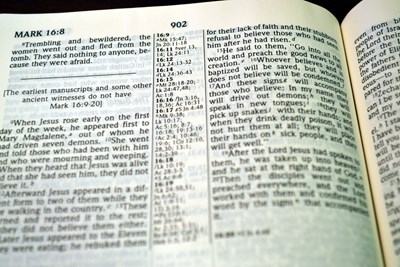
On the Ending(s) of the Gospel of Mark

d38a6db3-bd4e-4462-b587-5e0764af14dd-mark-16

In the Sunday School class that I am a part of, we have recently been studying the history and meaning of the cross, and as a part of that study, I suggested that while the historical specifics and the theological significance of the cross are important, to truly understand the cross, we must understand it narratively as the climax of the Passion of our Lord and Savior Jesus Christ. This led the class’s facilitator to ask me to walk us through the Passion narrative, an invitation that I was more than willing to accept, and so, for more than two months, we followed in the steps of Jesus as He made his way toward the cross. And we did this by focusing specifically on Mark’s version of these events, which is recorded in chapters 11-16 of his Gospel.

It has been said that Mark’s Gospel is simply a “passion narrative with an extended introduction.” And whether that is an accurate description or not, Mark does allocate a disproportionate amount of space to the final week of Jesus’ life as compared with the first three plus years of His public ministry or, even, the thirty-some years that Jesus had lived beforehand. To be specific, Mark dedicates six entire chapters of his Gospel, some 38% if you are doing the math, to the events leading up and following Jesus’ death on the cross. Obviously, he thought that these events were of supreme significance. And so, typical of Mark’s style, these final six chapters tell the story of Jesus’ passion with such action and drama as to constantly leave the reader on the edge of their seat waiting to see what might happen next.

However, all throughout this study of Jesus’ passion week, I found myself feeling somewhat more afraid with every step we took as we moved closer and closer to the ending of Mark’s Gospel. You see, I already knew that there is a text critical question regarding Mark’s Ending, but the vast majority of the members of the class, being King James faithful, were very likely unaware of this issue. I was terrified of how they might react when I explained that Mark, chapter 16, verses 9-20, as they appear in their Bibles, are most likely secondary in nature. Well, I am glad to report that my brothers and sisters in Christ were more than gracious in accepting my explanation of the issue, which, as I had presumed, most of them had never been exposed to. But, the vast ignorance of this issue among so many Christians, especially down here in the Bible Belt, breaks my heart, so in the space that follows I would like to give a brief overview of the issues related to Mark’s ending(s).

The fact of the matter is that there are actually four endings to the Gospel of Mark which are extant in the manuscript tradition. They are as follows:

  1. No ending, as is indicated in most modern translations, the earliest and most reliable manuscripts, particularly B and א, end the text of the second Gospel at verse 8.
  2. The Short Ending, immediately following 16:8, “But they reported briefly to Peter and those with him all that they had been told. And after these things Jesus himself sent out through them, from east to west, the sacred and imperishable proclamation of eternal salvation.”
  3. The Long ending (otherwise known as 16:9-20), which is included in all Bible translations that are available today, though usually with brackets, footnotes, and/or other indicators of its questionable authenticity.
  4. The Expanded ending, which expands the Long ending after verse 14, saying, “This age of lawlessness and unbelief is under Satan, who does not allow the truth and power of God to prevail over the unclean things of the spirits [or, does not allow what lies under the unclean spirits to understand the truth and power of God]. Therefore reveal your righteousness now’ – thus they spoke to Christ. And Christ replied to them, ‘The term of years of Satan’s power has been fulfilled, but other terrible things draw near. And for those who have sinned I was handed over to death, that they may return to the truth and sin no more, in order that they may inherit the spiritual and incorruptible glory of righteousness that is in heaven.”

Now, I am not here to argue the merits for or against any particular one of these four endings, but suffice it to say that the overwhelming consensus of New Testament textual scholarship has concluded that all of the endings that we have (numbers 2-4 above) are inherently secondary, and that, whether intentionally or unintentionally, the Gospel of Mark as we know it ends at 16:8. Based on both external and internal evidence considerations, this much seems reasonably certain.

However, what is important is not one’s conclusion regarding the original ending of the Gospel of Mark, but what conclusions should be drawn in light of the textual question. First, we must maintain our belief in the fundamental trustworthiness and historical reliability of the Bible in general, and of the Gospel accounts in particular. Just because the last twelve verses of the second Gospel as we know it are in question, this does not mean that the rest of the Gospel of Mark, or the other three Gospels for that matter, are inherently false. In fact, all of the events in the so-called Long Ending are attested in the other accounts, especially in Luke and Acts. Further, we must remember that we do not build theological conclusions based on the testimony of one verse in isolation. As important as scriptural citations are in establishing the Biblical basis for our theological conclusions, individual verses must be understood within the context of the whole of Holy Scripture.

Second, this does not mean that translations of the Bible which lack any indication of the textual issue, e.g. some editions of the King James Version, are fundamentally in error, or that the are trying to lead people astray. The history of the Bible in English is long and complex, and conclusions that are based on the presence and/or omission of this particular issue, or others like it, are simplistic and reductionistic. To the extent that any English translation of the Bible faithfully reflects the original text of the autographs, then it can be read with great spiritual benefit. As Jesus promised, the Spirit will lead us into all truth through His Holy Word. Ultimately, He is the one who inspired the original  biblical authors, He is the one who has providentially preserved the text, and He is the one who gives understanding of its truths and applies them to our hearts to make us more like Christ.


Slow To Write

"let every person be quick to hear, slow to speak, slow to anger."

lovegavehope

Just another WordPress.com site

Jared Cornutt

Pastor | Speaker | Writer

Denny Burk

A commentary on theology, politics, and culture

G3 Ministries

Events + Resources for the Local Church

Biblical Reasoning

Biblical and Systematic Theology According to the Scriptures

RetroChristianity

Reclaiming the Forgotten Faith

SBC Voices

Southern Baptist News & Opinion

Lucid Theology

Thoughts on words, books, theology, and life.

Baptist21

A pastor-led voice for Baptists in the 21st century

Center For Baptist Renewal

The Personal and Professional Blog of Phillip Powers

The Pastor's Well - Pastor Well

The Personal and Professional Blog of Phillip Powers

Articles - AlbertMohler.com

The Personal and Professional Blog of Phillip Powers

The Gospel Coalition

The Personal and Professional Blog of Phillip Powers