Tag Archives: Messiah

On Knowing Jesus through the Old Testament: A Book Review

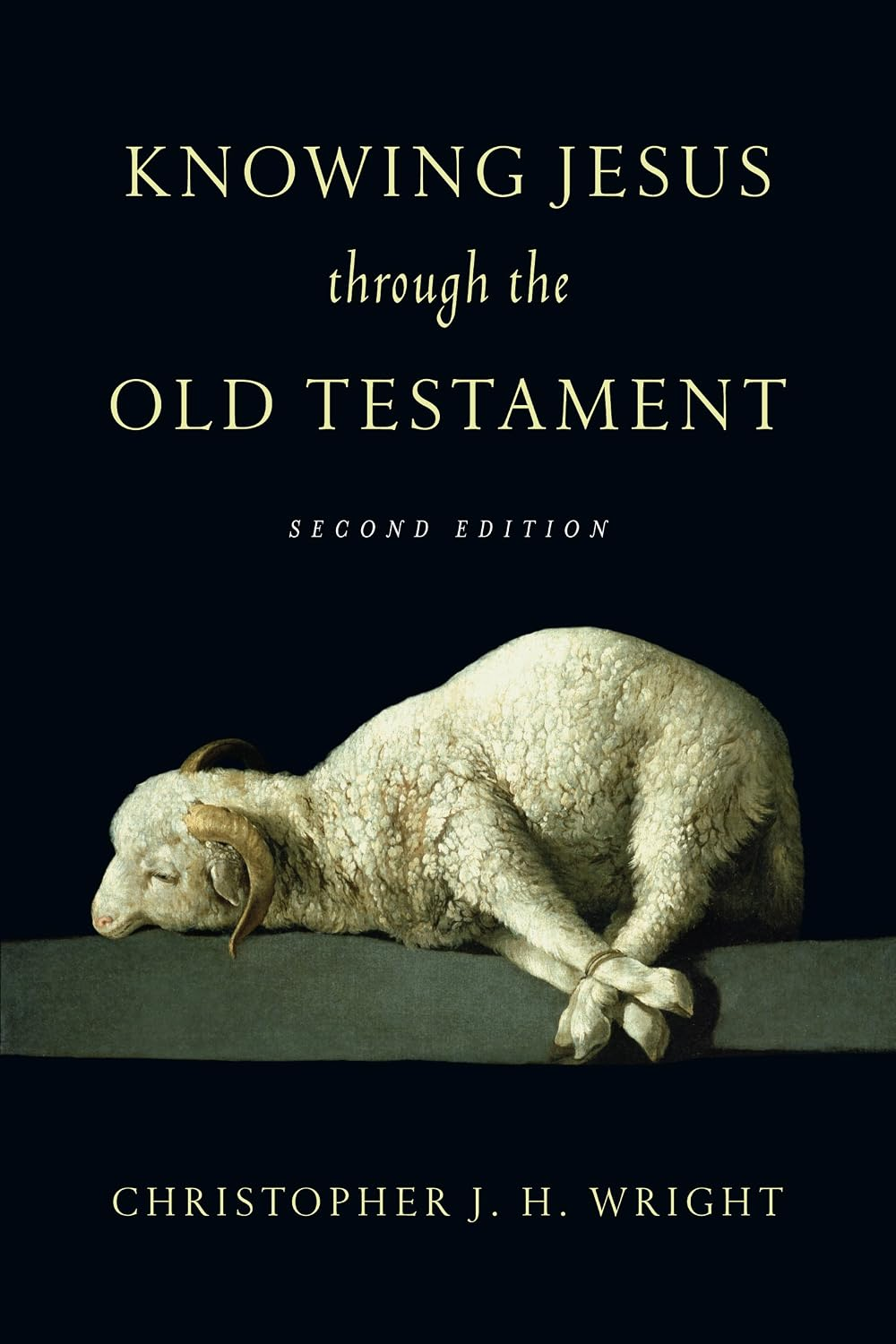
Wright, Christopher J. H. Knowing God through the Old Testament. Second Edition. Grand Rapids: Intervarsity Press, 2014.

Who was Jesus? How should he be understood? It has become almost a truism among historical Jesus scholars that Jesus must be understood within the context of Second Temple Judaism. He was a man of his own time, and this means that his teachings, actions, and self-understanding must be interpreted against the backdrop of first-century Jewish beliefs and expectations. More specifically, Jesus’s understanding of his own identity and mission was profoundly shaped by Israel’s Scriptures, what Christians know as the Old Testament. Although this observation may seem obvious, its importance is frequently overlooked. There remains a widespread tendency in modern discussions to disconnect Jesus from his Old Testament background, resulting in a portrait of Jesus that is neither historically satisfying nor theologically coherent. In Knowing Jesus through the Old Testament, Christopher J. H. Wright seeks to correct this tendency by situating the person and work of Jesus firmly within the unfolding story of Israel’s Scriptures. First published in 1992 and now available in a revised second edition as of 2014, Wright’s work has become something of a modern classic in biblical theology. Therefore, it is the thesis of this review that Knowing Jesus through the Old Testament succeeds admirably in demonstrating that Jesus’s identity and mission can only be fully understood against the backdrop of Israel’s Scriptures, even if some aspects of Wright’s approach invite further discussion.

Wright’s essential thesis is that Jesus’s understanding of himself and his mission was profoundly shaped by his study of and reflection upon the Old Testament Scriptures. In other words, Jesus repeatedly presents himself as the fulfillment of Israel’s story in ways that demonstrate his unique identity as the Christ, the Son of the living God. Wright develops this thesis by examining the major themes of the Old Testament that converge in the person and work of Jesus. He begins with Israel’s story itself, arguing that Jesus consciously understood his life and ministry as the climax of God’s covenant dealings with his people. From there, Wright explores Jesus’s identity as Israel’s Messiah and Davidic King, showing how the hopes and expectations of the Old Testament find their fulfillment in him. He then turns to the mission of Jesus, demonstrating that Christ’s proclamation of the Kingdom of God, his suffering, death, and resurrection, and his calling of disciples all stand firmly within the trajectory established by Israel’s Scriptures. Throughout the book, Wright carefully weaves together themes such as covenant, kingdom, redemption, mission, and fulfillment in order to show that the Old Testament is not merely a collection of predictions about Jesus but the very theological framework through which Jesus understood his own identity and vocation. The result is a compelling portrait of Jesus that is both historically grounded in first-century Judaism and deeply rooted in the unfolding story of God’s redemptive purposes revealed throughout the Old Testament.

The greatest strength of Wright’s work lies in its thoroughly canonical and biblical-theological approach to the person of Jesus. Rather than treating the Old Testament as a collection of isolated messianic proof texts, Wright demonstrates that Jesus understood himself within the unfolding story of Israel. The significance of Jesus’s identity and mission, therefore, cannot be grasped apart from the covenant, kingdom, promises, and expectations established throughout the Old Testament. This approach not only reflects the way Jesus himself repeatedly interpreted his ministry, but it also provides readers with a richer and more coherent understanding of the unity of Scripture. Closely related to this is Wright’s remarkable ability to integrate historical context, theological reflection, and biblical theology into a single, compelling presentation. He consistently situates Jesus within the world of first-century Judaism while never losing sight of the larger redemptive story that stretches from Genesis to Revelation. As a result, the reader comes away with a portrait of Jesus that is historically grounded without becoming reductionistic and theologically profound without becoming overly speculative. Another significant strength is Wright’s emphasis upon the continuity between Israel, Jesus, and the church. Rather than presenting Christianity as a departure from the Old Testament, he shows that the mission of Jesus represents the fulfillment of God’s covenant purposes for Israel and, through Israel’s Messiah, extends those blessings to the nations. Finally, despite engaging substantial theological themes, Wright writes with exceptional clarity and accessibility. His prose is straightforward, his arguments are well organized, and his illustrations are both helpful and memorable. This makes for easy and enjoyable reading from beginning to end.

Of course, no book is without its limitations, and Knowing Jesus through the Old Testament is no exception. Perhaps the most noticeable weakness is that Wright’s broad biblical-theological synthesis occasionally comes at the expense of detailed exegetical interaction with individual texts. His purpose is clearly to present the larger contours of the Old Testament’s witness to Christ rather than to defend every interpretive conclusion in detail. Nevertheless, readers looking for sustained engagement with particular passages or with competing scholarly interpretations may occasionally find themselves wanting more. Closely related to this is the fact that some themes receive considerably more attention than others. Wright’s discussions of covenant, kingdom, and Israel’s story are among the strongest sections of the book, while other important Old Testament motifs could have been explored in greater depth. Likewise, although Wright consistently situates Jesus within the world of first-century Judaism, greater interaction with developments in Second Temple Judaism would have further strengthened certain aspects of his argument by demonstrating more explicitly how Jesus both fulfilled and challenged the expectations of his contemporaries. Finally, Wright occasionally moves rather quickly from Old Testament themes to their fulfillment in Christ, assuming typological connections that many readers will readily accept but that others may have wished to see defended more fully. Even so, these observations do little to diminish the overall value of the work. They reflect the inevitable limitations of a synthetic volume rather than any significant weakness in Wright’s central thesis.

In the final analysis, Knowing Jesus through the Old Testament is a compelling and important contribution to biblical theology. Wright reminds us that Jesus did not appear in history as the founder of a new religion or as a figure detached from Israel’s past. Rather, he came as the fulfillment of God’s covenant purposes, bringing Israel’s story to its divinely intended climax. By consistently situating Jesus within the theological world of the Old Testament, Wright demonstrates that the Scriptures of Israel are not merely the background to the New Testament but the indispensable foundation for understanding the identity, mission, and message of Jesus Christ. In an age when the Old Testament is too often neglected or treated as merely preparatory to the New Testament, Wright reminds readers that the story of Jesus cannot be separated from the story of Israel, for the latter finds its fulfillment in the former. For this reason, I would readily recommend this book to pastors, seminary students, Bible teachers, and thoughtful Christians who desire a richer understanding of the unity of Scripture and the centrality of Christ within God’s redemptive plan. Though readers may occasionally wish for more detailed exegetical interaction or greater engagement with certain scholarly discussions, these minor limitations do little to diminish the book’s overall contribution. If readers come away from this volume with a renewed appreciation that the Old Testament is essential for understanding the person and work of Jesus Christ, then Wright will have accomplished precisely what he set out to do. Few books succeed so well in helping readers know Jesus by first learning to read him through the Scriptures that he himself loved, studied, and fulfilled.


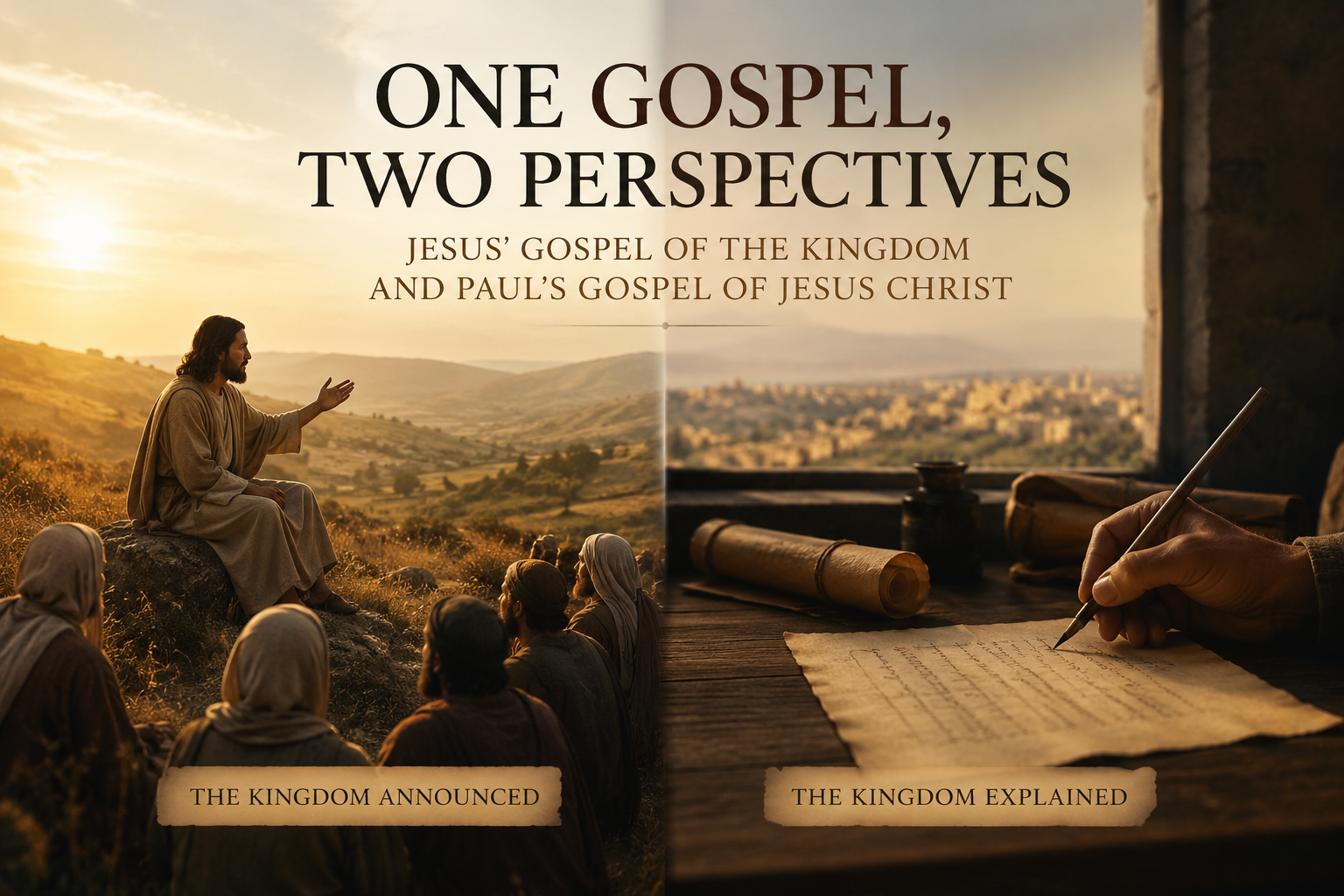
On the Gospel of the Kingdom and the Gospel of Jesus Christ

When Jesus stepped onto the scene in Galilee following the arrest of John the Baptist, he began preaching, “The time is fulfilled, and the kingdom of God has come near. Repent and believe the good news!” (Mark 1.15). His message focused on the arrival of the kingdom of God, the fulfillment of Israel’s prophetic hopes, and the call to repentance in light of God’s decisive action in history. Throughout the book of Acts and his epistles, however, the Apostle Paul repeatedly preached the gospel of Jesus Christ. His message emphasized the death and resurrection of Jesus, justification by faith, the forgiveness of sins, and the hope of resurrection. At first glance, these emphases can appear quite different. Jesus seems to proclaim the kingdom, while Paul proclaims Christ. Indeed, some scholars have argued that Paul transformed the original message of Jesus into something fundamentally different, shifting the focus from the kingdom of God to the person of Jesus himself. But are these really two different gospels? Must we choose between the message of Jesus and the message of Paul? It is my contention that the apparent tension disappears when both are understood within the broader framework of biblical eschatology. Far from proclaiming competing messages, Jesus and Paul announce the same good news from different vantage points within the unfolding drama of God’s redemptive plan.

Scholars of the historical Jesus are virtually unanimous in recognizing that the kingdom of God stood at the very center of Jesus’s preaching ministry. For example, in Matthew 4.23, we read, “Now Jesus began to go all over Galilee, teaching in their synagogues, preaching the good news of the kingdom, and healing every disease and sickness among the people.” Or again, in Matthew 24.14, Jesus declares that “this good news of the kingdom will be proclaimed in all the world as a testimony to all nations, and then the end will come.” For Jesus, the kingdom is nothing less than the reign of God breaking into history to accomplish his redemptive purposes. It is the fulfillment of Old Testament prophetic hopes such as those found in Isaiah and Daniel. Isaiah envisioned a time when God would restore his people, forgive their sins, defeat their enemies, and bring salvation to the nations. Daniel likewise anticipated the coming of the Son of Man, to whom would be given an everlasting kingdom that would never pass away. These hopes converge in the preaching of Jesus. The kingdom involves the liberation and vindication of God’s people, the defeat of evil, the forgiveness of sins, and the establishment of God’s righteous rule over all creation. In other words, Jesus did not merely announce a message of individual personal salvation; he announced the arrival of God’s long-promised reign and the fulfillment of Israel’s eschatological hope.

However, it is important to remember that Jesus never separates the kingdom from himself. He is the one true and rightful king, God’s anointed Messiah, and wherever the king is, there the kingdom stands. This is why Jesus could say to the Pharisees, when they asked him about the coming of the kingdom, “For you see, the kingdom of God is in your midst” (Luke 17.21). The kingdom was in their midst because the King himself stood among them. In other words, the kingdom is inseparable from the identity and mission of Jesus. This reality is evident throughout the Gospels. In the Son of Man sayings, Jesus identifies himself as the one who will receive dominion and an everlasting kingdom in fulfillment of Daniel 7. Likewise, in the kingdom parables, the growth and consummation of the kingdom are tied directly to his own ministry and mission. The same connection appears in the triumphal entry, where Jesus deliberately presents himself as Israel’s promised king, and again at the Last Supper, where he speaks of the coming kingdom in the context of his impending death. Far from being an unfortunate interruption of the kingdom program, the cross stands at its very center. Jesus understood that God’s reign would be established through his suffering, resurrection, and exaltation. The kingdom does not arrive apart from the King; it comes precisely through the saving work of the King himself.

This is precisely where the Apostle Paul enters into the discussion. Throughout his missionary ministry and epistles, Paul repeatedly proclaimed the good news of Christ’s saving work. In 1 Corinthians 15, he summarizes the gospel in its most basic form: Christ died for our sins, Christ was buried, Christ was raised on the third day, and Christ appeared to many witnesses (1 Cor. 15.1–8). At first glance, this emphasis on the death and resurrection of Jesus may appear quite different from Jesus’s proclamation of the kingdom of God. However, such a conclusion overlooks the fundamentally royal character of Paul’s gospel. Paul is not merely interested in what Christ accomplished; he is equally concerned with who Christ is. Again and again, he identifies Jesus as the promised Son of David, the Messiah, and the exalted Lord. For example, in Romans 1, Paul describes the gospel as being “concerning his Son, Jesus Christ our Lord, who was a descendant of David according to the flesh and was appointed to be the powerful Son of God according to the Spirit of holiness by the resurrection of the dead” (Rom. 1.3–4). Notice the royal language. Jesus is the Davidic king promised in the Old Testament, and his resurrection is the moment of his public vindication and enthronement. The point, then, is that Paul’s gospel is not less concerned with the kingdom than Jesus’s gospel. Rather, Paul focuses on the King through whom God’s kingdom has been established and through whom its blessings are now extended to the nations.

But the question remains: why the difference in emphasis? Why do Jesus and Paul sound so different in their proclamation of the gospel? The answer is that they stand at different points within the unfolding drama of redemptive history. The earthly ministry of Jesus occurs before the cross, before the resurrection, and before the ascension. He ministered primarily among Jews in Galilee and Judea, and therefore proclaimed a message that resonated deeply with Israel’s scriptural hopes and expectations. His preaching announced that the kingdom of God was at hand and that the promises spoken by the prophets were beginning to find their fulfillment. In other words, Jesus proclaimed what God was about to accomplish through his own person and work. Paul, by contrast, preached after these events had already occurred. He knew the crucified and risen Christ not merely as a future hope, but as a historical reality. Having encountered the exalted Lord on the road to Damascus, Paul devoted his ministry to explaining the significance of Christ’s death, resurrection, and exaltation for both Jews and Gentiles. Thus, Jesus announces the arrival of the kingdom, while Paul explains how that kingdom was established through the saving work of its King. The difference, then, is not one of substance but of historical perspective. Jesus proclaims the fulfillment that is coming; Paul proclaims the fulfillment that has come.

Of course, Paul is fully aware of the reality and significance of the kingdom of God. In fact, kingdom language appears throughout both his preaching and his letters. For example, in Colossians 1.13, he writes that God “has rescued us from the domain of darkness and transferred us into the kingdom of the Son he loves.” Notice that for Paul the kingdom is not merely a future hope; it is a present reality into which believers have already been brought through their union with Christ. Likewise, when Paul arrives in Rome at the end of Acts, Luke tells us that “from dawn to dusk he expounded and testified about the kingdom of God” (Acts 28.23), and concludes the book by describing Paul as “proclaiming the kingdom of God and teaching about the Lord Jesus Christ” (Acts 28.31). Significantly, Luke treats these two subjects as complementary rather than contradictory. The same pattern appears in 1 Corinthians 15.24–28, where Paul describes the consummation of history as the moment when Christ delivers the kingdom to the Father so that God may be all in all. The point is that Paul never abandoned kingdom theology; rather, he interpreted the kingdom through the death, resurrection, exaltation, and future return of Jesus. For Paul, the kingdom remains central because the King remains central.

In the final analysis, then, we can say that Jesus announced the kingdom, while Paul explained how that kingdom was established through the person and work of Christ. Jesus proclaimed its arrival; Paul proclaimed its accomplishment. Yet beneath these differing emphases lies a profound theological unity. Both Jesus and Paul understood God’s saving work as the fulfillment of Israel’s long-awaited hopes. Both proclaimed the reign of God breaking into history to accomplish redemption. Both understood forgiveness of sins, salvation for the nations, and the resurrection of the dead as essential features of God’s eschatological plan. The difference is not that Jesus preached one gospel and Paul another, but that each proclaimed the same gospel from a different vantage point within the unfolding drama of redemption. Jesus announced that the kingdom had drawn near because the King had arrived. Paul proclaimed that the kingdom had been inaugurated because the King had died, risen, and been exalted to the right hand of God. Thus, the gospel of the kingdom and the gospel of Jesus Christ are not rival messages but complementary perspectives on the same redemptive reality. To separate the kingdom from the King is to misunderstand Jesus, and to separate the King from the kingdom is to misunderstand Paul. Both stand together in proclaiming the fulfillment of God’s promises in Christ.

Ultimately, this discussion reminds us of the profound unity of the New Testament witness. Too often, Jesus and Paul are set against one another, as though they were proclaiming different messages or pursuing different theological agendas. Yet the testimony of the New Testament is remarkably consistent. The God who promised to establish his reign through Israel’s Messiah has done exactly that in the person of Jesus Christ. The kingdom that Jesus announced is the same kingdom that Paul proclaimed, and the salvation that Paul explained is the same salvation that Jesus came to accomplish. Rather than forcing a choice between the message of Jesus and the message of Paul, we should allow each to illuminate the other. When we do, we discover a single gospel centered on a single Savior, through whom God is fulfilling his promises and reconciling the world to himself.


On Thinking Theologically (Weekend Vlog)


On the Love and the Justice of God

TEXT

The word of the Lord that came to Hosea son of Beeri during the reigns of Uzziah, Jotham, Ahaz, and Hezekiah, kings of Judah, and of Jeroboam son of Jehoash, king of Israel.

When the Lord first spoke to Hosea, he said this to him:

Go and marry a woman of promiscuity,
and have children of promiscuity,
for the land is committing blatant acts of promiscuity
by abandoning the Lord.

So he went and married Gomer daughter of Diblaim, and she conceived and bore him a son. Then the Lord said to him:

Name him Jezreel, for in a little while
I will bring the bloodshed of Jezreel
on the house of Jehu
and put an end to the kingdom of the house of Israel.
On that day I will break the bow of Israel
in Jezreel Valley.

She conceived again and gave birth to a daughter, and the Lord said to him:

Name her Lo-ruhamah,
for I will no longer have compassion
on the house of Israel.
I will certainly take them away.
But I will have compassion on the house of Judah,
and I will deliver them by the Lord their God.
I will not deliver them by bow, sword, or war,
or by horses and cavalry.

After Gomer had weaned Lo-ruhamah, she conceived and gave birth to a son. Then the Lord said:

Name him Lo-ammi,
for you are not my people,
and I will not be your God.
10 Yet the number of the Israelites
will be like the sand of the sea,
which cannot be measured or counted.
And in the place where they were told:
You are not my people,
they will be called: Sons of the living God.
11 And the Judeans and the Israelites
will be gathered together.
They will appoint for themselves a single ruler
and go up from the land.
For the day of Jezreel will be great.
Call your brothers: My People
and your sisters: Compassion.

Title: On the Love and Justice of God
Text: Hosea 1.1-2.1; 3.1-5
Series: Hosea: A Love Story Like No Other
Church: Redeemer Baptist Church, Jonesboro, AR
Date: March 9, 2025


On Jesus was Born to Reign

TEXT

26 In the sixth month, the angel Gabriel was sent by God to a town in Galilee called Nazareth, 27 to a virgin engaged to a man named Joseph, of the house of David. The virgin’s name was Mary. 28 And the angel came to her and said, “Greetings, favored woman! The Lord is with you.” 29 But she was deeply troubled by this statement, wondering what kind of greeting this could be. 30 Then the angel told her, “Do not be afraid, Mary, for you have found favor with God. 31 Now listen: You will conceive and give birth to a son, and you will name him Jesus. 32 He will be great and will be called the Son of the Most High, and the Lord God will give him the throne of his father David. 33 He will reign over the house of Jacob forever, and his kingdom will have no end.”

34 Mary asked the angel, “How can this be, since I have not had sexual relations with a man?” 35 The angel replied to her, “The Holy Spirit will come upon you, and the power of the Most High will overshadow you. Therefore, the holy one to be born will be called the Son of God. 36 And consider your relative Elizabeth—even she has conceived a son in her old age, and this is the sixth month for her who was called childless. 37 For nothing will be impossible with God.” 38 “See, I am the Lord’s servant,” said Mary. “May it happen to me as you have said.” Then the angel left her.

Title: On Jesus was Born to Reign
Text: Isaiah 9.6-7, Luke 1. 26-38, Matthew 2.1-12, Revelation 11.15-19
Series: Promises Fulfilled
Church: Redeemer Baptist Church, Jonesboro, AR
Date: December 29, 2024


On the Theological Unity of Daniel’s Visions

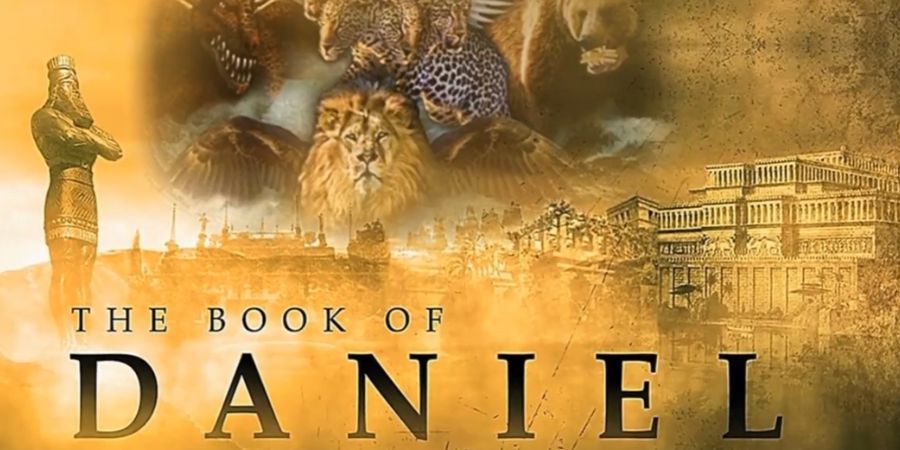
The unfortunate reality today is that the bulk of biblical scholarship on the Book of Daniel is mired in the abyss of higher critical presuppositions, not the least of which is a thoroughgoing rejection of predictive biblical prophecy as such. Because of this the Book of Daniel is viewed as a composite work that was compiled in the middle second century BCE in the midst of the Maccabean Crisis. This view would seem to be supported by the linguistic and generic divisions that exist within the text. Linguistically, chapters 2 thru 7 are written in Aramaic while chapter 1 and chapters 8 thru 12 are written in Hebrew; similarly, though not an exact correspondence, chapters 1 thru 6 comprise the court tails while chapters 7 thru 12 consist of the visionary material. The conclusion then of most biblical scholarship on Daniel is that the eschatological expectations of Daniel are essentially a contradictory hodgepodge of ex eventu (after the fact) depictions of the actions of the Seleucid King Antiochus IV Epiphanes.

Of course, to defend the book’s 6th century Danielic authorship would go beyond the limits of this medium, but in the space that follows I would like to briefly demonstrate the essential unity of Daniel’s visions. The clearest indication of this unity comes in the correspondence between Nebuchadnezzar’s dream in chapter 2 and in Daniel’s vision in chapter 7. While these chapters come from seemingly disparate parts of the book, they both present a sequence of four kingdoms followed by the establishment of the Kingdom of God. Of course, critical scholarship widely identifies these kingdoms as Babylon, Media, Persia, and Greece. This is mostly because they understand the actions of the fourth kingdom, and particularly the little horn, to be fulfilled in the actions of Antiochus IV Epiphanes during the Maccabean Crisis from 167-164 CE. I will come back to the identification of these kingdoms in a little bit, but suffice it to say here that it is difficult to see how Daniel’s expectation for the establishment Kingdom of God is fulfilled in this time period. The subsequent period of Hasmonean independence which followed was a far cry from the grandeur of Daniel’s expectations.

This is especially so when we turn our attention to Daniel chapter 9; in that chapter, Daniel is praying about the end of the exile, and he receives an answer from the angel Gabriel, which reads,

Seventy weeks are decreed about your people and your holy city—to bring the rebellion to an end, to put a stop to sin, to atone for iniquity, to bring in everlasting righteousness, to seal up vision and prophecy, and to anoint the most holy place.

Daniel 9.24

It seems rather clear that these seventy weeks span the timeframe from Daniel’s day (“from the issuing of the decree to restore and rebuild Jerusalem” in verse 25) to the time of final consummation, the time of “everlasting righteousness”. Because of this, we may presume then that the seventy weeks of Daniel 9 cover the same span of time as the visions of Daniel 2 and 7.

Now, the key to identifying the four kingdoms mentioned in Daniel’s sequence would seem to come in Daniel chapter 8. In that chapter, Daniel sees a vision of a ram with two horns, one longer than the other, and a goat whose large horn was broken off and replaced by four smaller horns. Again, the angel Gabriel gives the interpretation.

The two-horned ram that you saw represents the kings of Media and Persia. The shaggy goat represents the king of Greece, and the large horn between his eyes represents the first king. The four horns that took the place of the broken horn represent four kingdoms. They will rise from that nation, but without its power.

Daniel 8.20-22

This interpretation indicates that the second kingdom in Daniel’s sequence should be understood as the unified Kingdom of the Medes and Persians. It is described as a ram with two horns, one longer than the other (8.3) and as a bear which was raised up on one side (7.5). The third kingdom, then, should be understood as the Kingdom of Greece which is represented, of course, by Alexander the Great and the Diadochi, the four generals who followed him. They are variously described as a goat whose large horn was broken off and replaced by four smaller horns (8.8) and as a leopard with four wings and four heads (7.6).

This understanding is confirmed in Daniel chapter 11, where we read,

Three more kings will arise in Persia, and the fourth will be far richer than the others. By the power he gains through his riches, he will stir up everyone against the kingdom of Greece. Then a warrior king will arise; he will rule a vast realm and do whatever he wants. But as soon as he is established, his kingdom will be broken up and divided to the four winds of heaven, but not to his descendants; it will not be the same kingdom that he ruled, because his kingdom will be uprooted and will go to others besides them.

Daniel 11.3-4

The rest of chapter 11, then, goes on to detail the various campaigns of the “King of the North” and the “King of the South”, which describes the various conflicts between the Seleucids and the Ptolemies during the Third and Second century BCE respectively. The point of all this is to say that Daniel’s sequence of four kingdoms is best understood to refer to the progression of empires from Babylon to Medo-Persia to Greece and finally to Rome*. Of course, it must be noted that while the Roman Empire corresponds to Daniel’s fourth kingdom, it doesn’t completely fulfill it. That fulfillment comes ultimately in the eschatological kingdom of the beast, which is described in Book of Revelation, but this is a topic for another time.

By way of conclusion, then, Daniel’s visions reveal a remarkable and multifaceted unity in their expectation despite their seeming disparities. Daniel chapters 2, 7, and 9 give the overarching flow from Daniel’s day to the establishment of God’s Kingdom, and chapters 8 and 11 zoom in on the specific actions of the second and especially the third kingdom. More importantly, this understanding lays the foundation for the typological connection that Daniel draws between the third and fourth kingdoms, specifically between the actions of Antiochus IV Epiphanes and the eschatological little horn of the fourth kingdom. In addition, it helps us see how Daniel’s eschatological paradigm serves as the foundation for the message and ministry of Jesus, especially the Olivet Discourse, and for the message of the New Testament, particularly the Book of Revelation.

Of course, the most important aspect of all of this is the certain promise of God’s victory over His enemies and the enemies of His people. Our hope rests not in earthly powers, nations, or empires, but in the Kingdom of God and in His promised Messiah. That Messiah came incarnate 2000 years ago. He lived a perfect life, and then, He died on the cross for sin and rose again. Forty days later, He ascended to be seated at the right hand of the Father, and He left us this promise, that in the same way he ascended, he will also one day descend in glory and power (Acts 1.11). This is our glorious hope, and so we pray, “Amen, Come, Lord Jesus! (Revelation 22.20)

For further study, see:
Hamilton, James M. With the Clouds of Heaven: The Book of Daniel in Biblical Theology. New Studies in Biblical Theology. Downers Grove, IL: InterVarsity, 2014


On Praying Through Psalm 8

TEXT

For the choir director: on the Gittith. A psalm of David.

Lord, our Lord,
how magnificent is your name throughout the earth!
You have covered the heavens with your majesty.
From the mouths of infants and nursing babies,
you have established a stronghold
on account of your adversaries
in order to silence the enemy and the avenger.

When I observe your heavens,
the work of your fingers,
the moon and the stars,
which you set in place,
what is a human being that you remember him,
a son of man that you look after him?
You made him little less than God
and crowned him with glory and honor.
You made him ruler over the works of your hands;
you put everything under his feet:
all the sheep and oxen,
as well as the animals in the wild,
the birds of the sky,
and the fish of the sea
that pass through the currents of the seas.

Lord, our Lord,
how magnificent is your name throughout the earth!

~Psalm 8

Series: Praying through the Psalms
Text: Psalm 8.1-9
Church: South Caraway Baptist Church, Jonesboro, AR
Date: May 17, 2023


On Praying Through Psalm 2

TEXT

Why do the nations rage
and the peoples plot in vain?
The kings of the earth take their stand,
and the rulers conspire together
against the Lord and his Anointed One:
“Let’s tear off their chains
and throw their ropes off of us.”

The one enthroned in heaven laughs;
the Lord ridicules them.
Then he speaks to them in his anger
and terrifies them in his wrath:
“I have installed my king
on Zion, my holy mountain.”

I will declare the Lord’s decree.
He said to me, “You are my Son;
today I have become your Father.
Ask of me,
and I will make the nations your inheritance
and the ends of the earth your possession.
You will break them with an iron scepter;
you will shatter them like pottery.”

10 So now, kings, be wise;
receive instruction, you judges of the earth.
11 Serve the Lord with reverential awe
and rejoice with trembling.
12 Pay homage to the Son or he will be angry
and you will perish in your rebellion,
for his anger may ignite at any moment.
All who take refuge in him are happy.

~Psalm 2

Series: Praying through the Psalms
Text: Psalm 2.1-12
Church: South Caraway Baptist Church, Jonesboro, AR
Date: April 5, 2023


Slow To Write

"let every person be quick to hear, slow to speak, slow to anger."

lovegavehope

Just another WordPress.com site

Jared Cornutt

Pastor | Speaker | Writer

Denny Burk

A commentary on theology, politics, and culture

G3 Ministries

Events + Resources for the Local Church

Biblical Reasoning

Biblical and Systematic Theology According to the Scriptures

RetroChristianity

Reclaiming the Forgotten Faith

SBC Voices

Southern Baptist News & Opinion

Lucid Theology

Thoughts on words, books, theology, and life.

Baptist21

A pastor-led voice for Baptists in the 21st century

Center For Baptist Renewal

The Personal and Professional Blog of Phillip Powers

The Pastor's Well - Pastor Well

The Personal and Professional Blog of Phillip Powers

Articles - AlbertMohler.com

The Personal and Professional Blog of Phillip Powers

The Gospel Coalition

The Personal and Professional Blog of Phillip Powers