Tag Archives: Book Review

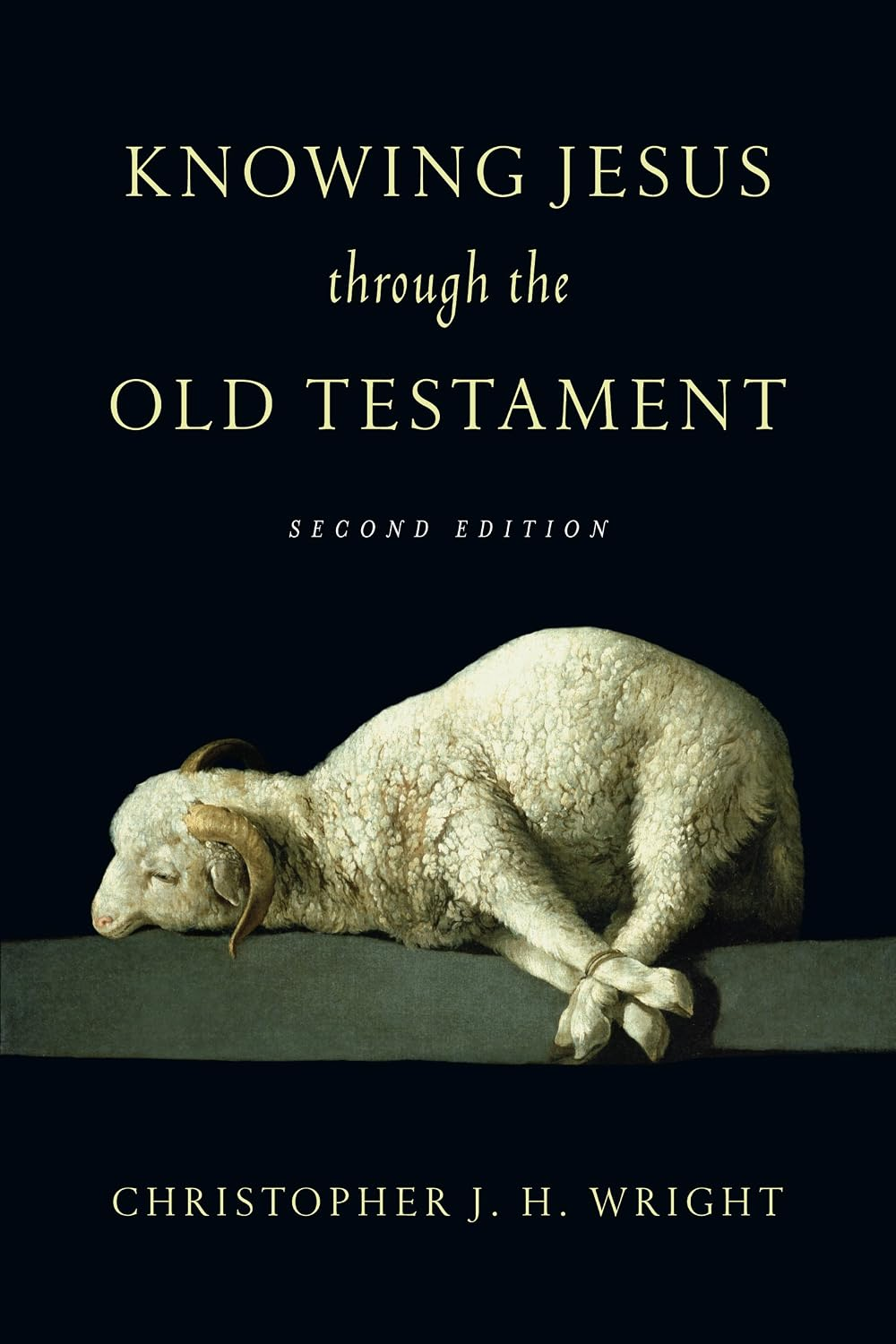
On Knowing Jesus through the Old Testament: A Book Review

Wright, Christopher J. H. Knowing God through the Old Testament. Second Edition. Grand Rapids: Intervarsity Press, 2014.

Who was Jesus? How should he be understood? It has become almost a truism among historical Jesus scholars that Jesus must be understood within the context of Second Temple Judaism. He was a man of his own time, and this means that his teachings, actions, and self-understanding must be interpreted against the backdrop of first-century Jewish beliefs and expectations. More specifically, Jesus’s understanding of his own identity and mission was profoundly shaped by Israel’s Scriptures, what Christians know as the Old Testament. Although this observation may seem obvious, its importance is frequently overlooked. There remains a widespread tendency in modern discussions to disconnect Jesus from his Old Testament background, resulting in a portrait of Jesus that is neither historically satisfying nor theologically coherent. In Knowing Jesus through the Old Testament, Christopher J. H. Wright seeks to correct this tendency by situating the person and work of Jesus firmly within the unfolding story of Israel’s Scriptures. First published in 1992 and now available in a revised second edition as of 2014, Wright’s work has become something of a modern classic in biblical theology. Therefore, it is the thesis of this review that Knowing Jesus through the Old Testament succeeds admirably in demonstrating that Jesus’s identity and mission can only be fully understood against the backdrop of Israel’s Scriptures, even if some aspects of Wright’s approach invite further discussion.

Wright’s essential thesis is that Jesus’s understanding of himself and his mission was profoundly shaped by his study of and reflection upon the Old Testament Scriptures. In other words, Jesus repeatedly presents himself as the fulfillment of Israel’s story in ways that demonstrate his unique identity as the Christ, the Son of the living God. Wright develops this thesis by examining the major themes of the Old Testament that converge in the person and work of Jesus. He begins with Israel’s story itself, arguing that Jesus consciously understood his life and ministry as the climax of God’s covenant dealings with his people. From there, Wright explores Jesus’s identity as Israel’s Messiah and Davidic King, showing how the hopes and expectations of the Old Testament find their fulfillment in him. He then turns to the mission of Jesus, demonstrating that Christ’s proclamation of the Kingdom of God, his suffering, death, and resurrection, and his calling of disciples all stand firmly within the trajectory established by Israel’s Scriptures. Throughout the book, Wright carefully weaves together themes such as covenant, kingdom, redemption, mission, and fulfillment in order to show that the Old Testament is not merely a collection of predictions about Jesus but the very theological framework through which Jesus understood his own identity and vocation. The result is a compelling portrait of Jesus that is both historically grounded in first-century Judaism and deeply rooted in the unfolding story of God’s redemptive purposes revealed throughout the Old Testament.

The greatest strength of Wright’s work lies in its thoroughly canonical and biblical-theological approach to the person of Jesus. Rather than treating the Old Testament as a collection of isolated messianic proof texts, Wright demonstrates that Jesus understood himself within the unfolding story of Israel. The significance of Jesus’s identity and mission, therefore, cannot be grasped apart from the covenant, kingdom, promises, and expectations established throughout the Old Testament. This approach not only reflects the way Jesus himself repeatedly interpreted his ministry, but it also provides readers with a richer and more coherent understanding of the unity of Scripture. Closely related to this is Wright’s remarkable ability to integrate historical context, theological reflection, and biblical theology into a single, compelling presentation. He consistently situates Jesus within the world of first-century Judaism while never losing sight of the larger redemptive story that stretches from Genesis to Revelation. As a result, the reader comes away with a portrait of Jesus that is historically grounded without becoming reductionistic and theologically profound without becoming overly speculative. Another significant strength is Wright’s emphasis upon the continuity between Israel, Jesus, and the church. Rather than presenting Christianity as a departure from the Old Testament, he shows that the mission of Jesus represents the fulfillment of God’s covenant purposes for Israel and, through Israel’s Messiah, extends those blessings to the nations. Finally, despite engaging substantial theological themes, Wright writes with exceptional clarity and accessibility. His prose is straightforward, his arguments are well organized, and his illustrations are both helpful and memorable. This makes for easy and enjoyable reading from beginning to end.

Of course, no book is without its limitations, and Knowing Jesus through the Old Testament is no exception. Perhaps the most noticeable weakness is that Wright’s broad biblical-theological synthesis occasionally comes at the expense of detailed exegetical interaction with individual texts. His purpose is clearly to present the larger contours of the Old Testament’s witness to Christ rather than to defend every interpretive conclusion in detail. Nevertheless, readers looking for sustained engagement with particular passages or with competing scholarly interpretations may occasionally find themselves wanting more. Closely related to this is the fact that some themes receive considerably more attention than others. Wright’s discussions of covenant, kingdom, and Israel’s story are among the strongest sections of the book, while other important Old Testament motifs could have been explored in greater depth. Likewise, although Wright consistently situates Jesus within the world of first-century Judaism, greater interaction with developments in Second Temple Judaism would have further strengthened certain aspects of his argument by demonstrating more explicitly how Jesus both fulfilled and challenged the expectations of his contemporaries. Finally, Wright occasionally moves rather quickly from Old Testament themes to their fulfillment in Christ, assuming typological connections that many readers will readily accept but that others may have wished to see defended more fully. Even so, these observations do little to diminish the overall value of the work. They reflect the inevitable limitations of a synthetic volume rather than any significant weakness in Wright’s central thesis.

In the final analysis, Knowing Jesus through the Old Testament is a compelling and important contribution to biblical theology. Wright reminds us that Jesus did not appear in history as the founder of a new religion or as a figure detached from Israel’s past. Rather, he came as the fulfillment of God’s covenant purposes, bringing Israel’s story to its divinely intended climax. By consistently situating Jesus within the theological world of the Old Testament, Wright demonstrates that the Scriptures of Israel are not merely the background to the New Testament but the indispensable foundation for understanding the identity, mission, and message of Jesus Christ. In an age when the Old Testament is too often neglected or treated as merely preparatory to the New Testament, Wright reminds readers that the story of Jesus cannot be separated from the story of Israel, for the latter finds its fulfillment in the former. For this reason, I would readily recommend this book to pastors, seminary students, Bible teachers, and thoughtful Christians who desire a richer understanding of the unity of Scripture and the centrality of Christ within God’s redemptive plan. Though readers may occasionally wish for more detailed exegetical interaction or greater engagement with certain scholarly discussions, these minor limitations do little to diminish the book’s overall contribution. If readers come away from this volume with a renewed appreciation that the Old Testament is essential for understanding the person and work of Jesus Christ, then Wright will have accomplished precisely what he set out to do. Few books succeed so well in helping readers know Jesus by first learning to read him through the Scriptures that he himself loved, studied, and fulfilled.


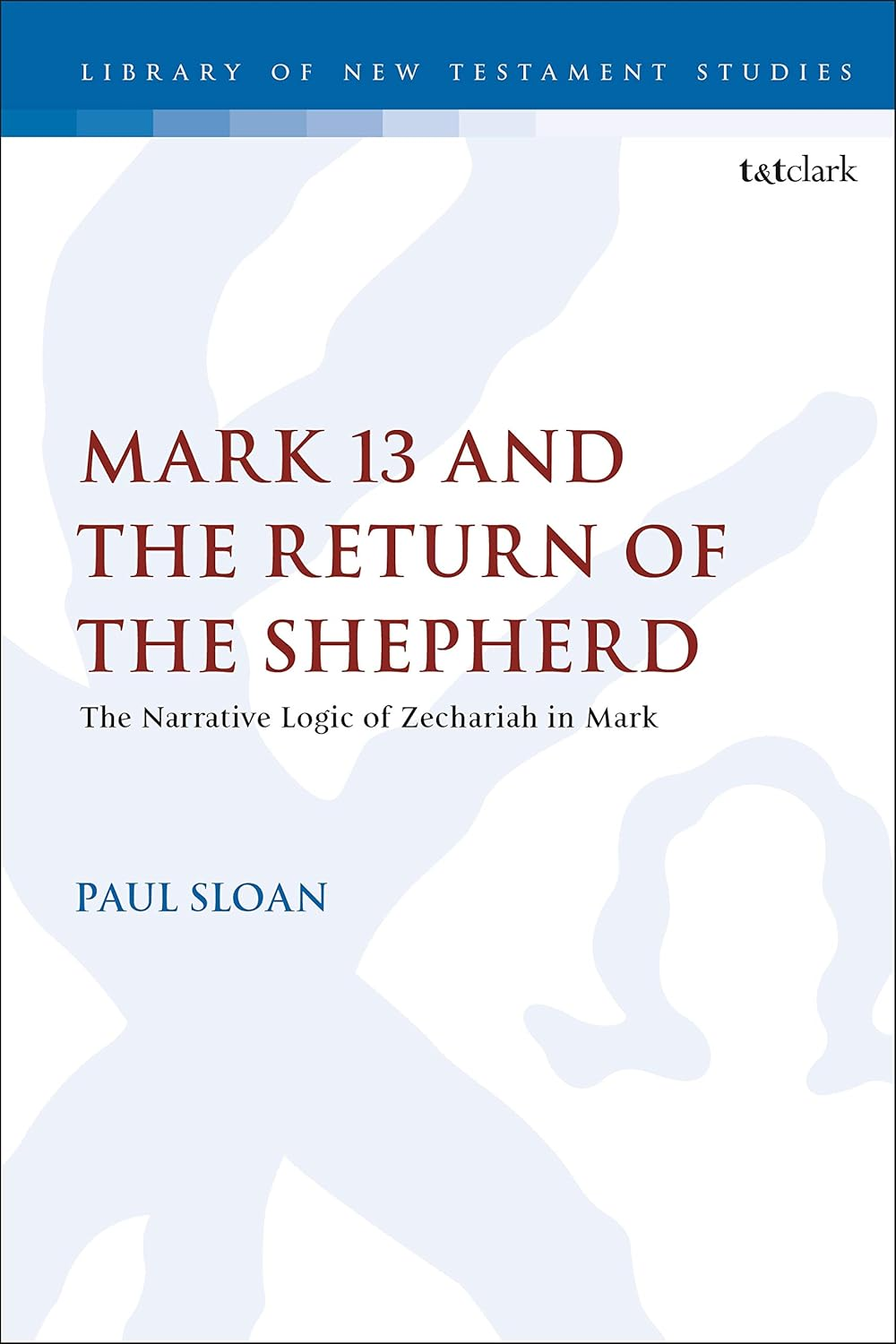
On Mark 13 and the Return of the Shepherd: A Book Review

Sloan, Paul T. Mark 13 and the Return of the Shepherd: The Narrative of Zechariah in Mark. Library of New Testament Studies. London: T&T Clark, 2019.

One of the most difficult interpretive questions in the study of the Synoptic Gospels concerns the Olivet Discourse (Mark 13; Matt 24–25; Luke 21). When the disciples marvel at the magnificence of the temple buildings, Jesus responds by predicting the destruction of the temple itself. Later, on the Mount of Olives—from which the discourse derives its name—the disciples ask Jesus about the timing of these events and their relationship to the coming of the Son of Man. How these events relate to one another, namely the destruction of the temple and the coming of Jesus, is the crux interpretum of the discourse, and no shortage of solutions have been proposed within modern Gospel scholarship. (For an overview of the major interpretive positions, along with my own view, see here.) In his published PhD dissertation, Mark 13 and the Return of the Shepherd, Paul T. Sloan, Chair of Theology at Houston Christian University and Associate Professor of New Testament, offers his own answer to these questions by exploring the influence of Zechariah 9–14 upon the Gospel of Mark generally and on Mark 13 specifically. In the space that follows, I will offer my review of his work.

Sloan’s essential thesis is that Zechariah 13.7–14.6 provides the primary narrative scaffolding for understanding the logic of the Olivet Discourse in Mark 13. He takes his cue from Mark 14.27, which is a quotation of Zechariah 13.7, “I will strike the shepherd, and the sheep will be scattered.” For Sloan, the “scattering of the sheep” entails more than merely the flight of the disciples on the night Jesus’s arrest. Rather, the striking of the shepherd, i.e. the death of Jesus, initiates a time of eschatological scattering that is described in Mark 13:5-23 and which spans the time between the death and the return of Jesus as the Son of Man. After examining the reception of Zechariah 13–14 in Second Temple Judaism and Mark’s use of Zecharian imagery elsewhere in the Gospel, Sloan develops his thesis through a detailed analysis of the logic and structure of Mark 13. According to Sloan, Jesus answers the disciples’ question concerning the timing of the temple’s destruction in verses 5–23 of the chapter, a section marked by an inclusio. He then turns to the coming of the Son of Man, not because the discourse changes subjects, but because this is the next stage in the eschatological sequence established by Zechariah 13–14. Thus, there is no break in logic between Jesus’s description of the events leading up to the temple’s destruction and his description of the coming of the Son of Man. Rather, both belong to a single prophetic scenario structured by the narrative flow of Zechariah’s vision.

One of the greatest strengths of Sloan’s work is the way that he brings coherence to the logic and flow of the Olivet Discourse. One of the persistent challenges in the interpretation of Mark 13 has been explaining the relationship between the destruction of the temple, the period of tribulation described in the discourse, and the coming of the Son of Man. Rather than treating these as disconnected subjects, Sloan argues that they belong to a single prophetic scenario structured by the narrative flow of Zechariah 13–14. Whether one ultimately agrees with all the details of his proposal or not, his reading has the significant advantage of explaining why the discourse unfolds in the sequence that it does. A second strength of the book is Sloan’s sustained attention to the Old Testament background of Jesus’s teaching. Too often discussions of Mark 13 become preoccupied with historical reconstruction or modern eschatological systems, but Sloan consistently grounds his interpretation in the scriptural world that shaped both Jesus and the Evangelist. In particular, he demonstrates that Zechariah functions as more than a source of isolated proof texts; rather, it provides an important theological and narrative framework for understanding the discourse as a whole. Finally, Sloan’s treatment of the relationship between the Olivet Discourse and the Passion Narrative is particularly illuminating. By connecting Mark 13 with the citation of Zechariah 13.7 in Mark 14.27, he highlights a literary and theological relationship that is often overlooked. The striking of the shepherd is not merely the occasion for the disciples’ flight, but the initiating event of the eschatological drama that unfolds throughout the remainder of the Gospel. Taken together, these features make Sloan’s work a significant and valuable contribution to the ongoing discussion surrounding Mark 13.

Despite these strengths, there are a couple of areas where Sloan’s proposal left me wanting further development. First, while he successfully demonstrates the narrative relationship between the destruction of the temple and the coming of the Son of Man, he gives comparatively little attention to the possibility of a typological relationship between these events. In my view, the destruction of Jerusalem in AD 70 functions not merely as an event that precedes the coming of the Son of Man, but as a historical anticipation of the final judgment and vindication that will accompany Christ’s return. A stronger account of typology would help explain not only why these events appear together in the discourse, but also why Jesus is able to move so naturally from one to the other. Second, although Sloan makes a compelling case for the importance of Zechariah 13–14, there are points at which Zechariah threatens to become so dominant that other important Old Testament backgrounds recede into the background. In particular, I would have appreciated more interaction with the book of Daniel, which plays a central role in Jesus’s eschatological teaching elsewhere and provides much of the conceptual framework for the coming of the Son of Man. These observations do not undermine Sloan’s thesis, but they do suggest avenues where the discussion might be further refined and developed.

In the final analysis, Sloan’s work represents a significant contribution to the ongoing discussion surrounding the Olivet Discourse and the interpretation of Mark 13. Whether one ultimately agrees with every aspect of his proposal or not, he succeeds in demonstrating the importance of Zechariah 13–14 for understanding the logic and structure of the discourse. His emphasis on the striking of the shepherd as the initiating event of the eschatological drama provides a fresh and compelling way of reading Mark’s Gospel as a coherent narrative whole. Moreover, his careful attention to Old Testament backgrounds serves as a helpful reminder that Jesus’s eschatological teaching must be interpreted within the scriptural world that shaped both him and his earliest followers. While I remain unconvinced that Zechariah alone can account for every feature of the discourse, and would have appreciated more discussion of the typological relationship between the destruction of Jerusalem and the final coming of the Son of Man, these reservations do little to diminish the overall value of the work. Sloan has produced a thoughtful, carefully argued, and highly stimulating study that deserves serious engagement from anyone interested in Mark’s Gospel, the Olivet Discourse, or the eschatological teaching of Jesus.


On Sacred Marriage: A Book Review

art-sacredmarriagecover-v1

Thomas, Gary. Sacred Marriage: What if God Designed Marriage to Make Us Holy More Than to Make Us Happy. Grand Rapids, MI: Zondervan, 2015.

If you were to visit your local bookstore – who am I kidding? No one visit bookstores anymore, right?! So let me rephrase – If you were to google for books on marriage, you would probably find yourself overwhelmed by the sheer plethora of titles from both Christian and non-Christian perspectives offering this many steps or that new and unique approach to having a better a marriage. To be honest, it can almost lead to a feeling of despair and hopelessness for your marriage, especially if you find yourself in a particularly difficult season. That is why I found Sacred Marriage by Gary Thomas to be a refreshing and unique voice in this boisterous cacophony.

And the subtitle of the book really says it all: What if God designed marriage to makes us holy more than to make us happy?  Because the general sentiment of popular culture is that marriage is primarily for emotional fulfillment. In other words, the main and most often the only reason a couple might get married is so that they can find and experience romantic love and personal happiness in their partner. Of course, on a horizontal level, that is alright, as far as it goes, but might it be possible that God has a bigger plan for marriage than simply our personal fulfillment, our happiness? Might it be that God designed marriage to serve His purposes rather than our own? And might it be that if we set our minds and hearts to pursue God’s purpose for our marriages, that we might find that our relationship with our spouse improves as well?

Obviously, I think so, and this is where Sacred Marriage comes into the discussion. In this book, Thomas explores the various aspects of the marriage relationship, not by offering any practical “how to’s”, but by exploring how God might be using that particular area of our marriage to teach us about who He is and to draw us into a deeper relationship with Himself. We may, then, regard marriage as a spiritual discipline, a Christian practice that by engaging in which we grow more and more in our own Christ-likeness, a posture of submission and humility in which we allow the Spirit who indwells to do His perfect work.Or we might say that God has so designed marriage that it, more than any other human relationship, forces us to deal directly with our own sinfulness.

The chapter that was most impactful for me was chapter 9, “Sacred Struggle: Embracing Difficulty in Order to Build Character.” The following quote summarizes the overall gist of the chapter:

If your marriage is tough, get down on your knees and thank God that he has given you an opportunity for unparalleled spiritual growth. You have the prime potential to excel in Christian character and obedience. (125)

Now, I want to be careful here, especially in light of what has recently transpired in the Southern Baptist Convention. In speaking of a tough or difficult marriage, we are not including here any kind of abuse, whether that be physical, sexual, emotional or verbal. All forms of spousal abuse are an evil and heinous sin in the eyes of God, and where there is violation of civil or criminal law, there should most certainly be consequences. And there is a great and pressing need for Christian churches to train people and implement processes to assist victims in these cases.

However, outside of those kinds of situations, difficult trying seasons in marriage are not cause for dissolution, which is precisely why we need a grander understanding of the purpose of marriage than mere emotional fulfillment. If marriage is only for the satisfaction of my need to be loved, accepted, and cherished, then when I no longer feel those needs are being met, I will find it justifiable to leave and seek out a new marriage that will meet those needs. But if marriage is for our sanctification, then difficulties in the marriage relationship can be embraced as opportunities to grow in Christ-likeness. In my opinion, this is a point of view that is sorely needed in today’s easy-divorce culture.

There were many other insightful and challenging aspects of this book, which is why I believe it’s voice is even more needed and applicable today than when it was first published nearly 20 years ago. For example chapter 10, “Falling Forward: Marriage Teaches Us to Forgive” was particularly helpful for me and my wife. As a pastor, I would certainly recommend this book to any all persons in my congregation regardless of what seasons they are in as it relates to marriage. For unmarried singles to dating/engaged couples to newly weds to those who find themselves in marriages of various lengths, whether you marriage is good or not so good, this book can definitely help shape your understanding of what God is doing in and through your marriage.

See Also:
Thomas, Gary. Devotions for a Sacred Marriage: A Year of Weekly Devotionals for Couples. Grand Rapids: MI: Zondervan, 2017.


Slow To Write

"let every person be quick to hear, slow to speak, slow to anger."

lovegavehope

Just another WordPress.com site

Jared Cornutt

Pastor | Speaker | Writer

Denny Burk

A commentary on theology, politics, and culture

G3 Ministries

Events + Resources for the Local Church

Biblical Reasoning

Biblical and Systematic Theology According to the Scriptures

RetroChristianity

Reclaiming the Forgotten Faith

SBC Voices

Southern Baptist News & Opinion

Lucid Theology

Thoughts on words, books, theology, and life.

Baptist21

A pastor-led voice for Baptists in the 21st century

Center For Baptist Renewal

The Personal and Professional Blog of Phillip Powers

The Pastor's Well - Pastor Well

The Personal and Professional Blog of Phillip Powers

Articles - AlbertMohler.com

The Personal and Professional Blog of Phillip Powers

The Gospel Coalition

The Personal and Professional Blog of Phillip Powers