When it comes to the eschatology of the historical Jesus, one of the most vexing questions concerns his repeated references to “this generation.” Few phrases have generated more debate in biblical studies. For example, what does Jesus mean when he says that the men of Nineveh and the queen of the South will rise up at the judgment and condemn “this generation”? (Matt. 12.39–45) Or when he declares that “all these things” will come upon “this generation,” who exactly is he talking about? (Matt. 23.36; 24.34) Discussions of these texts often focus on questions of chronology and fulfillment. We ask whether Jesus is referring to his contemporaries or to some future generation, and we speculate about when these events are supposed to occur. It is a question that has confounded even some of the greatest biblical scholars. In this post, I would like to revisit the issue, not because I am a great biblical scholar, but because I believe the discussion often overlooks an important biblical-theological dimension. I would suggest that “this generation” does indeed refer to Jesus’ contemporaries, but it functions as more than a simple chronological marker. Rather, Jesus employs the phrase to identify his contemporaries with the recurring biblical pattern of the rebellious generation that rejects God’s messengers and stands under covenant judgment.
Of course, at first glance, the meaning of “this generation” seems rather straightforward. Throughout the Gospels, the phrase consistently refers to those living during Jesus’s earthly ministry. For example, in Matthew 11:16, Jesus asks, “To what should I compare this generation? It’s like children sitting in the marketplaces who call out to other children.” Clearly, Jesus is reflecting upon the unbelief of his contemporaries and their rejection of both John the Baptist and himself. Or again, in Matthew 23:36, when Jesus declares, “Truly I tell you, all these things will come on this generation,” he is speaking directly to the religious leaders who stand before him. Texts such as these make it difficult to sustain interpretations that remove the phrase entirely from its first-century context. Jesus is not speaking primarily about a distant future generation but about the people of his own day. The crowds, the scribes, the Pharisees, and the religious leaders who heard his teaching constitute the immediate referent of the phrase. In other words, “this generation” is first and foremost a historical designation. Yet, as we shall see, it functions as more than a mere chronological marker. The phrase carries a theological significance that reaches beyond the simple identification of a particular group of people living at a particular moment in history.
This becomes even more apparent when we observe that Jesus rarely speaks of “this generation” in a neutral sense. Rather, he repeatedly describes it as an “evil and adulterous generation” (Matt. 12:39; 16:4) or as an “unbelieving generation” (Mark 9:19). These are not merely chronological descriptions; they are moral and theological evaluations. Jesus is not simply identifying the people who happen to be alive during his ministry. He is characterizing them according to their response to God’s revelation. Their defining feature is not that they belong to a particular moment in history, but that they have rejected the message of God’s prophets, resisted the ministry of John the Baptist, and refused to recognize the Messiah standing in their midst. In this sense, “this generation” functions as more than a temporal designation. It becomes a moral and covenantal category that describes a particular posture of unbelief and rebellion toward God. Indeed, the repeated use of terms such as “evil,” “adulterous,” and “unbelieving” suggests that Jesus is intentionally placing his contemporaries within a much larger biblical pattern. The question, then, is not simply who “this generation” is, but what kind of generation it is. And it is precisely here that the Old Testament background becomes crucial, for the language Jesus employs has deep roots in the Scriptures’ recurring depiction of “the generation of the wicked.”
The Old Testament repeatedly speaks of the “wicked generation,” and this theme stretches all the way back to the book of Deuteronomy. This is especially evident in Deuteronomy 32, where Moses describes Israel as a “crooked and perverse generation” (Deut. 32:5) and later speaks of them as a generation marked by faithlessness and rebellion (Deut. 32:20). This language is taken up again in the Psalms. For example, Psalm 78:8 describes the wilderness generation as “a stubborn and rebellious generation, a generation whose heart was not loyal and whose spirit was not faithful to God.” What is striking is that these texts are not merely concerned with identifying a particular group of people who happened to live at the same time. Rather, they are describing a recurring pattern of covenant rebellion. The wilderness generation rejected God’s Word, resisted God’s appointed leaders, refused to trust his promises, and consequently experienced his judgment. As a result, the wilderness generation became a paradigm for later generations of Israelites who repeated the same sins. Thus, in the Old Testament, the concept of a “generation” often carries theological significance beyond mere chronology. It becomes a covenantal category describing those who persist in unbelief and opposition to God’s purposes. This Old Testament background provides the conceptual framework for understanding Jesus’s repeated references to “this generation” in the Gospels.
The point of all this is that when Jesus speaks of “this generation,” he is making precisely this kind of moral and covenantal judgment. This is why he can declare, “that this generation may be held responsible for the blood of all the prophets shed since the foundation of the world—from the blood of Abel to the blood of Zechariah” (Luke 11:\.50–51; cf. Matt. 23.35–36). Clearly, Jesus is not suggesting that his contemporaries were personally present when Abel was murdered or when Zechariah was killed. Rather, they stand in continuity with those earlier generations because they are committing the very same acts of covenant rebellion. Indeed, in Matthew’s account, Jesus tells the religious leaders, “You are sons of those who murdered the prophets” (Matt. 23.31). They are not merely descended from their fathers biologically; they are following in their fathers’ footsteps spiritually. Just as earlier generations rejected God’s messengers, so now Jesus’s contemporaries reject John the Baptist, oppose Jesus himself, and will soon persecute his apostles. When Jesus reads Israel’s Scriptures, he sees a recurring pattern of covenant infidelity that reaches from the wilderness generation through the prophets and culminates in his own day. His contemporaries therefore represent not simply another generation in Israel’s history but the climactic manifestation of the rebellious generation. It is for this reason that they stand under the same covenantal judgment that had fallen upon those who came before them.
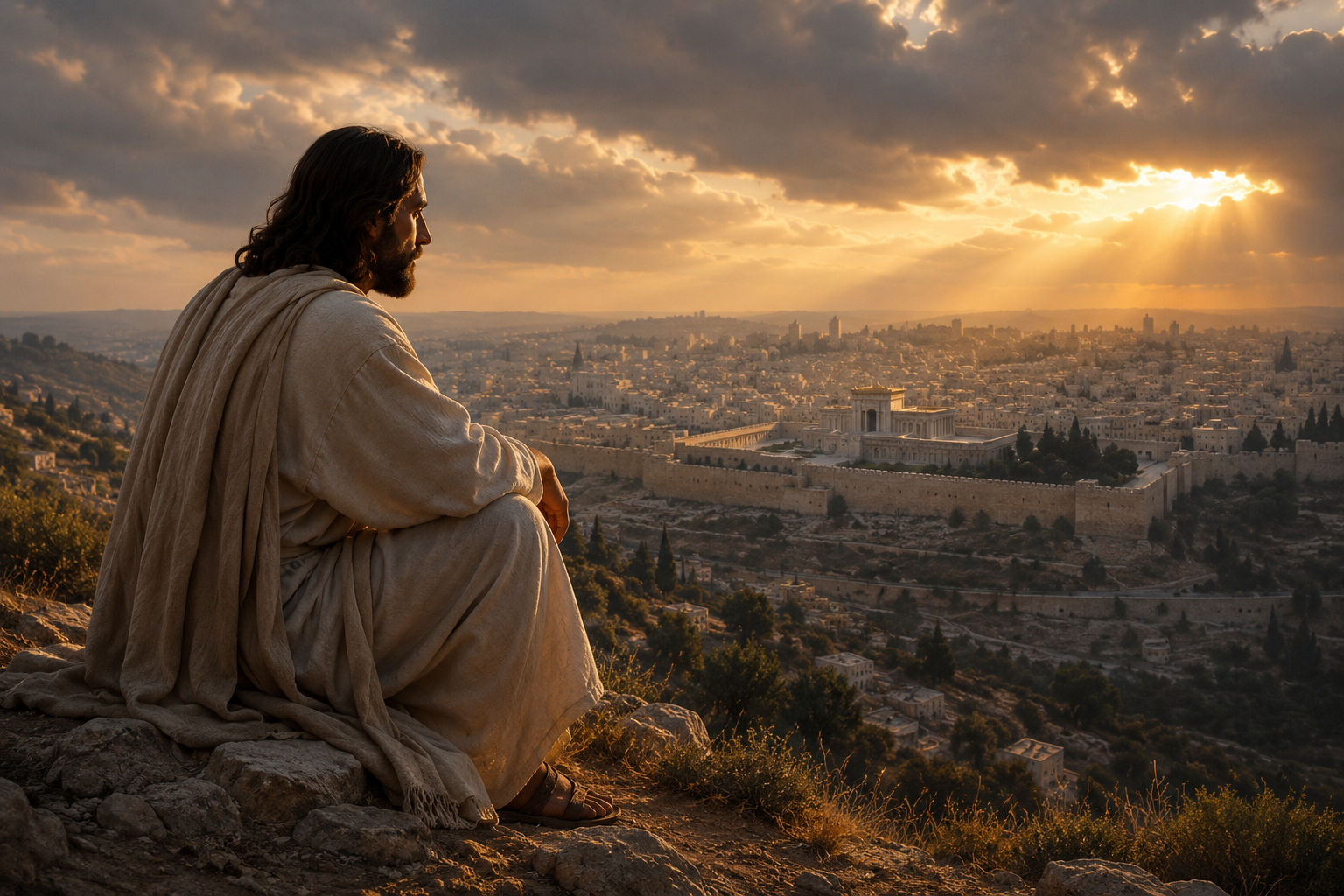
Of course, it is precisely this covenantal judgment that Jesus predicts in the Olivet Discourse (Matt. 24; Mark 13; Luke 21), where he declares, “Truly I tell you, this generation will certainly not pass away until all these things take place” (Matt. 24:34). If the preceding discussion is correct, then this statement should not be understood merely as a chronological marker but as the culmination of the biblical pattern we have already traced. Because Jesus’ contemporaries embody the recurring motif of the rebellious generation, the coming judgment upon Jerusalem is neither arbitrary nor unexpected. Rather, it follows the well-established pattern of covenant history. Just as the wilderness generation experienced God’s judgment for its unbelief, just as the northern kingdom was judged for its covenant unfaithfulness, and just as Judah ultimately fell under divine judgment for rejecting God’s prophets, so also Jesus announces that “this generation” will experience covenant judgment in the destruction of Jerusalem. The judgment falls upon a specific historical generation living in the first century, yet that generation simultaneously represents the climax of a much larger biblical pattern. Jesus’ words, therefore, are historically specific while at the same time theologically rich. They announce the judgment of his contemporaries precisely because they have become the latest—and greatest—manifestation of the generation that continually rejects God’s revelation and resists his redemptive purposes.
Understanding “this generation” in this way also helps us see why the phrase remains relevant today. The issue is not merely one of chronology but of response to God’s revelation. Throughout the Scriptures, the “generation of the wicked” is characterized by unbelief, the rejection of God’s Word, resistance to his appointed messengers, and ultimately opposition to his redemptive purposes. Jesus identifies his contemporaries with that pattern because they rejected the Messiah standing before them. Yet the pattern itself did not end with the destruction of Jerusalem. It continues to reappear wherever men and women harden their hearts against God’s Word and refuse his gracious call to repentance. In this sense, every generation must ask whether it will follow the path of covenant faithfulness or repeat the rebellion of those who came before. More than that, Scripture teaches that history is moving toward a final day of judgment when Christ will return to judge the living and the dead. Just as the generation of Jesus’s day experienced a historical judgment in the destruction of Jerusalem, so also the final generation will stand before God’s ultimate judgment at the return of Christ. The warning of “this generation,” therefore, is not confined to the first century. It continues to summon every generation to repent, believe the gospel, and receive the King whom God has sent.
In the final analysis, then, “this generation” should not be understood as merely a chronological expression nor as a reference to some distant future generation. It refers first and foremost to Jesus’ contemporaries, the men and women who heard his preaching, witnessed his miracles, and ultimately rejected him as Israel’s Messiah. Yet Jesus deliberately frames them within the larger biblical category of the rebellious generation that recurs throughout the Old Testament. Like the wilderness generation before them, they resisted God’s Word, rejected his appointed messenger, and consequently stood under covenant judgment. The destruction of Jerusalem, therefore, was not an arbitrary historical tragedy but the covenantal consequence of a pattern of rebellion that had reached its climax in the rejection of God’s Son. At the same time, the warning extends beyond the first century. Every generation must decide how it will respond to God’s revelation in Christ, for history is moving toward that final day when the righteous Judge will return. The question is not simply whether we understand who “this generation” was, but whether we will hear God’s Word, repent, and believe while there is still time.