Tag Archives: Gospel of Luke

On Old Testament Conceptual Metaphors and the Christology of Luke’s Gospel: A Book Review
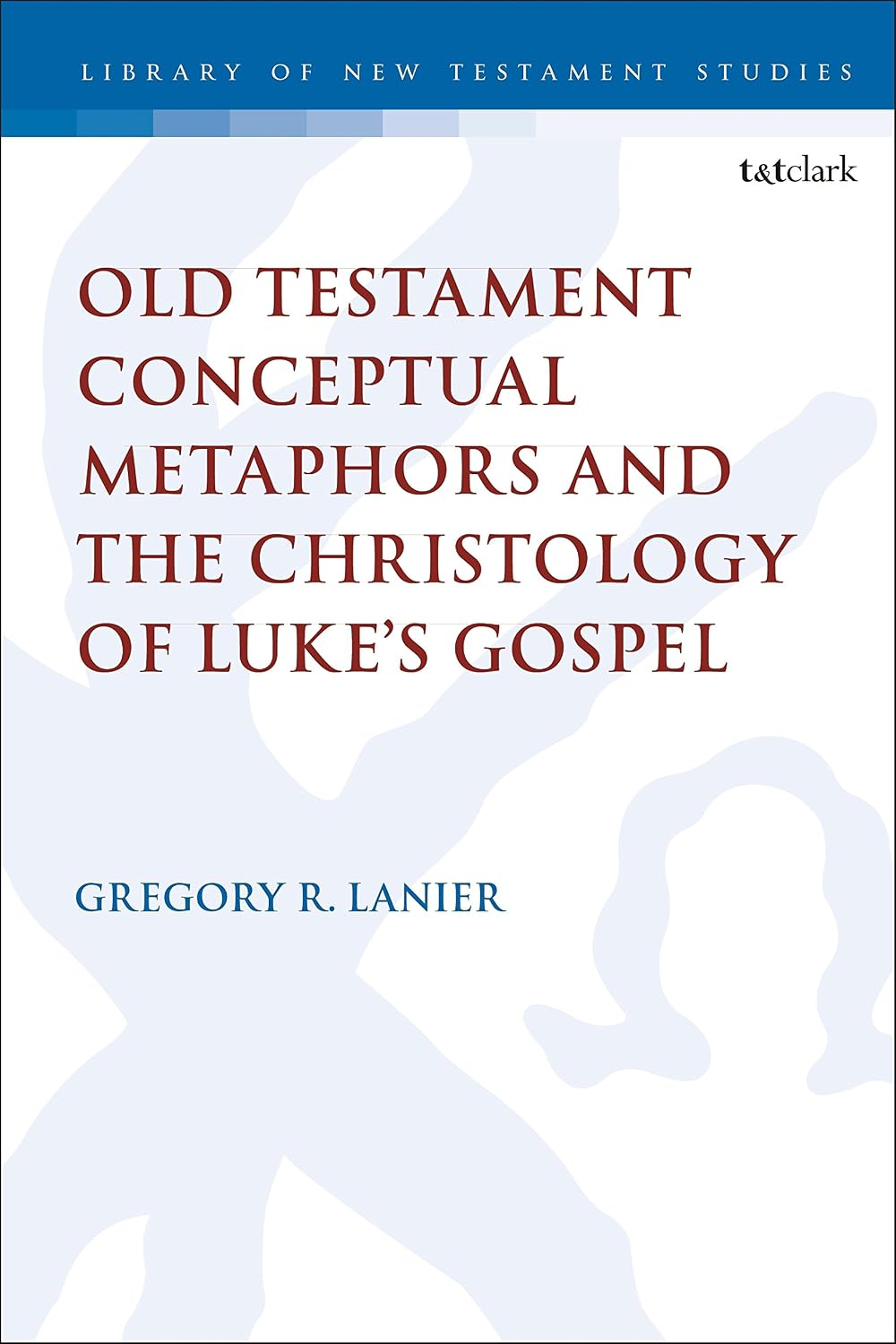
Lanier, Gregory R. Old Testament Conceptual Metaphors and the Christology of Luke’s Gospel. Library of New Testament Studies. London: T&T Clark, 2018.
The Christology of the canonical Gospels is remarkably multifaceted. From titles such as Son of God, Son of Man, Lord, and Christ, to John’s “I AM” statements, to the numerous Old Testament images and metaphors applied to Jesus, the Gospel writers employ a variety of categories to describe the complexity of Jesus’s person and work. No single title or image exhausts their Christological portrait; rather, it is through the convergence of these various titles, images, actions, and scriptural patterns that we begin to appreciate the fullness of their presentation of Christ. This is particularly important for the Gospel of Luke. While some have characterized Luke’s Christology as comparatively “low,” such a description can easily undersell the intricate ways in which Luke presents the identity and mission of Jesus. In his published dissertation, Old Testament Conceptual Metaphors and the Christology of Luke’s Gospel, Gregory R. Lanier takes up the question of Luke’s Christology by examining four characteristic metaphors that are distinctive to Luke’s Gospel. The result is a masterpiece of literary and exegetical analysis that demonstrates how deeply Luke’s presentation of Jesus is shaped by Old Testament patterns of thought. By tracing these metaphors through their Old Testament backgrounds and their distinctive deployment within Luke’s narrative, Lanier demonstrates that Luke’s Christology is considerably richer and more sophisticated than attention to explicit Christological titles alone might suggest.
Using the tools of conceptual metaphor theory (CMT), Lanier takes up four metaphors from the Gospel of Luke whose precise scriptural backgrounds and Christological significance have been variously interpreted. These four metaphors include the “horn of salvation” (Luke 1.68–69), the “dawn from on high” (Luke 1.78–79), the bird that gathers her chicks under her wings (Luke 13.34), and the “stone the builders rejected” (Luke 20.17–18). While scholars generally agree that these images draw upon the Old Testament and the interpretive world of Second Temple Judaism, there is considerably less agreement concerning which particular Scripture or Scriptures stand behind them and how those backgrounds illuminate Luke’s use of the images. Using CMT, Lanier approaches each image not simply as an allusion to a single Old Testament passage but as a conceptual metaphor drawing upon a wider network of Old Testament texts and images to map out the contours of Jesus’s person and work. Most significantly, Lanier argues that these metaphors draw upon imagery used in the Old Testament to describe the identity and activity of God, which Luke then reapplies to Jesus. The result contributes to a kind of “divine identity Christology” in which Jesus is portrayed as doing the kinds of things that Israel’s God does. Of course, these four metaphors do not exhaust Luke’s Christological perspective. Luke’s Christology is multilayered and must be constructed from the convergence of numerous titles, images, actions, and narrative patterns. Nevertheless, Lanier’s analysis demonstrates why the simple dichotomy between “high” and “low” Christology is inadequate for describing the complexity of Luke’s presentation of Jesus.
One of the greatest strengths of Lanier’s study is the explanatory power that conceptual metaphor theory brings to Luke’s use of Old Testament imagery. Studies of the New Testament’s use of the Old Testament often focus on identifying a particular source text behind a quotation or allusion. While this approach is useful when the textual relationship is relatively clear, it can prove more difficult when dealing with images that appear across a wide range of Old Testament texts. Lanier’s use of CMT provides a compelling way forward by allowing these metaphors to draw upon a broader network of scriptural associations rather than requiring them to depend upon a single identifiable source text. Thus, an image such as the “horn of salvation,” the dawning of light, the protection of a bird’s wings, or the rejected stone can evoke a constellation of Old Testament texts in which the same conceptual associations repeatedly occur. Importantly, this approach does not amount simply to collecting possible verbal parallels. Lanier demonstrates how recurring patterns of language and imagery establish conceptual relationships that would have shaped the meaning of these metaphors within the scriptural world inherited by Luke. This allows him to account for the richness of Luke’s imagery without reducing it to dependence upon any one passage. Lanier’s use of CMT therefore does more than identify additional Old Testament backgrounds for Luke’s language; it provides a compelling account of how a network of scriptural imagery can contribute cumulatively to Luke’s presentation of Jesus.
A second major strength of Lanier’s study is the Christological payoff that emerges from his analysis of these metaphors. Discussions of Luke’s Christology have often focused primarily on explicit Christological titles such as “Son of God,” “Son of Man,” “Lord,” and “Christ.” While these titles are undoubtedly important, Lanier demonstrates that Luke’s presentation of Jesus cannot be adequately reconstructed from titles alone. The conceptual metaphors examined in this study provide another important avenue through which Luke communicates Jesus’s identity and mission. Particularly significant is Lanier’s demonstration that each of these metaphors participates in patterns of Old Testament imagery associated with the identity and activity of YHWH. The significance of Luke’s application of these images to Jesus is therefore greater than the metaphors might initially suggest. Jesus does not merely perform actions analogous to those of other divinely appointed figures; he is portrayed through images that describe the saving, protecting, judging, and vindicating activity of Israel’s God. Lanier thus demonstrates how a robust Christology can emerge through the cumulative effect of Luke’s scriptural imagery without depending exclusively upon explicit statements concerning Jesus’s identity. This is one reason the traditional distinction between “high” and “low” Christology can prove inadequate for describing Luke’s Gospel. Lanier’s study shows that some of Luke’s most significant Christological claims are embedded within the scriptural images through which he narrates the identity and mission of Jesus.
The principal limitation of Lanier’s approach arises, somewhat ironically, from the same methodological breadth that makes his analysis so illuminating. By moving beyond the search for a single source text, CMT allows Lanier to account for the wider network of scriptural associations that may inform Luke’s metaphors. Yet this breadth also raises the question of how the interpreter determines the boundaries of that network. If a metaphor can draw upon a constellation of Old Testament texts without requiring a direct verbal correspondence with any one passage, it can become difficult to distinguish between conceptual associations that Luke plausibly intends to evoke and associations that are present within the broader scriptural tradition but may not contribute directly to the meaning of the Lukan text. Consequently, some of Lanier’s proposed connections are necessarily more persuasive than others, particularly where the linguistic or contextual relationship between Luke and the proposed Old Testament background is less explicit. This does not undermine the usefulness of CMT or the cumulative force of Lanier’s argument. Indeed, the recurrence of similar patterns across the four metaphors provides considerable support for his broader Christological conclusions. Nevertheless, the method places a significant burden upon the interpreter to demonstrate why particular texts and conceptual associations should be included within the relevant metaphorical network. Lanier’s study therefore demonstrates both the promise of CMT for the study of Luke’s use of Scripture and the need for careful exegetical controls when reconstructing the scriptural world that informs Luke’s Christological imagery.
In the final analysis, Old Testament Conceptual Metaphors and the Christology of Luke’s Gospel is an outstanding contribution to the study of Luke’s Christology and his use of the Old Testament. Lanier demonstrates both the explanatory value of conceptual metaphor theory and the importance of attending to forms of scriptural influence that extend beyond explicit quotations, direct allusions, and traditional Christological titles. His analysis of the “horn of salvation,” the “dawn from on high,” the gathering bird, and the rejected stone reveals how seemingly familiar images can carry a remarkable amount of Christological significance when situated within the broader conceptual world of Israel’s Scriptures. Although the breadth of CMT raises important questions concerning the boundaries and controls of these scriptural networks, Lanier applies the method with considerable exegetical care and produces a cumulative argument that is difficult to dismiss. More importantly, his study reminds us that Luke’s Christology cannot be adequately described simply by cataloguing the titles applied to Jesus or locating the Gospel somewhere along a spectrum from “low” to “high” Christology. Luke’s presentation of Jesus emerges from the convergence of titles, actions, narrative patterns, and deeply embedded scriptural images. Lanier has provided a compelling account of one important dimension of that portrait, and his study deserves serious attention from anyone interested in Luke’s Christology, Luke’s use of Scripture, or the relationship between the Old and New Testaments.
Share this:


On Luke and Scripture: A Book Review
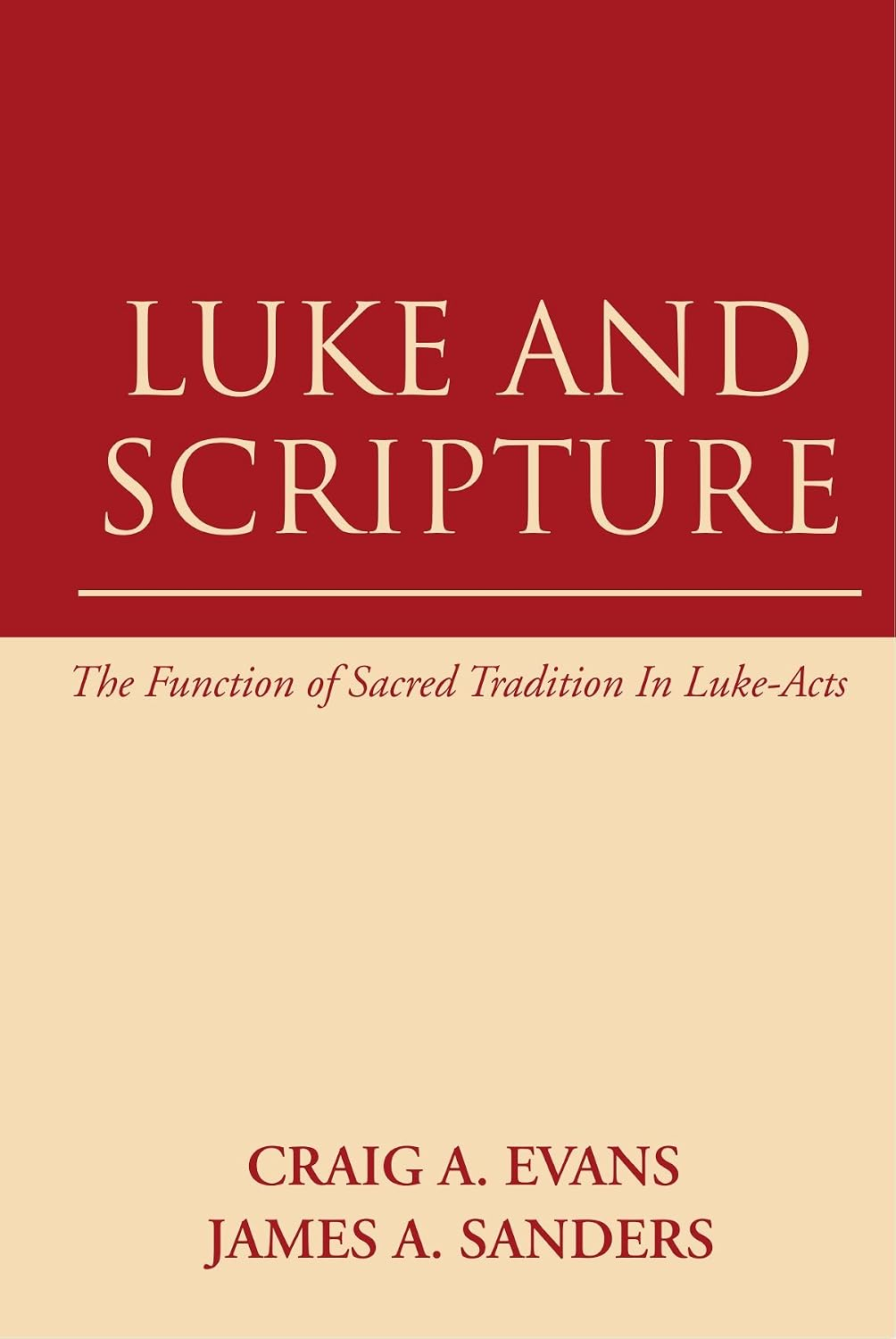
Evans, Craig A., and James A. Sanders. Luke and Scripture: The Function of Sacred Tradition in Luke-Acts. Eugene, OR: Wipf & Stock, 2001.
According to the Commentary on the New Testament Use of the Old Testament, although Luke only quotes the Old Testament some twenty-five times throughout his Gospel, he alludes to it possibly as many as 439 times. Thus, any perception that Luke is relatively uninterested in the Old Testament is largely mistaken. Luke makes extensive use of the Old Testament in his portrayal of Jesus and the fulfillment of Israel’s hopes and expectations. In Luke and Scripture: The Function of Sacred Tradition in Luke-Acts, Craig A. Evans and James A. Sanders take up Luke’s use of the Old Testament in a collection of essays that attempt to shed light on the topic through the method of comparative midrash. First published in 1993, the book has become a standard part of the discussion, and deservedly so. Luke and Scripture offers a valuable collection of studies demonstrating the pervasive importance of Israel’s sacred traditions for understanding Luke–Acts. At the same time, the diversity of the essays means that the volume is more successful in demonstrating the extent of Luke’s engagement with Scripture than in offering a unified account of how Scripture functions within Luke’s narrative.
The essays cover a wide range of topics, from Luke’s use of Isaiah, to the function of the Elijah/Elisha narratives, to the ethics of election in Luke’s great banquet parable, to the use of Psalm 118 in Luke’s entry narrative, to the portrayal of the Jews in Luke’s scriptural apologetic. The essays are nevertheless united by their general use of the method of comparative midrash, which simply means comparing Luke’s usage with contemporary uses of the same Scripture in Jewish literature. The underlying assumption of this approach is that Luke’s use of Scripture did not take place in isolation. The same texts and traditions upon which Luke draws were being interpreted and reapplied within the broader Jewish world, and these contemporary interpretations can therefore provide an important context for understanding Luke’s own hermeneutical activity. By comparing Luke’s use of a particular passage or tradition with its interpretation elsewhere in Jewish literature, Evans and Sanders attempt to identify both the interpretive conventions Luke shares with his contemporaries and the distinctive ways in which he adapts Israel’s Scriptures to the story of Jesus and the early church. Comparative midrash thus provides the methodological thread connecting what might otherwise appear to be a rather diverse collection of essays. Despite the variety of texts and questions addressed, comparative midrash thus provides a common methodological framework for the volume as a whole.
The value of this comparative approach becomes apparent in the exegetical insights it produces throughout the volume. Rather than simply identifying Old Testament quotations and allusions, the contributors frequently demonstrate how attention to the wider interpretive traditions surrounding a particular text can illuminate Luke’s own use of it. This is especially important because Luke often draws upon Scripture in ways that extend beyond explicit citation. Scriptural characters, narratives, themes, and expectations provide patterns through which Luke interprets Jesus and the events of the early church. Reading these passages alongside their interpretation elsewhere in early Judaism therefore helps recover dimensions of Luke’s scriptural world that might otherwise be overlooked. At its best, comparative midrash allows the reader to see not merely that Luke has used a particular passage, but why that passage could carry the theological significance that Luke assigns to it. The method consequently provides an important safeguard against treating Luke’s use of Scripture as a collection of isolated Christian proof texts disconnected from their larger Jewish interpretive context. Luke’s reading is unmistakably Christian and Christological, but the essays repeatedly demonstrate that it remains deeply rooted in Israel’s Scriptures and the interpretive traditions that had developed around them.
A second strength of Luke and Scripture is the sheer breadth of Luke’s engagement with Scripture that emerges from the essays taken together. The volume demonstrates that the Old Testament does far more in Luke–Acts than provide a collection of individual proof texts or explicit predictions that find their fulfillment in Jesus. Israel’s Scriptures supply characters, narratives, themes, patterns, and expectations that repeatedly shape the way Luke tells his story. This breadth is reflected in the diversity of the essays themselves. Isaiah, the Elijah and Elisha narratives, the Psalms, Israel’s election, and other scriptural traditions are all shown to contribute in various ways to Luke’s presentation of Jesus and the early church. For example, Evans’s essay “Prophecy and Polemic: Jews in Luke’s Scriptural Apologetic” is particularly compelling in the way it challenges the conclusion that Luke is anti-Semitic in his portrayal of the Jews. Evans argues that Luke’s polemic against Jewish unbelief should be understood within the scriptural and prophetic patterns through which Luke interprets both Jesus’s rejection and the opposition encountered by the early church. The point is that the cumulative effect of the essays is significant. Even where one might disagree with an individual interpretation, the volume makes it increasingly difficult to read Luke–Acts without recognizing how thoroughly Luke’s narrative has been shaped by Israel’s Scriptures. Taken together, the essays demonstrate that the Old Testament does not merely provide occasional support for Luke’s theology; Israel’s Scriptures supply much of the conceptual and narrative world within which Luke tells the story of Jesus and the early church.
Nevertheless, the diversity that gives Luke and Scripture much of its value also contributes to one of its principal weaknesses. Although the individual essays provide numerous illuminating examples of Luke’s engagement with Israel’s Scriptures, the volume does not always bring these individual studies together into a unified account of how Scripture functions within Luke–Acts as a whole. This is particularly noticeable given the book’s subtitle, The Function of Sacred Tradition in Luke-Acts. The essays demonstrate a variety of ways in which Luke draws upon Scripture, but the reader is often left to determine how these individual examples relate to one another and what they reveal collectively about Luke’s larger scriptural hermeneutic. Of course, some degree of diversity is unavoidable in a collection of essays addressing different texts and questions, and that diversity contributes to the breadth that makes the volume so useful. Nevertheless, a concluding chapter drawing together the results of the individual studies and articulating more explicitly what they reveal about the larger function of Scripture within Luke–Acts would have strengthened the volume considerably. As it stands, Luke and Scripture is more successful in demonstrating the pervasive extent of Luke’s engagement with Scripture than in providing a comprehensive account of how that engagement functions across his two-volume narrative.
A second limitation concerns the method of comparative midrash itself. As noted above, comparison with contemporary Jewish interpretations can provide invaluable context for understanding Luke’s use of Scripture. Nevertheless, identifying parallels between Luke and other Jewish interpreters does not by itself explain how a particular scriptural text or tradition functions within Luke’s own narrative. At times, the volume’s emphasis upon comparative material can therefore leave questions of literary and theological function somewhat underdeveloped. Luke is not merely preserving individual interpretations of Israel’s Scriptures but incorporating them into a carefully constructed narrative in which scriptural themes and expectations develop across Luke–Acts. Consequently, understanding Luke’s use of Scripture requires attention not only to how a particular text was interpreted within early Judaism but also to where Luke places that text, how it relates to other scriptural traditions within his narrative, and what role it plays in the larger theological argument of Luke–Acts. This does not diminish the value of comparative midrash; rather, it highlights the limits of what the method can accomplish on its own. Comparative midrash is therefore most illuminating when it provides the historical and interpretive context for Luke’s use of Scripture while remaining attentive to the distinctive narrative and theological purposes for which Luke employs it.
Despite these limitations, Luke and Scripture remains a valuable contribution to the study of Luke–Acts and its use of the Old Testament. The individual essays vary in their subjects and conclusions, but together they make a compelling case that Israel’s Scriptures and the interpretive traditions surrounding them are indispensable for understanding Luke’s narrative and theology. The volume is particularly valuable for students and scholars interested in Luke–Acts, the New Testament use of the Old Testament, and the relationship between early Christianity and Jewish scriptural interpretation. More than thirty years after its original publication, some aspects of the discussion have naturally been supplemented by subsequent scholarship, but the volume continues to provide important exegetical insights and a useful methodological reminder: Luke must be read within the scriptural world from which his Gospel and Acts emerged. Luke and Scripture may not provide a comprehensive or fully unified account of the function of sacred tradition in Luke–Acts, but it convincingly demonstrates that such a function cannot be treated as peripheral. Israel’s Scriptures belong near the center of any attempt to understand Luke’s presentation of Jesus, the early church, and the fulfillment of God’s purposes.
Share this:

On the Preaching of John the Baptist and Jesus
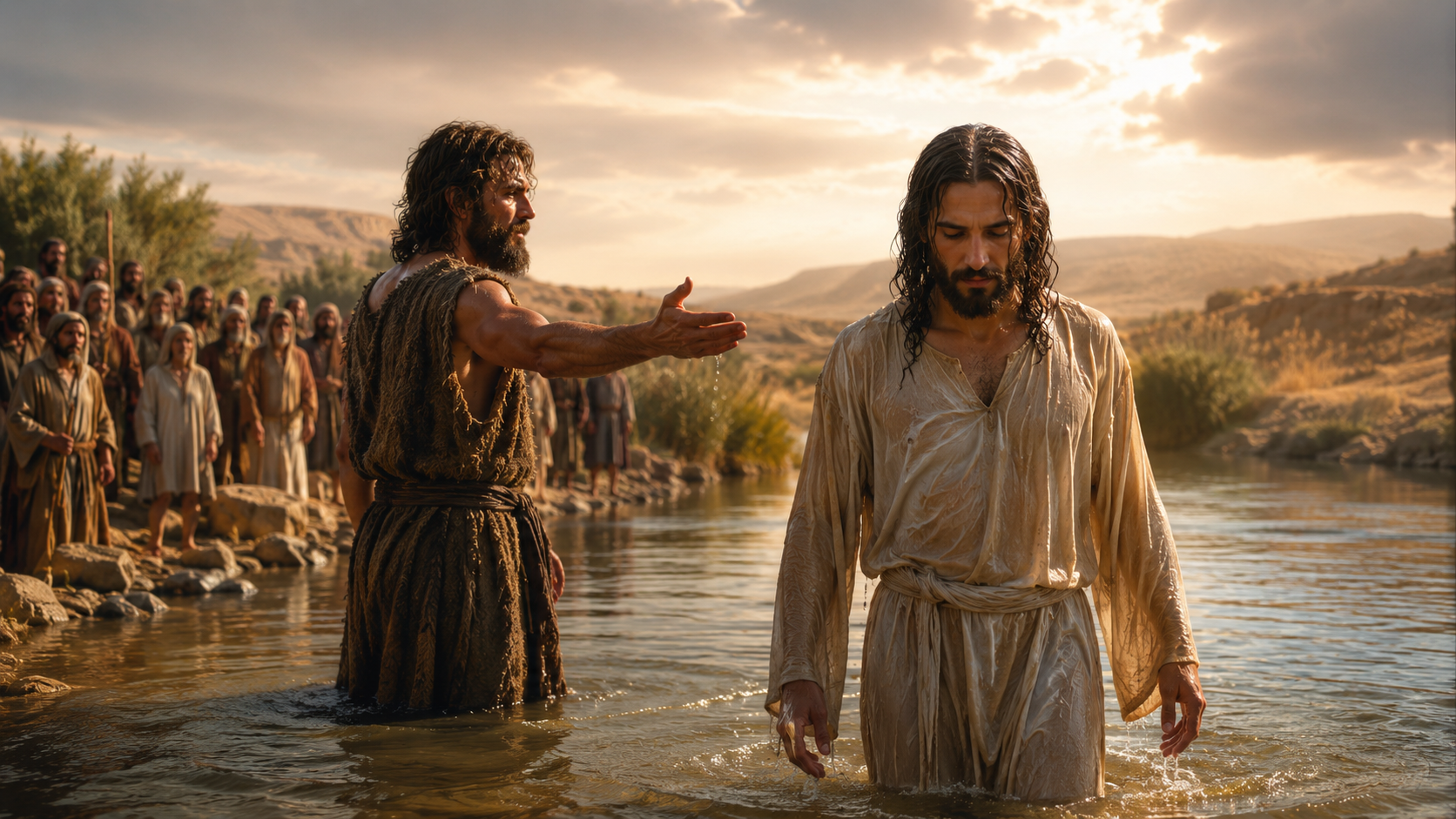
Have you ever wondered why all four Gospels begin the story of Jesus’s public ministry with the ministry of John the Baptist? Could it possibly be because John came preaching, “Repent, because the kingdom of heaven has come near!” (Matt. 3.2), and Jesus began his own ministry by preaching, “Repent, because the kingdom of heaven has come near!” (Matt. 4.17)? They begin their preaching with virtually the same message. What, then, is the relationship between the preaching and ministry of John the Baptist and that of Jesus? Sometimes John is treated as little more than a necessary but largely preparatory prelude to the more important ministry of Jesus, almost as though his primary purpose were simply to baptize Jesus and then disappear from the story. But the Gospels reveal remarkable continuity between the preaching of these two figures. Jesus’s preaching stands in fundamental continuity with John the Baptist’s proclamation of the approaching kingdom, repentance, salvation, and judgment; yet it also develops John’s message by announcing that the kingdom has become present in Jesus’s own ministry while its final judgment remains future. The transition from John to Jesus, therefore, is not a transition from one eschatological message to another, but from the announcement of what God is about to do to the inauguration of that promise in Jesus himself. To understand this development, however, we must first consider what John was actually announcing.
Of course, John the Baptist’s preaching is fundamentally eschatological. He appears in the wilderness announcing, “Repent, because the kingdom of heaven has come near!” (Matt. 3.2). The nearness of God’s kingdom means that Israel has reached a decisive moment in the history of salvation, and repentance is the necessary response to what God is about to do. Indeed, John warns his hearers not to presume upon their covenantal identity: “Don’t presume to say to yourselves, ‘We have Abraham as our father’” (Matt. 3.9). Instead, they must “produce fruit consistent with repentance” because “the ax is already at the root of the trees” (3.8, 10). John’s proclamation therefore contains both salvation and judgment. On the one hand, he announces the coming of one more powerful than himself who “will baptize you with the Holy Spirit and fire” (3.11). On the other hand, this Coming One already has “his winnowing shovel” in his hand and will separate the wheat from the chaff, burning the latter “with fire that never goes out” (3.12). John therefore stands at the threshold of Israel’s eschatological expectation, announcing that God’s promised intervention is no longer located in some distant future—it has drawn near. His call to repentance, promise of the Spirit, and warning of judgment all derive their urgency from this conviction. Most importantly, however, John does not present himself as the one who will accomplish these things. His entire proclamation points beyond himself toward the Coming One through whom God’s promised salvation and judgment will arrive.
The preaching of Jesus stands in basic continuity with the contours of John’s message. As noted above, Jesus also comes proclaiming the nearness of the kingdom and the need for repentance. In Matthew 4.17, Jesus declares, “Repent, because the kingdom of heaven has come near!” repeating verbatim the proclamation of John (Matt. 3.2). Similarly, Mark summarizes Jesus’s preaching: “The time is fulfilled, and the kingdom of God has come near. Repent and believe the good news!” (Mark 1.15). The point is that Jesus retains John’s basic eschatological framework: kingdom, repentance, salvation, judgment, restoration, and accountability before God. He does not correct John by suggesting that his expectation of judgment was mistaken or that Israel’s eschatological hopes were misguided. On the contrary, Jesus repeatedly warns of a coming judgment, whether in his teaching concerning Gehenna (Matt. 10.28), the separation of the righteous and wicked (Matt. 13.40–43), or the future judgment of the Son of Man (Matt. 25.31–46). We must therefore resist the simplistic dichotomy that John preached judgment while Jesus preached grace. Both proclaim salvation and judgment as dimensions of God’s coming kingdom. The fundamental difference between their preaching must be located somewhere else. The question is not whether Jesus abandoned John’s eschatological message, but what happened to that message once the One whom John announced actually arrived.
In Matthew 11.2–3, John sends messengers to Jesus to ask him, “Are you the one who is to come, or should we expect someone else?” We are not told exactly what prompted John’s question, but the apparent disconnect between his preaching and Jesus’s actual ministry was likely part of the equation. John had proclaimed the nearness of the kingdom alongside warnings of impending judgment, yet the ministry of Jesus did not seem to indicate that such judgment had arrived. This is why Jesus’s answer to John’s question is so significant. Rather than simply answering yes, Jesus points to the fruit of his ministry: “The blind receive their sight, the lame walk, those with leprosy are cleansed, the deaf hear, the dead are raised, and the poor are told the good news” (Matt. 11.5). These signs reflect the expectations of eschatological restoration found throughout the Book of Isaiah (especially Isa. 35:5–6; 61:1–2). The healings, exorcisms, forgiveness, restoration, and proclamation of good news therefore demonstrate that Israel’s promised salvation has begun. John announced what God was about to do; Jesus points to what God is now doing through him. Here we encounter the essential development from John’s preaching to that of Jesus: John announces the Coming One; Jesus announces and embodies the arrival of the kingdom because he is the Coming One. The transition from John to Jesus is therefore the transition from eschatological expectation to eschatological fulfillment. The promised blessings of the kingdom have begun to enter the present through the ministry of Jesus. But if the blessings have arrived, what has happened to the judgment John so urgently announced?
John had proclaimed that the ax was at the root, that the winnowing fork was in the Coming One’s hand, and that the chaff would be burned with unquenchable fire. Yet Jesus heals, forgives, restores, eats with sinners, and proclaims good news. What is important to remember, however, is that John was not wrong: judgment is coming. Rather, the ministry of Jesus brings greater clarity to the temporal structure of John’s eschatology. The kingdom has arrived in the earthly ministry of Jesus, but final judgment has not. This distinction is illustrated particularly well in Jesus’s sermon at Nazareth in Luke 4. There Jesus reads from Isaiah 61:1–2 and then proclaims, “Today as you listen, this Scripture has been fulfilled” (Luke 4:21). Interestingly, however, Jesus’s reading stops with “the year of the LORD’s favor” and does not include the following phrase, “the day of our God’s vengeance.” We should probably not build too much upon this omission alone, but it fits the larger pattern of Jesus’s ministry remarkably well. The promised blessings of Israel’s restoration are being inaugurated in the present, while final judgment remains future. This does not mean that Jesus abandons John’s expectation of judgment. As noted above, Jesus repeatedly warns of a coming judgment and associates its consummation with the future coming of the Son of Man in glory. Judgment has not disappeared from God’s eschatological program; Jesus has revealed that the kingdom’s saving blessings enter history before its final judgment arrives.
The point is that John’s basic expectations were correct. The Coming One would bring salvation, the Spirit, restoration, and judgment. But the earthly ministry of Jesus reveals that these realities do not all arrive simultaneously in their consummated form. The preaching and ministry of Jesus operate according to what is often described as the “already and not yet,” or inaugurated eschatology. This simply means that in the earthly ministry of Jesus, the kingdom of God was already present even though its final consummation remained future. For example, Jesus declares, “If I drive out demons by the Spirit of God, then the kingdom of God has come upon you” (Matt. 12:28). His ministry of healing, exorcism, forgiveness, and restoration therefore demonstrates that God’s saving reign had already broken into history. Yet Jesus continues to speak of realities that remain future: the resurrection of the dead, the return of the Son of Man, final judgment, and the consummation of God’s kingdom. The kingdom is therefore genuinely present without yet being present in its fullness. Salvation has been inaugurated, while final judgment and consummation remain future. This is not a rejection of John’s preaching but its clarification and fulfillment. The Coming One has arrived, just as John announced, but Jesus reveals something John did not fully articulate: his first advent inaugurates the promised salvation of the kingdom before his return brings that kingdom to its consummation in final judgment.
In the final analysis, the preaching of Jesus neither abandons nor merely repeats the preaching of John the Baptist. Both proclaim the nearness of God’s kingdom, call Israel to repentance, announce the arrival of eschatological salvation, and warn of coming judgment. This is why Matthew can summarize their preaching with precisely the same words: “Repent, because the kingdom of heaven has come near!” (Matt. 3:2; 4:17). Yet those words take on a new significance when spoken by Jesus. John stands at the threshold of fulfillment, announcing that the kingdom is near and pointing forward to the Coming One who will bring it. Jesus is that Coming One, and through his preaching, healings, exorcisms, forgiveness, and restoration, the saving power of the kingdom begins to enter the present. The transition from John to Jesus is therefore the transition from eschatological expectation to eschatological fulfillment—not yet fulfillment in all its fullness, but fulfillment genuinely inaugurated in history. John announces that God’s kingdom has drawn near; Jesus announces and demonstrates that in him its saving power has begun to arrive. Salvation has entered the present, while final judgment remains ahead, awaiting the return of the King who first came proclaiming good news.
Share this:


On the Meaning of “This Generation” in the Gospels

When it comes to the eschatology of the historical Jesus, one of the most vexing questions concerns his repeated references to “this generation.” Few phrases have generated more debate in biblical studies. For example, what does Jesus mean when he says that the men of Nineveh and the queen of the South will rise up at the judgment and condemn “this generation”? (Matt. 12.39–45) Or when he declares that “all these things” will come upon “this generation,” who exactly is he talking about? (Matt. 23.36; 24.34) Discussions of these texts often focus on questions of chronology and fulfillment. We ask whether Jesus is referring to his contemporaries or to some future generation, and we speculate about when these events are supposed to occur. It is a question that has confounded even some of the greatest biblical scholars. In this post, I would like to revisit the issue, not because I am a great biblical scholar, but because I believe the discussion often overlooks an important biblical-theological dimension. I would suggest that “this generation” does indeed refer to Jesus’ contemporaries, but it functions as more than a simple chronological marker. Rather, Jesus employs the phrase to identify his contemporaries with the recurring biblical pattern of the rebellious generation that rejects God’s messengers and stands under covenant judgment.
Of course, at first glance, the meaning of “this generation” seems rather straightforward. Throughout the Gospels, the phrase consistently refers to those living during Jesus’s earthly ministry. For example, in Matthew 11:16, Jesus asks, “To what should I compare this generation? It’s like children sitting in the marketplaces who call out to other children.” Clearly, Jesus is reflecting upon the unbelief of his contemporaries and their rejection of both John the Baptist and himself. Or again, in Matthew 23:36, when Jesus declares, “Truly I tell you, all these things will come on this generation,” he is speaking directly to the religious leaders who stand before him. Texts such as these make it difficult to sustain interpretations that remove the phrase entirely from its first-century context. Jesus is not speaking primarily about a distant future generation but about the people of his own day. The crowds, the scribes, the Pharisees, and the religious leaders who heard his teaching constitute the immediate referent of the phrase. In other words, “this generation” is first and foremost a historical designation. Yet, as we shall see, it functions as more than a mere chronological marker. The phrase carries a theological significance that reaches beyond the simple identification of a particular group of people living at a particular moment in history.
This becomes even more apparent when we observe that Jesus rarely speaks of “this generation” in a neutral sense. Rather, he repeatedly describes it as an “evil and adulterous generation” (Matt. 12:39; 16:4) or as an “unbelieving generation” (Mark 9:19). These are not merely chronological descriptions; they are moral and theological evaluations. Jesus is not simply identifying the people who happen to be alive during his ministry. He is characterizing them according to their response to God’s revelation. Their defining feature is not that they belong to a particular moment in history, but that they have rejected the message of God’s prophets, resisted the ministry of John the Baptist, and refused to recognize the Messiah standing in their midst. In this sense, “this generation” functions as more than a temporal designation. It becomes a moral and covenantal category that describes a particular posture of unbelief and rebellion toward God. Indeed, the repeated use of terms such as “evil,” “adulterous,” and “unbelieving” suggests that Jesus is intentionally placing his contemporaries within a much larger biblical pattern. The question, then, is not simply who “this generation” is, but what kind of generation it is. And it is precisely here that the Old Testament background becomes crucial, for the language Jesus employs has deep roots in the Scriptures’ recurring depiction of “the generation of the wicked.”
The Old Testament repeatedly speaks of the “wicked generation,” and this theme stretches all the way back to the book of Deuteronomy. This is especially evident in Deuteronomy 32, where Moses describes Israel as a “crooked and perverse generation” (Deut. 32:5) and later speaks of them as a generation marked by faithlessness and rebellion (Deut. 32:20). This language is taken up again in the Psalms. For example, Psalm 78:8 describes the wilderness generation as “a stubborn and rebellious generation, a generation whose heart was not loyal and whose spirit was not faithful to God.” What is striking is that these texts are not merely concerned with identifying a particular group of people who happened to live at the same time. Rather, they are describing a recurring pattern of covenant rebellion. The wilderness generation rejected God’s Word, resisted God’s appointed leaders, refused to trust his promises, and consequently experienced his judgment. As a result, the wilderness generation became a paradigm for later generations of Israelites who repeated the same sins. Thus, in the Old Testament, the concept of a “generation” often carries theological significance beyond mere chronology. It becomes a covenantal category describing those who persist in unbelief and opposition to God’s purposes. This Old Testament background provides the conceptual framework for understanding Jesus’s repeated references to “this generation” in the Gospels.
The point of all this is that when Jesus speaks of “this generation,” he is making precisely this kind of moral and covenantal judgment. This is why he can declare, “that this generation may be held responsible for the blood of all the prophets shed since the foundation of the world—from the blood of Abel to the blood of Zechariah” (Luke 11:\.50–51; cf. Matt. 23.35–36). Clearly, Jesus is not suggesting that his contemporaries were personally present when Abel was murdered or when Zechariah was killed. Rather, they stand in continuity with those earlier generations because they are committing the very same acts of covenant rebellion. Indeed, in Matthew’s account, Jesus tells the religious leaders, “You are sons of those who murdered the prophets” (Matt. 23.31). They are not merely descended from their fathers biologically; they are following in their fathers’ footsteps spiritually. Just as earlier generations rejected God’s messengers, so now Jesus’s contemporaries reject John the Baptist, oppose Jesus himself, and will soon persecute his apostles. When Jesus reads Israel’s Scriptures, he sees a recurring pattern of covenant infidelity that reaches from the wilderness generation through the prophets and culminates in his own day. His contemporaries therefore represent not simply another generation in Israel’s history but the climactic manifestation of the rebellious generation. It is for this reason that they stand under the same covenantal judgment that had fallen upon those who came before them.
Of course, it is precisely this covenantal judgment that Jesus predicts in the Olivet Discourse (Matt. 24; Mark 13; Luke 21), where he declares, “Truly I tell you, this generation will certainly not pass away until all these things take place” (Matt. 24:34). If the preceding discussion is correct, then this statement should not be understood merely as a chronological marker but as the culmination of the biblical pattern we have already traced. Because Jesus’ contemporaries embody the recurring motif of the rebellious generation, the coming judgment upon Jerusalem is neither arbitrary nor unexpected. Rather, it follows the well-established pattern of covenant history. Just as the wilderness generation experienced God’s judgment for its unbelief, just as the northern kingdom was judged for its covenant unfaithfulness, and just as Judah ultimately fell under divine judgment for rejecting God’s prophets, so also Jesus announces that “this generation” will experience covenant judgment in the destruction of Jerusalem. The judgment falls upon a specific historical generation living in the first century, yet that generation simultaneously represents the climax of a much larger biblical pattern. Jesus’ words, therefore, are historically specific while at the same time theologically rich. They announce the judgment of his contemporaries precisely because they have become the latest—and greatest—manifestation of the generation that continually rejects God’s revelation and resists his redemptive purposes.
Understanding “this generation” in this way also helps us see why the phrase remains relevant today. The issue is not merely one of chronology but of response to God’s revelation. Throughout the Scriptures, the “generation of the wicked” is characterized by unbelief, the rejection of God’s Word, resistance to his appointed messengers, and ultimately opposition to his redemptive purposes. Jesus identifies his contemporaries with that pattern because they rejected the Messiah standing before them. Yet the pattern itself did not end with the destruction of Jerusalem. It continues to reappear wherever men and women harden their hearts against God’s Word and refuse his gracious call to repentance. In this sense, every generation must ask whether it will follow the path of covenant faithfulness or repeat the rebellion of those who came before. More than that, Scripture teaches that history is moving toward a final day of judgment when Christ will return to judge the living and the dead. Just as the generation of Jesus’s day experienced a historical judgment in the destruction of Jerusalem, so also the final generation will stand before God’s ultimate judgment at the return of Christ. The warning of “this generation,” therefore, is not confined to the first century. It continues to summon every generation to repent, believe the gospel, and receive the King whom God has sent.
In the final analysis, then, “this generation” should not be understood as merely a chronological expression nor as a reference to some distant future generation. It refers first and foremost to Jesus’ contemporaries, the men and women who heard his preaching, witnessed his miracles, and ultimately rejected him as Israel’s Messiah. Yet Jesus deliberately frames them within the larger biblical category of the rebellious generation that recurs throughout the Old Testament. Like the wilderness generation before them, they resisted God’s Word, rejected his appointed messenger, and consequently stood under covenant judgment. The destruction of Jerusalem, therefore, was not an arbitrary historical tragedy but the covenantal consequence of a pattern of rebellion that had reached its climax in the rejection of God’s Son. At the same time, the warning extends beyond the first century. Every generation must decide how it will respond to God’s revelation in Christ, for history is moving toward that final day when the righteous Judge will return. The question is not simply whether we understand who “this generation” was, but whether we will hear God’s Word, repent, and believe while there is still time.
Share this:

On Son of God as a Messianic Title
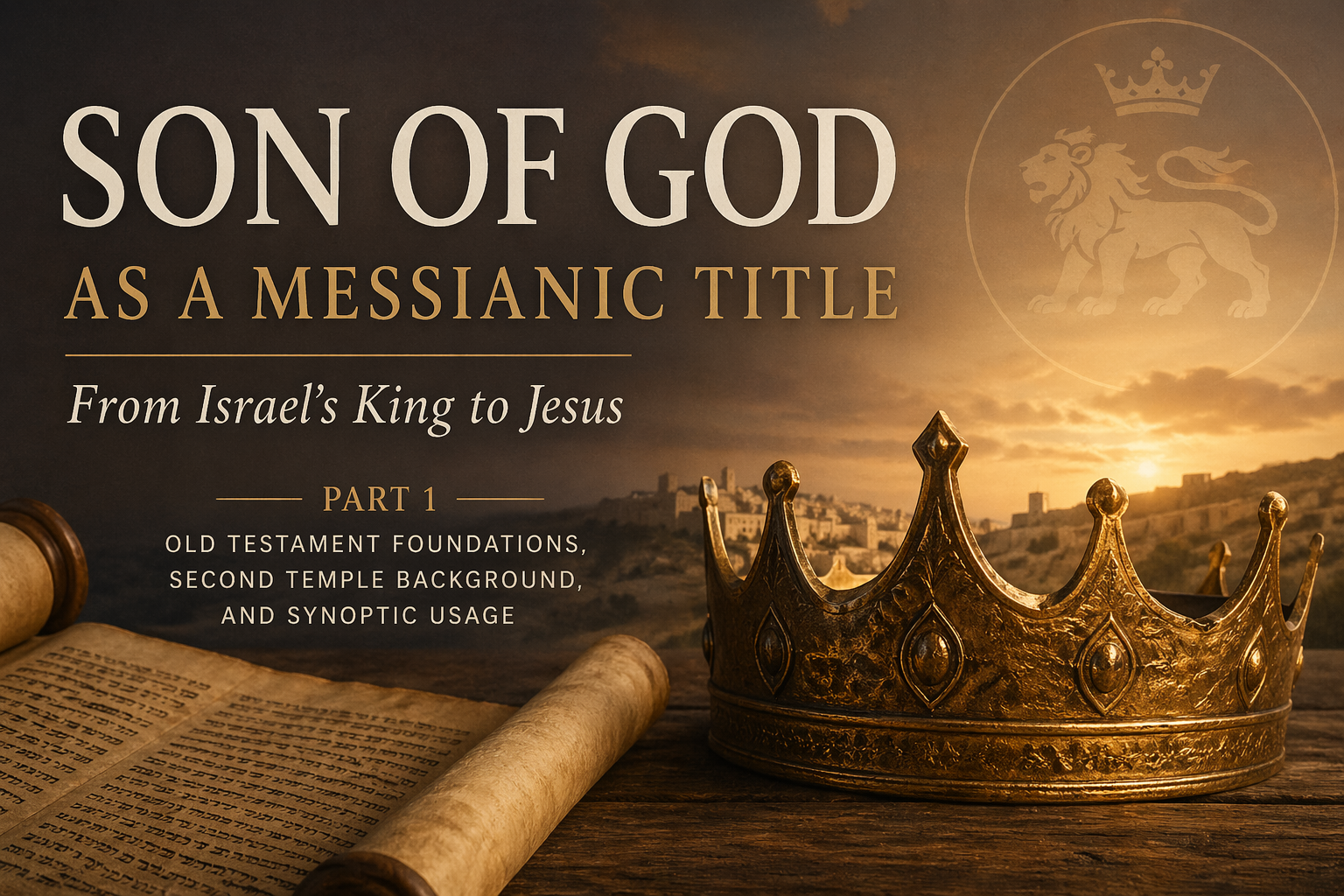
When Christians confess that Jesus is the Son of God, we are usually affirming something of his divinity. In other words, the title “Son of God” is typically understood in doctrinal terms as an affirmation that Jesus is the second person of the Trinity come incarnate. This understanding reaches back to the formulation of the First Council of Nicaea in AD 325. In that creed, we confess that Jesus is “the only begotten Son of God, born of the Father before all ages, God from God, Light from Light, true God from true God, begotten, not made, consubstantial with the Father.” These are beautiful words that faithfully express the truth of Christ’s divinity. However, they also risk skipping the story. In Scripture, the term “Son of God” first emerges as a royal, messianic title before it is developed into a fuller theological claim about his divine identity. Its meaning is shaped by covenant, kingship, and expectation, and only later expanded in light of who Jesus truly is.
The idea of sonship appears early in the Old Testament. As early as Exodus 4.22, God declares that “Israel is my firstborn son,” identifying the nation as his covenant people, set apart to represent him among the nations. Later, in the Davidic covenant, God speaks of the king in similar terms: “I will be his father, and he will be my son” (2 Sam. 7.14). Here, sonship is tied directly to kingship and divine appointment. The king stands as God’s representative, ruling on his behalf and under his authority. This same idea is expressed in Psalm 2, where, in the context of royal coronation, the king declares, “He said to me, ‘You are my Son; today I have begotten you.'” The language is not biological or metaphysical, but covenantal and functional. It marks the king as the one chosen and installed by God to exercise his rule. The point, then, is that in these texts divine sonship refers to representative, covenantal identity. It speaks of relational authority, divine election, and royal vocation rather than transcendent metaphysical realities. To be called ‘Son of God’ in this context is to be appointed as God’s king, entrusted with the responsibility of embodying his rule among his people.
The problem, however, is that these “sons of God” consistently fail to live up to the height of their calling. As God’s son, Israel was called to be a kingdom of priests, a light to the nations, and a visible reflection of God’s character in the world. Yet instead of faithfulness, they fell into sin and idolatry, broke the terms of the covenant, and were ultimately sent into exile under its curses. The same pattern emerges in the Davidic line. The kings of Israel and Judah, who were called to mediate God’s rule over his people, likewise failed through disobedience and compromise. This tension is reflected within the Psalms themselves. In Psalm 2, the authority of the Lord’s anointed king is met with resistance as the nations rage against him. In Psalm 89, the psalmist recalls God’s covenant promises to David, only to lament that those promises appear to stand in contradiction to present reality. The result is that the category of “son of God” begins to carry forward-looking weight. It no longer simply describes a present reality; it generates expectation. There emerges a longing for a faithful son, a greater son, who will succeed where Israel and her kings have failed, a hope captured in texts like Isaiah 9.6–7, where the promised son will finally bear the government in righteousness and peace. In other words, the Scriptures create space for a future Son who will succeed where others failed.
This hope for a greater Son of God becomes more clearly defined in the Second Temple period. Of course, these texts are not inspired Scripture, but they do provide important insight into the expectations and categories that were alive at the time of Jesus. What we see is a growing anticipation of deliverance increasingly framed in royal and messianic terms. While these expectations are diverse, there remains a significant continuity with Old Testament categories, especially the idea of the “Son of God.” For example, among the Dead Sea Scrolls, texts like 4Q174 (the Florilegium) link the Davidic covenant and the language of sonship in 2 Samuel 7.14 with the expectation of a coming royal Messiah. Likewise, 4Q246 explicitly uses the titles “Son of God” and “Son of the Most High” in reference to a future ruler. Another text, 1QSa (often cited as 1Q28a), appears to echo Psalm 2.7 with language of divine begetting applied to the Messiah. These examples could be multiplied, but the point is clear: in the Second Temple period, the concept of divine sonship is not abandoned or redefined, but carried forward and intensified. It remains closely tied to the Davidic king, even as it takes on heightened expectation in anticipation of the one who will finally fulfill that role. Or to put it another way, the term “Son of God” was already a loaded, expectation-filled term before Jesus appeared.
In the Synoptic Gospels, “Son of God” language appears at key moments in the life and ministry of Jesus. Most notably, at his baptism and again at his transfiguration, a voice from heaven declares, “This is my beloved Son,” marking him out as the one uniquely appointed and affirmed by God. The demons, too, recognize Jesus as the Son of God, a recognition that underscores his authority and signals his messianic identity, even when others fail to perceive it clearly. This comes into sharper focus at Caesarea Philippi. When Jesus asks his disciples, “Who do you say that I am?”, Peter responds, “You are the Messiah, the Son of the living God.” The grammar of this confession is particularly significant. The predicate nominative “Messiah” and the phrase “Son of the living God” stand in apposition, meaning that the second expression defines and clarifies the first. In other words, to confess Jesus as the Messiah is to confess him as the Son of God. In this context, divine sonship is directly tied to his mission, obedience, and kingship. At the same time, Jesus redefines contemporary messianic expectations. He rejects the political and nationalistic ambitions often associated with the Messiah and instead frames his identity around suffering, obedience, and ultimately his death. The point, then, is that throughout the Synoptic Gospels, the title “Son of God” functions primarily as a messianic designation, identifying who Jesus is and what he has come to do.
Even at his crucifixion, the language of sonship is front and center. The religious leaders mock him, saying, “If you are the Son of God, come down from the cross” (Matt. 27.40), and again, “He is the King of Israel! Let him come down now from the cross, and we will believe in him” (Matt. 27.42). The parallelism in these statements is striking. “Son of God” and “King of Israel” function as equivalent titles, reinforcing the connection between divine sonship and messianic kingship. And yet, this is the tension: the one who claims to be the Son of God appears to be defeated. He does not come down from the cross; he remains and suffers. But this apparent contradiction is precisely the point. Jesus does not abandon his identity as the Son; he fulfills it through obedience and suffering. His sonship is not negated at the cross; it is revealed there. The resurrection then serves as the divine vindication of his claims. As Paul writes in Romans 1.4, he was “appointed Son of God in power… by the resurrection from the dead.” That is, the resurrection publicly confirms what was already true of him, now revealed in power. The cross is not the denial of his kingship, but the path to it. As even the Roman centurion confesses at his death, “Truly this man was the Son of God.”
The early apostolic witness continues this same pattern by interpreting Jesus’s sonship in light of his resurrection and exaltation. In the book of Acts, the apostles repeatedly draw from the Psalms to explain what God has accomplished in Christ. For example, in Acts 13, Paul cites Psalm 2.7—“You are my Son; today I have begotten you”—and applies it to the resurrection of Jesus. In this context, the language of “begetting” is not about origin, but about installation. The resurrection marks the public declaration and vindication of Jesus as the Son of God, the one who now reigns in power. Similarly, Psalm 110 is used throughout the New Testament to describe Christ’s exaltation to the right hand of God, a position of authority, kingship, and rule over all things. The point is that the apostles read the Psalms as speaking directly to the identity and mission of Jesus, particularly as they relate to his enthronement. His sonship is not merely a title attached to his earthly ministry; it is confirmed and displayed in his exaltation. In other words, Jesus is revealed to be the Son of God in power as the risen and reigning king, fulfilling the royal and covenantal expectations embedded in the Psalter. (On Christ as the fulfillment of the Psalms, see here.)
Bringing all of this together, the title “Son of God” in Scripture carries a rich and layered meaning that is rooted in covenant, kingship, and ultimately fulfillment in Christ. It is a title that begins with Israel as God’s son, is focused and intensified in the Davidic king, and then expands into a forward-looking expectation for a faithful Son who will succeed where all others have failed. In Jesus, that expectation is finally realized. He is the true Son who embodies what Israel was called to be, the true King who fulfills the promises made to David, and the obedient Son who accomplishes the will of the Father. His sonship is not defined by abstract speculation, but by his mission—his life of perfect obedience, his suffering on the cross, his resurrection from the dead, and his exaltation to the right hand of God. To confess Jesus as the Son of God, then, is to confess him as the promised Messiah, the one in whom God’s purposes for his people and his world are brought to completion. And yet, as full and glorious as this picture is, the story does not end here. The New Testament, particularly in the Gospel of John, will press even further, showing that Jesus’s sonship is not only messianic, but also reveals something deeper about his identity. But that is a discussion for another time.
Share this:

On the Red Letters and the Authentic Words of Jesus
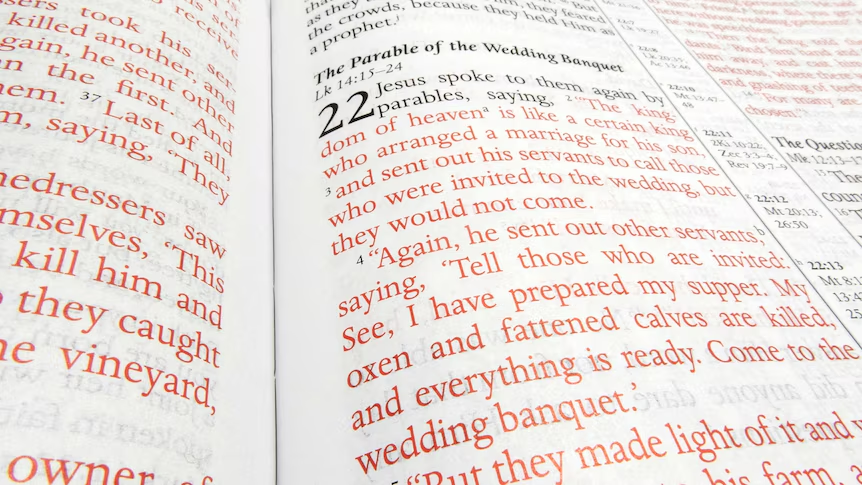
Most English versions of the Bible print the words of Jesus in the Gospels in red letters. It is a tradition that goes back nearly a century. The first red-letter New Testament was published in 1899; the full Bible with a red-letter New Testament was printed two years later in 1901. The reason for this practice is relatively clear, namely to highlight the words of Jesus over against the surrounding narrative and commentary. As noble as this aim is, it can lead to some unhealthy conclusions and applications. Readers might be tempted to conclude that the red letters are more important, more valuable, and more primary than the rest of the New Testament. For example, some so-called “red letter Christians” pit the words of Jesus against the rest of the New Testament and purport to follow the social ethic of Jesus which is characterized by love and compassion rather than the more conservative theology and ethics of the Apostle Paul et al. However, if Jesus is fully God, and there is only one God, and if God inspired the whole Bible, then in a sense all of the words of the Bible, whether black or red, are the words of Jesus.
Of course, this does not mean that the actual content of Jesus’s teaching ministry is unimportant. When it comes to the quest of the historical Jesus, the details of what Jesus said and did are essential for understanding who Jesus was and what he came to do. This is why scholars of the historical Jesus developed criteria of authenticity to determine which sayings in the canonical gospels authentically come from Jesus and which ones do not. Criteria like multiple attestation, dissimilarity, coherence, embarrassment and others like these are used to decide the authenticity of each individual saying or pericope. However, more often than not, these criteria have been used to dismiss more sayings than they have proven. This is most evident in work of the Jesus Seminar and their book The Five Gospels: What did Jesus Really Say? The Search for the Authentic Words of Jesus. Instead of establishing the authentic words of Jesus, they dismissed some 82 % of the sayings attributed to Jesus in the canonical Gospels either as things he definitely did not say (black bead) or as things he did not say but that might be close to his ideas (grey bead). Even sayings that met the established criteria were dismissed as inauthentic. This proves that there was probably another criteria at play in their judgment, that being if a saying evinced a relatively high Christology, then it was not authentic in their view.
More to the point, in my recent book review of Jesus and His Promised Second Coming by Tucker S. Ferda (see here), I suggested that the search for the “authentic” sayings of the historical Jesus in the gospels is a fundamentally flawed endeavor from the outset. This is because the Gospel writers did not set out to record the words of Jesus verbatim (ipsissima verba). They did, however, attempt to convey the words of Jesus by way of summary, thematic arrangement, implication, and interpretation. In other words, they were conveying the essential substance of the words of Jesus as well as it theological significance (ipsissima vox or substantia verba). This is partly because the Gospels are based on traditions that were passed down orally from the time of Jesus until the time the Gospels were composed. Even if the composition of the Gospels is dated early, i.e. in the 40s or 50s CE, then we are talking about 10+ years that have passed from the time Jesus to the time when the sayings of Jesus were written down. The point is that if “authentic” is understood to mean the actual words that Jesus spoke verbatim as he spoke to them, then we are searching for something that will never be found.
On the other hand, we must affirm that the Gospel writers were not simply making things up as they went along, putting words into the mouth of Jesus that he never said or thought. This is sometimes compared to the children’s game of “telephone”, where the first child hears a sentence, and then passes it along to the next child by whispering in their ear, and on to the next and so on. More often than not, when the final child reports the sentence, the final version is a far cry from the original, and usually so horribly garbled as to be beyond recognition. This analogy is a caricature of the actual nature of oral transmission. Not only was the culture at the time of Jesus thoroughly oral, but the Jews in particular took the transmission of oral tradition highly seriously. The Old Testament scriptures commanded them to pass on their faith orally from generation to generation, and Jewish children were trained in this from an early age in the temple and synagogues. The faithful transmission of oral tradition was practically sacrosanct in Jewish culture, and given the recognized authority of Jesus as a rabbi, the gospels writers would never have thought to put their own thoughts and agendas into his mouth. The same could be said for so-called prophetic utterances given by the risen Jesus; these would never have been treated as on par with actual Jesus tradition. As Luke himself indicates in the opening of his Gospel (1:1-4), the Gospel writers were faithfully writing down that which they had also remembered and received.
Now, someone might object, “What about the doctrine of inspiration? Weren’t the Gospel writers inspired by the Holy Spirit and so kept from error?” And I would answer, “Yes! Of course they were!” (2 Tim 3:16-17). But inspiration is not dictation. The Gospel writers were not mindless automatons simply transcribing by rote. Here again, Luke’s introduction indicates that he had done his research, had talked to eyewitnesses, had done the hard work “to write carefully and in order.” In other words, inspiration does not negate the normal processes of research and writing. In inspiration, the Holy Spirit works in, with, and through the human author in such a way that their words are his words. Moreover, the method of inspiration varies according to the genre of the literature being inspired. Clearly, prophetic texts, “thus saith the Lord” were directly inspired speech, but historical narrative, epistles, et al. allow for the creative engagement of the human author with the work of the Holy Spirit. B. B. Warfield puts it this way in The Inspiration and Authority of the Bible,
The Scriptures, in other words, are conceived by the writers of the New Testament as through and through God’s book, in every part expressive of His mind, given through men after a fashion which does no violence to their nature as men, and constitutes the book also men’s book as well as God’s, in every part expressive of the mind of its human authors.
The point of all this is to say that the Gospel writers have faithfully conveyed to us the real and true words of Jesus even if they have not conveyed to us his exact words. So, we should not take individual sayings (or even whole pericopes) out of their narrative context and then dismiss them as wholly inauthentic. This is a fundamentally flawed method of historical and exegetical inquiry. Rather we should attempt to understand how the words and actions of Jesus fit within the context of first century Judaism and how they gave rise to the theology and practice of the early church. As to whether we should continue to print the words of Jesus is red letters, I am of mixed opinion. Further, I suspect that my views on the question will do nothing to unseat standard publishing practice. Nevertheless, we must understand that there is no portion of Holy Scripture that is more authoritative, more valuable, more transformative than any other. Whether we are dealing with the letters of Paul or with the words of Jesus in the Gospels, we are dealing with the Word of God, and it is He who is speaking to us when we read. And so we should ask the Lord to give us the ears to hear and the hearts to receive what the Spirit is saying to us.
Share this:

On the Parable of the Rich Man and Lazarus
TEXT
19 “There was a rich man who would dress in purple and fine linen, feasting lavishly every day. 20 But a poor man named Lazarus, covered with sores, was lying at his gate. 21 He longed to be filled with what fell from the rich man’s table, but instead the dogs would come and lick his sores. 22 One day the poor man died and was carried away by the angels to Abraham’s side. The rich man also died and was buried. 23 And being in torment in Hades, he looked up and saw Abraham a long way off, with Lazarus at his side. 24 ‘Father Abraham!’ he called out, ‘Have mercy on me and send Lazarus to dip the tip of his finger in water and cool my tongue, because I am in agony in this flame!’
25 “‘Son,’ Abraham said, ‘remember that during your life you received your good things, just as Lazarus received bad things, but now he is comforted here, while you are in agony. 26 Besides all this, a great chasm has been fixed between us and you, so that those who want to pass over from here to you cannot; neither can those from there cross over to us.’
27 “‘Father,’ he said, ‘then I beg you to send him to my father’s house— 28 because I have five brothers—to warn them, so that they won’t also come to this place of torment.’
29 “But Abraham said, ‘They have Moses and the prophets; they should listen to them.’
30 “‘No, father Abraham,’ he said. ‘But if someone from the dead goes to them, they will repent.’
31 “But he told him, ‘If they don’t listen to Moses and the prophets, they will not be persuaded if someone rises from the dead.’”
~Luke 16.19-31
Title: On the Parable of the Rich Man and Lazarus
Series: Who is Jesus? A Study of the Gospel of Luke
Church: South Caraway Baptist Church, Jonesboro, AR
Date: May 08, 2022


