Tag Archives: Covenant

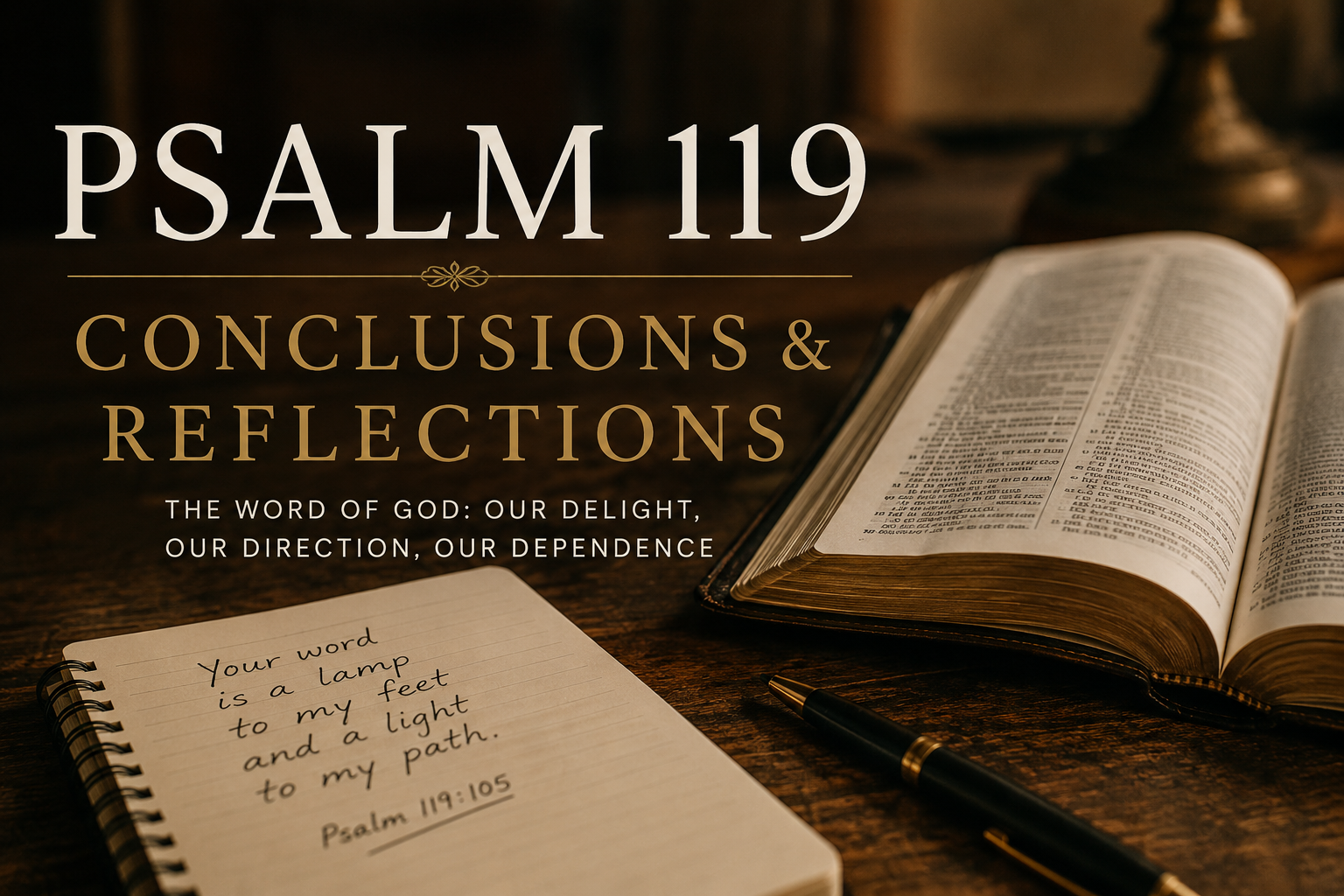
On Psalm 119.145-152 (Qoph)

145 I call with all my heart; answer me, Lord.
I will obey your statutes.
146 I call to you; save me,
and I will keep your decrees.
147 I rise before dawn and cry out for help;
I put my hope in your word.
148 I am awake through each watch of the night
to meditate on your promise.
149 In keeping with your faithful love, hear my voice.
Lord, give me life in keeping with your justice.
150 Those who pursue evil plans come near;
they are far from your instruction.
151 You are near, Lord,
and all your commands are true.
152 Long ago I learned from your decrees
that you have established them forever.

It has been a while since I have continued my work through Psalm 119, but we now come to the nineteenth stanza (ק/Qoph). Immediately in the opening verses, we are met with the heartfelt cry of the psalmist. He rises before the dawn and cries out; he watches through the night and longs for deliverance. There is a desperation and urgency in his prayers that is all too familiar to the people of God. And yet, what grounds the psalmist in the midst of his anxieties is a profound confidence in God and in his Word. In other words, even amid the uncertainties of his circumstances, there remains a quiet confidence, a sure and certain foundation upon which he can stand, namely the faithfulness of God to his promises. Even as he waits for God to intervene in his particular situation, he does so with the expectation that God will do what he has said he will do. He will keep his promises; he will remain true to his Word.

This is perhaps why the psalmist’s prayers are so heartfelt and sincere. He cries out “with all my heart.” This is not empty emotionalism or emotion for emotion’s sake; rather, it is the full orientation of the whole self toward God in utter dependence upon him and his promises. It is only from this posture of dependence that we are truly able to express our deepest fears, longings, and vulnerabilities before God. This is one of the great comforts of covenant relationship with him, namely that we can entrust even our most personal anxieties and desperations into his hands because he hears the cries of his people. At the same time, the psalmist balances his cries for deliverance with his own commitment to walk in obedience and faithfulness. This is not a kind of tit-for-tat arrangement in which obedience earns God’s favor. Rather, it is the logic of covenant itself. God has promised to remain faithful to his word, and the psalmist responds with trust expressed through obedience. In other words, true dependence upon God does not produce passivity, but faithful perseverance. It is a radical dependence that issues forth in both trust and obedience.

It is this covenant relationship that also strengthens the psalmist’s perseverance; he rises before the dawn and watches through the night. These actions express hopeful expectation even in the midst of waiting. The fact of the matter is that we simply do not know how long the psalmist has been observing these rhythms of prayer and longing. Perhaps he has been crying out for deliverance for a very long time. And yet he persists in the offering because he remains confident that God will one day answer his prayers. Of course, waiting is a common season in the Christian life. We have all experienced moments in which we long for God’s intervention and yet it does not seem to be forthcoming. It is precisely this kind of hopeful expectation that provides the strength necessary to persevere through such seasons. Indeed, this is how waiting itself can be transformed into worship, namely when it is sustained by confidence in the promises of God. The dawn has not yet come, but hope keeps the people of God awake in the darkness.

Because, let’s face it, we do live in the midst of pervasive darkness. The psalmist puts it this way in verse 150: “Those who pursue evil plans come near; they are far from your instruction.” And yet, in the very next line, he says, “You are near, Lord.” This is one of the great comforts of covenant relationship with God, namely that the nearness of affliction does not negate the nearness of God himself. The psalmist appears to be experiencing real oppression. He is pursued by those who would do him harm and likely lives under the constant threat of suffering and hostility. And yet, his confidence does not rest in the immediate resolution of his circumstances, but in the character and presence of God. This is an incredibly important insight because we are often tempted to interpret suffering as evidence of divine distance or absence. But Scripture repeatedly teaches us otherwise. Indeed, it is often in our deepest pains and afflictions that the nearness of God becomes most precious to his people. The psalmist knows this because his confidence is grounded not in changing circumstances, but in the sure and steadfast promises of God. The darkness may draw near, but the Lord is nearer still.

The psalmist knows this truth because, as he says in verse 152, “Long ago I learned from your decrees that you have established them forever.” This is an important statement because, in the midst of a stanza filled with emotional weight and longing, the psalmist ultimately grounds his confidence in the objective certainty of God’s Word. He is not led by his emotions, nor is he controlled by the instability of his circumstances. Rather, he is anchored in the enduring faithfulness of God and his promises. This is because God’s Word is not only true, but eternally true. In the midst of the shifting seasons of life, the highs and lows of our emotions, and the ever-changing nature of our trials and afflictions, the promises of God remain fixed and unchanging. The Lord himself is the same yesterday, today, and forever, and therefore his faithfulness does not fluctuate with the changing tides of human experience. This is why the people of God are able to persevere with expectant hope, because our confidence ultimately rests not in ourselves or our circumstances, but in the unchanging certainty of the Word of God.

In the end, then, the Qoph stanza of Psalm 119 teaches us what it means to persevere in hopeful dependence upon God. The psalmist cries out, waits, watches, suffers, and longs for deliverance, and yet the dominant note throughout the stanza is not despair, but confidence. Though darkness surrounds him and affliction draws near, he remains convinced that the Lord is nearer still. This is often the shape of the Christian life as well. We pray before the dawn; we wait through long nights of uncertainty; we trust God before deliverance finally comes. And yet, in all of these seasons, the people of God continue to hope because our confidence rests not in ourselves or in the stability of our circumstances, but in the unchanging faithfulness of God and his Word. The darkness may linger through the night, but the people of God continue to hope because the God who speaks remains near, and his word remains forever true.

For further study:
Introduction
Psalm 119.1-8
Psalm 119.9-16
Psalm 119.17-24
Psalm 119.25-32
Psalm 119.33-40
Psalm 119.41-48
Psalm 119.49-56
Psalm 119.57-64
Psalm 119.65-72
Psalm 119.73-80
Psalm 119.81-88
Psalm 119.89-96
Psalm 119.97-104
Psalm 119.105-112
Psalm 119.113-120
Psalm 119.121-128
Psalm 119.129-136
Psalm 119.137-144


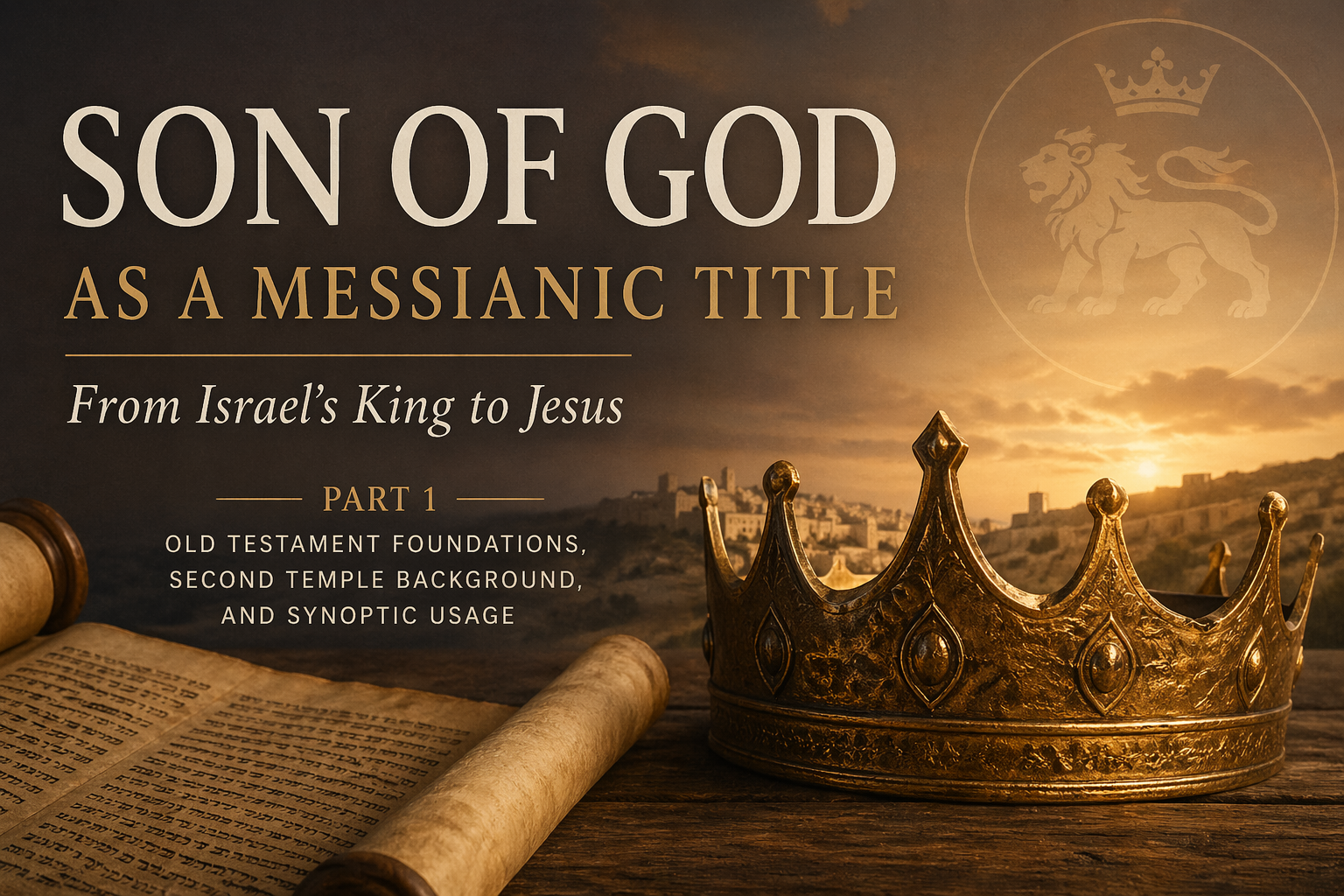
On Son of God as a Messianic Title

When Christians confess that Jesus is the Son of God, we are usually affirming something of his divinity. In other words, the title “Son of God” is typically understood in doctrinal terms as an affirmation that Jesus is the second person of the Trinity come incarnate. This understanding reaches back to the formulation of the First Council of Nicaea in AD 325. In that creed, we confess that Jesus is “the only begotten Son of God, born of the Father before all ages, God from God, Light from Light, true God from true God, begotten, not made, consubstantial with the Father.” These are beautiful words that faithfully express the truth of Christ’s divinity. However, they also risk skipping the story. In Scripture, the term “Son of God” first emerges as a royal, messianic title before it is developed into a fuller theological claim about his divine identity. Its meaning is shaped by covenant, kingship, and expectation, and only later expanded in light of who Jesus truly is.

The idea of sonship appears early in the Old Testament. As early as Exodus 4.22, God declares that “Israel is my firstborn son,” identifying the nation as his covenant people, set apart to represent him among the nations. Later, in the Davidic covenant, God speaks of the king in similar terms: “I will be his father, and he will be my son” (2 Sam. 7.14). Here, sonship is tied directly to kingship and divine appointment. The king stands as God’s representative, ruling on his behalf and under his authority. This same idea is expressed in Psalm 2, where, in the context of royal coronation, the king declares, “He said to me, ‘You are my Son; today I have begotten you.'” The language is not biological or metaphysical, but covenantal and functional. It marks the king as the one chosen and installed by God to exercise his rule. The point, then, is that in these texts divine sonship refers to representative, covenantal identity. It speaks of relational authority, divine election, and royal vocation rather than transcendent metaphysical realities. To be called ‘Son of God’ in this context is to be appointed as God’s king, entrusted with the responsibility of embodying his rule among his people.

The problem, however, is that these “sons of God” consistently fail to live up to the height of their calling. As God’s son, Israel was called to be a kingdom of priests, a light to the nations, and a visible reflection of God’s character in the world. Yet instead of faithfulness, they fell into sin and idolatry, broke the terms of the covenant, and were ultimately sent into exile under its curses. The same pattern emerges in the Davidic line. The kings of Israel and Judah, who were called to mediate God’s rule over his people, likewise failed through disobedience and compromise. This tension is reflected within the Psalms themselves. In Psalm 2, the authority of the Lord’s anointed king is met with resistance as the nations rage against him. In Psalm 89, the psalmist recalls God’s covenant promises to David, only to lament that those promises appear to stand in contradiction to present reality. The result is that the category of “son of God” begins to carry forward-looking weight. It no longer simply describes a present reality; it generates expectation. There emerges a longing for a faithful son, a greater son, who will succeed where Israel and her kings have failed, a hope captured in texts like Isaiah 9.6–7, where the promised son will finally bear the government in righteousness and peace. In other words, the Scriptures create space for a future Son who will succeed where others failed.

This hope for a greater Son of God becomes more clearly defined in the Second Temple period. Of course, these texts are not inspired Scripture, but they do provide important insight into the expectations and categories that were alive at the time of Jesus. What we see is a growing anticipation of deliverance increasingly framed in royal and messianic terms. While these expectations are diverse, there remains a significant continuity with Old Testament categories, especially the idea of the “Son of God.” For example, among the Dead Sea Scrolls, texts like 4Q174 (the Florilegium) link the Davidic covenant and the language of sonship in 2 Samuel 7.14 with the expectation of a coming royal Messiah. Likewise, 4Q246 explicitly uses the titles “Son of God” and “Son of the Most High” in reference to a future ruler. Another text, 1QSa (often cited as 1Q28a), appears to echo Psalm 2.7 with language of divine begetting applied to the Messiah. These examples could be multiplied, but the point is clear: in the Second Temple period, the concept of divine sonship is not abandoned or redefined, but carried forward and intensified. It remains closely tied to the Davidic king, even as it takes on heightened expectation in anticipation of the one who will finally fulfill that role. Or to put it another way, the term “Son of God” was already a loaded, expectation-filled term before Jesus appeared.

In the Synoptic Gospels, “Son of God” language appears at key moments in the life and ministry of Jesus. Most notably, at his baptism and again at his transfiguration, a voice from heaven declares, “This is my beloved Son,” marking him out as the one uniquely appointed and affirmed by God. The demons, too, recognize Jesus as the Son of God, a recognition that underscores his authority and signals his messianic identity, even when others fail to perceive it clearly. This comes into sharper focus at Caesarea Philippi. When Jesus asks his disciples, “Who do you say that I am?”, Peter responds, “You are the Messiah, the Son of the living God.” The grammar of this confession is particularly significant. The predicate nominative “Messiah” and the phrase “Son of the living God” stand in apposition, meaning that the second expression defines and clarifies the first. In other words, to confess Jesus as the Messiah is to confess him as the Son of God. In this context, divine sonship is directly tied to his mission, obedience, and kingship. At the same time, Jesus redefines contemporary messianic expectations. He rejects the political and nationalistic ambitions often associated with the Messiah and instead frames his identity around suffering, obedience, and ultimately his death. The point, then, is that throughout the Synoptic Gospels, the title “Son of God” functions primarily as a messianic designation, identifying who Jesus is and what he has come to do.

Even at his crucifixion, the language of sonship is front and center. The religious leaders mock him, saying, “If you are the Son of God, come down from the cross” (Matt. 27.40), and again, “He is the King of Israel! Let him come down now from the cross, and we will believe in him” (Matt. 27.42). The parallelism in these statements is striking. “Son of God” and “King of Israel” function as equivalent titles, reinforcing the connection between divine sonship and messianic kingship. And yet, this is the tension: the one who claims to be the Son of God appears to be defeated. He does not come down from the cross; he remains and suffers. But this apparent contradiction is precisely the point. Jesus does not abandon his identity as the Son; he fulfills it through obedience and suffering. His sonship is not negated at the cross; it is revealed there. The resurrection then serves as the divine vindication of his claims. As Paul writes in Romans 1.4, he was “appointed Son of God in power… by the resurrection from the dead.” That is, the resurrection publicly confirms what was already true of him, now revealed in power. The cross is not the denial of his kingship, but the path to it. As even the Roman centurion confesses at his death, “Truly this man was the Son of God.”

The early apostolic witness continues this same pattern by interpreting Jesus’s sonship in light of his resurrection and exaltation. In the book of Acts, the apostles repeatedly draw from the Psalms to explain what God has accomplished in Christ. For example, in Acts 13, Paul cites Psalm 2.7—“You are my Son; today I have begotten you”—and applies it to the resurrection of Jesus. In this context, the language of “begetting” is not about origin, but about installation. The resurrection marks the public declaration and vindication of Jesus as the Son of God, the one who now reigns in power. Similarly, Psalm 110 is used throughout the New Testament to describe Christ’s exaltation to the right hand of God, a position of authority, kingship, and rule over all things. The point is that the apostles read the Psalms as speaking directly to the identity and mission of Jesus, particularly as they relate to his enthronement. His sonship is not merely a title attached to his earthly ministry; it is confirmed and displayed in his exaltation. In other words, Jesus is revealed to be the Son of God in power as the risen and reigning king, fulfilling the royal and covenantal expectations embedded in the Psalter. (On Christ as the fulfillment of the Psalms, see here.)

Bringing all of this together, the title “Son of God” in Scripture carries a rich and layered meaning that is rooted in covenant, kingship, and ultimately fulfillment in Christ. It is a title that begins with Israel as God’s son, is focused and intensified in the Davidic king, and then expands into a forward-looking expectation for a faithful Son who will succeed where all others have failed. In Jesus, that expectation is finally realized. He is the true Son who embodies what Israel was called to be, the true King who fulfills the promises made to David, and the obedient Son who accomplishes the will of the Father. His sonship is not defined by abstract speculation, but by his mission—his life of perfect obedience, his suffering on the cross, his resurrection from the dead, and his exaltation to the right hand of God. To confess Jesus as the Son of God, then, is to confess him as the promised Messiah, the one in whom God’s purposes for his people and his world are brought to completion. And yet, as full and glorious as this picture is, the story does not end here. The New Testament, particularly in the Gospel of John, will press even further, showing that Jesus’s sonship is not only messianic, but also reveals something deeper about his identity. But that is a discussion for another time.


On Fuel for the Fires of Revival

TEXT

The high priest Hilkiah told the court secretary Shaphan, “I have found the book of the law in the Lord’s temple,” and he gave the book to Shaphan, who read it. Then the court secretary Shaphan went to the king and reported, “Your servants have emptied out the silver that was found in the temple and have given it to those doing the work—those who oversee the Lord’s temple.” 10 Then the court secretary Shaphan told the king, “The priest Hilkiah has given me a book,” and Shaphan read it in the presence of the king.

11 When the king heard the words of the book of the law, he tore his clothes. 12 Then he commanded the priest Hilkiah, Ahikam son of Shaphan, Achbor son of Micaiah, the court secretary Shaphan, and the king’s servant Asaiah, 13 “Go and inquire of the Lord for me, for the people, and for all Judah about the words in this book that has been found. For great is the Lord’s wrath that is kindled against us because our ancestors have not obeyed the words of this book in order to do everything written about us.”

14 So the priest Hilkiah, Ahikam, Achbor, Shaphan, and Asaiah went to the prophetess Huldah, wife of Shallum son of Tikvah, son of Harhas, keeper of the wardrobe. She lived in Jerusalem in the Second District. They spoke with her. 15 She said to them, “This is what the Lord God of Israel says: Say to the man who sent you to me, 16 ‘This is what the Lord says: I am about to bring disaster on this place and on its inhabitants, fulfilling all the words of the book that the king of Judah has read, 17 because they have abandoned me and burned incense to other gods in order to anger me with all the work of their hands. My wrath will be kindled against this place, and it will not be quenched.’ 

18 Say this to the king of Judah who sent you to inquire of the Lord: ‘This is what the Lord God of Israel says: As for the words that you heard, 19 because your heart was tender and you humbled yourself before the Lord when you heard what I spoke against this place and against its inhabitants, that they would become a desolation and a curse, and because you have torn your clothes and wept before me, I myself have heard’—this is the Lord’s declaration. 20 ‘Therefore, I will indeed gather you to your ancestors, and you will be gathered to your grave in peace. Your eyes will not see all the disaster that I am bringing on this place.’” Then they reported to the king.

~2 Kings 22.8-20

Title: On Fuel for the Fires of Revival
Text: 2 Kings 22-23
Series: Revival Us Again!
Church: Redeemer Baptist Church, Jonesboro, AR
Date: December 28, 2025


On God’s Case Against Israel

*Audio begins around two minutes in due to technical difficulties*

TEXT

Hear the word of the Lord, people of Israel,
for the Lord has a case
against the inhabitants of the land:
There is no truth, no faithful love,
and no knowledge of God in the land!
Cursing, lying, murder, stealing,
and adultery are rampant;
one act of bloodshed follows another.
For this reason the land mourns,
and everyone who lives in it languishes,
along with the wild animals and the birds of the sky;
even the fish of the sea disappear.
But let no one dispute; let no one argue,
for my case is against you priests.
You will stumble by day;
the prophet will also stumble with you by night.
And I will destroy your mother.
My people are destroyed for lack of knowledge.
Because you have rejected knowledge,
I will reject you from serving as my priest.
Since you have forgotten the law of your God,
I will also forget your sons.

The more they multiplied,
the more they sinned against me.
I will change their honor into disgrace.
They feed on the sin of my people;
they have an appetite for their iniquity.
The same judgment will happen
to both people and priests.
I will punish them for their ways
and repay them for their deeds.
10 They will eat but not be satisfied;
they will be promiscuous but not multiply.
For they have abandoned their devotion to the Lord.
11 Promiscuity, wine, and new wine
take away one’s understanding.

Title: On God’s Case Against Israel
Text: Hosea 4.1-11
Series: Hosea: A Love Story Like No Other
Church: Redeemer Baptist Church, Jonesboro, AR
Date: March 30, 2025


On the Love and the Justice of God

TEXT

The word of the Lord that came to Hosea son of Beeri during the reigns of Uzziah, Jotham, Ahaz, and Hezekiah, kings of Judah, and of Jeroboam son of Jehoash, king of Israel.

When the Lord first spoke to Hosea, he said this to him:

Go and marry a woman of promiscuity,
and have children of promiscuity,
for the land is committing blatant acts of promiscuity
by abandoning the Lord.

So he went and married Gomer daughter of Diblaim, and she conceived and bore him a son. Then the Lord said to him:

Name him Jezreel, for in a little while
I will bring the bloodshed of Jezreel
on the house of Jehu
and put an end to the kingdom of the house of Israel.
On that day I will break the bow of Israel
in Jezreel Valley.

She conceived again and gave birth to a daughter, and the Lord said to him:

Name her Lo-ruhamah,
for I will no longer have compassion
on the house of Israel.
I will certainly take them away.
But I will have compassion on the house of Judah,
and I will deliver them by the Lord their God.
I will not deliver them by bow, sword, or war,
or by horses and cavalry.

After Gomer had weaned Lo-ruhamah, she conceived and gave birth to a son. Then the Lord said:

Name him Lo-ammi,
for you are not my people,
and I will not be your God.
10 Yet the number of the Israelites
will be like the sand of the sea,
which cannot be measured or counted.
And in the place where they were told:
You are not my people,
they will be called: Sons of the living God.
11 And the Judeans and the Israelites
will be gathered together.
They will appoint for themselves a single ruler
and go up from the land.
For the day of Jezreel will be great.
Call your brothers: My People
and your sisters: Compassion.

Title: On the Love and Justice of God
Text: Hosea 1.1-2.1; 3.1-5
Series: Hosea: A Love Story Like No Other
Church: Redeemer Baptist Church, Jonesboro, AR
Date: March 9, 2025


On Praying through Psalm 3

TEXT

A psalm of David when he fled from his son Absalom.

Lord, how my foes increase!
There are many who attack me.
Many say about me,
“There is no help for him in God.” Selah

But you, Lord, are a shield around me,
my glory, and the one who lifts up my head.
I cry aloud to the Lord,
and he answers me from his holy mountain. Selah

I lie down and sleep;
I wake again because the Lord sustains me.
I will not be afraid of thousands of people
who have taken their stand against me on every side.

Rise up, Lord!
Save me, my God!
You strike all my enemies on the cheek;
you break the teeth of the wicked.
Salvation belongs to the Lord;
may your blessing be on your people. Selah

~Psalm 3

Series: Praying through the Psalms
Text: Psalm 3.1-8
Church: South Caraway Baptist Church, Jonesboro, AR
Date: April 12, 2023


On Faithfulness in the Face of Evil

TEXT

When Mordecai learned all that had occurred, he tore his clothes, put on sackcloth and ashes, went into the middle of the city, and cried loudly and bitterly. He went only as far as the King’s Gate, since the law prohibited anyone wearing sackcloth from entering the King’s Gate. There was great mourning among the Jewish people in every province where the king’s command and edict reached. They fasted, wept, and lamented, and many lay in sackcloth and ashes.

Esther’s female servants and her eunuchs came and reported the news to her, and the queen was overcome with fear. She sent clothes for Mordecai to wear so that he would take off his sackcloth, but he did not accept them. Esther summoned Hathach, one of the king’s eunuchs who attended her, and dispatched him to Mordecai to learn what he was doing and why. So Hathach went out to Mordecai in the city square in front of the King’s Gate. Mordecai told him everything that had happened as well as the exact amount of money Haman had promised to pay the royal treasury for the slaughter of the Jews.

Mordecai also gave him a copy of the written decree issued in Susa ordering their destruction, so that Hathach might show it to Esther, explain it to her, and command her to approach the king, implore his favor, and plead with him personally for her people. Hathach came and repeated Mordecai’s response to Esther.

10 Esther spoke to Hathach and commanded him to tell Mordecai, 11 “All the royal officials and the people of the royal provinces know that one law applies to every man or woman who approaches the king in the inner courtyard and who has not been summoned—the death penalty—unless the king extends the gold scepter, allowing that person to live. I have not been summoned to appear before the king for the last thirty days.” 12 Esther’s response was reported to Mordecai.

13 Mordecai told the messenger to reply to Esther, “Don’t think that you will escape the fate of all the Jews because you are in the king’s palace. 14 If you keep silent at this time, relief and deliverance will come to the Jewish people from another place, but you and your father’s family will be destroyed. Who knows, perhaps you have come to your royal position for such a time as this.”

15 Esther sent this reply to Mordecai: 16 “Go and assemble all the Jews who can be found in Susa and fast for me. Don’t eat or drink for three days, night or day. I and my female servants will also fast in the same way. After that, I will go to the king even if it is against the law. If I perish, I perish.” 17 So Mordecai went and did everything Esther had commanded him.

~Esther 4.1-17

Title: On Faithfulness in the Face of Evil
Text: Esther 4.1-17
Series: The Book of Esther
Church: South Caraway Baptist Church, Jonesboro, AR
Date: March 19, 2023


On Pastoral Tenure as Covenant

I recently read an article about an Oklahoma pastor who is retiring after serving in the same church for 60 years. And let me just begin by saying that this is the kind of pastor that deserves the platform though he would probably never ask for it. So often, we platform the personalities that are the most visible, those pastors who have the largest churches, who have published the most books, who speak regularly on the conference circuit. It would seem we have missed the mark. Our measures of ministry success reflect all of the values and metrics of the world and none of the values of God, who says in His Word that, “Humans do not see what the Lord sees, for humans see what is visible, but the Lord sees the heart.” (1 Samuel 16.7) This pastor exemplifies the kind of nameless faithfulness that is the backbone of Christ’s church; pastors serving tirelessly in insignificant and forgotten places, loving people who are regular and ordinary, proclaiming the Word of God week in and week out. He never published any books; he wasn’t asked to speak at anyone’s conference. He held no denominational influence or power beyond his local association. May his tribe increase!

However, this story is not simply about a pastor who served in the same place for six decades. According to the pastor in question, and I quote, “A lot of it has to do with a church that has kept a pastor for years.” This, it would seem, is the key to long term pastoral tenure; it is churches that keep pastors. A pastor’s theological fidelity and moral integrity notwithstanding, churches bear a God given responsibility to keep the pastors that God has called to care for their souls. (c.f. Hebrews 13.17) According to research, the average pastoral tenure has risen over the years, from 3.6 years in 1996 to 6 years in 2016, but it is clear that the constant churning of pastoral leadership in churches all across this county is at least one major contributor to the weakness of American Christianity. Every pastor I know, myself included, has been hurt by churches who prematurely requested their resignation at the first sign of disagreement, disappointment, or difficulty. Sadly, these stories are often filled with the tears of betrayal, of broken trust, and of shattered confidences.

The point is that we need a better paradigm for thinking about the relationship between pastors and congregations. An employer/employee model that is driven by consumeristic expectations fundamentally lacks the virtues of grace that should define the church’s life together. This is why I believe we must recover the biblical idea of covenant, because covenants move us beyond a “what’s in it for me, what have you done for me lately” mindset by forcing us to consider our own responsibility for maintaining the relationship. There are many examples of covenants in the Bible: Abrahamic, Mosaic, Davidic, and New to name just a few. But I would suggest that it is the marital covenant that stands as the closest parallel to the relationship between a pastor and a congregation. Consider the following similarities.

During the “dating” period, the pastoral candidate and the interviewing church put their best foot forward. Both parties accentuate their assets and their strengths and conceal their weaknesses. For the most part, this “get to know you” phase is full of excitement and anticipation of the possible match and its attendant benefits, and each subsequent interaction merely adds to the perception that this is a “match made in heaven.” Both parties wonder if the other might be “the one God intended”. The votes are totaled; the call is accepted. And the relationship moves into the “honeymoon phase”; it is a time that is filled with great idealism and blissful naiveté. Both the pastor and the congregation view each other through “rose colored glasses”; neither party can do any wrong in the eyes of the other. As the relationship grows, every new experience, every new situation is an opportunity to relish in the seeming perfections of the other.

Eventually, however, the difficulties come. The rose petals fall off; the idealism fades. What was once endearing is now annoying; what was once a source of great fulfillment now causes great frustration. Differences in opinion and perspective on all sorts of issues seem nearly insurmountable. The waves of conflict and division threaten to tear the relationship apart, and sadly, in many cases, it does. Marriages end in divorce, and pastors resign, sometimes of their own volition, other times at the behest of church leaders. It is a cycle that is all too familiar, but it need not be so. As in marriage, so also in the church, both parties have a decision to make as to how they will navigate this season. Instead of separation, they can choose to remain committed to each other. They can choose to work through their differences by listening, by showing grace, by compromise. They can persevere and come out on the other side together and stronger for it. Churches can choose to keep their pastors, and pastors can choose to love and serve the church that God has called them to.

This is what relationships should look like within the Body of Christ. We do not give up each other when relationships get hard; we do not throw in the proverbial towel because circumstances are difficult or challenging. We choose love, we choose grace, we choose hope. We covenant together for the sake of the Gospel, for the growth of each other in Christlikeness, for the glory of God. It has been said that most pastors, and I would include most churches, overestimate what can be accomplished in the span of three years, but underestimate what can be accomplished in the span of ten years. So, rather than aiming for some set of five year goals that are ultimately unrealistic, let us strive for that biblical standard of godly faithfulness over time. And when we do this, we can rest assured that we will one day hear those most blessed of commendations from our Lord Jesus, “Well done, good and faithful servant! Share your master’s joy!”

This post was also posted at SBCvoices, here.


Slow To Write

"let every person be quick to hear, slow to speak, slow to anger."

lovegavehope

Just another WordPress.com site

Jared Cornutt

Pastor | Speaker | Writer

Denny Burk

A commentary on theology, politics, and culture

G3 Ministries

Events + Resources for the Local Church

Biblical Reasoning

Biblical and Systematic Theology According to the Scriptures

RetroChristianity

Reclaiming the Forgotten Faith

SBC Voices

Southern Baptist News & Opinion

Lucid Theology

Thoughts on words, books, theology, and life.

Baptist21

A pastor-led voice for Baptists in the 21st century

Center For Baptist Renewal

The Personal and Professional Blog of Phillip Powers

The Pastor's Well - Pastor Well

The Personal and Professional Blog of Phillip Powers

Articles - AlbertMohler.com

The Personal and Professional Blog of Phillip Powers

The Gospel Coalition

The Personal and Professional Blog of Phillip Powers