A psalm of David when he fled from his son Absalom.
1 Lord, how my foes increase! There are many who attack me. 2 Many say about me, “There is no help for him in God.” Selah
3 But you, Lord, are a shield around me, my glory, and the one who lifts up my head. 4 I cry aloud to the Lord, and he answers me from his holy mountain. Selah
5 I lie down and sleep; I wake again because the Lord sustains me. 6 I will not be afraid of thousands of people who have taken their stand against me on every side.
7 Rise up, Lord! Save me, my God! You strike all my enemies on the cheek; you break the teeth of the wicked. 8 Salvation belongs to the Lord; may your blessing be on your people. Selah
~Psalm 3
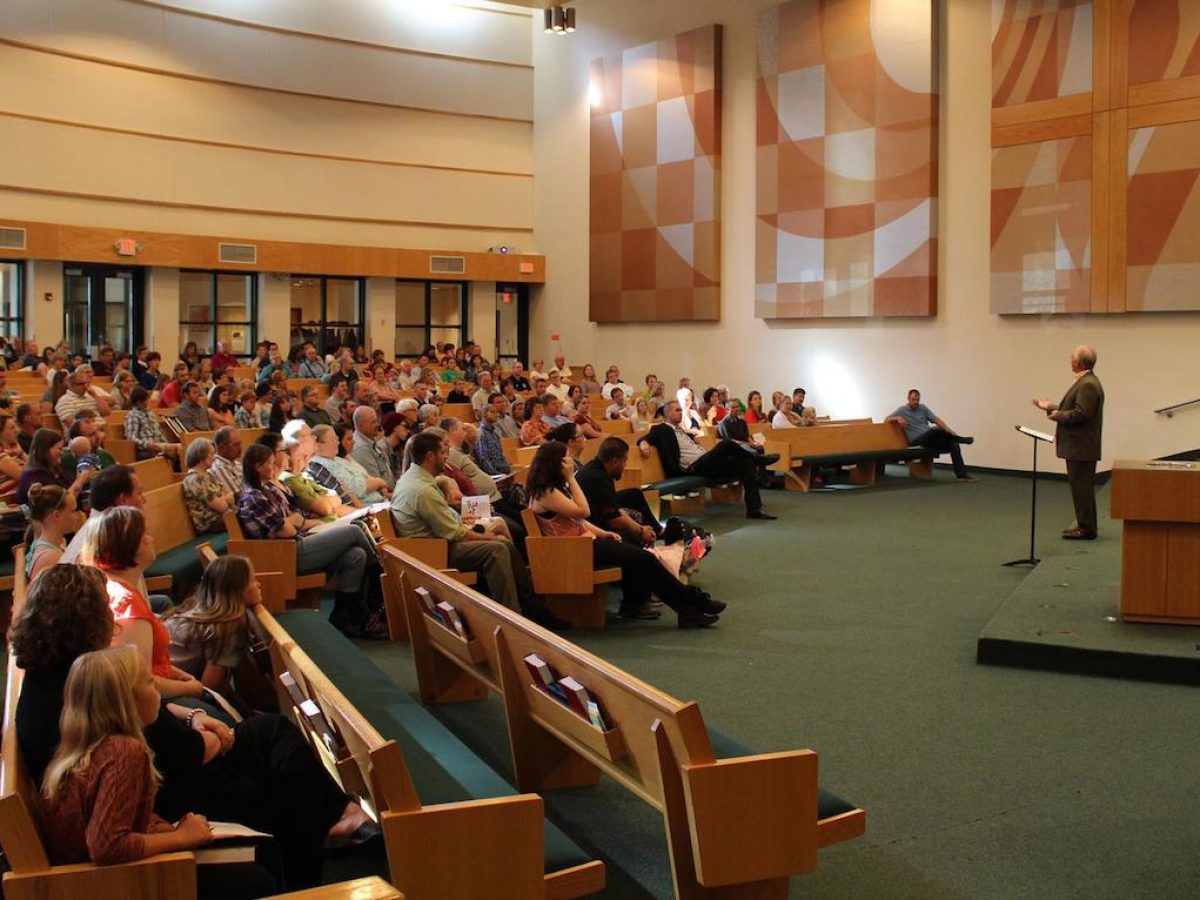
Series: Praying through the Psalms Text: Psalm 3.1-8 Church: South Caraway Baptist Church, Jonesboro, AR Date: April 12, 2023
4 When Mordecai learned all that had occurred, he tore his clothes, put on sackcloth and ashes, went into the middle of the city, and cried loudly and bitterly. 2 He went only as far as the King’s Gate, since the law prohibited anyone wearing sackcloth from entering the King’s Gate. 3 There was great mourning among the Jewish people in every province where the king’s command and edict reached. They fasted, wept, and lamented, and many lay in sackcloth and ashes.
4 Esther’s female servants and her eunuchs came and reported the news to her, and the queen was overcome with fear. She sent clothes for Mordecai to wear so that he would take off his sackcloth, but he did not accept them. 5 Esther summoned Hathach, one of the king’s eunuchs who attended her, and dispatched him to Mordecai to learn what he was doing and why. 6 So Hathach went out to Mordecai in the city square in front of the King’s Gate. 7 Mordecai told him everything that had happened as well as the exact amount of money Haman had promised to pay the royal treasury for the slaughter of the Jews.
8 Mordecai also gave him a copy of the written decree issued in Susa ordering their destruction, so that Hathach might show it to Esther, explain it to her, and command her to approach the king, implore his favor, and plead with him personally for her people. 9 Hathach came and repeated Mordecai’s response to Esther.
10 Esther spoke to Hathach and commanded him to tell Mordecai, 11 “All the royal officials and the people of the royal provinces know that one law applies to every man or woman who approaches the king in the inner courtyard and who has not been summoned—the death penalty—unless the king extends the gold scepter, allowing that person to live. I have not been summoned to appear before the king for the last thirty days.” 12 Esther’s response was reported to Mordecai.
13 Mordecai told the messenger to reply to Esther, “Don’t think that you will escape the fate of all the Jews because you are in the king’s palace. 14 If you keep silent at this time, relief and deliverance will come to the Jewish people from another place, but you and your father’s family will be destroyed. Who knows, perhaps you have come to your royal position for such a time as this.”
15 Esther sent this reply to Mordecai: 16 “Go and assemble all the Jews who can be found in Susa and fast for me. Don’t eat or drink for three days, night or day. I and my female servants will also fast in the same way. After that, I will go to the king even if it is against the law. If I perish, I perish.” 17 So Mordecai went and did everything Esther had commanded him.
~Esther 4.1-17
Title: On Faithfulness in the Face of Evil Text: Esther 4.1-17 Series: The Book of Esther Church: South Caraway Baptist Church, Jonesboro, AR Date: March 19, 2023
I recently read an article about an Oklahoma pastor who is retiring after serving in the same church for 60 years. And let me just begin by saying that this is the kind of pastor that deserves the platform though he would probably never ask for it. So often, we platform the personalities that are the most visible, those pastors who have the largest churches, who have published the most books, who speak regularly on the conference circuit. It would seem we have missed the mark. Our measures of ministry success reflect all of the values and metrics of the world and none of the values of God, who says in His Word that, “Humans do not see what the Lord sees, for humans see what is visible, but the Lord sees the heart.” (1 Samuel 16.7) This pastor exemplifies the kind of nameless faithfulness that is the backbone of Christ’s church; pastors serving tirelessly in insignificant and forgotten places, loving people who are regular and ordinary, proclaiming the Word of God week in and week out. He never published any books; he wasn’t asked to speak at anyone’s conference. He held no denominational influence or power beyond his local association. May his tribe increase!
However, this story is not simply about a pastor who served in the same place for six decades. According to the pastor in question, and I quote, “A lot of it has to do with a church that has kept a pastor for years.” This, it would seem, is the key to long term pastoral tenure; it is churches that keep pastors. A pastor’s theological fidelity and moral integrity notwithstanding, churches bear a God given responsibility to keep the pastors that God has called to care for their souls. (c.f. Hebrews 13.17) According to research, the average pastoral tenure has risen over the years, from 3.6 years in 1996 to 6 years in 2016, but it is clear that the constant churning of pastoral leadership in churches all across this county is at least one major contributor to the weakness of American Christianity. Every pastor I know, myself included, has been hurt by churches who prematurely requested their resignation at the first sign of disagreement, disappointment, or difficulty. Sadly, these stories are often filled with the tears of betrayal, of broken trust, and of shattered confidences.
The point is that we need a better paradigm for thinking about the relationship between pastors and congregations. An employer/employee model that is driven by consumeristic expectations fundamentally lacks the virtues of grace that should define the church’s life together. This is why I believe we must recover the biblical idea of covenant, because covenants move us beyond a “what’s in it for me, what have you done for me lately” mindset by forcing us to consider our own responsibility for maintaining the relationship. There are many examples of covenants in the Bible: Abrahamic, Mosaic, Davidic, and New to name just a few. But I would suggest that it is the marital covenant that stands as the closest parallel to the relationship between a pastor and a congregation. Consider the following similarities.
During the “dating” period, the pastoral candidate and the interviewing church put their best foot forward. Both parties accentuate their assets and their strengths and conceal their weaknesses. For the most part, this “get to know you” phase is full of excitement and anticipation of the possible match and its attendant benefits, and each subsequent interaction merely adds to the perception that this is a “match made in heaven.” Both parties wonder if the other might be “the one God intended”. The votes are totaled; the call is accepted. And the relationship moves into the “honeymoon phase”; it is a time that is filled with great idealism and blissful naiveté. Both the pastor and the congregation view each other through “rose colored glasses”; neither party can do any wrong in the eyes of the other. As the relationship grows, every new experience, every new situation is an opportunity to relish in the seeming perfections of the other.
Eventually, however, the difficulties come. The rose petals fall off; the idealism fades. What was once endearing is now annoying; what was once a source of great fulfillment now causes great frustration. Differences in opinion and perspective on all sorts of issues seem nearly insurmountable. The waves of conflict and division threaten to tear the relationship apart, and sadly, in many cases, it does. Marriages end in divorce, and pastors resign, sometimes of their own volition, other times at the behest of church leaders. It is a cycle that is all too familiar, but it need not be so. As in marriage, so also in the church, both parties have a decision to make as to how they will navigate this season. Instead of separation, they can choose to remain committed to each other. They can choose to work through their differences by listening, by showing grace, by compromise. They can persevere and come out on the other side together and stronger for it. Churches can choose to keep their pastors, and pastors can choose to love and serve the church that God has called them to.
This is what relationships should look like within the Body of Christ. We do not give up each other when relationships get hard; we do not throw in the proverbial towel because circumstances are difficult or challenging. We choose love, we choose grace, we choose hope. We covenant together for the sake of the Gospel, for the growth of each other in Christlikeness, for the glory of God. It has been said that most pastors, and I would include most churches, overestimate what can be accomplished in the span of three years, but underestimate what can be accomplished in the span of ten years. So, rather than aiming for some set of five year goals that are ultimately unrealistic, let us strive for that biblical standard of godly faithfulness over time. And when we do this, we can rest assured that we will one day hear those most blessed of commendations from our Lord Jesus, “Well done, good and faithful servant! Share your master’s joy!”