Tag Archives: Faithfulness

On the Value and Wisdom of Seminary Training for Pastors

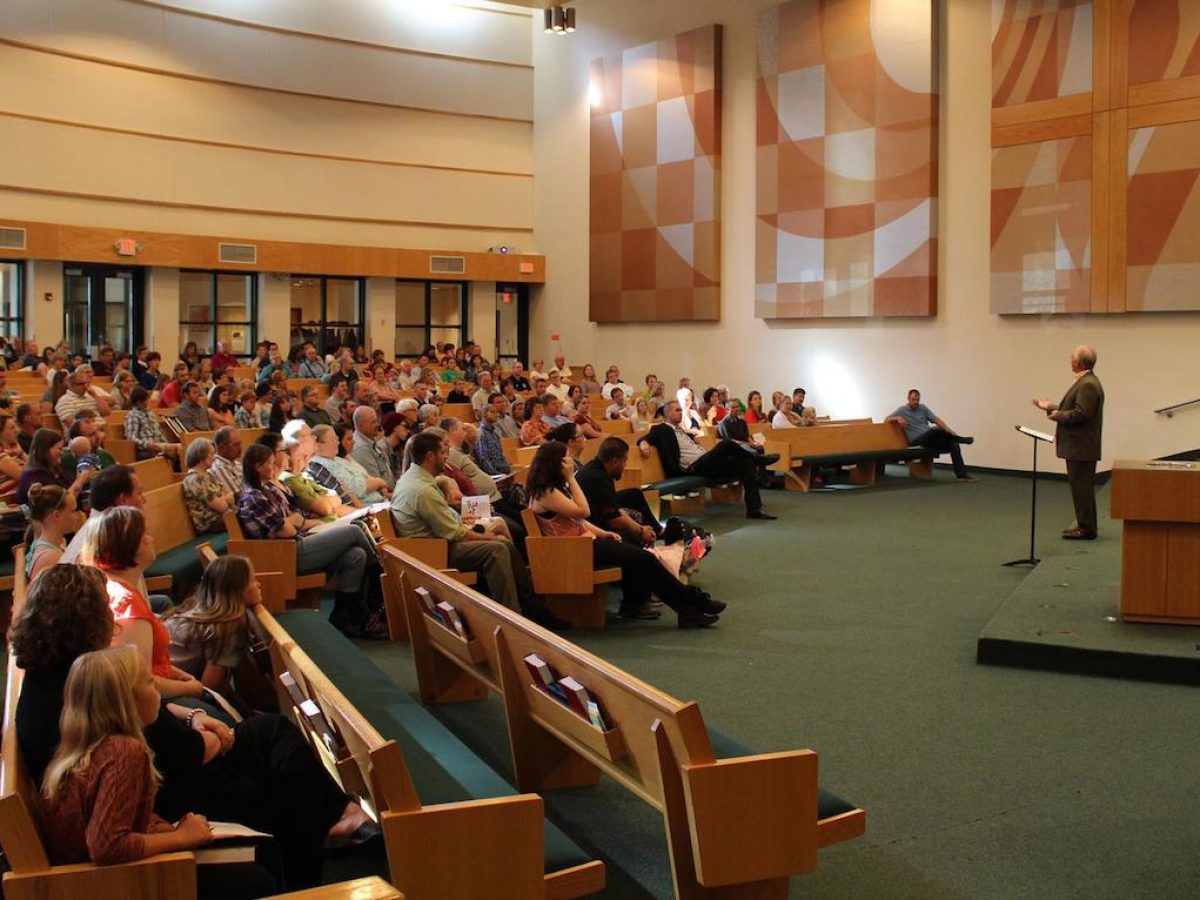
When I surrendered my life to God’s calling for vocational ministry at the age of 15, I always knew that that path would eventually take me to seminary, and now, as I am more than halfway through my PhD in Biblical Studies (New Testament) at The Southern Baptist Theological Seminary in Louisville, KY (pictured above), I can’t help but reflect on the value and benefits it has brought to my life and to my ministry. However, down here in the good ole’ “Bible Belt”, formal theological education is often viewed with a measure of skepticism and distrust. On the one hand, many people know faithful pastors who have influenced their lives who have never gone to seminary. On other hand, there is a lingering suspicion of academia that is left over from the historical influence of the Fundamentalist movement. So, it is understandable that in many churches, formal theological education can feel unnecessary at best and spiritually dangerous at worst. However, the real question is not simply whether theological education is necessary, but what kind of formation is required to faithfully know, teach, and live the truth of Scripture. Therefore, it is the thesis of this post that while formal theological education is not strictly necessary for faithful ministry, it is profoundly valuable because it cultivates the habits of careful thinking, deep reading, and disciplined reflection on the things of God.

Those who are leery of formal theological education point to several reasons why seminary is sometimes less than helpful. Some suggest that going to seminary kills spiritual passion, that academic theological knowledge can choke out personal devotion and piety. Seminary becomes a cemetery. And let’s be honest, this can happen. There is a real temptation in academia that one’s experience of faith can become utterly cerebral and lacking in spiritual pathos. However, I would suggest that this temptation is not unique to the seminary setting, and that it has more to do with the student than with the institution. Another objection that is sometimes heard is that “all we need is the Bible and the Spirit,” that the Scriptures are sufficient, and that the Spirit leads us into all truth. I have addressed this question in another post, but suffice it to say here that we do not download biblical understanding from the Spirit. His work has more to do with confirming and applying the truths of Scripture in our lives than with the transmission of content. Interpretation still requires care and study. Some also object that education can lead to pride and liberalism, and here again, these are legitimate concerns. And while discernment must be exercised in selecting an institution, it is up to the student to maintain their own humility and faithfulness. Lastly, as mentioned above, scores of pastors throughout the history of the church have served faithfully without formal theological training, and I praise God for those individuals. Let me say it clearly: seminary is not necessary for pastoral faithfulness. It is not a matter of necessity, but a matter of wisdom. The concerns I’ve listed here are not imaginary; they reflect real temptations and dangers. But they are dangers of misuse, not arguments against the value of theological training itself.

So, in the interest of clarity, it is important at this point to distinguish what theological education is and what it is not. First, theological education is not mere information transfer; it is not primarily about the mastery of content, though that is certainly a component of it. The fact is that we live in an information age, and theological content is available at the click of a button. Of course, not all of it is of the same quality, but it is true that taking in theological content is easier today than it has ever been. There are literally tons of resources both digital and in print that are available to the pastor who wants to grow in theological knowledge. And pastors should be taking it in; they should read and read widely and deeply, but seminary is not just about the transfer of information. Secondly, it is not a substitute for a person’s spiritual or devotional life. This I think is the misconception that undergirds a lot of the objections mentioned above, namely that seminary cannot replace personal piety and devotion. It is not a substitute for prayer, for holiness, for obedience, or for involvement in the local church. These are vital for spiritual life, and seminaries are not primarily focused on training these personal disciplines. Seminary is focused training in how to read carefully, how to think clearly, and how to serve faithfully throughout the course of one’s life. It is not about knowing more things; it is about learning how to think rightly about God and his Word.

This is exactly the point, namely that the Scriptures require careful and attentive reading. We must be taught the importance of historical and literary context, of genre and authorial intent, of words and sentences and paragraphs and how they communicate textual meaning. Ideally, these hermeneutical principles are modeled in the pulpit and Sunday school classroom. However, mastery requires focused and intensive didactic formation, because it is this kind of training that guards us from interpretive error. We must be taught how to rightly divide the Word of truth, so that we do not misuse Scripture for our own aims and ends or read our assumptions back into the text. Understanding the literary and historical intricacies and complexities of the Bible keeps us from falling into the arrogance of overconfidence, where familiarity is mistaken for understanding. It forces us to slow down, to wrestle with difficult passages, and to recognize that Scripture does not always yield its meaning at a glance. And in this way, it teaches us the discipline of slowness, how to let the text speak on its own terms and to listen carefully rather than forcing quick conclusions. What I am saying is that formal theological training teaches us not just what the Bible says, but how to listen to it well—and that is a skill that serves both the church and the individual believer for a lifetime.

In addition to learning to read carefully, formal theological training also helps us to develop theological depth in our understanding of the Word. It helps us to see the whole Bible, to understand the metanarrative of Scripture, and to locate particular books and passages within that unfolding storyline. We learn to follow themes and their development through the canon, and we come to appreciate both the continuity and the discontinuity between the Testaments. In doing so, we begin to see that the Bible is not a loose collection of disconnected texts, but a unified and coherent witness to God’s redemptive work in history. We also develop a certain measure of doctrinal coherence, in that we begin to understand how themes and concepts relate to one another, and we avoid fragmented theological reflections that isolate passages from the larger framework of Scripture. Questions of Christology, salvation, covenant, and kingdom are no longer treated in isolation, but are understood in relation to the whole counsel of God. Formal theological training also helps us to learn from the history of the church; it teaches us to see tradition as a resource rather than as a threat. (On the Use and Benefit of Tradition, see here.) To put it rather bluntly, we are not the first to read the Bible, and we won’t be the last. thankfully, this is a gift, not a limitation. It is an invitation to listen, to learn, and to be shaped by the wisdom of those who have gone before us.

Lastly, formal theological education helps us to develop intellectual humility. It exposes us to the difficult questions of the faith that have been asked throughout church history, and it forces us to wrestle with issues that do not admit of easy or immediate answers. It requires us to read and engage hard texts, both biblical and extrabiblical, and it immerses us in the real debates that continue to shape theological reflection even today. In doing so, it helps us develop a rightly calibrated confidence, one that is rooted in strong convictions, yet carried with a softer ego. We come to see that clarity is often hard-won, and that many of the questions we face have been carefully considered by thoughtful believers long before us. And as a result, we learn not only how to argue well, but how to disagree well. This is perhaps one of the greatest challenges in our present moment, and formal theological training can teach us to treat our interlocutors with patience, precision, and grace, even when we disagree deeply. In other words, theological education does not simply make you smarter; it makes you more aware of your limits. It reveals our strengths, exposes our weaknesses, and teaches us to value the insights of others, even when they do not fully align with our own.

However, even with all these benefits, formal theological education has its limits and dangers, and it is important that we are clear on what they are. For one, seminary training cannot produce spiritual life. And while many schools are now attempting to incorporate more spiritual life components into their curricula, it will always be true that knowledge simply does not equal transformation. True transformation is a work of the Spirit in us, and it is up to each individual to work with the Spirit through the classic spiritual disciplines in order to experience transformation. (On the Spiritual Disciplines, see here.) Second, seminary education can foster pride. This is a real danger. As the Scriptures remind us, “Knowledge puffs up, but love builds up.” (1 Corinthians 8.1) This is an ever-present temptation for those who are well informed in the study of the Scriptures. And lastly, seminary education can drift from the primary importance of the local church. At present, there is an ever-growing movement to reconnect seminary education with the local church, and this is to be celebrated. But seminaries must always orient their purpose and mission toward the service of the church, because it is the church that is Christ’s bride. However, in all three of these, the problem is not theological education itself, but theological education disconnected from the life of the church and the work of the Spirit.

This is why it is so important that head, heart, and ministry remain inherently intertwined. Pastors must always make sure that their thinking about God and their love for God remain together. There should be no head/heart divisions, as though theological precision and spiritual devotion were somehow in competition with one another. Rather, careful thinking about God should deepen our love for him, and our love for him should drive us to think more carefully about his Word. Further, pastors must remember that we do theology for the sake of the church, not for publications, not for CV development, not for accolades or recognition. All theology must be oriented toward the teaching, preaching, and discipleship ministries of the local church. “For the Church” must be more than an institutional mantra or a tagline; it must be the driving motivation in all of our theological efforts. Theology that does not serve the church ultimately fails in its purpose. And finally, we must remember that theological education is primarily about formation and faithfulness. We are seeking to develop the knowledge, skills, and habits that will sustain long-term ministry stability, presentational clarity, and faithful endurance. The goal is not to produce scholars detached from the church, but servants equipped to build it up, men who can think clearly, love deeply, and labor faithfully for the good of God’s people.

In the end, we must say this carefully: formal theological education is not necessary, but it is wise. God has used, and will continue to use, many faithful pastors and teachers who have never set foot in a seminary classroom. Again, thank God for his grace in this! The power of ministry has never rested in credentials, but in the faithful proclamation of the Word and the work of the Spirit. And yet, when pursued rightly, theological education is a gift. It strengthens the church by equipping its leaders to handle Scripture with greater care, to think with greater clarity, and to teach with greater depth and precision. It forms habits that serve a lifetime of ministry, not just a moment of preparation. To study theology carefully is not to move away from God, but to learn how to think about him rightly. That is a task worthy of our best effort.


On the Old Testament’s Relevance for New Testament Believers

TEXT
“Are these things true?” the high priest asked.

“Brothers and fathers,” he replied, “listen: The God of glory appeared to our father Abraham when he was in Mesopotamia, before he settled in Haran, and said to him: Leave your country and relatives, and come to the land that I will show you. “Then he left the land of the Chaldeans and settled in Haran. From there, after his father died, God had him move to this land in which you are now living. He didn’t give him an inheritance in it—not even a foot of ground—but he promised to give it to him as a possession, and to his descendants after him, even though he was childless. God spoke in this way: His descendants would be strangers in a foreign country, and they would enslave and oppress them for four hundred years. I will judge the nation that they will serve as slaves, God said. After this, they will come out and worship me in this place. And so he gave Abraham the covenant of circumcision. After this, he fathered Isaac and circumcised him on the eighth day. Isaac became the father of Jacob, and Jacob became the father of the twelve patriarchs.

“The patriarchs became jealous of Joseph and sold him into Egypt, but God was with him 10 and rescued him out of all his troubles. He gave him favor and wisdom in the sight of Pharaoh, king of Egypt, who appointed him ruler over Egypt and over his whole household. 11 Now a famine and great suffering came over all of Egypt and Canaan, and our ancestors could find no food. 12 When Jacob heard there was grain in Egypt, he sent our ancestors there the first time. 13 The second time, Joseph revealed himself to his brothers, and Joseph’s family became known to Pharaoh. 14 Joseph invited his father Jacob and all his relatives, seventy-five people in all, 15 and Jacob went down to Egypt. He and our ancestors died there, 16 were carried back to Shechem, and were placed in the tomb that Abraham had bought for a sum of silver from the sons of Hamor in Shechem.

17 “As the time was approaching to fulfill the promise that God had made to Abraham, the people flourished and multiplied in Egypt 18 until a different king who did not know Joseph ruled over Egypt. 19 He dealt deceitfully with our race and oppressed our ancestors by making them abandon their infants outside so that they wouldn’t survive. 20 At this time Moses was born, and he was beautiful in God’s sight. He was cared for in his father’s home for three months. 21 When he was put outside, Pharaoh’s daughter adopted and raised him as her own son. 22 So Moses was educated in all the wisdom of the Egyptians and was powerful in his speech and actions.

23 “When he was forty years old, he decided to visit his own people, the Israelites. 24 When he saw one of them being mistreated, he came to his rescue and avenged the oppressed man by striking down the Egyptian. 25 He assumed his people would understand that God would give them deliverance through him, but they did not understand. 26 The next day he showed up while they were fighting and tried to reconcile them peacefully, saying, ‘Men, you are brothers. Why are you mistreating each other?’ 27 “But the one who was mistreating his neighbor pushed Moses aside, saying: Who appointed you a ruler and a judge over us? 28 Do you want to kill me, the same way you killed the Egyptian yesterday?

29 “When he heard this, Moses fled and became an exile in the land of Midian, where he became the father of two sons. 30 After forty years had passed, an angel appeared to him in the wilderness of Mount Sinai, in the flame of a burning bush. 31 When Moses saw it, he was amazed at the sight. As he was approaching to look at it, the voice of the Lord came: 32 I am the God of your ancestors—the God of Abraham, of Isaac, and of Jacob. Moses began to tremble and did not dare to look. 33 “The Lord said to him: Take off the sandals from your feet, because the place where you are standing is holy ground. 34 I have certainly seen the oppression of my people in Egypt; I have heard their groaning and have come down to set them free. And now, come, I will send you to Egypt. 35 “This Moses, whom they rejected when they said, Who appointed you a ruler and a judge?—this one God sent as a ruler and a deliverer through the angel who appeared to him in the bush. 36 This man led them out and performed wonders and signs in the land of Egypt, at the Red Sea, and in the wilderness for forty years.

37 “This is the Moses who said to the Israelites: God will raise up for you a prophet like me from among your brothers. 38 He is the one who was in the assembly in the wilderness, with the angel who spoke to him on Mount Sinai, and with our ancestors. He received living oracles to give to us. 39 Our ancestors were unwilling to obey him. Instead, they pushed him aside, and in their hearts turned back to Egypt. 40 They told Aaron: Make us gods who will go before us. As for this Moses who brought us out of the land of Egypt, we don’t know what’s happened to him. 41 They even made a calf in those days, offered sacrifice to the idol, and were celebrating what their hands had made. 42 God turned away and gave them up to worship the stars of heaven, as it is written in the book of the prophets: House of Israel, did you bring me offerings and sacrifices for forty years in the wilderness? 43 You took up the tent of Moloch and the star of your god Rephan, the images that you made to worship. So I will send you into exile beyond Babylon.

44 “Our ancestors had the tabernacle of the testimony in the wilderness, just as he who spoke to Moses commanded him to make it according to the pattern he had seen. 45 Our ancestors in turn received it and with Joshua brought it in when they dispossessed the nations that God drove out before them, until the days of David. 46 He found favor in God’s sight and asked that he might provide a dwelling place for the God of Jacob. 47 It was Solomon, rather, who built him a house, 48 but the Most High does not dwell in sanctuaries made with hands, as the prophet says: 49 Heaven is my throne, and the earth my footstool. What sort of house will you build for me? says the Lord, or what will be my resting place? 50 Did not my hand make all these things?

51 “You stiff-necked people with uncircumcised hearts and ears! You are always resisting the Holy Spirit. As your ancestors did, you do also. 52 Which of the prophets did your ancestors not persecute? They even killed those who foretold the coming of the Righteous One, whose betrayers and murderers you have now become. 53 You received the law under the direction of angels and yet have not kept it.”

~Acts 7.1-53

Title: On the Value and Relevance of the Old Testament
Text: Acts 7.1-53
Series: The Book of Acts
Church: Redeemer Baptist Church, Jonesboro, AR
Date: April 7, 2024


On Faithfulness in the Face of Evil

TEXT

When Mordecai learned all that had occurred, he tore his clothes, put on sackcloth and ashes, went into the middle of the city, and cried loudly and bitterly. He went only as far as the King’s Gate, since the law prohibited anyone wearing sackcloth from entering the King’s Gate. There was great mourning among the Jewish people in every province where the king’s command and edict reached. They fasted, wept, and lamented, and many lay in sackcloth and ashes.

Esther’s female servants and her eunuchs came and reported the news to her, and the queen was overcome with fear. She sent clothes for Mordecai to wear so that he would take off his sackcloth, but he did not accept them. Esther summoned Hathach, one of the king’s eunuchs who attended her, and dispatched him to Mordecai to learn what he was doing and why. So Hathach went out to Mordecai in the city square in front of the King’s Gate. Mordecai told him everything that had happened as well as the exact amount of money Haman had promised to pay the royal treasury for the slaughter of the Jews.

Mordecai also gave him a copy of the written decree issued in Susa ordering their destruction, so that Hathach might show it to Esther, explain it to her, and command her to approach the king, implore his favor, and plead with him personally for her people. Hathach came and repeated Mordecai’s response to Esther.

10 Esther spoke to Hathach and commanded him to tell Mordecai, 11 “All the royal officials and the people of the royal provinces know that one law applies to every man or woman who approaches the king in the inner courtyard and who has not been summoned—the death penalty—unless the king extends the gold scepter, allowing that person to live. I have not been summoned to appear before the king for the last thirty days.” 12 Esther’s response was reported to Mordecai.

13 Mordecai told the messenger to reply to Esther, “Don’t think that you will escape the fate of all the Jews because you are in the king’s palace. 14 If you keep silent at this time, relief and deliverance will come to the Jewish people from another place, but you and your father’s family will be destroyed. Who knows, perhaps you have come to your royal position for such a time as this.”

15 Esther sent this reply to Mordecai: 16 “Go and assemble all the Jews who can be found in Susa and fast for me. Don’t eat or drink for three days, night or day. I and my female servants will also fast in the same way. After that, I will go to the king even if it is against the law. If I perish, I perish.” 17 So Mordecai went and did everything Esther had commanded him.

~Esther 4.1-17

Title: On Faithfulness in the Face of Evil
Text: Esther 4.1-17
Series: The Book of Esther
Church: South Caraway Baptist Church, Jonesboro, AR
Date: March 19, 2023


On the Problem of Eschatological Imminence

I love Christmas music, both the secular and sacred. When I hear it on the radio, in retail stores, or even in church, it just brings back all the wonderful memories of this time of year from my childhood. So, as the song goes, it’s the holiday season, so hoop-de-do and dickory dock. That means that Thanksgiving, Christmas, and New Year’s are right around the corner, and most of us are preoccupied with decorations and presents, parties and planning, and all of the other details that fill our minds during this time of year. But for Christians, this time of year is an invitation to reflect afresh on the coming of our Lord Jesus Christ. Traditionally, the season of Advent consists of the four Sundays that lead up to the celebration of Christmas, and it is a time when we are invited to look back on the first coming of Jesus at the incarnation even while we look forward to the second coming of Jesus. For more on this, see my post here.

However, most discussions of our Lord’s second coming always ends up with the same plaguing question, “So, when is he coming? When will it be?” This is a question that has plagued the people of God since the days of Jesus’ earthly ministry, and even before. We can read in the Psalms and prophets of the Old Testament where the people of God cried out in agony wondering, “Lord, how long will the wicked—how long will the wicked celebrate?” (Psalms 94.3), or “How long will you judge unjustly and show partiality to the wicked?” (Psalm 82.2), or even “How long, Lord, must I call for help and you do not listen or cry out to you about violence and you do not save?” (Habakkuk 1.2). This has been the longing of the people of God throughout history, that He would act finally and climatically to put an end to sin, vindicate His people, and establish His perfect reign on earth.

A quick review of the New Testament and what it says about the second coming of Jesus would seem to indicate that these prayers have been answered. In those hallowed pages, we read promises like, “In the same way, when you see all these things, recognize that he is near—at the door.” (Matthew 24.33), and “Look, I am coming soon, and my reward is with me to repay each person according to his work.” (Revelation 22.12), and  “The God of peace will soon crush Satan under your feet.” (Romans 16.20). Words like soon, near, at hand, quickly seem to indicate that the consummation the people of God had waited for so long was imminent and about to be realized, perhaps even within the first century. The reality, of course, is that those words were written some 2000 years ago, and we are still waiting for the return of Jesus in glory and power. This, then, is the problem. What are we to make of the New Testament’s promises of imminence, in light of the fact that we are still waiting for His coming some two millennia later?

There are really three options for answering this problem; however, one of them is out of bounds for those who hold orthodox convictions about the person of Christ and the nature of the Bible. Essentially, this option simply concludes that Jesus and His followers were wrong in their expectation. In other words, Jesus had promised and they believed that He would return in power and glory in the first century, i.e. within their lifetimes, and they were just wrong. But this solution charges both Jesus and the authors of Holy Scripture with error, which is something orthodoxy simply cannot abide. We confess that the Scriptures are wholly inerrant, that the authors of both the Old and New Testaments were kept from error by the Holy Spirit who inspired them. Their words are the very words of God himself; therefore, if they lied, he lied, but he cannot lie. Moreover, we confess that Jesus was God the Son incarnate, the very embodiment of truth. He lived a sinless life in complete obedience to God’s Law; therefore, He cannot and did not lie in anything He said. So, we cannot conclude that Jesus or the Apostles were in error in any way.

Another solution to the apparent problem of eschatological imminence is to reinterpret what Jesus and the New Testament authors meant by His coming. In other words, they did not understand His coming to mean the visible bodily return of Jesus to the earth in power and glory to judge the wicked and vindicate the righteous at the end of time. Rather, when they referred to His coming, they were simply referring to His coming in judgment on the people of Israel who rejected and murdered him, a judgment that was fulfilled when Jerusalem was destroyed by the Romans in 70 AD. This view is usually referred to as preterism, and there is certainly more to it than the definition given here. But its central tenet is that all of the New Testament’s predictions and descriptions of our Lord’s second coming are fulfilled in the first century. The strength of this view is that it seeks to maintain the relevance of the New Testament’s promises of imminence for the biblical audience, and rightly so. However, the conclusion that His coming refers to something other than a visible bodily coming is anticlimactic and unconvincing to say the least. As the church has confessed for nearly two millennia, so also must we affirm that, “He will come again in glory to judge the living and the dead and his kingdom will have no end.” (Nicene Creed)

The final solution, and the one that is most commonly accepted, is to reconsider what the Bible means by its promises of imminence. In other words, temporal qualifiers like near, soon, quickly, and at hand may not necessitate immediate fulfillment in the lifetime of Jesus and His first followers. This is even more likely when we remember that typological fulfillment is a typical characteristic of God’s comings throughout biblical history. Moreover, this is exactly how the question is answered within the New Testament itself. In Second Peter chapter 3, Peter addresses this very objection, “Where is his ‘coming’ that he promised?” (2 Peter 3.4). He gives a couple of different answers to this objection, the examination of which is beyond the scope of this post. However, in verse 8, he writes, “Dear friends, don’t overlook this one fact: With the Lord one day is like a thousand years, and a thousand years like one day.” In this verse, Peter is saying that eschatological imminence must be considered from the eternal perspective and not from a temporal one; the meaning of words like soon, near, quickly, and at hand must be measured from the perspective of the one who gave the promise to begin with. Of course, some might object that this verse should not be used as a kind of trump card that dismisses the biblical promises of imminence, and they would be right. However, whatever is meant by eschatological imminence, our understanding of those promises must be consistent with the principles outlined in Second Peter chapter 3, because there are no contradictions in the Bible.

In light of this discussion then, we may conclude that the Bible’s promises of eschatological imminence are just as relevant to the people of God today as they were when they were first given. His coming is near; it is at hand. He is coming soon; he is coming quickly. This means that the people of God must live in a constant state of ready expectation and eager anticipation, because this is our blessed hope, “the appearing of the glory of our great God and Savior, Jesus Christ.” (Titus 2.13). And while we wait, may we find ourselves consistently faithful, until we hear those wonderful and precious words, “Well done, good and faithful servant. Enter into the joy of your master.” As our Lord himself said, “Blessed is that servant whom the master finds doing his job when he comes.” (Luke 12.43)


On Pastoral Tenure as Covenant

I recently read an article about an Oklahoma pastor who is retiring after serving in the same church for 60 years. And let me just begin by saying that this is the kind of pastor that deserves the platform though he would probably never ask for it. So often, we platform the personalities that are the most visible, those pastors who have the largest churches, who have published the most books, who speak regularly on the conference circuit. It would seem we have missed the mark. Our measures of ministry success reflect all of the values and metrics of the world and none of the values of God, who says in His Word that, “Humans do not see what the Lord sees, for humans see what is visible, but the Lord sees the heart.” (1 Samuel 16.7) This pastor exemplifies the kind of nameless faithfulness that is the backbone of Christ’s church; pastors serving tirelessly in insignificant and forgotten places, loving people who are regular and ordinary, proclaiming the Word of God week in and week out. He never published any books; he wasn’t asked to speak at anyone’s conference. He held no denominational influence or power beyond his local association. May his tribe increase!

However, this story is not simply about a pastor who served in the same place for six decades. According to the pastor in question, and I quote, “A lot of it has to do with a church that has kept a pastor for years.” This, it would seem, is the key to long term pastoral tenure; it is churches that keep pastors. A pastor’s theological fidelity and moral integrity notwithstanding, churches bear a God given responsibility to keep the pastors that God has called to care for their souls. (c.f. Hebrews 13.17) According to research, the average pastoral tenure has risen over the years, from 3.6 years in 1996 to 6 years in 2016, but it is clear that the constant churning of pastoral leadership in churches all across this county is at least one major contributor to the weakness of American Christianity. Every pastor I know, myself included, has been hurt by churches who prematurely requested their resignation at the first sign of disagreement, disappointment, or difficulty. Sadly, these stories are often filled with the tears of betrayal, of broken trust, and of shattered confidences.

The point is that we need a better paradigm for thinking about the relationship between pastors and congregations. An employer/employee model that is driven by consumeristic expectations fundamentally lacks the virtues of grace that should define the church’s life together. This is why I believe we must recover the biblical idea of covenant, because covenants move us beyond a “what’s in it for me, what have you done for me lately” mindset by forcing us to consider our own responsibility for maintaining the relationship. There are many examples of covenants in the Bible: Abrahamic, Mosaic, Davidic, and New to name just a few. But I would suggest that it is the marital covenant that stands as the closest parallel to the relationship between a pastor and a congregation. Consider the following similarities.

During the “dating” period, the pastoral candidate and the interviewing church put their best foot forward. Both parties accentuate their assets and their strengths and conceal their weaknesses. For the most part, this “get to know you” phase is full of excitement and anticipation of the possible match and its attendant benefits, and each subsequent interaction merely adds to the perception that this is a “match made in heaven.” Both parties wonder if the other might be “the one God intended”. The votes are totaled; the call is accepted. And the relationship moves into the “honeymoon phase”; it is a time that is filled with great idealism and blissful naiveté. Both the pastor and the congregation view each other through “rose colored glasses”; neither party can do any wrong in the eyes of the other. As the relationship grows, every new experience, every new situation is an opportunity to relish in the seeming perfections of the other.

Eventually, however, the difficulties come. The rose petals fall off; the idealism fades. What was once endearing is now annoying; what was once a source of great fulfillment now causes great frustration. Differences in opinion and perspective on all sorts of issues seem nearly insurmountable. The waves of conflict and division threaten to tear the relationship apart, and sadly, in many cases, it does. Marriages end in divorce, and pastors resign, sometimes of their own volition, other times at the behest of church leaders. It is a cycle that is all too familiar, but it need not be so. As in marriage, so also in the church, both parties have a decision to make as to how they will navigate this season. Instead of separation, they can choose to remain committed to each other. They can choose to work through their differences by listening, by showing grace, by compromise. They can persevere and come out on the other side together and stronger for it. Churches can choose to keep their pastors, and pastors can choose to love and serve the church that God has called them to.

This is what relationships should look like within the Body of Christ. We do not give up each other when relationships get hard; we do not throw in the proverbial towel because circumstances are difficult or challenging. We choose love, we choose grace, we choose hope. We covenant together for the sake of the Gospel, for the growth of each other in Christlikeness, for the glory of God. It has been said that most pastors, and I would include most churches, overestimate what can be accomplished in the span of three years, but underestimate what can be accomplished in the span of ten years. So, rather than aiming for some set of five year goals that are ultimately unrealistic, let us strive for that biblical standard of godly faithfulness over time. And when we do this, we can rest assured that we will one day hear those most blessed of commendations from our Lord Jesus, “Well done, good and faithful servant! Share your master’s joy!”

This post was also posted at SBCvoices, here.


Slow To Write

"let every person be quick to hear, slow to speak, slow to anger."

lovegavehope

Just another WordPress.com site

Jared Cornutt

Pastor | Speaker | Writer

Denny Burk

A commentary on theology, politics, and culture

G3 Ministries

Events + Resources for the Local Church

Biblical Reasoning

Biblical and Systematic Theology According to the Scriptures

RetroChristianity

Reclaiming the Forgotten Faith

SBC Voices

Southern Baptist News & Opinion

Lucid Theology

Thoughts on words, books, theology, and life.

Baptist21

A pastor-led voice for Baptists in the 21st century

Center For Baptist Renewal

The Personal and Professional Blog of Phillip Powers

The Pastor's Well - Pastor Well

The Personal and Professional Blog of Phillip Powers

Articles - AlbertMohler.com

The Personal and Professional Blog of Phillip Powers

The Gospel Coalition

The Personal and Professional Blog of Phillip Powers