Tag Archives: Local Church

On the Priority of the “Local” Church
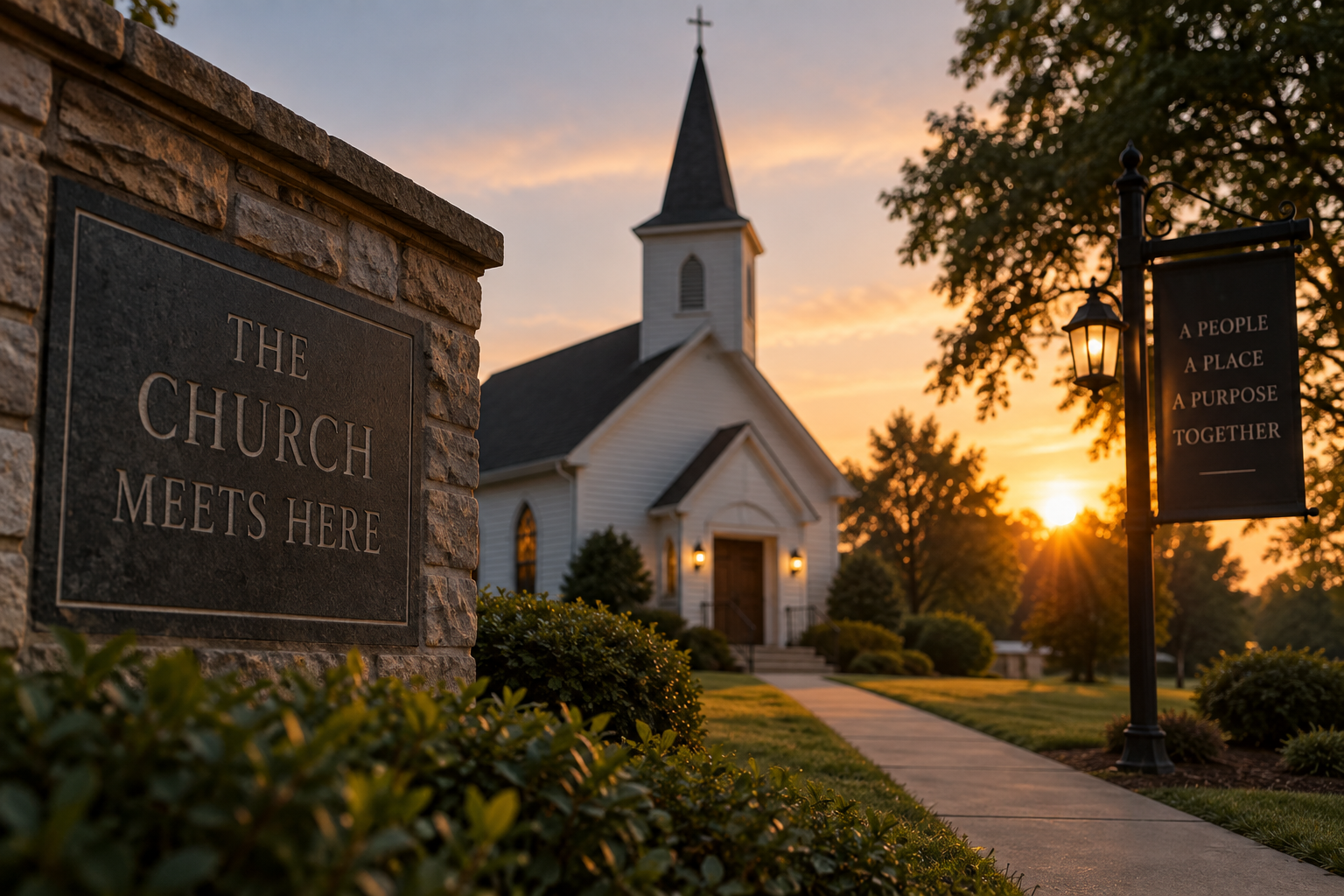
Paul Washer has been quoted as saying, “Don’t look for the church nearest to your house; look for the church closest to the Bible.” I understand the point, and there is considerable wisdom in it. Christians need faithful, Bible-believing churches, and proximity can never compensate for serious theological or ecclesiological unfaithfulness. Yet I wonder whether, in emphasizing the first half of that equation, we have sometimes neglected the importance of the second. It has become increasingly normal for Christians to drive thirty, forty, or even fifty minutes to attend their preferred church, sometimes passing several faithful churches along the way. Of course, there may be good reasons for doing so. But the New Testament’s vision of the church is profoundly local. Churches are gathered in particular places, composed of people who worship together, bear one another’s burdens, submit to one another, serve one another, and bear witness to Christ within the communities where God has placed them. The local church is therefore more than a place where Christians receive good preaching on Sunday morning. It is a community in which they share the ordinary rhythms of Christian life. Perhaps, then, the question is not simply whether we have found a church faithful enough to attend, but whether we have planted our lives deeply enough within a local church to truly belong to one.
Part of the problem is that the modern world has accustomed us to living our lives across increasingly large geographical areas. We may live in one town, work in another, send our children to school in another, and regularly drive considerable distances for shopping, entertainment, and recreation. It is perhaps unsurprising, then, that we have begun to approach the church in much the same way. Rather than looking first for a faithful congregation within the community where we already live, we can survey churches across a wide area and choose according to our particular preferences: preaching style, music, children’s ministry, programs, demographics, theological distinctives, or any number of other considerations. None of these things is necessarily unimportant, and some may represent legitimate theological convictions rather than mere preferences. The danger comes when this way of choosing a church subtly transforms the congregation into another religious service that we consume. We drive somewhere on Sunday morning to receive the preaching, worship, and programming we prefer, and then drive back to a life that remains largely disconnected from the people with whom we have just worshiped. But a church is not merely a place where Christians gather for a few hours each week. It is a people to whom we belong. And if belonging to a church means sharing our lives with one another, then the distance between our church life and the rest of our life may matter more than we sometimes imagine.
This emphasis on belonging reflects the way the New Testament ordinarily speaks about the church. Certainly, there is a universal dimension to the church: Christ is building his church (Matt 16.18), and all who belong to him constitute his body. Yet this universal church repeatedly takes concrete expression in particular congregations located in particular places. We read of the church in Jerusalem (Acts 8.1), the church at Antioch (Acts 13.1), the church of God in Corinth (1 Cor 1.2), and the churches scattered throughout cities and regions across the Roman world. These were not merely collections of Christians who happened to attend the same worship service. They were identifiable communities of believers who knew one another, worshiped together, appointed and submitted to leaders, cared for members in need, practiced discipline, supported the work of the gospel, and shared responsibility for one another’s faithfulness. This is why Paul can describe the church as a body whose individual members belong to one another and depend upon one another for the health of the whole (1 Cor 12.12–27). The New Testament church is therefore universal in scope but irreducibly local in expression. Christianity does not merely unite individual believers to Christ; it joins believers to Christ’s people. And ordinarily, that belonging becomes visible not through an abstract relationship to Christians everywhere, but through committed participation in a particular congregation of Christians somewhere.
This local character of the church becomes especially important when we consider the numerous “one another” commands scattered throughout the New Testament. Christians are commanded to love one another (John 13.34), serve one another (Gal 5.13), bear one another’s burdens (Gal 6.2), encourage one another (1 Thess 5.11), confess their sins and pray for one another (Jas 5.16), show hospitality to one another (1 Pet 4.9), and teach and admonish one another (Col 3.16). These commands envision considerably more than occupying the same room for an hour or two on Sunday morning. They assume a shared life in which believers know one another well enough to recognize burdens, meet needs, offer encouragement, practice hospitality, and intervene when a brother or sister begins to wander. Of course, none of these commands establishes a geographical radius within which Christians must live, and modern transportation allows us to maintain relationships across distances that would have been unimaginable in the first century. Nevertheless, proximity ordinarily facilitates the kind of shared life these commands envision. It is much easier to bring a meal, open our homes, care for children, visit the sick, respond to an unexpected need, or simply participate in the ordinary rhythms of one another’s lives when the members of a church actually live near one another. The question, then, is not merely whether we can make the drive to church each Sunday, but whether we are close enough to its people to share our lives with them throughout the week.
The importance of this shared life becomes even clearer when we consider the means through which God ordinarily brings Christians to maturity. From the beginning, the church devoted itself to “the apostles’ teaching and the fellowship, to the breaking of bread and the prayers” (Acts 2.42). Christians grow through the preaching of the Word, prayer, baptism and the Lord’s Supper, fellowship, accountability, discipline, and the ordinary encouragement of other believers. Indeed, Paul describes the church as a body in which Christ gives pastors and teachers to equip the saints for ministry so that the entire body might grow together toward maturity in Christ (Eph 4.11–16). Christian growth is therefore not merely the result of receiving biblical information from a gifted preacher. It occurs as believers are joined to a community in which every member contributes to the spiritual health of the others. The same is true of pastoral ministry. Elders are not merely preachers whose sermons we consume each week; they are shepherds charged with keeping watch over particular souls for whom they will give an account (Heb 13.17). Such shepherding assumes that pastors know their people and that those people are sufficiently involved in the life of the congregation to be known. God certainly uses ministries beyond the local church for our good, but the ordinary pattern of the New Testament places our worship, discipleship, accountability, and perseverance within the life of a particular congregation.
There is also a missional dimension to the local character of the church. When God sent the exiles into Babylon, he instructed them to “seek the welfare of the city” where he had sent them (Jer 29.7). This passage is not, of course, a direct command concerning New Testament church membership, but it reflects a broader biblical principle that God’s people are called to live faithfully in the places where his providence has situated them. The church’s witness likewise occurs not merely in the abstract but in actual neighborhoods, towns, and cities where Christians live alongside unbelieving neighbors, coworkers, friends, and family members. Ideally, then, our church life and our community life should not exist in two entirely separate geographical worlds. When Christians worship, serve, and build relationships with believers who share the same communities in which they live, the church is better positioned to become a visible presence for the gospel within that place. Members can invite neighbors into relationships that naturally extend into the life of the congregation, churches can become more attentive to the needs of their communities, and evangelism can emerge from the ordinary relationships of everyday life. Again, none of this means that every Christian must attend the congregation geographically nearest to his or her home. But it does suggest that there is something valuable about churches that bloom where their members are planted: particular communities of Christians bearing witness to Christ together in the particular communities where God has placed them.
If the local church occupies this kind of place in the Christian life, then it should inevitably shape some of the larger decisions we make about where and how we live. Christians routinely make decisions about education, employment, housing, retirement, and relocation on the basis of numerous legitimate considerations: salary, cost of living, proximity to family, quality of schools, career opportunities, and countless others. Yet the local church can easily become an afterthought. We decide where we want to live and only afterward ask whether there happens to be a faithful church somewhere within driving distance. Perhaps we should reverse that order, or at least bring the church much earlier into the conversation. If God ordinarily intends Christians to grow, worship, serve, persevere, and participate in his mission through the life of a local congregation, then the availability of a faithful church should matter when deciding where we plant our lives. This does not mean that the church must always outweigh every other consideration, nor that Christians are wrong to accept jobs or pursue opportunities that require relocation. It simply means that belonging to Christ’s people should be treated as one of the defining priorities of the Christian life. Before asking only, “Where can I find the best job, house, or opportunity?” perhaps we should also be asking, “Where can I faithfully belong to Christ’s people and invest my life alongside them?”
None of this is intended to establish an arbitrary geographical rule for church membership. There are many legitimate reasons why Christians may need to travel some distance to belong to a faithful church. Those living in rural communities may have few healthy congregations nearby. Others may face significant theological disagreements with the churches closest to them, require a congregation that ministers in a particular language, or have family and ministry circumstances that make a more distant church the wisest choice. Churches themselves can change, decline, or depart from convictions that once made them faithful places to belong. Nor should proximity ever be used to justify remaining in a church that has abandoned the gospel or seriously compromised the teaching of Scripture. The point, then, is not that Christians must always attend the church geographically closest to their homes. Proximity should not trump faithfulness, but neither should it be treated as irrelevant to faithfulness. If two churches are genuinely faithful, there is real value in considering where we can most meaningfully share life, serve, practice hospitality, receive pastoral care, participate in mission, and bear one another’s burdens. The goal is not to calculate how many miles Christians are permitted to drive on Sunday morning. It is to recover a vision of church membership in which belonging to a local congregation means sharing our lives with a particular people rather than merely attending their services.
So, should Christians look for the church nearest to their house or the church closest to the Bible? If those were truly our only two options, the answer would be easy: we should choose faithfulness every time. But perhaps the choice is not always so stark. When God has placed faithful, Bible-believing churches within the communities where we live, there is something deeply fitting about planting our lives among them. The local church is not merely a place where we hear a sermon each week. It is the people with whom we worship, pray, break bread, bear burdens, raise families, serve our neighbors, pursue holiness, and persevere together in the faith. Recovering the priority of the local church therefore requires more than faithfully attending Sunday services. It means ordering our lives so that we can genuinely belong to Christ’s people and invest ourselves in their good. We should certainly look for churches that are close to the Bible. But perhaps we should also value churches close enough for their people to become part of the ordinary fabric of our lives. If Christ loved the church enough to give himself for her, then surely the local church deserves to be one of the defining priorities by which we order our own lives.
Share this:

On Making the Lord’s Supper Normal Again
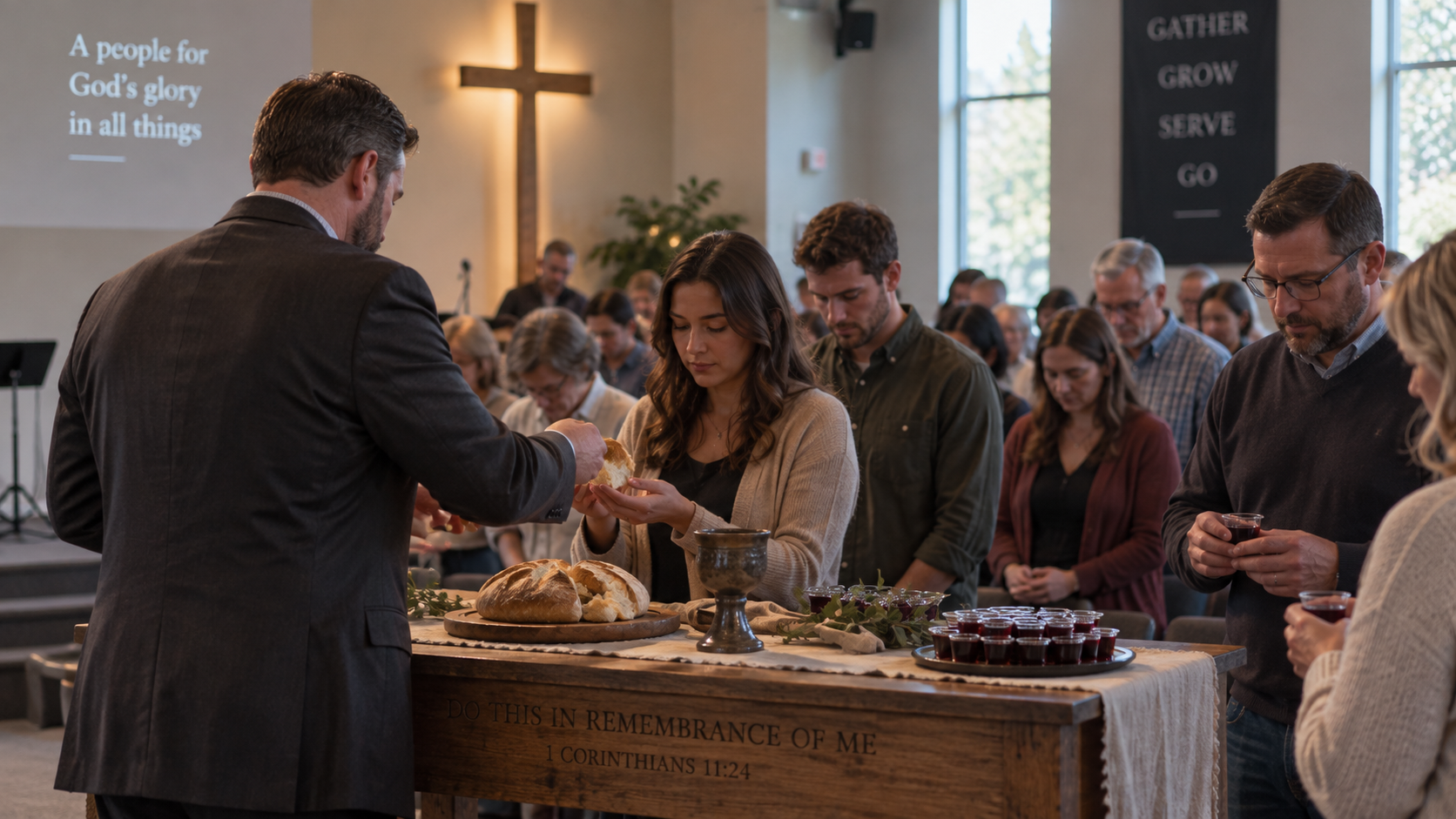
It is a typical Sunday at your local Baptist church. The service starts with some upbeat songs and maybe a Scripture reading. It continues with a time of prayer and giving, perhaps one or two more songs, a thirty- to forty-minute sermon on a particular text, and then a closing song and prayer. Everything seems normal. But then the pastor invites everyone to sit down, and the deacons begin passing plates containing small wafers and thimbles full of juice. It is communion Sunday, and suddenly everything feels different. Whether your church observes the Lord’s Supper monthly, quarterly, or only on designated occasions, communion can feel like something special added to the church’s worship rather than something that belongs to its normal rhythms. Of course, there is nothing inherently wrong with observing the Lord’s Supper less than weekly; Scripture never gives us an explicit command concerning its frequency. But when communion is something we rarely do, Christians can begin to think of it as something exceptional rather than ordinary. Yet when we look at the practice of the early church, what has become unusual for many churches seems remarkably ordinary in the life of the earliest Christians. The Lord’s Supper should therefore be recovered as a normal practice of the gathered church because the New Testament presents the Table not as an occasional ceremony added to Christian worship, but as an ordinary expression of the church’s life together in the gospel.
Perhaps the question is not simply how often we should observe the Lord’s Supper, but whether our practices have caused something ordinary in the life of the earliest church to become extraordinary in ours. We read in Acts 2.42 that, “They devoted themselves to the apostles’ teaching, to the fellowship, to the breaking of bread, and to prayer.” Or again, when Paul is in Troas, we read, “On the first day of the week, we assembled to break bread” (Acts 20.7). In other words, Luke does not portray the breaking of bread as a special ceremony added to the church’s life but as part of its regular shared life. Of course, the language of “breaking bread” could encompass a larger communal meal, but the Lord’s Supper would nevertheless have belonged within this larger practice of Christian table fellowship. Table fellowship was a regular part of the gathering of the early church, and Acts 20.7 is particularly striking because Luke describes breaking bread as the very purpose for which the believers had assembled. For the earliest Christians, then, breaking bread does not appear as an interruption of the church’s ordinary life together; it appears to belong to that life. So perhaps, instead of asking, “Where or when can we fit communion into the service?” we should be asking, “Why has communion become peripheral to what we think Christians ordinarily do when they gather?”
In his first letter to the Corinthians, Paul gives explicit instructions concerning the observance of the Lord’s Supper, and he continually refers to it as something that takes place “when you come together” (1 Cor. 11.17, 18, 20, 33). The irony, of course, is that the Corinthian Christians were intending to celebrate the Lord’s Supper, but their behavior so contradicted its meaning that Paul tells them, “when you come together, it is not really to eat the Lord’s Supper” (1 Cor. 11.20). Wealthy members of the congregation were eating ahead of the poorer members, and the poorer members were being humiliated. Social divisions were being reproduced at Christ’s Table. However, the important point is that Paul’s response to these errant practices demonstrates that the Supper is inherently ecclesial and communal. The Table not only proclaims, “Christ died for me,” but also, “Christ has made us one people through his death.” As Paul says in 1 Corinthians 10.17, “Because there is one bread, we who are many are one body, since all of us share the one bread.” Therefore, communion is not simply an individual devotional exercise conducted in the same room as other Christians; it is an act of the gathered body. The Lord’s Supper belongs to the church because at the Table the gospel that reconciles us to God also displays the new community that the gospel has created.
Moreover, the Apostle Paul says, “For as often as you eat this bread and drink the cup, you proclaim the Lord’s death until he comes” (1 Cor. 11.26). In other words, the Lord’s Supper is itself an act of proclamation. In preaching, the gospel is proclaimed through the words of the preacher; at the Table, the same gospel is proclaimed visibly and materially through the broken bread and poured cup. The point is that the Word and the Table are not competitors. Communion does not steal time from “gospel-centered worship”; communion is gospel-centered worship. The church hears what Christ has done through the preaching of the Word and then receives the signs Christ gave his church to remember and proclaim his saving work. And we must note here that Paul is clear that this proclamation continues “until he comes.” The Table therefore looks backward to the death of Christ while simultaneously looking forward to his return. As long as the church lives in the already and the not yet between Christ’s first coming and his second, it is called to proclaim the death by which its salvation was accomplished and anticipate the return by which that salvation will be consummated. What I am saying is that the Lord’s Supper is not an interruption of gospel-centered worship; it is one of the ways Christ has given his church to proclaim the gospel when we gather together.
Of course, someone might object, “If we take communion every week, won’t it become routine, empty, rote ritual?” This is a legitimate concern; our sacred rhythms can become thoughtless, and the familiarity of repetition can become mechanical if we are not careful. However, rarity does not automatically create reverence, and frequency does not automatically destroy it. Think of it this way: we don’t preach quarterly so that preaching remains special. We don’t pray occasionally to prevent prayer from becoming routine, and we don’t sing infrequently so that worship retains its significance. These practices become formative precisely through repetition, and the same can be true for communion. Regular observance at the Table reinforces the truths that Christ died for us, that we live by grace, that we belong to one another, and that Christ is coming again. The real question, then, is not frequency versus significance, but thoughtless repetition versus meaningful repetition. This is precisely where pastoral leadership matters. The Table should be intentionally connected to Scripture and the preaching of the Word so that its repeated observance continually directs the congregation to the different dimensions of the gospel it proclaims. However we approach it, the danger is not that the Lord’s Supper might become familiar; the danger is that familiarity might become thoughtlessness.
Now, to make the Lord’s Supper normal is not to make it casual or insignificant. If anything, Paul’s rebuke of the Corinthians in 1 Corinthians 11 demonstrates just the opposite. Their problem was not that they observed the Supper too frequently, but that they had lost sight of what their actions at the Table proclaimed. Their selfishness, divisions, and disregard for one another contradicted the gospel the meal was intended to display. Paul’s response was therefore not to discourage their observance of the Supper, but to call the Corinthians to discern what they were doing when they came together. The same should be true for us. Every time we come to the Table, we are reminded that Christ’s body was given and his blood was shed for us, that we belong to one another because we belong to Christ, and that the crucified and risen Lord will one day return. The Supper thus directs our attention backward to the cross, inward to the body of Christ gathered around the Table, and forward to the return of our Lord. To make the Lord’s Supper normal is not to make it ordinary in significance, but ordinary in practice—to weave it into the regular rhythm by which the gathered church is continually formed around the gospel.
None of this is to suggest that a church that observes the Lord’s Supper monthly or quarterly is somehow being disobedient to Scripture. The New Testament simply does not prescribe how frequently the church must come to the Table, and we should be careful not to create a command where Scripture has given us freedom. Nevertheless, Christian freedom does not mean that every possible practice equally reflects the patterns and priorities we find in the New Testament. Acts portrays breaking bread as part of the ordinary life of the earliest Christians. Paul assumes that the Lord’s Supper belongs to the gathering of the church, where the one bread displays the one body Christ has created. And every time the church eats the bread and drinks the cup, it proclaims the Lord’s death until he comes. Perhaps, then, we should ask whether some of our inherited practices have unintentionally pushed the Table toward the margins of Christian worship. The goal is not simply to observe communion more frequently, but to recover the Lord’s Supper as a regular, central, and joyful practice of the gathered church. Perhaps we have spent too much time trying to preserve the significance of the Lord’s Supper by making it extraordinary. The earliest Christians seem to have found its significance precisely in making it part of their ordinary life together. The Lord’s Supper does not need to become more extraordinary. Perhaps it simply needs to become normal again.
For further study, see:
On the Practice of the Lord’s Supper
On Partaking of the Lord’s Supper
Share this:



On the Value and Wisdom of Seminary Training for Pastors
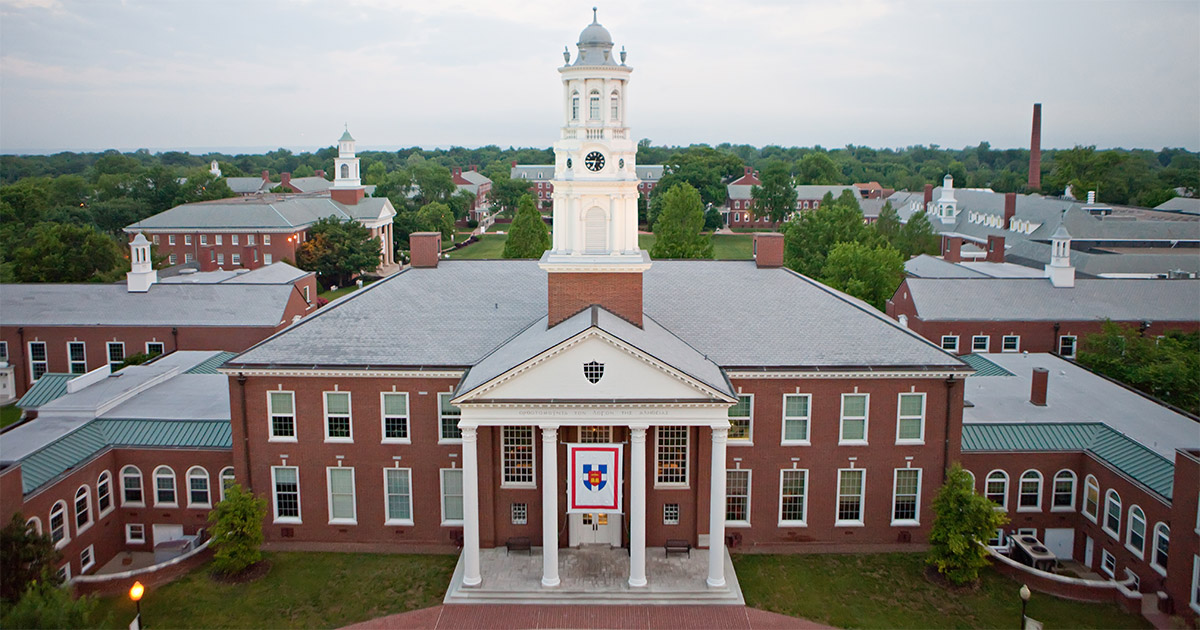
When I surrendered my life to God’s calling for vocational ministry at the age of 15, I always knew that that path would eventually take me to seminary, and now, as I am more than halfway through my PhD in Biblical Studies (New Testament) at The Southern Baptist Theological Seminary in Louisville, KY (pictured above), I can’t help but reflect on the value and benefits it has brought to my life and to my ministry. However, down here in the good ole’ “Bible Belt”, formal theological education is often viewed with a measure of skepticism and distrust. On the one hand, many people know faithful pastors who have influenced their lives who have never gone to seminary. On other hand, there is a lingering suspicion of academia that is left over from the historical influence of the Fundamentalist movement. So, it is understandable that in many churches, formal theological education can feel unnecessary at best and spiritually dangerous at worst. However, the real question is not simply whether theological education is necessary, but what kind of formation is required to faithfully know, teach, and live the truth of Scripture. Therefore, it is the thesis of this post that while formal theological education is not strictly necessary for faithful ministry, it is profoundly valuable because it cultivates the habits of careful thinking, deep reading, and disciplined reflection on the things of God.
Those who are leery of formal theological education point to several reasons why seminary is sometimes less than helpful. Some suggest that going to seminary kills spiritual passion, that academic theological knowledge can choke out personal devotion and piety. Seminary becomes a cemetery. And let’s be honest, this can happen. There is a real temptation in academia that one’s experience of faith can become utterly cerebral and lacking in spiritual pathos. However, I would suggest that this temptation is not unique to the seminary setting, and that it has more to do with the student than with the institution. Another objection that is sometimes heard is that “all we need is the Bible and the Spirit,” that the Scriptures are sufficient, and that the Spirit leads us into all truth. I have addressed this question in another post, but suffice it to say here that we do not download biblical understanding from the Spirit. His work has more to do with confirming and applying the truths of Scripture in our lives than with the transmission of content. Interpretation still requires care and study. Some also object that education can lead to pride and liberalism, and here again, these are legitimate concerns. And while discernment must be exercised in selecting an institution, it is up to the student to maintain their own humility and faithfulness. Lastly, as mentioned above, scores of pastors throughout the history of the church have served faithfully without formal theological training, and I praise God for those individuals. Let me say it clearly: seminary is not necessary for pastoral faithfulness. It is not a matter of necessity, but a matter of wisdom. The concerns I’ve listed here are not imaginary; they reflect real temptations and dangers. But they are dangers of misuse, not arguments against the value of theological training itself.
So, in the interest of clarity, it is important at this point to distinguish what theological education is and what it is not. First, theological education is not mere information transfer; it is not primarily about the mastery of content, though that is certainly a component of it. The fact is that we live in an information age, and theological content is available at the click of a button. Of course, not all of it is of the same quality, but it is true that taking in theological content is easier today than it has ever been. There are literally tons of resources both digital and in print that are available to the pastor who wants to grow in theological knowledge. And pastors should be taking it in; they should read and read widely and deeply, but seminary is not just about the transfer of information. Secondly, it is not a substitute for a person’s spiritual or devotional life. This I think is the misconception that undergirds a lot of the objections mentioned above, namely that seminary cannot replace personal piety and devotion. It is not a substitute for prayer, for holiness, for obedience, or for involvement in the local church. These are vital for spiritual life, and seminaries are not primarily focused on training these personal disciplines. Seminary is focused training in how to read carefully, how to think clearly, and how to serve faithfully throughout the course of one’s life. It is not about knowing more things; it is about learning how to think rightly about God and his Word.
This is exactly the point, namely that the Scriptures require careful and attentive reading. We must be taught the importance of historical and literary context, of genre and authorial intent, of words and sentences and paragraphs and how they communicate textual meaning. Ideally, these hermeneutical principles are modeled in the pulpit and Sunday school classroom. However, mastery requires focused and intensive didactic formation, because it is this kind of training that guards us from interpretive error. We must be taught how to rightly divide the Word of truth, so that we do not misuse Scripture for our own aims and ends or read our assumptions back into the text. Understanding the literary and historical intricacies and complexities of the Bible keeps us from falling into the arrogance of overconfidence, where familiarity is mistaken for understanding. It forces us to slow down, to wrestle with difficult passages, and to recognize that Scripture does not always yield its meaning at a glance. And in this way, it teaches us the discipline of slowness, how to let the text speak on its own terms and to listen carefully rather than forcing quick conclusions. What I am saying is that formal theological training teaches us not just what the Bible says, but how to listen to it well—and that is a skill that serves both the church and the individual believer for a lifetime.
In addition to learning to read carefully, formal theological training also helps us to develop theological depth in our understanding of the Word. It helps us to see the whole Bible, to understand the metanarrative of Scripture, and to locate particular books and passages within that unfolding storyline. We learn to follow themes and their development through the canon, and we come to appreciate both the continuity and the discontinuity between the Testaments. In doing so, we begin to see that the Bible is not a loose collection of disconnected texts, but a unified and coherent witness to God’s redemptive work in history. We also develop a certain measure of doctrinal coherence, in that we begin to understand how themes and concepts relate to one another, and we avoid fragmented theological reflections that isolate passages from the larger framework of Scripture. Questions of Christology, salvation, covenant, and kingdom are no longer treated in isolation, but are understood in relation to the whole counsel of God. Formal theological training also helps us to learn from the history of the church; it teaches us to see tradition as a resource rather than as a threat. (On the Use and Benefit of Tradition, see here.) To put it rather bluntly, we are not the first to read the Bible, and we won’t be the last. thankfully, this is a gift, not a limitation. It is an invitation to listen, to learn, and to be shaped by the wisdom of those who have gone before us.
Lastly, formal theological education helps us to develop intellectual humility. It exposes us to the difficult questions of the faith that have been asked throughout church history, and it forces us to wrestle with issues that do not admit of easy or immediate answers. It requires us to read and engage hard texts, both biblical and extrabiblical, and it immerses us in the real debates that continue to shape theological reflection even today. In doing so, it helps us develop a rightly calibrated confidence, one that is rooted in strong convictions, yet carried with a softer ego. We come to see that clarity is often hard-won, and that many of the questions we face have been carefully considered by thoughtful believers long before us. And as a result, we learn not only how to argue well, but how to disagree well. This is perhaps one of the greatest challenges in our present moment, and formal theological training can teach us to treat our interlocutors with patience, precision, and grace, even when we disagree deeply. In other words, theological education does not simply make you smarter; it makes you more aware of your limits. It reveals our strengths, exposes our weaknesses, and teaches us to value the insights of others, even when they do not fully align with our own.
However, even with all these benefits, formal theological education has its limits and dangers, and it is important that we are clear on what they are. For one, seminary training cannot produce spiritual life. And while many schools are now attempting to incorporate more spiritual life components into their curricula, it will always be true that knowledge simply does not equal transformation. True transformation is a work of the Spirit in us, and it is up to each individual to work with the Spirit through the classic spiritual disciplines in order to experience transformation. (On the Spiritual Disciplines, see here.) Second, seminary education can foster pride. This is a real danger. As the Scriptures remind us, “Knowledge puffs up, but love builds up.” (1 Corinthians 8.1) This is an ever-present temptation for those who are well informed in the study of the Scriptures. And lastly, seminary education can drift from the primary importance of the local church. At present, there is an ever-growing movement to reconnect seminary education with the local church, and this is to be celebrated. But seminaries must always orient their purpose and mission toward the service of the church, because it is the church that is Christ’s bride. However, in all three of these, the problem is not theological education itself, but theological education disconnected from the life of the church and the work of the Spirit.
This is why it is so important that head, heart, and ministry remain inherently intertwined. Pastors must always make sure that their thinking about God and their love for God remain together. There should be no head/heart divisions, as though theological precision and spiritual devotion were somehow in competition with one another. Rather, careful thinking about God should deepen our love for him, and our love for him should drive us to think more carefully about his Word. Further, pastors must remember that we do theology for the sake of the church, not for publications, not for CV development, not for accolades or recognition. All theology must be oriented toward the teaching, preaching, and discipleship ministries of the local church. “For the Church” must be more than an institutional mantra or a tagline; it must be the driving motivation in all of our theological efforts. Theology that does not serve the church ultimately fails in its purpose. And finally, we must remember that theological education is primarily about formation and faithfulness. We are seeking to develop the knowledge, skills, and habits that will sustain long-term ministry stability, presentational clarity, and faithful endurance. The goal is not to produce scholars detached from the church, but servants equipped to build it up, men who can think clearly, love deeply, and labor faithfully for the good of God’s people.
In the end, we must say this carefully: formal theological education is not necessary, but it is wise. God has used, and will continue to use, many faithful pastors and teachers who have never set foot in a seminary classroom. Again, thank God for his grace in this! The power of ministry has never rested in credentials, but in the faithful proclamation of the Word and the work of the Spirit. And yet, when pursued rightly, theological education is a gift. It strengthens the church by equipping its leaders to handle Scripture with greater care, to think with greater clarity, and to teach with greater depth and precision. It forms habits that serve a lifetime of ministry, not just a moment of preparation. To study theology carefully is not to move away from God, but to learn how to think about him rightly. That is a task worthy of our best effort.
Share this:

On Christian Living in the Last Hour
TEXT
1 The elder: To the elect lady and her children, whom I love in the truth—and not only I, but also all who know the truth— 2 because of the truth that remains in us and will be with us forever. 3 Grace, mercy, and peace will be with us from God the Father and from Jesus Christ, the Son of the Father, in truth and love.
4 I was very glad to find some of your children walking in truth, in keeping with a command we have received from the Father. 5 So now I ask you, dear lady—not as if I were writing you a new command, but one we have had from the beginning—that we love one another. 6 This is love: that we walk according to his commands. This is the command as you have heard it from the beginning: that you walk in love.
7 Many deceivers have gone out into the world; they do not confess the coming of Jesus Christ in the flesh. This is the deceiver and the antichrist. 8 Watch yourselves so that you don’t lose what we have worked for, but that you may receive a full reward. 9 Anyone who does not remain in Christ’s teaching but goes beyond it does not have God. The one who remains in that teaching, this one has both the Father and the Son. 10 If anyone comes to you and does not bring this teaching, do not receive him into your home, and do not greet him; 11 for the one who greets him shares in his evil works.
12 Though I have many things to write to you, I don’t want to use paper and ink. Instead, I hope to come to you and talk face to face so that our joy may be complete. 13 The children of your elect sister send you greetings.
~2 John 1-13
Title: On Christian Living in the Last Hour
Text: 2 John 1-13
Church: South Caraway Baptist Church, Jonesboro, AR
Date: September 24, 2023
Share this:

On How Christ Makes all the Difference
TEXT
1 Paul, an apostle of Christ Jesus by God’s will:
To the faithful saints in Christ Jesus at Ephesus.
2 Grace to you and peace from God our Father and the Lord Jesus Christ.
~Ephesians 1.1-2
Title: On a Historical, Literary, and Theological Overview of Ephesians
Text: Ephesians 1.1-2
Series: The Letter to the Ephesians
Church: South Caraway Baptist Church, Jonesboro, AR
Date: April 30, 2023
Share this:

On the Ministry of the Local Association

Cooperation between local churches has long been a hallmark of Baptist identity. Going all the way back to the earliest English separatists, Baptists have always understood that, though local churches are autonomous, we are better able to accomplish the Great Commission to make disciples of all nations when we partner together. Our history is filled with example after example of local churches that have worked together to fund, train, and send missionaries around the world. In many ways, these precedents are the foundation for the denominational structures that exist today. Whether it is the national convention, the state conventions, or the local associations, all of these entities exist to facilitate the cooperation of like-minded churches for the advancement of the global cause of Christ.
Of course, it goes without saying that the strength and effectiveness of these entities is directly dependent on the participation of local churches. This is particularly true at the level of the local Baptist association; their ministry suffers drastically when local churches do not participate regularly. One factor that has contributed significantly to the weakness of associational ministry is the rise of the mega/multisite church. The overabundance of people and resources in these churches enables them to operate as independent self-sufficient organisms, essentially negating their need to cooperate with other churches in the area. In my own local association, there is a relatively large church, a mega church by all comparative measurements, and while their name appears on the association roster, their participation therein is practically nil save a token monthly financial contribution.
Whatever the reasons, when local churches do not participate in the ministry of the local association, all of the churches that partner with that association suffer. Local associations, especially those in more rural areas, have largely become weak, ineffective, and irrelevant due to the widespread apathy that characterizes attitudes in most local Baptist churches. It has come to the point that we might even begin to wonder why these entities still exist and whether they should continue at all. As the Apostle Paul would say, “May it never be!”. The point is that we desperately need to recover the value of local association ministry, and in the space that remains, I would like to highlight just a few of the ways that participation in the local association benefits the local church.
First, the local association provides pastors the opportunity to build relationships with other pastors. More often than not, pastors cannot find the kinds of relationships that sustain long term ministry success in their own congregations. This should not be the case, of course, but being a pastor can sometimes feel very lonely. Building relationships with other pastors through the local association can help to alleviate that isolation; it is a place where pastors can turn for encouragement, accountability, and mentoring. The latter of these is particularly important for younger first time pastors. The value of being mentored by seasoned, experienced, faithful pastors is a resource that will bear fruit long after those pastors retire. Older pastors have the opportunity to invest in and influence the next generation of pastors through meaningful self-giving relationships, and the best place for these to develop is through the local association. Or to put it more simply, pastors need each other.
A second way in which participation in the local association benefits the local church is by cooperative mission efforts. The simple fact of the matter is that the Great Commission to make disciples of all nations, while it is certainly not less than, it is so much more than the isolated ministry of one local church. Most local churches, the vast majority of which average less than 100 in weekly attendance, simply do not have the financial or people resources to develop an effective mission program. However, when those resources are pooled together with other churches through the local association, we are better able to reach not only our Jerusalem, but our Judea and Samaria, and even to the ends of the earth. This is essentially what the Cooperative Program is all about; in the Southern Baptist Convention, churches pool their resources through the cooperative program primarily for the purpose of national and international missions and theological education. If we truly care about the cause of Christ, then this kind of cooperation must begin at the local level.
Lastly, participation in the ministry of the local association helps churches cultivate a kingdom first mentality. This may be more of a result of the first two, but the point is that participating in the local association reminds us that Christianity is bigger than our little slice of the pie. The Kingdom of God is much more than our particular sphere of influence. However, it is all too easy for churches, particularly those that are experiencing seasons of meaningful ministry, to begin to believe that the work of the Kingdom revolves around the ministry efforts of their particular church. Pride begins to spring up in our hearts, and we develop a kind of competitive attitude where we measure our successes and achievements against other local churches. But, the fact of the matter is that local churches should not be in competition with each other. We are all on the same team, all striving for the same goal, and local association ministry helps keep this reality at the foreground of our ambitions.
I love the local church; I believe in the ministry of the local church. The local church is the primary avenue of God’s work in the world to bring people to faith in His Son and transform them into His image. But the Kingdom of God is bigger than individual churches; the Great Commission is bigger than individual churches. And denominational organizations from the local association all the way up to the national convention exist to facilitate and support the cooperation of likeminded churches for the cause of Christ. Denominations are not perfect, because they are made up of people that are not perfect. They can be frustrating, ineffective, and even disappointing at times, but when local association ministry is done well, it makes it all worth it.
Note: This post was originally posted at SBCvoices, here.
Share this:

On Theological Discourse, False Teaching, and the Ministry of Rebuke

In my previous post, I began to outline the general contours of a biblical ethic for theological discourse. The ability to discuss questions of theology and biblical interpretation Christianly, especially where there is disagreement, is a primary indication of a person’s maturity in Christ. However, so often in this current cultural climate, godly virtues like humility, gentleness, kindness, love, and grace are glaringly absent from most (online) theological discourse. In addition to that, the proliferation of social media has created a practical cacophony of voices making it nearly impossible to know which ones are faithful and true. As Christians, we are called to contend passionately for the truth, which necessarily includes calling out those errors which are in direct contradiction to the clear teaching of the Bible. And so, the question remains, how can we contend for theological truth without being unnecessarily contentious?
The fact is that false teaching has always been a plague on the people of God. From Mosaic prescriptions that lay out the consequences for those making false prophecies to the writing prophets and their warnings about those who offer false promises of peace and security in the face of judgment to the warnings of the New Testament Gospels and epistles even to Revelation’s descriptions of an eschatological false prophet, the Bible is consistent in calling the people of God to be on guard, always watching our lives and our doctrine closely. However, we are also responsible for the lives and doctrine of each other within the community of faith. We bear a mutual responsibility for each other’s souls as we pursue biblical faithfulness, and when a brother or sister wanders off the path of truth, when they are swept up by the deceptions of false teaching, then we are called to the ministry of a loving rebuke that we may point them back to faithfulness.
The challenge, however, comes in identifying exactly what is and what is not false teaching. It has become common practice it seems to label our theological opponents with ideological and emotionally charged epithets that end up causing more confusion than clarity, which results in even more division. Labels like false teacher, heretic, liberal, etc. simply cannot be thrown around carelessly. Merely holding a different theological conclusion than someone else does not mean that they deserve to be identified as a false teacher. This is why we need a clear definition of what false teaching is. False teaching is any teaching that contradicts the primary and essential truths of the Bible. It is any doctrine that stands contrary to the fundamental essence of the Gospel. This has been the common understanding throughout the history of the church, but it would seem that in the current cultural climate many people have forgotten how to distinguish between friend and foe.
We desperately need to recover the discipline of theological triage. The ability to appreciate what is primary and what is secondary or tertiary is an ability that seems all but lost in most theological discourse. The threat of false teaching only applies at the level of the primary, those core truths that if compromised place one outside of the Christian faith. Historically, these primary doctrines have been defined by the classic creeds of the early church. These creeds (e.g. Apostle’s, Nicene/Constantinopolitan, Athanasian, etc.) were forged in the crucible of theological controversy, so they are helpful in identifying what does and does not constitute false teaching. Of course, they do not replace or supersede the authority and sufficiency of Scripture, but they can be helpful in clarifying the contours of Christian orthodoxy. Clearly, as it was then so also now, any teaching or doctrine that falls outside of these bounds is rightly called heresy or false teaching, and anyone who holds, affirms, or promotes this kind of doctrine must be rebuked for their error. With that being said, in what follows, I would like to outline a few biblical priorities that we must keep in mind as we engage each other in these matters.
The first priority is the priority of the local church. The local church is the primary locus of God’s redemptive and sanctifying work, and this includes the ministry of rebuke. It is in the local church that we are taught sound doctrine. It is in the local church where we submit to pastor-elders who keep watch over our souls. It is in the local church where we hold each other accountable and consider how we might provoke one another to love and good deeds. All of the commands that instruct us to correct and rebuke false teaching are addressed to the local church. This means that the local church is the right and proper context for hammering out our theological differences, for wrestling with the text of Scripture. It should be a safe place where people can ask questions, where they can express their understanding of particular issues and questions without fear of judgment or ridicule, and when necessary, where they can be pointed back to the way of biblical truth by correction or rebuke. In other words, it is not our job as pastors or as church members to police the theology of all Christians everywhere. Rather, it is our job to maintain biblical faithfulness within the context of the local church community where God has placed us.
The second priority is the priority of relationships. Relationships matter. What we must realize is that the Great Commandment to love God and to love people is not two but one. These are two sides of the same coin, to halves of one whole. Loving God necessarily includes loving others, and we can only do this in personal intimate friendships. When these relationships are grounded in mutual love for God and for each another, then and only then can we be assured of a person’s intent, that they are for our good and not for our harm, that they only wants what’s best for us. This unwavering trust is the currency that must be spent in speaking words of rebuke to one another. Outside of this basic assurance of a person’s good intentions, our rebukes will almost always come across as harsh, demeaning, belittling, and divisive. This is why the greater the relational distance that exists between us and our theological opponents, the greater amount of grace we must be willing to show them. This means giving the benefit of the doubt; it means taking our opponents at their word. And it means attributing questions or concerns first to misunderstanding, differing emphases, or lack of clarity before immediately impugning, slandering, and mischaracterizing someone’s biblical fidelity and devotion.
The third priority in the ministry of rebuke is the priority of repentance. Repentance, restoration, reconciliation. This must be the guiding principle, the primary purpose, in every church discipline situation. This is especially so when it comes to the ministry of rebuke. There may be occasions where a stern rebuke is necessary and warranted, but we are not simply trying to win arguments for the sake of being right. We are not engaged in a game where we need to win theological points to defeat our opponents. If false teaching is any doctrine or belief that would invalidate the Gospel, then we cannot pretend that these questions have no consequence. We are engaged in a spiritual battle for the soul, that we might turn them to Christ. This is why doctrine matters; this is why we must contend for the faith. It can never merely be a question of who is right and who is wrong. Every theological conversation must be guided by the primary desire of both parties to be more like Christ, to submit more to Christ, to trust more in Christ. This is why we must be ready and willing to repent and seek forgiveness, and it is why we must engage our theological differences in ways that invite others to do likewise.
And finally, the fourth priority for our theological discourse is the priority of Christlikeness. We are called to demonstrate the virtues of Christian character in every situation, in every interaction, in every conversation. Even when we must speak hard words, we are not permitted to speak them harshly. We cannot give into attitudes like hate, bitterness, or pride. We cannot treat our theological opponents, no matter the severity of their error, with derision or disregard or contempt. We must always seek to “speak the truth in love” even when that truth is confronting. Of course, there are plenty of examples in the Gospels where Jesus had to deliver hard words, and to our ears, his confrontations with the Pharisees may seem downright combative or argumentative. I will consider these examples and how they relate to theological discourse in my next post; however, suffice it say here that tone matters. Even when we must confront those who are descending into grave theological error, we must endeavor to deliver our rebukes with the virtues of Christ-like character, not the least of which are grace, humility, and love.
This post was also posted at SBCvoices, here.


