Tag Archives: Denominations

On Truth and Unity in the Southern Baptist Convention

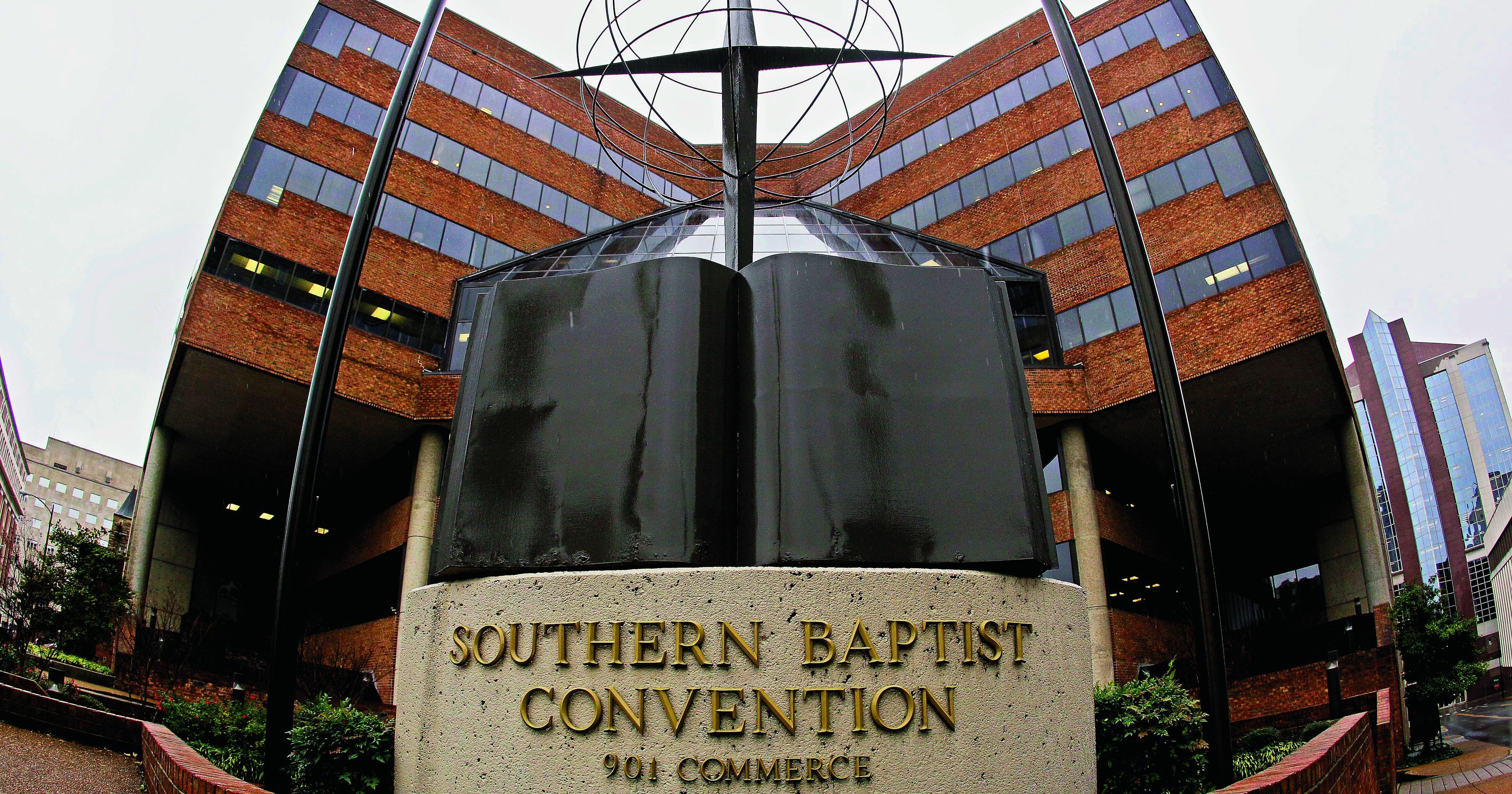
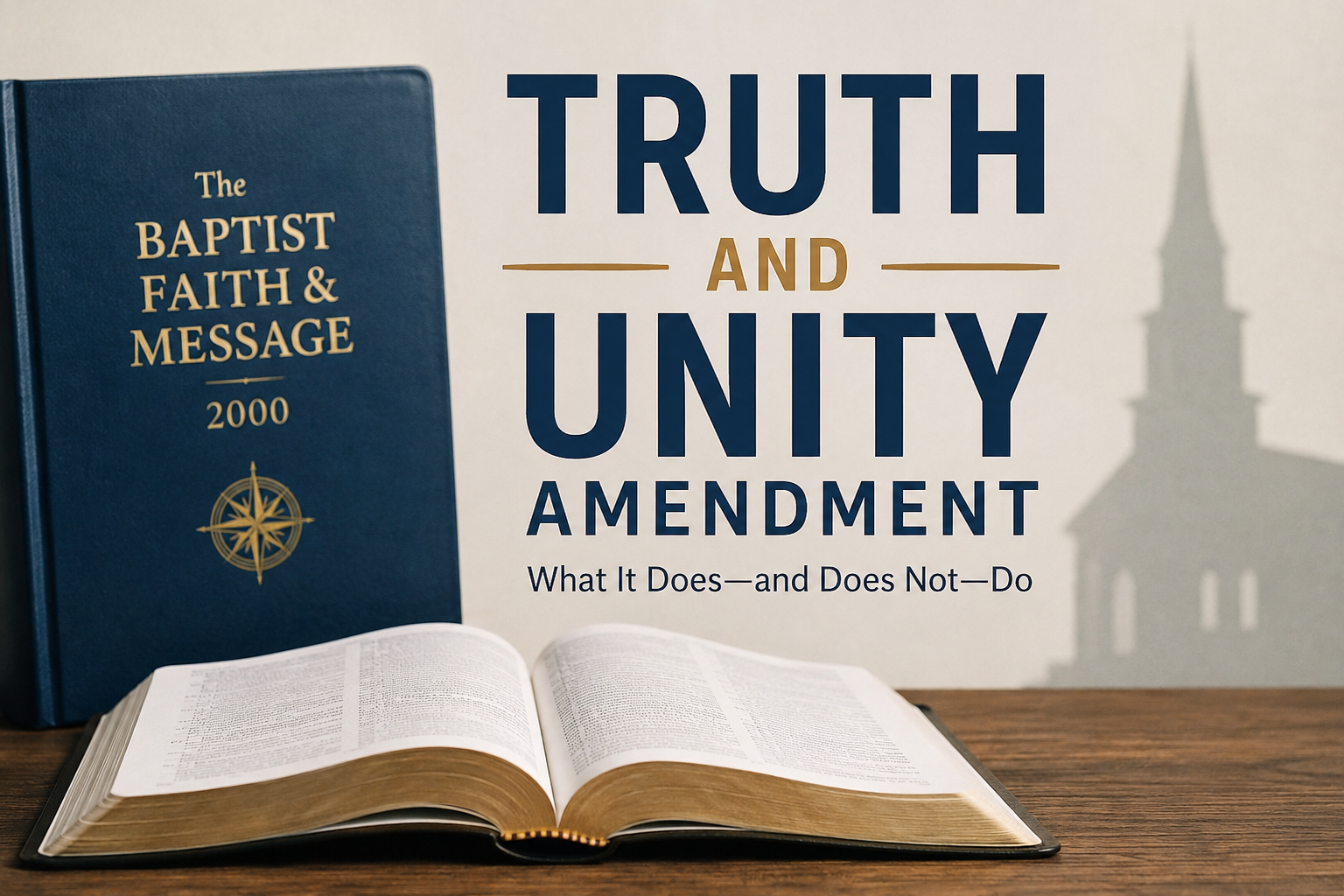
Last week, Southern Baptists met in Orlando, Florida, for their annual meeting, and one of the most significant items of discussion was the proposed “Truth and Unity Amendment” to the SBC Constitution, introduced by Dr. Albert Mohler. The amendment would add language to Article III concerning the qualifications for churches that wish to remain in friendly cooperation with the Southern Baptist Convention. Specifically, it states that a cooperating church “does not act to affirm, appoint, or endorse a woman serving in the office or function of a pastor/elder/overseer, specifically preaching to the assembled congregation.” The rationale behind the proposal is that recent disputes concerning churches with women serving in pastoral functions revealed ambiguity in the Convention’s existing standards of cooperation. Supporters therefore argue that the amendment is necessary to provide greater constitutional clarity. As to the vote, the amendment received strong support from the messengers, passing by a margin of approximately 75 percent to 25 percent. Of course, this vote has generated widespread discussion both within and outside the Southern Baptist Convention. News feeds and social media reels have been filled with reactions, criticisms, endorsements, and predictions about what the amendment will mean for the future of the SBC. However, it seems to me that much of the discussion has been marked by confusion and misunderstanding. Many reactions appear to be responding more to headlines and assumptions than to the actual text of the amendment and the issues it seeks to address. In this post, I am not primarily interested in arguing for or against the Truth and Unity Amendment. Rather, I would simply like to offer a few observations that may help clarify what the amendment is, what it is not, and why some of the most common criticisms may not fully capture the nature of the debate.

First, it must be understood that the Truth and Unity Amendment has not actually been ratified. According to the SBC Constitution, amendments to the Convention’s governing documents must be approved by two consecutive annual meetings before they become part of the Constitution. Last week’s vote in Orlando therefore represents only the first step in a two-year process. While the amendment received strong support from the messengers, it must still receive the required two-thirds approval at next year’s annual meeting in Indianapolis before it can be officially adopted. Until that happens, the amendment remains a proposal rather than a constitutional provision. This distinction is important because much of the public discussion has proceeded as though the matter has already been settled. Several headlines and social media posts have suggested that the Southern Baptist Convention has formally enacted a new constitutional ban on women pastors or women in ministry. Procedurally speaking, however, that is simply not the case. The Convention has expressed its desire to move in that direction, but the constitutional process is not yet complete. There remains another year of discussion, debate, and deliberation before a final decision is reached. Whatever one’s position on the amendment, it is important that our discussions begin with an accurate understanding of where the process currently stands.

Secondly, many headlines and social media reactions seem to proceed as though the Southern Baptist Convention has never had a position on women serving as pastors. However, this simply is not the case. The Baptist Faith and Message 2000, which serves as the Convention’s official statement of faith, already affirms that the office of pastor is limited to qualified men. Article VI states, in part, “While both men and women are gifted for service in the church, the office of pastor/elder/overseer is limited to men as qualified by Scripture.” Nor is this a position that suddenly emerged in the year 2000. Rather, it reflects the historic understanding of Southern Baptists for the vast majority of the Convention’s existence. For this reason, the “Truth and Unity Amendment” is not attempting to create a new doctrine or introduce a novel theological position. The SBC has already spoken clearly on the question of the pastoral office. Instead, the amendment seeks to address a different issue altogether: how the Convention’s existing confession should be applied in questions of friendly cooperation. Put differently, the debate is not whether the SBC possesses a complementarian confession, but whether churches that affirm women in pastoral functions should be regarded as being in friendly cooperation with a convention whose official statement of faith limits the pastoral office to qualified men. The amendment is therefore best understood as an attempt to clarify constitutional standards rather than to establish new theological ones.

A third misunderstanding claims that “the SBC is trying to control local churches.” However, this reflects a fundamental misunderstanding of Baptist polity. One of the defining convictions of Southern Baptists is the autonomy of the local church. In other words, every local congregation is free to govern its own affairs under the lordship of Christ and the authority of Scripture. The Southern Baptist Convention possesses no ecclesiastical hierarchy. It cannot appoint or remove pastors, dictate church policies, or seize church property. Regardless of a church’s relationship with the SBC, it remains entirely free to call its own pastors and order its ministry according to its own convictions. For this reason, the Truth and Unity Amendment cannot actually force a church to do anything. A church that wishes to appoint a woman as a pastor remains free to do so. The question at stake is not church governance but denominational cooperation. Here it is important to distinguish between autonomy and cooperation. Just as a local church is free to determine its own practices, so also the Convention is free to determine the parameters of its cooperative fellowship. A church may choose a particular course of action, but the SBC may likewise determine whether that action is compatible with its understanding of friendly cooperation. The amendment, therefore, concerns denominational boundaries rather than denominational control. It seeks to answer the question, “What kinds of churches should cooperate together?” rather than “How should local churches govern themselves?”

Of course, another important clarification concerns women and their roles in the life of the church. As I noted above, several headlines and social media reactions have suggested that the Truth and Unity Amendment amounts to a formal ban on women in ministry. However, this is simply not what the amendment addresses. Southern Baptists have long affirmed that women play vital and indispensable roles in the work of the church. Women serve as missionaries, Sunday school teachers, women’s ministry leaders, counselors, and in countless other capacities. Indeed, the Baptist Faith and Message explicitly states that both men and women are gifted for service in the church. The specific question addressed by the amendment concerns the office of pastor/elder/overseer. The Baptist Faith and Message recognizes two church offices, that of pastor/elder/overseer and that of deacon, and it affirms that the office of pastor is limited to qualified men. This conviction is rooted in passages such as 1 Timothy 2.12 and 1 Timothy 3.1–7 among others, as Southern Baptists have historically understood them. While churches often use titles and ministry descriptions in different ways, the amendment seeks to clarify how the Convention understands the office and functions of a pastor in relation to friendly cooperation. The question, therefore, is not whether women can minister in the church, but whether certain pastoral functions are compatible with the SBC’s understanding of the pastoral office.

Lastly, several critics of the Truth and Unity Amendment have suggested that the amendment represents a distraction from more pressing concerns, particularly the issue of sexual abuse within churches. Some have even argued that Southern Baptists should not devote time and energy to questions of ecclesiology while such serious problems remain unresolved. To be clear, sexual abuse is a genuine evil, and victims deserve protection, justice, accountability, and compassionate care. These concerns should never be minimized, ignored, or treated as secondary matters. Churches and denominational leaders must continue to take them seriously. At the same time, it is important to recognize that these issues are not necessarily in competition with one another. The Southern Baptist Convention already possesses constitutional provisions addressing churches that facilitate abuse or protect abusers, and ongoing efforts to improve accountability should continue. However, the existence of one important issue does not automatically render every other issue unimportant. The Truth and Unity Amendment addresses a different question altogether, namely the Convention’s understanding of the pastoral office and the requirements for friendly cooperation. One may agree or disagree with the amendment itself, but it is not necessary to choose between addressing sexual abuse and discussing ecclesiology. A denomination is capable of addressing multiple concerns at the same time. The real question, therefore, is not whether sexual abuse matters more than ecclesiology, but whether Southern Baptists can pursue faithfulness in both areas simultaneously. I believe the answer to that question is yes.

In conclusion, whatever one’s position on the Truth and Unity Amendment may be, the discussion surrounding it will be far more productive if it is grounded in clarity rather than assumption. As we have seen, much of the public conversation has focused on claims that the amendment has already been ratified, that it establishes a new doctrinal position, that it threatens local church autonomy, that it bans women from ministry altogether, or that it somehow prevents Southern Baptists from addressing other important concerns. Yet none of these claims fully captures what the amendment is actually attempting to accomplish. Christians should strive to understand an issue before reacting to it, especially when that issue touches matters of theology, ecclesiology, and cooperation among churches. Careful reading, charitable engagement, and theological seriousness are always preferable to slogans, headlines, and social media outrage. Before we can decide whether the Truth and Unity Amendment is wise, unwise, necessary, or unnecessary, we must first understand what it actually says and what it is attempting to accomplish. Clarity should always precede controversy.

For further reflection on these issues, see:
On the Spiritual Gift of Pastoral Ministry
On Pastoral Ministry and Job Titles


On the Ministry of the Local Association

Cooperation between local churches has long been a hallmark of Baptist identity. Going all the way back to the earliest English separatists, Baptists have always understood that, though local churches are autonomous, we are better able to accomplish the Great Commission to make disciples of all nations when we partner together. Our history is filled with example after example of local churches that have worked together to fund, train, and send missionaries around the world. In many ways, these precedents are the foundation for the denominational structures that exist today. Whether it is the national convention, the state conventions, or the local associations, all of these entities exist to facilitate the cooperation of like-minded churches for the advancement of the global cause of Christ.

Of course, it goes without saying that the strength and effectiveness of these entities is directly dependent on the participation of local churches. This is particularly true at the level of the local Baptist association; their ministry suffers drastically when local churches do not participate regularly. One factor that has contributed significantly to the weakness of associational ministry is the rise of the mega/multisite church. The overabundance of people and resources in these churches enables them to operate as independent self-sufficient organisms, essentially negating their need to cooperate with other churches in the area. In my own local association, there is a relatively large church, a mega church by all comparative measurements, and while their name appears on the association roster, their participation therein is practically nil save a token monthly financial contribution.

Whatever the reasons, when local churches do not participate in the ministry of the local association, all of the churches that partner with that association suffer. Local associations, especially those in more rural areas, have largely become weak, ineffective, and irrelevant due to the widespread apathy that characterizes attitudes in most local Baptist churches. It has come to the point that we might even begin to wonder why these entities still exist and whether they should continue at all. As the Apostle Paul would say, “May it never be!”. The point is that we desperately need to recover the value of local association ministry, and in the space that remains, I would like to highlight just a few of the ways that participation in the local association benefits the local church.

First, the local association provides pastors the opportunity to build relationships with other pastors. More often than not, pastors cannot find the kinds of relationships that sustain long term ministry success in their own congregations. This should not be the case, of course, but being a pastor can sometimes feel very lonely. Building relationships with other pastors through the local association can help to alleviate that isolation; it is a place where pastors can turn for encouragement, accountability, and mentoring. The latter of these is particularly important for younger first time pastors. The value of being mentored by seasoned, experienced, faithful pastors is a resource that will bear fruit long after those pastors retire. Older pastors have the opportunity to invest in and influence the next generation of pastors through meaningful self-giving relationships, and the best place for these to develop is through the local association. Or to put it more simply, pastors need each other.

A second way in which participation in the local association benefits the local church is by cooperative mission efforts. The simple fact of the matter is that the Great Commission to make disciples of all nations, while it is certainly not less than, it is so much more than the isolated ministry of one local church. Most local churches, the vast majority of which average less than 100 in weekly attendance, simply do not have the financial or people resources to develop an effective mission program. However, when those resources are pooled together with other churches through the local association, we are better able to reach not only our Jerusalem, but our Judea and Samaria, and even to the ends of the earth. This is essentially what the Cooperative Program is all about; in the Southern Baptist Convention, churches pool their resources through the cooperative program primarily for the purpose of national and international missions and theological education. If we truly care about the cause of Christ, then this kind of cooperation must begin at the local level.

Lastly, participation in the ministry of the local association helps churches cultivate a kingdom first mentality. This may be more of a result of the first two, but the point is that participating in the local association reminds us that Christianity is bigger than our little slice of the pie. The Kingdom of God is much more than our particular sphere of influence. However, it is all too easy for churches, particularly those that are experiencing seasons of meaningful ministry, to begin to believe that the work of the Kingdom revolves around the ministry efforts of their particular church. Pride begins to spring up in our hearts, and we develop a kind of competitive attitude where we measure our successes and achievements against other local churches. But, the fact of the matter is that local churches should not be in competition with each other. We are all on the same team, all striving for the same goal, and local association ministry helps keep this reality at the foreground of our ambitions.

I love the local church; I believe in the ministry of the local church. The local church is the primary avenue of God’s work in the world to bring people to faith in His Son and transform them into His image. But the Kingdom of God is bigger than individual churches; the Great Commission is bigger than individual churches. And denominational organizations from the local association all the way up to the national convention exist to facilitate and support the cooperation of likeminded churches for the cause of Christ. Denominations are not perfect, because they are made up of people that are not perfect. They can be frustrating, ineffective, and even disappointing at times, but when local association ministry is done well, it makes it all worth it.

Note: This post was originally posted at SBCvoices, here.


On Denominational Identity

denominations

In my last post, I considered the benefit and value of denominations within the body of Christ, and I concluded that denominations, in their noblest expressions and forms, are a beautiful mosaic of the diversity that exists within the one holy and apostolic church of our Lord Jesus Christ. However, the glaring reality is that in their  most ignominious of forms, they can be downright disgraceful, divisive, and even destructive to the cause of Christ and the mission of the church. This is especially true in the “Bible Belt” where denominational boundaries seem like firmly drawn lines in the sand which dare not ever be crossed and where denominational distinctives are seen more as fronts in the battle that must be defended at all costs than as opportunities to learn from each other in humility.

This more vitriolic and antagonistic form of Christian denominations is the direct result of placing our denominational identity before our identity in Christ. In other words, denominational affiliation is understood to be more primary and more determinative for our faith and practice than who we are in Christ. So, when we are asked the question “Who am I?” or “Who are we?”, more often than not, the first answer that comes to mind is whatever our particularly denominational affiliation might happen to be. We might answer, “Well, I am a Southern Baptist” or “Oh, I am Assemblies of God” or maybe “I am Roman Catholic” or insert your preferred denominational label here.

We actually sound a lot like those first-century Christians in the church at Corinth. It could be argued that the Corinthian churches caused the Apostle Paul more grief and heartache than all of his other churches combined, or it could be that we simply know more about their problems than we do any other church in the first century. Nevertheless, in the letter we know as First Corinthians, which was probably the second letter that Paul had written to them, he had this to say in chapter 1, verses 11-12:

For it has been reported to me about you, my brothers and sisters, by members of Chloe’s people, that there is rivalry among you. What I am saying is this: One of you says, “I belong to Paul,” or “I belong to Apollos,” or “I belong to Cephas,” or “I belong to Christ.” 

Obviously, this is unacceptable to the great Apostle; he said back in verse 10:

Now I urge you, brothers and sisters, in the name of our Lord Jesus Christ, that all of you agree in what you say, that there be no divisions among you, and that you be united with the same understanding and the same conviction.

Of course, Paul’s instruction here does not completely preclude the existence of denominations all together, but it does temper the extent to which we should emphasize the differences among us. In other words, denominational diversity in the body of Christ need not necessarily be the same as denominational division. As Paul explains later in that same letter, “For just as the body is one and has many parts, and all the parts of that body, though many, are one body—so also is Christ.” (12:12)

That is really the key, namely expressing our unity even in the context of our diversity. Christianity is united by its central and essential truths; these are the bounds of orthodoxy. Orthodoxy is grounded in the truths of the Gospel, and its contours are outlined by the historic councils, creeds, and confessions of the church throughout its history. These are the things that a person must believe to be called a Christian. Our unified identity as Christians must take controlling precedence over any and all of our denominational distinctives. As Paul went on to say, “For we were all baptized by one Spirit into one body—whether Jews or Greeks, whether slaves or free—and we were all given one Spirit to drink.” (12:13)

Our identity as Christians, as those that are hidden in Christ, must come first, and our  denominational affiliation must come second or even third in order of importance. It is this unity expressed in diversity that gives the church its prophetic witness in the world, because in this they are see firsthand what life in the Kingdom of God under the rule King Jesus looks like. We are Christians first, and we are members of the body of Christ, which is the church. And our mission is to build that body through evangelism and discipleship, not to prove ourselves right in every obscure point of Christian theology.


On the Benefit and Value of Denominations

-murbrd02-21-2012dnj1a00320120220imgsouthernbaptistnam31ci11a.jpg

Last week (June 12-13, 2018), we all watched with bated breath as denominational leaders and messengers from local churches across the nation met in Dallas, TX for the annual meeting of the Southern Baptist Convention. To be quite honest, the weeks and months leading up to this year’s annual meeting were trying to say the least. We watched in horror and sadness as several of our top leaders resigned or were removed from their positions due to moral failings. We endured divisiveness and contention in social media outlets as various groups argued over their particular theological and ministerial soap boxes. And we questioned how, or maybe even if, it would possible for our beloved denomination to move forward in its primary purpose, i.e. the proclamation of the Gospel.

Now, looking back, we must say that there is great cause for hope for the future of the Southern Baptist Convention. Many good things were both said and done by our delegates in Dallas, and it seems, in hindsight, that Godly wisdom prevailed. Oh sure, there were some vocal minorities who continued to clamor for their particular pet agenda, but for the most part the Gospel was prioritized, Christian love and unity was maximized, and our churches were energized. However, this raises another question, namely, what is the benefit, the value, of denominational entities? Are they still useful and beneficial for the cause of Christ, or are they more like distractions that divide the body of Christ?

It is no secret that most of the mainline denominations in our country are on the decline, and, over the past 20 years or so, we have seen the exponential proliferation of “non-denominational” churches across the Christian landscape. Some groups even refer to themselves as “pre-denominational” as if they have thrown off the baggage of denominationalism and gone back to the nobler and more biblical way of being and doing church. Still others point to the numerous theological, ministerial, and organizational differences that separate and divide Christians from one another. “Can’t we all just get along?” seems to be the sentiment of the day. After all, didn’t Jesus and the New Testament authors teach us that our unity and love for one another is a primary means by which we display and proclaim the truth of the Gospel?

Living and ministering in the Bible Belt, I am uniquely sensitive to these critiques. Growing up, denominational divisions were like hard lines drawn in the sand which could never be crossed. There seemed to be constant argument over various denominational distinctives. So, it would be very easy for me to succumb to the temptation of believing that denominations are ultimately ploys of the enemy meant to divide us. However, I do believe that denominations are still good and useful in the body of Christ, so in what follows, I want to provide just a few reasons why I believe that denominations are still beneficial and valuable.

First, denominations allow us to embrace our cultural, theological, and ministerial distinctives. There is great diversity within the body of Christ when it comes to how we express and practice our faith in Christ. This diversity is a good thing, because it helps us to realize that the Gospel transcends the particularities of time and place. The simple fact of the matter is that no one person, group, or tradition can claim to have an exhaustive and complete knowledge of God’s word, God’s will, or God’s ways. Differences in belief and practice among Christian denominations are vivid indications that people and churches are grappling with the inspired Word and how God has revealed Himself to us through that Word by His Spirit. So, distinctives should be embraced, cherished, and held dear by those who have done the hard work of studying to show themselves approved.

Secondly, and this follows on the first,  denominations force us to listen to, learn from, and love those with whom we differ on the non-essential facets of belief and practice. An oft quoted but wrongly attributed quotation expresses this thought succinctly, “In essentials, unity; in non-essentials, liberty; in all things, charity.”  There are certainly beliefs and practices that are essential to the Christian faith. These essentials define Christian orthodoxy, and any person, group, or church calling themselves Christian must adhere to these essentials.  These are most clearly defined in the classic creeds of the church. However, beyond these first order essentials, there is room for discussion, or even passionate debate, all the while grounded in humility and Christian love for one another. There is a great many things Christian denominations can learn from each other, or as Proverbs 27.17 says, “Iron sharpens iron, and one person sharpens another.” Or we might say, “one denomination sharpens another.”

Finally, denominations allow people and churches of like minded belief and practice to pool their resources for the church’s primary mission, namely, the advancement of the kingdom. This is one hallmark of the Southern Baptist Convention that stands out in particular distinction among the many denominational bodies that speckle the Christian landscape. Southern Baptist churches across the country designate a portion of their undesignated receipts to the Cooperative Program, and through this Cooperative Program, the Southern Baptist Convention funds its six seminaries, the International and North American Mission Boards, the Ethics and Religious Liberty Commission, Lifeway, and Guidestone. Through this Cooperative Program, smaller churches with limited financial resources are able to join with churches across the nation in a participation that advances the global cause of Christ.

Ultimately, as good and beneficial as denominational bodies are, we must remember that

There is one body and one Spirit, just as you too were called to the one hope of your calling, one Lord, one faith, one baptism, one God and Father of all, who is over all and through all and in all. (Ephesians 4:4-6)

We are all part of the body of Christ, and as a part of that body, we all have our part to play in the advancement of the Kingdom of Our Lord and Savior Jesus Christ. So, let us embrace our unique theological and ecclesiological distinctives, even as we join together for to proclaim the good news of Jesus Christ.


Slow To Write

"let every person be quick to hear, slow to speak, slow to anger."

lovegavehope

Just another WordPress.com site

Jared Cornutt

Pastor | Speaker | Writer

Denny Burk

A commentary on theology, politics, and culture

G3 Ministries

Events + Resources for the Local Church

Biblical Reasoning

Biblical and Systematic Theology According to the Scriptures

RetroChristianity

Reclaiming the Forgotten Faith

SBC Voices

Southern Baptist News & Opinion

Lucid Theology

Thoughts on words, books, theology, and life.

Baptist21

A pastor-led voice for Baptists in the 21st century

Center For Baptist Renewal

The Personal and Professional Blog of Phillip Powers

The Pastor's Well - Pastor Well

The Personal and Professional Blog of Phillip Powers

Articles - AlbertMohler.com

The Personal and Professional Blog of Phillip Powers

The Gospel Coalition

The Personal and Professional Blog of Phillip Powers