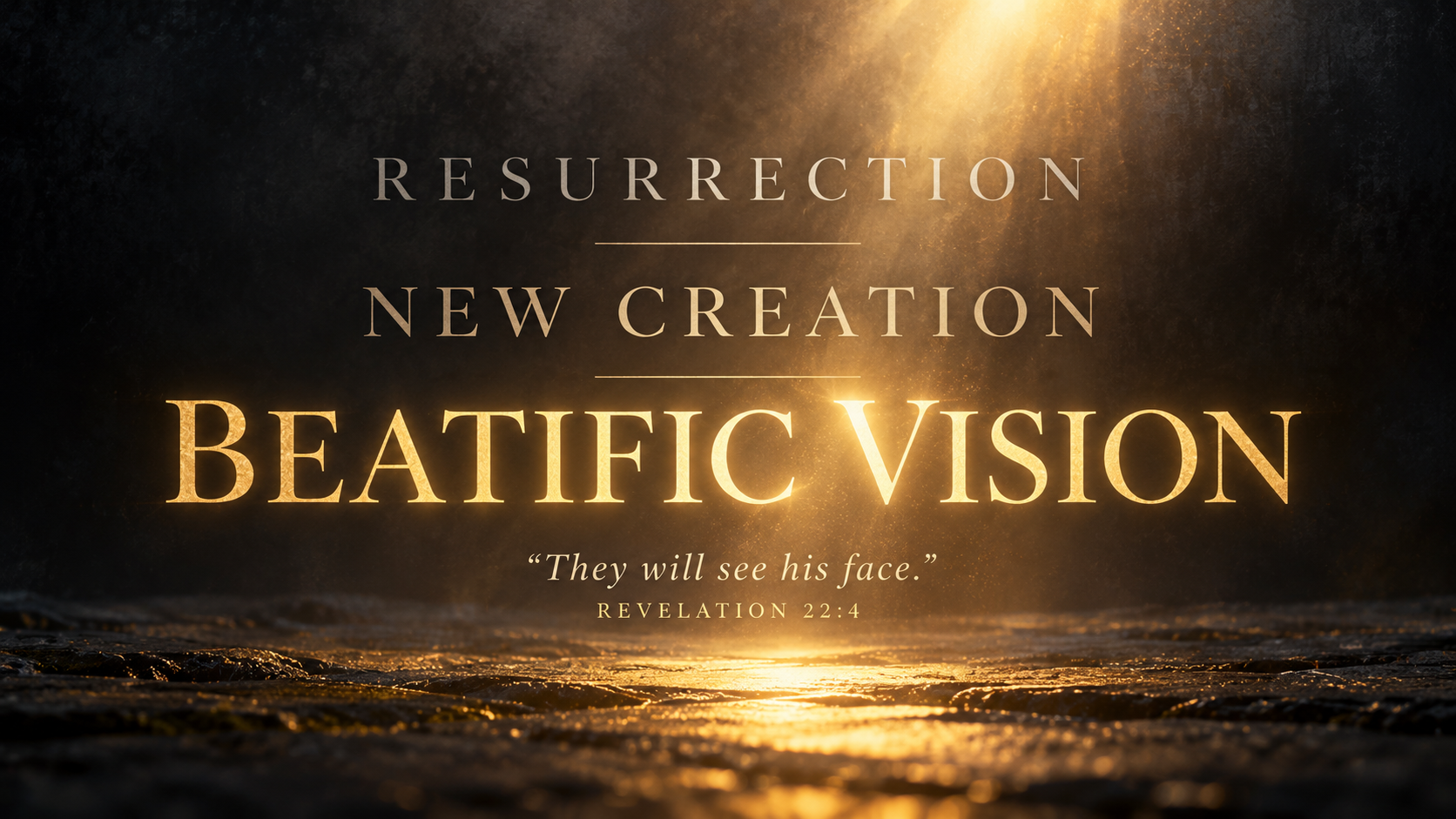
In my last episode of Thinking Theologically (see here), I reflected on the nature of the Christian’s hope in the face of death. Do we simply go to heaven when we die, or is there something more for which we are waiting? (See also my post, “On Christian Hope: Heaven or Resurrection,” here.) The point of all this is that we must recover the priority of resurrection and new creation in contemporary evangelical eschatology. Christian hope is not simply “dying and going to heaven.” We await bodily resurrection and the renewal of creation. However, there is a danger of swinging the pendulum too far in the other direction, as it were. A beautiful renewed earth, embodied existence, culture, work, relationships, and the like are genuine eschatological goods—but are they the highest good? What are we to make of the traditional doctrine of the beatific vision, the idea that the final blessedness of redeemed humanity consists in seeing and enjoying God forever? After all, Paul can say that to depart and be with Christ is “far better” (Phil 1:23). So, which is it? I would submit that the Christian eschatological hope is neither merely resurrection and new creation nor an immaterial vision of God detached from creation. Rather, the resurrection of the body and renewal of creation provide the embodied setting for the beatific vision, in which redeemed humanity reaches its final blessedness by dwelling in the unveiled presence of the Triune God.
Of course, the Christian hope is irreducibly bodily. This cannot be denied. In Romans 8:23, Paul reminds us that “we also groan within ourselves, eagerly waiting for adoption, the redemption of our bodies.” In the same way that Christ was raised bodily from the dead, so we too, as his people, will one day be raised in glorified bodies. His resurrection is the pattern for ours. This is the logic of the resurrection. (On which, see here.) Salvation, therefore, does not culminate in the permanent separation of the soul from the body. God created human beings as embodied creatures, and his work of redemption restores the whole human person rather than liberating the soul from embodied existence. This is important for how we understand the beatific vision. To say that our final blessedness consists in seeing and enjoying God does not require us to abandon the bodily character of Christian hope. The redeemed who see God will be resurrected human beings, restored to the embodied existence for which God created them. The beatific vision is not the replacement of embodied human existence; it is the perfection of embodied human existence in the presence of God.
Neither, by the way, does embracing the beatific vision require us to abandon our concept of a renewed creation. In Romans 8, Paul deliberately connects the liberation of creation with the glorification of God’s children. Creation presently “groans” under its bondage to decay, even as we ourselves groan while awaiting the redemption of our bodies (Rom 8:21–23). The two hopes belong together. Just as God will redeem our bodies from death, so creation itself “will also be set free from the bondage to decay into the glorious freedom of God’s children” (8:21). The biblical hope, therefore, is not the abandonment of the created order but its renewal. This trajectory reaches its culmination in Revelation 21, where John sees “a new heaven and a new earth” and the New Jerusalem descending “out of heaven from God” (Rev 21:1–2). The direction is significant: redeemed humanity does not permanently escape upward from creation; rather, God’s heavenly reality comes down to transform the dwelling place of humanity. Resurrection and new creation thus belong together as essential dimensions of Christian eschatological hope. But this raises an important question: what ultimately makes this renewed creation the blessed existence for which Christians hope? A renewed creation is essential to Christian hope, but the biblical story does not reach its climax merely by telling us that everything has been made new.
What, then, constitutes the supreme glory of the new creation? John provides the answer almost immediately: “Look, God’s dwelling is with humanity, and he will live with them. They will be his peoples, and God himself will be with them and will be their God” (Rev 21:3). The great hope of the new creation is therefore not merely that death has been defeated, the curse has been removed, or creation has been restored—glorious though each of these realities will be. Its supreme glory is the presence of God himself. Indeed, this is the destination toward which the entire biblical story has been moving. Humanity begins in Eden dwelling in the presence of God. After the entrance of sin and humanity’s exile from his presence, God nevertheless dwells among his covenant people through the tabernacle and temple. In the incarnation, the Word himself “dwelt among us” (John 1:14), and through the Spirit God now dwells among his people in the church. Yet each of these anticipates the consummation, when God will dwell immediately and permanently with redeemed humanity in the new creation. The glory of the new creation is not ultimately that everything has been made new, but that the God who makes all things new dwells there with his people.
Yet Revelation goes even further. The promise is not merely that God will dwell with his people, but that “they will see his face” (Rev 22:4). Here we arrive at what Christian theology has traditionally called the beatific vision. The word “beatific” refers to blessedness, and the doctrine describes the final blessedness of redeemed humanity as consisting in the immediate knowledge and enjoyment of God himself. This hope appears throughout the New Testament. Jesus promises that the “pure in heart” will “see God” (Matt 5:8). Paul explains that although we presently see “only a reflection as in a mirror,” we will one day see “face to face” (1 Cor 13:12). Likewise, John declares that when Christ appears, “we will be like him because we will see him as he is” (1 John 3:2). Of course, none of this means that finite creatures will somehow become capable of comprehending the infinite God exhaustively. The Creator-creature distinction remains. Rather, the redeemed will know and enjoy God with an immediacy, purity, and fullness impossible in the present age. We presently know God truly, but our knowledge remains mediated and incomplete. In the new creation, faith will finally give way to sight. The highest blessing of the age to come is therefore not merely that we will live forever, but that we will live forever in the unveiled presence of God.
We should not, therefore, think that we must choose between resurrection and the beatific vision, as though one represented a properly biblical hope while the other reflected an overly spiritualized view of salvation. The New Testament holds them together. We will see God as the resurrected and glorified human beings he created and redeemed us to be. Our resurrected eyes will behold Christ, our ears will hear the worship of the redeemed, and our glorified bodies will inhabit the renewed creation in which God dwells with his people. Indeed, the closing chapters of Revelation bring all these realities together. John sees a city, a river, the tree of life, the nations, the servants of God, and the throne of God and of the Lamb (Rev 21–22). Yet at the center of this renewed creation stands the remarkable promise that God’s servants “will see his face” (22:4). New creation is not an alternative to heaven because heaven comes down. Resurrection is not an alternative to seeing God because we are raised to enjoy God as whole human beings. And the beatific vision is not an escape from creation because God’s unveiled presence is the supreme glory of the new creation.
This is why Scripture can speak of God himself as the inheritance and supreme good of his people. The psalmist declares, “LORD, you are my portion and my cup of blessing” and confesses that “in your presence is abundant joy; at your right hand are eternal pleasures” (Ps 16:5, 11). Likewise, Psalm 73 asks, “Who do I have in heaven but you? And I desire nothing on earth but you” (73:25). Such language does not diminish the goodness of God’s created gifts. Rather, it places those gifts in their proper order. We should certainly look forward to a renewed creation free from death, suffering, and the curse. We should look forward to resurrected bodies, restored relationships, and the fullness of human life as God intended it. But none of these things constitutes our highest good apart from God himself. Indeed, Revelation describes the New Jerusalem as having no temple because “the Lord God the Almighty and the Lamb are its temple,” and needing neither sun nor moon because “the glory of God illuminates it” (Rev 21:22–23). The greatest gift God gives his people in the new creation is ultimately himself. Every other eschatological good finds its proper place within that supreme and everlasting good.
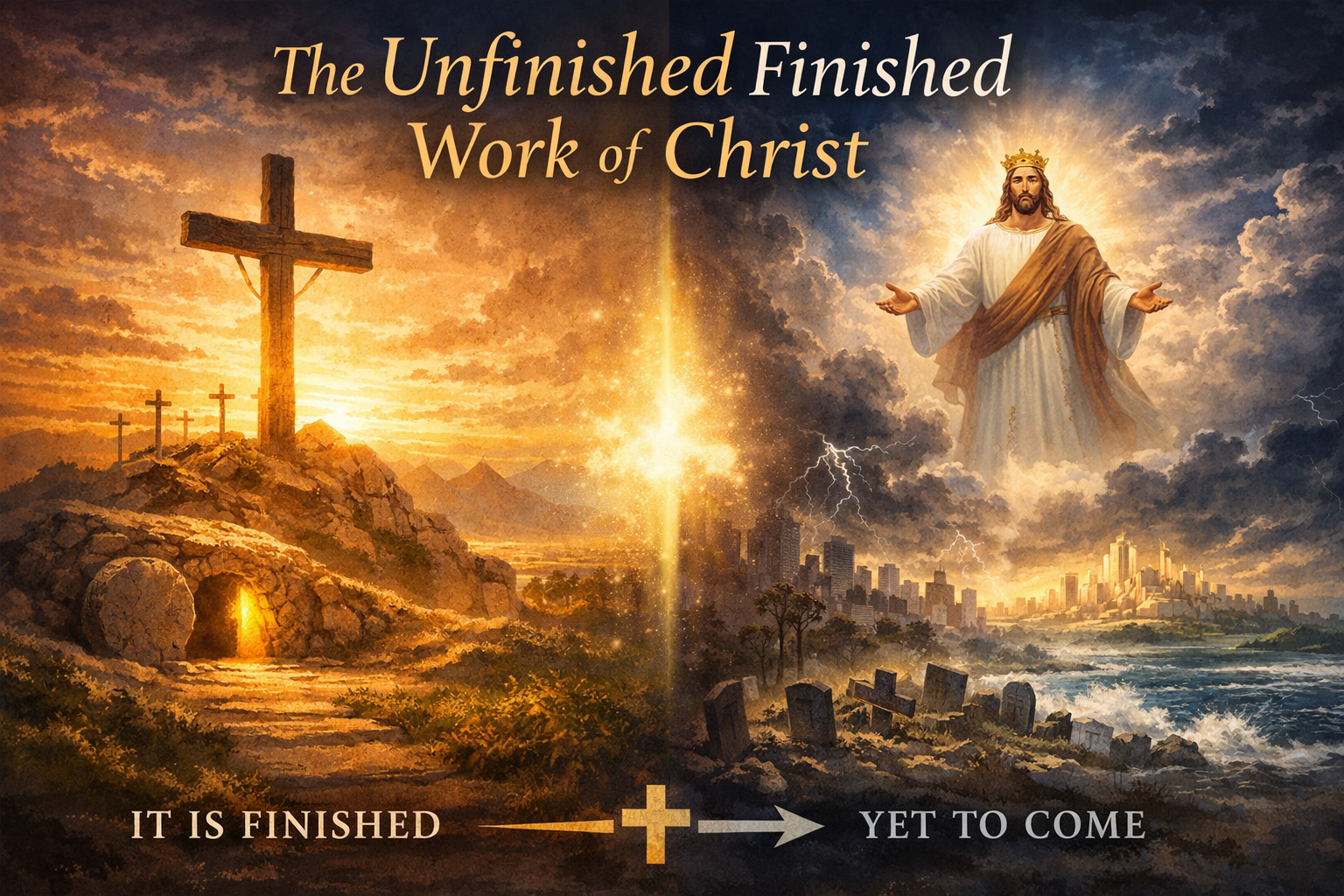
What, then, is the Christian’s ultimate hope? It is not simply that our souls go to heaven when we die. Neither, however, is it merely that our bodies will be raised and we will inhabit a renewed creation forever. We await the return of Christ, the resurrection of the dead, the renewal of creation, the removal of death and the curse, and, above all, the unhindered presence of God himself. Resurrection describes the embodied form of our final salvation. New creation describes its created setting. The beatific vision describes its supreme blessedness and end. This is precisely the picture with which the biblical story concludes: “There will no longer be any curse. The throne of God and of the Lamb will be in the city, and his servants will worship him. They will see his face” (Rev 22:3–4). Christian hope is therefore gloriously earthly without being earth-centered and gloriously heavenly without being disembodied. We await resurrection and new creation because God intends redeemed humanity to live forever as the creatures he made us to be. But the supreme glory of that life will not be merely that death is gone, creation is renewed, or our bodies have been raised. It will be that we will see his face. The new creation is the world of our eschatological hope, but God himself is its object.