Tag Archives: Biblical Theology

On the Kingdom of God and this World
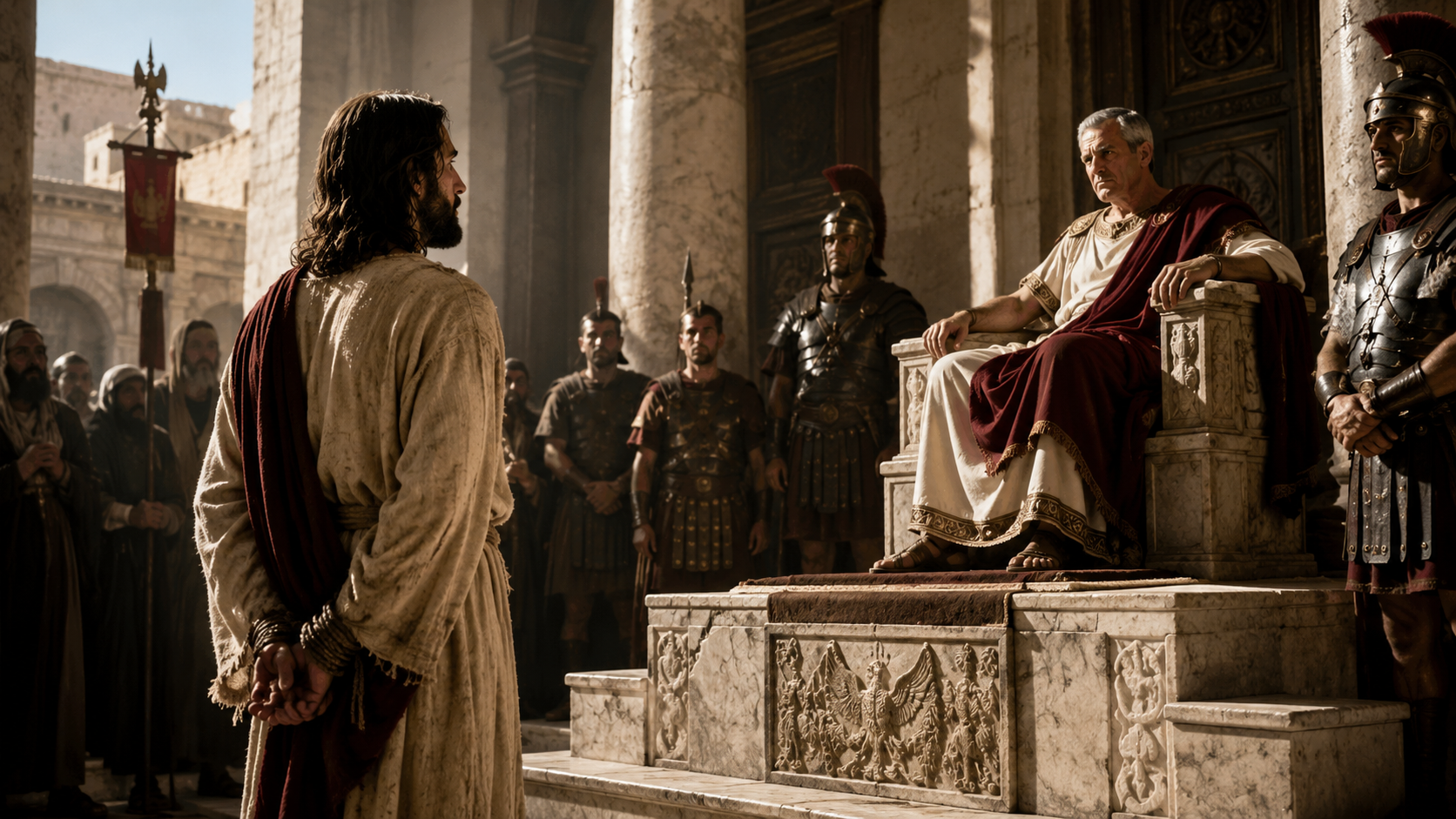
In my opinion, one of the most profound scenes of Jesus’s passion is his examination before Pilate in John 18:28–40. In the middle of this scene, Jesus makes a startling statement: “My kingdom is not of this world. If my kingdom were of this world, my servants would fight, so that I wouldn’t be handed over to the Jews. But as it is, my kingdom is not from here” (John 18.36). This statement is pregnant with significance for understanding the nature of the kingdom Jesus preached, but it is often misunderstood. When Jesus says, “My kingdom is not of this world,” many understand him to mean something like, “My kingdom has nothing to do with the earth.” This can create the misconception that the Christian hope is ultimately to escape the physical world for an immaterial heavenly existence. But is this what Jesus is really saying? To answer that question, we must distinguish between two others: Where does Jesus’s kingdom come from, and where will it ultimately be manifested? Jesus’s kingdom is not an immaterial or purely spiritual kingdom removed from the earth. Rather, its origin and authority do not derive from the present world order, and it will ultimately be manifested in its fullness when Christ reigns over a renewed creation.
However, in order to understand this, we must first consider Jesus’s statement in its immediate context. The question Jesus is answering sets the scene. Pilate asks, “Are you the King of the Jews?” (John 18:33). In response, Jesus does not deny the implication of the question, but he uses the opportunity to clarify the nature of his kingdom: “My kingdom is not [from] this world.” The preposition (ἐκ) indicates the source or origin of Jesus’s kingdom, not its geographical location or ultimate destination. In other words, Jesus does not mean that his kingdom has nothing to do with this world, that it will never exist upon the earth, or even that it is purely spiritual. Rather, Jesus is saying that his authority does not stem from the world’s powers and that his kingdom does not operate according to the world’s principles and values. This is why he goes on to say, “If my kingdom were of this world, my servants would fight, so that I wouldn’t be handed over to the Jews.” If his kingdom were a kingdom derived from this world, then his servants would advance it according to this world’s methods. But his kingdom is from above, even as he is from above. It is defined by a different set of priorities and values. Or, to put it another way, Jesus’s point concerns the origin and character of his kingdom, not the permanent exclusion of the earth from its rule.
This distinction between the kingdom’s heavenly origin and its earthly significance is consistent with a larger pattern in John’s Gospel. Earlier, Jesus tells his opponents, “You are from below; I am from above. You are of this world; I am not of this world” (John 8:23). The language closely parallels Jesus’s description of his kingdom before Pilate. Yet when Jesus says that he is not “of this world,” he obviously does not mean that his mission has nothing to do with the world. Jesus comes from above precisely in order to enter this world and accomplish God’s saving purposes within it. His heavenly origin identifies the source of his identity and authority without removing his mission from the earthly sphere. The same is true of his kingdom. Because it is not “from this world,” Christ’s kingdom does not derive its authority from earthly rulers like Pilate or advance through the coercive power by which worldly kingdoms maintain their rule. Its authority comes from God and therefore confronts the fallen world’s values rather than conforming to them. A kingdom that is not from this world, then, need not be a kingdom that has nothing to do with this world. Indeed, the larger biblical story reveals that God’s purpose is not to abandon the world he created, but ultimately to redeem and renew it.
In the beginning, God created the physical world and all it entails, and then he pronounced it to be “very good.” When sin entered the picture, however, it corrupted God’s good creation. But rather than simply abandon what he had made, God set in motion a plan to redeem the created order and restore what was lost in the garden. This is why Paul says that creation itself longs to be “set free from the bondage to decay into the glorious freedom of God’s children” (Rom. 8:21). Significantly, Paul connects the liberation of creation with the redemption of our bodies (8:23). The Christian hope, therefore, can be summed up in one word: resurrection. Jesus was raised bodily, and those who believe in him await a resurrection in which our mortal bodies will be glorified. (On Christian hope as resurrection rather than simply “going to heaven,” see here.) Our hope is not for some kind of disembodied existence, nor is it to be saved from material creation. Rather, we await the glorification of our bodies so that we might live as embodied creatures within a restored creation. The biblical story does not move from creation to the abandonment of creation, but from creation through fall and redemption to new creation.
This is ultimately how the kingdom of God will be manifested on earth, i.e., in a new creation; this is the goal of the Bible’s story. In Revelation 21:1–3, we read of a new heaven and a new earth, and a new Jerusalem coming down out of heaven to earth. John records it this way: “Then I heard a loud voice from the throne: Look, God’s dwelling is with humanity, and he will live with them. They will be his peoples, and God himself will be with them and will be their God” (Rev. 21:3). The direction of this movement is significant. God’s people do not permanently leave the earth to dwell with God somewhere else; God comes to dwell with his people in a renewed creation. This vision brings to fulfillment Isaiah’s earlier expectation of “new heavens and a new earth” (Isa. 65:17) and the declaration in Revelation that “the kingdom of the world has become the kingdom of our Lord and of his Christ, and he will reign forever and ever” (Rev. 11:15). Christ’s reign, therefore, does not culminate in the abandonment of the created world, but in God’s reign being fully manifested throughout a renewed creation. The present world order characterized by sin, rebellion, death, and corruption passes away, but God’s purposes for his creation do not. The kingdom is not from this world, but it is ultimately for this world—not the world as presently corrupted by sin, but the world judged, renewed, and brought completely under the reign of Christ.
Of course, this does not mean that Christ is not already reigning. Christ does not have to wait until the new creation to become King. He is King, and he is seated at the right hand of the Father, where he reigns over his church by his Spirit through the Word. His kingdom is already present, and his authority is already real. Through his death, resurrection, exaltation, and the giving of the Spirit, Christ presently reigns. We call this inaugurated eschatology, or the already and the not yet. (On inaugurated eschatology in the preaching of John and Jesus, see my post here.) The kingdom of Christ has already begun, but it has not yet reached its full realization. However, it is important to note that just because Christ’s kingdom is already present, this does not mean that it is a purely spiritual kingdom. It is presently manifested on earth through his church, and one day it will be consummated throughout the new creation. The difference is not between a spiritual kingdom now and an earthly kingdom later, but between a kingdom already inaugurated and a kingdom not yet consummated. The kingdom that has already broken into the present through Christ will therefore reach its appointed goal when his reign extends in all its fullness throughout a renewed creation at his return. (On the already and the not yet of the Kingdom, see Thinking Theologically here.)
So, we can now return to that profound scene with which we began. Pilate looks upon what appears to be a powerless Jewish prisoner and asks, “Are you the King of the Jews?” Jesus’s answer is that he possesses a kingdom, but that his kingdom is “not from this world” (John 18:36). Far from denying his kingship or consigning his kingdom to some immaterial spiritual realm, Jesus identifies the divine source and radically different character of his reign. His kingdom does not originate from the fallen powers of this world, nor does it advance through their methods of coercion and violence. The Christian hope, therefore, is neither the establishment of Christ’s kingdom through worldly political conquest nor an escape from the physical world into an eternal disembodied existence. Instead, we await the return of the King, the resurrection of the dead, the judgment of evil, and the renewal of creation, when the reign that already belongs to Christ will be manifested in all its fullness. Jesus’s kingdom is not from this world because its authority, power, and character come from God. But that does not mean that Christ intends to abandon the world to sin, death, and decay. The King who once stood before Pilate will return to renew creation and manifest his reign over all things. The kingdom is not from this world, but God’s purpose is ultimately to bring this world, renewed and restored, under the reign of its rightful King.
Share this:

On Psalm 119.169-176 (Taw)
169 Let my cry reach you, Lord;
give me understanding according to your word.
170 Let my plea reach you;
rescue me according to your promise.
171 My lips pour out praise,
for you teach me your statutes.
172 My tongue sings about your promise,
for all your commands are righteous.
173 May your hand be ready to help me,
for I have chosen your precepts.
174 I long for your salvation, Lord,
and your instruction is my delight.
175 Let me live, and I will praise you;
may your judgments help me.
176 I wander like a lost sheep;
seek your servant,
for I do not forget your commands.

Well, we have finally come to the last stanza of Psalm 119 (ת/taw), and it is fitting that our psalmist opens with a prayer. In verses 169–170, he petitions the Lord, “Let my cry reach you, Lord; give me understanding according to your word. Let my plea reach you; rescue me according to your promise.” After nearly 170 verses extolling the beauty, perfection, and life-giving power of God’s Word, he is still asking for understanding. In other words, his extensive knowledge of Holy Scripture has not diminished his dependence upon God. In the language of systematic theology, this truth is often described as the doctrine of illumination. Illumination is the gracious work of the Holy Spirit whereby he enlightens our minds and hearts to understand and receive God’s Word as he intended. (For a more extended discussion of this doctrine, see On Biblical Interpretation and the Holy Spirit.) The point is that a right understanding of Scripture is ultimately a gift of God. It certainly comes through careful study and diligent reflection, but our study must always be accompanied by humble dependence upon the Spirit who inspired the Scriptures in the first place. Throughout Psalm 119, we have repeatedly seen that God’s Word imparts wisdom, yet wisdom comes as God illumines the heart. The mature believer, therefore, never outgrows the need to pray, “Give me understanding according to your word.”
He also prays for deliverance when he says, “Rescue me according to your promise.” Once again, we are reminded that our psalmist continues to face hardship and opposition. Throughout Psalm 119 he has repeatedly cried out for God’s intervention, and here the same prayer rises once more from his lips. Yet what is particularly striking is the basis upon which he asks for deliverance. He does not appeal to his own merit, his own worthiness, or even his own obedience. Rather, he appeals to God’s promise. In other words, his confidence rests not in himself but in God’s covenant faithfulness. Or to put it another way, even after all his devotion to God’s Word, he still depends entirely upon divine grace. As D. Martyn Lloyd-Jones wisely observed, “Everything is of grace in the Christian life from the very beginning to the very end.” Apart from God’s grace we have nothing and are nothing. Even our most faithful obedience must be sustained and empowered by the God who first called us to himself. This is why the promises of Scripture are such a source of comfort for the believer. They remind us that God’s faithfulness does not fluctuate with our circumstances or our performance. Rather, his promises are rooted in his unchanging character. It is these gracious promises that become the foundation of confident prayer, enabling us to approach the throne of grace with boldness because we know that the God who has spoken is always faithful to his Word.
In verses 171–172, our psalmist moves from prayer to praise when he says, “My lips pour out praise, for you teach me your statutes. My tongue sings about your promise, for all your commands are righteous.” Notice here the motivation for his praise: it is that God has taught him his righteous commands and statutes. In other words, the purpose of Holy Scripture is not merely information. Our study of God’s Word should produce praise, obedience, and delight. Or, to put it another way, theology should produce doxology. God’s commands are righteous; therefore, praise is the fitting response. This has been one of the dominant themes throughout Psalm 119. The psalmist has repeatedly reminded us that God’s Word is sweeter than honey, more valuable than gold, a lamp to his feet, and a source of wisdom, comfort, hope, and peace. Yet all of these blessings ultimately direct his attention back to the God who has spoken. Scripture never terminates upon itself. It reveals the character, faithfulness, wisdom, and holiness of the Lord, and as we behold these divine perfections, our hearts are moved to worship. This is why genuine knowledge of God can never remain merely intellectual. The more deeply God’s truth takes root within us, the more naturally praise flows from our lips. If our study of Scripture produces greater knowledge without greater love for God, then we have missed the very purpose for which the Scriptures were given. True biblical understanding always culminates in joyful worship, because the ultimate goal of God’s Word is not simply that we know about him, but that we know him, delight in him, and glorify him with our lives.
In verses 173–174, our psalmist continues this theme of dependence when he prays, “May your hand be ready to help me, for I have chosen your precepts. I long for your salvation, Lord, and your instruction is my delight.” At first glance, these two statements may seem contradictory. On the one hand, he declares that he has chosen God’s precepts. On the other hand, he immediately asks for God’s help. Yet this is precisely the balance that runs throughout the Christian life. Genuine obedience is never independent of divine grace. Our willingness to follow the Lord is itself sustained by his continual presence and power. The psalmist recognizes that choosing God’s ways does not eliminate his need for God’s help; rather, it deepens his awareness of that need. Likewise, his longing for God’s salvation reminds us that he continues to look forward in hope. Though he delights in God’s instruction, he still awaits the full realization of God’s saving purposes. Throughout Psalm 119 we have repeatedly encountered this tension between present obedience and future expectation. God’s Word teaches us how to live faithfully today while at the same time directing our hope toward the salvation that God has promised to complete. The Christian life, therefore, is one of continual dependence upon the Lord, trusting that the God who calls us to walk in his ways is also the God who strengthens us to persevere until his work of redemption is brought to completion.
The final verses of Psalm 119 bring us to one of the most surprising conclusions in all of Scripture. After extolling the beauty, wisdom, and sufficiency of God’s Word for 175 verses, our psalmist concludes with this remarkable confession: “Let me live, and I will praise you;
may your judgments help me. I wander like a lost sheep; seek your servant, for I do not forget your commands.” At first glance, this seems almost out of place. Has not our psalmist repeatedly affirmed his love for God’s law, his delight in God’s commandments, and his commitment to walk in God’s ways? Why, then, does he end by describing himself as a wandering sheep? The answer is that this is not a confession of apostasy but of humble dependence. He recognizes that even the most faithful believer remains vulnerable apart from the preserving grace of God. Yet his wandering is immediately balanced by a profound affirmation: “I do not forget your commands.” Though he stumbles, he still belongs to the Lord. His hope rests not in his own ability to remain faithful but in the God who faithfully seeks and restores his servants. It is difficult to read these words without thinking of the Good Shepherd who came “to seek and to save the lost” (Luke 19.10), or of Jesus’ parable of the shepherd who leaves the ninety-nine sheep to search for the one that has wandered (Luke 15.4–7). Indeed, Isaiah had already declared, “We all went astray like sheep; we all have turned to our own way; and the Lord has punished him for the iniquity of us all” (Isa. 53.6). Thus, the final note of Psalm 119 is not one of self-confidence but of grace. The believer’s security ultimately rests not in the strength of his obedience but in the faithfulness of the Shepherd who continually seeks, preserves, and restores his wandering sheep.
As Psalm 119 draws to a close, we discover that its final emphasis is not human achievement but divine faithfulness. Throughout these twenty-two stanzas, our psalmist has celebrated the beauty, wisdom, sufficiency, and life-giving power of God’s Word. He has endured persecution, wrestled with suffering, delighted in God’s commandments, longed for deliverance, and found peace amid adversity. Yet the final word of the psalm is not self-confidence but humble dependence. Even after a lifetime devoted to God’s Word, he still cries out for understanding, seeks God’s help, and confesses his need for the Shepherd who alone can preserve him. In this way, Psalm 119 reminds us that the purpose of Scripture is never merely to increase our knowledge but to deepen our dependence upon the God who has spoken. The more faithfully we walk according to God’s Word, the more clearly we recognize our continual need for his sustaining grace. It is this gracious God who teaches, strengthens, seeks, and restores his people. And that, perhaps, is the greatest lesson of Psalm 119: the written Word continually directs us to the living God, whose truth, presence, and faithfulness are the sure foundation of the believer’s life.
For further study:
Introduction
Psalm 119.1-8
Psalm 119.9-16
Psalm 119.17-24
Psalm 119.25-32
Psalm 119.33-40
Psalm 119.41-48
Psalm 119.49-56
Psalm 119.57-64
Psalm 119.65-72
Psalm 119.73-80
Psalm 119.81-88
Psalm 119.89-96
Psalm 119.97-104
Psalm 119.105-112
Psalm 119.113-120
Psalm 119.121-128
Psalm 119.129-136
Psalm 119.137-144
Psalm 119.145-152
Psalm 119.153-160
Psalm 119.161-168
Share this:


On Acts and the Isaianic New Exodus: A Book Review

Pao, David W. Acts and the Isaianic New Exodus. Reprint Edition. Eugene, OR: Wipf & Stock, 2016.
Among the books of the New Testament, the book of Acts is arguably one of the most unique. Whereas the Gospels focus primarily on the life and ministry of Jesus and the Epistles provide theological instruction and practical guidance for the Christian life, Acts records the expansion of the early church and the missionary ministry of the Apostle Paul. Consequently, the theological message of Acts is sometimes overshadowed by its historical narrative. Yet beneath its historical narrative lies a rich and carefully constructed theological message, one that is especially evident in Luke’s extensive use of the Old Testament. In Acts and the Isaianic New Exodus, David W. Pao explores this important dimension of Acts by arguing that Luke deliberately presents the mission of Jesus and the early church against the backdrop of Isaiah’s vision of the New Exodus. Originally published as Pao’s doctoral dissertation by Mohr Siebeck in 2000, the work remains one of the most significant studies of Isaiah’s influence on Acts. Therefore, it is the thesis of this review that Acts and the Isaianic New Exodus makes a compelling case for the centrality of Isaiah’s New Exodus motif in Luke’s theology, even if certain aspects of Pao’s argument invite further discussion.
In the book of Isaiah, the “New Exodus” is a way of describing God’s future work of redemption by drawing upon the imagery and language of Israel’s original exodus from Egypt. Just as God once delivered his people from slavery under Pharaoh, so Isaiah portrays God as bringing about a second and greater act of deliverance through the restoration from Babylonian exile. The first exodus thus becomes the typological pattern for God’s future saving work. It is Pao’s central thesis that this Isaianic vision of restoration provides the foundational theological framework for Luke’s understanding of the growth and mission of the early church in the book of Acts. After demonstrating the significance of Isaiah 40:1–11 for Luke’s two-volume work and showing how key Isaianic texts frame the narrative of Acts, Pao identifies four major themes that reveal the influence of the New Exodus motif: the identity of the true people of God as restored Israel, the Word of God as the primary agent of God’s redemptive work, the anti-idolatry polemic as a demonstration of God’s universal sovereignty, and the expansion of Isaiah’s vision to include the salvation of the Gentiles alongside believing Israel. In other words, Pao argues that Luke presents the church not as a departure from Israel’s story but as the fulfillment of Isaiah’s restoration promises, with the mission of the apostles representing the continuation of God’s New Exodus restoration through the risen and exalted Messiah.
The greatest strength of Pao’s work lies in its careful and convincing demonstration that Isaiah provides the conceptual framework through which Luke understands the theological message of Acts. Rather than merely identifying quotations and allusions to Isaiah scattered throughout the narrative, Pao argues that Luke has intentionally structured his theology around Isaiah’s vision of the New Exodus. This approach gives remarkable coherence to the book of Acts by showing that themes such as restoration, mission, the Word of God, the inclusion of the Gentiles, and the identity of the people of God are not isolated theological concerns but interconnected aspects of a single redemptive program. Closely related to this is Pao’s rigorous intertextual methodology. His argument rests not upon superficial verbal parallels but upon sustained literary and theological analysis that demonstrates how Luke appropriates and develops Isaiah’s message. As a result, even readers who remain unconvinced by every aspect of his thesis will gain a much deeper appreciation for the pervasive influence of Isaiah upon Luke’s writing. Particularly valuable is Pao’s treatment of restoration theology. He persuasively demonstrates that the mission of the church should not be understood as a departure from Israel’s story but as the fulfillment of God’s promises to restore his covenant people, promises that now embrace believing Jews and Gentiles alike through the risen Messiah. Finally, Pao’s work serves as an excellent model of canonical interpretation. Rather than reading Acts in isolation, he consistently interprets Luke’s narrative within the larger context of Scripture, thereby illustrating the profound unity of God’s redemptive plan. Whether or not one accepts every detail of Pao’s argument, his study permanently enriches the way one reads the book of Acts and its theological message.
Pao’s work is remarkably persuasive in establishing the significance of Isaiah for the theology of Acts. At the same time, the breadth of his argument gives rise to several questions that invite further discussion. Ironically, one of the book’s greatest strengths—its comprehensive argument for the centrality of Isaiah’s New Exodus—also becomes its primary limitation. At times, Pao’s thesis is so comprehensive that other significant Old Testament trajectories receive comparatively little attention. While Isaiah undoubtedly provides one of the principal theological frameworks for Luke’s theology, greater attention to Luke’s Christology and to the complementary influence of other Old Testament traditions—particularly Daniel’s vision of the Son of Man and the kingdom of God—would have presented an even fuller picture of Luke’s theological vision. Closely related to this is the fact that some of Pao’s proposed intertextual connections are more persuasive than others. In several instances, he moves rather quickly from thematic similarity to literary dependence, leaving readers wishing for a more sustained defense of particular allusions. Finally, because the volume originated as a doctoral dissertation, portions of the discussion are necessarily technical and assume a significant degree of familiarity with contemporary scholarship on Luke-Acts and intertextuality. Nevertheless, these observations should be understood as limitations of emphasis rather than substantive weaknesses. They do little to diminish the enduring value of Pao’s work or its significant contribution to the study of Acts and biblical theology.
Even after more than two decades, Acts and the Isaianic New Exodus continues to stand as one of the most significant contributions to the study of Luke-Acts and biblical theology. Pao convincingly demonstrates that the book of Acts should be read as far more than a historical record of the early church’s expansion; it is a carefully crafted theological narrative that presents the mission of Jesus and his apostles as the fulfillment of Isaiah’s vision of restoration and New Exodus. Although readers may differ with certain aspects of Pao’s thesis or wish that other Old Testament themes received greater attention, these observations do little to diminish the overall value of his work. Indeed, the greatest achievement of this volume is its ability to teach readers to read Acts canonically, recognizing that Luke’s theology is deeply rooted in the Scriptures of Israel and unfolds as the continuation of God’s covenant purposes for his people. For this reason, I would highly recommend this book to pastors, seminary students, scholars, thoughtful Christians who desire a deeper appreciation of the theological richness of Acts. Even readers who ultimately qualify portions of Pao’s argument will find themselves returning to the book of Acts with fresh eyes and a renewed awareness of the profound influence of Isaiah upon Luke’s presentation of the gospel and the mission of the church.
Share this:


On Knowing Jesus through the Old Testament: A Book Review
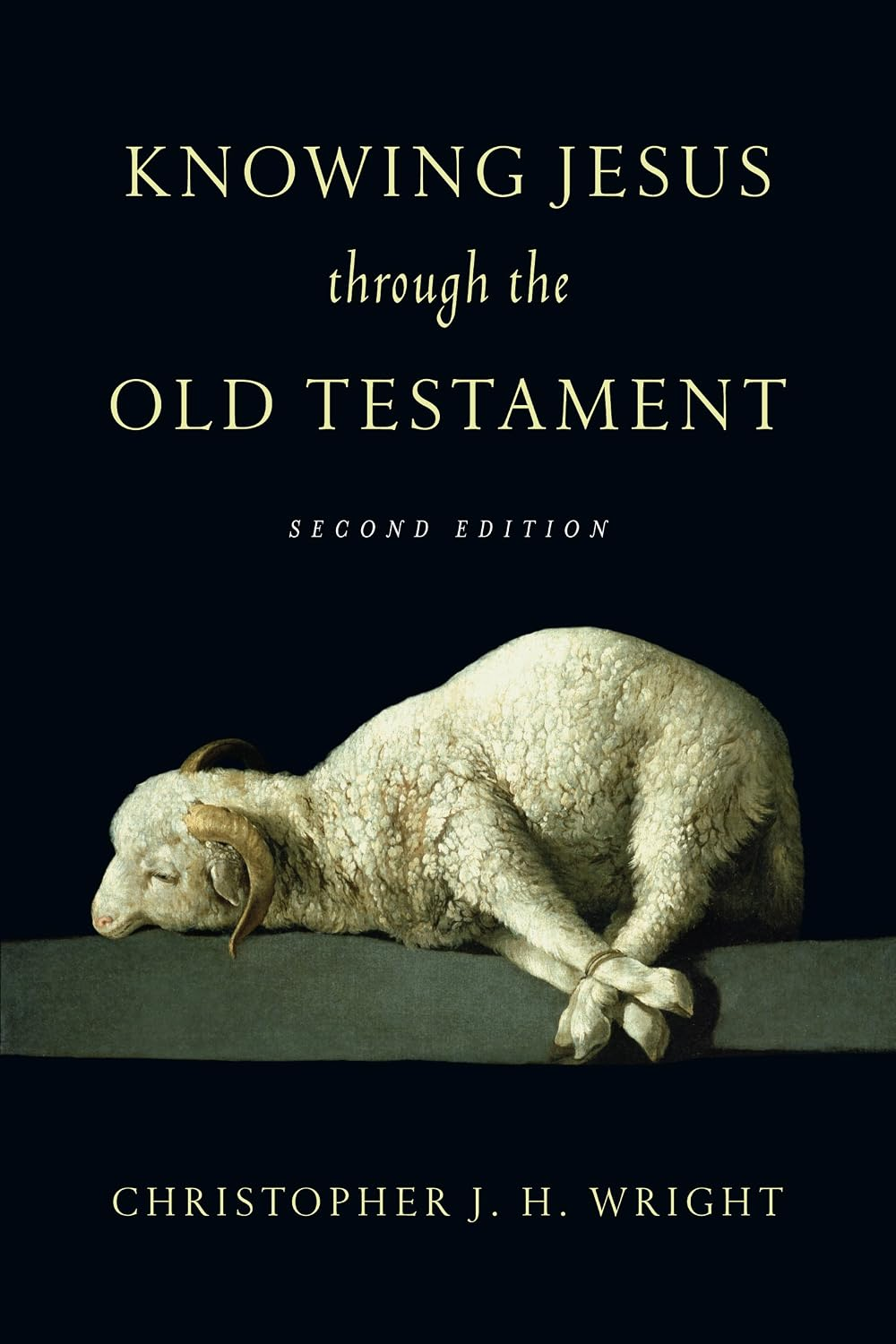
Wright, Christopher J. H. Knowing God through the Old Testament. Second Edition. Grand Rapids: Intervarsity Press, 2014.
Who was Jesus? How should he be understood? It has become almost a truism among historical Jesus scholars that Jesus must be understood within the context of Second Temple Judaism. He was a man of his own time, and this means that his teachings, actions, and self-understanding must be interpreted against the backdrop of first-century Jewish beliefs and expectations. More specifically, Jesus’s understanding of his own identity and mission was profoundly shaped by Israel’s Scriptures, what Christians know as the Old Testament. Although this observation may seem obvious, its importance is frequently overlooked. There remains a widespread tendency in modern discussions to disconnect Jesus from his Old Testament background, resulting in a portrait of Jesus that is neither historically satisfying nor theologically coherent. In Knowing Jesus through the Old Testament, Christopher J. H. Wright seeks to correct this tendency by situating the person and work of Jesus firmly within the unfolding story of Israel’s Scriptures. First published in 1992 and now available in a revised second edition as of 2014, Wright’s work has become something of a modern classic in biblical theology. Therefore, it is the thesis of this review that Knowing Jesus through the Old Testament succeeds admirably in demonstrating that Jesus’s identity and mission can only be fully understood against the backdrop of Israel’s Scriptures, even if some aspects of Wright’s approach invite further discussion.
Wright’s essential thesis is that Jesus’s understanding of himself and his mission was profoundly shaped by his study of and reflection upon the Old Testament Scriptures. In other words, Jesus repeatedly presents himself as the fulfillment of Israel’s story in ways that demonstrate his unique identity as the Christ, the Son of the living God. Wright develops this thesis by examining the major themes of the Old Testament that converge in the person and work of Jesus. He begins with Israel’s story itself, arguing that Jesus consciously understood his life and ministry as the climax of God’s covenant dealings with his people. From there, Wright explores Jesus’s identity as Israel’s Messiah and Davidic King, showing how the hopes and expectations of the Old Testament find their fulfillment in him. He then turns to the mission of Jesus, demonstrating that Christ’s proclamation of the Kingdom of God, his suffering, death, and resurrection, and his calling of disciples all stand firmly within the trajectory established by Israel’s Scriptures. Throughout the book, Wright carefully weaves together themes such as covenant, kingdom, redemption, mission, and fulfillment in order to show that the Old Testament is not merely a collection of predictions about Jesus but the very theological framework through which Jesus understood his own identity and vocation. The result is a compelling portrait of Jesus that is both historically grounded in first-century Judaism and deeply rooted in the unfolding story of God’s redemptive purposes revealed throughout the Old Testament.
The greatest strength of Wright’s work lies in its thoroughly canonical and biblical-theological approach to the person of Jesus. Rather than treating the Old Testament as a collection of isolated messianic proof texts, Wright demonstrates that Jesus understood himself within the unfolding story of Israel. The significance of Jesus’s identity and mission, therefore, cannot be grasped apart from the covenant, kingdom, promises, and expectations established throughout the Old Testament. This approach not only reflects the way Jesus himself repeatedly interpreted his ministry, but it also provides readers with a richer and more coherent understanding of the unity of Scripture. Closely related to this is Wright’s remarkable ability to integrate historical context, theological reflection, and biblical theology into a single, compelling presentation. He consistently situates Jesus within the world of first-century Judaism while never losing sight of the larger redemptive story that stretches from Genesis to Revelation. As a result, the reader comes away with a portrait of Jesus that is historically grounded without becoming reductionistic and theologically profound without becoming overly speculative. Another significant strength is Wright’s emphasis upon the continuity between Israel, Jesus, and the church. Rather than presenting Christianity as a departure from the Old Testament, he shows that the mission of Jesus represents the fulfillment of God’s covenant purposes for Israel and, through Israel’s Messiah, extends those blessings to the nations. Finally, despite engaging substantial theological themes, Wright writes with exceptional clarity and accessibility. His prose is straightforward, his arguments are well organized, and his illustrations are both helpful and memorable. This makes for easy and enjoyable reading from beginning to end.
Of course, no book is without its limitations, and Knowing Jesus through the Old Testament is no exception. Perhaps the most noticeable weakness is that Wright’s broad biblical-theological synthesis occasionally comes at the expense of detailed exegetical interaction with individual texts. His purpose is clearly to present the larger contours of the Old Testament’s witness to Christ rather than to defend every interpretive conclusion in detail. Nevertheless, readers looking for sustained engagement with particular passages or with competing scholarly interpretations may occasionally find themselves wanting more. Closely related to this is the fact that some themes receive considerably more attention than others. Wright’s discussions of covenant, kingdom, and Israel’s story are among the strongest sections of the book, while other important Old Testament motifs could have been explored in greater depth. Likewise, although Wright consistently situates Jesus within the world of first-century Judaism, greater interaction with developments in Second Temple Judaism would have further strengthened certain aspects of his argument by demonstrating more explicitly how Jesus both fulfilled and challenged the expectations of his contemporaries. Finally, Wright occasionally moves rather quickly from Old Testament themes to their fulfillment in Christ, assuming typological connections that many readers will readily accept but that others may have wished to see defended more fully. Even so, these observations do little to diminish the overall value of the work. They reflect the inevitable limitations of a synthetic volume rather than any significant weakness in Wright’s central thesis.
In the final analysis, Knowing Jesus through the Old Testament is a compelling and important contribution to biblical theology. Wright reminds us that Jesus did not appear in history as the founder of a new religion or as a figure detached from Israel’s past. Rather, he came as the fulfillment of God’s covenant purposes, bringing Israel’s story to its divinely intended climax. By consistently situating Jesus within the theological world of the Old Testament, Wright demonstrates that the Scriptures of Israel are not merely the background to the New Testament but the indispensable foundation for understanding the identity, mission, and message of Jesus Christ. In an age when the Old Testament is too often neglected or treated as merely preparatory to the New Testament, Wright reminds readers that the story of Jesus cannot be separated from the story of Israel, for the latter finds its fulfillment in the former. For this reason, I would readily recommend this book to pastors, seminary students, Bible teachers, and thoughtful Christians who desire a richer understanding of the unity of Scripture and the centrality of Christ within God’s redemptive plan. Though readers may occasionally wish for more detailed exegetical interaction or greater engagement with certain scholarly discussions, these minor limitations do little to diminish the book’s overall contribution. If readers come away from this volume with a renewed appreciation that the Old Testament is essential for understanding the person and work of Jesus Christ, then Wright will have accomplished precisely what he set out to do. Few books succeed so well in helping readers know Jesus by first learning to read him through the Scriptures that he himself loved, studied, and fulfilled.
Share this:


On the Meaning of “This Generation” in the Gospels

When it comes to the eschatology of the historical Jesus, one of the most vexing questions concerns his repeated references to “this generation.” Few phrases have generated more debate in biblical studies. For example, what does Jesus mean when he says that the men of Nineveh and the queen of the South will rise up at the judgment and condemn “this generation”? (Matt. 12.39–45) Or when he declares that “all these things” will come upon “this generation,” who exactly is he talking about? (Matt. 23.36; 24.34) Discussions of these texts often focus on questions of chronology and fulfillment. We ask whether Jesus is referring to his contemporaries or to some future generation, and we speculate about when these events are supposed to occur. It is a question that has confounded even some of the greatest biblical scholars. In this post, I would like to revisit the issue, not because I am a great biblical scholar, but because I believe the discussion often overlooks an important biblical-theological dimension. I would suggest that “this generation” does indeed refer to Jesus’ contemporaries, but it functions as more than a simple chronological marker. Rather, Jesus employs the phrase to identify his contemporaries with the recurring biblical pattern of the rebellious generation that rejects God’s messengers and stands under covenant judgment.
Of course, at first glance, the meaning of “this generation” seems rather straightforward. Throughout the Gospels, the phrase consistently refers to those living during Jesus’s earthly ministry. For example, in Matthew 11:16, Jesus asks, “To what should I compare this generation? It’s like children sitting in the marketplaces who call out to other children.” Clearly, Jesus is reflecting upon the unbelief of his contemporaries and their rejection of both John the Baptist and himself. Or again, in Matthew 23:36, when Jesus declares, “Truly I tell you, all these things will come on this generation,” he is speaking directly to the religious leaders who stand before him. Texts such as these make it difficult to sustain interpretations that remove the phrase entirely from its first-century context. Jesus is not speaking primarily about a distant future generation but about the people of his own day. The crowds, the scribes, the Pharisees, and the religious leaders who heard his teaching constitute the immediate referent of the phrase. In other words, “this generation” is first and foremost a historical designation. Yet, as we shall see, it functions as more than a mere chronological marker. The phrase carries a theological significance that reaches beyond the simple identification of a particular group of people living at a particular moment in history.
This becomes even more apparent when we observe that Jesus rarely speaks of “this generation” in a neutral sense. Rather, he repeatedly describes it as an “evil and adulterous generation” (Matt. 12:39; 16:4) or as an “unbelieving generation” (Mark 9:19). These are not merely chronological descriptions; they are moral and theological evaluations. Jesus is not simply identifying the people who happen to be alive during his ministry. He is characterizing them according to their response to God’s revelation. Their defining feature is not that they belong to a particular moment in history, but that they have rejected the message of God’s prophets, resisted the ministry of John the Baptist, and refused to recognize the Messiah standing in their midst. In this sense, “this generation” functions as more than a temporal designation. It becomes a moral and covenantal category that describes a particular posture of unbelief and rebellion toward God. Indeed, the repeated use of terms such as “evil,” “adulterous,” and “unbelieving” suggests that Jesus is intentionally placing his contemporaries within a much larger biblical pattern. The question, then, is not simply who “this generation” is, but what kind of generation it is. And it is precisely here that the Old Testament background becomes crucial, for the language Jesus employs has deep roots in the Scriptures’ recurring depiction of “the generation of the wicked.”
The Old Testament repeatedly speaks of the “wicked generation,” and this theme stretches all the way back to the book of Deuteronomy. This is especially evident in Deuteronomy 32, where Moses describes Israel as a “crooked and perverse generation” (Deut. 32:5) and later speaks of them as a generation marked by faithlessness and rebellion (Deut. 32:20). This language is taken up again in the Psalms. For example, Psalm 78:8 describes the wilderness generation as “a stubborn and rebellious generation, a generation whose heart was not loyal and whose spirit was not faithful to God.” What is striking is that these texts are not merely concerned with identifying a particular group of people who happened to live at the same time. Rather, they are describing a recurring pattern of covenant rebellion. The wilderness generation rejected God’s Word, resisted God’s appointed leaders, refused to trust his promises, and consequently experienced his judgment. As a result, the wilderness generation became a paradigm for later generations of Israelites who repeated the same sins. Thus, in the Old Testament, the concept of a “generation” often carries theological significance beyond mere chronology. It becomes a covenantal category describing those who persist in unbelief and opposition to God’s purposes. This Old Testament background provides the conceptual framework for understanding Jesus’s repeated references to “this generation” in the Gospels.
The point of all this is that when Jesus speaks of “this generation,” he is making precisely this kind of moral and covenantal judgment. This is why he can declare, “that this generation may be held responsible for the blood of all the prophets shed since the foundation of the world—from the blood of Abel to the blood of Zechariah” (Luke 11:\.50–51; cf. Matt. 23.35–36). Clearly, Jesus is not suggesting that his contemporaries were personally present when Abel was murdered or when Zechariah was killed. Rather, they stand in continuity with those earlier generations because they are committing the very same acts of covenant rebellion. Indeed, in Matthew’s account, Jesus tells the religious leaders, “You are sons of those who murdered the prophets” (Matt. 23.31). They are not merely descended from their fathers biologically; they are following in their fathers’ footsteps spiritually. Just as earlier generations rejected God’s messengers, so now Jesus’s contemporaries reject John the Baptist, oppose Jesus himself, and will soon persecute his apostles. When Jesus reads Israel’s Scriptures, he sees a recurring pattern of covenant infidelity that reaches from the wilderness generation through the prophets and culminates in his own day. His contemporaries therefore represent not simply another generation in Israel’s history but the climactic manifestation of the rebellious generation. It is for this reason that they stand under the same covenantal judgment that had fallen upon those who came before them.
Of course, it is precisely this covenantal judgment that Jesus predicts in the Olivet Discourse (Matt. 24; Mark 13; Luke 21), where he declares, “Truly I tell you, this generation will certainly not pass away until all these things take place” (Matt. 24:34). If the preceding discussion is correct, then this statement should not be understood merely as a chronological marker but as the culmination of the biblical pattern we have already traced. Because Jesus’ contemporaries embody the recurring motif of the rebellious generation, the coming judgment upon Jerusalem is neither arbitrary nor unexpected. Rather, it follows the well-established pattern of covenant history. Just as the wilderness generation experienced God’s judgment for its unbelief, just as the northern kingdom was judged for its covenant unfaithfulness, and just as Judah ultimately fell under divine judgment for rejecting God’s prophets, so also Jesus announces that “this generation” will experience covenant judgment in the destruction of Jerusalem. The judgment falls upon a specific historical generation living in the first century, yet that generation simultaneously represents the climax of a much larger biblical pattern. Jesus’ words, therefore, are historically specific while at the same time theologically rich. They announce the judgment of his contemporaries precisely because they have become the latest—and greatest—manifestation of the generation that continually rejects God’s revelation and resists his redemptive purposes.
Understanding “this generation” in this way also helps us see why the phrase remains relevant today. The issue is not merely one of chronology but of response to God’s revelation. Throughout the Scriptures, the “generation of the wicked” is characterized by unbelief, the rejection of God’s Word, resistance to his appointed messengers, and ultimately opposition to his redemptive purposes. Jesus identifies his contemporaries with that pattern because they rejected the Messiah standing before them. Yet the pattern itself did not end with the destruction of Jerusalem. It continues to reappear wherever men and women harden their hearts against God’s Word and refuse his gracious call to repentance. In this sense, every generation must ask whether it will follow the path of covenant faithfulness or repeat the rebellion of those who came before. More than that, Scripture teaches that history is moving toward a final day of judgment when Christ will return to judge the living and the dead. Just as the generation of Jesus’s day experienced a historical judgment in the destruction of Jerusalem, so also the final generation will stand before God’s ultimate judgment at the return of Christ. The warning of “this generation,” therefore, is not confined to the first century. It continues to summon every generation to repent, believe the gospel, and receive the King whom God has sent.
In the final analysis, then, “this generation” should not be understood as merely a chronological expression nor as a reference to some distant future generation. It refers first and foremost to Jesus’ contemporaries, the men and women who heard his preaching, witnessed his miracles, and ultimately rejected him as Israel’s Messiah. Yet Jesus deliberately frames them within the larger biblical category of the rebellious generation that recurs throughout the Old Testament. Like the wilderness generation before them, they resisted God’s Word, rejected his appointed messenger, and consequently stood under covenant judgment. The destruction of Jerusalem, therefore, was not an arbitrary historical tragedy but the covenantal consequence of a pattern of rebellion that had reached its climax in the rejection of God’s Son. At the same time, the warning extends beyond the first century. Every generation must decide how it will respond to God’s revelation in Christ, for history is moving toward that final day when the righteous Judge will return. The question is not simply whether we understand who “this generation” was, but whether we will hear God’s Word, repent, and believe while there is still time.
Share this:

On Justification and the Roman Catholic Church
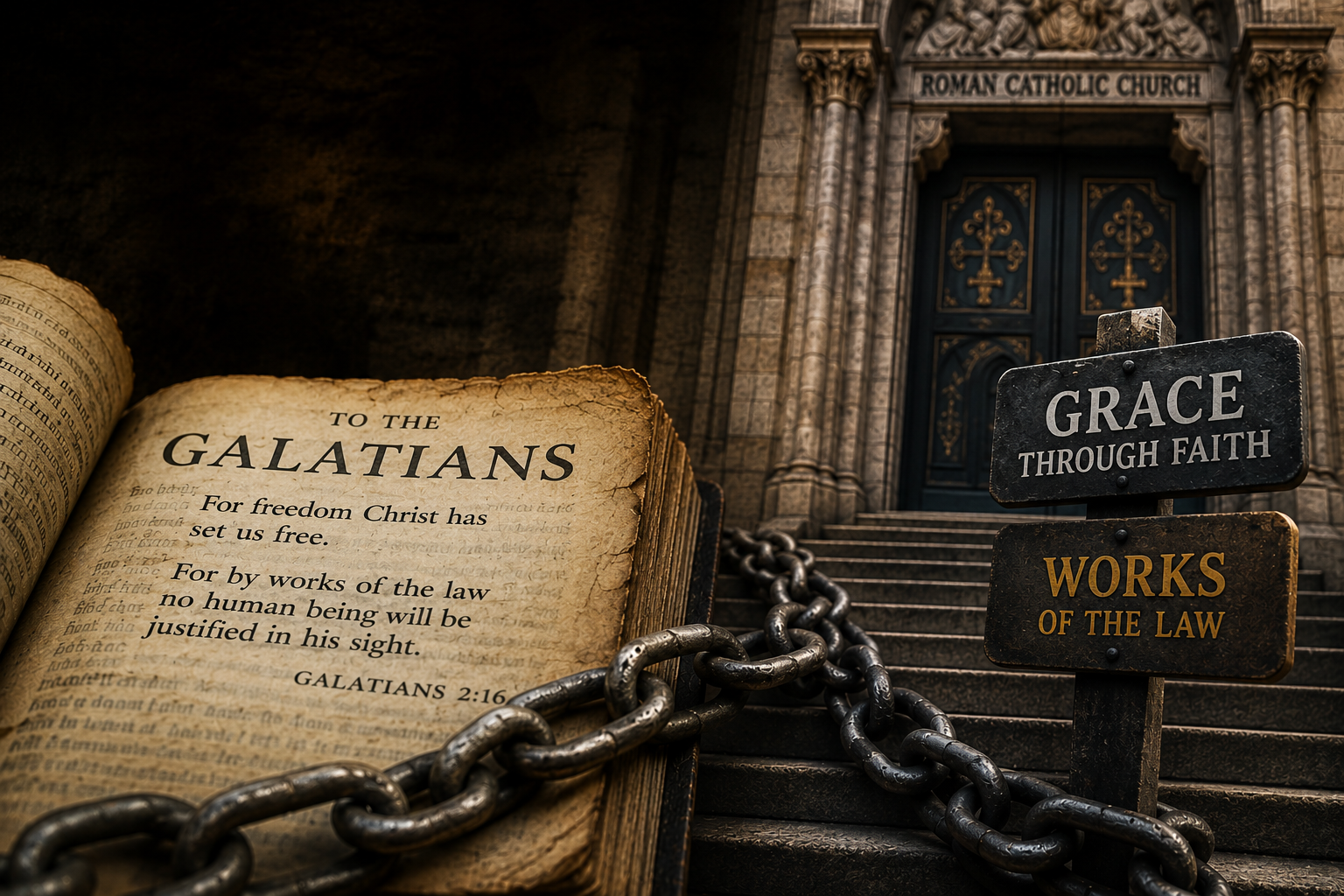
Some time ago, I reviewed a debate between Allen S. Nelson IV, pastor of Providence Baptist Church, and Father Stephen Hart of Sacred Heart Church on the question of whether the Roman Catholic Church is a gospel-denying church. (See my review here.) This debate centered on the doctrine of justification and exposed the fundamental differences between Protestant and Roman Catholic understandings of how a person is made right before God. Of course, justification stands at the very center of the gospel itself; it is not merely a secondary disagreement between theological traditions. A distorted understanding of justification necessarily distorts the good news because it touches the question of how sinners are reconciled to God through Christ. And this is precisely the issue that the Apostle Paul takes up in the Epistle to the Galatians. In Galatians, Paul argues with remarkable force that justification is by faith apart from works of the law and warns that any alteration of the gospel strikes at the heart of Christian truth. In this post, then, I would like to consider how Paul’s argument in Galatians relates to the Roman Catholic understanding of justification, because if the message of Galatians is taken seriously, it forces us to ask whether justification can, in any sense, be grounded in works without compromising the gospel itself.
The situation addressed in the Epistle to the Galatians is relatively well known, but it is worth reviewing briefly for the sake of clarity. Sometime after Paul’s first missionary journey, it appears that a group of Jewish Christians came into the churches of Galatia and began teaching that Gentile believers needed to be circumcised and adopt the Torah in order to be fully included among the people of God. (On the timeline of events in Galatia, see here.) These teachers are often described as “Judaizers,” though the issue at stake is frequently misunderstood. They were not simply advocating for moral effort or “legalism” in the modern sense of the term. Rather, they were challenging the basis upon which Gentiles could belong to the covenant community. Was faith in Christ sufficient, or did covenant membership require obedience to the Mosaic law as well? In other words, the issue was not whether obedience mattered in the Christian life. Paul himself repeatedly affirms the necessity of holiness and faithful living. The question, rather, was whether obedience to the law contributed in any sense to justification and covenant inclusion. And it is precisely at this point that Paul responds with extraordinary urgency, because for him the integrity of the gospel itself was at stake.
Against this backdrop, Paul’s central claim is that “no one is justified before God by the law, because the righteous will live by faith” (3.11). The question, of course, revolves around what Paul means by the term “justified.” However, the qualifying phrase “before God” is especially revealing. Paul is not speaking primarily about inward moral transformation or spiritual renewal, important as those realities are elsewhere in his theology. Rather, he is speaking about a person’s standing before the divine judge. Justification, then, is fundamentally forensic in nature. It is a legal declaration in which the believer is counted righteous before God on the basis of faith rather than works of the law. This is why Paul consistently contrasts justification with human obedience throughout Galatians. If righteousness could be obtained through the law, then there would be no need for Christ’s death (2.21). The issue is not whether good works follow genuine faith; Paul clearly believes that they do. The issue is whether those works contribute in any sense to the believer’s right standing before God. Paul’s answer is emphatic and uncompromising: sinners are justified by faith in Christ apart from the works of the law. Their acceptance before God rests not in their own obedience, but in the saving work of Christ received through faith.
However, the question must still be asked: what exactly does Paul mean by “works of the law”? In recent decades, the so-called “New Perspective on Paul,” especially in the work of James D. G. Dunn, has argued that these “works” refer primarily to Jewish socio-religious boundary markers such as circumcision, Sabbath observance, and food laws. On this reading, Paul’s concern is chiefly horizontal. The issue is how Jews and Gentiles can exist together within the same covenant community without the Torah functioning as a barrier between them. There is certainly truth in this observation, especially given the prominence of circumcision in Galatians itself. However, this understanding is ultimately too narrow because it does not fully account for Paul’s repeated emphasis on justification “before God.” Paul’s concern is not merely social fellowship, but a person’s standing before the divine judge. Therefore, “works of the law” cannot be reduced simply to ceremonial observances or ethnic boundary markers. Rather, the phrase must encompass any attempt to establish righteousness before God through obedience to the law. This is precisely why Paul contrasts law and promise, works and faith, curse and blessing. For Paul, the law cannot justify because fallen humanity cannot keep it perfectly. Faith, by contrast, receives what God promises in Christ rather than attempting to achieve righteousness through human obedience.
This is made clear by the way that Paul builds his argument in Galatians, namely on a series of theological contrasts that structure his understanding of the gospel itself. Central to his reasoning is the example of Abraham. Long before the giving of the law, Abraham “believed God, and it was credited to him for righteousness” (3.6). This point is crucial because it demonstrates that justification by faith precedes the Mosaic covenant altogether. The promise given to Abraham was received through faith, not through obedience to the law. The law, therefore, cannot function as the basis of justification because it was never the foundation of God’s covenant promises to begin with. Rather, Paul argues that the law was temporary, added “because of transgressions” until the coming of Christ (3.19). This is why Paul consistently contrasts promise and law, Spirit and flesh, faith and works throughout the letter. These are not complementary paths to justification, but fundamentally different principles. The law demands obedience and pronounces a curse upon those who fail to keep it perfectly, whereas faith receives the promise of God fulfilled in Christ. This is why Paul reacts so strongly to the Galatian error. The law does not complete what faith begins—it belongs to a different order altogether. To return to the law as the ground of justification is not spiritual maturity; it is, in Paul’s view, a departure from the very logic of the gospel itself.
This is perhaps why Paul speaks with such force in the opening of the Epistle to the Galatians. In 1:9, he writes, “As we have said before, I now say again: If anyone is preaching to you a gospel contrary to what you received, a curse be on him!” For Paul, this is not rhetorical exaggeration or emotional overstatement; it is covenantal seriousness. The gospel is not infinitely flexible or open to revision. It is the announcement of what God has accomplished in Christ for the salvation of sinners, and therefore to alter the basis of justification is to alter the gospel itself. This is precisely why Paul reacts so strongly to the teaching of the Judaizers. In his view, adding obedience to the law as a condition of justification does not merely supplement the gospel—it fundamentally changes its character. The issue is not whether circumcision or obedience have value in themselves; the issue is whether they contribute to a person’s right standing before God. Once works are introduced as part of the ground of justification, faith in Christ alone is no longer sufficient. And for Paul, that is not a small theological mistake, but a corruption of the gospel itself.
At this point, it is worth bringing Paul’s argument into conversation with the Roman Catholic understanding of justification, especially as articulated at the Council of Trent. To be clear, the Roman Catholic position is not identical to the error confronted in Galatia. The Judaizers were specifically requiring circumcision and Torah observance for covenant inclusion, whereas Roman Catholic theology affirms the necessity of grace and the centrality of Christ’s work. Nevertheless, there are important structural similarities that raise serious theological concerns. According to Trent, justification is not merely the forgiveness of sins, but also “the sanctification and renewal of the inward man” (Session 6, Chapter 7). Likewise, Trent teaches that the justified “through the observance of the commandments of God and of the Church, faith cooperating with good works, increase in that justice received through the grace of Christ” (Session 6, Chapter 10). In other words, justification in Roman Catholic theology includes transformative righteousness and can increase through obedience. But this is precisely where the tension with Galatians emerges. Paul consistently treats justification as a forensic declaration received through faith apart from works of the law. The question, then, is unavoidable: if justification is maintained or increased through works, even grace-enabled works, does this not reintroduce the very dynamic Paul rejects? Put differently, does the Roman Catholic system preserve the sufficiency of faith in Christ alone, or does it ultimately ground final justification, at least in part, in human obedience? At the very least, Trent’s understanding of justification is horribly confused and differs significantly from Paul’s argument in Galatians.
Now, in the interest of completeness, it is equally important to consider how the message of the Epistle to the Galatians might speak to those of us on the Protestant side of the aisle as well. As I noted in my original review, Protestants often have a tendency to underemphasize the importance—indeed, even the necessity—of good works in the Christian life. In some circles, the gospel is reduced to little more than a kind of “get out of hell free” card: simply believe in Jesus and secure your eternal destiny. But this reductionistic understanding of salvation severely minimizes the transforming power of grace and the necessity of Spirit-empowered obedience. Paul himself never makes this mistake. While he fiercely rejects works as the basis of justification, he equally insists that genuine faith necessarily produces obedience. This is why he can say in Galatians 5.6 that “what matters is faith working through love.” For Paul, obedience is not opposed to faith; rather, obedience is the fruit of true faith. The problem, then, is not works in themselves, but works placed in the wrong category. Works cannot justify the sinner before God, but they are the inevitable result of union with Christ and the indwelling work of the Spirit. Grace does not merely forgive; it transforms.
In theological categories, this process is known as sanctification, that is, the lifelong work of growing in conformity to the character of Christ through the power of the Holy Spirit. In the language of the Epistle to the Galatians, this is described as “walking by the Spirit” and cultivating the “fruit of the Spirit,” namely “love, joy, peace, patience, kindness, goodness, faithfulness, gentleness, and self-control” (5.22–23). The point is that while sanctification is logically distinct from justification, it is not altogether separate from it. The faith that justifies is never barren or inactive. We are justified by faith alone, but the person who is truly justified by faith will necessarily grow in holiness and produce the good works of Christlike character. This is why Paul can reject works as the basis of justification while simultaneously insisting upon obedience as the necessary fruit of life in the Spirit. Indeed, this is essentially the same point made by the Epistle of James in its discussion of faith and works, a point Paul himself would affirm wholeheartedly. Works do not secure our standing before God; rather, they demonstrate that our faith is living and genuine. Grace not only pardons the sinner, it transforms him.
What emerges from Galatians, then, is a clear theological order that must not be confused or reversed. First comes faith, and through faith comes justification, that once-for-all declaration in which the sinner is counted righteous before God on the basis of Christ alone. Then comes the gift of the Spirit, through whom the believer is progressively transformed into the image of Christ. Finally, obedience follows as the fruit of this new life in the Spirit. In other words, the imperatives of the Christian life flow out of the indicatives of the gospel. We obey because we have been accepted in Christ, not in order to be accepted by him. This is precisely why Paul can simultaneously reject justification by works while insisting upon the necessity of holiness. The Christian life is not opposed to obedience; it is grounded in grace-enabled obedience that flows from faith. But the order matters immensely. To place works before justification, or to make obedience part of the ground of our acceptance before God, is to reverse Paul’s entire theological structure and, in doing so, distort the very nature of the gospel itself.
In conclusion, then, we must affirm that the question of justification as it relates to faith and works is a foundational question when it comes to the clarity of the gospel itself. As Paul warns in the Epistle to the Galatians, to distort the gospel is to come under the curse of God. And while I do not think that the Roman Catholic Church falls under this curse in a simplistic or one-to-one sense, I do believe that the formulations of the Council of Trent are deeply confused on the question of justification and, in important ways, structurally parallel the very concerns Paul raises in Galatians. At the same time, Protestants must also resist the temptation to reduce the gospel to mere intellectual assent divorced from holiness and obedience. Paul rejects both legalism and moral indifference. The gospel he proclaims is one in which sinners are justified by faith alone and then transformed by the power of the Spirit into lives of joyful obedience. Faithful theology, then, requires more than loyalty to tradition or theological systems. It requires that we let Paul define the gospel on his own terms—and then have the courage to examine our systems in light of that definition.


