Tag Archives: Christian Living

On Religious Affections and Saving Faith

A few weeks ago, I was sitting in a Sunday school class, and we were discussing James 1.12, which says, “Blessed is the one who endures trials, because when he has stood the test he will receive the crown of life that God has promised to those who love him.” This verse raises an important question about the relationship between our affections for God and saving faith. In other words, if we are justified by faith alone in Christ alone, then what role do our affections play in saving faith. On the one hand, we do not want to reduce saving faith to mere intellectual agreement, i.e. “I believe that Christianity is true.” On the other hand, we do not want to reduce faith to sheer emotional experience, i.e. “I know I am saved simply because I feel close to God.” The Scriptures reject both of these reductions. Instead, the Scriptures present saving faith as the wholehearted response of a person to God’s self-revelation in Christ—a response that engages the mind, the will, and the affections. However, before we consider the relationship between saving faith and the affections, we must first ask a more basic question: What is saving faith?

Throughout the history of the church, theologians have commonly described saving faith as consisting of three essential elements: notitia (knowledge), assensus (assent), and fiducia (trust). Together, these categories help explain what it means to believe in Christ for salvation. First, a person must possess notitia, that is, a basic knowledge of the gospel and the identity of Jesus Christ. Second, that knowledge must be accompanied by assensus, an acknowledgment that the gospel is true. Yet Scripture makes it clear that knowledge and assent alone are not enough. James reminds us, “You believe that God is one. Good! Even the demons believe—and they shudder” (James 2:19). The demons possess both knowledge of God and an orthodox understanding of who he is, yet they remain in rebellion because they lack fiducia—a wholehearted trust that rests in God alone for salvation. Saving faith, therefore, is more than simply knowing the truth or agreeing that it is true; it is entrusting oneself to God in Christ. This naturally raises another question: What does that trust actually look like, and what role do our affections play in its expression?

The point, then, is that saving faith is never merely cognitive. As Paul writes in Romans 10:9, “If you confess with your mouth, ‘Jesus is Lord,’ and believe in your heart that God raised him from the dead, you will be saved.” In Scripture, the heart is far more than the seat of our emotions. It represents the very center of our personhood—the source of our thinking, willing, loving, and desiring. This is why, when Jesus is asked about the greatest commandment, he cites the Shema: “Love the Lord your God with all your heart, with all your soul, and with all your mind” (Matt. 22:37). Saving faith, therefore, is not merely the acceptance of certain propositions about Christ; it is the wholehearted entrusting of ourselves to him. Such faith redirects the deepest loves and loyalties of the heart toward the One who gave himself for us. At this point, however, an important distinction must be made. The affections are not the same thing as our passing emotions. Emotions often fluctuate with our circumstances, but the affections are the settled inclinations, desires, and loves of the soul. Consequently, when we trust in Christ for salvation, we do more than experience a passing feeling—we come to treasure him as the supreme object of our love and devotion.

Perhaps no theologian has reflected more deeply on this subject than Jonathan Edwards in his classic work Religious Affections. Writing during the First Great Awakening of the 1730s and 1740s, Edwards ministered in a period marked by extraordinary religious enthusiasm. As revival spread throughout the American colonies, many professed faith in Christ and displayed intense emotional experiences. Yet these developments raised an important question: How can we distinguish genuine saving faith from merely temporary or emotional religious excitement? It was this question that prompted Edwards to write Religious Affections. His central argument is that true religion “in great part consists in holy affections” because regeneration does more than inform the mind—it transforms the heart. Saving faith not only convinces us that Christ is worthy of our trust; it also reorients our deepest loves toward him. Edwards was therefore not measuring the authenticity of faith by the intensity of a person’s emotions. Rather, he sought to identify the enduring dispositions of the heart that inevitably accompany the new birth. In doing so, he helped clarify an important biblical truth: genuine saving faith transforms not only what we believe but also what we love.

The transformation of our affections begins with the regenerating work of God. Scripture does not describe salvation as the mere addition of new information to an otherwise unchanged heart. Rather, God promises, “I will give you a new heart and put a new spirit within you” (Ezek. 36:26). This is the new birth of which Jesus speaks in John 3 and the new creation Paul describes in 2 Corinthians 5:17. Regeneration changes the deepest orientation of the person, enabling us to see Christ as beautiful, trust him as sufficient, and love him as Lord. These new affections arise because, through faith, we are united to Christ by the Holy Spirit and begin to share in the life of the One to whom we belong. However, they do not earn our justification, nor do they become an additional ground of acceptance before God. We are justified by faith alone on the basis of Christ alone. Yet the faith through which we are justified is never left barren or unchanged. It becomes fruitful in sanctification because the Spirit who grants faith also renews the heart from which faith arises. The order, therefore, must be preserved: God regenerates, the sinner believes, God justifies, and the justified believer begins to grow in holiness. Our love for God, delight in Christ, and desire for obedience are not the merit of our salvation; they are the evidence that God has made us new.

This is the important distinction: our affections for Christ are evidence of our salvation and therefore contribute to our assurance, but they are never the ground of it. The foundation of our assurance rests entirely upon the finished work of Christ and the promises of God confirmed by the indwelling Holy Spirit. At the same time, the Spirit who assures us of our adoption also transforms our hearts, producing new desires and holy affections that testify to his ongoing work within us. Many believers ask the wrong questions when examining themselves. They wonder, “Do I feel enough?” or “Do I know enough?” Yet Scripture directs our attention elsewhere. The better question is, “Has Christ begun changing what I love?” Am I growing in my hatred of sin and my love for Christ? Do I desire to read and meditate upon God’s Word? Do I increasingly delight in holiness and long to obey him? Do I love God’s people and desire fellowship with them? None of these things earns God’s favor, but together they provide evidence that he has given us a new heart. The Christian’s assurance, therefore, rests on Christ alone, while the transformed affections of the heart bear witness that his saving work is truly taking root within us.

Saving faith, then, is far richer than either mere intellectual agreement or passing emotional experience. It knows the truth of the gospel, believes that truth to be certain, entrusts itself wholly to Christ, and, through the regenerating work of the Holy Spirit, comes to love the One in whom it has believed. In other words, saving faith engages the whole person—mind, will, and affections—in response to God’s gracious self-revelation in Jesus Christ. This is why the Christian life is not marked by perfect emotions or flawless devotion but by a heart that is being steadily transformed by the grace of God. None of us possesses perfect affections in this life. Our love for Christ is often weak, inconsistent, and mixed with the remnants of sin. Yet the Spirit who gave us a new heart does not abandon his work. Day by day, he continues to redirect our loves, deepen our trust, and conform us to the image of Christ. The mark of genuine saving faith, therefore, is not the perfection of our love but the presence of a new love—a heart that increasingly treasures Christ above all else. These affections do not save us, nor do they merit God’s favor. Rather, they testify that the One who does save us has already begun his transforming work within us. May we therefore fix our eyes on Christ, for as we behold his glory in the Scriptures, our faith is strengthened, our assurance deepened, and our hearts are increasingly taught to love the One who first loved us.

On Psalm 119: A Conclusion and Reflection

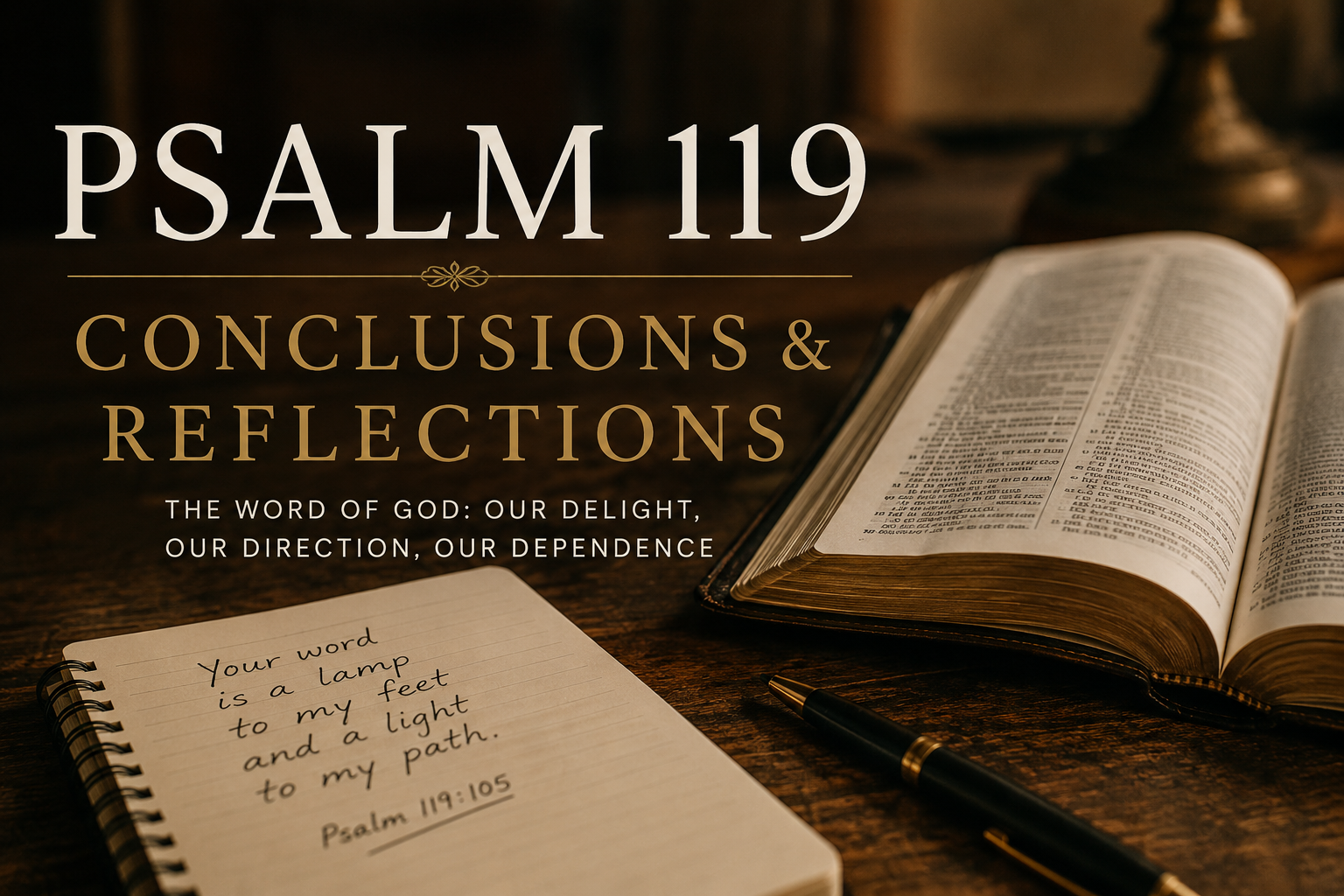
Well, we have now come to the end of our journey through Psalm 119. Twenty-two stanzas. One hundred and seventy-six verses. The longest chapter in the Bible. At first glance, reading through this psalm from beginning to end can feel somewhat repetitive. Yet, if our journey has revealed anything, it is that sustained meditation upon its lines uncovers remarkable depth. Each stanza approaches God’s Word from a distinct perspective, and each verse contributes another facet to the psalm’s rich theological portrait of Scripture. What initially appears repetitive gradually proves to be profoundly complementary, as the psalmist returns again and again to the same central theme with fresh insight and renewed appreciation. After spending the past several years working through this magnificent chapter, I would like to conclude our study by reflecting on some of the primary theological themes and practical lessons that have emerged along the way. While these observations certainly do not exhaust the riches of Psalm 119, they represent some of the truths that have most profoundly shaped my own understanding of God’s Word and its indispensable place in the life of every believer.

Of course, the primary lesson of Psalm 119 is immediately evident, and that is the absolute centrality of God’s Word. Nearly every verse contains some reference to or synonym for divine revelation—law, statutes, precepts, commandments, testimonies, judgments, ordinances, promises, etc. Regardless of what is happening in the psalmist’s life, whether he is rejoicing, suffering, praying, or pleading for deliverance, he continually returns to God’s revelation as the foundation of his faith and the source of his hope. Yet, in doing so, the psalmist reminds us that God’s Word is far more than a collection of sacred information. It is God’s self-revelation, through which He makes Himself known to His people. Through His Word, God instructs, corrects, comforts, warns, and sustains those who belong to Him. Every encounter with God’s Word is ultimately an encounter with the living God who still addresses His covenant people through the Scriptures He has breathed out. In that sense, Psalm 119 is not ultimately a celebration of the Bible as an end in itself, but of the God who graciously reveals Himself through His Word. The psalmist delights in Scripture because, through it, he encounters the living God.

Closely related to the centrality of God’s Word is another theme that has surfaced repeatedly throughout our study: the covenantal nature of the psalmist’s relationship with God. The Word is never presented as an impersonal code of conduct or a collection of detached religious obligations. Rather, it is the covenant document through which God reveals His character, declares His promises, and defines what covenant faithfulness looks like for His people. To delight in God’s Word, therefore, is to delight in the God who has graciously entered into relationship with His people. This covenantal perspective also explains why the psalm is so thoroughly saturated with prayer. Again and again the psalmist cries, “Teach me,” “Give me understanding,” “Revive me,” “Strengthen me,” and “Sustain me.” These are not the prayers of someone attempting to earn God’s favor through obedience, but of one who already belongs to God and longs to live faithfully within that covenant relationship. His obedience is never portrayed as self-generated moral achievement; it is the grateful response of a servant who desires to know his Lord more fully and to walk in the path that God Himself has graciously revealed. Throughout Psalm 119, studying God’s Word and communing with God are inseparable realities, for the believer encounters the covenant God precisely through the covenant Word He has given.

Another theme that emerged with surprising frequency throughout our study is the reality of affliction. At first glance, many readers approach Psalm 119 expecting a lengthy meditation on the beauty and benefits of God’s Word. While it is certainly that, it is also a psalm written in the midst of suffering. References to enemies, reproach, persecution, oppression, and distress appear again and again, particularly in the latter portions of the psalm. The psalmist is rarely speaking from a position of comfort or ease. More often than not, he is crying out to God in the midst of hardship, pleading for deliverance while clinging to the promises of His Word. This observation is significant because it reveals one of the primary purposes of Scripture in the life of the believer. God’s Word is not merely given to increase our knowledge or deepen our understanding during seasons of peace; it is given to sustain our faith when life is hardest. Again and again, the psalmist finds hope in God’s promises, strength in God’s commandments, and comfort in God’s faithfulness precisely because suffering has stripped away every other source of security. Affliction, rather than diminishing his confidence in God’s Word, drives him back to it with even greater urgency. Psalm 119 therefore reminds us that Scripture is not simply a companion for life’s brightest moments, but an anchor for its darkest ones. It is in the crucible of suffering that the enduring sufficiency of God’s Word is most clearly displayed.

Closely connected to this theme of affliction is another characteristic of Psalm 119 that is often overlooked: its persistent spirit of prayer. Although the psalm is rightly celebrated for its exaltation of God’s Word, it is equally a sustained conversation with the God who gave that Word. Throughout its twenty-two stanzas, the psalmist repeatedly prays, “Teach me,” “Give me understanding,” “Revive me,” “Sustain me,” “Strengthen me,” and “Rescue me.” Nearly every meditation upon God’s revelation naturally gives rise to another petition for God’s gracious work in his life. This reminds us of an important spiritual truth. Knowledge of Scripture is never intended to produce self-sufficiency. Rather, it cultivates ever-deepening dependence upon God. The more clearly the psalmist understands God’s holiness, the more aware he becomes of his own weakness. The more he delights in God’s commandments, the more earnestly he prays for grace to obey them. The more he meditates upon God’s promises, the more confidently he casts himself upon God’s faithfulness. In this way, Scripture and prayer are inseparable companions. God’s Word reveals His will, while prayer expresses our continual dependence upon His power to accomplish it. Far from fostering spiritual independence, Psalm 119 teaches us that genuine maturity is marked by an ever-growing reliance upon the God who speaks through His Word and graciously enables His people to live according to it.

Perhaps the most compelling feature of Psalm 119 is that the psalmist’s relationship with God’s Word is characterized not merely by obedience, but by delight. Throughout the psalm he repeatedly speaks of loving God’s law, rejoicing in His testimonies, delighting in His commandments, meditating upon His precepts, and treasuring His promises. These are not the words of someone reluctantly fulfilling religious obligations. They are the language of deep affection, revealing a heart that has come to cherish God’s Word as one of life’s greatest treasures. This emphasis offers an important corrective for many Christians today. We often approach Scripture primarily as a duty to perform or a discipline to maintain, measuring success by how consistently we complete our daily reading plans. While faithful discipline certainly has its place, Psalm 119 calls us to something far deeper. The ultimate goal is not simply external conformity to God’s commands, but an inward delight in the God who has spoken. Obedience reaches its fullest expression when it flows from love rather than mere obligation, when God’s Word becomes not simply something we read but something we long for. The psalmist reminds us that genuine spirituality is measured not only by what we know or even by what we do, but by what we love. A heart captivated by God’s Word is ultimately a heart captivated by God Himself.

As we come to the close of Psalm 119, we discover that the psalmist’s final words are not a declaration of victory but a confession of dependence: “I have gone astray like a lost sheep; seek your servant, for I do not forget your commandments” (v. 176). After 176 verses celebrating God’s Word, he does not conclude by boasting in his obedience but by casting himself upon God’s grace. In many ways, this final prayer gathers together every major theme of the psalm. The Word has revealed the covenant God. Affliction has driven the psalmist to His promises. Prayer has expressed continual dependence upon His strength. Delight has cultivated a heart that loves His ways. Yet all of these themes ultimately lead to the recognition that God’s people never outgrow their need for the Shepherd who seeks, sustains, and preserves them. Indeed, the One who perfectly delighted in the Father’s will is also the Good Shepherd who came “to seek and to save the lost.” It is therefore fitting that Psalm 119 ends not with human achievement, but with divine grace. Ultimately, this magnificent psalm teaches us that the goal of God’s Word is not merely that we know His commandments, but that we know and love the God who speaks, trust His promises, delight in His ways, and depend upon His grace until the end.

For further study:
Introduction
Psalm 119.1-8
Psalm 119.9-16
Psalm 119.17-24
Psalm 119.25-32
Psalm 119.33-40
Psalm 119.41-48
Psalm 119.49-56
Psalm 119.57-64
Psalm 119.65-72
Psalm 119.73-80
Psalm 119.81-88
Psalm 119.89-96
Psalm 119.97-104
Psalm 119.105-112
Psalm 119.113-120
Psalm 119.121-128
Psalm 119.129-136
Psalm 119.137-144
Psalm 119.145-152
Psalm 119.153-160
Psalm 119.161-168
Psalm 119.169-176


On Thinking Theologically (Weekend Vlog)


On Psalm 119.169-176 (Taw)

169 Let my cry reach you, Lord;
give me understanding according to your word.
170 Let my plea reach you;
rescue me according to your promise.
171 My lips pour out praise,
for you teach me your statutes.
172 My tongue sings about your promise,
for all your commands are righteous.
173 May your hand be ready to help me,
for I have chosen your precepts.
174 I long for your salvation, Lord,
and your instruction is my delight.
175 Let me live, and I will praise you;
may your judgments help me.
176 I wander like a lost sheep;
seek your servant,
for I do not forget your commands.

Well, we have finally come to the last stanza of Psalm 119 (ת/taw), and it is fitting that our psalmist opens with a prayer. In verses 169–170, he petitions the Lord, “Let my cry reach you, Lord; give me understanding according to your word. Let my plea reach you; rescue me according to your promise.” After nearly 170 verses extolling the beauty, perfection, and life-giving power of God’s Word, he is still asking for understanding. In other words, his extensive knowledge of Holy Scripture has not diminished his dependence upon God. In the language of systematic theology, this truth is often described as the doctrine of illumination. Illumination is the gracious work of the Holy Spirit whereby he enlightens our minds and hearts to understand and receive God’s Word as he intended. (For a more extended discussion of this doctrine, see On Biblical Interpretation and the Holy Spirit.) The point is that a right understanding of Scripture is ultimately a gift of God. It certainly comes through careful study and diligent reflection, but our study must always be accompanied by humble dependence upon the Spirit who inspired the Scriptures in the first place. Throughout Psalm 119, we have repeatedly seen that God’s Word imparts wisdom, yet wisdom comes as God illumines the heart. The mature believer, therefore, never outgrows the need to pray, “Give me understanding according to your word.”

He also prays for deliverance when he says, “Rescue me according to your promise.” Once again, we are reminded that our psalmist continues to face hardship and opposition. Throughout Psalm 119 he has repeatedly cried out for God’s intervention, and here the same prayer rises once more from his lips. Yet what is particularly striking is the basis upon which he asks for deliverance. He does not appeal to his own merit, his own worthiness, or even his own obedience. Rather, he appeals to God’s promise. In other words, his confidence rests not in himself but in God’s covenant faithfulness. Or to put it another way, even after all his devotion to God’s Word, he still depends entirely upon divine grace. As D. Martyn Lloyd-Jones wisely observed, “Everything is of grace in the Christian life from the very beginning to the very end.” Apart from God’s grace we have nothing and are nothing. Even our most faithful obedience must be sustained and empowered by the God who first called us to himself. This is why the promises of Scripture are such a source of comfort for the believer. They remind us that God’s faithfulness does not fluctuate with our circumstances or our performance. Rather, his promises are rooted in his unchanging character. It is these gracious promises that become the foundation of confident prayer, enabling us to approach the throne of grace with boldness because we know that the God who has spoken is always faithful to his Word.

In verses 171–172, our psalmist moves from prayer to praise when he says, “My lips pour out praise, for you teach me your statutes. My tongue sings about your promise, for all your commands are righteous.” Notice here the motivation for his praise: it is that God has taught him his righteous commands and statutes. In other words, the purpose of Holy Scripture is not merely information. Our study of God’s Word should produce praise, obedience, and delight. Or, to put it another way, theology should produce doxology. God’s commands are righteous; therefore, praise is the fitting response. This has been one of the dominant themes throughout Psalm 119. The psalmist has repeatedly reminded us that God’s Word is sweeter than honey, more valuable than gold, a lamp to his feet, and a source of wisdom, comfort, hope, and peace. Yet all of these blessings ultimately direct his attention back to the God who has spoken. Scripture never terminates upon itself. It reveals the character, faithfulness, wisdom, and holiness of the Lord, and as we behold these divine perfections, our hearts are moved to worship. This is why genuine knowledge of God can never remain merely intellectual. The more deeply God’s truth takes root within us, the more naturally praise flows from our lips. If our study of Scripture produces greater knowledge without greater love for God, then we have missed the very purpose for which the Scriptures were given. True biblical understanding always culminates in joyful worship, because the ultimate goal of God’s Word is not simply that we know about him, but that we know him, delight in him, and glorify him with our lives.

In verses 173–174, our psalmist continues this theme of dependence when he prays, “May your hand be ready to help me, for I have chosen your precepts. I long for your salvation, Lord, and your instruction is my delight.” At first glance, these two statements may seem contradictory. On the one hand, he declares that he has chosen God’s precepts. On the other hand, he immediately asks for God’s help. Yet this is precisely the balance that runs throughout the Christian life. Genuine obedience is never independent of divine grace. Our willingness to follow the Lord is itself sustained by his continual presence and power. The psalmist recognizes that choosing God’s ways does not eliminate his need for God’s help; rather, it deepens his awareness of that need. Likewise, his longing for God’s salvation reminds us that he continues to look forward in hope. Though he delights in God’s instruction, he still awaits the full realization of God’s saving purposes. Throughout Psalm 119 we have repeatedly encountered this tension between present obedience and future expectation. God’s Word teaches us how to live faithfully today while at the same time directing our hope toward the salvation that God has promised to complete. The Christian life, therefore, is one of continual dependence upon the Lord, trusting that the God who calls us to walk in his ways is also the God who strengthens us to persevere until his work of redemption is brought to completion.

The final verses of Psalm 119 bring us to one of the most surprising conclusions in all of Scripture. After extolling the beauty, wisdom, and sufficiency of God’s Word for 175 verses, our psalmist concludes with this remarkable confession: “Let me live, and I will praise you;
may your judgments help me. I wander like a lost sheep; seek your servant, for I do not forget your commands.”
At first glance, this seems almost out of place. Has not our psalmist repeatedly affirmed his love for God’s law, his delight in God’s commandments, and his commitment to walk in God’s ways? Why, then, does he end by describing himself as a wandering sheep? The answer is that this is not a confession of apostasy but of humble dependence. He recognizes that even the most faithful believer remains vulnerable apart from the preserving grace of God. Yet his wandering is immediately balanced by a profound affirmation: “I do not forget your commands.” Though he stumbles, he still belongs to the Lord. His hope rests not in his own ability to remain faithful but in the God who faithfully seeks and restores his servants. It is difficult to read these words without thinking of the Good Shepherd who came “to seek and to save the lost” (Luke 19.10), or of Jesus’ parable of the shepherd who leaves the ninety-nine sheep to search for the one that has wandered (Luke 15.4–7). Indeed, Isaiah had already declared, “We all went astray like sheep; we all have turned to our own way; and the Lord has punished him for the iniquity of us all” (Isa. 53.6). Thus, the final note of Psalm 119 is not one of self-confidence but of grace. The believer’s security ultimately rests not in the strength of his obedience but in the faithfulness of the Shepherd who continually seeks, preserves, and restores his wandering sheep.

As Psalm 119 draws to a close, we discover that its final emphasis is not human achievement but divine faithfulness. Throughout these twenty-two stanzas, our psalmist has celebrated the beauty, wisdom, sufficiency, and life-giving power of God’s Word. He has endured persecution, wrestled with suffering, delighted in God’s commandments, longed for deliverance, and found peace amid adversity. Yet the final word of the psalm is not self-confidence but humble dependence. Even after a lifetime devoted to God’s Word, he still cries out for understanding, seeks God’s help, and confesses his need for the Shepherd who alone can preserve him. In this way, Psalm 119 reminds us that the purpose of Scripture is never merely to increase our knowledge but to deepen our dependence upon the God who has spoken. The more faithfully we walk according to God’s Word, the more clearly we recognize our continual need for his sustaining grace. It is this gracious God who teaches, strengthens, seeks, and restores his people. And that, perhaps, is the greatest lesson of Psalm 119: the written Word continually directs us to the living God, whose truth, presence, and faithfulness are the sure foundation of the believer’s life.

For further study:
Introduction
Psalm 119.1-8
Psalm 119.9-16
Psalm 119.17-24
Psalm 119.25-32
Psalm 119.33-40
Psalm 119.41-48
Psalm 119.49-56
Psalm 119.57-64
Psalm 119.65-72
Psalm 119.73-80
Psalm 119.81-88
Psalm 119.89-96
Psalm 119.97-104
Psalm 119.105-112
Psalm 119.113-120
Psalm 119.121-128
Psalm 119.129-136
Psalm 119.137-144
Psalm 119.145-152
Psalm 119.153-160
Psalm 119.161-168


On Thinking Theologically (Weekend Vlog)


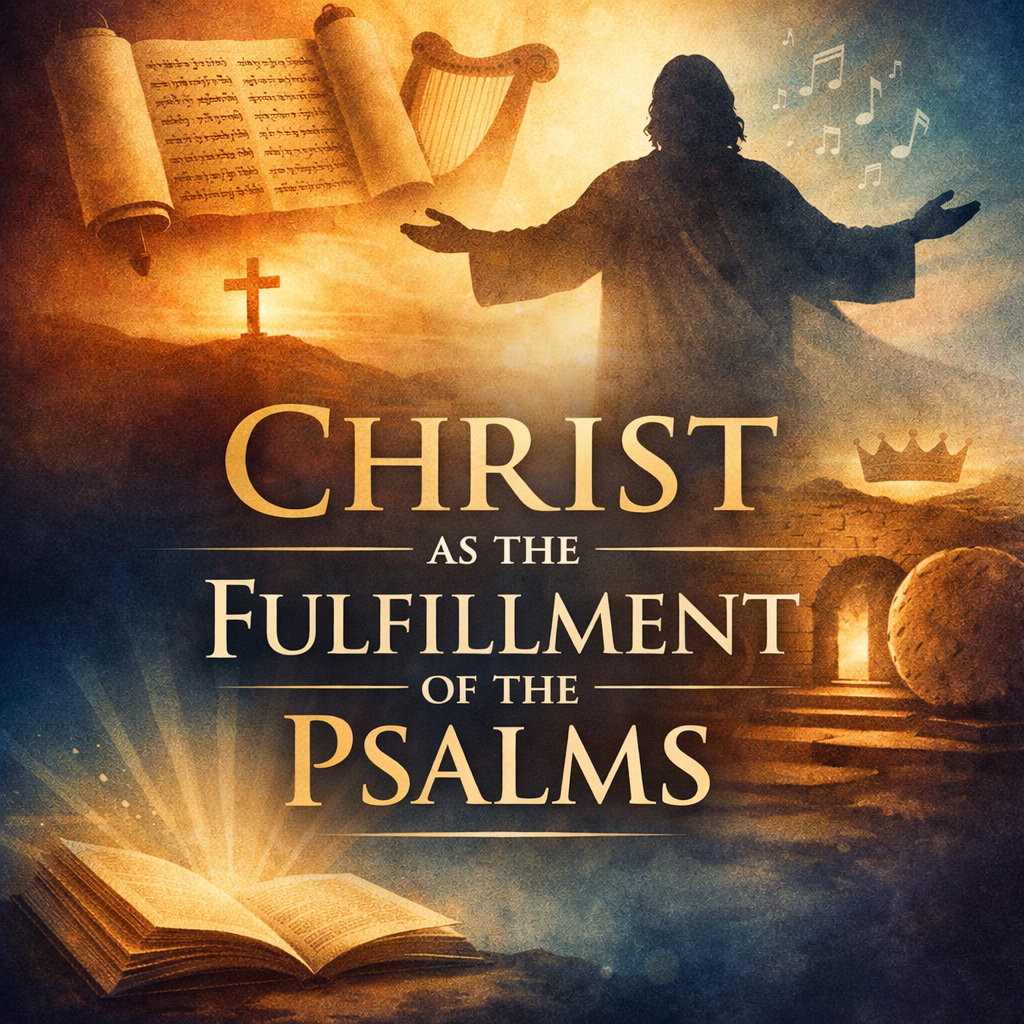
On Christ as the Fulfillment of the Psalms

One of the richest books in the Old Testament, in my opinion, is the Book of Psalms. It is a collection filled with the prayers and songs of Israel throughout her history, and it holds immense value for the devotional life of the church today. When we read the Psalms, we are drawn into the devotional, emotional, and personal experience of faith in ways that touch every part of our lives. And this is good and right. But the Psalms are not only expressions of faith, whether Israel’s or our own. They are also filled with expectations that reach beyond themselves. The Book of Psalms gives voice to Israel’s experience, to her covenant relationship with God, and to the life of faith more broadly, but it also creates categories that are not fully resolved within Israel’s history. In other words, the Psalms cry out for fulfillment, and it is my thesis that that fulfillment is ultimately found in and through the person and work of Jesus Christ.

In terms of the Old Testament canon, the Book of Psalms consists of prayers and songs that reflect the people, events, and experiences of Israel’s history. They provide a kind of covenantal reflection and royal theology that flows directly out of that historical context. However, the Psalms consistently reach beyond their immediate setting to realities that are eschatological in nature and central to God’s redemptive purposes. For example, in Psalm 22, we encounter the figure of the righteous sufferer—one who endures deep emotional and physical suffering through no fault of his own. While the superscript attributes the psalm to David, the experience described surpasses anything we can clearly identify in his life. Similarly, Psalms 2 and 110 present a vision of Israel’s ideal king: one who is anointed by God, victorious over his enemies, and who reigns with perfect righteousness and justice. Yet no king in Israel’s history, David included, fully embodies this portrait. Likewise, Psalm 1 sets forth a picture of perfect obedience that distinguishes the righteous from the wicked—an ideal never fully realized in Israel or in our own experience. The point is that the realities these psalms describe extend far beyond any one historical figure. They are not exhausted by the past; they point forward. This is why we can say that they cry out for fulfillment.

What I am saying is that the Psalms present us with a kind of tension; they describe ideals that are a far cry from the lived experience of the faithful, both then and now. The righteous sufferer suffers, but he is ultimately vindicated. The ideal king reigns, yet the nations still rage against his authority. The faithful worshiper trusts in God’s covenant promises, but the world remains broken and filled with sin. In other words, these themes are not fully resolved within the Psalter itself; they point beyond its pages and look forward to the decisive intervention of God. Or to put it differently, the Psalms do not simply describe reality as it is; they long for its restoration. There is a deep and persistent yearning throughout the Psalms for God to act on behalf of his people, to fulfill his promises, to judge the wicked, and to vindicate the righteous. This has been the cry of God’s people from the time of the fall until today. We know that something is wrong with the world as it is, and we long for the day when God will set things right and restore creation to what it was always meant to be. This is the heart of the Psalms.

Of course, it is clear in the Gospels that Jesus knew the Psalms well; no doubt he had read, heard, and memorized many of them throughout his life. But Jesus does not merely quote from the Psalms; he inhabits the realities that they describe. For example, when he is hanging on the cross, he cries out in quotation of Psalm 22.1, even as he bears the weight of his work in making atonement for sin. (On the cry of dereliction, see here.) This is not simply a cry of anguish, but an identification with the righteous sufferer whose vindication is anticipated in that psalm. Or again, in his debates with the religious leaders, he quotes Psalm 110.1 in reference to the identity of the Messiah (Matt. 22.41–46). But this is not merely an abstract theological question; it cuts to the very heart of Jesus’s identity as David’s Lord and the one who shares in the authority of God himself. Likewise, after telling the parable of the vineyard owner, Jesus quotes Psalm 118.22–23 about the stone the builders rejected, applying it directly to his own rejection by the religious leaders (Matt. 21.42–46). Many commentators suggest that these quotations function in a way similar to the Jewish practice of remez, where a single verse evokes the broader context of the entire psalm. The point is that Jesus read the Psalms as speaking about himself and his mission. He is not merely borrowing their language; he is revealing their fulfillment, embodying in his own life, death, and resurrection the realities toward which they ultimately point.

This is most clearly seen in the accounts of Jesus’s passion. I have already mentioned his quotation of Psalm 22, but he also alludes to Psalm 31.5, “Into your hands I entrust my spirit.” In addition to this, the Gospel writers present Jesus as inhabiting the experience of the righteous sufferer described in Psalm 69—one who is mocked, rejected, and consumed with zeal for the house of God. Even in the details of his crucifixion, we see the Psalms shaping the narrative, as John notes that not one of his bones was broken, in keeping with Psalm 34.20. These are not random correspondences; they are theological claims. The cross is the place where the unresolved tensions of the Psalms converge. The suffering of the righteous one, the apparent triumph of the wicked, and the trust of the faithful all meet in this moment. And yet, even here, lament is not the final word. In the midst of suffering, there is trust; in the midst of humiliation, there is the promise of vindication. In other words, what the Psalms anticipated, the cross of Jesus embodies. The cries of the Psalter are not silenced at Calvary; they are fulfilled there, as Jesus bears the full weight of suffering while entrusting himself completely to the Father.

And these kinds of connections between the person and work of Jesus and the Psalms are not unique to the Gospels; they are found throughout the New Testament. The apostles consistently interpret the Psalms in light of Christ. For example, in Acts 2, Peter quotes Psalm 16 in defense of Jesus’s resurrection, arguing that David’s words, “You will not abandon my soul to Hades or allow your Holy One to see decay,” cannot ultimately refer to David himself, since his tomb remained among them. Rather, the psalm finds its true fulfillment in the resurrection of Jesus. Likewise, in Acts 4, when the early church faces opposition, they quote Psalm 2 to interpret the raging of the nations against Jesus as the outworking of God’s sovereign plan. And again, in Acts 4:11, Peter cites Psalm 118.22 about the stone the builders rejected and applies it directly to Christ, a move he likely learned from Jesus himself. The author of Hebrews goes even further, repeatedly drawing from the Psalms to establish the superiority of the Son over angels, priests, and kings (e.g., Psalms 2, 8, and 110 among others). These examples could be multiplied, but the point is clear: the New Testament does not treat the Psalms merely as background; it treats them as prophetic and forward-looking. This fulfillment is not always a matter of direct prediction, but often of pattern and typology. The apostles read the Psalms as finding their true meaning in Christ, a hermeneutic grounded in Jesus’s own words that “everything written about me in the Law of Moses, the Prophets, and the Psalms must be fulfilled” (Luke 24:44).

In other words, Christ is the true singer of the Psalms. He is the true righteous one of Psalm 1; he is the true king of Psalm 2. He is the true suffering servant of Psalm 22, and on and on we could go through all 150 psalms. What the Psalter describes in part and in shadow, Christ embodies in fullness and in reality. He fulfills the Psalms both perfectly, in himself, and representatively, for us. That is to say, he is not only the one who perfectly lives out the life of trust, obedience, and righteousness described in the Psalms, but he is also the one who does so on behalf of his people. He stands in our place as the faithful worshiper, the obedient son, and the righteous sufferer who entrusts himself fully to the Father. This means that the Psalms ultimately belong to Christ before they belong to us. We do not begin with our own experience and read ourselves into the Psalms; rather, we begin with Christ and understand the Psalms through him. Only then, as those united to him by faith, do we find our place within their words.

This means that we must read the Psalms as Christians. Yes, we should still read them devotionally; yes, we should still make them our own in the discipline of prayer as we pray through the Scriptures. But we pray them as those who are united to Christ by faith; we pray them in him and through him. This means that our laments are joined to his laments; our cries of suffering are not isolated expressions, but echoes of the righteous sufferer who has gone before us. Likewise, our hope for vindication and deliverance is not grounded in uncertain circumstances, but in the sure reality of his resurrection. When we pray the Psalms, we are not merely expressing our own emotions; we are participating in the life of Christ himself. He gives shape to our prayers, depth to our suffering, and certainty to our hope. This is why we do not outgrow the Psalms; rather, we grow into them. We learn to read them more deeply in, with, and through Christ, finding that what once seemed distant or unresolved now finds clarity and fulfillment in him.

So, yes, the Psalms cry out for fulfillment, and Christ is the answer to their call. They give voice to the longings, tensions, and expectations of God’s people—longings for justice, for deliverance, for a righteous king, for the vindication of the faithful. Yet these cries are not left unresolved. They are not left hanging in the pages of the Old Testament. Rather, they find their resolution in Jesus. In his life, death, resurrection, and exaltation, the realities anticipated in the Psalms come to their fullness. The righteous sufferer is vindicated, the true king is enthroned, and the faithful worshiper is perfected. What the Psalms express in hope, Christ accomplishes in reality. To read the Psalms rightly, then, is not only to hear the voice of Israel, but to hear the voice of Christ—and to see that what they longed for, he has fulfilled.

For further study:
Ash, Christopher. The Psalms: A Christ-Centered Commentary. Four Volumes. Wheaton, IL: Crossway, 2024.


On How Christians are Different

TEXT

Therefore I, the prisoner in the Lord, urge you to walk worthy of the calling you have received, with all humility and gentleness, with patience, bearing with one another in love, making every effort to keep the unity of the Spirit through the bond of peace. There is one body and one Spirit—just as you were called to one hope at your calling— one Lord, one faith, one baptism, one God and Father of all, who is above all and through all and in all.

Now grace was given to each one of us according to the measure of Christ’s gift. For it says:

When he ascended on high,
he took the captives captive;
he gave gifts to people.

But what does “he ascended” mean except that he also descended to the lower parts of the earth? 10 The one who descended is also the one who ascended far above all the heavens, to fill all things. 11 And he himself gave some to be apostles, some prophets, some evangelists, some pastors and teachers, 12 to equip the saints for the work of ministry, to build up the body of Christ, 13 until we all reach unity in the faith and in the knowledge of God’s Son, growing into maturity with a stature measured by Christ’s fullness. 14 Then we will no longer be little children, tossed by the waves and blown around by every wind of teaching, by human cunning with cleverness in the techniques of deceit. 15 But speaking the truth in love, let us grow in every way into him who is the head—Christ. 16 From him the whole body, fitted and knit together by every supporting ligament, promotes the growth of the body for building itself up in love by the proper working of each individual part.

~Ephesians 4.1-16

Title: On How Christians are Different
Text: Ephesians 4.1-16
Series: The Letter to the Ephesians
Church: South Caraway Baptist Church, Jonesboro, AR
Date: July 23, 2023


Slow To Write

"let every person be quick to hear, slow to speak, slow to anger."

lovegavehope

Just another WordPress.com site

Jared Cornutt

Pastor | Speaker | Writer

Denny Burk

A commentary on theology, politics, and culture

G3 Ministries

Events + Resources for the Local Church

Biblical Reasoning

Biblical and Systematic Theology According to the Scriptures

RetroChristianity

Reclaiming the Forgotten Faith

SBC Voices

Southern Baptist News & Opinion

Lucid Theology

Thoughts on words, books, theology, and life.

Baptist21

A pastor-led voice for Baptists in the 21st century

Center For Baptist Renewal

The Personal and Professional Blog of Phillip Powers

The Pastor's Well - Pastor Well

The Personal and Professional Blog of Phillip Powers

Articles - AlbertMohler.com

The Personal and Professional Blog of Phillip Powers

The Gospel Coalition

The Personal and Professional Blog of Phillip Powers