Tag Archives: Fulfillment

On the New Testament Use of the Old Testament
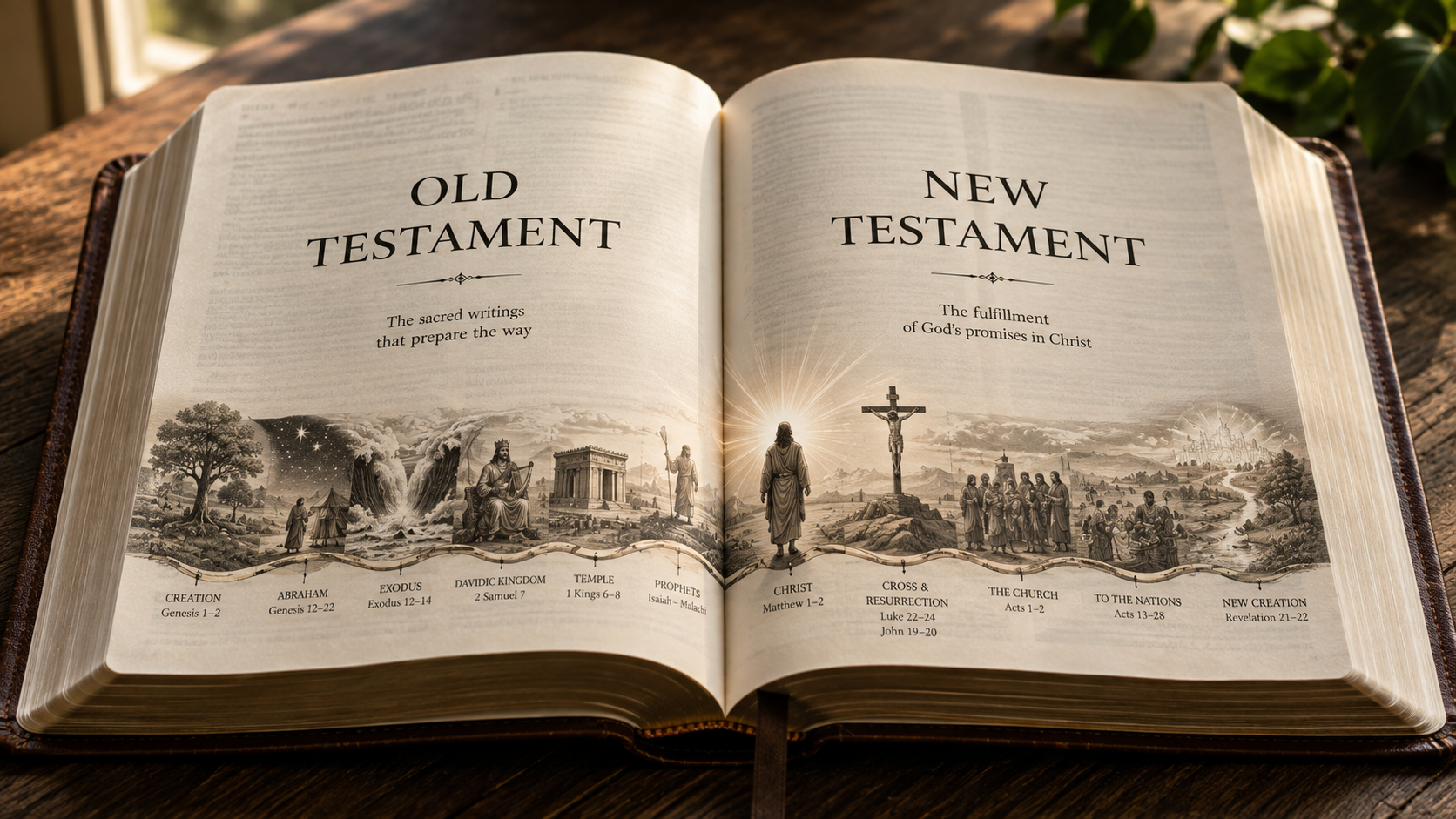
One of the most fascinating areas of biblical scholarship concerns the New Testament’s use of the Old Testament. Anyone who has spent much time reading the New Testament has eventually encountered an Old Testament quotation whose interpretive logic does not seem immediately obvious. We turn back to the original passage, read it within its context, and find ourselves asking, “How did the New Testament author get that from this Old Testament passage?” Some quotations and allusions seem relatively straightforward, while others, such as Matthew’s appeal to Hosea 11:1, initially appear somewhat disconnected from their original contexts. This raises an important hermeneutical question: If Scripture is inspired and authorial intent matters, are the apostles sometimes interpreting Scripture in ways that disregard what the Old Testament authors actually meant? Two possible answers present themselves. On the one hand, we might conclude that the apostles were not constrained by original meaning and therefore neither should we be. On the other hand, we might insist that every New Testament application must have been completely explicit within the conscious intention of the Old Testament author. Yet neither extreme adequately explains the phenomenon, because both fail to reckon with the way Scripture develops across redemptive history. Therefore, it is the thesis of this post that the New Testament authors do not abandon the original meaning of the Old Testament when they interpret it in light of Christ; rather, they read individual texts within their historical contexts and within the larger, progressively unfolding story of redemption that reaches its culmination in Christ.
Of course, before considering how the apostles read the Old Testament Christologically, we must first affirm that the original meaning of the Old Testament text actually matters. This is a fundamental principle of faithful biblical hermeneutics. The biblical authors used particular words within particular literary contexts, during particular historical circumstances, and for particular audiences. Therefore, interpretation must begin by asking what the inspired human author intended to communicate. This being the case, whatever Christological interpretation might subsequently emerge cannot be built upon the abandonment of authorial intent. However, it is also true that a text’s original meaning does not necessarily exhaust its canonical significance. An Old Testament author can communicate something real and intelligible within his own historical setting while his words simultaneously occupy a place within a larger story whose full significance unfolds over time. This is possible because the biblical authors do not write in isolation; each writes at a particular point within the progressively unfolding history of God’s redemptive purposes. Later revelation can therefore develop the implications of earlier revelation without contradicting what the earlier author actually meant. Or, to put it somewhat differently, the original meaning of a text establishes the necessary foundation for its canonical development, but it does not necessarily exhaust the significance that text possesses within the completed story of Scripture.
The reason this distinction is so important is that the Bible is not merely a collection of independent books; it tells one progressively unfolding redemptive story, i.e. creation, fall, redemption, and consummation. This is the metanarrative of Scripture. Throughout that narrative, several important themes and patterns rise to the surface—seed, covenant, exodus, sacrifice, temple, Davidic kingship, servant, restoration, kingdom, and new creation. These themes do not remain static but develop and become increasingly clear as God’s purposes unfold across redemptive history. The promise of the seed develops into the expectation of a coming Messiah; the Davidic covenant generates hope for an everlasting king; exile gives rise to the expectation of restoration; and the prophetic hope ultimately looks toward the renewal of creation itself. The New Testament authors inherit all of this as part of their own theological and canonical heritage. Therefore, although every Old Testament passage possesses an immediate historical-literary context, it also occupies a position within an unfolding redemptive-historical context. We call this progressive revelation, or the idea that God’s revelation of himself and of his plan to redeem humanity becomes increasingly clear as the story progresses. Later revelation clarifies and develops earlier revelation without contradicting it. Consequently, later biblical writers can recognize relationships, patterns, and implications that become clearer as God’s plan unfolds. In other words, the coming of Christ does not change the Old Testament’s story; it reveals where that story was ultimately going. And this is precisely how Jesus himself teaches his disciples to understand Israel’s Scriptures.
In Luke 24.44, Jesus tells his disciples that “everything written about me in the Law of Moses, the Prophets, and the Psalms must be fulfilled” (cf. Luke 24.26–27). In other words, Jesus teaches his disciples to interpret the Old Testament in light of his suffering, resurrection, and the proclamation of repentance to the nations. This does not necessarily mean that every individual passage of the Old Testament is a direct prediction concerning Jesus. Rather, the persons, promises, patterns, institutions, offices, expectations, and trajectories that develop throughout Israel’s Scriptures ultimately find their fulfillment in him. The hope for a Davidic king is fulfilled in Christ. The prophetic expectation of the servant of the Lord reaches its culmination in Christ. The Old Testament sacrificial system anticipates the sacrifice of Christ. The hope for Israel’s restoration reaches its fulfillment in and through Christ. Indeed, Jesus himself says, “Don’t think that I came to abolish the Law or the Prophets. I did not come to abolish but to fulfill” (Matt. 5:17). Fulfillment, therefore, is much broader than the correspondence between a direct prediction and a subsequent event; it encompasses the bringing of God’s entire redemptive purpose to its intended goal. The point is that Christ is not artificially inserted into Israel’s Scriptures; he stands at the culmination of the redemptive story those Scriptures themselves tell.
This is why the assumption that every New Testament quotation works in exactly the same way is problematic. The New Testament certainly employs the Old Testament through direct prediction and fulfillment, but it also utilizes typology, analogy, and broader biblical-theological patterns, often communicating these relationships through explicit quotation or more subtle allusion. For example, in Matthew 2:6, Matthew appeals to Micah 5:2 by way of direct prediction, but only a few verses later, in Matthew 2:15, he appeals to Hosea 11:1 by way of typology. Hosea speaks historically about Israel’s exodus from Egypt; Matthew recognizes that Israel’s sonship establishes a pattern that is recapitulated by Jesus, the true Son. (For more on this particular text, see my post “On Hosea, Matthew, and Authorial Intent,” here.) The same phenomenon occurs throughout the New Testament. Adam is a type of Christ; the Passover anticipates the atoning work of Christ; Davidic kingship reaches its fulfillment in Christ; and the tabernacle and temple anticipate God’s presence with his people ultimately realized in Christ. In each case, the relationship between the Old and New Testaments is real, but it does not operate according to precisely the same hermeneutical mechanism. In other words, fulfillment is a broader category than mere prediction. The New Testament does not require every Old Testament passage applied to Christ to have originally functioned as a direct messianic prophecy. Rather, Christ fulfills the persons, events, institutions, promises, and patterns that together constitute the unfolding story of redemption.
The New Testament authors can recognize a fuller significance in Old Testament passages without assigning them arbitrary meanings. Their readings are constrained by the original historical-literary context, the broader canonical context, the unfolding history of redemption, and ultimately the fulfillment of God’s purposes in Christ. They do not simply disregard the original meaning of a text and assign it an entirely new Christian meaning; neither are they limited to saying only what was already completely explicit within the conscious understanding of the Old Testament author. Rather, God’s intention as the divine author can encompass the developing significance of a text without contradicting what the human author actually communicated. The intentions of the divine and human authors must therefore be understood as complementary rather than competing. (On the question of inspiration and authorial intent, see my post here.) Whatever “fuller sense” we recognize in an Old Testament text must remain grounded in the inspired meaning communicated through the human author and develop organically from the place that text occupies within the unfolding story of redemption. This is because later revelation develops and clarifies earlier revelation; it does not overturn it. The New Testament’s Christological interpretation of the Old Testament is therefore not an alternative to grammatical-historical interpretation, but the canonical culmination of it.
So, when we encounter an Old Testament quotation in the New Testament and find ourselves asking, “How did the New Testament author get that from this Old Testament passage?” the answer is not that the apostles interpreted Scripture arbitrarily or disregarded its original historical and literary context. Neither is it that every Old Testament passage they employ was originally intended as a direct prediction of Jesus. Rather, the apostles read Israel’s Scriptures within their historical and literary contexts, while also recognizing their place within the broader canonical context and the unfolding story of redemption that has reached its culmination in Christ. Their example, therefore, does not give us permission to engage in imaginative interpretations disconnected from authorial intent. If anything, it requires us to read the Old Testament more carefully, tracing the promises, patterns, institutions, and theological trajectories that develop throughout the biblical story. The New Testament authors do not teach us to read Christ into the Old Testament where he does not belong. They teach us to read the Old Testament as Christian Scripture, recognizing that the same God who spoke through Israel’s Scriptures has brought the redemptive purposes revealed in those Scriptures to their divinely intended fulfillment in his Son. Original meaning and Christological fulfillment are not competitors; properly understood, the former provides the foundation upon which the latter is built.
Share this:


On Christ as the Fulfillment of the Psalms
One of the richest books in the Old Testament, in my opinion, is the Book of Psalms. It is a collection filled with the prayers and songs of Israel throughout her history, and it holds immense value for the devotional life of the church today. When we read the Psalms, we are drawn into the devotional, emotional, and personal experience of faith in ways that touch every part of our lives. And this is good and right. But the Psalms are not only expressions of faith, whether Israel’s or our own. They are also filled with expectations that reach beyond themselves. The Book of Psalms gives voice to Israel’s experience, to her covenant relationship with God, and to the life of faith more broadly, but it also creates categories that are not fully resolved within Israel’s history. In other words, the Psalms cry out for fulfillment, and it is my thesis that that fulfillment is ultimately found in and through the person and work of Jesus Christ.
In terms of the Old Testament canon, the Book of Psalms consists of prayers and songs that reflect the people, events, and experiences of Israel’s history. They provide a kind of covenantal reflection and royal theology that flows directly out of that historical context. However, the Psalms consistently reach beyond their immediate setting to realities that are eschatological in nature and central to God’s redemptive purposes. For example, in Psalm 22, we encounter the figure of the righteous sufferer—one who endures deep emotional and physical suffering through no fault of his own. While the superscript attributes the psalm to David, the experience described surpasses anything we can clearly identify in his life. Similarly, Psalms 2 and 110 present a vision of Israel’s ideal king: one who is anointed by God, victorious over his enemies, and who reigns with perfect righteousness and justice. Yet no king in Israel’s history, David included, fully embodies this portrait. Likewise, Psalm 1 sets forth a picture of perfect obedience that distinguishes the righteous from the wicked—an ideal never fully realized in Israel or in our own experience. The point is that the realities these psalms describe extend far beyond any one historical figure. They are not exhausted by the past; they point forward. This is why we can say that they cry out for fulfillment.
What I am saying is that the Psalms present us with a kind of tension; they describe ideals that are a far cry from the lived experience of the faithful, both then and now. The righteous sufferer suffers, but he is ultimately vindicated. The ideal king reigns, yet the nations still rage against his authority. The faithful worshiper trusts in God’s covenant promises, but the world remains broken and filled with sin. In other words, these themes are not fully resolved within the Psalter itself; they point beyond its pages and look forward to the decisive intervention of God. Or to put it differently, the Psalms do not simply describe reality as it is; they long for its restoration. There is a deep and persistent yearning throughout the Psalms for God to act on behalf of his people, to fulfill his promises, to judge the wicked, and to vindicate the righteous. This has been the cry of God’s people from the time of the fall until today. We know that something is wrong with the world as it is, and we long for the day when God will set things right and restore creation to what it was always meant to be. This is the heart of the Psalms.
Of course, it is clear in the Gospels that Jesus knew the Psalms well; no doubt he had read, heard, and memorized many of them throughout his life. But Jesus does not merely quote from the Psalms; he inhabits the realities that they describe. For example, when he is hanging on the cross, he cries out in quotation of Psalm 22.1, even as he bears the weight of his work in making atonement for sin. (On the cry of dereliction, see here.) This is not simply a cry of anguish, but an identification with the righteous sufferer whose vindication is anticipated in that psalm. Or again, in his debates with the religious leaders, he quotes Psalm 110.1 in reference to the identity of the Messiah (Matt. 22.41–46). But this is not merely an abstract theological question; it cuts to the very heart of Jesus’s identity as David’s Lord and the one who shares in the authority of God himself. Likewise, after telling the parable of the vineyard owner, Jesus quotes Psalm 118.22–23 about the stone the builders rejected, applying it directly to his own rejection by the religious leaders (Matt. 21.42–46). Many commentators suggest that these quotations function in a way similar to the Jewish practice of remez, where a single verse evokes the broader context of the entire psalm. The point is that Jesus read the Psalms as speaking about himself and his mission. He is not merely borrowing their language; he is revealing their fulfillment, embodying in his own life, death, and resurrection the realities toward which they ultimately point.
This is most clearly seen in the accounts of Jesus’s passion. I have already mentioned his quotation of Psalm 22, but he also alludes to Psalm 31.5, “Into your hands I entrust my spirit.” In addition to this, the Gospel writers present Jesus as inhabiting the experience of the righteous sufferer described in Psalm 69—one who is mocked, rejected, and consumed with zeal for the house of God. Even in the details of his crucifixion, we see the Psalms shaping the narrative, as John notes that not one of his bones was broken, in keeping with Psalm 34.20. These are not random correspondences; they are theological claims. The cross is the place where the unresolved tensions of the Psalms converge. The suffering of the righteous one, the apparent triumph of the wicked, and the trust of the faithful all meet in this moment. And yet, even here, lament is not the final word. In the midst of suffering, there is trust; in the midst of humiliation, there is the promise of vindication. In other words, what the Psalms anticipated, the cross of Jesus embodies. The cries of the Psalter are not silenced at Calvary; they are fulfilled there, as Jesus bears the full weight of suffering while entrusting himself completely to the Father.
And these kinds of connections between the person and work of Jesus and the Psalms are not unique to the Gospels; they are found throughout the New Testament. The apostles consistently interpret the Psalms in light of Christ. For example, in Acts 2, Peter quotes Psalm 16 in defense of Jesus’s resurrection, arguing that David’s words, “You will not abandon my soul to Hades or allow your Holy One to see decay,” cannot ultimately refer to David himself, since his tomb remained among them. Rather, the psalm finds its true fulfillment in the resurrection of Jesus. Likewise, in Acts 4, when the early church faces opposition, they quote Psalm 2 to interpret the raging of the nations against Jesus as the outworking of God’s sovereign plan. And again, in Acts 4:11, Peter cites Psalm 118.22 about the stone the builders rejected and applies it directly to Christ, a move he likely learned from Jesus himself. The author of Hebrews goes even further, repeatedly drawing from the Psalms to establish the superiority of the Son over angels, priests, and kings (e.g., Psalms 2, 8, and 110 among others). These examples could be multiplied, but the point is clear: the New Testament does not treat the Psalms merely as background; it treats them as prophetic and forward-looking. This fulfillment is not always a matter of direct prediction, but often of pattern and typology. The apostles read the Psalms as finding their true meaning in Christ, a hermeneutic grounded in Jesus’s own words that “everything written about me in the Law of Moses, the Prophets, and the Psalms must be fulfilled” (Luke 24:44).
In other words, Christ is the true singer of the Psalms. He is the true righteous one of Psalm 1; he is the true king of Psalm 2. He is the true suffering servant of Psalm 22, and on and on we could go through all 150 psalms. What the Psalter describes in part and in shadow, Christ embodies in fullness and in reality. He fulfills the Psalms both perfectly, in himself, and representatively, for us. That is to say, he is not only the one who perfectly lives out the life of trust, obedience, and righteousness described in the Psalms, but he is also the one who does so on behalf of his people. He stands in our place as the faithful worshiper, the obedient son, and the righteous sufferer who entrusts himself fully to the Father. This means that the Psalms ultimately belong to Christ before they belong to us. We do not begin with our own experience and read ourselves into the Psalms; rather, we begin with Christ and understand the Psalms through him. Only then, as those united to him by faith, do we find our place within their words.
This means that we must read the Psalms as Christians. Yes, we should still read them devotionally; yes, we should still make them our own in the discipline of prayer as we pray through the Scriptures. But we pray them as those who are united to Christ by faith; we pray them in him and through him. This means that our laments are joined to his laments; our cries of suffering are not isolated expressions, but echoes of the righteous sufferer who has gone before us. Likewise, our hope for vindication and deliverance is not grounded in uncertain circumstances, but in the sure reality of his resurrection. When we pray the Psalms, we are not merely expressing our own emotions; we are participating in the life of Christ himself. He gives shape to our prayers, depth to our suffering, and certainty to our hope. This is why we do not outgrow the Psalms; rather, we grow into them. We learn to read them more deeply in, with, and through Christ, finding that what once seemed distant or unresolved now finds clarity and fulfillment in him.
So, yes, the Psalms cry out for fulfillment, and Christ is the answer to their call. They give voice to the longings, tensions, and expectations of God’s people—longings for justice, for deliverance, for a righteous king, for the vindication of the faithful. Yet these cries are not left unresolved. They are not left hanging in the pages of the Old Testament. Rather, they find their resolution in Jesus. In his life, death, resurrection, and exaltation, the realities anticipated in the Psalms come to their fullness. The righteous sufferer is vindicated, the true king is enthroned, and the faithful worshiper is perfected. What the Psalms express in hope, Christ accomplishes in reality. To read the Psalms rightly, then, is not only to hear the voice of Israel, but to hear the voice of Christ—and to see that what they longed for, he has fulfilled.
For further study:
Ash, Christopher. The Psalms: A Christ-Centered Commentary. Four Volumes. Wheaton, IL: Crossway, 2024.
Share this:

On Jesus was Born to Reign
TEXT
26 In the sixth month, the angel Gabriel was sent by God to a town in Galilee called Nazareth, 27 to a virgin engaged to a man named Joseph, of the house of David. The virgin’s name was Mary. 28 And the angel came to her and said, “Greetings, favored woman! The Lord is with you.” 29 But she was deeply troubled by this statement, wondering what kind of greeting this could be. 30 Then the angel told her, “Do not be afraid, Mary, for you have found favor with God. 31 Now listen: You will conceive and give birth to a son, and you will name him Jesus. 32 He will be great and will be called the Son of the Most High, and the Lord God will give him the throne of his father David. 33 He will reign over the house of Jacob forever, and his kingdom will have no end.”
34 Mary asked the angel, “How can this be, since I have not had sexual relations with a man?” 35 The angel replied to her, “The Holy Spirit will come upon you, and the power of the Most High will overshadow you. Therefore, the holy one to be born will be called the Son of God. 36 And consider your relative Elizabeth—even she has conceived a son in her old age, and this is the sixth month for her who was called childless. 37 For nothing will be impossible with God.” 38 “See, I am the Lord’s servant,” said Mary. “May it happen to me as you have said.” Then the angel left her.
Title: On Jesus was Born to Reign
Text: Isaiah 9.6-7, Luke 1. 26-38, Matthew 2.1-12, Revelation 11.15-19
Series: Promises Fulfilled
Church: Redeemer Baptist Church, Jonesboro, AR
Date: December 29, 2024
Share this:

On the Errors of Full Preterism
Full preterism, or consistent eschatology as it is sometimes called, is the belief that all of the Bible’s prophecies regarding the consummation of God’s plan for the redemption of humanity, including but not limited to the second coming of Jesus, the resurrection, final judgment, and the establishment of the new heavens and the new earth, occurred in 70 AD when the Romans destroyed the temple in Jerusalem. This event in their understanding marked the eschatological transition from the Old Covenant to the New Covenant, meaning that no further fulfillment is necessary. The new has come; it is really and truly here to its fullest extent. There is no need for any further act of God to complete his redemptive purposes in the world.
Now, let me be clear, this position is complete and utter heresy. It is a false gospel, because it denies the essential orthodox belief that “He will come again to judge the living and the dead” (Apostle’s Creed). It denies “the resurrection of the dead and the life of the world to come” (Nicene Creed). These denials among others put the views of full preterism wholly outside the boundaries of historic Christian orthodoxy. In the space that remains here, I would simply like to outline a few of the methodological and theological errors that are typical of this view, and then I will conclude by reaffirming the orthodox Christian hope.
The first error of full preterism is that they have a conspiracy theory view of hermeneutical method. In other words, their interpretations are based on a string of loosely related or even unrelated texts that are tied together by the occurrence of similar words. Of course, they would claim that they are following the principle of sola scriptura, namely that “scripture interprets scripture,” but I would submit that this is a theological conviction for biblical interpretation not a hermeneutical method for biblical interpretation. (See my post here). In stringing texts together the way that they do, they completely disregard concerns for the text’s historical and theological context and the author’s flow of thought. Instead, they flatten out the distinctive emphases of particular texts by smashing them together to say that same thing. More often than not, their exegesis comes across like someone throwing paint against a wall and then concluding they’ve painted Mona Lisa.
A second error of full preterism is that they hold to a gnostic view of the human person. Gnosticism is a heresy from the second century CE that suggests that Christ came to save us from this evil material world so that we could throw off the limits of our physical bodies and exist eternally as pure spirit. Of course, there is much more to it than this simple definition, but its weakness is that it disregards God’s design for human beings as embodied souls. We were made with a body and a soul, and to exist without either one of these is to be incomplete from the biblical point of view. This is why the resurrection of the body is such a primary doctrine; we are not merely transformed spiritually, we will be transformed physically when He comes again. Full preterism denies the future bodily resurrection of both the righteous and the wicked, and they suppose that when we die, we either go to heaven or hell to continue on as a “spiritual” being for eternity.
Thirdly, full preterism has an adoptionistic view of the incarnation. Adoptionism, or dynamic monarchianism, is a heresy from the third century CE that suggests that the divine logos came upon the man Jesus as his baptism, left him at his crucifixion, but then came upon him again at his resurrection. In other words, the man Jesus was “adopted” by God at his resurrection. The view of full preterism is not unlike adoptionistic Christology because they seem to believe the body of Jesus was only necessary during his earthly life. Often they suggest that his body was burnt up, or maybe it disappeared, at His ascension, so that He no longer has a body in heaven now. In other words, the son “adopted” a body for as long as he needed it, but then, when he no longer needed it, he discarded it. Along with the gnostic notions discussed above, this position negates the necessity of the resurrection. Why did Jesus even have to be resurrected from the dead with a body? Why not just rise as pure spirit? Here again, this view cannot explain the glorified body of Jesus, because it makes the incarnation temporary.
A fourth error that is part of the full preterist view is that they seem to have a fatalistic view of human history. Since they view this world as it is now as the “new heavens and new earth,” they have no expectation for any kind of renewal or transformation of the created order. According to this view, sin, death, disease, heartache, and the like will continue in perpetuity, eternally, without end. The only escape from the harsh realities of this world is when we die and go to heaven. But a renewed earth free of the corruption of sin and death is not in the purview of full preterism. This is fatalistic, because it essentially says that this is how the world is and this is how it will be. Nothing will ever get better, paradise will never be restored. Among others problems, this perspective denies the original purity and goodness of God’s creation and God’s intent to restore creation to that state of purity and goodness.
The final error that I see with full preterism, and perhaps the greatest, is that it offers a hopeless view of the Gospel. The reason for this is that it does not offer a final and full defeat of sin. Sure, the penalty of sin has been paid on the cross, and Satan has been defeated. But according to the full preterists, Satan and sin continue to run free forever. There is no final end to sin; there is no final defeat of Satan, no final judgment of the wicked. These things continue into perpetuity. The fact of the matter is that this is not the Gospel. Christ came, yes to pay the penalty for our sin, but also to free us from sin, and not only us, but the entirety of His creation. This is why the creation groans with yearning for the revelation of the sons of God (Romans 8.19-22). We look forward to a world that will be free of the domination and corruption of sin, free of the decay of death, where there will be no more tears, no more pains, no more heartaches. This is hope. This is the Gospel. And so we say, “Amen! Come, Lord Jesus!” (Revelation 22.20)
For further study:
On Christian Hope: Heaven or Resurrection
On Eschatology and the Gospel
Share this:

On Hosea, Matthew, and Authorial Intent
In my previous post, I argued that our hermeneutic for interpreting the Bible must be grounded in the conviction that what God intended to say in the Scriptures is accurately and faithfully conveyed in what the human authors actually wrote, and for most of the Bible, this seems to be rather clear. The question, however, arises when we come to texts in the New Testament that seem to interpret the Old Testament against the grain of the author’s intent. If we believe that “scripture interprets scripture” (see my post, here), then it would makes sense to suggest that we should follow the interpretive principles of the Apostles, and if they were not bound by a strict conception of authorial intent, then perhaps we should jettison this hermeneutical ground in our interpretive efforts as well. This then is the point that must be proven, namely that the New Testament authors did in fact disregard the human author’s intent when they interpreted the Old Testament. Of course, to examine every place where the New Testament author’s quote from or allude to the Old Testament would require far more space than is available here, and this work has already been done by many fine scholars in the field. I recommend Commentary on the New Testament use of the Old Testament, edited by G.K. Beale and D.A. Carson. But in lieu of that, I would like to explore one text as a test case for the thesis that the New Testament authors ignored the principle of authorial intent in their use of the Old Testament, that being Matthew’s use of Hosea 11.1 in chapter 2, verse 15 of his Gospel.
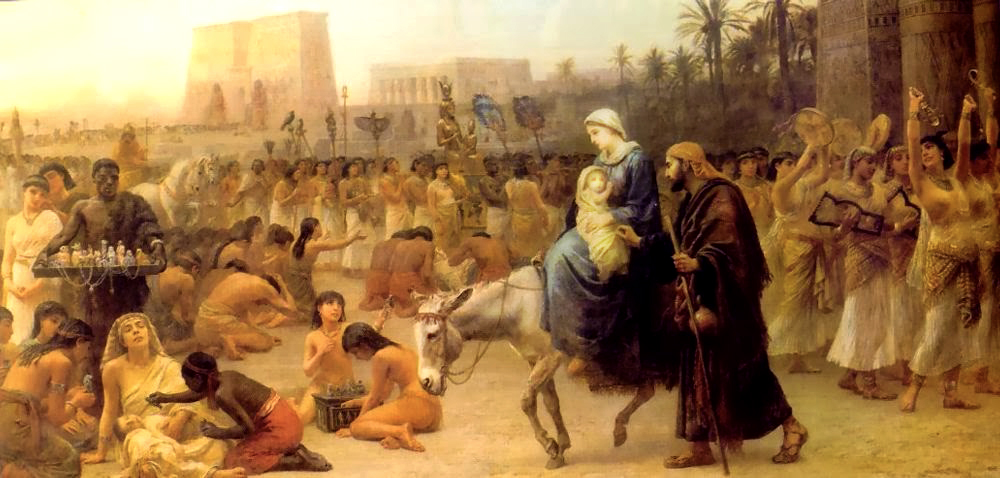
After they were gone, an angel of the Lord appeared to Joseph in a dream, saying, “Get up! Take the child and his mother, flee to Egypt, and stay there until I tell you. For Herod is about to search for the child to kill him.” So he got up, took the child and his mother during the night, and escaped to Egypt. He stayed there until Herod’s death, so that what was spoken by the Lord through the prophet might be fulfilled: Out of Egypt I called my Son.
~Matthew 2.13-15
The book of the prophet Hosea is a story of love and betrayal; set against the backdrop of Hosea’s own marriage to the adulteress Gomer, throughout the book, God repeatedly rebukes the northern Kingdom of Israel for scorning His grace, rejecting His love, forgetting His covenant, and playing the whore with the false gods of Baal. And so, in chapter 11, and verse 1, we read, “When Israel was a child, I loved him, and out of Egypt I called my son.” In these verses, God is looking back on the Exodus experience of His people as the initial overture of His love for Israel; as He goes on to say in verse 4 of that chapter, “I led them with human cords, with ropes of love. To them I was like one who eases the yoke from their jaws; I bent down to give them food.” It is clear that these verses are operating on the paternal imagery of parenthood. In the same way that parents nurture their newborn children, so also God nurtured His “son” Israel by bringing them out of Egyptian slavery, providing for them in the wilderness, and leading them into a land flowing with milk and honey. Even in spite of their repeated betrayal, God goes on to say in verse 8, “How can I give you up, Ephraim? How can I surrender you, Israel? How can I make you like Admah? How can I treat you like Zeboiim? I have had a change of heart; my compassion is stirred!” This chapter is a beautiful picture of the tenderness and mercy of God toward His rebellious son, and even though, the people of Israel will suffer His discipline, it holds out the hope that God has not ceased loving His people.
Now, in chapter 2 of the first canonical Gospel, Matthew connects the flight of the Holy family to Egypt to the words of Hosea 11.1, “so that what was spoken by the Lord through the prophet might be fulfilled: Out of Egypt I have called my Son“ (quoting Hosea 11.1b). But if the prophet Hosea wasn’t making a direct messianic prediction in the text in question, as we saw above, then how can the Egyptian flight of Mary, Joseph, and Jesus properly be considered a fulfillment? The answer is that this is a fulfillment by way of typology not prediction. Part of Matthew’s portrayal of Jesus is to show that He is the long awaited “prophet like Moses” (c.f. Deut 18.15-19), and he demonstrates this by highlighting the ways that Jesus recapitulates the story of Moses. A few examples should suffice. When Moses was born, Pharaoh killed all the Hebrew boys; when Jesus was born, Herod killed all the Jewish boys. According to 1 Corinthians 10.1-2, Moses had a baptism experience in the Red Sea, and Jesus was baptized in the Jordan River. Moses and the Israelites spent forty years in the wilderness; Jesus spent forty days in the wilderness. Moses went up on Mount Sinai to receive the Law; Jesus went up on a mountain to give the law (Sermon on the Mount). There are five books of Moses (Pentateuch); there are five discourses of Jesus’ sermons in the Gospel of Matthew. And “out of Egypt, I called my Son.” Based on this evidence, it is reasonably clear that the fulfillment that Matthew sees in the text of Hosea 11.1 is typological. Even as Israel was God’s typological “son”, Jesus is the true and better messianic Son of God.
In the final analysis, rather than violating the principle of authorial intent in his use of Hosea 11.1, the typological connection drawn by Matthew actually affirms the authorial intent of Hosea. And still, the question remains, “what of God’s intent in Hosea 11.1? When He inspired Hosea to write “out of Egypt, I called my son,” did he know that Matthew would take it in a different direction?” Of course, it is a theological truism to say that God knew the theological connections that Matthew would draw when He inspired Hosea to write, and so it is not wrong to say God “intended” more than Hosea understood at the time. However, this doesn’t mean that His intent stands in contradiction to or competition with the intent of Hosea. We must assume that God’s intent in Hosea 11 was to spark His people to repentance by reminding them of the great depths of His love that was demonstrated in the events of the Exodus, especially because the words of Hosea 11 are reported by the prophet as the very words spoken by God. (This is the Lord’s declaration, Hosea 11.11) Whatever “fuller sense” that we may understand from Hosea’s words, it must be grounded in the inspired intent of the human author, and this is exemplified in Matthew’s use of the text to explain the flight to Egypt.
But there is something that Matthew’s use of the Old Testament can teach us about our own interpretive efforts, namely that our hermeneutic for understanding of the Old Testament must reckon with the person and work of Christ. As Jesus himself affirms, “everything written about me in the Law of Moses, the Prophets, and the Psalms must be fulfilled.” (Luke 24.44) In other words, we have not done our full interpretive work in the Old Testament if we fail to consider how the text points to or is fulfilled in Jesus. If our understanding of the Old Testament would be accepted in a Jewish synagogue, then we haven’t understood the text Christianly. However, this does not mean that we can disregard the principle of authorial intent; we must still labor within the boundaries of literary and historical context before we can consider the broader canonical and theological implications. At the very least, our understanding of the human author’s intent must function as the true and necessary foundation upon which we stand as we seek the illumination of the Spirit in understanding the theological and applicational implications of the text for our lives in Christ. This is a thoroughly Christian understanding of how to interpret the Bible.
Share this:

On the Fear of God and the Fulfilled Life
TEXT
9 In addition to the Teacher being a wise man, he constantly taught the people knowledge; he weighed, explored, and arranged many proverbs. 10 The Teacher sought to find delightful sayings and write words of truth accurately. 11 The sayings of the wise are like cattle prods, and those from masters of collections are like firmly embedded nails. The sayings are given by one Shepherd.
12 But beyond these, my son, be warned: there is no end to the making of many books, and much study wearies the body. 13 When all has been heard, the conclusion of the matter is this: fear God and keep his commands, because this is for all humanity. 14 For God will bring every act to judgment, including every hidden thing, whether good or evil.
Text: Ecclesiastes 12.9-14
Series: The Book of Ecclesiastes
Church: South Caraway Baptist Church, Jonesboro, AR
Date: October 2, 2022


