Tag Archives: Christology

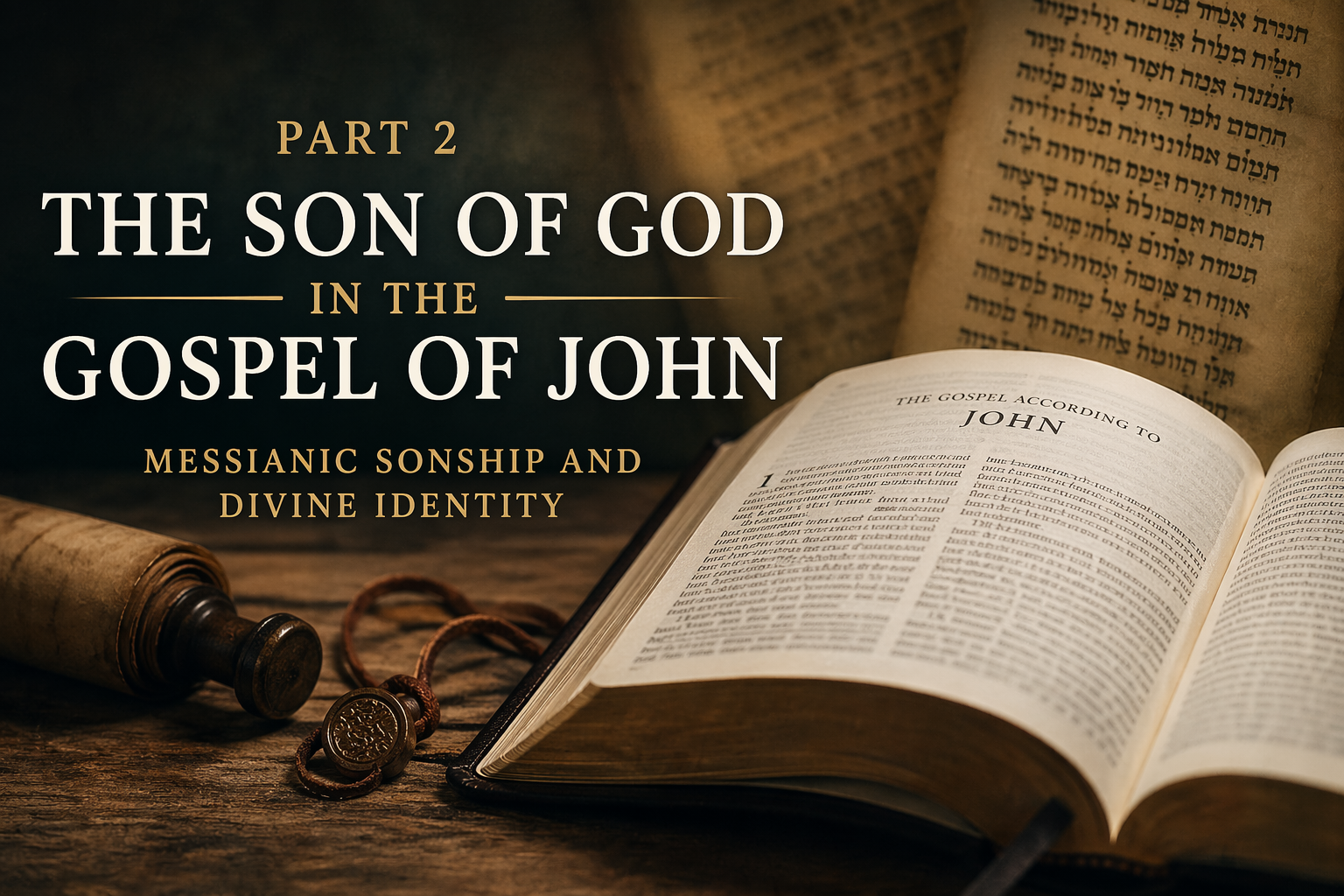
On Messianic Sonship in the Gospel of John

In my previous post, I argued that in the New Testament the title “Son of God” should be understood primarily as royal and messianic before it is understood in fully developed theological terms. However, because of its clear emphasis on the divinity of Jesus, many assume that the Gospel of John moves away from this historical and messianic framework. In this post, I want to suggest that John does not abandon these categories; on the contrary, he deepens them in order to reveal what it truly means for Jesus to be the Messiah. Or to put it another way, John presents Jesus in continuity with Jewish messianic expectations, while also showing that this messianic sonship entails a uniquely intimate and divine relationship with the Father that exceeds what was previously anticipated. The question, then, is not whether John’s understanding of Jesus is messianic, but what kind of messianism he presents.

In his purpose statement, John writes that “these are written so that you may believe that Jesus is the Messiah, the Son of God.” Here again, the grammatical construction is significant. The term “Christ” (or “Messiah”) stands in apposition to the phrase “Son of God,” meaning that the two expressions are placed side by side, with one defining or clarifying the other. In this context, to confess Jesus as the Messiah is to confess him as the Son of God. This same connection appears at the beginning of the Gospel of John. In John 1:49, Nathanael declares, “You are the Son of God; you are the King of Israel.” The parallelism in these lines again equates divine sonship with messianic kingship, but more importantly, these two statements function as bookends to the Gospel, framing John’s presentation of Jesus from beginning to end. The point, then, is that John does not abandon the messianic meaning of “Son of God.” Rather, he affirms it at the structural level of his narrative. To believe in Jesus as the Messiah is to believe in him as the Son, and this understanding stands in direct continuity with the Synoptic presentation explored in the previous post.

This same connection appears at the midpoint of the Gospel of John. In the account of Lazarus in John 11, after Jesus declares that he is “the resurrection and the life,” he turns to Martha and asks, “Do you believe this?” She responds, “Yes, Lord; I believe that you are the Messiah, the Son of God, who is coming into the world.” This confession is loaded with Christological significance. Not only does it once again place “Messiah” and “Son of God” in apposition, reinforcing the connection we have already seen, but it also adds a further layer by describing Jesus as “the one who is coming into the world.” This language resonates with broader biblical expectations of a coming deliverer—one who is sent by God and arrives to accomplish his purposes. It echoes themes associated with the coming figure of Daniel 7 and the one who comes in the name of the Lord in Psalm 118. Taken together with John 1:49 and 20:31, this confession strengthens the pattern: to be the Son of God is to be the Messiah, the King of Israel, the one sent into the world. In other words, John clearly preserves and reinforces the traditional messianic categories that were already in circulation.

Of course, conceptions of the Messiah in the literature of Second Temple Judaism were far from uniform. Expectations were diverse and often overlapping rather than monolithic. Some traditions emphasized a royal figure in continuity with the promises to David, drawing on texts like 2 Samuel 7 and Psalm 2, where the Messiah is understood as the anointed king who would rule on God’s behalf. Others envisioned a more prophetic figure, in keeping with the promise of a prophet like Moses in Deuteronomy 18, one who would speak God’s word with unique authority. Still others anticipated a more exalted or even heavenly figure, shaped by texts like Daniel 7, where the “Son of Man” is portrayed as receiving dominion and glory from God himself. The point is not that these expectations were clearly defined or neatly separated, but that Jewish messianism already contained a range of categories capable of accommodating a figure of significant authority and even transcendent status. This is important for reading the Gospel of John. When John presents Jesus in elevated terms, he is not abandoning messianic categories or importing something foreign into the tradition. Rather, he is drawing on a rich and developing matrix of expectation already present within Second Temple Judaism and showing how these strands converge in the person of Jesus.

Now, as I argued in my previous post, in the Synoptic Gospels the idea of sonship is primarily representative. As the Messiah, Jesus stands as God’s appointed ruler on earth, the true king who embodies and fulfills the role that Israel and her kings failed to carry out. But in the Gospel of John, the concept of sonship is taken further. The relationship between the Father and the Son is not merely one of representation, but of participation. That is, the Son does not simply act on God’s behalf; he acts in a way that is inseparably bound up with the Father’s own activity. This is made clear in passages like John 5:19, where Jesus says, “Truly I tell you, the Son is not able to do anything on his own, but only what he sees the Father doing. For whatever the Father does, the Son likewise does these things.” The claim here is remarkable. It is not merely that the Son imitates the Father, but that his actions are perfectly coordinated with and reflective of the Father’s own work. The same idea appears in John 10:30: “I and the Father are one.” In other words, the Son does not merely represent the Father as his agent; he shares in his work in a unique and unparalleled way. This is not a departure from messianic sonship, but a deepening of it—one that begins to press beyond simple representation into a more profound unity between the Father and the Son.

At this point, it is helpful to introduce a category that has received significant attention in recent scholarship, namely the Jewish concept of agency. In the ancient Jewish world, an agent functioned as a representative of the one who sent him. The basic idea was that “the one sent is as the sender,” meaning that the agent could speak and act with the authority of the one who commissioned him. This framework helps explain much of the language in the Gospel of John, especially the repeated emphasis that Jesus is the one “sent” by the Father. He speaks the Father’s words, performs the Father’s works, and carries out the Father’s will. In this sense, Jesus clearly fits within recognizable Jewish categories of agency. And yet, as the Gospel unfolds, it becomes evident that his sonship cannot be fully contained within that framework. Jesus does not merely speak for God; he speaks as one who uniquely knows the Father. He does not simply carry out God’s works; he does what the Father himself does. The point, then, is that while the category of agency is helpful, it is ultimately insufficient. The Son does not merely act on God’s behalf—he acts with God’s authority in a way that is inseparably bound up with the Father himself. In other words, John presents a form of agency that is intensified to the point of revealing something more about the identity of the Son.

According to John, this is precisely why opposition to Jesus intensifies. In John 5:18, we read, “This is why the Jews began trying all the more to kill him: not only was he breaking the Sabbath, but he was even calling God his own Father, making himself equal to God.” This observation is significant because it shows that the implications of Jesus’s claims are drawn from within the narrative itself. John does not import the idea of divine sonship from some external philosophical framework; rather, it emerges organically from the way Jesus speaks about his relationship to the Father. What is particularly striking is that Jesus does not correct this interpretation. Instead, in the verses that follow, he deepens it. He speaks of doing whatever the Father does, of giving life as the Father gives life, and of exercising judgment as the Father does. In other words, the claim to sonship entails participation in divine prerogatives that belong to God alone. The response of his opponents, then, is not a misunderstanding but a recognition of the implications of his words. They perceive that Jesus is not merely claiming to be God’s representative, but is placing himself in a unique relationship of shared authority with God. The point, then, is that in John’s Gospel, messianic sonship presses beyond representation into a form of equality that raises unavoidable questions about the identity of the Son.

And this is why Jesus is uniquely able to reveal the Father. In John 1:18 we read, “No one has ever seen God. The one and only Son, who is himself God and is at the Father’s side—he has revealed him.” There is a well-known textual question here as to whether the verse should read “the only begotten God” or “the only begotten Son.” While the evidence favors the reading “the only begotten God”, what is most striking is that both readings point in the same direction: John is describing a relationship between the Father and the Son that is without parallel. The Son stands in the closest possible relation to the Father—“at his side”—and precisely for that reason he is able to make him known. This is not simply the language of a prophet who speaks on God’s behalf; it is the language of one who knows God from within that relationship. Jesus makes this point explicit in John 14. When Philip asks, “Lord, show us the Father,” Jesus responds, “The one who has seen me has seen the Father.” In other words, the Son does not merely communicate information about God—he reveals him. The Son is uniquely qualified to make the Father known because his identity is inseparably bound up with the Father himself.

As in the Synoptic Gospels, the identity of Jesus as the Son reaches its fullest expression in his death, but in the Gospel of John this moment is framed in a striking way. The crucifixion is not merely suffering; it is glorification. In John 12:32, Jesus says, “As for me, if I am lifted up from the earth I will draw all people to myself.” The language of being “lifted up” carries a deliberate double meaning. On the one hand, it refers to the physical lifting up of Jesus on the cross. On the other, it points to exaltation, to being lifted up in glory. For John, these are not separate events but one and the same reality viewed from different angles. This is confirmed in John 13:31, where, immediately after predicting his betrayal, Jesus declares, “Now the Son of Man is glorified, and God is glorified in him.” In other words, the cross is not a contradiction of Jesus’s identity as the Son—it is its revelation. The glory of his sonship is displayed precisely in his obedience, his self-giving, and his willingness to suffer. The Son is most fully revealed not in avoiding the cross, but in embracing it.

And the resurrection brings this trajectory to its proper conclusion. After seeing the risen Jesus and placing his hands in his wounds, Thomas responds with the climactic confession, “My Lord and my God!” (John 20.28). This is not merely an emotional outburst; it is the narrative’s decisive answer to the question that has been building throughout the Gospel of John: Who is this Jesus who claims to be the Son of God? Thomas’s confession brings together the strands that John has been developing from the beginning. The one who is the Messiah, the Son of God, is also rightly confessed as Lord and God. In this moment, the identity of Jesus is not revised but fully recognized. The resurrection does not introduce something new; it confirms and unveils what has been true all along. As such, the arc of the Gospel reaches its climax in the full acknowledgment of Jesus’s identity, echoing the claims of the opening prologue. The Son who was sent into the world is revealed to be none other than God himself, now seen, known, and confessed in the risen Christ.

So, to bring all of this together, we can now see the full trajectory of the title “Son of God” across the canon. In the Old Testament, sonship is grounded in covenant and kingship. Israel is called God’s son, and the Davidic king is identified as God’s son, functioning as his appointed ruler and representative. In the Synoptic Gospels, this category is sharpened and focused in the person of Jesus, who is confessed as the Messiah, the Son of God—the one who fulfills the role that Israel and her kings failed to carry out. But in the Gospel of John, this messianic sonship is not abandoned; it is brought to its fullest expression. John shows that the Messiah is the Son in a deeper sense than previously expected. The Son does not merely represent God’s rule; he participates in the Father’s work, shares in his authority, and uniquely reveals his identity. In other words, John does not move beyond messianism into something else entirely. Rather, he reveals what messianism was ultimately pointing toward all along. The royal Son of the Old Testament and the messianic Son of the Synoptics find their fullest meaning in the one who is not only God’s appointed king, but the Son who stands in a unique and unparalleled relationship with the Father.

What all of this means, then, is that the confession that Jesus is the Son of God is not merely a doctrinal statement to be affirmed, but a reality to be believed and lived. In the Gospel of John, belief in the Son is consistently tied to life. To believe in him is to receive life, to enter into a relationship with the Father, and to know God as he truly is. This is because the Son is the one who uniquely reveals the Father. He is not simply a messenger who brings information about God; he is the one in whom God is made known. And so to come to the Son is to come to the Father. At the same time, this confession is grounded in the unfolding story of Scripture. The title “Son of God” begins in the Old Testament as a royal and covenantal designation, is sharpened in the Synoptic Gospels as a messianic identity, and is brought to its fullest expression in John, where the Son is revealed in a uniquely intimate and participatory relationship with the Father. To confess Jesus as the Son of God, then, is not only to affirm his role as Messiah, but to recognize him as the one who stands at the very center of God’s redemptive purposes, the one who makes the Father known, and the one in whom we find life.

For further study:
Reynolds, Benjamin E., and Gabriele Boccaccini, eds. Reading the Gospel of John’s Christology as Jewish Messianism: Royal, Prophetic, and Divine Messiahs. Ancient Judaism and Early Christianity. Leiden: Brill, 2018.


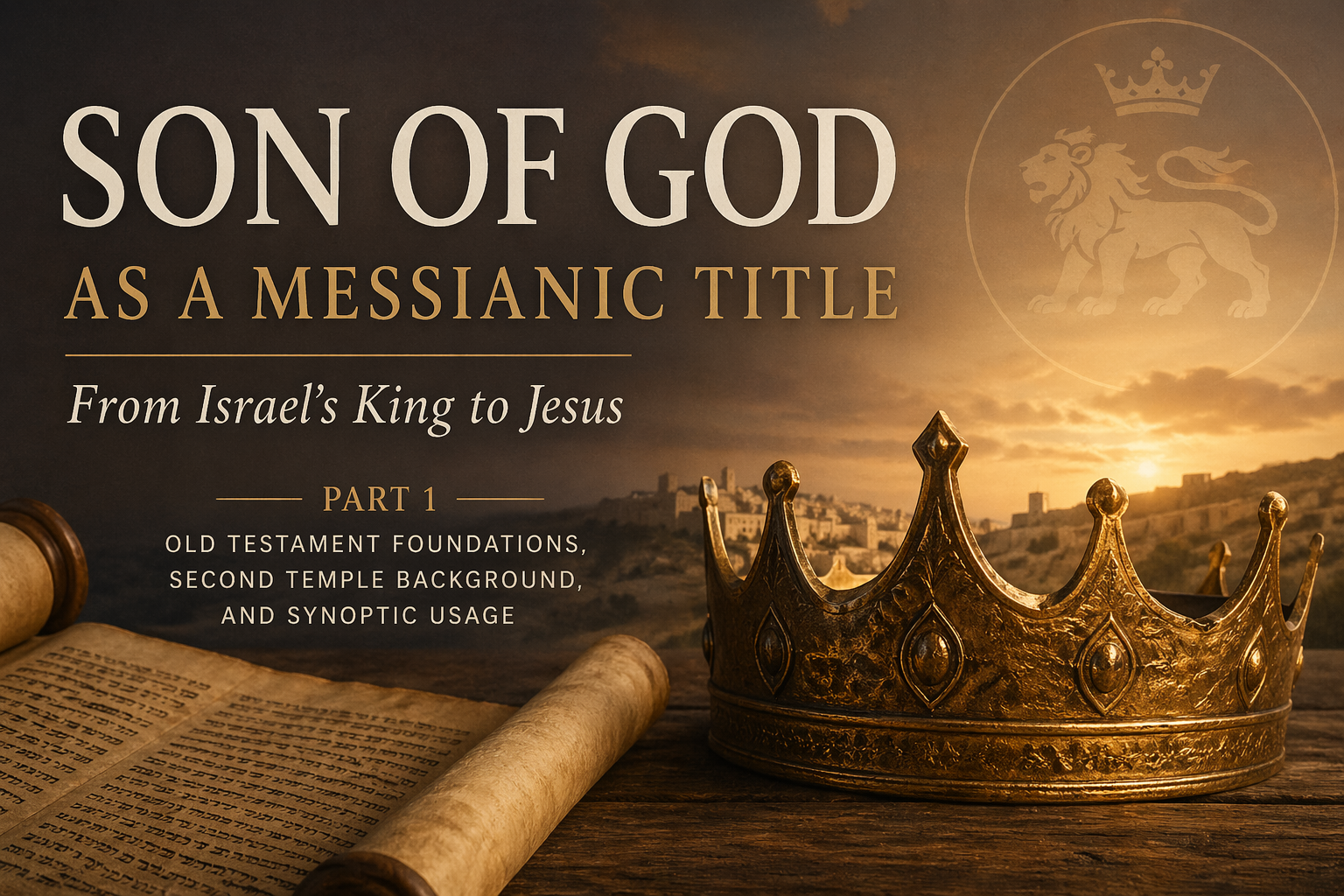
On Son of God as a Messianic Title

When Christians confess that Jesus is the Son of God, we are usually affirming something of his divinity. In other words, the title “Son of God” is typically understood in doctrinal terms as an affirmation that Jesus is the second person of the Trinity come incarnate. This understanding reaches back to the formulation of the First Council of Nicaea in AD 325. In that creed, we confess that Jesus is “the only begotten Son of God, born of the Father before all ages, God from God, Light from Light, true God from true God, begotten, not made, consubstantial with the Father.” These are beautiful words that faithfully express the truth of Christ’s divinity. However, they also risk skipping the story. In Scripture, the term “Son of God” first emerges as a royal, messianic title before it is developed into a fuller theological claim about his divine identity. Its meaning is shaped by covenant, kingship, and expectation, and only later expanded in light of who Jesus truly is.

The idea of sonship appears early in the Old Testament. As early as Exodus 4.22, God declares that “Israel is my firstborn son,” identifying the nation as his covenant people, set apart to represent him among the nations. Later, in the Davidic covenant, God speaks of the king in similar terms: “I will be his father, and he will be my son” (2 Sam. 7.14). Here, sonship is tied directly to kingship and divine appointment. The king stands as God’s representative, ruling on his behalf and under his authority. This same idea is expressed in Psalm 2, where, in the context of royal coronation, the king declares, “He said to me, ‘You are my Son; today I have begotten you.'” The language is not biological or metaphysical, but covenantal and functional. It marks the king as the one chosen and installed by God to exercise his rule. The point, then, is that in these texts divine sonship refers to representative, covenantal identity. It speaks of relational authority, divine election, and royal vocation rather than transcendent metaphysical realities. To be called ‘Son of God’ in this context is to be appointed as God’s king, entrusted with the responsibility of embodying his rule among his people.

The problem, however, is that these “sons of God” consistently fail to live up to the height of their calling. As God’s son, Israel was called to be a kingdom of priests, a light to the nations, and a visible reflection of God’s character in the world. Yet instead of faithfulness, they fell into sin and idolatry, broke the terms of the covenant, and were ultimately sent into exile under its curses. The same pattern emerges in the Davidic line. The kings of Israel and Judah, who were called to mediate God’s rule over his people, likewise failed through disobedience and compromise. This tension is reflected within the Psalms themselves. In Psalm 2, the authority of the Lord’s anointed king is met with resistance as the nations rage against him. In Psalm 89, the psalmist recalls God’s covenant promises to David, only to lament that those promises appear to stand in contradiction to present reality. The result is that the category of “son of God” begins to carry forward-looking weight. It no longer simply describes a present reality; it generates expectation. There emerges a longing for a faithful son, a greater son, who will succeed where Israel and her kings have failed, a hope captured in texts like Isaiah 9.6–7, where the promised son will finally bear the government in righteousness and peace. In other words, the Scriptures create space for a future Son who will succeed where others failed.

This hope for a greater Son of God becomes more clearly defined in the Second Temple period. Of course, these texts are not inspired Scripture, but they do provide important insight into the expectations and categories that were alive at the time of Jesus. What we see is a growing anticipation of deliverance increasingly framed in royal and messianic terms. While these expectations are diverse, there remains a significant continuity with Old Testament categories, especially the idea of the “Son of God.” For example, among the Dead Sea Scrolls, texts like 4Q174 (the Florilegium) link the Davidic covenant and the language of sonship in 2 Samuel 7.14 with the expectation of a coming royal Messiah. Likewise, 4Q246 explicitly uses the titles “Son of God” and “Son of the Most High” in reference to a future ruler. Another text, 1QSa (often cited as 1Q28a), appears to echo Psalm 2.7 with language of divine begetting applied to the Messiah. These examples could be multiplied, but the point is clear: in the Second Temple period, the concept of divine sonship is not abandoned or redefined, but carried forward and intensified. It remains closely tied to the Davidic king, even as it takes on heightened expectation in anticipation of the one who will finally fulfill that role. Or to put it another way, the term “Son of God” was already a loaded, expectation-filled term before Jesus appeared.

In the Synoptic Gospels, “Son of God” language appears at key moments in the life and ministry of Jesus. Most notably, at his baptism and again at his transfiguration, a voice from heaven declares, “This is my beloved Son,” marking him out as the one uniquely appointed and affirmed by God. The demons, too, recognize Jesus as the Son of God, a recognition that underscores his authority and signals his messianic identity, even when others fail to perceive it clearly. This comes into sharper focus at Caesarea Philippi. When Jesus asks his disciples, “Who do you say that I am?”, Peter responds, “You are the Messiah, the Son of the living God.” The grammar of this confession is particularly significant. The predicate nominative “Messiah” and the phrase “Son of the living God” stand in apposition, meaning that the second expression defines and clarifies the first. In other words, to confess Jesus as the Messiah is to confess him as the Son of God. In this context, divine sonship is directly tied to his mission, obedience, and kingship. At the same time, Jesus redefines contemporary messianic expectations. He rejects the political and nationalistic ambitions often associated with the Messiah and instead frames his identity around suffering, obedience, and ultimately his death. The point, then, is that throughout the Synoptic Gospels, the title “Son of God” functions primarily as a messianic designation, identifying who Jesus is and what he has come to do.

Even at his crucifixion, the language of sonship is front and center. The religious leaders mock him, saying, “If you are the Son of God, come down from the cross” (Matt. 27.40), and again, “He is the King of Israel! Let him come down now from the cross, and we will believe in him” (Matt. 27.42). The parallelism in these statements is striking. “Son of God” and “King of Israel” function as equivalent titles, reinforcing the connection between divine sonship and messianic kingship. And yet, this is the tension: the one who claims to be the Son of God appears to be defeated. He does not come down from the cross; he remains and suffers. But this apparent contradiction is precisely the point. Jesus does not abandon his identity as the Son; he fulfills it through obedience and suffering. His sonship is not negated at the cross; it is revealed there. The resurrection then serves as the divine vindication of his claims. As Paul writes in Romans 1.4, he was “appointed Son of God in power… by the resurrection from the dead.” That is, the resurrection publicly confirms what was already true of him, now revealed in power. The cross is not the denial of his kingship, but the path to it. As even the Roman centurion confesses at his death, “Truly this man was the Son of God.”

The early apostolic witness continues this same pattern by interpreting Jesus’s sonship in light of his resurrection and exaltation. In the book of Acts, the apostles repeatedly draw from the Psalms to explain what God has accomplished in Christ. For example, in Acts 13, Paul cites Psalm 2.7—“You are my Son; today I have begotten you”—and applies it to the resurrection of Jesus. In this context, the language of “begetting” is not about origin, but about installation. The resurrection marks the public declaration and vindication of Jesus as the Son of God, the one who now reigns in power. Similarly, Psalm 110 is used throughout the New Testament to describe Christ’s exaltation to the right hand of God, a position of authority, kingship, and rule over all things. The point is that the apostles read the Psalms as speaking directly to the identity and mission of Jesus, particularly as they relate to his enthronement. His sonship is not merely a title attached to his earthly ministry; it is confirmed and displayed in his exaltation. In other words, Jesus is revealed to be the Son of God in power as the risen and reigning king, fulfilling the royal and covenantal expectations embedded in the Psalter. (On Christ as the fulfillment of the Psalms, see here.)

Bringing all of this together, the title “Son of God” in Scripture carries a rich and layered meaning that is rooted in covenant, kingship, and ultimately fulfillment in Christ. It is a title that begins with Israel as God’s son, is focused and intensified in the Davidic king, and then expands into a forward-looking expectation for a faithful Son who will succeed where all others have failed. In Jesus, that expectation is finally realized. He is the true Son who embodies what Israel was called to be, the true King who fulfills the promises made to David, and the obedient Son who accomplishes the will of the Father. His sonship is not defined by abstract speculation, but by his mission—his life of perfect obedience, his suffering on the cross, his resurrection from the dead, and his exaltation to the right hand of God. To confess Jesus as the Son of God, then, is to confess him as the promised Messiah, the one in whom God’s purposes for his people and his world are brought to completion. And yet, as full and glorious as this picture is, the story does not end here. The New Testament, particularly in the Gospel of John, will press even further, showing that Jesus’s sonship is not only messianic, but also reveals something deeper about his identity. But that is a discussion for another time.


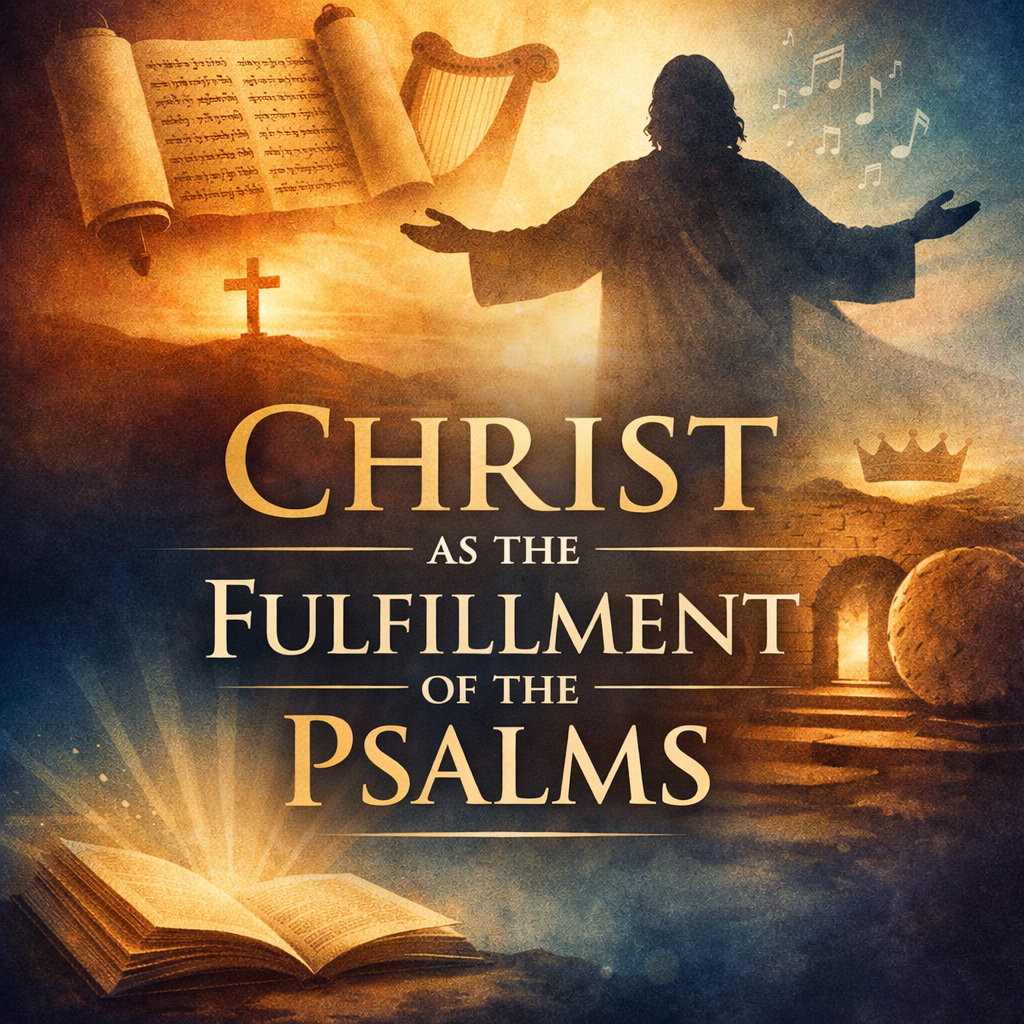
On Christ as the Fulfillment of the Psalms

One of the richest books in the Old Testament, in my opinion, is the Book of Psalms. It is a collection filled with the prayers and songs of Israel throughout her history, and it holds immense value for the devotional life of the church today. When we read the Psalms, we are drawn into the devotional, emotional, and personal experience of faith in ways that touch every part of our lives. And this is good and right. But the Psalms are not only expressions of faith, whether Israel’s or our own. They are also filled with expectations that reach beyond themselves. The Book of Psalms gives voice to Israel’s experience, to her covenant relationship with God, and to the life of faith more broadly, but it also creates categories that are not fully resolved within Israel’s history. In other words, the Psalms cry out for fulfillment, and it is my thesis that that fulfillment is ultimately found in and through the person and work of Jesus Christ.

In terms of the Old Testament canon, the Book of Psalms consists of prayers and songs that reflect the people, events, and experiences of Israel’s history. They provide a kind of covenantal reflection and royal theology that flows directly out of that historical context. However, the Psalms consistently reach beyond their immediate setting to realities that are eschatological in nature and central to God’s redemptive purposes. For example, in Psalm 22, we encounter the figure of the righteous sufferer—one who endures deep emotional and physical suffering through no fault of his own. While the superscript attributes the psalm to David, the experience described surpasses anything we can clearly identify in his life. Similarly, Psalms 2 and 110 present a vision of Israel’s ideal king: one who is anointed by God, victorious over his enemies, and who reigns with perfect righteousness and justice. Yet no king in Israel’s history, David included, fully embodies this portrait. Likewise, Psalm 1 sets forth a picture of perfect obedience that distinguishes the righteous from the wicked—an ideal never fully realized in Israel or in our own experience. The point is that the realities these psalms describe extend far beyond any one historical figure. They are not exhausted by the past; they point forward. This is why we can say that they cry out for fulfillment.

What I am saying is that the Psalms present us with a kind of tension; they describe ideals that are a far cry from the lived experience of the faithful, both then and now. The righteous sufferer suffers, but he is ultimately vindicated. The ideal king reigns, yet the nations still rage against his authority. The faithful worshiper trusts in God’s covenant promises, but the world remains broken and filled with sin. In other words, these themes are not fully resolved within the Psalter itself; they point beyond its pages and look forward to the decisive intervention of God. Or to put it differently, the Psalms do not simply describe reality as it is; they long for its restoration. There is a deep and persistent yearning throughout the Psalms for God to act on behalf of his people, to fulfill his promises, to judge the wicked, and to vindicate the righteous. This has been the cry of God’s people from the time of the fall until today. We know that something is wrong with the world as it is, and we long for the day when God will set things right and restore creation to what it was always meant to be. This is the heart of the Psalms.

Of course, it is clear in the Gospels that Jesus knew the Psalms well; no doubt he had read, heard, and memorized many of them throughout his life. But Jesus does not merely quote from the Psalms; he inhabits the realities that they describe. For example, when he is hanging on the cross, he cries out in quotation of Psalm 22.1, even as he bears the weight of his work in making atonement for sin. (On the cry of dereliction, see here.) This is not simply a cry of anguish, but an identification with the righteous sufferer whose vindication is anticipated in that psalm. Or again, in his debates with the religious leaders, he quotes Psalm 110.1 in reference to the identity of the Messiah (Matt. 22.41–46). But this is not merely an abstract theological question; it cuts to the very heart of Jesus’s identity as David’s Lord and the one who shares in the authority of God himself. Likewise, after telling the parable of the vineyard owner, Jesus quotes Psalm 118.22–23 about the stone the builders rejected, applying it directly to his own rejection by the religious leaders (Matt. 21.42–46). Many commentators suggest that these quotations function in a way similar to the Jewish practice of remez, where a single verse evokes the broader context of the entire psalm. The point is that Jesus read the Psalms as speaking about himself and his mission. He is not merely borrowing their language; he is revealing their fulfillment, embodying in his own life, death, and resurrection the realities toward which they ultimately point.

This is most clearly seen in the accounts of Jesus’s passion. I have already mentioned his quotation of Psalm 22, but he also alludes to Psalm 31.5, “Into your hands I entrust my spirit.” In addition to this, the Gospel writers present Jesus as inhabiting the experience of the righteous sufferer described in Psalm 69—one who is mocked, rejected, and consumed with zeal for the house of God. Even in the details of his crucifixion, we see the Psalms shaping the narrative, as John notes that not one of his bones was broken, in keeping with Psalm 34.20. These are not random correspondences; they are theological claims. The cross is the place where the unresolved tensions of the Psalms converge. The suffering of the righteous one, the apparent triumph of the wicked, and the trust of the faithful all meet in this moment. And yet, even here, lament is not the final word. In the midst of suffering, there is trust; in the midst of humiliation, there is the promise of vindication. In other words, what the Psalms anticipated, the cross of Jesus embodies. The cries of the Psalter are not silenced at Calvary; they are fulfilled there, as Jesus bears the full weight of suffering while entrusting himself completely to the Father.

And these kinds of connections between the person and work of Jesus and the Psalms are not unique to the Gospels; they are found throughout the New Testament. The apostles consistently interpret the Psalms in light of Christ. For example, in Acts 2, Peter quotes Psalm 16 in defense of Jesus’s resurrection, arguing that David’s words, “You will not abandon my soul to Hades or allow your Holy One to see decay,” cannot ultimately refer to David himself, since his tomb remained among them. Rather, the psalm finds its true fulfillment in the resurrection of Jesus. Likewise, in Acts 4, when the early church faces opposition, they quote Psalm 2 to interpret the raging of the nations against Jesus as the outworking of God’s sovereign plan. And again, in Acts 4:11, Peter cites Psalm 118.22 about the stone the builders rejected and applies it directly to Christ, a move he likely learned from Jesus himself. The author of Hebrews goes even further, repeatedly drawing from the Psalms to establish the superiority of the Son over angels, priests, and kings (e.g., Psalms 2, 8, and 110 among others). These examples could be multiplied, but the point is clear: the New Testament does not treat the Psalms merely as background; it treats them as prophetic and forward-looking. This fulfillment is not always a matter of direct prediction, but often of pattern and typology. The apostles read the Psalms as finding their true meaning in Christ, a hermeneutic grounded in Jesus’s own words that “everything written about me in the Law of Moses, the Prophets, and the Psalms must be fulfilled” (Luke 24:44).

In other words, Christ is the true singer of the Psalms. He is the true righteous one of Psalm 1; he is the true king of Psalm 2. He is the true suffering servant of Psalm 22, and on and on we could go through all 150 psalms. What the Psalter describes in part and in shadow, Christ embodies in fullness and in reality. He fulfills the Psalms both perfectly, in himself, and representatively, for us. That is to say, he is not only the one who perfectly lives out the life of trust, obedience, and righteousness described in the Psalms, but he is also the one who does so on behalf of his people. He stands in our place as the faithful worshiper, the obedient son, and the righteous sufferer who entrusts himself fully to the Father. This means that the Psalms ultimately belong to Christ before they belong to us. We do not begin with our own experience and read ourselves into the Psalms; rather, we begin with Christ and understand the Psalms through him. Only then, as those united to him by faith, do we find our place within their words.

This means that we must read the Psalms as Christians. Yes, we should still read them devotionally; yes, we should still make them our own in the discipline of prayer as we pray through the Scriptures. But we pray them as those who are united to Christ by faith; we pray them in him and through him. This means that our laments are joined to his laments; our cries of suffering are not isolated expressions, but echoes of the righteous sufferer who has gone before us. Likewise, our hope for vindication and deliverance is not grounded in uncertain circumstances, but in the sure reality of his resurrection. When we pray the Psalms, we are not merely expressing our own emotions; we are participating in the life of Christ himself. He gives shape to our prayers, depth to our suffering, and certainty to our hope. This is why we do not outgrow the Psalms; rather, we grow into them. We learn to read them more deeply in, with, and through Christ, finding that what once seemed distant or unresolved now finds clarity and fulfillment in him.

So, yes, the Psalms cry out for fulfillment, and Christ is the answer to their call. They give voice to the longings, tensions, and expectations of God’s people—longings for justice, for deliverance, for a righteous king, for the vindication of the faithful. Yet these cries are not left unresolved. They are not left hanging in the pages of the Old Testament. Rather, they find their resolution in Jesus. In his life, death, resurrection, and exaltation, the realities anticipated in the Psalms come to their fullness. The righteous sufferer is vindicated, the true king is enthroned, and the faithful worshiper is perfected. What the Psalms express in hope, Christ accomplishes in reality. To read the Psalms rightly, then, is not only to hear the voice of Israel, but to hear the voice of Christ—and to see that what they longed for, he has fulfilled.

For further study:
Ash, Christopher. The Psalms: A Christ-Centered Commentary. Four Volumes. Wheaton, IL: Crossway, 2024.


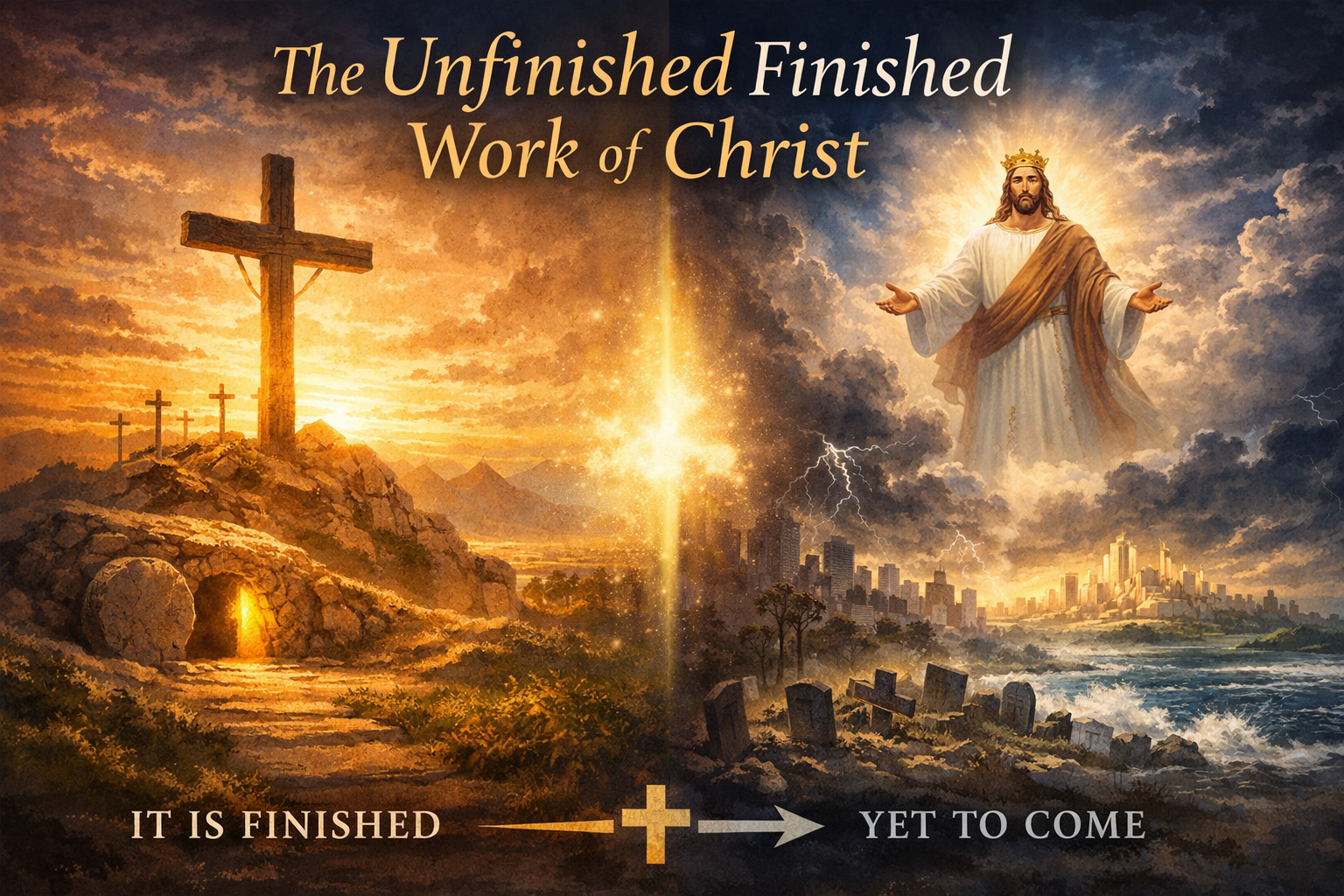
On the Unfinished Finished Work of Christ

In light of this being the week of our Lord’s passion, it is interesting to note that one of the last things that he said before he gave up his Spirit on the cross was, “It is finished.” (τετέλεσται, John 19.30). With this powerful word, Jesus declared that his work on the cross in making full atonement for sin was completed, and “bowing his head, he gave up his spirit.” It must have been a powerful scene, and no more pregnant words have perhaps ever been spoken. However, the problem is that even though Christ finished his work, sin still seems to run rampant in this world. If it is finished, why, we might ask, is the world still broken, still full of pain and suffering and sin and death? Because of this, we might be tempted to suggest that his work is unfinished. Many Christians struggle to hold together what has already been accomplished and what still remains. However, what we must realize is that Christ’s work is finished; it is fully accomplished in its foundation, but not yet fully realized in its effects. In this post, I would like to consider this tension by offering just a few thoughts on what Christ accomplished in his first coming and what waits to be realized at his second coming.

In one sense, then, it is completely accurate to say that the work of Christ has been fully accomplished, and there are at least three aspects of his work that are completely finished. First, atonement has been accomplished. When Christ died on the cross, he made the full and final payment for our sin. In systematic theology, this is called penal substitutionary atonement. In other words, this means that Christ paid the penalty (penal) that we deserve (substitutionary) for our sin. (On the fact that this was Christ’s view of his death, see here.) He died the death that we deserve by dying in our place. But he did not stay dead; he rose again on the third day. This is the second aspect of Christ’s finished work, namely that victory over death has been secured. When Jesus walked out of the grave on the third day, he defeated death and disarmed Satan of his power. Death no longer has hold over those who are in Christ. We need not fear, we can have hope, even in the face of death. (On hope in the face of death, see here.) And lastly, by dying on the cross, Christ finished his work of establishing righteousness. In other words, his finished work on the cross is now the ground upon which God grants our justification, when we place our faith in Jesus. He lived a perfect life, he died an innocent death. And his righteousness is imputed to us by faith. We are made right, declared innocent, because of Christ’s finished work. This is the gospel. Nothing needs to be added to what Christ accomplished; his work is complete, sufficient, and final. It is not partial, not provisional. It is finished!

Moreover, his finished work on the cross inaugurated several important realities in which we now live. For one, the Kingdom of God has been inaugurated. Forty days after his resurrection, Jesus ascended into heaven to be seated at the right hand of the Father, and he is now reigning with all authority on earth as it is in heaven. (Matt. 28.18) He is not waiting to become King; he is already reigning as King. And he does this by his Spirit. This is the second reality in which we now live, namely that Christ has sent his Spirit to indwell his people. The Spirit mediates Christ’s real presence in and among his people. He is the down payment, the seal, and the guarantee of our faith. And he is actively working in us to make us more like Jesus. And lastly, but certainly not leastly, new life has begun. When we place our faith in Christ, the Spirit regenerates us. He brings to life what was once spiritually dead, and we are born again. In this way we are new creatures in Christ. The old has passed away, and behold the new has come. (2 Cor. 5.17) New creation realities are already at work in us through the Spirit. In these ways, the future has already broken into the present through the risen Christ, and we live in these future realities even now.

And yet, in spite of all of this, several aspects of Christ’s work remain unfinished. Perhaps most clearly, sin still remains in the world. We have been saved from the penalty of sin, but we have not yet been saved from the presence of sin. Our world is saturated and polluted with sin at every turn. People are burdened down with sin and its consequences. Our relationships suffer, bodies are diseased, conflict and turmoil abound at every level of our society. Sin continues its reign of terror nearly unchecked. In addition to this, death still operates in this world. This world reeks with the stench of death; it fills our nostrils everywhere we turn. Our loved ones get sick and die. Accidents and tragedy take lives too soon. Christ has been raised, and death has been defeated. But death still reigns in our mortal bodies, and we ache and groan for that day when death will be no more. Thirdly, the created order groans under the weight of humanity’s sin. When our first parents fell, the creation itself was subjected to futility and decay. The idyllic paradise of Eden was lost to the corruption of sin. And lastly, justice and restoration are yet to be realized. Injustice abounds in our society. From all appearances, the weak get weaker and the strong get stronger. There is no real justice; there is no real peace. Wickedness and evil seem to grow day by day. What is wrong is celebrated as right, and what is right is condemned as wrong. The world is turned upside down, and we long for the day when justice will flow like rivers and when peace will rest upon the earth. And we cry out with the Scriptures, “How long, O Lord? How long?”

In theological parlance, this tension between the finished and the unfinished work of Christ is often referred to by the shorthand phrase “already/not yet”. It simply means that God’s plan of redemption for the world has already begun, has already been inaugurated, but has not yet been fully consummated. The work of Christ’s first coming is finished. He died on the cross, he rose again the third day, he sent his life-giving Spirit. But we are still waiting for the work of his second coming, namely the resurrection of the dead, the final judgment, and the new creation. This is the tension in which we now live, and in this tension, we must avoid two extremes. First, we must avoid living as if nothing has been finished. We must learn to rest in the finished work of Christ. We have been forgiven; we have been indwelled by His Spirit. We can have peace. On the other hand, however, we must not live as if everything is already complete. We do live under the burdens of sin and death; we do long for justice and peace. And we can have hope. The work of Christ is finished in its accomplishment, but it is unfinished in its application to the whole of creation. And so, we wait faithfully as Christ has instructed us.

And this is the point, namely that this tension is not ultimately about stages of fulfillment, though that is certainly the best framework for understanding it. Ultimately, this tension is about Christ. His work is unfinished because his story is not over. (On my argument for the centrality of Christ in our eschatological reflection, see here.) In other words, the same Jesus who said, “It is finished” is the same Jesus who is coming again to make all things new. The same Jesus who died on the cross is the same Jesus who is coming again in glory. Or to put it another way, the second coming of Jesus is not a different work; no, it is the completion of the same work that he began 2000 years ago. The second coming completes what the first coming began, because Christ himself is the fulfillment of all our hopes. Our hope is not just about what Christ has done and will do; it is about Christ himself. It is about his presence. In John 14.3, Jesus promised that he would come again and receive us unto himself, that where he is there we may be also. And so, the unfinished nature of Christ’s work is not a failure of the first coming, but the promise of the second. He is our blessed hope.

And so, yes, we live in the middle of this tension; we live in between the already and the not yet. We are already forgiven, but we are still struggling. We are already alive, yet we are still dying. We are already redeemed, yet we are still waiting. We are waiting to be set free from the presence and the corruption of sin once and for all. This is the lived reality of the Christian life—caught between what has been accomplished and what has not yet been revealed. And I suggest that we must embrace this tension with open arms, because it is only when we embrace this tension that we will be able to hope without denying the pain of our sufferings, that we can be confident without giving into naive triumphalism, and that we can have patience without being paralyzed by despair. If we collapse this tension in either direction, we lose something essential. Either we deny the reality of our present struggle, or we forget the certainty of our future hope. This is the ground that we must stand on, the already and the not yet. We do not live as those waiting for Christ to begin his work, but as those waiting for him to complete it.

When Jesus said, “It is finished.”, he surely meant it. Christ’s work is finished, and yet, it is not yet finished completely. It is finished in its foundation, but it is unfinished in its consummation. We are waiting for the full glory of Christ and his work to be finally revealed on earth. And even in acknowledging the unfinished aspects of Christ work, we must affirm that the work of the cross is not undone; it is unfolding. The resurrection is not isolated; it is expanding. And one day, we will all be raised to meet him in the air, and from that point on, we will always be with the Lord. This is our hope, namely that the Christ who finished his work on the cross is coming again to bring it to final completion. Even so, come quickly, Lord Jesus! Maranatha!


On Christological Eschatology

If you have followed my blog for any amount of time or if you have perused through the topics and tags, then you have probably noticed that eschatology is a primary interest of mine, both academically and pastorally. However, this area of theological reflection often evokes a mixed bag of responses and reactions. Some are quick to debate the various questions and details related to timelines, rapture debates, and millennium questions, while others are prone to avoid the questions altogether. I would suggest that neither one of these responses to the doctrines of the last things is healthy. Moreover, when we are so focused on identifying our particular eschatological system, whether dispensational, premillennial, amillennial, or postmillennial, we run the risk of displacing Jesus from the center of the question. This is not to say that these systems are wrong per se, but it is to say that we are often in danger of missing the forest for the trees as it were. Our eschatology is only as sound as our Christology. Every question about the end ultimately reduces to the question: Who is Jesus, and what is he doing? In other words, our eschatological views must be inherently Christological before they are anything else.

Christological eschatology is the conviction that the person and work of Jesus Christ are not merely part of the end times—they are the interpretive center of all eschatology. Of course, this does not mean that it is unconcerned with the unfolding of future events like the final judgment or the general resurrection. Eschatological reflection will always entail some understanding of the events that are yet to unfold, as Scripture itself directs our attention to these realities. However, Christological eschatology asserts that these events derive their meaning and significance from Christ and his work. They are not self-interpreting realities, nor are they ultimate in themselves; rather, they are the outworking of what God has already accomplished in and through Jesus. In this way, Christological eschatology is not event-centered nor system-centered, but Christ-centered. It refuses to treat the end as a sequence to be mapped or a system to be mastered and instead understands it as the fulfillment of the redemptive work of Christ. It is simply the view that every eschatological question ultimately revolves around the person and work of Christ in bringing redemption to the world.

In many ways, viewing our eschatology as centered on the person and work of Christ is simply a way of embracing the interpretive horizon of the New Testament. The New Testament authors consistently orient their eschatological claims back to the person and work of Jesus. For example, in 1 Corinthians 15, when Paul is addressing the question of the resurrection, he grounds his argument in the fact that Christ has already been resurrected from the dead. He is the first fruits of our resurrection; because Christ has already been raised, we will be raised. (On the logic of the resurrection, see here.) Or again, when the Gospel authors talk about the nearness or the presence of the Kingdom, they speak of it in relation to the presence of Christ. Because Christ is King, his coming to earth marks the beginning of the Kingdom age. This is why we regularly speak of the already and the not yet. The Kingdom has already been inaugurated at Christ’s first coming, and it will be finally consummated at his second coming. In other words, the already/not yet framework is grounded in Jesus himself. Jesus is not just a participant in the end; he is the turning point of history. The end does not merely arrive with Jesus. In a real sense, it begins with him.

We miss this emphasis when we become too focused on other eschatological questions. Both at the popular and at the academic level, we are quick to obsess about timelines, to speculate about sequences, and to read Scripture backward through our preferred eschatological systems. Entire interpretive frameworks are often constructed around the ordering of events, the identification of signs, or the alignment of prophetic texts with contemporary developments. None of these questions are unimportant in themselves, but they can easily assume a controlling role that they were never meant to have. When this happens, the center of gravity in our eschatology subtly shifts. When eschatology becomes primarily about events, charts, and sequences, Christ becomes secondary. Jesus becomes just another piece in the system rather than the center of the system. He is treated as a necessary component within a larger structure, rather than the one in whom that structure finds its meaning and coherence. And when a system can be mapped without reference to the living Christ, then it has already gone off track. At that point, eschatology risks becoming an exercise in speculative reconstruction rather than a theological reflection on the redemptive work of Christ. The question is not whether we have constructed a coherent system, but whether our understanding of the end is actually centered on the person and work of Jesus.

Now, there are several aspects of Christ’s person and work that ground our eschatological reflections. First, as I’ve already noted, Jesus is the Risen Lord. In other words, if eschatology begins with resurrection (and it does), then because Jesus has already been raised from the dead, the future has already broken into the present. We have been spiritually raised with Christ to walk in newness of life, and one day, we will be raised physically to walk hand in hand with him in glory. Second, and this has already been noted as well, but Jesus is the Reigning King. After his resurrection, he ascended into heaven to be seated at the right hand of the Father where he is currently reigning in glory. In this sense, the Kingdom is not merely a future reality; it is present now as he reigns over his people by his Spirit through his Word. He is coming again to reign on earth, but his present enthronement should shape our expectations. Third, Jesus is the Coming Judge. In other words, the final judgment is not some abstract threat. No, it is a personal reality that is tied to Christ authority. As the ancient creeds confess, he is coming to judge the living and the dead. The judge is the crucified and risen Christ. And finally, Jesus is the Center of Restoration. Or to put it another way, the new creation is not a system reset, it is the union that we now have with Christ being finally fulfilled on earth as it is in heaven. My point is that every eschatological hope—resurrection, judgment, kingdom, restoration—finds its coherence in the person of Jesus.

So, rather than asking “when is the rapture?” or “what is the millennium?”, we should be asking questions like, “What does Jesus’s resurrection mean for the future?”, “What does his kingship imply about the present?”, and “What does his return reveal about judgment and restoration?” These are not different questions so much as they are better-ordered questions. They move us away from speculative sequencing and toward theological reflection on the person and work of Christ. In other words, the question is not first what happens next, but what does Jesus’ work mean for what happens next? This shift in emphasis reorients the entire task of eschatology. It forces us to begin not with a timeline but with an event—the death and resurrection of Jesus—and to interpret the future in light of that reality. It reminds us that the resurrection is not merely a past miracle, but the decisive intrusion of the future into the present, the beginning of the end itself. Likewise, the present reign of Christ is not an abstract theological claim, but the governing reality that shapes how we understand the present age. And his return is not simply the final item on a prophetic chart, but the personal culmination of God’s redemptive purposes in the world. When we ask our eschatological questions in this way, Christ is no longer assumed in the background—he stands at the center.

This is not just some theological word game; this change has direct pastoral and theological payoff. Most importantly, it grounds our hopes for the future in a person and not in a system. This is our “blessed hope, the appearing of the glory of our great God and Savior, Jesus Christ.” (Titus 2.13) We don’t have to have all the details figured out down to a T, so to speak; we simply have to trust in the one who has promised to make all things new. More than this, though, it produces stability in the midst of disagreement. The disagreements among eschatological systems are myriad, but in theory, we can all agree that Christ stands at the center of the eschatological program. I would go as far as to say that we must agree on this, as a matter of Christian orthodoxy. Our common hope in Christ should unify believers across all our eschatological differences. Our eschatology should bring us together not drive us apart. And finally, this reorientation in our eschatological reflection centers us on questions of discipleship rather than speculation. By focusing on Christ and his work, we are better able to wait patiently and faithfully as he has commanded us, instead of worrying about the details. The point is that the doctrines of eschatology are not meant to produce anxiety about the future, but confidence in the One who holds it.

Ultimately, the end times are all about Jesus. This may sound cliché, but it is the biblical emphasis. The New Testament does not give space to unnecessary speculations about the end times or invite us to lose ourselves in the details of timelines and sequences. Rather, every eschatological vision must revolve around the person and work of Jesus Christ. He is the one who is coming back to make all things new. He is the one who is coming back to receive us unto himself, that where he is there we may be also. He is the one who is coming back to set us free from the presence of sin once and for all and to bring God’s redemptive purposes to their final fulfillment. And so, the end of all things is not a timeline to decode, but a person to behold—the crucified, risen, and reigning Christ.


On Our Conduct as Members of the Local Church

TEXT

14 I write these things to you, hoping to come to you soon. 15 But if I should be delayed, I have written so that you will know how people ought to conduct themselves in God’s household, which is the church of the living God, the pillar and foundation of the truth. 16 And most certainly, the mystery of godliness is great:

He was manifested in the flesh,
vindicated in the Spirit,
seen by angels,
preached among the nations,
believed on in the world,
taken up in glory.

~1 Timothy 3.14-16

Title: On Our Conduct in the Local Church
Text: 1 Timothy 3.14-16
Series: 1 Timothy: God’s Design for a Healthy Church
Church: Redeemer Baptist Church, Jonesboro, AR
Date: October 5, 2025


Slow To Write

"let every person be quick to hear, slow to speak, slow to anger."

lovegavehope

Just another WordPress.com site

Jared Cornutt

Pastor | Speaker | Writer

Denny Burk

A commentary on theology, politics, and culture

G3 Ministries

Events + Resources for the Local Church

Biblical Reasoning

Biblical and Systematic Theology According to the Scriptures

RetroChristianity

Reclaiming the Forgotten Faith

SBC Voices

Southern Baptist News & Opinion

Lucid Theology

Thoughts on words, books, theology, and life.

Baptist21

A pastor-led voice for Baptists in the 21st century

Center For Baptist Renewal

The Personal and Professional Blog of Phillip Powers

The Pastor's Well - Pastor Well

The Personal and Professional Blog of Phillip Powers

Articles - AlbertMohler.com

The Personal and Professional Blog of Phillip Powers

The Gospel Coalition

The Personal and Professional Blog of Phillip Powers