
Tag Archives: Final Judgment

On Eschatology in the Book of Hebrews

One of the major themes of the Letter to the Hebrews is the theme of perseverance. But perseverance unto what? What is the destination toward which we are heading? Hebrews paints an extraordinarily “heavenly” picture. We share in a heavenly calling (3.1), we have tasted the heavenly gift (6.4), we desire a heavenly country (11.16), and we have come to the heavenly Jerusalem (12.22). All of this can create the impression that Hebrews replaces earthly and creational hope with an essentially spiritual, heavenly destiny. On the other hand, the strong fulfillment language found throughout the book can be pushed toward the opposite mistake, namely treating the eschatological horizon of Hebrews as if it were essentially exhausted by Christ’s first coming and other first-century events. But, in my opinion, neither of these extremes adequately captures the eschatological vision of the Book of Hebrews. Rather, Hebrews presents Christian existence as participation in an eschatological salvation that has genuinely begun through Christ’s death, resurrection, exaltation, and heavenly priesthood but awaits a future consummation at his return. That consummation cannot be reduced either to events surrounding the first century or to an immaterial heavenly existence, for Hebrews directs believers toward Christ’s future appearing, the resurrection and judgment of the dead, the final shaking of creation, and humanity’s inheritance of “the world to come.”

The author of Hebrews introduces this “world to come that we are talking about” in 2.5, and he immediately quotes from Psalm 8. Psalm 8 is a prayerful reflection on humanity’s God-given dominion over creation. In other words, it speaks of creational realities and of humanity’s God-intended vocation. The eschatological hope envisioned here is therefore not an abandonment of humanity’s creational vocation but its ultimate realization. And the author of Hebrews is clear that this vocation is fulfilled in the second Adam, Jesus Christ. Jesus fulfills humanity’s vocation, having been crowned with glory and honor because he suffered death (2.9). Yet Hebrews immediately acknowledges an obvious tension: “At present, we do not yet see everything in subjection to him.” The promise of Psalm 8 has not yet reached its complete realization in human experience. What we do see, however, is Jesus, who has already entered into the glory and dominion for which humanity was created. His exaltation therefore anticipates the destiny of those who belong to him. The “world to come” is the world in which humanity’s creational vocation, already realized in the exalted Christ, will finally become a reality for redeemed humanity. From the outset, then, Hebrews presents an eschatological hope that is both already realized in Christ and still awaiting its full realization in the world to come.

This is exactly why we can speak of the “already” in the phrase “already and not yet.” The “last days” began when the Son came incarnate to earth, died on the cross, and rose again (cf. 1.1–2). “He has appeared one time, at the end of the ages, for the removal of sin by the sacrifice of himself” (9.26). The turning of the ages, then, is not merely a future expectation; it has already occurred through the saving work of Jesus Christ. Indeed, believers have even “tasted the powers of the coming age” (6.5). This is possible because Jesus has already entered the heavenly sanctuary on our behalf (9.11–12, 24) and has taken his place at the right hand of God (1.3; 8.1). Consequently, the blessings associated with the world to come have broken into the present through the exalted Christ. Christians can presently draw near to the throne of grace (4.14–16), enter the presence of God through the blood of Jesus (10.19–22), and participate in realities belonging to the coming age. In this sense, the eschatology of Hebrews is genuinely inaugurated. The future has become present in Christ without thereby ceasing to be future.

And yet there is still a future hope. As the author writes in 9.28, “so also Christ, having been offered once to bear the sins of many, will appear a second time, not to bear sin, but to bring salvation to those who are waiting for him.” The Day is approaching (10.25), and “he who is coming will come and will not delay” (10.37). Likewise, there remains a promised rest for the people of God into which believers must still strive to enter (4.1–11). Nor is this future expectation limited to Christ’s return. Hebrews includes “the resurrection of the dead and eternal judgment” among the foundational realities of the Christian faith (6.2), while the faithful who have gone before us have “not received what was promised,” so that “they would not be made perfect without us” (11.39–40). In other words, whatever first-century fulfillments Hebrews may encompass, its eschatological horizon exceeds them. Christ has accomplished the decisive work of salvation and presently reigns at the right hand of God, but the salvation secured by his first appearing still awaits its consummation at his second. The “already” of Hebrews is therefore substantial, but it does not eliminate the “not yet.”

Of course, as I stated above, Hebrews paints an extraordinarily heavenly picture of salvation. However, it is important that we distinguish between the heavenly location and source of our salvation and the ultimate nature of our salvation. A heavenly sanctuary does not imply eternal disembodiment, nor does present access to heaven require an ultimate escape from creation. As we saw in Hebrews 2 and its quotation of Psalm 8, our salvific destiny concerns humanity and “the world to come.” The goal is the realization of humanity’s God-given vocation over creation, a destiny already realized in the exalted Christ but not yet realized in us. Moreover, Hebrews 6.2 explicitly retains “the resurrection of the dead” as part of its eschatological expectation. Even Abraham’s desire for a “better country—a heavenly one” (11.16) must be read within this broader eschatological horizon rather than as a Greek-style escape from embodiment. The country is heavenly because it is prepared by God and belongs to the order of his promised salvation, not because salvation requires the abandonment of created existence. Indeed, Hebrews immediately associates this heavenly country with the city that God has prepared for his people. In other words, Hebrews has a heavenly Christology without an ethereal eschatology.

This is made clear when the author quotes Haggai 2.6: “Yet once more I will shake not only the earth but also the heavens” (Heb 12.26). In other words, final judgment has cosmic dimensions. God’s eschatological purpose is not merely private souls arriving in heaven. It involves the shaking of the created order and “the removal of what can be shaken—that is, created things—so that what is not shaken might remain” (12.27). Significantly, the emphasis is not simply upon destruction, but upon what remains after the shaking. As believers, we are therefore “receiving a kingdom that cannot be shaken” (12.28). The contrast is between the present order, which remains subject to God’s eschatological shaking and judgment, and the permanent kingdom that God will establish beyond that judgment. This is the “world to come” toward which the author has been directing our attention: the promised order in which the purposes of God, already realized in the exalted Christ, reach their final and unshakable realization. The consummation envisioned by Hebrews therefore encompasses creation, judgment, kingdom, and the destiny of redeemed humanity. Its hope is not escape from the created order, but participation in the permanent order that remains when God finally shakes heaven and earth.

This already-but-not-yet tension explains why Hebrews so frequently describes the Christian life in terms of pilgrimage and perseverance. Abraham looked forward to “the city that has foundations, whose architect and builder is God” (11.10), while the patriarchs confessed that they were “strangers and temporary residents on the earth” because they desired the better and heavenly country God had prepared for them (11.13–16). Christians similarly have no enduring city here but “seek the one to come” (13.14). Yet this pilgrimage does not mean that believers are searching for a salvation they have not yet encountered. Jesus has already entered the heavenly sanctuary as our “forerunner” (6.19–20), opening the way into God’s presence for those who belong to him. Christians therefore live between promise and consummation. We already possess access to the heavenly realities secured by Christ, but we still journey toward the final inheritance of those realities in the world to come. This is precisely why perseverance matters so much in Hebrews. Christians belong to the world to come before the world to come has arrived in its fullness. We therefore press forward in faith because the destination toward which we journey has already been secured by the Christ who has gone before us.

So, we return to the opening question: perseverance unto what? Hebrews calls believers to persevere because the salvation inaugurated by Jesus Christ has not yet reached its consummation. We await his second appearing, the resurrection of the dead and final judgment, the promised rest, the city that is to come, the unshakable kingdom, and ultimately the “world to come” over which redeemed humanity will share in the destiny already realized in Jesus Christ. Hebrews therefore allows us neither to collapse its eschatological expectations into events surrounding the first century nor to transform its heavenly language into the hope of an immaterial existence removed from creation. Instead, its eschatology is grounded in what Christ has already accomplished and directed toward what God has yet promised to accomplish. Hebrews 2 captures this tension remarkably well: “At present, we do not yet see everything subjected to him,” but “we do see Jesus” already crowned with glory and honor (2.8–9). Christians therefore look upward because Jesus is already enthroned in heaven, but we also look forward because the world over which the enthroned Son reigns has not yet become what God has promised it will be. Until then, we persevere, following our forerunner and awaiting the world to come.

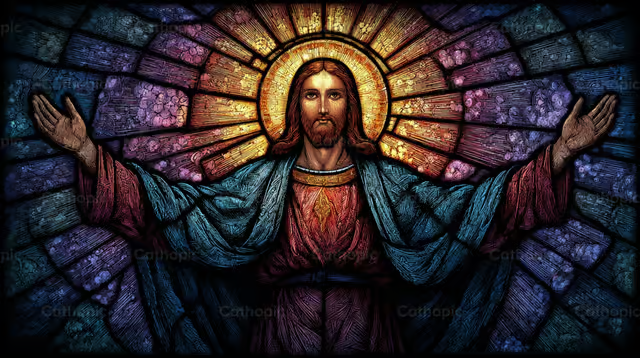
On Christological Eschatology

If you have followed my blog for any amount of time or if you have perused through the topics and tags, then you have probably noticed that eschatology is a primary interest of mine, both academically and pastorally. However, this area of theological reflection often evokes a mixed bag of responses and reactions. Some are quick to debate the various questions and details related to timelines, rapture debates, and millennium questions, while others are prone to avoid the questions altogether. I would suggest that neither one of these responses to the doctrines of the last things is healthy. Moreover, when we are so focused on identifying our particular eschatological system, whether dispensational, premillennial, amillennial, or postmillennial, we run the risk of displacing Jesus from the center of the question. This is not to say that these systems are wrong per se, but it is to say that we are often in danger of missing the forest for the trees as it were. Our eschatology is only as sound as our Christology. Every question about the end ultimately reduces to the question: Who is Jesus, and what is he doing? In other words, our eschatological views must be inherently Christological before they are anything else.

Christological eschatology is the conviction that the person and work of Jesus Christ are not merely part of the end times—they are the interpretive center of all eschatology. Of course, this does not mean that it is unconcerned with the unfolding of future events like the final judgment or the general resurrection. Eschatological reflection will always entail some understanding of the events that are yet to unfold, as Scripture itself directs our attention to these realities. However, Christological eschatology asserts that these events derive their meaning and significance from Christ and his work. They are not self-interpreting realities, nor are they ultimate in themselves; rather, they are the outworking of what God has already accomplished in and through Jesus. In this way, Christological eschatology is not event-centered nor system-centered, but Christ-centered. It refuses to treat the end as a sequence to be mapped or a system to be mastered and instead understands it as the fulfillment of the redemptive work of Christ. It is simply the view that every eschatological question ultimately revolves around the person and work of Christ in bringing redemption to the world.

In many ways, viewing our eschatology as centered on the person and work of Christ is simply a way of embracing the interpretive horizon of the New Testament. The New Testament authors consistently orient their eschatological claims back to the person and work of Jesus. For example, in 1 Corinthians 15, when Paul is addressing the question of the resurrection, he grounds his argument in the fact that Christ has already been resurrected from the dead. He is the first fruits of our resurrection; because Christ has already been raised, we will be raised. (On the logic of the resurrection, see here.) Or again, when the Gospel authors talk about the nearness or the presence of the Kingdom, they speak of it in relation to the presence of Christ. Because Christ is King, his coming to earth marks the beginning of the Kingdom age. This is why we regularly speak of the already and the not yet. The Kingdom has already been inaugurated at Christ’s first coming, and it will be finally consummated at his second coming. In other words, the already/not yet framework is grounded in Jesus himself. Jesus is not just a participant in the end; he is the turning point of history. The end does not merely arrive with Jesus. In a real sense, it begins with him.

We miss this emphasis when we become too focused on other eschatological questions. Both at the popular and at the academic level, we are quick to obsess about timelines, to speculate about sequences, and to read Scripture backward through our preferred eschatological systems. Entire interpretive frameworks are often constructed around the ordering of events, the identification of signs, or the alignment of prophetic texts with contemporary developments. None of these questions are unimportant in themselves, but they can easily assume a controlling role that they were never meant to have. When this happens, the center of gravity in our eschatology subtly shifts. When eschatology becomes primarily about events, charts, and sequences, Christ becomes secondary. Jesus becomes just another piece in the system rather than the center of the system. He is treated as a necessary component within a larger structure, rather than the one in whom that structure finds its meaning and coherence. And when a system can be mapped without reference to the living Christ, then it has already gone off track. At that point, eschatology risks becoming an exercise in speculative reconstruction rather than a theological reflection on the redemptive work of Christ. The question is not whether we have constructed a coherent system, but whether our understanding of the end is actually centered on the person and work of Jesus.

Now, there are several aspects of Christ’s person and work that ground our eschatological reflections. First, as I’ve already noted, Jesus is the Risen Lord. In other words, if eschatology begins with resurrection (and it does), then because Jesus has already been raised from the dead, the future has already broken into the present. We have been spiritually raised with Christ to walk in newness of life, and one day, we will be raised physically to walk hand in hand with him in glory. Second, and this has already been noted as well, but Jesus is the Reigning King. After his resurrection, he ascended into heaven to be seated at the right hand of the Father where he is currently reigning in glory. In this sense, the Kingdom is not merely a future reality; it is present now as he reigns over his people by his Spirit through his Word. He is coming again to reign on earth, but his present enthronement should shape our expectations. Third, Jesus is the Coming Judge. In other words, the final judgment is not some abstract threat. No, it is a personal reality that is tied to Christ authority. As the ancient creeds confess, he is coming to judge the living and the dead. The judge is the crucified and risen Christ. And finally, Jesus is the Center of Restoration. Or to put it another way, the new creation is not a system reset, it is the union that we now have with Christ being finally fulfilled on earth as it is in heaven. My point is that every eschatological hope—resurrection, judgment, kingdom, restoration—finds its coherence in the person of Jesus.

So, rather than asking “when is the rapture?” or “what is the millennium?”, we should be asking questions like, “What does Jesus’s resurrection mean for the future?”, “What does his kingship imply about the present?”, and “What does his return reveal about judgment and restoration?” These are not different questions so much as they are better-ordered questions. They move us away from speculative sequencing and toward theological reflection on the person and work of Christ. In other words, the question is not first what happens next, but what does Jesus’ work mean for what happens next? This shift in emphasis reorients the entire task of eschatology. It forces us to begin not with a timeline but with an event—the death and resurrection of Jesus—and to interpret the future in light of that reality. It reminds us that the resurrection is not merely a past miracle, but the decisive intrusion of the future into the present, the beginning of the end itself. Likewise, the present reign of Christ is not an abstract theological claim, but the governing reality that shapes how we understand the present age. And his return is not simply the final item on a prophetic chart, but the personal culmination of God’s redemptive purposes in the world. When we ask our eschatological questions in this way, Christ is no longer assumed in the background—he stands at the center.

This is not just some theological word game; this change has direct pastoral and theological payoff. Most importantly, it grounds our hopes for the future in a person and not in a system. This is our “blessed hope, the appearing of the glory of our great God and Savior, Jesus Christ.” (Titus 2.13) We don’t have to have all the details figured out down to a T, so to speak; we simply have to trust in the one who has promised to make all things new. More than this, though, it produces stability in the midst of disagreement. The disagreements among eschatological systems are myriad, but in theory, we can all agree that Christ stands at the center of the eschatological program. I would go as far as to say that we must agree on this, as a matter of Christian orthodoxy. Our common hope in Christ should unify believers across all our eschatological differences. Our eschatology should bring us together not drive us apart. And finally, this reorientation in our eschatological reflection centers us on questions of discipleship rather than speculation. By focusing on Christ and his work, we are better able to wait patiently and faithfully as he has commanded us, instead of worrying about the details. The point is that the doctrines of eschatology are not meant to produce anxiety about the future, but confidence in the One who holds it.

Ultimately, the end times are all about Jesus. This may sound cliché, but it is the biblical emphasis. The New Testament does not give space to unnecessary speculations about the end times or invite us to lose ourselves in the details of timelines and sequences. Rather, every eschatological vision must revolve around the person and work of Jesus Christ. He is the one who is coming back to make all things new. He is the one who is coming back to receive us unto himself, that where he is there we may be also. He is the one who is coming back to set us free from the presence of sin once and for all and to bring God’s redemptive purposes to their final fulfillment. And so, the end of all things is not a timeline to decode, but a person to behold—the crucified, risen, and reigning Christ.


Slow To Write

"let every person be quick to hear, slow to speak, slow to anger."

lovegavehope

Just another WordPress.com site

Jared Cornutt

Pastor | Speaker | Writer

Denny Burk

A commentary on theology, politics, and culture

G3 Ministries

Events + Resources for the Local Church

Biblical Reasoning

Biblical and Systematic Theology According to the Scriptures

RetroChristianity

Reclaiming the Forgotten Faith

SBC Voices

Southern Baptist News & Opinion

Lucid Theology

Thoughts on words, books, theology, and life.

Baptist21

A pastor-led voice for Baptists in the 21st century

Center For Baptist Renewal

The Personal and Professional Blog of Phillip Powers

The Pastor's Well - Pastor Well

The Personal and Professional Blog of Phillip Powers

Articles - AlbertMohler.com

The Personal and Professional Blog of Phillip Powers

The Gospel Coalition

The Personal and Professional Blog of Phillip Powers