Tag Archives: Inaugurated Eschatology

On the Preaching of John the Baptist and Jesus

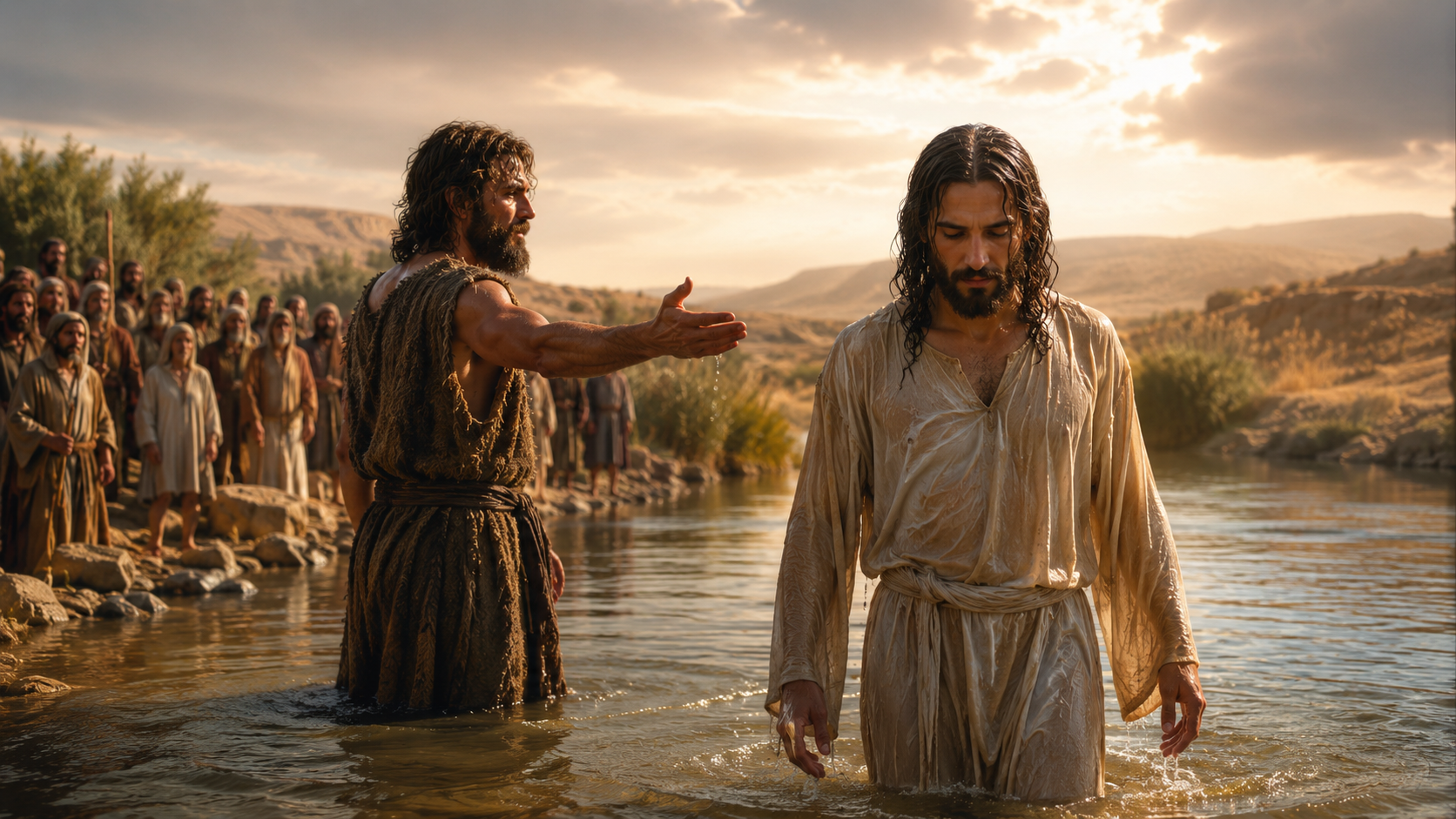
Have you ever wondered why all four Gospels begin the story of Jesus’s public ministry with the ministry of John the Baptist? Could it possibly be because John came preaching, “Repent, because the kingdom of heaven has come near!” (Matt. 3.2), and Jesus began his own ministry by preaching, “Repent, because the kingdom of heaven has come near!” (Matt. 4.17)? They begin their preaching with virtually the same message. What, then, is the relationship between the preaching and ministry of John the Baptist and that of Jesus? Sometimes John is treated as little more than a necessary but largely preparatory prelude to the more important ministry of Jesus, almost as though his primary purpose were simply to baptize Jesus and then disappear from the story. But the Gospels reveal remarkable continuity between the preaching of these two figures. Jesus’s preaching stands in fundamental continuity with John the Baptist’s proclamation of the approaching kingdom, repentance, salvation, and judgment; yet it also develops John’s message by announcing that the kingdom has become present in Jesus’s own ministry while its final judgment remains future. The transition from John to Jesus, therefore, is not a transition from one eschatological message to another, but from the announcement of what God is about to do to the inauguration of that promise in Jesus himself. To understand this development, however, we must first consider what John was actually announcing.

Of course, John the Baptist’s preaching is fundamentally eschatological. He appears in the wilderness announcing, “Repent, because the kingdom of heaven has come near!” (Matt. 3.2). The nearness of God’s kingdom means that Israel has reached a decisive moment in the history of salvation, and repentance is the necessary response to what God is about to do. Indeed, John warns his hearers not to presume upon their covenantal identity: “Don’t presume to say to yourselves, ‘We have Abraham as our father’” (Matt. 3.9). Instead, they must “produce fruit consistent with repentance” because “the ax is already at the root of the trees” (3.8, 10). John’s proclamation therefore contains both salvation and judgment. On the one hand, he announces the coming of one more powerful than himself who “will baptize you with the Holy Spirit and fire” (3.11). On the other hand, this Coming One already has “his winnowing shovel” in his hand and will separate the wheat from the chaff, burning the latter “with fire that never goes out” (3.12). John therefore stands at the threshold of Israel’s eschatological expectation, announcing that God’s promised intervention is no longer located in some distant future—it has drawn near. His call to repentance, promise of the Spirit, and warning of judgment all derive their urgency from this conviction. Most importantly, however, John does not present himself as the one who will accomplish these things. His entire proclamation points beyond himself toward the Coming One through whom God’s promised salvation and judgment will arrive.

The preaching of Jesus stands in basic continuity with the contours of John’s message. As noted above, Jesus also comes proclaiming the nearness of the kingdom and the need for repentance. In Matthew 4.17, Jesus declares, “Repent, because the kingdom of heaven has come near!” repeating verbatim the proclamation of John (Matt. 3.2). Similarly, Mark summarizes Jesus’s preaching: “The time is fulfilled, and the kingdom of God has come near. Repent and believe the good news!” (Mark 1.15). The point is that Jesus retains John’s basic eschatological framework: kingdom, repentance, salvation, judgment, restoration, and accountability before God. He does not correct John by suggesting that his expectation of judgment was mistaken or that Israel’s eschatological hopes were misguided. On the contrary, Jesus repeatedly warns of a coming judgment, whether in his teaching concerning Gehenna (Matt. 10.28), the separation of the righteous and wicked (Matt. 13.40–43), or the future judgment of the Son of Man (Matt. 25.31–46). We must therefore resist the simplistic dichotomy that John preached judgment while Jesus preached grace. Both proclaim salvation and judgment as dimensions of God’s coming kingdom. The fundamental difference between their preaching must be located somewhere else. The question is not whether Jesus abandoned John’s eschatological message, but what happened to that message once the One whom John announced actually arrived.

In Matthew 11.2–3, John sends messengers to Jesus to ask him, “Are you the one who is to come, or should we expect someone else?” We are not told exactly what prompted John’s question, but the apparent disconnect between his preaching and Jesus’s actual ministry was likely part of the equation. John had proclaimed the nearness of the kingdom alongside warnings of impending judgment, yet the ministry of Jesus did not seem to indicate that such judgment had arrived. This is why Jesus’s answer to John’s question is so significant. Rather than simply answering yes, Jesus points to the fruit of his ministry: “The blind receive their sight, the lame walk, those with leprosy are cleansed, the deaf hear, the dead are raised, and the poor are told the good news” (Matt. 11.5). These signs reflect the expectations of eschatological restoration found throughout the Book of Isaiah (especially Isa. 35:5–6; 61:1–2). The healings, exorcisms, forgiveness, restoration, and proclamation of good news therefore demonstrate that Israel’s promised salvation has begun. John announced what God was about to do; Jesus points to what God is now doing through him. Here we encounter the essential development from John’s preaching to that of Jesus: John announces the Coming One; Jesus announces and embodies the arrival of the kingdom because he is the Coming One. The transition from John to Jesus is therefore the transition from eschatological expectation to eschatological fulfillment. The promised blessings of the kingdom have begun to enter the present through the ministry of Jesus. But if the blessings have arrived, what has happened to the judgment John so urgently announced?

John had proclaimed that the ax was at the root, that the winnowing fork was in the Coming One’s hand, and that the chaff would be burned with unquenchable fire. Yet Jesus heals, forgives, restores, eats with sinners, and proclaims good news. What is important to remember, however, is that John was not wrong: judgment is coming. Rather, the ministry of Jesus brings greater clarity to the temporal structure of John’s eschatology. The kingdom has arrived in the earthly ministry of Jesus, but final judgment has not. This distinction is illustrated particularly well in Jesus’s sermon at Nazareth in Luke 4. There Jesus reads from Isaiah 61:1–2 and then proclaims, “Today as you listen, this Scripture has been fulfilled” (Luke 4:21). Interestingly, however, Jesus’s reading stops with “the year of the LORD’s favor” and does not include the following phrase, “the day of our God’s vengeance.” We should probably not build too much upon this omission alone, but it fits the larger pattern of Jesus’s ministry remarkably well. The promised blessings of Israel’s restoration are being inaugurated in the present, while final judgment remains future. This does not mean that Jesus abandons John’s expectation of judgment. As noted above, Jesus repeatedly warns of a coming judgment and associates its consummation with the future coming of the Son of Man in glory. Judgment has not disappeared from God’s eschatological program; Jesus has revealed that the kingdom’s saving blessings enter history before its final judgment arrives.

The point is that John’s basic expectations were correct. The Coming One would bring salvation, the Spirit, restoration, and judgment. But the earthly ministry of Jesus reveals that these realities do not all arrive simultaneously in their consummated form. The preaching and ministry of Jesus operate according to what is often described as the “already and not yet,” or inaugurated eschatology. This simply means that in the earthly ministry of Jesus, the kingdom of God was already present even though its final consummation remained future. For example, Jesus declares, “If I drive out demons by the Spirit of God, then the kingdom of God has come upon you” (Matt. 12:28). His ministry of healing, exorcism, forgiveness, and restoration therefore demonstrates that God’s saving reign had already broken into history. Yet Jesus continues to speak of realities that remain future: the resurrection of the dead, the return of the Son of Man, final judgment, and the consummation of God’s kingdom. The kingdom is therefore genuinely present without yet being present in its fullness. Salvation has been inaugurated, while final judgment and consummation remain future. This is not a rejection of John’s preaching but its clarification and fulfillment. The Coming One has arrived, just as John announced, but Jesus reveals something John did not fully articulate: his first advent inaugurates the promised salvation of the kingdom before his return brings that kingdom to its consummation in final judgment.

In the final analysis, the preaching of Jesus neither abandons nor merely repeats the preaching of John the Baptist. Both proclaim the nearness of God’s kingdom, call Israel to repentance, announce the arrival of eschatological salvation, and warn of coming judgment. This is why Matthew can summarize their preaching with precisely the same words: “Repent, because the kingdom of heaven has come near!” (Matt. 3:2; 4:17). Yet those words take on a new significance when spoken by Jesus. John stands at the threshold of fulfillment, announcing that the kingdom is near and pointing forward to the Coming One who will bring it. Jesus is that Coming One, and through his preaching, healings, exorcisms, forgiveness, and restoration, the saving power of the kingdom begins to enter the present. The transition from John to Jesus is therefore the transition from eschatological expectation to eschatological fulfillment—not yet fulfillment in all its fullness, but fulfillment genuinely inaugurated in history. John announces that God’s kingdom has drawn near; Jesus announces and demonstrates that in him its saving power has begun to arrive. Salvation has entered the present, while final judgment remains ahead, awaiting the return of the King who first came proclaiming good news.


On Christological Eschatology

If you have followed my blog for any amount of time or if you have perused through the topics and tags, then you have probably noticed that eschatology is a primary interest of mine, both academically and pastorally. However, this area of theological reflection often evokes a mixed bag of responses and reactions. Some are quick to debate the various questions and details related to timelines, rapture debates, and millennium questions, while others are prone to avoid the questions altogether. I would suggest that neither one of these responses to the doctrines of the last things is healthy. Moreover, when we are so focused on identifying our particular eschatological system, whether dispensational, premillennial, amillennial, or postmillennial, we run the risk of displacing Jesus from the center of the question. This is not to say that these systems are wrong per se, but it is to say that we are often in danger of missing the forest for the trees as it were. Our eschatology is only as sound as our Christology. Every question about the end ultimately reduces to the question: Who is Jesus, and what is he doing? In other words, our eschatological views must be inherently Christological before they are anything else.

Christological eschatology is the conviction that the person and work of Jesus Christ are not merely part of the end times—they are the interpretive center of all eschatology. Of course, this does not mean that it is unconcerned with the unfolding of future events like the final judgment or the general resurrection. Eschatological reflection will always entail some understanding of the events that are yet to unfold, as Scripture itself directs our attention to these realities. However, Christological eschatology asserts that these events derive their meaning and significance from Christ and his work. They are not self-interpreting realities, nor are they ultimate in themselves; rather, they are the outworking of what God has already accomplished in and through Jesus. In this way, Christological eschatology is not event-centered nor system-centered, but Christ-centered. It refuses to treat the end as a sequence to be mapped or a system to be mastered and instead understands it as the fulfillment of the redemptive work of Christ. It is simply the view that every eschatological question ultimately revolves around the person and work of Christ in bringing redemption to the world.

In many ways, viewing our eschatology as centered on the person and work of Christ is simply a way of embracing the interpretive horizon of the New Testament. The New Testament authors consistently orient their eschatological claims back to the person and work of Jesus. For example, in 1 Corinthians 15, when Paul is addressing the question of the resurrection, he grounds his argument in the fact that Christ has already been resurrected from the dead. He is the first fruits of our resurrection; because Christ has already been raised, we will be raised. (On the logic of the resurrection, see here.) Or again, when the Gospel authors talk about the nearness or the presence of the Kingdom, they speak of it in relation to the presence of Christ. Because Christ is King, his coming to earth marks the beginning of the Kingdom age. This is why we regularly speak of the already and the not yet. The Kingdom has already been inaugurated at Christ’s first coming, and it will be finally consummated at his second coming. In other words, the already/not yet framework is grounded in Jesus himself. Jesus is not just a participant in the end; he is the turning point of history. The end does not merely arrive with Jesus. In a real sense, it begins with him.

We miss this emphasis when we become too focused on other eschatological questions. Both at the popular and at the academic level, we are quick to obsess about timelines, to speculate about sequences, and to read Scripture backward through our preferred eschatological systems. Entire interpretive frameworks are often constructed around the ordering of events, the identification of signs, or the alignment of prophetic texts with contemporary developments. None of these questions are unimportant in themselves, but they can easily assume a controlling role that they were never meant to have. When this happens, the center of gravity in our eschatology subtly shifts. When eschatology becomes primarily about events, charts, and sequences, Christ becomes secondary. Jesus becomes just another piece in the system rather than the center of the system. He is treated as a necessary component within a larger structure, rather than the one in whom that structure finds its meaning and coherence. And when a system can be mapped without reference to the living Christ, then it has already gone off track. At that point, eschatology risks becoming an exercise in speculative reconstruction rather than a theological reflection on the redemptive work of Christ. The question is not whether we have constructed a coherent system, but whether our understanding of the end is actually centered on the person and work of Jesus.

Now, there are several aspects of Christ’s person and work that ground our eschatological reflections. First, as I’ve already noted, Jesus is the Risen Lord. In other words, if eschatology begins with resurrection (and it does), then because Jesus has already been raised from the dead, the future has already broken into the present. We have been spiritually raised with Christ to walk in newness of life, and one day, we will be raised physically to walk hand in hand with him in glory. Second, and this has already been noted as well, but Jesus is the Reigning King. After his resurrection, he ascended into heaven to be seated at the right hand of the Father where he is currently reigning in glory. In this sense, the Kingdom is not merely a future reality; it is present now as he reigns over his people by his Spirit through his Word. He is coming again to reign on earth, but his present enthronement should shape our expectations. Third, Jesus is the Coming Judge. In other words, the final judgment is not some abstract threat. No, it is a personal reality that is tied to Christ authority. As the ancient creeds confess, he is coming to judge the living and the dead. The judge is the crucified and risen Christ. And finally, Jesus is the Center of Restoration. Or to put it another way, the new creation is not a system reset, it is the union that we now have with Christ being finally fulfilled on earth as it is in heaven. My point is that every eschatological hope—resurrection, judgment, kingdom, restoration—finds its coherence in the person of Jesus.

So, rather than asking “when is the rapture?” or “what is the millennium?”, we should be asking questions like, “What does Jesus’s resurrection mean for the future?”, “What does his kingship imply about the present?”, and “What does his return reveal about judgment and restoration?” These are not different questions so much as they are better-ordered questions. They move us away from speculative sequencing and toward theological reflection on the person and work of Christ. In other words, the question is not first what happens next, but what does Jesus’ work mean for what happens next? This shift in emphasis reorients the entire task of eschatology. It forces us to begin not with a timeline but with an event—the death and resurrection of Jesus—and to interpret the future in light of that reality. It reminds us that the resurrection is not merely a past miracle, but the decisive intrusion of the future into the present, the beginning of the end itself. Likewise, the present reign of Christ is not an abstract theological claim, but the governing reality that shapes how we understand the present age. And his return is not simply the final item on a prophetic chart, but the personal culmination of God’s redemptive purposes in the world. When we ask our eschatological questions in this way, Christ is no longer assumed in the background—he stands at the center.

This is not just some theological word game; this change has direct pastoral and theological payoff. Most importantly, it grounds our hopes for the future in a person and not in a system. This is our “blessed hope, the appearing of the glory of our great God and Savior, Jesus Christ.” (Titus 2.13) We don’t have to have all the details figured out down to a T, so to speak; we simply have to trust in the one who has promised to make all things new. More than this, though, it produces stability in the midst of disagreement. The disagreements among eschatological systems are myriad, but in theory, we can all agree that Christ stands at the center of the eschatological program. I would go as far as to say that we must agree on this, as a matter of Christian orthodoxy. Our common hope in Christ should unify believers across all our eschatological differences. Our eschatology should bring us together not drive us apart. And finally, this reorientation in our eschatological reflection centers us on questions of discipleship rather than speculation. By focusing on Christ and his work, we are better able to wait patiently and faithfully as he has commanded us, instead of worrying about the details. The point is that the doctrines of eschatology are not meant to produce anxiety about the future, but confidence in the One who holds it.

Ultimately, the end times are all about Jesus. This may sound cliché, but it is the biblical emphasis. The New Testament does not give space to unnecessary speculations about the end times or invite us to lose ourselves in the details of timelines and sequences. Rather, every eschatological vision must revolve around the person and work of Jesus Christ. He is the one who is coming back to make all things new. He is the one who is coming back to receive us unto himself, that where he is there we may be also. He is the one who is coming back to set us free from the presence of sin once and for all and to bring God’s redemptive purposes to their final fulfillment. And so, the end of all things is not a timeline to decode, but a person to behold—the crucified, risen, and reigning Christ.


Slow To Write

"let every person be quick to hear, slow to speak, slow to anger."

lovegavehope

Just another WordPress.com site

Jared Cornutt

Pastor | Speaker | Writer

Denny Burk

A commentary on theology, politics, and culture

G3 Ministries

Events + Resources for the Local Church

Biblical Reasoning

Biblical and Systematic Theology According to the Scriptures

RetroChristianity

Reclaiming the Forgotten Faith

SBC Voices

Southern Baptist News & Opinion

Lucid Theology

Thoughts on words, books, theology, and life.

Baptist21

A pastor-led voice for Baptists in the 21st century

Center For Baptist Renewal

The Personal and Professional Blog of Phillip Powers

The Pastor's Well - Pastor Well

The Personal and Professional Blog of Phillip Powers

Articles - AlbertMohler.com

The Personal and Professional Blog of Phillip Powers

The Gospel Coalition

The Personal and Professional Blog of Phillip Powers