Tag Archives: Parousia

On the Kingdom of God and this World

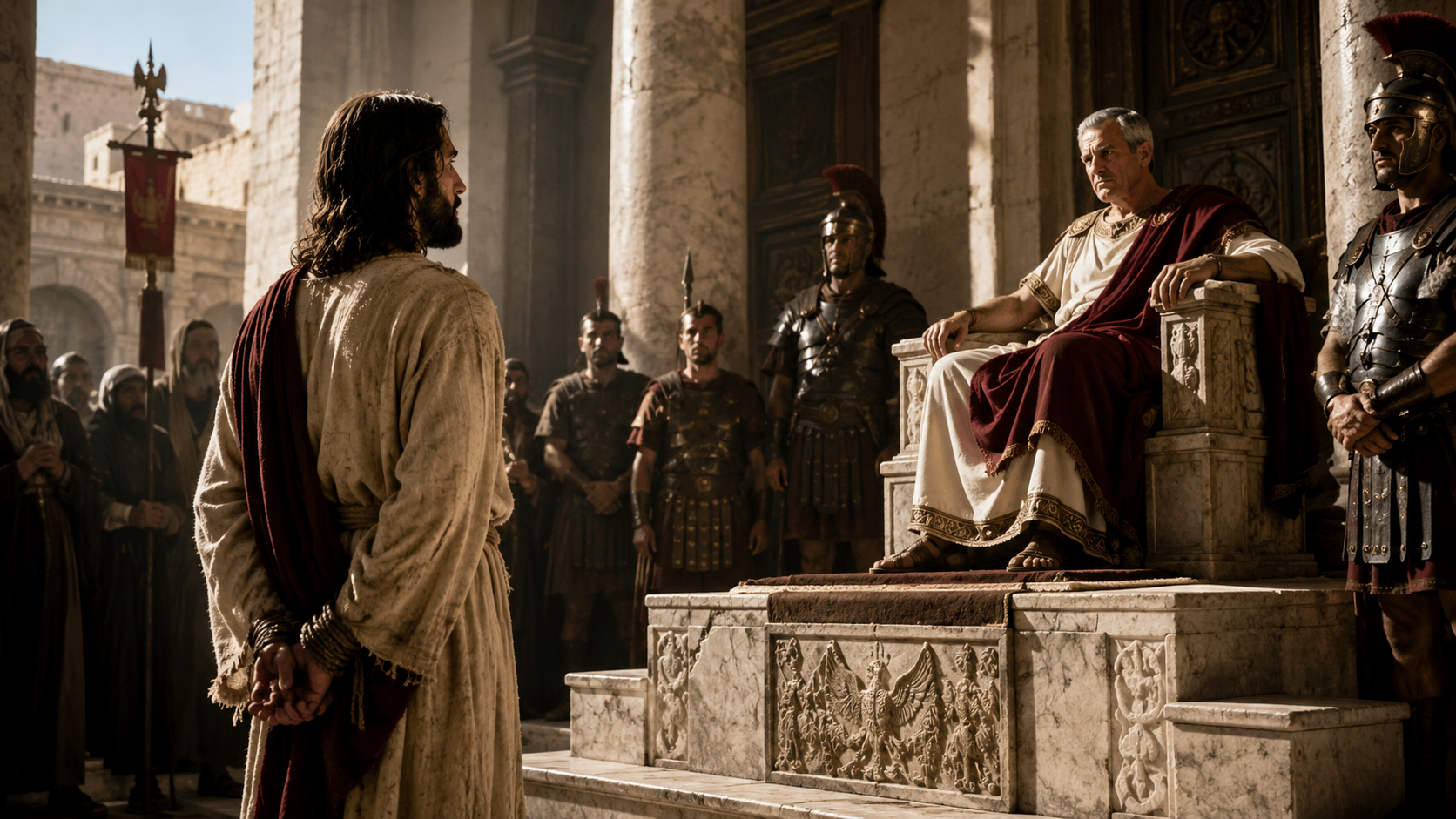
In my opinion, one of the most profound scenes of Jesus’s passion is his examination before Pilate in John 18:28–40. In the middle of this scene, Jesus makes a startling statement: “My kingdom is not of this world. If my kingdom were of this world, my servants would fight, so that I wouldn’t be handed over to the Jews. But as it is, my kingdom is not from here” (John 18.36). This statement is pregnant with significance for understanding the nature of the kingdom Jesus preached, but it is often misunderstood. When Jesus says, “My kingdom is not of this world,” many understand him to mean something like, “My kingdom has nothing to do with the earth.” This can create the misconception that the Christian hope is ultimately to escape the physical world for an immaterial heavenly existence. But is this what Jesus is really saying? To answer that question, we must distinguish between two others: Where does Jesus’s kingdom come from, and where will it ultimately be manifested? Jesus’s kingdom is not an immaterial or purely spiritual kingdom removed from the earth. Rather, its origin and authority do not derive from the present world order, and it will ultimately be manifested in its fullness when Christ reigns over a renewed creation.

However, in order to understand this, we must first consider Jesus’s statement in its immediate context. The question Jesus is answering sets the scene. Pilate asks, “Are you the King of the Jews?” (John 18:33). In response, Jesus does not deny the implication of the question, but he uses the opportunity to clarify the nature of his kingdom: “My kingdom is not [from] this world.” The preposition (ἐκ) indicates the source or origin of Jesus’s kingdom, not its geographical location or ultimate destination. In other words, Jesus does not mean that his kingdom has nothing to do with this world, that it will never exist upon the earth, or even that it is purely spiritual. Rather, Jesus is saying that his authority does not stem from the world’s powers and that his kingdom does not operate according to the world’s principles and values. This is why he goes on to say, “If my kingdom were of this world, my servants would fight, so that I wouldn’t be handed over to the Jews.” If his kingdom were a kingdom derived from this world, then his servants would advance it according to this world’s methods. But his kingdom is from above, even as he is from above. It is defined by a different set of priorities and values. Or, to put it another way, Jesus’s point concerns the origin and character of his kingdom, not the permanent exclusion of the earth from its rule.

This distinction between the kingdom’s heavenly origin and its earthly significance is consistent with a larger pattern in John’s Gospel. Earlier, Jesus tells his opponents, “You are from below; I am from above. You are of this world; I am not of this world” (John 8:23). The language closely parallels Jesus’s description of his kingdom before Pilate. Yet when Jesus says that he is not “of this world,” he obviously does not mean that his mission has nothing to do with the world. Jesus comes from above precisely in order to enter this world and accomplish God’s saving purposes within it. His heavenly origin identifies the source of his identity and authority without removing his mission from the earthly sphere. The same is true of his kingdom. Because it is not “from this world,” Christ’s kingdom does not derive its authority from earthly rulers like Pilate or advance through the coercive power by which worldly kingdoms maintain their rule. Its authority comes from God and therefore confronts the fallen world’s values rather than conforming to them. A kingdom that is not from this world, then, need not be a kingdom that has nothing to do with this world. Indeed, the larger biblical story reveals that God’s purpose is not to abandon the world he created, but ultimately to redeem and renew it.

In the beginning, God created the physical world and all it entails, and then he pronounced it to be “very good.” When sin entered the picture, however, it corrupted God’s good creation. But rather than simply abandon what he had made, God set in motion a plan to redeem the created order and restore what was lost in the garden. This is why Paul says that creation itself longs to be “set free from the bondage to decay into the glorious freedom of God’s children” (Rom. 8:21). Significantly, Paul connects the liberation of creation with the redemption of our bodies (8:23). The Christian hope, therefore, can be summed up in one word: resurrection. Jesus was raised bodily, and those who believe in him await a resurrection in which our mortal bodies will be glorified. (On Christian hope as resurrection rather than simply “going to heaven,” see here.) Our hope is not for some kind of disembodied existence, nor is it to be saved from material creation. Rather, we await the glorification of our bodies so that we might live as embodied creatures within a restored creation. The biblical story does not move from creation to the abandonment of creation, but from creation through fall and redemption to new creation.

This is ultimately how the kingdom of God will be manifested on earth, i.e., in a new creation; this is the goal of the Bible’s story. In Revelation 21:1–3, we read of a new heaven and a new earth, and a new Jerusalem coming down out of heaven to earth. John records it this way: “Then I heard a loud voice from the throne: Look, God’s dwelling is with humanity, and he will live with them. They will be his peoples, and God himself will be with them and will be their God” (Rev. 21:3). The direction of this movement is significant. God’s people do not permanently leave the earth to dwell with God somewhere else; God comes to dwell with his people in a renewed creation. This vision brings to fulfillment Isaiah’s earlier expectation of “new heavens and a new earth” (Isa. 65:17) and the declaration in Revelation that “the kingdom of the world has become the kingdom of our Lord and of his Christ, and he will reign forever and ever” (Rev. 11:15). Christ’s reign, therefore, does not culminate in the abandonment of the created world, but in God’s reign being fully manifested throughout a renewed creation. The present world order characterized by sin, rebellion, death, and corruption passes away, but God’s purposes for his creation do not. The kingdom is not from this world, but it is ultimately for this world—not the world as presently corrupted by sin, but the world judged, renewed, and brought completely under the reign of Christ.

Of course, this does not mean that Christ is not already reigning. Christ does not have to wait until the new creation to become King. He is King, and he is seated at the right hand of the Father, where he reigns over his church by his Spirit through the Word. His kingdom is already present, and his authority is already real. Through his death, resurrection, exaltation, and the giving of the Spirit, Christ presently reigns. We call this inaugurated eschatology, or the already and the not yet. (On inaugurated eschatology in the preaching of John and Jesus, see my post here.) The kingdom of Christ has already begun, but it has not yet reached its full realization. However, it is important to note that just because Christ’s kingdom is already present, this does not mean that it is a purely spiritual kingdom. It is presently manifested on earth through his church, and one day it will be consummated throughout the new creation. The difference is not between a spiritual kingdom now and an earthly kingdom later, but between a kingdom already inaugurated and a kingdom not yet consummated. The kingdom that has already broken into the present through Christ will therefore reach its appointed goal when his reign extends in all its fullness throughout a renewed creation at his return. (On the already and the not yet of the Kingdom, see Thinking Theologically here.)

So, we can now return to that profound scene with which we began. Pilate looks upon what appears to be a powerless Jewish prisoner and asks, “Are you the King of the Jews?” Jesus’s answer is that he possesses a kingdom, but that his kingdom is “not from this world” (John 18:36). Far from denying his kingship or consigning his kingdom to some immaterial spiritual realm, Jesus identifies the divine source and radically different character of his reign. His kingdom does not originate from the fallen powers of this world, nor does it advance through their methods of coercion and violence. The Christian hope, therefore, is neither the establishment of Christ’s kingdom through worldly political conquest nor an escape from the physical world into an eternal disembodied existence. Instead, we await the return of the King, the resurrection of the dead, the judgment of evil, and the renewal of creation, when the reign that already belongs to Christ will be manifested in all its fullness. Jesus’s kingdom is not from this world because its authority, power, and character come from God. But that does not mean that Christ intends to abandon the world to sin, death, and decay. The King who once stood before Pilate will return to renew creation and manifest his reign over all things. The kingdom is not from this world, but God’s purpose is ultimately to bring this world, renewed and restored, under the reign of its rightful King.


On Thinking Theologically (Weekend Vlog)


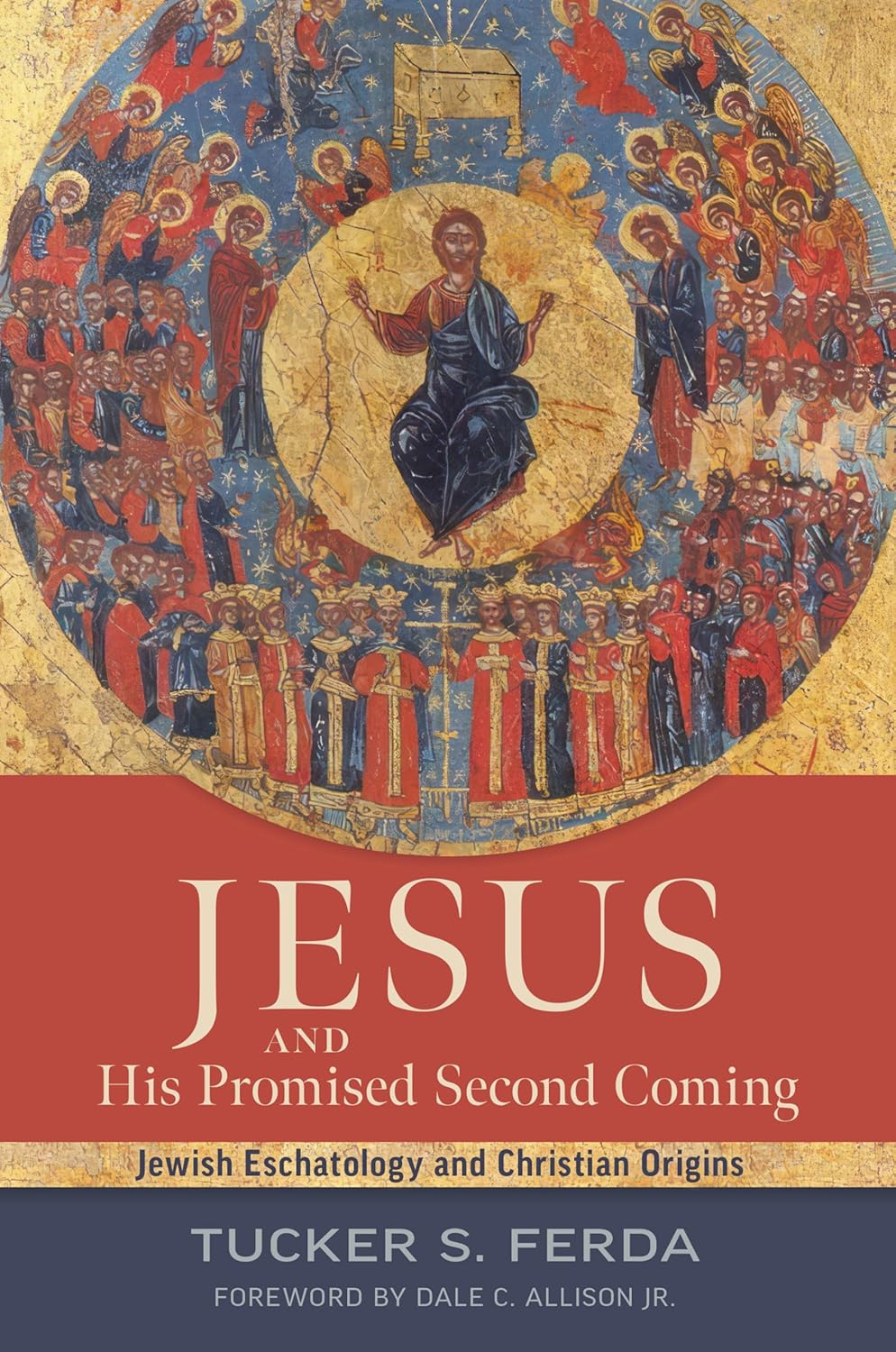
On Jesus and His Promised Second Coming: A Book Review

Ferda, Tucker S. Jesus and His Promised Second Coming: Jewish Eschatology and Christian Origins. Grand Rapids: Eerdmans, 2024.

One of the convictions that has Christians now for 2000 years is the expectation that Jesus will come again at the end of history to judge the living and the dead and to establish his kingdom on earth. This “blessed hope” (Titus 2:13) has been the confession of followers of Jesus from the very beginning of Christian history, as evidenced in the Apostle’s Creed. The problem is that this belief has somewhat of an embarrassment in the study of the historical Jesus. In other words, if Jesus truly believed that he would come again in the lifetime of “this generation” (Matthew 16:28, et al.), then either he made a simple mistake in his calculations or he was horribly deluded as to his understanding of himself and his role in the final consummation of all things. Scholars have typically followed two approaches in order to alleviate this embarrassment. On the one hand, there is a widespread consensus among critical scholars that the second coming is a belief that was created by the first followers of Jesus, and it does not go back to the historical Jesus. On the other, a large number of “evangelical” scholars have reinterpreted the coming of Jesus metaphorically/symbolically as a coming in judgment and have applied it to the destruction of Jerusalem in 70 AD.

In his most recent book, Jesus and His Promised Second Coming: Jewish Eschatology and Christian Origins, Tucker S. Ferda (Errett M. Grable Associate Professor of New Testament Exegesis and Early Christianity at Pittsburgh Theological Seminary) challenges both of these approaches by arguing that the second coming hope goes back to the historical Jesus. He advances this argument in four parts. In the first section, he considers questions related to historical and interpretive method, and he critiques certain “atomistic” approaches that attempt to sift through the Gospels in order to find the authentic sayings of Jesus and then then from them try to construct the beliefs of Jesus. In Ferda’s view, this methodological approach has it completely backward. Instead, he suggests that we should start with the beliefs of the early church as they are presented in the New Testament documents and then attempt to construct a plausible scenario that how these beliefs came to be. In the second section, Ferda considers the history of scholarship on the question of the Second Coming, and he identifies certain presuppositions and biases that have contributed to the current state of affairs. Particularly, he suggests that certain elitist and antisemitic tendences among scholars have caused them to want to distance Jesus from “outlandish” apocalyptic beliefs of Second Temple Judaism. In the third section, in keeping with the method that he outlined in section one, Ferda surveys the Gospels and and writings of Paul to demonstrate the widespread and ubiquitous belief in the Second Coming that characterized the early church, and finally, in section four, he offers a historical reconstruction of the Sitz im Leben Jesu (the life and ministry context of Jesus) which he believes explains the Second Coming beliefs of the early church and how they arose from the teaching and beliefs of the historical Jesus.

In the space that remains, I would simply like to identify two strengths and two weaknesses that stand out in Ferda’s work. First, Ferda’s critique of certain “atomistic” approaches to the study of the historical Jesus is spot on. So many reconstructions of the historical Jesus have relied on application of the so-called criterion of (in)authenticity to the saying of Jesus. In this approach, scholars utilize criteria like dissimilarity, multiple attestation, embarrassment, et al., to identify which sayings of Jesus in the Gospels are authentic . However, in practice, these criteria have led to the dismissal of more sayings of Jesus than they have authenticated. Moreover, this approach simply does not appreciate the what the Gospels actually are. They are not verbatim recordings of the teaching of Jesus; the Gospel writers were not attempting to record and convey the ipsissima verba (the very words) of Jesus. Given the literary and historical nature of Gospels, it is much more likely that they convey the ipsissima vox (the very voice) or the substantia verba (the substance of the words) of Jesus. So, the search for “authentic” sayings of the historical Jesus is a fundamentally flawed endeavor to begin with; it is not possible. Ferda’s alternative approach accounts for this by treating the Gospels as theological/interpretive history, and moving backward from how the church understood and interpreted Jesus to what Jesus likely understood and believed. In other words, it attempts to explain how the beliefs and expectations of the historical Jesus fit both within the context of Second Temple Judaism and how they give rise to the beliefs and hopes of the early church.

The second strength in Ferda’s argument has to do with his thorough and nuanced handling of messianic expectations in the Second Temple period. It is widely recognized that expectations for who the Messiah would be and what he would do were quite diverse during the time of Jesus. Of course, the liberation and restoration of Israel was foundational for these hopes, but expectations for how this would be accomplished were far from uniform. However, it seems relatively clear that book of Daniel played a primary role in the formulation of these expectations, and especially so for Jesus and his understanding of himself as the Son of Man. In his analysis of these expectations, Ferda clearly demonstrates the plausibility of Jesus’ belief in his own Second Coming. Moreover, he clarifies how notions of imminence and delay fit together in these scenarios. He writes, “It is also important to note that messianic hopes, varied though they were, frequently envisioned some kind of process of inauguration, whereby the coming of a messianic figure is climactic but does not necessarily change history instantaneously.” (390) The point is that the idea of imminence need not be equated with immediacy, and it need not preclude the idea Jesus expected an interim period between his death/resurrection and his coming in glory and power. Not only is this tension between imminence and interim present in the expectations of Second Temple Judaism, it is highly likely that it was a characteristic component of the eschatological expectations of the historical Jesus.

Overall, I think Ferda has made a strong and persuasive case for the idea that the Second Coming hope goes back to Jesus himself. Of course, this does not mean that I agree with every detail of his argument, and here I will identify two that stand out. First. while he is right to reject approaches that attempt to sift the Gospels for authentic sayings of Jesus, from time to time he still dismisses sayings that he considers clearly inauthentic. For example, he writes, “The threefold passion and resurrection predictions are highly suspect as they conveniently predict what exactly took place in Jerusalem (Mark 8.31, 9.30-32, 10.32-34, and parr.).” (327) In other words, because Jesus predicts the exact events that will unfold as to his death/resurrection, these predictions cannot be authentic sayings of the historical Jesus. This is a dismissive statement that reads more like a bias than an evidence based conclusion. Moreover, he goes on to argue that it is entirely plausible that Jesus had considered the possibility of his own death and that he likely expected to die in Jerusalem. Setting aside the question of Jesus’s understanding of his resurrection, it is not clear why Jesus could expect to die but not predict that he would be killed. Moreover, as noted above, the decision on whether a saying is authentic or inauthentic is at best not helpful and at worst irrelevant.

Secondly, as I noted above, Ferda makes a convincing case that Jesus’s understanding of imminence need not entail that the kingdom would come and that the would return within his own lifetime, especially since it is clear that he expected that he would die (rise again, and ascend). It is a truism to say that the proclamation of Jesus was characterized by the notion of imminence. However, how the notion of imminence should be understood is widely debated. Even though Ferda acknowledges the presence of a delay in Jesus’s expectations, he attempts to salvage the idea of imminence by limiting it to “this generation”, meaning that Jesus expected that he would come back within the lifetimes of his audience or a timespan of approximately 40 years. This is based on statements like the one found in Matthew 16:28, which says, “Truly I tell you, there are some standing here who will not taste death until they see the Son of Man coming in his kingdom,” or Matthew 24.34, “Truly I tell you, this generation will certainly not pass away until all these things take place.” These verses, and their parallels, are widely debated. Moreover, if Ferda’s interpretation is correct, then it is not clear how this saves Jesus from error. If he believed that he would come back within 40 years, and he clearly did not, then he was still wrong about his understanding of his coming. This is a fundamental question. Ferda doesn’t acknowledge the implications of his statements in this regard, nor does he attempt to resolve this tension. (See how I have attempted to address this problem, here.)

In the final analysis, we need not be ashamed to confess that “He will come again in glory to judge the living and the dead and his kingdom will have no end.” (Nicene Creed). This is our blessed hope, and to deny this in any way is to countenance heresy. It simply will not do to explain it away as a creation of the early church, and it will not do to reinterpret it as a metaphor or symbol. Jesus is coming again, visibly, bodily, in glory and power, to establish his kingdom on earth, to vindicate his people, and to defeat sin once and for all. Tucker S. Ferda has effectively demonstrated the plausibility that the church’s belief goes back to Jesus himself. Of course, he has not answered every question, and there is still more work to be done in terms of understanding the eschatology of the historical Jesus and how it is presented in Gospels particularly but also in the rest of the New Testament. But even if every question cannot be answered or every detail explained, followers of Jesus can boldly proclaim, “Amen! Come, Lord Jesus!”


On Three Views for Interpreting the Olivet Discourse

TEXT

24 As Jesus left and was going out of the temple, his disciples came up and called his attention to its buildings. 2 He replied to them, “Do you see all these things? Truly I tell you, not one stone will be left here on another that will not be thrown down.” 3 While he was sitting on the Mount of Olives, the disciples approached him privately and said, “Tell us, when will these things happen? And what is the sign of your coming and of the end of the age?”

Text: Matthew 24-25, c.f. Mark 13, Luke 21
Series: Eschatology: A Study of the End Times
Church: South Caraway Baptist Church, Jonesboro, AR
Date: September 7 , 2022


On the Season of Advent

Advent

Well, it is that time of year again. ‘Tis the season, and all that jazz. Now that Thanksgiving has come and gone, the sights and sounds and smells of Christmas have begun to fill the air. However, with the month of December comes another season that sometimes gets lost in the hustle and bustle of the holidays. I am talking about the Christian season of Advent. Advent, that time of year, according to the Christian calendar, when followers of Jesus prepare themselves to celebrate the incarnation of the Savior at Christmas. Of course, the season of Advent, which consists of the four Sundays leading up to Christmas, stands at the beginning of the church year, and as such, it brings with it a sense of renewal and hope.

The name Advent comes from a Latin word that simply means “coming”, which itself is a translation of the Greek word parousia, meaning “coming”. And in the New Testament, this word almost always refers to the Second Coming of our Lord Jesus when He will return to the earth in glory and power. In other words, the season of Advent is a time when Christians reflect on the Second Coming of our Lord Jesus Christ, even as we prepare to celebrate His first coming. We look back, so that we may look forward. We look back into the hope and longing of Israel for the coming of Messiah, even as we look forward with hope and longing for the return of Messiah. And we let their expectations inform our expectation.

This sentiment is captured best in the well known hymn, O Come, O Come, Emmanuel, which begins, “O come, o come, Emmanuel, and ransom captive Israel that mourns in lonely Exile here until the Son of God appears.” The chorus follows, “Rejoice! Rejoice! Emmanuel shall come to you, O Israel.” Or again, in the hymn Come, thou long expected Jesus,” where we sing, “Come, thou long expected Jesus, born to set thy people free; from our fears and sins release us, let us find our rest in thee. Israel’s strength and consolation, hope of all the earth thou art; dear desire of every nation, joy of every longing heart.” And so, it is understandable that the corresponding lectionary readings for this season emphasize the prophetic expectation that is fulfilled in the coming of Jesus as Messiah.

For the follower of Jesus, then, I believe the season of Advent teaches us three things in preparation for the celebration of Christmas. First, it teaches us to wait. When we look back into the hopes of Israel for the coming of Messiah, we are reminded that they had to wait for quite some time. The last messianic prophecy is given in the Book of Malachi, and it was some 400 years or so after those words were spoken that the Christ-child was born. Even as Israel had to wait, so also we have been waiting for some 2000 years for the return of our King. And as long as He should tarry, we will continue to wait. Sadly, the notion of waiting well has been lost in our fast-paced, instant society, but Advent teaches us to wait patiently.

Secondly, Advent teaches us to hope. It is in the season of Advent that we are reminded that our hope has only partially been fulfilled. And even as we anticipate the celebration of Christmas, we are reminded that the incarnation is only half of the Gospel story. Our Lord Jesus came to this earth the first time as a baby in a manger, and He grew into a man who died on a cross for our sin and then rose again. And after His resurrection, He ascended unto the Father with a promise, that in the same way that He departed, so also would He return one day. He will come a second time with glory and power, and He will finally and permanently establish the kingdom of God on the earth in peace and righteousness. And we should long deeply for that day!

And lastly, Advent teaches us to be faithful. In other words, even as we wait, we are not waiting passively. We are not merely sitting back on our hands looking to the sky for His return. No, we have been given a commission, a Great Commission, to go into all the world making disciples of our Lord Jesus the Christ. We are called to be faithful, to serve, and love, and live in Christ-likeness, until that time when we will meet Him in the air. As the Apostle Paul puts it in the Letter to Titus, chapter 2, verses 11-13,

“For the grace of God has appeared, bringing salvation for all people, instructing us to deny godlessness and worldly lusts and to live in a sensible, righteous, and godly way in the present age, while we wait for the blessed hope, the appearing of the glory of our great God and Savior, Jesus Christ.”

This Advent season, I pray that you all will be filled with this blessed hope.

For Further Study, see:
On the Use and Benefit of the Christian Calendar

See also:
On the Epiphany of Our Lord Jesus Christ
On the Season of Lent
On the Season of Easter


Slow To Write

"let every person be quick to hear, slow to speak, slow to anger."

lovegavehope

Just another WordPress.com site

Jared Cornutt

Pastor | Speaker | Writer

Denny Burk

A commentary on theology, politics, and culture

G3 Ministries

Events + Resources for the Local Church

Biblical Reasoning

Biblical and Systematic Theology According to the Scriptures

RetroChristianity

Reclaiming the Forgotten Faith

SBC Voices

Southern Baptist News & Opinion

Lucid Theology

Thoughts on words, books, theology, and life.

Baptist21

A pastor-led voice for Baptists in the 21st century

Center For Baptist Renewal

The Personal and Professional Blog of Phillip Powers

The Pastor's Well - Pastor Well

The Personal and Professional Blog of Phillip Powers

Articles - AlbertMohler.com

The Personal and Professional Blog of Phillip Powers

The Gospel Coalition

The Personal and Professional Blog of Phillip Powers