Tag Archives: Salvation

On the Preaching of John the Baptist and Jesus
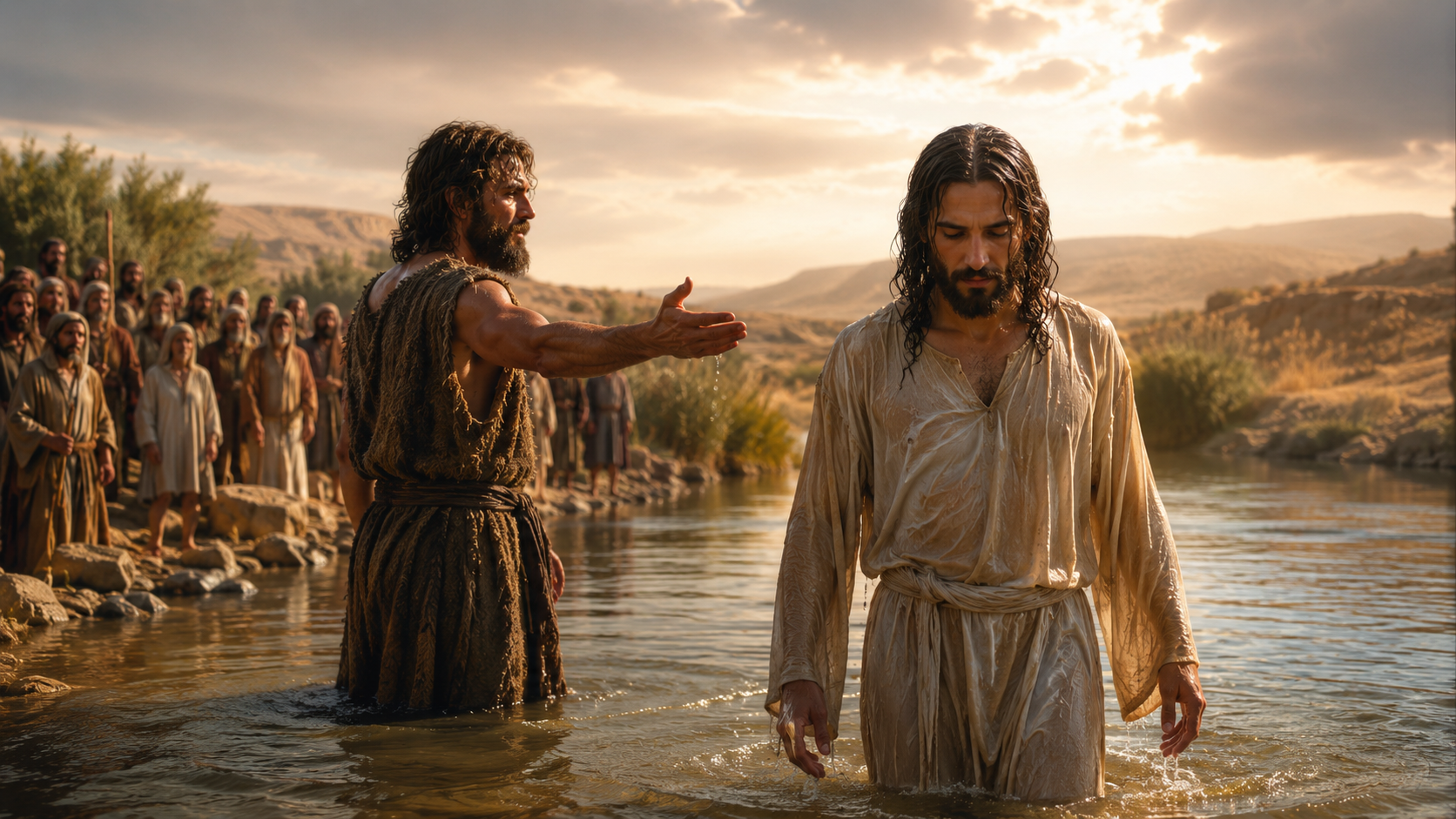
Have you ever wondered why all four Gospels begin the story of Jesus’s public ministry with the ministry of John the Baptist? Could it possibly be because John came preaching, “Repent, because the kingdom of heaven has come near!” (Matt. 3.2), and Jesus began his own ministry by preaching, “Repent, because the kingdom of heaven has come near!” (Matt. 4.17)? They begin their preaching with virtually the same message. What, then, is the relationship between the preaching and ministry of John the Baptist and that of Jesus? Sometimes John is treated as little more than a necessary but largely preparatory prelude to the more important ministry of Jesus, almost as though his primary purpose were simply to baptize Jesus and then disappear from the story. But the Gospels reveal remarkable continuity between the preaching of these two figures. Jesus’s preaching stands in fundamental continuity with John the Baptist’s proclamation of the approaching kingdom, repentance, salvation, and judgment; yet it also develops John’s message by announcing that the kingdom has become present in Jesus’s own ministry while its final judgment remains future. The transition from John to Jesus, therefore, is not a transition from one eschatological message to another, but from the announcement of what God is about to do to the inauguration of that promise in Jesus himself. To understand this development, however, we must first consider what John was actually announcing.
Of course, John the Baptist’s preaching is fundamentally eschatological. He appears in the wilderness announcing, “Repent, because the kingdom of heaven has come near!” (Matt. 3.2). The nearness of God’s kingdom means that Israel has reached a decisive moment in the history of salvation, and repentance is the necessary response to what God is about to do. Indeed, John warns his hearers not to presume upon their covenantal identity: “Don’t presume to say to yourselves, ‘We have Abraham as our father’” (Matt. 3.9). Instead, they must “produce fruit consistent with repentance” because “the ax is already at the root of the trees” (3.8, 10). John’s proclamation therefore contains both salvation and judgment. On the one hand, he announces the coming of one more powerful than himself who “will baptize you with the Holy Spirit and fire” (3.11). On the other hand, this Coming One already has “his winnowing shovel” in his hand and will separate the wheat from the chaff, burning the latter “with fire that never goes out” (3.12). John therefore stands at the threshold of Israel’s eschatological expectation, announcing that God’s promised intervention is no longer located in some distant future—it has drawn near. His call to repentance, promise of the Spirit, and warning of judgment all derive their urgency from this conviction. Most importantly, however, John does not present himself as the one who will accomplish these things. His entire proclamation points beyond himself toward the Coming One through whom God’s promised salvation and judgment will arrive.
The preaching of Jesus stands in basic continuity with the contours of John’s message. As noted above, Jesus also comes proclaiming the nearness of the kingdom and the need for repentance. In Matthew 4.17, Jesus declares, “Repent, because the kingdom of heaven has come near!” repeating verbatim the proclamation of John (Matt. 3.2). Similarly, Mark summarizes Jesus’s preaching: “The time is fulfilled, and the kingdom of God has come near. Repent and believe the good news!” (Mark 1.15). The point is that Jesus retains John’s basic eschatological framework: kingdom, repentance, salvation, judgment, restoration, and accountability before God. He does not correct John by suggesting that his expectation of judgment was mistaken or that Israel’s eschatological hopes were misguided. On the contrary, Jesus repeatedly warns of a coming judgment, whether in his teaching concerning Gehenna (Matt. 10.28), the separation of the righteous and wicked (Matt. 13.40–43), or the future judgment of the Son of Man (Matt. 25.31–46). We must therefore resist the simplistic dichotomy that John preached judgment while Jesus preached grace. Both proclaim salvation and judgment as dimensions of God’s coming kingdom. The fundamental difference between their preaching must be located somewhere else. The question is not whether Jesus abandoned John’s eschatological message, but what happened to that message once the One whom John announced actually arrived.
In Matthew 11.2–3, John sends messengers to Jesus to ask him, “Are you the one who is to come, or should we expect someone else?” We are not told exactly what prompted John’s question, but the apparent disconnect between his preaching and Jesus’s actual ministry was likely part of the equation. John had proclaimed the nearness of the kingdom alongside warnings of impending judgment, yet the ministry of Jesus did not seem to indicate that such judgment had arrived. This is why Jesus’s answer to John’s question is so significant. Rather than simply answering yes, Jesus points to the fruit of his ministry: “The blind receive their sight, the lame walk, those with leprosy are cleansed, the deaf hear, the dead are raised, and the poor are told the good news” (Matt. 11.5). These signs reflect the expectations of eschatological restoration found throughout the Book of Isaiah (especially Isa. 35:5–6; 61:1–2). The healings, exorcisms, forgiveness, restoration, and proclamation of good news therefore demonstrate that Israel’s promised salvation has begun. John announced what God was about to do; Jesus points to what God is now doing through him. Here we encounter the essential development from John’s preaching to that of Jesus: John announces the Coming One; Jesus announces and embodies the arrival of the kingdom because he is the Coming One. The transition from John to Jesus is therefore the transition from eschatological expectation to eschatological fulfillment. The promised blessings of the kingdom have begun to enter the present through the ministry of Jesus. But if the blessings have arrived, what has happened to the judgment John so urgently announced?
John had proclaimed that the ax was at the root, that the winnowing fork was in the Coming One’s hand, and that the chaff would be burned with unquenchable fire. Yet Jesus heals, forgives, restores, eats with sinners, and proclaims good news. What is important to remember, however, is that John was not wrong: judgment is coming. Rather, the ministry of Jesus brings greater clarity to the temporal structure of John’s eschatology. The kingdom has arrived in the earthly ministry of Jesus, but final judgment has not. This distinction is illustrated particularly well in Jesus’s sermon at Nazareth in Luke 4. There Jesus reads from Isaiah 61:1–2 and then proclaims, “Today as you listen, this Scripture has been fulfilled” (Luke 4:21). Interestingly, however, Jesus’s reading stops with “the year of the LORD’s favor” and does not include the following phrase, “the day of our God’s vengeance.” We should probably not build too much upon this omission alone, but it fits the larger pattern of Jesus’s ministry remarkably well. The promised blessings of Israel’s restoration are being inaugurated in the present, while final judgment remains future. This does not mean that Jesus abandons John’s expectation of judgment. As noted above, Jesus repeatedly warns of a coming judgment and associates its consummation with the future coming of the Son of Man in glory. Judgment has not disappeared from God’s eschatological program; Jesus has revealed that the kingdom’s saving blessings enter history before its final judgment arrives.
The point is that John’s basic expectations were correct. The Coming One would bring salvation, the Spirit, restoration, and judgment. But the earthly ministry of Jesus reveals that these realities do not all arrive simultaneously in their consummated form. The preaching and ministry of Jesus operate according to what is often described as the “already and not yet,” or inaugurated eschatology. This simply means that in the earthly ministry of Jesus, the kingdom of God was already present even though its final consummation remained future. For example, Jesus declares, “If I drive out demons by the Spirit of God, then the kingdom of God has come upon you” (Matt. 12:28). His ministry of healing, exorcism, forgiveness, and restoration therefore demonstrates that God’s saving reign had already broken into history. Yet Jesus continues to speak of realities that remain future: the resurrection of the dead, the return of the Son of Man, final judgment, and the consummation of God’s kingdom. The kingdom is therefore genuinely present without yet being present in its fullness. Salvation has been inaugurated, while final judgment and consummation remain future. This is not a rejection of John’s preaching but its clarification and fulfillment. The Coming One has arrived, just as John announced, but Jesus reveals something John did not fully articulate: his first advent inaugurates the promised salvation of the kingdom before his return brings that kingdom to its consummation in final judgment.
In the final analysis, the preaching of Jesus neither abandons nor merely repeats the preaching of John the Baptist. Both proclaim the nearness of God’s kingdom, call Israel to repentance, announce the arrival of eschatological salvation, and warn of coming judgment. This is why Matthew can summarize their preaching with precisely the same words: “Repent, because the kingdom of heaven has come near!” (Matt. 3:2; 4:17). Yet those words take on a new significance when spoken by Jesus. John stands at the threshold of fulfillment, announcing that the kingdom is near and pointing forward to the Coming One who will bring it. Jesus is that Coming One, and through his preaching, healings, exorcisms, forgiveness, and restoration, the saving power of the kingdom begins to enter the present. The transition from John to Jesus is therefore the transition from eschatological expectation to eschatological fulfillment—not yet fulfillment in all its fullness, but fulfillment genuinely inaugurated in history. John announces that God’s kingdom has drawn near; Jesus announces and demonstrates that in him its saving power has begun to arrive. Salvation has entered the present, while final judgment remains ahead, awaiting the return of the King who first came proclaiming good news.
Share this:

On Religious Affections and Saving Faith

A few weeks ago, I was sitting in a Sunday school class, and we were discussing James 1.12, which says, “Blessed is the one who endures trials, because when he has stood the test he will receive the crown of life that God has promised to those who love him.” This verse raises an important question about the relationship between our affections for God and saving faith. In other words, if we are justified by faith alone in Christ alone, then what role do our affections play in saving faith. On the one hand, we do not want to reduce saving faith to mere intellectual agreement, i.e. “I believe that Christianity is true.” On the other hand, we do not want to reduce faith to sheer emotional experience, i.e. “I know I am saved simply because I feel close to God.” The Scriptures reject both of these reductions. Instead, the Scriptures present saving faith as the wholehearted response of a person to God’s self-revelation in Christ—a response that engages the mind, the will, and the affections. However, before we consider the relationship between saving faith and the affections, we must first ask a more basic question: What is saving faith?
Throughout the history of the church, theologians have commonly described saving faith as consisting of three essential elements: notitia (knowledge), assensus (assent), and fiducia (trust). Together, these categories help explain what it means to believe in Christ for salvation. First, a person must possess notitia, that is, a basic knowledge of the gospel and the identity of Jesus Christ. Second, that knowledge must be accompanied by assensus, an acknowledgment that the gospel is true. Yet Scripture makes it clear that knowledge and assent alone are not enough. James reminds us, “You believe that God is one. Good! Even the demons believe—and they shudder” (James 2:19). The demons possess both knowledge of God and an orthodox understanding of who he is, yet they remain in rebellion because they lack fiducia—a wholehearted trust that rests in God alone for salvation. Saving faith, therefore, is more than simply knowing the truth or agreeing that it is true; it is entrusting oneself to God in Christ. This naturally raises another question: What does that trust actually look like, and what role do our affections play in its expression?
The point, then, is that saving faith is never merely cognitive. As Paul writes in Romans 10:9, “If you confess with your mouth, ‘Jesus is Lord,’ and believe in your heart that God raised him from the dead, you will be saved.” In Scripture, the heart is far more than the seat of our emotions. It represents the very center of our personhood—the source of our thinking, willing, loving, and desiring. This is why, when Jesus is asked about the greatest commandment, he cites the Shema: “Love the Lord your God with all your heart, with all your soul, and with all your mind” (Matt. 22:37). Saving faith, therefore, is not merely the acceptance of certain propositions about Christ; it is the wholehearted entrusting of ourselves to him. Such faith redirects the deepest loves and loyalties of the heart toward the One who gave himself for us. At this point, however, an important distinction must be made. The affections are not the same thing as our passing emotions. Emotions often fluctuate with our circumstances, but the affections are the settled inclinations, desires, and loves of the soul. Consequently, when we trust in Christ for salvation, we do more than experience a passing feeling—we come to treasure him as the supreme object of our love and devotion.
Perhaps no theologian has reflected more deeply on this subject than Jonathan Edwards in his classic work Religious Affections. Writing during the First Great Awakening of the 1730s and 1740s, Edwards ministered in a period marked by extraordinary religious enthusiasm. As revival spread throughout the American colonies, many professed faith in Christ and displayed intense emotional experiences. Yet these developments raised an important question: How can we distinguish genuine saving faith from merely temporary or emotional religious excitement? It was this question that prompted Edwards to write Religious Affections. His central argument is that true religion “in great part consists in holy affections” because regeneration does more than inform the mind—it transforms the heart. Saving faith not only convinces us that Christ is worthy of our trust; it also reorients our deepest loves toward him. Edwards was therefore not measuring the authenticity of faith by the intensity of a person’s emotions. Rather, he sought to identify the enduring dispositions of the heart that inevitably accompany the new birth. In doing so, he helped clarify an important biblical truth: genuine saving faith transforms not only what we believe but also what we love.
The transformation of our affections begins with the regenerating work of God. Scripture does not describe salvation as the mere addition of new information to an otherwise unchanged heart. Rather, God promises, “I will give you a new heart and put a new spirit within you” (Ezek. 36:26). This is the new birth of which Jesus speaks in John 3 and the new creation Paul describes in 2 Corinthians 5:17. Regeneration changes the deepest orientation of the person, enabling us to see Christ as beautiful, trust him as sufficient, and love him as Lord. These new affections arise because, through faith, we are united to Christ by the Holy Spirit and begin to share in the life of the One to whom we belong. However, they do not earn our justification, nor do they become an additional ground of acceptance before God. We are justified by faith alone on the basis of Christ alone. Yet the faith through which we are justified is never left barren or unchanged. It becomes fruitful in sanctification because the Spirit who grants faith also renews the heart from which faith arises. The order, therefore, must be preserved: God regenerates, the sinner believes, God justifies, and the justified believer begins to grow in holiness. Our love for God, delight in Christ, and desire for obedience are not the merit of our salvation; they are the evidence that God has made us new.
This is the important distinction: our affections for Christ are evidence of our salvation and therefore contribute to our assurance, but they are never the ground of it. The foundation of our assurance rests entirely upon the finished work of Christ and the promises of God confirmed by the indwelling Holy Spirit. At the same time, the Spirit who assures us of our adoption also transforms our hearts, producing new desires and holy affections that testify to his ongoing work within us. Many believers ask the wrong questions when examining themselves. They wonder, “Do I feel enough?” or “Do I know enough?” Yet Scripture directs our attention elsewhere. The better question is, “Has Christ begun changing what I love?” Am I growing in my hatred of sin and my love for Christ? Do I desire to read and meditate upon God’s Word? Do I increasingly delight in holiness and long to obey him? Do I love God’s people and desire fellowship with them? None of these things earns God’s favor, but together they provide evidence that he has given us a new heart. The Christian’s assurance, therefore, rests on Christ alone, while the transformed affections of the heart bear witness that his saving work is truly taking root within us.
Saving faith, then, is far richer than either mere intellectual agreement or passing emotional experience. It knows the truth of the gospel, believes that truth to be certain, entrusts itself wholly to Christ, and, through the regenerating work of the Holy Spirit, comes to love the One in whom it has believed. In other words, saving faith engages the whole person—mind, will, and affections—in response to God’s gracious self-revelation in Jesus Christ. This is why the Christian life is not marked by perfect emotions or flawless devotion but by a heart that is being steadily transformed by the grace of God. None of us possesses perfect affections in this life. Our love for Christ is often weak, inconsistent, and mixed with the remnants of sin. Yet the Spirit who gave us a new heart does not abandon his work. Day by day, he continues to redirect our loves, deepen our trust, and conform us to the image of Christ. The mark of genuine saving faith, therefore, is not the perfection of our love but the presence of a new love—a heart that increasingly treasures Christ above all else. These affections do not save us, nor do they merit God’s favor. Rather, they testify that the One who does save us has already begun his transforming work within us. May we therefore fix our eyes on Christ, for as we behold his glory in the Scriptures, our faith is strengthened, our assurance deepened, and our hearts are increasingly taught to love the One who first loved us.
Share this:




On the Roman Catholic Church and the Nature of the Gospel
Is the Roman Catholic Church a Gospel-denying church? This question was the theme of a recent debate between Allen S. Nelson IV, pastor of Providence Baptist Church in Perryville, AR, and Father Stephen Hart, pastor/priest at Sacred Heart Church in Morrilton, AR. (A video of the debate can be found on the YouTube page of Providence Baptist Church, here.) While it is true that both participants had strong moments in the two hour event, it is not my purpose to evaluate their performances or to name a winner. I think that Pastor Nelson was at his best when he was pushing the details of the official teachings of the Roman Catholic Church as stated in their published documents, and Father Hart was at his best when he was giving the Catholic understanding of relevant New Testament texts. In the final analysis, though, I suspect that most people went away from the event feeling confirmed in the positions they held coming in and believing that their preferred candidate had won the evening. In the space that follows, I would simply like to suggest four important takeaways that were clarified for me.
First, the debate made it clear that the Roman Catholic Church generally misunderstands the New Testament concept of justification. Lexically, the δικαι- word group (words that are usually translated in the NT as righteousness and/or justified) refers to a forensic or legal status of innocence or guiltlessness. In his commentary on Romans in the NICNT series, Douglas Moo writes, “To justify signifies, according to forensic usage, to acquit a guilty one and declare him or her righteous.” (86) As we read in Romans 5.19, “For just as through one man’s disobedience the many were made sinners, so also through the one man’s obedience the many will be made righteous (δικαίωμα).” In other words, it is a once-for-all gavel dropping declaration that a person is not guilty of their sin before God because of their faith in the atoning work of Christ. And what is important is that this status cannot be changed because of our sin, nor can it be augmented by good works. From beginning to end, it is a gift that is given by faith alone and that is preserved, maintained, and completed by God through His Spirit. As the Apostle Paul writes, “I am sure of this, that he who started a good work in you will carry it on to completion until the day of Christ Jesus.” (Phil. 1.6) Or again, in Romans 8.29-30, we read, “For those he foreknew he also predestined to be conformed to the image of his Son, so that he would be the firstborn among many brothers and sisters. And those he predestined, he also called; and those he called, he also justified; and those he justified, he also glorified.”
However, the RCC insists that this declaration of righteousness, being God’s powerful word, must be effectual, and include thereby moral transformation. For example, the Council of Trent defines justification as that “which is not remission of sins merely, but also the sanctification and renewal of the inward man.” (Chapter 7) Trent goes on to argue that “by mortifying the members of their own flesh, and by presenting them as instruments of justice unto sanctification, they, through the observance of the commandments of God and of the Church, faith co-operating with good works, increase in that justice which they have received through the grace of Christ, and are still further justified.” (Chapter 10) And so, it logically follows when Trent resolves that, “If any one saith, that the justice received is not preserved and also increased before God through good works; but that the said works are merely the fruits and signs of Justification obtained, but not a cause of the increase thereof; let him be anathema.” (Canon 24) Of course, the Council of Trent, first convened in 1545, was the Church’s response to the Protestant Reformation, and so one can’t help but wonder if there isn’t some amount of reactionism that has influenced their positions on these matters. Nevertheless, it seems clear from these statements that Trent’s understanding of justification goes well beyond the New Testament understanding of the term.
Secondly, and the statements above demonstrates this, but the debate made it clear that the Roman Catholic Church confuses the doctrine of justification with the doctrines of regeneration and sanctification. Regeneration (aka new birth or “being born again”) refers to that work of the Spirit in which a person is given spiritual life. In other words, the Spirit transforms an individual from a state of spiritual death to a state of new creation in Christ, thus, enabling them to repent, believe, and live in accordance with God’s will. By the same token, sanctification is simply the lifelong process by which a person is gradually transformed more and more into the image of Christ, becomes more holy, and learns to walk in obedience to the law of Christ. As we read in Hebrews 10.14, “For by one offering he has perfected forever those who are being sanctified.” (ESV/LSB) Note especially in this verse that we are perfected forever, and yet we are being sanctified. The point is that these are logically distinct aspects of the salvation process (ordo salutis), even if in actual experience they are sometimes indistinguishable.
But in the teaching of the RCC, all of this inheres within the doctrine of justification. As we saw above, the Catholic church defines justification as that “which is not remission of sins merely, but also the sanctification and renewal of the inward man.” Whatever the reason for this lack of theological precision may be, this indiscriminate intermingling of categories leads inevitably to the conclusion that a person’s justification is dependent upon their sanctification. Or to put it another way, the Roman Catholic view seems that imply that while justification is begun by faith, it is continued, maintained, and eventually confirmed by good works. This is perhaps why Trent envisages the possibility that a person’s initial justification can be lost. In Chapter 14, Trent reads, “As regards those who, by sin, have fallen from the received grace of Justification, they may be again justified, when, God exciting them, through the sacrament of Penance they shall have attained to the recovery, by the merit of Christ, of the grace lost.” If a person’s justification can be lost by their disobedience, then it necessarily follows that it must be maintained (or should I say earned) by their obedience. Whatever the case, it is clear that in the Catholic understanding, the determining factor in a person’s justification is their obedience, i.e. their good “works”, and not their faith.
Now, I would be remiss if I did not also submit the opposing position to equal scrutiny, and so, before I conclude this article, I would like to offer two areas of weakness in our position that I believe were exposed in the aforementioned debate. And let me hasten to add that these points should not be received as any kind of criticism of Pastor Nelson; based on the limited interaction I have had with him, I find him to be a biblically faithful, theologically astute individual. But, as it regards the way that our views are typically represented in these discussions, I think there are two important takeaways for us to consider.
The first takeaway for those holding our perspective might be stated thus, namely that Protestants have a tendency to underemphasize the importance, nay even the necessity, of good works. In our zeal to proclaim and defend that time honored Reformation principle sola fide, or justification by faith alone, we inadvertently imply that living a life of obedience that issues forth in good works is some kind of optional add-on. We suggest, though perhaps unintentionally, that the Gospel’s call to live a life of ongoing discipleship to Jesus is something that is reserved for the religious elite, those who are really serious about their faith, those who are truly devout, so-called ‘super Christians’. But the Apostle James is clear on this point when he writes, “You see that a person is justified by works and not by faith alone.” (James 2.24) Of course, this is not a contradiction of the Apostle Paul, nor is it inconsistent with the Reformation’s emphasis on faith alone rightly understood (contra Luther). Rather, it is a reminder that the kind of faith that justifies is a faith that works. In other words, the principle of sola fide does not mean that a person can believe in Jesus and then live in whatever manner they so choose. This kind of “easy-believism’ is in truth no faith at all. In fact, it is demonic (James 2.19), and it does not and cannot save. A faith that saves, a faith that justifies, is a faith that works, and on this point, James and Paul are in complete agreement.
There is a sense in which our works will play a role at the final judgment. Jesus himself says in Matthew 16.27, “For the Son of Man is going to come with his angels in the glory of his Father, and then he will reward each according to what he has done. ” And in Second Corinthians 5.10, we read, “For we must all appear before the judgment seat of Christ, so that each may be repaid for what he has done in the body, whether good or evil.” Or again, in Romans 2.6-8, Paul writes (quoting Proverbs 24.12 et al.), “He will repay each one according to his works: eternal life to those who by persistence in doing good seek glory, honor, and immortality; but wrath and anger to those who are self-seeking and disobey the truth while obeying unrighteousness.” And finally, in Hebrews 12.14, we are told to “Pursue … holiness [because] without it no one will see the Lord.” This does not mean that we are “saved” by or because of our works, but it does mean that living a life of obedience to God validates or proves that our faith is indeed a saving faith. The message of the Gospel is built on both the indicatives of what Jesus has done for us and imperatives that we are called to obey for Him. We receive the indicatives by faith, and we obey the imperatives because of what we have received by faith. The order matters here. If we put the imperatives of the Gospel before the indicatives of the Gospel, then we distort the Gospel into a salvation by works. In the logic of the Gospel, the indicatives precede and enable the imperatives. But the point is that they are both necessary parts of the gospel.
And this brings me to the second weakness of the Protestant position that I believe was exposed in the debate, namely that Protestants have a tendency to reduce the Gospel to its lowest common denominator. There can be no doubt that justification by faith is an important, even essential, foundation for our salvation, but the Gospel is so much more than justification by faith. The Gospel is the good news that in the person and work of Jesus Christ God has entered into his creation to redeem his people by dying for their sin as an atonement and by defeating death through His resurrection and to renew his creation by establishing his rule on earth, so that through the Spirit they can walk in perfect conformity to His ways and experience the blessings of His ongoing presence in and among them. It is this vision of a renewed humanity living in a renewed world in which God is eternally present to bless that is the goal of the biblical narrative (Revelation 21-22). This is why we must constantly remind ourselves that even though we have already been saved (justification), we are still being saved (sanctification), and yet one day we will be saved (glorification). And all of this is received and experienced by and through faith, but this faith must be a faith by which we walk in conformity to the way and will of Christ.
So, is the Roman Catholic Church a Gospel-denying church? I don’t know, but it does seem to me that their official teachings, whether explicitly or implicitly, confuse important concepts and components of the Gospel, and in doing so, it has the potential to lead even the most sincere and devout parishioner to believe that they are saved by living a morally upright and generally good and charitable life. Can a person be genuinely saved in the Roman Catholic Church? I think yes, but I would suspect that this is in spite of its official dogmas and teachings. And beyond their doctrine of salvation, there are many other tenets and teachings of the Roman Catholic tradition that I consider to be in clear contradiction to the teaching of Scripture. However, that is a question for another time. I will simply close this post with the words of the Apostle Paul, because I think they sum up the issues discussed in this article particularly well. “For you are saved by grace through faith, and this is not from yourselves; it is God’s gift— not from works, so that no one can boast. For we are his workmanship, created in Christ Jesus for good works, which God prepared ahead of time for us to do.” (Ephesians 2.8-10)
Share this:

On Psalm 119.137-144 (Tsade)
137 You are righteous, Lord,
and your judgments are just.
138 The decrees you issue are righteous
and altogether trustworthy.
139 My anger overwhelms me
because my foes forget your words.
140 Your word is completely pure,
and your servant loves it.
141 I am insignificant and despised,
but I do not forget your precepts.
142 Your righteousness is an everlasting righteousness,
and your instruction is true.
143 Trouble and distress have overtaken me,
but your commands are my delight.
144 Your decrees are righteous forever.
Give me understanding, and I will live.

In keeping with the Hebrew alphabet acrostic form, the next stanza of Psalm 119 begins with the Hebrew letter tsade (צ), and it revolves around the Hebrew word for righteousness (צֶדֶק/ṣeḏeq). The word itself occurs in one form another some five times in these eight verses. It is a word that is rich with significance, both for our understanding of God and our relationship with Him, and for our our understanding of ourselves and our relationships with one another. Literally, it refers to something that is straight, like “straight paths” (Psalm 23.3, where the same word is used), but more often than not, it also carries the figurative sense of upright, true, normal, and just. Clearly, it is in this sense that we read, “You are righteous, Lord, and your judgments are just.” (Verse 137) There are few statements that define the character of God in this way, e.g. God is holy, God is perfect, God is Spirit, God is love. So also, here, we read that God is righteous. In other words, righteousness is a perfection of his being; it is essential to His essence. It is an attribute of His divine character. He is righteous, i.e. morally perfect and true, in every way, in what He thinks, in what He feels, in what He says, in what He does. It is impossible for Him to be otherwise, it is who He is. He is righteous. Of course, this is why His judgments are just, where the word used is a synonym for the word in question.
Of course, righteousness is more than simply who He is in himself; His righteousness extends to everything that He does. “Your decrees are righteous forever. Give me understanding, and I will live.” (Verse 144) This is an important affirmation especially in the context of the Old Testament. The Old Testament is filled with divine actions and events that make no sense to our modern minds, that stand as an affront to our modern sensibilities. The most often cited example of this is God’s command to the Israelites to exterminate the Canaanites in the conquest of the Promised Land. According to our Psalmist, even this deed of God is righteous. Of course, we may immediately ask, “how can this be?” I think it is important that we understand that we cannot understand the rightness of God’s ways by our own standards. Our perception of right and wrong and fundamentally flawed by sin. This is why our psalmist prays, “Give me understanding.” The only way we can hope to understand the righteousness of God and His ways is by divine illumination. This comes as a result of the Holy Spirit’s indwelling. As the Apostle Paul puts it in 1 Corinthians 2.14, “ But the person without the Spirit does not receive what comes from God’s Spirit, because it is foolishness to him; he is not able to understand it since it is evaluated spiritually.”
Of course, the question for our psalmist remains, “how can we, as fallen individuals, experience or participate in the righteousness of God?” As our psalmist confesses, “I am insignificant and despised, but I do not forget your precepts.” (Verse 141) Compared to God’s righteousness, our righteousness is nothing more than “filthy rags” (Isaiah 64.6). We are sinners, and even our best attempts at cultivating our own righteousness fall short of the standard of righteousness that God is in himself (Romans 3.23). For our psalmist, however, the answer to this question is simple; it is to live in submission before and obedience to the Word of God. As he says in verse 140, “Your word is completely pure, and your servant loves it.” Now, we must be careful here, because this answer could come across as a legalistic effort to earn righteousness. I don’t believe that is what our psalmist is saying. As we have already seen, even our best efforts at attaining righteousness are tinged with sin. No, our psalmist understands that righteousness is something that is imputed from God to us. This is why he says in verse 144, “Your decrees are righteous forever. Give me understanding, and I will live.” In other words, he understands that the righteousness of God comes to us by the transformative revelation of God. This is why he prays for understanding.
As New Testament believers, we know that that ultimate revelation of God’s righteousness came to earth in the person and work of Jesus Christ; He was God incarnate in all the fullness of His being. “He made the one who did not know sin to be sin for us, so that in him we might become the righteousness of God.” (2 Corinthians 5.21) Ours is an alien righteousness; it is not our own. It is imputed to us by grace through faith because of Christ’s death and resurrection. This is why the Apostle Paul could write,
For I am not ashamed of the gospel, because it is the power of God for salvation to everyone who believes, first to the Jew, and also to the Greek. For in it the righteousness of God is revealed from faith to faith, just as it is written: The righteous will live by faith. (Romans 1.16-17)
Our justification, our right standing before God, is by grace alone through faith alone in Christ alone. And I think even our psalmist knew that. Old Testament saints were made righteous in the same way that New Testament believers are made righteous, that is by faith. This principle is confirmed in the example of Abraham, “Abram believed the Lord, and he credited it to him as righteousness .” (Genesis 15.6, c.f. Romans 4 and Galatians 3) The point of all this is to say that righteousness is a perfection of God’s eternal being, and by grace we who believe in Christ have been covered in that same righteousness. This is the beauty of the Gospel. “It is from him that you are in Christ Jesus, who became wisdom from God for us—our righteousness, sanctification, and redemption— in order that, as it is written: Let the one who boasts, boast in the Lord.“ (1 Corinthians 1.30-31)
For further study:
Introduction
Psalm 119.1-8
Psalm 119.9-16
Psalm 119.17-24
Psalm 119.25-32
Psalm 119.33-40
Psalm 119.41-48
Psalm 119.49-56
Psalm 119.57-64
Psalm 119.65-72
Psalm 119.73-80
Psalm 119.81-88
Psalm 119.89-96
Psalm 119.97-104
Psalm 119.105-112
Psalm 119.113-120
Psalm 119.121-128
Psalm 119.129-136
Share this:

On Apocalyptic Eschatology and Christian Theology

In a frequently repeated statement, Ernst Käsemann famously said that “Apocalyptic was the mother of all Christian theology.” Not as well-known is that two years later, Käsemann clarified what he actually meant by “apocalyptic”: for him, it referred to “eschatology,” or in his words, “the expectation of an imminent Parousia.” Personally, I would define apocalyptic eschatology a bit more broadly. Apocalyptic eschatology is the belief that this present age is irredeemably corrupted by sin, that God is coming to intervene in a final judgment on the wicked, and that at that time he will vindicate the righteous and deliver them into a new of age of eschatological salvation that is both personal in the sense of resurrection and cosmic in the sense of renewal. The question remains, however, as to how this perspective might rightly be considered to be the “mother of all Christian theology,” and in the space that remains, I would simply like to offer a few brief explanations for this claim.
First, apocalyptic eschatology revolves around the final, climactic visitation of God to the earth. In the Old Testament, this visitation was often referred to as “the Day of the Lord.” In fact, there were many “days of the Lord” in the Old Testament, all of which function as typological portends of the final Day of the Lord when God comes in eschatological glory and power. Christian theology believes that this final Day of the Lord began when God came to earth in the incarnate Lord Jesus Christ. He was to be called Emmanuel, which is translated “God with us.” (Matthew 1.23). And the Lord Jesus himself said of Jerusalem, “you did not recognize the time when God visited you.” (Luke 19.44) This is exactly the point, namely that the coming of Christ in his incarnation was the beginning of the apocalyptic visitation of God to the earth. Of course, we know that He is coming again in glory and power to bring to consummation that which he began in His first coming, but the point here is that in Christ, God himself came in climactic apocalyptic visitation.
And this brings me to the second reason why apocalyptic eschatology is the mother of all Christian theology, namely that the first coming of Christ to the earth as a baby in a manger marked the beginning of the end of this corrupt present age. In New Testament theology, this is commonly referred to as the already and the not yet, namely that God’s plan for the final redemption of his people has already begun in Christ but it is not yet complete. Consequently, we live in this in between time of already and not yet, already saved, already filled with the eschatological spirit, already living under the blessings of God’s eschatological salvation in part, but we await the time when Christ will come again to consummate, or to bring to completion, that which he began by his death, resurrection and ascension. This is why Peter, in his Pentecost sermon, can say, “And it will be in the last days, says God, that I will pour out my Spirit on all people.” (Acts 2.17). The underlined phrase marks a change that Peter has applied to his source text (Joel 2.28), which simply says, “After this.” Peter understood that in Christ the last days had begun, and we have been living “in the [apocalyptic] last days” now for 2000 years.
But what about the final judgment of the wicked? Isn’t this something that is still yet future? How can we say that the apocalyptic judgment of the wicked began in Christ at his first coming? The answer is that this is exactly what we must say, as Jesus says in John 12.31-32, “Now is the judgment of this world. Now the ruler of this world will be cast out. As for me, if I am lifted up from the earth I will draw all people to myself.” The verb here, “lift up”, means to lift up on high, to exalt, or to raise to dignity and honor. This is why it is so ironic that John goes on to add the explanatory note, “He said this to indicate what kind of death he was about to die.” (John 12.33) The death of Jesus on the cross is nothing less than his enthronement. By his death, he judges the wickedness of this world and its ruler; He exposes the sinfulness and the ultimate fate of those that would reject him. This is why we can say that the final judgment began in Jesus, because a person’s response to the crucified and risen Christ will determine their eternal fate. In the death of Christ, judgment has begun, and it will be meted out when “the lamb who was slain,” as the Revelation calls him, returns in glory and power.
Finally, apocalyptic eschatology is the mother of all Christian theology because in Christ eschatological salvation has come. Salvation is inherently and irreducibly an eschatological concept. Saved from what, we might ask? We are saved from the eschatological wrath of God toward sin. And in Christ this salvation has broken into this present age and been made available to all those who respond to Christ in faith. This is why Peter refers to Joel’s prophecy to explain the coming of the Spirit at Pentecost, as we saw above. We have been filled with the eschatological Spirit, the seal and sign of the new age. We are new creatures, the fruit of a new creation, in Christ because of the Spirit. This is why the Apostle Paul can say, “Blessed is the God and Father of our Lord Jesus Christ, who has blessed us with every spiritual blessing in the heavens in Christ.” (Ephesians 1.3) Every spiritual blessing, every blessing of the age to come is already ours in Christ. We have been saved. We are being saved. And we will be saved. Apocalyptic salvation has already begun in Christ, and we are partakers of it by His indwelling Spirit.
So, I agree with the sentiments of Ernst Käsemann as expressed above. Apocalyptic eschatology is the mother of all Christian theology, because in Christ the apocalyptic visitation of God has come. All of the rest of our theology must be derived from this point, that the climactic work of God for the salvation of His people and His world has come in Christ. This is the Gospel; this is the good news of our salvation. In Christ, God himself has broken into this present age to redeem his people from their sin and set us free from its bondage, its corruption, even its very presence. And this is why we can have hope.
Share this:

On the Trinity, the Cross, and the Cry of Dereliction

Today is Good Friday, a day when Christians around the world will pause to think about the death of Jesus Christ. It is a scene that has gripped the imaginations of Christian artists and sculptors now for two millennia, the Son of God hanging, naked, beaten, and bleeding, nailed to a Roman cross, and left to die. The brutal and gory realities of the scene would probably turn even the strongest of stomachs. And yet, for followers of Jesus, the words of the old hymn writer capture it well, “O that old rugged cross, so despised by the world, has a wondrous attraction for me.” This is because for those whose sins have been washed away by the shed blood of Christ, there is simply nothing more beautiful, nothing more deeply profound, than the substitutionary death of Son of God.
The profundity of the scene is best expressed in the words of Jesus; “About three in the afternoon Jesus cried out with a loud voice, “Elí, Elí, lemá sabachtháni?” that is, “My God, my God, why have you abandoned me?” (Matthew 27.46) This “cry of dereliction”, which Jesus quotes from Psalm 22.1, is typically explained as the moment in which the full weight of God’s wrath toward sin was placed on the Son, and because God is essentially holy and cannot look upon sin, “the father turned his face away”, as we often sing. Of course, I am not sure that we will ever understand what Jesus was feeling in that moment, but the significance of the moment invites us to spend the next few moments attempting to understanding its theological implications.
And our reflection on this scene must begin with the affirmation of the hypostatic union, or the truth that Jesus was both God and man. He was God the Son incarnate. So, what might it mean for the Son to be “abandoned” by the Father? From a trinitarian perspective, it cannot mean that the godhead was divided in any kind of way. We confess that the God of the Bible is three in one – Father, Son, and Holy Spirit – one in essence, three in person. As a corollary, we confess that there is one God; we are not tri-theists. So, if there is only one God, then, it is metaphysically impossible for God to be divided from himself. In other words, the “cry of dereliction” cannot be understood to imply a separation or a division of the Father from the Son, or of God from himself.
Secondly, the doctrine of the Trinity also implies the idea of inseparable operations, meaning that whatever the Father does, the Son and the Holy Spirit do also, because there is only one God. This means that when the Father poured out His wrath on Jesus at the cross, that wrath belonged equally to the Son and the Spirit as well. So, it is completely accurate to say that the Son poured out His own wrath toward sin on Himself at the cross. This is the beauty of the Gospel, namely that what the justice of God required the love of God supplied. God took into Himself, in the person of Jesus Christ, the wrath that we deserve, so that we could be saved from His wrath. This truth should always leave us absolutely breathless and without words.
So, can we still sing the words “the father turned His face away”? I think yes; as Paul writes in 2 Corinthians 5:21, “He made the one who did not know sin to be sin for us.” One commentator that I recently read explains, “In a sense beyond human comprehension, God treated Christ as ‘sin,’ aligning him so totally with sin and its dire consequences that from God’s viewpoint he became indistinguishable from sin itself.” Jesus knew this to be his fate. He was fully and completely human, and, on the night He was betrayed, the burden of this task was so heavy that it caused even to sweat great drops of blood. Whatever the god-man felt in that moment, hanging there as the perfect and final sacrifice for our sin, is simply beyond our capability to fathom. Nevertheless, it was a fate that He willingly embraced for the sake of our salvation. And so we sing,
In that old rugged cross, stained with blood so divine,
a wondrous beauty I see,
for ’twas on that old cross Jesus suffered and died,
to pardon and sanctify me.
For further study, see
Matthew Emerson, “Parameters for Talking about the the Cry of Dereliction” (March 27, 2018)
and “Canonical Parameters for Talking about the Cry of Dereliction” (April 3, 2018)


