Tag Archives: 1 Corinthians

On the Gospel of the Kingdom and the Gospel of Jesus Christ

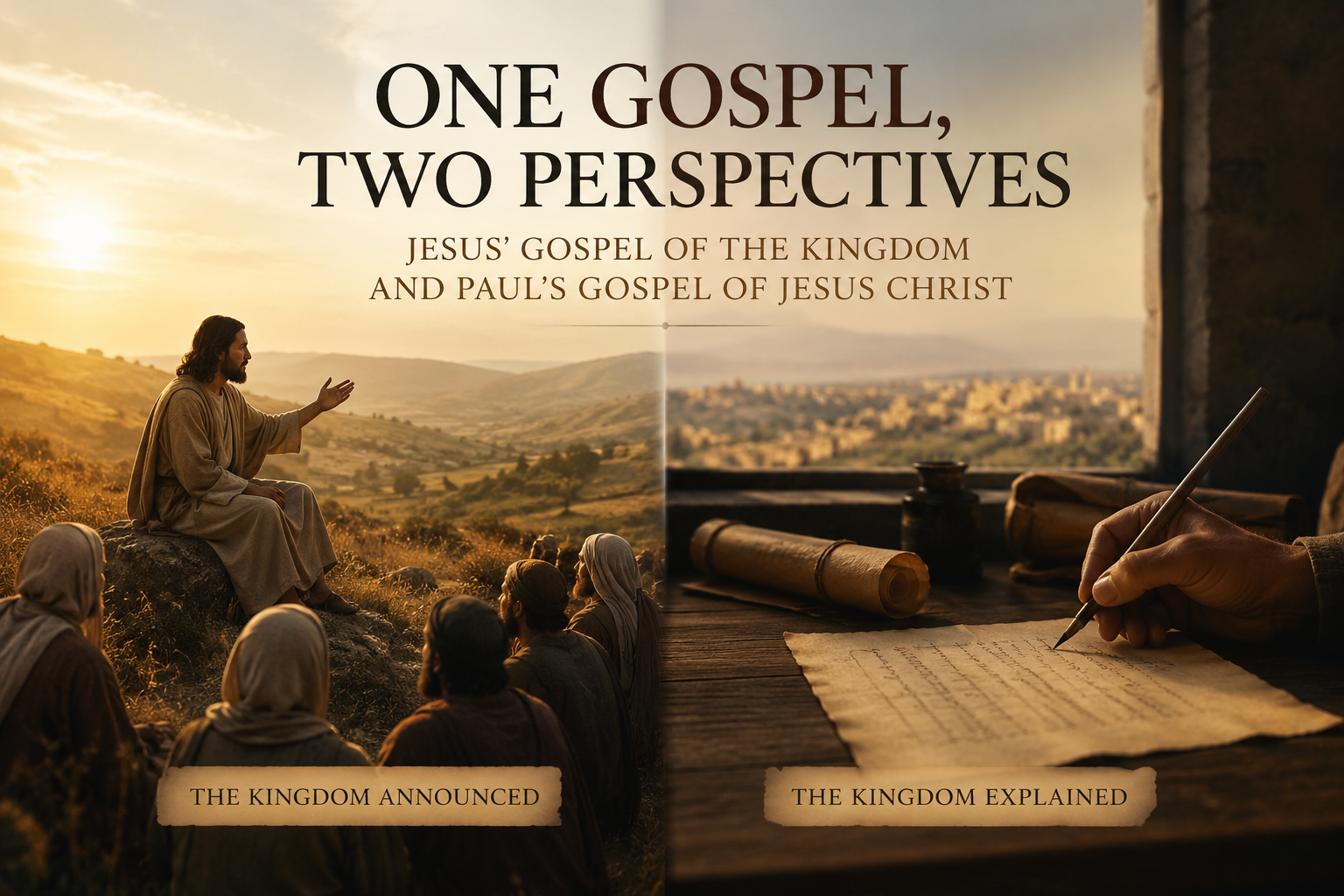
When Jesus stepped onto the scene in Galilee following the arrest of John the Baptist, he began preaching, “The time is fulfilled, and the kingdom of God has come near. Repent and believe the good news!” (Mark 1.15). His message focused on the arrival of the kingdom of God, the fulfillment of Israel’s prophetic hopes, and the call to repentance in light of God’s decisive action in history. Throughout the book of Acts and his epistles, however, the Apostle Paul repeatedly preached the gospel of Jesus Christ. His message emphasized the death and resurrection of Jesus, justification by faith, the forgiveness of sins, and the hope of resurrection. At first glance, these emphases can appear quite different. Jesus seems to proclaim the kingdom, while Paul proclaims Christ. Indeed, some scholars have argued that Paul transformed the original message of Jesus into something fundamentally different, shifting the focus from the kingdom of God to the person of Jesus himself. But are these really two different gospels? Must we choose between the message of Jesus and the message of Paul? It is my contention that the apparent tension disappears when both are understood within the broader framework of biblical eschatology. Far from proclaiming competing messages, Jesus and Paul announce the same good news from different vantage points within the unfolding drama of God’s redemptive plan.

Scholars of the historical Jesus are virtually unanimous in recognizing that the kingdom of God stood at the very center of Jesus’s preaching ministry. For example, in Matthew 4.23, we read, “Now Jesus began to go all over Galilee, teaching in their synagogues, preaching the good news of the kingdom, and healing every disease and sickness among the people.” Or again, in Matthew 24.14, Jesus declares that “this good news of the kingdom will be proclaimed in all the world as a testimony to all nations, and then the end will come.” For Jesus, the kingdom is nothing less than the reign of God breaking into history to accomplish his redemptive purposes. It is the fulfillment of Old Testament prophetic hopes such as those found in Isaiah and Daniel. Isaiah envisioned a time when God would restore his people, forgive their sins, defeat their enemies, and bring salvation to the nations. Daniel likewise anticipated the coming of the Son of Man, to whom would be given an everlasting kingdom that would never pass away. These hopes converge in the preaching of Jesus. The kingdom involves the liberation and vindication of God’s people, the defeat of evil, the forgiveness of sins, and the establishment of God’s righteous rule over all creation. In other words, Jesus did not merely announce a message of individual personal salvation; he announced the arrival of God’s long-promised reign and the fulfillment of Israel’s eschatological hope.

However, it is important to remember that Jesus never separates the kingdom from himself. He is the one true and rightful king, God’s anointed Messiah, and wherever the king is, there the kingdom stands. This is why Jesus could say to the Pharisees, when they asked him about the coming of the kingdom, “For you see, the kingdom of God is in your midst” (Luke 17.21). The kingdom was in their midst because the King himself stood among them. In other words, the kingdom is inseparable from the identity and mission of Jesus. This reality is evident throughout the Gospels. In the Son of Man sayings, Jesus identifies himself as the one who will receive dominion and an everlasting kingdom in fulfillment of Daniel 7. Likewise, in the kingdom parables, the growth and consummation of the kingdom are tied directly to his own ministry and mission. The same connection appears in the triumphal entry, where Jesus deliberately presents himself as Israel’s promised king, and again at the Last Supper, where he speaks of the coming kingdom in the context of his impending death. Far from being an unfortunate interruption of the kingdom program, the cross stands at its very center. Jesus understood that God’s reign would be established through his suffering, resurrection, and exaltation. The kingdom does not arrive apart from the King; it comes precisely through the saving work of the King himself.

This is precisely where the Apostle Paul enters into the discussion. Throughout his missionary ministry and epistles, Paul repeatedly proclaimed the good news of Christ’s saving work. In 1 Corinthians 15, he summarizes the gospel in its most basic form: Christ died for our sins, Christ was buried, Christ was raised on the third day, and Christ appeared to many witnesses (1 Cor. 15.1–8). At first glance, this emphasis on the death and resurrection of Jesus may appear quite different from Jesus’s proclamation of the kingdom of God. However, such a conclusion overlooks the fundamentally royal character of Paul’s gospel. Paul is not merely interested in what Christ accomplished; he is equally concerned with who Christ is. Again and again, he identifies Jesus as the promised Son of David, the Messiah, and the exalted Lord. For example, in Romans 1, Paul describes the gospel as being “concerning his Son, Jesus Christ our Lord, who was a descendant of David according to the flesh and was appointed to be the powerful Son of God according to the Spirit of holiness by the resurrection of the dead” (Rom. 1.3–4). Notice the royal language. Jesus is the Davidic king promised in the Old Testament, and his resurrection is the moment of his public vindication and enthronement. The point, then, is that Paul’s gospel is not less concerned with the kingdom than Jesus’s gospel. Rather, Paul focuses on the King through whom God’s kingdom has been established and through whom its blessings are now extended to the nations.

But the question remains: why the difference in emphasis? Why do Jesus and Paul sound so different in their proclamation of the gospel? The answer is that they stand at different points within the unfolding drama of redemptive history. The earthly ministry of Jesus occurs before the cross, before the resurrection, and before the ascension. He ministered primarily among Jews in Galilee and Judea, and therefore proclaimed a message that resonated deeply with Israel’s scriptural hopes and expectations. His preaching announced that the kingdom of God was at hand and that the promises spoken by the prophets were beginning to find their fulfillment. In other words, Jesus proclaimed what God was about to accomplish through his own person and work. Paul, by contrast, preached after these events had already occurred. He knew the crucified and risen Christ not merely as a future hope, but as a historical reality. Having encountered the exalted Lord on the road to Damascus, Paul devoted his ministry to explaining the significance of Christ’s death, resurrection, and exaltation for both Jews and Gentiles. Thus, Jesus announces the arrival of the kingdom, while Paul explains how that kingdom was established through the saving work of its King. The difference, then, is not one of substance but of historical perspective. Jesus proclaims the fulfillment that is coming; Paul proclaims the fulfillment that has come.

Of course, Paul is fully aware of the reality and significance of the kingdom of God. In fact, kingdom language appears throughout both his preaching and his letters. For example, in Colossians 1.13, he writes that God “has rescued us from the domain of darkness and transferred us into the kingdom of the Son he loves.” Notice that for Paul the kingdom is not merely a future hope; it is a present reality into which believers have already been brought through their union with Christ. Likewise, when Paul arrives in Rome at the end of Acts, Luke tells us that “from dawn to dusk he expounded and testified about the kingdom of God” (Acts 28.23), and concludes the book by describing Paul as “proclaiming the kingdom of God and teaching about the Lord Jesus Christ” (Acts 28.31). Significantly, Luke treats these two subjects as complementary rather than contradictory. The same pattern appears in 1 Corinthians 15.24–28, where Paul describes the consummation of history as the moment when Christ delivers the kingdom to the Father so that God may be all in all. The point is that Paul never abandoned kingdom theology; rather, he interpreted the kingdom through the death, resurrection, exaltation, and future return of Jesus. For Paul, the kingdom remains central because the King remains central.

In the final analysis, then, we can say that Jesus announced the kingdom, while Paul explained how that kingdom was established through the person and work of Christ. Jesus proclaimed its arrival; Paul proclaimed its accomplishment. Yet beneath these differing emphases lies a profound theological unity. Both Jesus and Paul understood God’s saving work as the fulfillment of Israel’s long-awaited hopes. Both proclaimed the reign of God breaking into history to accomplish redemption. Both understood forgiveness of sins, salvation for the nations, and the resurrection of the dead as essential features of God’s eschatological plan. The difference is not that Jesus preached one gospel and Paul another, but that each proclaimed the same gospel from a different vantage point within the unfolding drama of redemption. Jesus announced that the kingdom had drawn near because the King had arrived. Paul proclaimed that the kingdom had been inaugurated because the King had died, risen, and been exalted to the right hand of God. Thus, the gospel of the kingdom and the gospel of Jesus Christ are not rival messages but complementary perspectives on the same redemptive reality. To separate the kingdom from the King is to misunderstand Jesus, and to separate the King from the kingdom is to misunderstand Paul. Both stand together in proclaiming the fulfillment of God’s promises in Christ.

Ultimately, this discussion reminds us of the profound unity of the New Testament witness. Too often, Jesus and Paul are set against one another, as though they were proclaiming different messages or pursuing different theological agendas. Yet the testimony of the New Testament is remarkably consistent. The God who promised to establish his reign through Israel’s Messiah has done exactly that in the person of Jesus Christ. The kingdom that Jesus announced is the same kingdom that Paul proclaimed, and the salvation that Paul explained is the same salvation that Jesus came to accomplish. Rather than forcing a choice between the message of Jesus and the message of Paul, we should allow each to illuminate the other. When we do, we discover a single gospel centered on a single Savior, through whom God is fulfilling his promises and reconciling the world to himself.


On the Curse of Death and the Hope of Resurrection

TEXT

12 The iniquity of Ephraim is bound up;
His sin is stored up.
13 The pains of childbirth come upon him;
He is not a wise son,
For it is not the time that he should delay at the opening of the womb.
14 Shall I ransom them from the power of Sheol?
Shall I redeem them from death?
O Death, where are your thorns?
O Sheol, where is your sting?
Compassion will be hidden from My sight.

15 Though he flourishes among the reeds,
An east wind will come,
The wind of the Lord coming up from the wilderness;
And his fountain will become dry
And his spring will be dried up;
It will plunder his treasury of every precious article.
16 Samaria will be held guilty,
For she has rebelled against her God.
They will fall by the sword,
Their little ones will be dashed in pieces,
And their pregnant women will be ripped open.

~Hosea 13.12-16 (NASB95)

Title: On the Curse of Death and the Hope of Resurrection
Text: Hosea 13.12-16
Series: Hosea: A Love Story Like No Other
Church: Redeemer Baptist Church, Jonesboro, AR
Date: July 13, 2025


On Christian Hope: Heaven or Resurrection

It is commonplace in American Christianity to hear people talk about going to heaven when they die. For most people, this is the promise of the Gospel, that if you believe in Jesus for the forgiveness of sin and live a morally good and ethical life for the most part, then you will get to go to heaven when you die. This is usually conceptualized as a kind of purely spiritual (nonmaterial, nonphysical) existence of some kind (think halos, harps, and clouds). However, this is a far cry from the biblical picture of eternal life. First, eternal life is not simply a limitless quantity of life that we experience when we die, though it certainly includes this; rather is a certain quality of life, i.e. the life of the messianic age, that we begin to experience even now in part on this side of glory. But, more importantly, the Christian vision for life after death is for a resurrected embodied life. This is a crucial aspect of the biblical understanding of salvation, but it is so often neglected, ignored, or outright denied. And so, since this is the week in which we celebrate the resurrection of our Lord Jesus, I would like to use the space that follows to explore the biblical foundation of the biblical hope for resurrection.

First, we must affirm that human beings were created as composite wholes, that is with a body and a soul. Some theologians would argue for a tripartite division, i.e. body, soul, and spirit, but the point remains the same, namely that the body is essential for what it means to be human. In Genesis, chapter 2, verse 7, we read, “Then the Lord God formed the man out of the dust from the ground and breathed the breath of life into his nostrils, and the man became a living being.” In other words, when the “spirit of life” (the Hebrew word for “breath” can also be translated as “spirit”) entered into the body made of dust, the first man became a living being. Both components were necessary to complete the first man; therefore, to exist as spirit only would be an incomplete, non-human existence. This is why the incarnation was necessary; as the author of Hebrews argues in chapter 10, verse 5 (quoting Psalm 40.6 LXX), “Therefore, as he was coming into the world, he said: You did not desire sacrifice and offering, but you prepared a body for me.” In order to redeem humanity, it was necessary that the Son of God should become fully human, body and soul, and if He was anything less than fully human, then the redemption He secured would be incomplete. Or to put it another way, that which He did not assume, He cannot redeem. And the only way that the body can be redeemed from death is through resurrection.

Of course, this leads right into the second biblical foundation of our resurrection, namely that Jesus Christ was resurrected bodily from the dead. A cursory reading of the Gospel accounts of our Lord’s passion leads to the inescapable conclusion that Jesus died bodily, He was raised bodily, He ascended bodily, and He will return bodily. He was no mere apparition or ghost; He was not some kind of spirit only being that appeared at random. In the Gospel of Luke, we read that Jesus ate with the disciples after His resurrection, both on the road to Emmaus and in the upper room, and in the Gospel of John, we read that He invited Thomas to touch the holes in His hands and in His side. So, while His resurrected body was different in many ways, there was still a corporeal continuity to His bodily existence both before and after His resurrection. Moreover, and perhaps more importantly, the Apostle Paul argues that the physical bodily resurrection of Jesus is the lynchpin of the Gospel. “And if Christ has not been raised, your faith is worthless; you are still in your sins.” (1 Corinthians 15.17) In other words, the bodily resurrection of Jesus was necessary for our salvation to be complete. It was not only necessary for Him to die physically for our sin, but it was also necessary for Him to be raised physically to new life. The bodily resurrection makes His work of redemption complete, and because He has been raised, He is able to offer resurrection life to those who trust in Him.

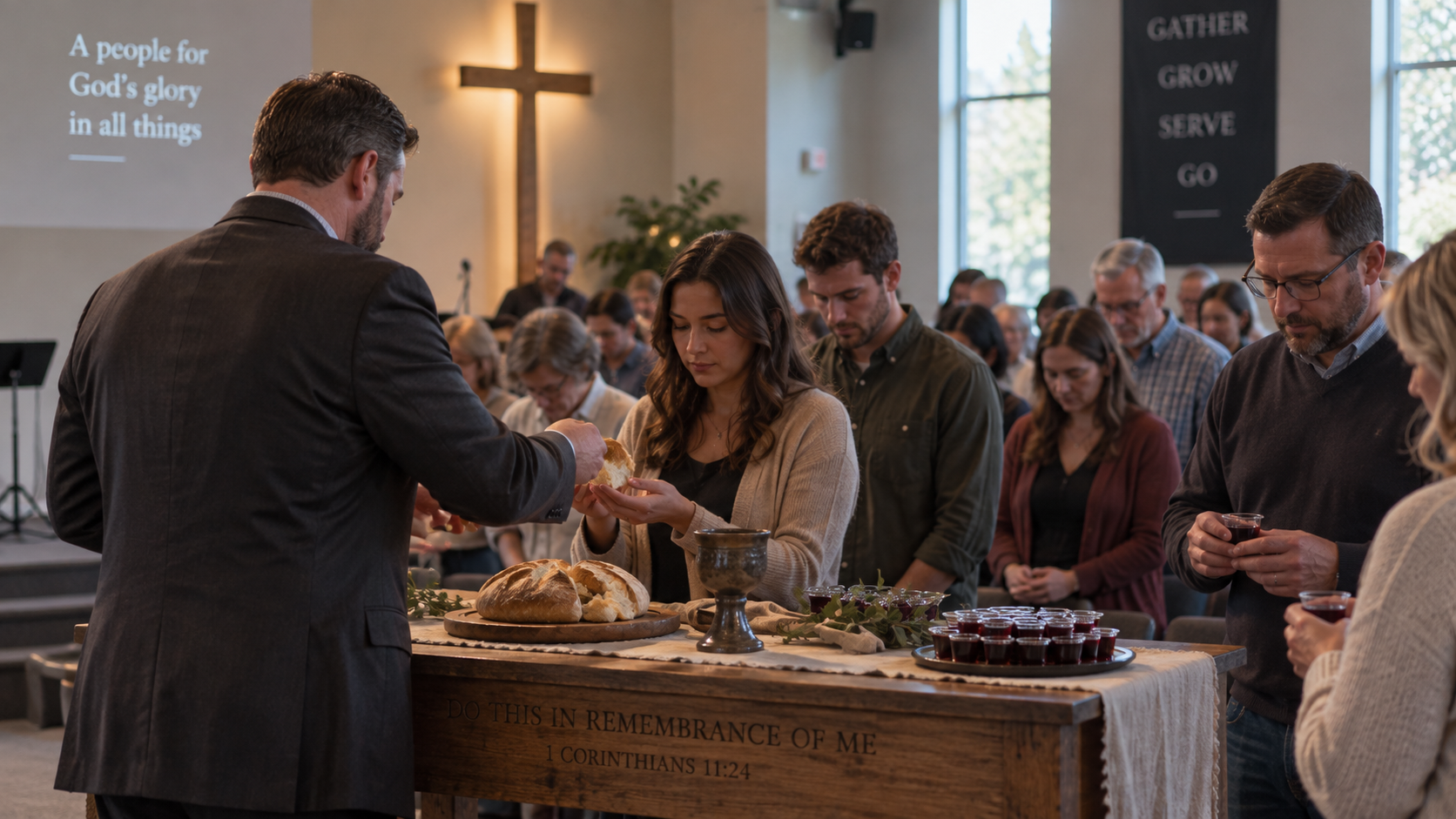
Consequently, this is the third biblical foundation for the Christian hope of resurrection, namely that the bodily resurrection of Jesus is the ground and promise for the bodily resurrection of those who have trusted in Him. Because He has been raised bodily, we who have trusted in Him will also be raised bodily. This is the inescapable logic of our union with Christ. As the Apostle Paul argues in the Letter to the Romans, chapter 6, verse 5, “For if we have been united with him in the likeness of his death, we will certainly also be in the likeness of his resurrection.” Or again, in 1 Corinthians, chapter 15, verse 20, “But as it is, Christ has been raised from the dead, the firstfruits of those who have fallen asleep.” The fact that He is the “first fruit” necessarily implies that there will be more fruit to come, and it is clear that the fruit Paul is envisioning in this context is the bodily resurrection of those who have been united with Jesus by faith. So, the promise of the Gospel, the Christian hope, is not merely going to heaven when we die; it is nothing less than resurrection from the dead. “For if we believe that Jesus died and rose again, in the same way, through Jesus, God will bring with him those who have fallen asleep.” (1 Thessalonians 4.14)

So, while the idea of going to heaven when we die sounds nice and comforting, the truth of the matter is that those who ignore or deny the future resurrection of the body really have no hope at all. All they really have is a vague notion of something resembling hope, which is really no better than an empty wish. It has no substance, no grounding in biblical realities at all. Disembodied existence as spirit only is not true life, at least not life the way that God intended it for humanity. God alone is spirit, and we are His creatures. The desire to shed the flesh and exist as pure spirit is a desire that comes from pagan philosophy and not from the Bible. The true biblical Christian hope is far better. It is nothing less than the fullness of embodied life that God always intended for humanity. It is eternal life, resurrected life, in the presence of God forever. In other words, the promise of the Gospel is not so much that we will get to go up to heaven when we die, but that heaven will come down to us when Jesus comes again to establish His kingdom on earth once and for all. This is the blessed hope, the Christian hope.

See also:
Chase, Mitchell L. Resurrection Hope and the Death of Death. Short Studies in Biblical Theology. Wheaton, IL: Crossway, 2022.
Wright, N.T. Surprised by Hope: Rethinking Heaven, the Resurrection, and the Mission of the Church. New York, NY: HarperOne, 2008.


Slow To Write

"let every person be quick to hear, slow to speak, slow to anger."

lovegavehope

Just another WordPress.com site

Jared Cornutt

Pastor | Speaker | Writer

Denny Burk

A commentary on theology, politics, and culture

G3 Ministries

Events + Resources for the Local Church

Biblical Reasoning

Biblical and Systematic Theology According to the Scriptures

RetroChristianity

Reclaiming the Forgotten Faith

SBC Voices

Southern Baptist News & Opinion

Lucid Theology

Thoughts on words, books, theology, and life.

Baptist21

A pastor-led voice for Baptists in the 21st century

Center For Baptist Renewal

The Personal and Professional Blog of Phillip Powers

The Pastor's Well - Pastor Well

The Personal and Professional Blog of Phillip Powers

Articles - AlbertMohler.com

The Personal and Professional Blog of Phillip Powers

The Gospel Coalition

The Personal and Professional Blog of Phillip Powers