Tag Archives: Apostle Paul

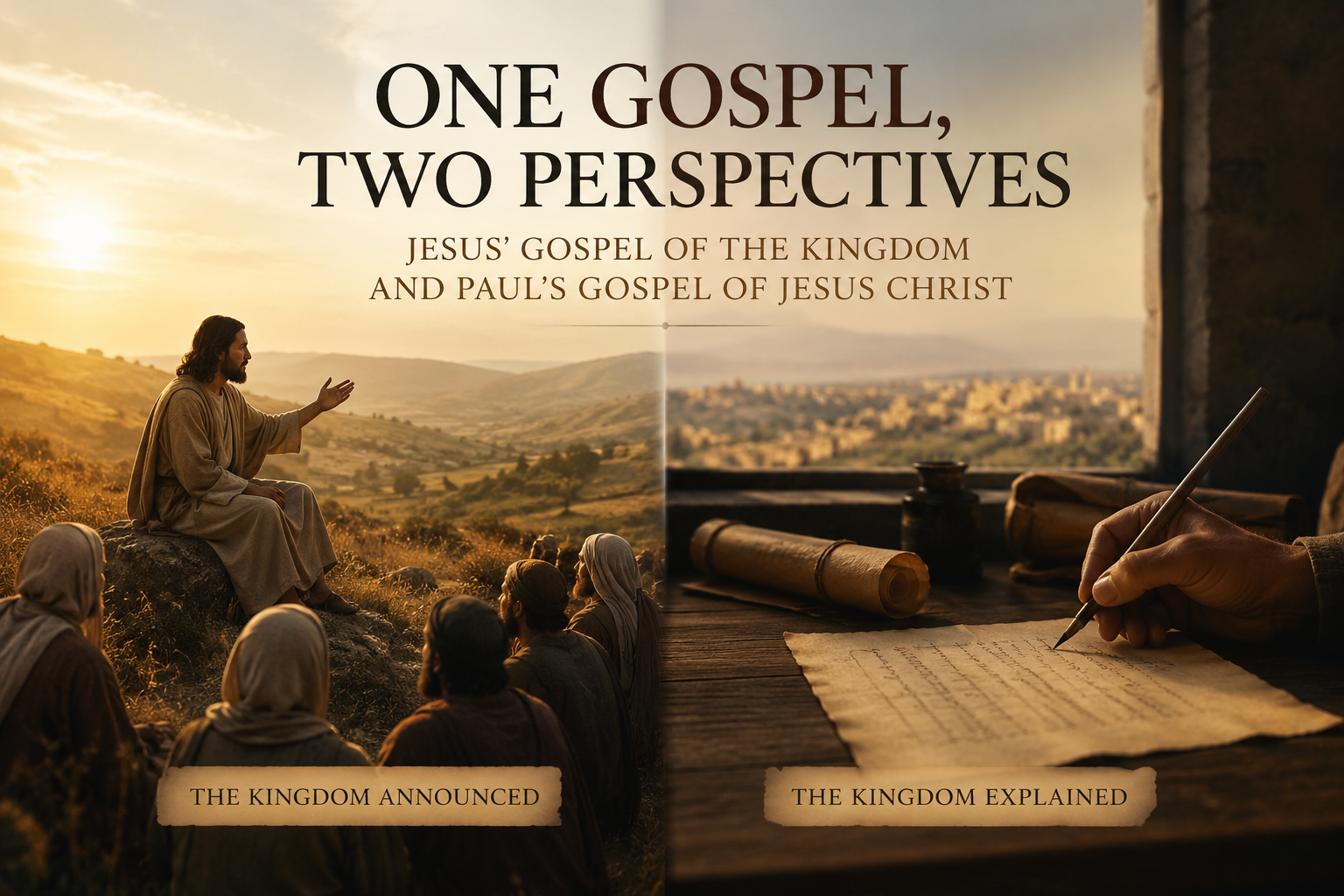

On the Rejection of the Gospel at Thessalonica
TEXT
17 After they passed through Amphipolis and Apollonia, they came to Thessalonica, where there was a Jewish synagogue. 2 As usual, Paul went into the synagogue, and on three Sabbath days reasoned with them from the Scriptures, 3 explaining and proving that it was necessary for the Messiah to suffer and rise from the dead: “This Jesus I am proclaiming to you is the Messiah.” 4 Some of them were persuaded and joined Paul and Silas, including a large number of God-fearing Greeks, as well as a number of the leading women.
5 But the Jews became jealous, and they brought together some wicked men from the marketplace, formed a mob, and started a riot in the city. Attacking Jason’s house, they searched for them to bring them out to the public assembly. 6 When they did not find them, they dragged Jason and some of the brothers before the city officials, shouting, “These men who have turned the world upside down have come here too, 7 and Jason has welcomed them. They are all acting contrary to Caesar’s decrees, saying that there is another king—Jesus.” 8 The crowd and city officials who heard these things were upset. 9 After taking a security bond from Jason and the others, they released them.
~ Acts 17.1-9
Title: On the Rejection of the Gospel at Thessalonica
Text: Acts 17.1-9
Series: The Book of Acts
Church: Redeemer Baptist Church, Jonesboro, AR
Date: September 8, 2024
Share this:

On the Logic of the Resurrection

The New Testament is clear that the Christian Gospel rises and falls on the historical factuality of this truth, that Jesus Christ truly lived, truly died, and truly rose again. There simply is no way around it; as the Apostle Paul writes, “If there is no resurrection of the dead, then not even Christ has been raised; and if Christ has not been raised, then our proclamation is in vain, and so is your faith. … And if Christ has not been raised, your faith is worthless; you are still in your sins.” (1 Cor 15.13-14, 17) Jesus had to truly die in our place to satisfy the wrath of God toward sin, and he had to truly be raised from the dead in victory over sin and death. The work of Christ in His death and resurrection is the means by which he secures our salvation; His death achieves for us our forgiveness, and His resurrections assures us of our life eternal.
However, the crucifixion and resurrection of Jesus is more than simply a historical event; it is more than merely a transaction between the Father and the Son. No, the logic of the Gospel is that the work of Christ in his crucifixion is the pattern for our life as well. By faith, we are united with Christ; we have died with him to sin and we have been raised with him in newness of life. (Romans 6.4-5) This is the logic of the Gospel, namely that His death becomes our death and his resurrection becomes our resurrection. In the space that follows, I would like to spend just a few brief moments reflecting on the implications of this essential principle of the Christian Gospel.
On the one hand, we participate in his death and resurrection spiritually, which means we experience it through the indwelling of His Holy Spirit. This happens at the point of conversion; when someone trusts in Christ, they die with Him to the tyranny and slavery of sin, they die with Him to the old self and its fleshly desires. “For we know that our old self was crucified with him so that the body ruled by sin might be rendered powerless so that we may no longer be enslaved to sin.” (Romans 6.6) Consequently, they are, then, indwelt by the Holy Spirit who gives life. As Paul goes on to write, “Now if Christ is in you, the body is dead because of sin, but the Spirit gives life because of righteousness.” (Romans 8.10) We are renewed and transformed by the Spirit that we might walk in righteousness and holiness before God and others in this life. This is what it means to be resurrected with Him spiritually; as Paul says elsewhere, “Therefore, if anyone is in Christ, he is a new creation; the old has passed away, and see, the new has come!” (2 Cor 5.17) This is the good news of the Gospel.
However, we must also affirm that we will participate in his death and resurrection physically. This is also essential to the logic of the Gospel. Death is the consequence of sin and its corruption in a fallen creation. As the author of Hebrews writes, “it is appointed for people to die once—and after this, judgment.” Every human being, saved and unsaved, will die physically, but those who die in Christ will also be resurrected physically. The Apostle Paul writes, “the dead in Christ will rise,” (1 Thess. 4.16) or again, “the dead will be raised incorruptible, and we will be changed.” (1 Cor 15.52) In the same way that he was raised in a glorified and perfected physical body, so also we will be raised in a glorified and perfected body. “We know that when he appears, we will be like him because we will see him as he is.” (1 John 3.2) This is the hope; this is the promise. This is the logic of the Gospel. “Just as we have borne the image of the man of dust, we will also bear the image of the man of heaven.” (1 Cor 15.49)
Of course, we may be tempted to conclude that the position that I have sketched out here is hopelessly illogical. How can it be possible that we must die and be raised both spiritually and physically? This seems like a contradiction in terms. How can Paul claim that we have been raised with Christ but then claim that we will one day be raised with Christ. I believe the answer to this apparent contradiction lies in the New Testament reality of the already and the not yet. In fact, I believe that this hermeneutical principle is fundamental for understanding the New Testament in general. In Christ, the last days have already been inaugurated. The fulfillment of God’s work of salvation has begun in the person and work of Christ. Christ has been raised from the dead as the “firstfruits”, and he has given us the eschatological indwelling of the Spirit. We already live the life of the age to come, aka eternal life, and we stand redeemed under the promise of the New Covenant.
And yet, we understand that the full consequences of the redeeming work of Christ have not yet been completely realized. We await the day when he will come again in power and glory to do away with sin once and for all, and it is then that we will be raised in glorified bodies. This is how the Apostle Paul describes the order of the resurrection, “Christ, the firstfruits; afterward, at his coming, those who belong to Christ.” (1 Cor 15.23) Yes, those who are in Christ by faith have already been made new; we are already regenerated by the indwelling Spirit,. But we await the day when our faith will be made sight. “We ourselves have the Spirit as the firstfruits, [yet] we also groan within ourselves, eagerly waiting for adoption, the redemption of our bodies.” (Romans 8.23) Christ is risen; he came up out of the grave – physically, bodily, gloriously, and one day we too will be raised from the dead physically, bodily, and gloriously.
The point of all this is to say that the inherent logic of Christ’s resurrection requires the physical bodily resurrection of believers. To deny this truth is to deny the gospel itself. We cannot have a gospel, we cannot have a salvation, we cannot have a redemption, that does not find its completion in the physical bodily resurrection of those who have been united with Christ by faith. One article I recently read sums up this truth by saying, “The end of the work of God, as regards man, is the glorification of his restored and sanctified nature—body and soul—in eternity. Without this, salvation and restitution would be incomplete. The adoption cannot be consummated without the redemption of the body.” Or to put it more sharply, a gospel that denies the physical resurrection of believers at the physical second coming of Christ is a false gospel, as the Apostle Paul would say, “If anyone is preaching to you a gospel contrary to what you received, a curse be on him!” (Galatians 1.9)
For further study, see:
On Christian Hope: Heaven or Resurrection
On the Ground of Christian Hope
On Eschatology and the Gospel
On Grief and Hope
Share this:

On Resurrection and the Path of Glory
10 My goal is to know him and the power of his resurrection and the fellowship of his sufferings, being conformed to his death, 11 assuming that I will somehow reach the resurrection from among the dead.
~Philippians 3.10-11
Title: On Resurrection and the Path of Glory
Text: Philippians 3.10-11
Church: Redeemer Baptist Church, Jonesboro, AR
Date: March 31, 2024
Share this:

On Christ Our Blessing
TEXT
3 Blessed is the God and Father of our Lord Jesus Christ, who has blessed us with every spiritual blessing in the heavens in Christ. 4 For he chose us in him, before the foundation of the world, to be holy and blameless in love before him. 5 He predestined us to be adopted as sons through Jesus Christ for himself, according to the good pleasure of his will, 6 to the praise of his glorious grace that he lavished on us in the Beloved One.
~Ephesians 1.3-6
Title: On the Blessings of Election and Predestination in Christ
Text: Ephesians 1.3-6
Series: The Letter to the Ephesians
Church: South Caraway Baptist Church, Jonesboro, AR
Date: May 8, 2023
Share this:

On the Future of Israel
TEXT
25 I don’t want you to be ignorant of this mystery, brothers and sisters, so that you will not be conceited: A partial hardening has come upon Israel until the fullness of the Gentiles has come in. 26 And in this way all Israel will be saved, as it is written,
The Deliverer will come from Zion;
he will turn godlessness away from Jacob.
27 And this will be my covenant with them
when I take away their sins.
28 Regarding the gospel, they are enemies for your advantage, but regarding election, they are loved because of the patriarchs, 29 since God’s gracious gifts and calling are irrevocable. 30 As you once disobeyed God but now have received mercy through their disobedience, 31 so they too have now disobeyed, resulting in mercy to you, so that they also may now receive mercy. 32 For God has imprisoned all in disobedience so that he may have mercy on all.
~Romans 11.25-32
Text: Romans 9-11, et al.
Series: Eschatology: A Study of the End Times
Church: South Caraway Baptist Church, Jonesboro, AR
Date: October 12, 2022
Share this:

On Remembering the Gospel
Text
8 Remember Jesus Christ, risen from the dead and descended from David, according to my gospel, 9 for which I suffer to the point of being bound like a criminal. But the word of God is not bound. 10 This is why I endure all things for the elect: so that they also may obtain salvation, which is in Christ Jesus, with eternal glory. 11 This saying is trustworthy:
For if we died with him,
we will also live with him;
12 if we endure, we will also reign with him;
if we deny him, he will also deny us;
13 if we are faithless, he remains faithful,
for he cannot deny himself.
~2 Timothy 2.8-13
Title: On 2 Timothy 2.8-13
Series: Revival
Church: First Baptist Church, DeValls Bluff, AR
Date: March 16, 2022
Share this:

On “Able to Teach” as a Qualification for Elders

If you have ever browsed pastoral job descriptions, then you know that for most churches Jesus himself wouldn’t measure up to their desired qualifications. After all, he was a single thirty something with almost no pastoral experience. But I digress. What you have probably also noticed is that almost every one of these descriptions makes some reference to the qualifications for elders mentioned in 1 Timothy 3.1-7 and/or Titus 1.6-9. In these passages, Paul lays out the character virtues that should be true of those who serve the church in the role of pastor/elder.
And this is the point that must be emphasized, that each and every one of these qualifications reflect a man’s character and not his achievements, skills, or experience. As God once told the prophet Samuel, “Humans do not see what the Lord sees, for humans see what is visible, but the Lord sees the heart.” (1 Samuel 16.7) Paul wants Timothy and Titus to understand this principle, that what matters in Christian service are the virtues of Christ-like character, godliness that flows outward from a heart that has been transformed by the Spirit. These are what make a person qualified to lead others down the path of Christian discipleship. As the old adage states, “it is impossible to lead someone down a path that you have never traveled yourself.” And so it is for those who would lead Christ’s church.
However, one of these qualifications seems to stand out from the rest, and that is where elders are called to be “able to teach.” (1 Timothy 3.2) Of course, a quick reading of the Pastoral Epistles makes it very clear that teaching/preaching is one of the primary duties of those who serve the church as pastors/elders. Time and again, Paul exhorts his young protégés, Timothy and Titus, to “ Preach the word; be ready in season and out of season; rebuke, correct, and encourage with great patience and teaching.” (2 Timothy 4.2) The importance of teaching/preaching in the ministry of a pastor/elder almost seems to trump all other concerns, and understandably so, because “All Scripture is inspired by God and is profitable for teaching, for rebuking, for correcting, for training in righteousness, so that the man of God may be complete, equipped for every good work.” (2 Timothy 3.16-17)
Therefore, it would seem that an ability to teach is a primary qualification for those men who aspire to the noble work of pastoral/elder ministry. The problem, though, is that an ability to teach is more of a skill than it is a quality of godly character. It is almost out of place for Paul to include the skill of teaching ability in a list of what is otherwise qualities of Christ-like character. More than that though, in actual practice, we have come to the point where we exalt a man’s rhetorical ability over and above all other concerns when it comes to evaluating pastoral candidates. We have created a celebrity culture in the church where mega-church pastors who have remarkable speaking and teaching ability have become the standard against which all other pastors are measured. Style, personality, and delivery become the criterion by which we judge a pastor/elder. And so, in most cases, pastoral candidates are invited to preach in view of a call, and after a single hearing, the church is asked to vote on that candidate for pastor, a decision which more often than not boils down to mere stylistic preference.
If Paul prioritizes qualities of character over achievements, skills, and experience, then how can a congregation expect to evaluate a man’s character after only a few hours of interaction. This system is flawed, but that is a topic for another post. My concern in this post is to consider anew what the Apostle Paul meant by the phrase “able to teach.” Now, this three word phrase in English renders a single word in the Greek text, διδακτικός/didaktikos, and this word only occurs twice in the New Testament, here in 1 Timothy 3.2 and also in 2 Timothy 2.24. So, we have scant evidence within the New Testament to which we might appeal for a better understanding of this word. However, we do have a similar word that may shed some light on our text, and that is the word διδακτός/didaktos. This adjective describes someone who is taught or instructed (c.f. John 6.45, 1 Corinthians 2.13, 1 Thessalonians 4.9). So, what we have in our text is simply this same adjective with the ending -(t)ikos. This Greek suffix carries the meaning of “concerned with” and “having characteristics of.” In light of this evidence, we may conclude that the meaning of the word in question carries the idea of something like “having the characteristics of someone who has been taught.” In other words, someone who is teachable.
And in the context of both 1 Timothy 3.2 and 2 Timothy 2.24, the meaning “teachable” would seem to fit squarely with the argument that Paul is making. An elder/pastor “must be above reproach, the husband of one wife, self-controlled, sensible, respectable, hospitable, [teachable].” (1 Timothy 3.2) Likewise, he “must be gentle to everyone, [teachable], and patient.” (2 Timothy 2.24). This reading simply fits better with the contextual and linguistic evidence. The bottom line is that teaching/preaching ability is a skill that can be learned and honed over time. In fact, I would suggest that it is something that even the most prolific preachers continually work on, as they constantly seek to be better communicators of God’s truth. But being teachable is the fruit of God’s spirit working within to make us more like Christ. It is a reflection of godly humility that recognizes that we do not have all the answers, a reflection of the heart that understands there is always more to learn in the School of Christ.
Of course, we must hasten to add that the one directly affects the other, that is to say that being teachable is necessary in the work of preaching and teaching effectively, because the pastor/elder that assumes that he knows it all has already fallen headlong into the pride of human self-sufficiency. But godly pastor/elders understand that they have no sufficiency in themselves, nothing of value to offer; rather, they only speak as those who have been taught of God by the Spirit through the Word, and this is what makes their teaching and preaching effective, namely that it comes from God and not from themselves. This is in keeping with the example of our Lord Jesus who said, “For I have not spoken on my own, but the Father himself who sent me has given me a command to say everything I have said. I know that his command is eternal life. So the things that I speak, I speak just as the Father has told me.” (John 12.49-50)
This, I believe, is what Paul intended when he called pastor/elders to be “able to teach”, namely that they speak only as they have heard from the inspired Word of the one true and living God, that they eschew the temptations of originality, creativity, and novelty in the pulpit, that they accurately and faithfully deliver what was once for all delivered to the saints. As the Apostle Paul puts it,
When I came to you, brothers and sisters, announcing the mystery of God to you, I did not come with brilliance of speech or wisdom. I decided to know nothing among you except Jesus Christ and him crucified. I came to you in weakness, in fear, and in much trembling. My speech and my preaching were not with persuasive words of wisdom but with a demonstration of the Spirit’s power, so that your faith might not be based on human wisdom but on God’s power.
1 Corinthians 2.1-5


