Tag Archives: Repentance

On the Preaching of John the Baptist and Jesus

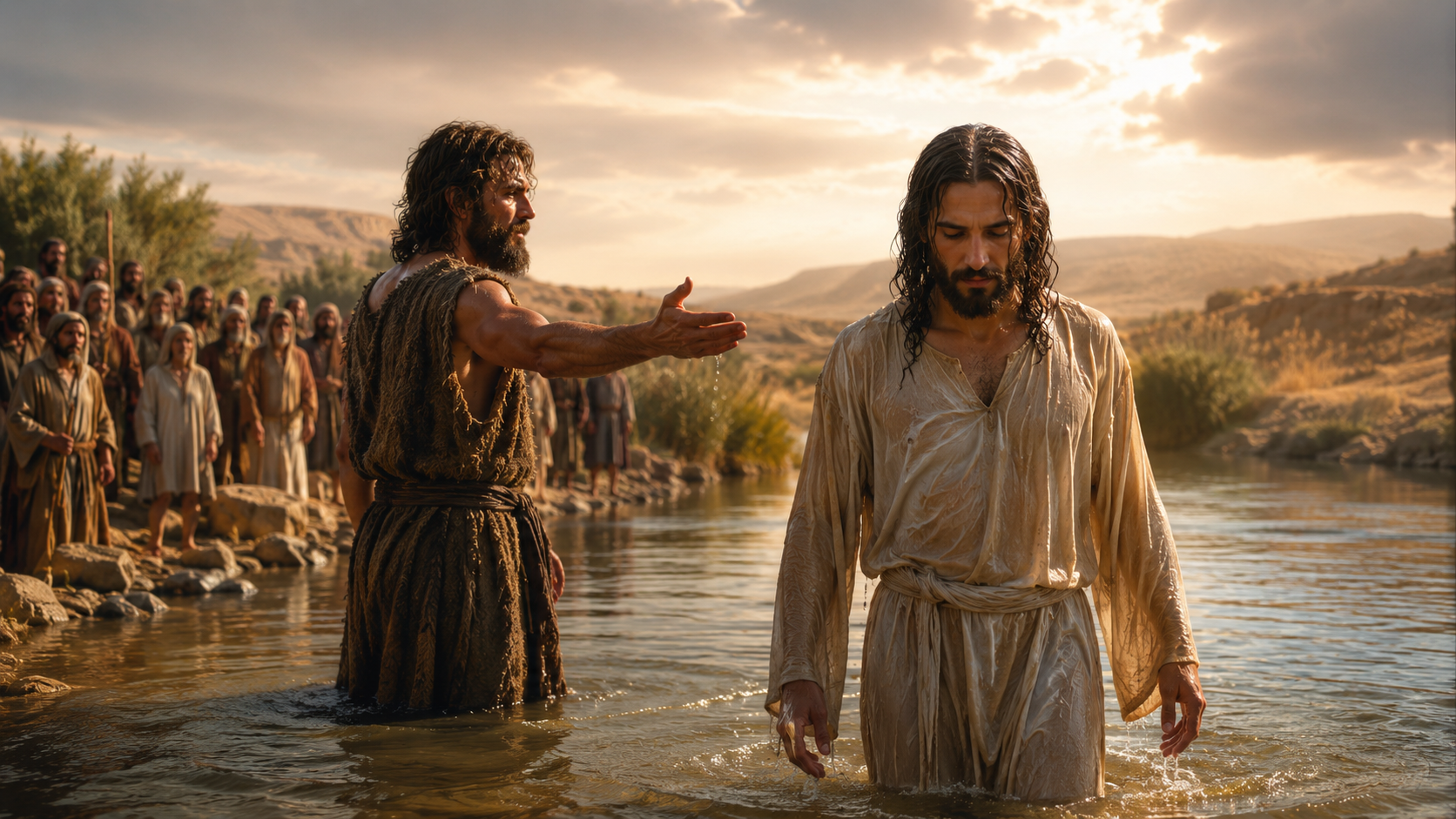
Have you ever wondered why all four Gospels begin the story of Jesus’s public ministry with the ministry of John the Baptist? Could it possibly be because John came preaching, “Repent, because the kingdom of heaven has come near!” (Matt. 3.2), and Jesus began his own ministry by preaching, “Repent, because the kingdom of heaven has come near!” (Matt. 4.17)? They begin their preaching with virtually the same message. What, then, is the relationship between the preaching and ministry of John the Baptist and that of Jesus? Sometimes John is treated as little more than a necessary but largely preparatory prelude to the more important ministry of Jesus, almost as though his primary purpose were simply to baptize Jesus and then disappear from the story. But the Gospels reveal remarkable continuity between the preaching of these two figures. Jesus’s preaching stands in fundamental continuity with John the Baptist’s proclamation of the approaching kingdom, repentance, salvation, and judgment; yet it also develops John’s message by announcing that the kingdom has become present in Jesus’s own ministry while its final judgment remains future. The transition from John to Jesus, therefore, is not a transition from one eschatological message to another, but from the announcement of what God is about to do to the inauguration of that promise in Jesus himself. To understand this development, however, we must first consider what John was actually announcing.

Of course, John the Baptist’s preaching is fundamentally eschatological. He appears in the wilderness announcing, “Repent, because the kingdom of heaven has come near!” (Matt. 3.2). The nearness of God’s kingdom means that Israel has reached a decisive moment in the history of salvation, and repentance is the necessary response to what God is about to do. Indeed, John warns his hearers not to presume upon their covenantal identity: “Don’t presume to say to yourselves, ‘We have Abraham as our father’” (Matt. 3.9). Instead, they must “produce fruit consistent with repentance” because “the ax is already at the root of the trees” (3.8, 10). John’s proclamation therefore contains both salvation and judgment. On the one hand, he announces the coming of one more powerful than himself who “will baptize you with the Holy Spirit and fire” (3.11). On the other hand, this Coming One already has “his winnowing shovel” in his hand and will separate the wheat from the chaff, burning the latter “with fire that never goes out” (3.12). John therefore stands at the threshold of Israel’s eschatological expectation, announcing that God’s promised intervention is no longer located in some distant future—it has drawn near. His call to repentance, promise of the Spirit, and warning of judgment all derive their urgency from this conviction. Most importantly, however, John does not present himself as the one who will accomplish these things. His entire proclamation points beyond himself toward the Coming One through whom God’s promised salvation and judgment will arrive.

The preaching of Jesus stands in basic continuity with the contours of John’s message. As noted above, Jesus also comes proclaiming the nearness of the kingdom and the need for repentance. In Matthew 4.17, Jesus declares, “Repent, because the kingdom of heaven has come near!” repeating verbatim the proclamation of John (Matt. 3.2). Similarly, Mark summarizes Jesus’s preaching: “The time is fulfilled, and the kingdom of God has come near. Repent and believe the good news!” (Mark 1.15). The point is that Jesus retains John’s basic eschatological framework: kingdom, repentance, salvation, judgment, restoration, and accountability before God. He does not correct John by suggesting that his expectation of judgment was mistaken or that Israel’s eschatological hopes were misguided. On the contrary, Jesus repeatedly warns of a coming judgment, whether in his teaching concerning Gehenna (Matt. 10.28), the separation of the righteous and wicked (Matt. 13.40–43), or the future judgment of the Son of Man (Matt. 25.31–46). We must therefore resist the simplistic dichotomy that John preached judgment while Jesus preached grace. Both proclaim salvation and judgment as dimensions of God’s coming kingdom. The fundamental difference between their preaching must be located somewhere else. The question is not whether Jesus abandoned John’s eschatological message, but what happened to that message once the One whom John announced actually arrived.

In Matthew 11.2–3, John sends messengers to Jesus to ask him, “Are you the one who is to come, or should we expect someone else?” We are not told exactly what prompted John’s question, but the apparent disconnect between his preaching and Jesus’s actual ministry was likely part of the equation. John had proclaimed the nearness of the kingdom alongside warnings of impending judgment, yet the ministry of Jesus did not seem to indicate that such judgment had arrived. This is why Jesus’s answer to John’s question is so significant. Rather than simply answering yes, Jesus points to the fruit of his ministry: “The blind receive their sight, the lame walk, those with leprosy are cleansed, the deaf hear, the dead are raised, and the poor are told the good news” (Matt. 11.5). These signs reflect the expectations of eschatological restoration found throughout the Book of Isaiah (especially Isa. 35:5–6; 61:1–2). The healings, exorcisms, forgiveness, restoration, and proclamation of good news therefore demonstrate that Israel’s promised salvation has begun. John announced what God was about to do; Jesus points to what God is now doing through him. Here we encounter the essential development from John’s preaching to that of Jesus: John announces the Coming One; Jesus announces and embodies the arrival of the kingdom because he is the Coming One. The transition from John to Jesus is therefore the transition from eschatological expectation to eschatological fulfillment. The promised blessings of the kingdom have begun to enter the present through the ministry of Jesus. But if the blessings have arrived, what has happened to the judgment John so urgently announced?

John had proclaimed that the ax was at the root, that the winnowing fork was in the Coming One’s hand, and that the chaff would be burned with unquenchable fire. Yet Jesus heals, forgives, restores, eats with sinners, and proclaims good news. What is important to remember, however, is that John was not wrong: judgment is coming. Rather, the ministry of Jesus brings greater clarity to the temporal structure of John’s eschatology. The kingdom has arrived in the earthly ministry of Jesus, but final judgment has not. This distinction is illustrated particularly well in Jesus’s sermon at Nazareth in Luke 4. There Jesus reads from Isaiah 61:1–2 and then proclaims, “Today as you listen, this Scripture has been fulfilled” (Luke 4:21). Interestingly, however, Jesus’s reading stops with “the year of the LORD’s favor” and does not include the following phrase, “the day of our God’s vengeance.” We should probably not build too much upon this omission alone, but it fits the larger pattern of Jesus’s ministry remarkably well. The promised blessings of Israel’s restoration are being inaugurated in the present, while final judgment remains future. This does not mean that Jesus abandons John’s expectation of judgment. As noted above, Jesus repeatedly warns of a coming judgment and associates its consummation with the future coming of the Son of Man in glory. Judgment has not disappeared from God’s eschatological program; Jesus has revealed that the kingdom’s saving blessings enter history before its final judgment arrives.

The point is that John’s basic expectations were correct. The Coming One would bring salvation, the Spirit, restoration, and judgment. But the earthly ministry of Jesus reveals that these realities do not all arrive simultaneously in their consummated form. The preaching and ministry of Jesus operate according to what is often described as the “already and not yet,” or inaugurated eschatology. This simply means that in the earthly ministry of Jesus, the kingdom of God was already present even though its final consummation remained future. For example, Jesus declares, “If I drive out demons by the Spirit of God, then the kingdom of God has come upon you” (Matt. 12:28). His ministry of healing, exorcism, forgiveness, and restoration therefore demonstrates that God’s saving reign had already broken into history. Yet Jesus continues to speak of realities that remain future: the resurrection of the dead, the return of the Son of Man, final judgment, and the consummation of God’s kingdom. The kingdom is therefore genuinely present without yet being present in its fullness. Salvation has been inaugurated, while final judgment and consummation remain future. This is not a rejection of John’s preaching but its clarification and fulfillment. The Coming One has arrived, just as John announced, but Jesus reveals something John did not fully articulate: his first advent inaugurates the promised salvation of the kingdom before his return brings that kingdom to its consummation in final judgment.

In the final analysis, the preaching of Jesus neither abandons nor merely repeats the preaching of John the Baptist. Both proclaim the nearness of God’s kingdom, call Israel to repentance, announce the arrival of eschatological salvation, and warn of coming judgment. This is why Matthew can summarize their preaching with precisely the same words: “Repent, because the kingdom of heaven has come near!” (Matt. 3:2; 4:17). Yet those words take on a new significance when spoken by Jesus. John stands at the threshold of fulfillment, announcing that the kingdom is near and pointing forward to the Coming One who will bring it. Jesus is that Coming One, and through his preaching, healings, exorcisms, forgiveness, and restoration, the saving power of the kingdom begins to enter the present. The transition from John to Jesus is therefore the transition from eschatological expectation to eschatological fulfillment—not yet fulfillment in all its fullness, but fulfillment genuinely inaugurated in history. John announces that God’s kingdom has drawn near; Jesus announces and demonstrates that in him its saving power has begun to arrive. Salvation has entered the present, while final judgment remains ahead, awaiting the return of the King who first came proclaiming good news.


On Thinking Theologically (Weekend Vlog)


On Fuel for the Fires of Revival

TEXT

The high priest Hilkiah told the court secretary Shaphan, “I have found the book of the law in the Lord’s temple,” and he gave the book to Shaphan, who read it. Then the court secretary Shaphan went to the king and reported, “Your servants have emptied out the silver that was found in the temple and have given it to those doing the work—those who oversee the Lord’s temple.” 10 Then the court secretary Shaphan told the king, “The priest Hilkiah has given me a book,” and Shaphan read it in the presence of the king.

11 When the king heard the words of the book of the law, he tore his clothes. 12 Then he commanded the priest Hilkiah, Ahikam son of Shaphan, Achbor son of Micaiah, the court secretary Shaphan, and the king’s servant Asaiah, 13 “Go and inquire of the Lord for me, for the people, and for all Judah about the words in this book that has been found. For great is the Lord’s wrath that is kindled against us because our ancestors have not obeyed the words of this book in order to do everything written about us.”

14 So the priest Hilkiah, Ahikam, Achbor, Shaphan, and Asaiah went to the prophetess Huldah, wife of Shallum son of Tikvah, son of Harhas, keeper of the wardrobe. She lived in Jerusalem in the Second District. They spoke with her. 15 She said to them, “This is what the Lord God of Israel says: Say to the man who sent you to me, 16 ‘This is what the Lord says: I am about to bring disaster on this place and on its inhabitants, fulfilling all the words of the book that the king of Judah has read, 17 because they have abandoned me and burned incense to other gods in order to anger me with all the work of their hands. My wrath will be kindled against this place, and it will not be quenched.’ 

18 Say this to the king of Judah who sent you to inquire of the Lord: ‘This is what the Lord God of Israel says: As for the words that you heard, 19 because your heart was tender and you humbled yourself before the Lord when you heard what I spoke against this place and against its inhabitants, that they would become a desolation and a curse, and because you have torn your clothes and wept before me, I myself have heard’—this is the Lord’s declaration. 20 ‘Therefore, I will indeed gather you to your ancestors, and you will be gathered to your grave in peace. Your eyes will not see all the disaster that I am bringing on this place.’” Then they reported to the king.

~2 Kings 22.8-20

Title: On Fuel for the Fires of Revival
Text: 2 Kings 22-23
Series: Revival Us Again!
Church: Redeemer Baptist Church, Jonesboro, AR
Date: December 28, 2025


On God’s Lament Over False Repentance

TEXT

What am I going to do with you, Ephraim?
What am I going to do with you, Judah?
Your love is like the morning mist
and like the early dew that vanishes.
This is why I have used the prophets
to cut them down;
I have killed them with the words from my mouth.
My judgment strikes like lightning.
For I desire faithful love and not sacrifice,
the knowledge of God rather than burnt offerings.

But they, like Adam, have violated the covenant;
there they have betrayed me.
Gilead is a city of evildoers,
tracked with bloody footprints.
Like raiders who wait in ambush for someone,
a band of priests murders on the road to Shechem.
They commit atrocities.
10 I have seen something horrible in the house of Israel:
Ephraim’s promiscuity is there; Israel is defiled.
11 A harvest is also appointed for you, Judah.

Title: On God’s Lament Over False Repentance
Text: Hosea 6.4-11
Series: Hosea: A Love Story Like No Other
Church: Redeemer Baptist Church, Jonesboro, AR
Date: April 27, 2025


On God’s Case Against Israel

*Audio begins around two minutes in due to technical difficulties*

TEXT

Hear the word of the Lord, people of Israel,
for the Lord has a case
against the inhabitants of the land:
There is no truth, no faithful love,
and no knowledge of God in the land!
Cursing, lying, murder, stealing,
and adultery are rampant;
one act of bloodshed follows another.
For this reason the land mourns,
and everyone who lives in it languishes,
along with the wild animals and the birds of the sky;
even the fish of the sea disappear.
But let no one dispute; let no one argue,
for my case is against you priests.
You will stumble by day;
the prophet will also stumble with you by night.
And I will destroy your mother.
My people are destroyed for lack of knowledge.
Because you have rejected knowledge,
I will reject you from serving as my priest.
Since you have forgotten the law of your God,
I will also forget your sons.

The more they multiplied,
the more they sinned against me.
I will change their honor into disgrace.
They feed on the sin of my people;
they have an appetite for their iniquity.
The same judgment will happen
to both people and priests.
I will punish them for their ways
and repay them for their deeds.
10 They will eat but not be satisfied;
they will be promiscuous but not multiply.
For they have abandoned their devotion to the Lord.
11 Promiscuity, wine, and new wine
take away one’s understanding.

Title: On God’s Case Against Israel
Text: Hosea 4.1-11
Series: Hosea: A Love Story Like No Other
Church: Redeemer Baptist Church, Jonesboro, AR
Date: March 30, 2025


On the Old Testament’s Relevance for New Testament Believers

TEXT
“Are these things true?” the high priest asked.

“Brothers and fathers,” he replied, “listen: The God of glory appeared to our father Abraham when he was in Mesopotamia, before he settled in Haran, and said to him: Leave your country and relatives, and come to the land that I will show you. “Then he left the land of the Chaldeans and settled in Haran. From there, after his father died, God had him move to this land in which you are now living. He didn’t give him an inheritance in it—not even a foot of ground—but he promised to give it to him as a possession, and to his descendants after him, even though he was childless. God spoke in this way: His descendants would be strangers in a foreign country, and they would enslave and oppress them for four hundred years. I will judge the nation that they will serve as slaves, God said. After this, they will come out and worship me in this place. And so he gave Abraham the covenant of circumcision. After this, he fathered Isaac and circumcised him on the eighth day. Isaac became the father of Jacob, and Jacob became the father of the twelve patriarchs.

“The patriarchs became jealous of Joseph and sold him into Egypt, but God was with him 10 and rescued him out of all his troubles. He gave him favor and wisdom in the sight of Pharaoh, king of Egypt, who appointed him ruler over Egypt and over his whole household. 11 Now a famine and great suffering came over all of Egypt and Canaan, and our ancestors could find no food. 12 When Jacob heard there was grain in Egypt, he sent our ancestors there the first time. 13 The second time, Joseph revealed himself to his brothers, and Joseph’s family became known to Pharaoh. 14 Joseph invited his father Jacob and all his relatives, seventy-five people in all, 15 and Jacob went down to Egypt. He and our ancestors died there, 16 were carried back to Shechem, and were placed in the tomb that Abraham had bought for a sum of silver from the sons of Hamor in Shechem.

17 “As the time was approaching to fulfill the promise that God had made to Abraham, the people flourished and multiplied in Egypt 18 until a different king who did not know Joseph ruled over Egypt. 19 He dealt deceitfully with our race and oppressed our ancestors by making them abandon their infants outside so that they wouldn’t survive. 20 At this time Moses was born, and he was beautiful in God’s sight. He was cared for in his father’s home for three months. 21 When he was put outside, Pharaoh’s daughter adopted and raised him as her own son. 22 So Moses was educated in all the wisdom of the Egyptians and was powerful in his speech and actions.

23 “When he was forty years old, he decided to visit his own people, the Israelites. 24 When he saw one of them being mistreated, he came to his rescue and avenged the oppressed man by striking down the Egyptian. 25 He assumed his people would understand that God would give them deliverance through him, but they did not understand. 26 The next day he showed up while they were fighting and tried to reconcile them peacefully, saying, ‘Men, you are brothers. Why are you mistreating each other?’ 27 “But the one who was mistreating his neighbor pushed Moses aside, saying: Who appointed you a ruler and a judge over us? 28 Do you want to kill me, the same way you killed the Egyptian yesterday?

29 “When he heard this, Moses fled and became an exile in the land of Midian, where he became the father of two sons. 30 After forty years had passed, an angel appeared to him in the wilderness of Mount Sinai, in the flame of a burning bush. 31 When Moses saw it, he was amazed at the sight. As he was approaching to look at it, the voice of the Lord came: 32 I am the God of your ancestors—the God of Abraham, of Isaac, and of Jacob. Moses began to tremble and did not dare to look. 33 “The Lord said to him: Take off the sandals from your feet, because the place where you are standing is holy ground. 34 I have certainly seen the oppression of my people in Egypt; I have heard their groaning and have come down to set them free. And now, come, I will send you to Egypt. 35 “This Moses, whom they rejected when they said, Who appointed you a ruler and a judge?—this one God sent as a ruler and a deliverer through the angel who appeared to him in the bush. 36 This man led them out and performed wonders and signs in the land of Egypt, at the Red Sea, and in the wilderness for forty years.

37 “This is the Moses who said to the Israelites: God will raise up for you a prophet like me from among your brothers. 38 He is the one who was in the assembly in the wilderness, with the angel who spoke to him on Mount Sinai, and with our ancestors. He received living oracles to give to us. 39 Our ancestors were unwilling to obey him. Instead, they pushed him aside, and in their hearts turned back to Egypt. 40 They told Aaron: Make us gods who will go before us. As for this Moses who brought us out of the land of Egypt, we don’t know what’s happened to him. 41 They even made a calf in those days, offered sacrifice to the idol, and were celebrating what their hands had made. 42 God turned away and gave them up to worship the stars of heaven, as it is written in the book of the prophets: House of Israel, did you bring me offerings and sacrifices for forty years in the wilderness? 43 You took up the tent of Moloch and the star of your god Rephan, the images that you made to worship. So I will send you into exile beyond Babylon.

44 “Our ancestors had the tabernacle of the testimony in the wilderness, just as he who spoke to Moses commanded him to make it according to the pattern he had seen. 45 Our ancestors in turn received it and with Joshua brought it in when they dispossessed the nations that God drove out before them, until the days of David. 46 He found favor in God’s sight and asked that he might provide a dwelling place for the God of Jacob. 47 It was Solomon, rather, who built him a house, 48 but the Most High does not dwell in sanctuaries made with hands, as the prophet says: 49 Heaven is my throne, and the earth my footstool. What sort of house will you build for me? says the Lord, or what will be my resting place? 50 Did not my hand make all these things?

51 “You stiff-necked people with uncircumcised hearts and ears! You are always resisting the Holy Spirit. As your ancestors did, you do also. 52 Which of the prophets did your ancestors not persecute? They even killed those who foretold the coming of the Righteous One, whose betrayers and murderers you have now become. 53 You received the law under the direction of angels and yet have not kept it.”

~Acts 7.1-53

Title: On the Value and Relevance of the Old Testament
Text: Acts 7.1-53
Series: The Book of Acts
Church: Redeemer Baptist Church, Jonesboro, AR
Date: April 7, 2024


On Sanctification and the Christian Life

TEXT

1. Those who are united to Christ and effectually called and regenerated have a new heart and a new spirit created in them through the power of Christ’s death and resurrection. They are also further sanctified, really and personally, through the same power, by his Word and Spirit dwelling in them. The dominion of the whole body of sin is destroyed, and the various evil desires that arise from it are more and more weakened and put to death.  At the same time, those called and regenerated are more and more enlivened and strengthened in all saving graces so that they practice true holiness, without which no one will see the Lord.

2. This sanctification extends throughout the whole person, though it is never completed in this life. Some corruption remains in every part.  From this arises a continual and irreconcilable war, with the desires of the flesh against the Spirit and the Spirit against the flesh.

3. In this war, the remaining corruption may greatly prevail for a time.  Yet through the continual supply of strength from the sanctifying Spirit of Christ, the regenerate part overcomes.  So the saints grow in grace, perfecting holiness in the fear of God. They pursue a heavenly life, in gospel obedience to all the commands that Christ as Head and King has given them in his Word.

Series: The 1689 Baptist Confession of Faith
Church: Redeemer Baptist Church, Jonesboro, AR
Date: February 28, 2024


On How the Death of Jesus Changed Everything

TEXT

44 It was now about noon, and darkness came over the whole land until three, 45 because the sun’s light failed. The curtain of the sanctuary was split down the middle. 46 And Jesus called out with a loud voice, “Father, into your hands I entrust my spirit.” Saying this, he breathed his last.

47 When the centurion saw what happened, he began to glorify God, saying, “This man really was righteous!” 48 All the crowds that had gathered for this spectacle, when they saw what had taken place, went home, striking their chests. 49 But all who knew him, including the women who had followed him from Galilee, stood at a distance, watching these things.

~Luke 23.44-49

Title: On How the Death of Jesus Changed Everything
Text: Luke 23.44-49
Series: Who is Jesus? A Study of the Gospel of Luke
Church: South Caraway Baptist Church, Jonesboro, AR
Date: January 1, 2023


On Peter’s Denials and the Grace of God

TEXT

54 They seized him, led him away, and brought him into the high priest’s house. Meanwhile Peter was following at a distance. 55 They lit a fire in the middle of the courtyard and sat down together, and Peter sat among them. 56 When a servant saw him sitting in the light, and looked closely at him, she said, “This man was with him too.” 57 But he denied it: “Woman, I don’t know him.” 58 After a little while, someone else saw him and said, “You’re one of them too.” “Man, I am not!” Peter said. 59 About an hour later, another kept insisting, “This man was certainly with him, since he’s also a Galilean.” 60 But Peter said, “Man, I don’t know what you’re talking about!” Immediately, while he was still speaking, a rooster crowed. 61 Then the Lord turned and looked at Peter. So Peter remembered the word of the Lord, how he had said to him, “Before the rooster crows today, you will deny me three times.” 62 And he went outside and wept bitterly.

~Luke 22.54-62

Title: On Peter’s Denials and the Grace of God
Text: Luke 22.54-62
Series: Who is Jesus? A Study of the Gospel of Luke
Church: South Caraway Baptist Church, Jonesboro, AR
Date: November 13, 2022


On True and False Repentance

TEXT

Come, let’s return to the Lord.
For he has torn us,
and he will heal us;
he has wounded us,
and he will bind up our wounds.
He will revive us after two days,
and on the third day he will raise us up
so we can live in his presence.
Let’s strive to know the Lord.
His appearance is as sure as the dawn.
He will come to us like the rain,
like the spring showers that water the land.

What am I going to do with you, Ephraim?
What am I going to do with you, Judah?
Your love is like the morning mist
and like the early dew that vanishes.
This is why I have used the prophets
to cut them down;
I have killed them with the words from my mouth.
My judgment strikes like lightning.
For I desire faithful love and not sacrifice,
the knowledge of God rather than burnt offerings.

But they, like Adam, have violated the covenant;
there they have betrayed me.

Gilead is a city of evildoers,
tracked with bloody footprints.
Like raiders who wait in ambush for someone,
a band of priests murders on the road to Shechem.
They commit atrocities.
10 I have seen something horrible in the house of Israel:
Ephraim’s promiscuity is there; Israel is defiled.

11 A harvest is also appointed for you, Judah.

~Hosea 6.1-11

Text: Hosea 6.1-11
Series: Supply Preaching
Church: Fellowship Baptist Church, Marion, AR
Date: October 23, 2022


Slow To Write

"let every person be quick to hear, slow to speak, slow to anger."

lovegavehope

Just another WordPress.com site

Jared Cornutt

Pastor | Speaker | Writer

Denny Burk

A commentary on theology, politics, and culture

G3 Ministries

Events + Resources for the Local Church

Biblical Reasoning

Biblical and Systematic Theology According to the Scriptures

RetroChristianity

Reclaiming the Forgotten Faith

SBC Voices

Southern Baptist News & Opinion

Lucid Theology

Thoughts on words, books, theology, and life.

Baptist21

A pastor-led voice for Baptists in the 21st century

Center For Baptist Renewal

The Personal and Professional Blog of Phillip Powers

The Pastor's Well - Pastor Well

The Personal and Professional Blog of Phillip Powers

Articles - AlbertMohler.com

The Personal and Professional Blog of Phillip Powers

The Gospel Coalition

The Personal and Professional Blog of Phillip Powers