11 When Israel was a child, I loved him, and out of Egypt I called my son. 2 Israel called to the Egyptians even as Israel was leaving them. They kept sacrificing to the Baals and burning offerings to idols. 3 It was I who taught Ephraim to walk, taking them by the hand, but they never knew that I healed them. 4 I led them with human cords, with ropes of love. To them I was like one who eases the yoke from their jaws; I bent down to give them food. 5 Israel will not return to the land of Egypt and Assyria will be his king, because they refused to repent. 6 A sword will whirl through his cities; it will destroy and devour the bars of his gates, because of their schemes. 7 My people are bent on turning from me. Though they call to him on high, he will not exalt them at all.
8 How can I give you up, Ephraim? How can I surrender you, Israel? How can I make you like Admah? How can I treat you like Zeboiim? I have had a change of heart; my compassion is stirred! 9 I will not vent the full fury of my anger; I will not turn back to destroy Ephraim. For I am God and not man, the Holy One among you; I will not come in rage. 10 They will follow the Lord; he will roar like a lion. When he roars, his children will come trembling from the west. 11 They will be roused like birds from Egypt and like doves from the land of Assyria. Then I will settle them in their homes.
This is the Lord’s declaration.
Text: Hosea 11.1-11 Series: Supply Preaching Church: First Baptist Church, Mammoth Spring, AR Date: June 5, 2022
In my previous post, I began to outline the general contours of a biblical ethic for theological discourse. The ability to discuss questions of theology and biblical interpretation Christianly, especially where there is disagreement, is a primary indication of a person’s maturity in Christ. However, so often in this current cultural climate, godly virtues like humility, gentleness, kindness, love, and grace are glaringly absent from most (online) theological discourse. In addition to that, the proliferation of social media has created a practical cacophony of voices making it nearly impossible to know which ones are faithful and true. As Christians, we are called to contend passionately for the truth, which necessarily includes calling out those errors which are in direct contradiction to the clear teaching of the Bible. And so, the question remains, how can we contend for theological truth without being unnecessarily contentious?
The fact is that false teaching has always been a plague on the people of God. From Mosaic prescriptions that lay out the consequences for those making false prophecies to the writing prophets and their warnings about those who offer false promises of peace and security in the face of judgment to the warnings of the New Testament Gospels and epistles even to Revelation’s descriptions of an eschatological false prophet, the Bible is consistent in calling the people of God to be on guard, always watching our lives and our doctrine closely. However, we are also responsible for the lives and doctrine of each other within the community of faith. We bear a mutual responsibility for each other’s souls as we pursue biblical faithfulness, and when a brother or sister wanders off the path of truth, when they are swept up by the deceptions of false teaching, then we are called to the ministry of a loving rebuke that we may point them back to faithfulness.
The challenge, however, comes in identifying exactly what is and what is not false teaching. It has become common practice it seems to label our theological opponents with ideological and emotionally charged epithets that end up causing more confusion than clarity, which results in even more division. Labels like false teacher, heretic, liberal, etc. simply cannot be thrown around carelessly. Merely holding a different theological conclusion than someone else does not mean that they deserve to be identified as a false teacher. This is why we need a clear definition of what false teaching is. False teaching is any teaching that contradicts the primary and essential truths of the Bible. It is any doctrine that stands contrary to the fundamental essence of the Gospel. This has been the common understanding throughout the history of the church, but it would seem that in the current cultural climate many people have forgotten how to distinguish between friend and foe.
We desperately need to recover the discipline of theological triage. The ability to appreciate what is primary and what is secondary or tertiary is an ability that seems all but lost in most theological discourse. The threat of false teaching only applies at the level of the primary, those core truths that if compromised place one outside of the Christian faith. Historically, these primary doctrines have been defined by the classic creeds of the early church. These creeds (e.g. Apostle’s, Nicene/Constantinopolitan, Athanasian, etc.) were forged in the crucible of theological controversy, so they are helpful in identifying what does and does not constitute false teaching. Of course, they do not replace or supersede the authority and sufficiency of Scripture, but they can be helpful in clarifying the contours of Christian orthodoxy. Clearly, as it was then so also now, any teaching or doctrine that falls outside of these bounds is rightly called heresy or false teaching, and anyone who holds, affirms, or promotes this kind of doctrine must be rebuked for their error. With that being said, in what follows, I would like to outline a few biblical priorities that we must keep in mind as we engage each other in these matters.
The first priority is the priority of the local church. The local church is the primary locus of God’s redemptive and sanctifying work, and this includes the ministry of rebuke. It is in the local church that we are taught sound doctrine. It is in the local church where we submit to pastor-elders who keep watch over our souls. It is in the local church where we hold each other accountable and consider how we might provoke one another to love and good deeds. All of the commands that instruct us to correct and rebuke false teaching are addressed to the local church. This means that the local church is the right and proper context for hammering out our theological differences, for wrestling with the text of Scripture. It should be a safe place where people can ask questions, where they can express their understanding of particular issues and questions without fear of judgment or ridicule, and when necessary, where they can be pointed back to the way of biblical truth by correction or rebuke. In other words, it is not our job as pastors or as church members to police the theology of all Christians everywhere. Rather, it is our job to maintain biblical faithfulness within the context of the local church community where God has placed us.
The second priority is the priority of relationships. Relationships matter. What we must realize is that the Great Commandment to love God and to love people is not two but one. These are two sides of the same coin, to halves of one whole. Loving God necessarily includes loving others, and we can only do this in personal intimate friendships. When these relationships are grounded in mutual love for God and for each another, then and only then can we be assured of a person’s intent, that they are for our good and not for our harm, that they only wants what’s best for us. This unwavering trust is the currency that must be spent in speaking words of rebuke to one another. Outside of this basic assurance of a person’s good intentions, our rebukes will almost always come across as harsh, demeaning, belittling, and divisive. This is why the greater the relational distance that exists between us and our theological opponents, the greater amount of grace we must be willing to show them. This means giving the benefit of the doubt; it means taking our opponents at their word. And it means attributing questions or concerns first to misunderstanding, differing emphases, or lack of clarity before immediately impugning, slandering, and mischaracterizing someone’s biblical fidelity and devotion.
The third priority in the ministry of rebuke is the priority of repentance. Repentance, restoration, reconciliation. This must be the guiding principle, the primary purpose, in every church discipline situation. This is especially so when it comes to the ministry of rebuke. There may be occasions where a stern rebuke is necessary and warranted, but we are not simply trying to win arguments for the sake of being right. We are not engaged in a game where we need to win theological points to defeat our opponents. If false teaching is any doctrine or belief that would invalidate the Gospel, then we cannot pretend that these questions have no consequence. We are engaged in a spiritual battle for the soul, that we might turn them to Christ. This is why doctrine matters; this is why we must contend for the faith. It can never merely be a question of who is right and who is wrong. Every theological conversation must be guided by the primary desire of both parties to be more like Christ, to submit more to Christ, to trust more in Christ. This is why we must be ready and willing to repent and seek forgiveness, and it is why we must engage our theological differences in ways that invite others to do likewise.
And finally, the fourth priority for our theological discourse is the priority of Christlikeness. We are called to demonstrate the virtues of Christian character in every situation, in every interaction, in every conversation. Even when we must speak hard words, we are not permitted to speak them harshly. We cannot give into attitudes like hate, bitterness, or pride. We cannot treat our theological opponents, no matter the severity of their error, with derision or disregard or contempt. We must always seek to “speak the truth in love” even when that truth is confronting. Of course, there are plenty of examples in the Gospels where Jesus had to deliver hard words, and to our ears, his confrontations with the Pharisees may seem downright combative or argumentative. I will consider these examples and how they relate to theological discourse in my next post; however, suffice it say here that tone matters. Even when we must confront those who are descending into grave theological error, we must endeavor to deliver our rebukes with the virtues of Christ-like character, not the least of which are grace, humility, and love.
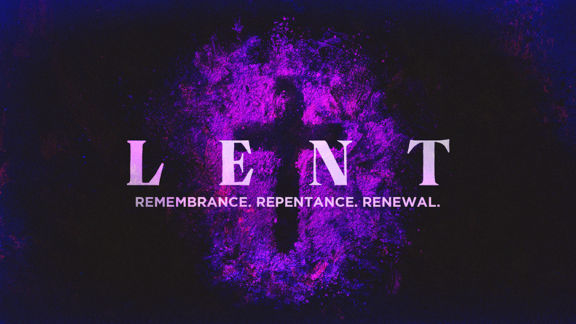
Well, as they say, it is that time of year again. No, I am not talking about tax season; I am talking about the season in the traditional Christian calendar which is set aside for the purpose of self-reflection, examination, confession, and repentance. I am talking about that time of the year when we are asked to set aside the creature comforts that we are so dependent on and to cultivate that pure and singular dependence upon Christ through His Spirit. It is that time of year when Christians from all around the world from many varied theological and cultural backgrounds are invited to set their gaze on the cross of our Lord Jesus and the price that He paid for our sin, even as they begin to anticipate that victorious day when we will celebrate His resurrection from the dead. I am talking about the season of Lent. (For more on this season and its usefulness in the Christian life, see my post here.)
However, in most non-liturgical, low-church traditions, especially down here in the good ole’ Bible belt, the idea of observing the season of Lent is most often met with hostility and a host of objections as to why Christians should not observe this ancient practice. In this post, I would like to consider just a few of these, so that we may perhaps have a clearer understanding as to the benefits and the dangers of observing the season of Lent.
One of the primary objections that is most often given against the practice of Lent, as well as any other practice that might remotely be considered liturgical, is that it comes to us from the traditions of the Roman Catholic Church. There is a deep seated antipathy, an unstated but ever present aversion to any and all things Roman Catholic, that lives just under the surface in many Protestant denominations, and this is much to our shame. (This may be a symptom of a wider problem, i.e. the hubris of denominational tribalism that treats all those outside of our own tradition with skepticism and disdain.) Now, I will be the first to admit that there are many facets of Roman Catholic theology that I find troublesome and concerning, many aspects of their belief and practice that are hard to square with the teaching of the Bible, but we do ourselves a great disservice when we dismiss their contributions to the Christian faith altogether.
After all, the Roman Catholic Church was the only church for the first 1500 years of Christian history, and though they might have gone astray along the way, they actually got many things right. From their centuries long faithfulness comes classic formulations of doctrines like the trinity, the hypostatic union, etc., and for these we must be ever grateful. But not only in matters of doctrinal orthodoxy, but in the details of faithful orthopraxy, their contributions must be considered, and not merely dismissed. They have given us a rich and beautiful liturgical tradition which we would do well to consider in our own attempts to be faithful worshippers of Christ. Practices like the lectionary and the calendar are just some of the contributions that come to us from that tradition. I believe the season of Lent to be one of these contributions from which our faith and practice could benefit deeply. In other words, we don’t have to throw the baby out with the bathwater, so to speak.
A second objection that is somewhat connected with the first has do with the purpose of the season of Lent. In some traditions, Lent is presented as a way of “earning” God’s forgiveness, as a meritorious act by which we might deserve God’s grace, even as a kind of penance. In this light, the observance of Lent is made to be a mandatory practice for all of those who call themselves Christians. Clearly, this flies in the face of the clear teaching of the Bible. Our sins were once and for all completely forgiven when we placed our faith in Christ. This is what it means to be justified. There are no actions that we can take to earn or deserve more grace from God, because He has already poured out grace upon grace to us through the person and work of Jesus Christ. We are not required to do any works of penance for our sins, because the once and for all punishment for our sins fell on the shoulders of Jesus Christ as He was nailed to the cross to die. The payment for sin has been made in full; nothing more is necessary.
However, the repentance that God requires is more than a one time event; on the contrary, it is the lifelong discipline of a follower of Christ as we turn from our sin daily. This is the first of Martin Luther’s 95 Theses, that “When our Lord and Master Jesus Christ said, “Repent” (Mt 4:17), he willed the entire life of believers to be one of repentance.” Repentance is a habit, and setting aside a season for intentional reflection and cultivation of that habit can be quite beneficial in the life of the Christian. Especially as we prepare ourselves for the festivities of Holy Week, which culminate in the events of Good Friday and Easter Sunday, this season can aid us in our sanctification by exposing our sin and then reminding us anew of the wonder of the atoning work of our Savior and the victory that we have over sin through His resurrection. So, while the season of Lent should not be observed as a means to earning God’s grace, it can help us to understand and appreciate the grace that we have already received in new and fresh ways.
A final objection that is often raised in this conversation is that the practice of Lent is nowhere explicitly commanded in Holy Scripture. And if I am being honest, this is the strongest objection to be considered, because we all want to be biblical in the practice and expression of our faith. This is often expressed as a formulation of the regulative principle for worship (RPW), which states, “The acceptable way of worshiping the true God, is instituted by himself, and so limited by his own revealed will, that he may not be worshiped according to the imagination and devices of men, nor the suggestions of Satan, under any visible representations, or any other way not prescribed in the Holy Scriptures.” (2nd London Baptist Confession, 1689) Anyone who believes that the Bible is the inspired inerrant Word of the one true and living God must affirm this as being true. And so, if lent is nowhere commanded in Holy Scripture, then why would we concern ourselves with observing it. Aren’t the Scriptures sufficient for all matters of faith and practice?
We are required to answer this question in the affirmative. (2 Timothy 3.16-17) YES, the Scriptures are sufficient. But just because something is not expressly commanded in Scripture does not mean that it is not beneficial for our faith and practice. There are many things we do in the practice of our faith, both personally and corporately, that are not directly commanded in Scripture. For example, the Scriptures do not command us to have Vacation Bible Schools during the summer, but almost every church I know and have been a part of has a VBS. The point is simply that no one follows the RPW absolutely; in fact, to do so would be impossible. The Scriptures give us general guidelines, and we are called to use our Holy Spirit guided Biblically informed wisdom in the specific applications of those guidelines. (cf. Romans 12.1-2) In the case of Lent, the Bible clearly emphasizes the importance and priority of repentance, and it is up to us, with the help of Scripture and tradition, to cultivate repentance in our lives.
In the final analysis, we must conclude that the decision to observe the season of Lent, whether that observance is personal or corporate, it must remain at the level of Christian freedom. For those who have come out of liturgically rigorous traditions bordering on the legalistic, where observing Lent was a matter of obligation, then I would advise against it. Instead, I would encourage you to relish in the finished work of Christ. However, for others, and I would surmise that this is most of my readers, observing Lent can be an opportunity to cultivate the spiritual discipline of repentance, to intentionally reflect on the condition of our souls, to identify those unacknowledged and unadmitted sins, and to turn again toward Christ in faithful obedience. We are hardly in danger of taking our repentance too seriously, and the season of Lent can help us appreciate anew the reality and significance of sin and its ongoing power in our lives, even as we anticipate the day when we will finally be set free from its very presence. And oh, how we long for that day! Even so, Lord Jesus, come quickly!