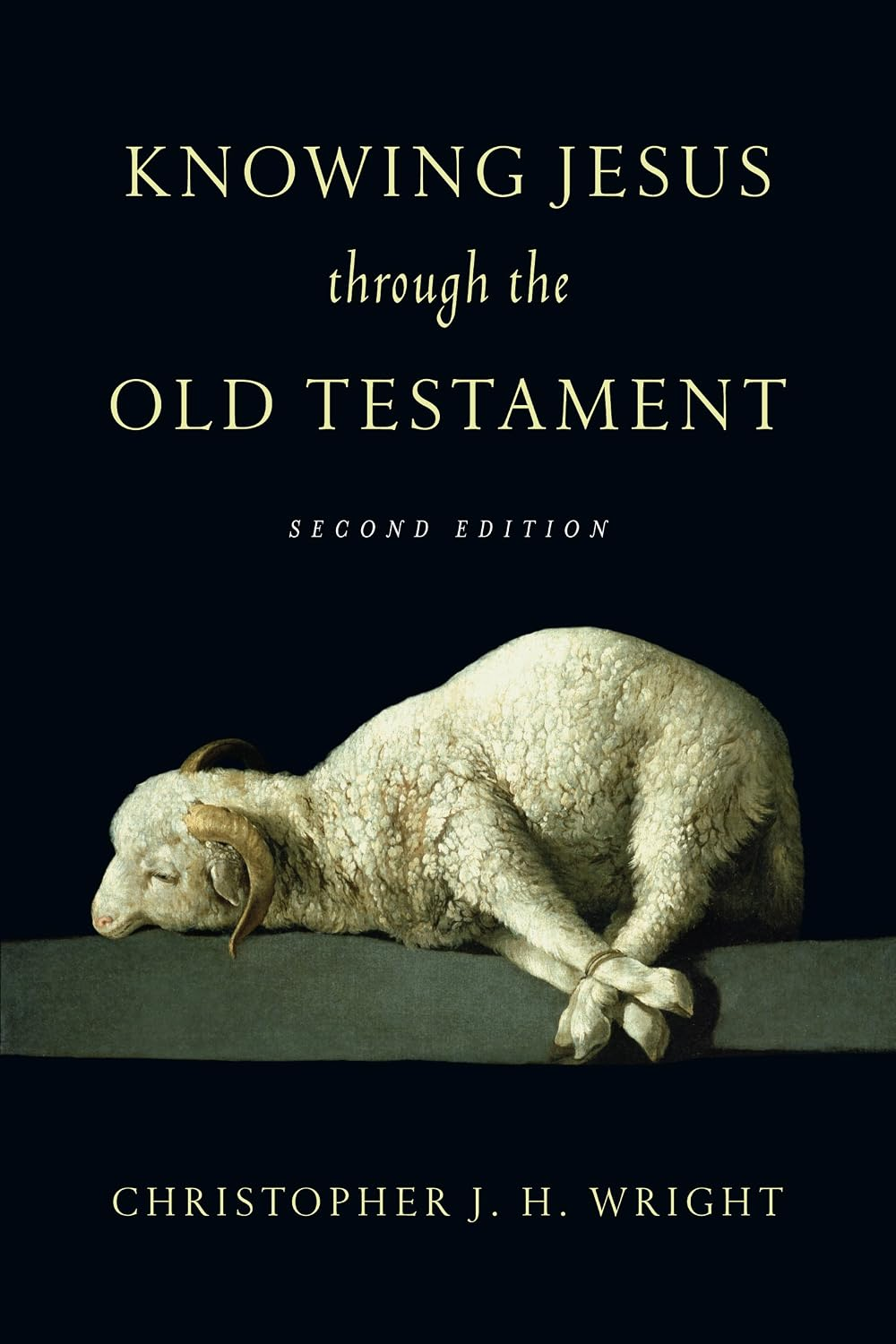
Wright, Christopher J. H. Knowing God through the Old Testament. Second Edition. Grand Rapids: Intervarsity Press, 2014.
Who was Jesus? How should he be understood? It has become almost a truism among historical Jesus scholars that Jesus must be understood within the context of Second Temple Judaism. He was a man of his own time, and this means that his teachings, actions, and self-understanding must be interpreted against the backdrop of first-century Jewish beliefs and expectations. More specifically, Jesus’s understanding of his own identity and mission was profoundly shaped by Israel’s Scriptures, what Christians know as the Old Testament. Although this observation may seem obvious, its importance is frequently overlooked. There remains a widespread tendency in modern discussions to disconnect Jesus from his Old Testament background, resulting in a portrait of Jesus that is neither historically satisfying nor theologically coherent. In Knowing Jesus through the Old Testament, Christopher J. H. Wright seeks to correct this tendency by situating the person and work of Jesus firmly within the unfolding story of Israel’s Scriptures. First published in 1992 and now available in a revised second edition as of 2014, Wright’s work has become something of a modern classic in biblical theology. Therefore, it is the thesis of this review that Knowing Jesus through the Old Testament succeeds admirably in demonstrating that Jesus’s identity and mission can only be fully understood against the backdrop of Israel’s Scriptures, even if some aspects of Wright’s approach invite further discussion.
Wright’s essential thesis is that Jesus’s understanding of himself and his mission was profoundly shaped by his study of and reflection upon the Old Testament Scriptures. In other words, Jesus repeatedly presents himself as the fulfillment of Israel’s story in ways that demonstrate his unique identity as the Christ, the Son of the living God. Wright develops this thesis by examining the major themes of the Old Testament that converge in the person and work of Jesus. He begins with Israel’s story itself, arguing that Jesus consciously understood his life and ministry as the climax of God’s covenant dealings with his people. From there, Wright explores Jesus’s identity as Israel’s Messiah and Davidic King, showing how the hopes and expectations of the Old Testament find their fulfillment in him. He then turns to the mission of Jesus, demonstrating that Christ’s proclamation of the Kingdom of God, his suffering, death, and resurrection, and his calling of disciples all stand firmly within the trajectory established by Israel’s Scriptures. Throughout the book, Wright carefully weaves together themes such as covenant, kingdom, redemption, mission, and fulfillment in order to show that the Old Testament is not merely a collection of predictions about Jesus but the very theological framework through which Jesus understood his own identity and vocation. The result is a compelling portrait of Jesus that is both historically grounded in first-century Judaism and deeply rooted in the unfolding story of God’s redemptive purposes revealed throughout the Old Testament.
The greatest strength of Wright’s work lies in its thoroughly canonical and biblical-theological approach to the person of Jesus. Rather than treating the Old Testament as a collection of isolated messianic proof texts, Wright demonstrates that Jesus understood himself within the unfolding story of Israel. The significance of Jesus’s identity and mission, therefore, cannot be grasped apart from the covenant, kingdom, promises, and expectations established throughout the Old Testament. This approach not only reflects the way Jesus himself repeatedly interpreted his ministry, but it also provides readers with a richer and more coherent understanding of the unity of Scripture. Closely related to this is Wright’s remarkable ability to integrate historical context, theological reflection, and biblical theology into a single, compelling presentation. He consistently situates Jesus within the world of first-century Judaism while never losing sight of the larger redemptive story that stretches from Genesis to Revelation. As a result, the reader comes away with a portrait of Jesus that is historically grounded without becoming reductionistic and theologically profound without becoming overly speculative. Another significant strength is Wright’s emphasis upon the continuity between Israel, Jesus, and the church. Rather than presenting Christianity as a departure from the Old Testament, he shows that the mission of Jesus represents the fulfillment of God’s covenant purposes for Israel and, through Israel’s Messiah, extends those blessings to the nations. Finally, despite engaging substantial theological themes, Wright writes with exceptional clarity and accessibility. His prose is straightforward, his arguments are well organized, and his illustrations are both helpful and memorable. This makes for easy and enjoyable reading from beginning to end.
Of course, no book is without its limitations, and Knowing Jesus through the Old Testament is no exception. Perhaps the most noticeable weakness is that Wright’s broad biblical-theological synthesis occasionally comes at the expense of detailed exegetical interaction with individual texts. His purpose is clearly to present the larger contours of the Old Testament’s witness to Christ rather than to defend every interpretive conclusion in detail. Nevertheless, readers looking for sustained engagement with particular passages or with competing scholarly interpretations may occasionally find themselves wanting more. Closely related to this is the fact that some themes receive considerably more attention than others. Wright’s discussions of covenant, kingdom, and Israel’s story are among the strongest sections of the book, while other important Old Testament motifs could have been explored in greater depth. Likewise, although Wright consistently situates Jesus within the world of first-century Judaism, greater interaction with developments in Second Temple Judaism would have further strengthened certain aspects of his argument by demonstrating more explicitly how Jesus both fulfilled and challenged the expectations of his contemporaries. Finally, Wright occasionally moves rather quickly from Old Testament themes to their fulfillment in Christ, assuming typological connections that many readers will readily accept but that others may have wished to see defended more fully. Even so, these observations do little to diminish the overall value of the work. They reflect the inevitable limitations of a synthetic volume rather than any significant weakness in Wright’s central thesis.
In the final analysis, Knowing Jesus through the Old Testament is a compelling and important contribution to biblical theology. Wright reminds us that Jesus did not appear in history as the founder of a new religion or as a figure detached from Israel’s past. Rather, he came as the fulfillment of God’s covenant purposes, bringing Israel’s story to its divinely intended climax. By consistently situating Jesus within the theological world of the Old Testament, Wright demonstrates that the Scriptures of Israel are not merely the background to the New Testament but the indispensable foundation for understanding the identity, mission, and message of Jesus Christ. In an age when the Old Testament is too often neglected or treated as merely preparatory to the New Testament, Wright reminds readers that the story of Jesus cannot be separated from the story of Israel, for the latter finds its fulfillment in the former. For this reason, I would readily recommend this book to pastors, seminary students, Bible teachers, and thoughtful Christians who desire a richer understanding of the unity of Scripture and the centrality of Christ within God’s redemptive plan. Though readers may occasionally wish for more detailed exegetical interaction or greater engagement with certain scholarly discussions, these minor limitations do little to diminish the book’s overall contribution. If readers come away from this volume with a renewed appreciation that the Old Testament is essential for understanding the person and work of Jesus Christ, then Wright will have accomplished precisely what he set out to do. Few books succeed so well in helping readers know Jesus by first learning to read him through the Scriptures that he himself loved, studied, and fulfilled.


