Tag Archives: Salvation

On How Christ Makes all the Difference

TEXT

Paul, an apostle of Christ Jesus by God’s will:
To the faithful saints in Christ Jesus at Ephesus.
Grace to you and peace from God our Father and the Lord Jesus Christ.

~Ephesians 1.1-2

Title: On a Historical, Literary, and Theological Overview of Ephesians
Text: Ephesians 1.1-2
Series: The Letter to the Ephesians
Church: South Caraway Baptist Church, Jonesboro, AR
Date: April 30, 2023


On Praying through Psalm 3

TEXT

A psalm of David when he fled from his son Absalom.

Lord, how my foes increase!
There are many who attack me.
Many say about me,
“There is no help for him in God.” Selah

But you, Lord, are a shield around me,
my glory, and the one who lifts up my head.
I cry aloud to the Lord,
and he answers me from his holy mountain. Selah

I lie down and sleep;
I wake again because the Lord sustains me.
I will not be afraid of thousands of people
who have taken their stand against me on every side.

Rise up, Lord!
Save me, my God!
You strike all my enemies on the cheek;
you break the teeth of the wicked.
Salvation belongs to the Lord;
may your blessing be on your people. Selah

~Psalm 3

Series: Praying through the Psalms
Text: Psalm 3.1-8
Church: South Caraway Baptist Church, Jonesboro, AR
Date: April 12, 2023


On Psalm 119.89-96 (Lamed)

89 Lord, your word is forever;
it is firmly fixed in heaven.
90 Your faithfulness is for all generations;
you established the earth, and it stands firm.
91 Your judgments stand firm today,
for all things are your servants.
92 If your instruction had not been my delight,
I would have died in my affliction.
93 I will never forget your precepts,
for you have given me life through them.
94 I am yours; save me,
for I have studied your precepts.
95 The wicked hope to destroy me,
but I contemplate your decrees.
96 I have seen a limit to all perfection,
but your command is without limit.

The twelfth stanza of Psalm 119 (ל/Lamed) begins with a beautiful affirmation of the permanence and timelessness of God’s Word. “Lord, your Word is forever; it is firmly fixed in heaven.” (verse 89) It is not just another curiosity that has been passed down to us from antiquity; no, it is the living and abiding Word of the one true and living God. In theology, this is called the doctrine of inspiration, namely that God speaks through the human authors of the Biblical documents, such that their words are His very words. This is why the Bible has lasting relevance and authority even beyond the audiences to whom it was originally written. As our psalmist puts it, “Your judgments stand firm today. for all things are your servants.” (verse 91) Contrary to the opinions of modern culture, the Word of God is still the right and true prescription for human flourishing; the virtues it sanctions and the vices it prohibits are not outdated holdovers from people and places now long past. No, the Bible is special revelation from God in which He reveals the problem of humanity’s sin and the way of salvation that comes by grace through faith in the person and work of Jesus Christ.

Now, in verse 90, we read “Your faithfulness is for all generations; you established the earth, and it stands firm.” As we have noted in previous posts, most of the verses in Psalm 119 contain some synonym for God’s Word, e.g. laws, commands, instructions, precepts, etc., and so here we have “your faithfulness” (אֱמֽוּנָתֶךָ). It seems clear that this word is meant to stand in parallel relationship with “your word” (verse 89) and “your judgments” (verse 91); interestingly, the Septuagint (LXX) translates this word as “your truth” (ἡ ἀλήθειά σου). The point of all of this is to say that the abiding authority of God’s Word is grounded in who He is, i.e. in His unchanging character. He is faithful; He keeps His promises. Whatever He says, He will most certainly do. His Word is a reflection of who He is: His holiness, His grace, His power, His love, and even His incomprehensibility. This is why our psalmist writes in verse 96, “I have seen a limit to all perfection, but your command is without limit,” or as it reads in the NET Bible, “your commands are beyond full comprehension.” The God of the Bible is infinite; He is a mystery whose depths can never fully be exhausted. So also is His Word.

However, this does not mean that we should not read or study the Word of God. Yes, the depths of the Bible’s riches are inexhaustible, but they are also perspicuous and clear. I have previously written on this topic, here. But suffice it to say that in the act of inspiration, the infinite God condescended to our finite capacities for understanding. He is infinite in power, wisdom, and goodness, and we are His creatures, finite in our ability to comprehend His perfections. But He chose to reveal Himself in and through the Word so that we might know Him and be reconciled to Him. So yes, the Bible is so clear that any human being, regardless of their intellectual aptitude or educational achievement, can read it and understand their sin and their need for a savior; it is also, at the same time, a limitless source of mystery and wonder, such that even the finest minds throughout human history have been unable to fully explain all of its secrets.

For our psalmist, this means that the Word of God must be continuously read, studied, and contemplated. As he says in verse 93, “I will never forget your precepts, for you have given me life through them.” Here again, not only do we see that abiding authority of God’s Word, but we also see its all encompassing sufficiency. Our psalmist understands that every need of the human soul is provided for in the inspired Word of God. In verse 92, we read, “If your instruction had not been my delight, I would have died in my affliction.” The word “delight” conveys the idea of contentment, satisfaction, or pleasure. In other words, our psalmist understands that even in the midst of turmoil, adversity, and heartache, there is a joy, a “peace that passes all understanding” that is available when we rest in the promises of God’s Word. The spiritual disciplines of the Word (study, meditation, memorization) are the God prescribed antidote for our anxiety, our fear, our depression, our despair. Again, our psalmist writes in verse 95, “The wicked hope to destroy me, but I contemplate your decrees.”

This devotion, this diligence in the discipline of the Word, this affection for the perfections of God’s Law, is a distinguishing characteristic of those who belong to Him. As our psalmist writes in verse 94. “I am yours; save me, for I have studied your precepts.” We are a people of the Book. Our faith is not based on a human philosophy or mere reflections on the divine; no, it is based on the inspired, inerrant, authoritative, sufficient revelation of God Himself. In His Word, He has clearly and finally revealed the one and only path unto salvation, and He has called His people to walk upon it until we reach glory. So, when our psalmist prays “save me”, he is not simply expressing his desire to be saved from the penalty of sin. Rather, he is praying for the ongoing work of salvation to be applied in his life through sanctification, that God would save him from the power of sin through His sufficient Word. In the same breath, he is also expressing that most fundamental of Christian hopes, namely that one day he would be saved from the very presence of sin entirely, a hope that is grounded in the promises of God’s Word. In other words, our psalmist understands that the full experience of our salvation comes to us through the Word by the Spirit. Therefore, we should never cease to be amazed at the riches of His word, and we should constantly devote ourselves to its discipline.

For further study:
Introduction
Psalm 119.1-8
Psalm 119.9-16
Psalm 119.17-24
Psalm 119.25-32
Psalm 119.33-40
Psalm 119.41-48
Psalm 119.49-56
Psalm 119.57-64
Psalm 119.65-72
Psalm 119.73-80
Psalm 119.81-88


On Psalm 119.81-88 (Kaf)

81 I long for your salvation;
I put my hope in your word.
82 My eyes grow weary
looking for what you have promised;
I ask, “When will you comfort me?”
83 Though I have become like a wineskin dried by smoke,
I do not forget your statutes.
84 How many days must your servant wait?
When will you execute judgment on my persecutors?
85 The arrogant have dug pits for me;
they violate your instruction.
86 All your commands are true;
people persecute me with lies—help me!
87 They almost ended my life on earth,
but I did not abandon your precepts.
88 Give me life in accordance with your faithful love,
and I will obey the decree you have spoken.

We now come to the eleventh stanza of Psalm 119 (Kaf/Kaph – כ‎, final form – ך), and with this stanza, we are halfway through the longest chapter in the Bible. This is somewhat appropriate since the theme of this stanza concerns waiting. “How many days must your servant wait?” (verse 84a) In the same way that this psalm requires endurance and perseverance to read and work through, so also the life of faith requires endurance and perseverance. Or, to borrow the title of Eugene Peterson’s book on the Psalms of Ascent (120-134), the Christian life is A Long Obedience in the Same Direction. As the subtitle of the book states, Peterson uses these psalms to reflect on “discipleship in an instant society”. As a culture, we are addicted to instant gratification, and the proliferation of social media with its “likes” and “follows” has only made this incessant need more consuming. We desperately need to relearn what it means to wait, to persevere in faith, to appreciate delayed fulfillment. But, of course, waiting is not easy; it is not fun. Most of the time, it is hard, and this is the struggle that our psalmist is wrestling with in these verses.

It would seem that he is facing intense persecution for his devotion to God and His ways. As he writes in verse 86, “people persecute me with lies; they almost ended my life on earth.” This is because “they violate your instruction, but I did not abandon your precepts.” (verse 85) Clearly, the psalmist is facing opposition, ridicule, even the threat of physical harm because of his commitment to the Word and ways of God. Sadly, this is the reality of living in the already but not yet. As believers in Christ, we are already citizens of His kingdom; we live by a set of standards and convictions, principles and values, that stand in complete contradiction to the kingdom of this world. This inevitably leads to conflict with those who are on the outside of the faith, which results in ridicule, ostracism, and eventually outright persecution. The more that we obey the Word of God, the more that we will face criticism for it. As the Apostle Paul puts it in Second Timothy, chapter 3, verse 12, “In fact, all who want to live a godly life in Christ Jesus will be persecuted.” This is a lived reality for our psalmist.

And so, understandably, our psalmist cries out to God, “How many days must your servant wait? When will you execute judgment on my persecutors? When will you comfort me?” (verse 84) This prayer has been the prayer of the people of God for the entirety of history. Every moment, we wonder, “How long, O Lord? How long until you will come to do away with sin, vindicate your people, fulfill your promises, and establish your perfect rule on earth? How long?!” This is our heart’s deepest and truest longing, as our psalmist says, “I long for your salvation.” Of course, salvation here, as our psalmist envisions it, is a much more robust concept than we usually understand. As a post-reformation, post-enlightenment, westernized people, we have been conditioned to understand salvation in individualistic terms. We generally think of salvation as the forgiveness of sin, the removal of guilt, and inheritance of eternal life (when we die). But for our psalmist, salvation is vindication; it the victory of God over those who would oppose Him and His people. However, these two understandings of salvation are not in contradiction. The Bible presents the work of Christ in redeeming His people as a both/and, as an already/not yet. We have already received the forgiveness of sin resulting in eternal life, but we are also waiting for the day when Christ will come again to defeat sin and Satan once and for all and establish His Kingdom on earth.

This is our blessed hope, and as our psalmist writes, “I put my hope in your word.” Our psalmist understands that hope is the source of the strength that is necessary for waiting, and the promises of God found in His Word are the foundation of hope. It is hope that empowers our psalmist’s unflinching obedience in spite of the persecution that he is facing. This is why he prays in verse 88, “Give me life in accordance with your faithful love, and I will obey the decree you have spoken.” The word that is translated as “faithful love” here is the Hebrew word חֶסֶד (hesed), and according to Darrell Bock, it encompasses “all the positive attributes of God: love, covenant faithfulness, mercy, grace, kindness, loyalty–in short, acts of devotion and loving-kindness that go beyond the requirements of duty.” It is variously translated as “faithful love, lovingkindness, loyalty, etc.”, and it refers to His promise keeping devotion to His covenant people. Our psalmist is confident that God will keep the promises of His Word, because that is who He is. He is a promise keeping God, and this is the ground of hope for our psalmist. It is what empowers him to step out in obedience expecting that it will result in the abundant life.

In many ways, the Christian life is a life lived in between, a life of the already but not yet, a life of waiting. We understandably wonder how long we will have to wait for the promises of God to be fulfilled, but there is a question that is more important than this. And that question is simply this: how shall we wait? Will we wait in faithfulness and obedience strengthened by our confident hope in the promises of God’s Word? Or will we give in to the pressures of the world as it seeks to conform us to itself? There will certainly be times when our waiting will be difficult, when continuing in faithfulness will feel pointless, when our hope will appear to be in vain. But these are the times that we must renew our faith in God and the promises are found in His Word and live in light of them. Then and only then will hear those most blessed words on that final day when our Lord Jesus says, “Well done, good and faithful servant! You were faithful over a few things; I will put you in charge of many things. Share your master’s joy.” (Matthew 24.23)

For further study:
Introduction
Psalm 119.1-8
Psalm 119.9-16
Psalm 119.17-24
Psalm 119.25-32
Psalm 119.33-40
Psalm 119.41-48
Psalm 119.49-56
Psalm 119.57-64
Psalm 119.65-72
Psalm 119.73-80


On the Annual Celebration of Christmas and Easter

When it comes to a church’s life together, there are two pillars around which the rest of the annual calendar swings, i.e. Christmas and Easter. These are the high points in the church’s worship every year. Many churches still commemorate these holidays with special programs, musical and dramatic presentations of the Biblical story, and a focus on inviting the community in for high attendance, after all these are the only days that the CEOs come to church anyway (Christmas and Easter Onlys). It is clear that these holidays hold a special place in the devotion of most Christians. They focus our reflection on the primary movements of the story of redemption, how God the Son came to earth incarnate as a baby in a manger and how he died on the cross for sin and rose again some thirty years later. Even though they are mostly overcome by the cultural consumerism that so obviously characterizes our society these days, they are still a meaningful season in the worship of the church.

However, the question remains, “why do we celebrate these annual holidays anyway?” After all, there is no explicit command in the Scriptures to commemorate the nativity and/or the passion of our Lord Jesus Christ annually by a special holiday. In the New Testament, the church’s worship moved away from the annual calendar marked by special holidays and feasts that characterized the worship of the Jews in the Old Testament, and they moved to a weekly calendar marked by the gathering of the saints on the Lord’s Day for the preaching of the Word and the breaking of bread. Further, the Regulative Principle for Worship (RPW) states that only those elements that are clearly prescribed in the Scriptures should be included in the church’s worship. A strict application of this principle would mean that since Christmas and Easter are not explicitly prescribed by the New Testament, then we are in error when we make them a primary emphasis or central component in our devotion and worship, whether corporately or individually.

We do know that the church began to celebrate these holidays fairly early on in her existence. Within a century or so of the life and death of Jesus and His first followers, the church began to include these annual feasts as a regular part of the worship calendar. Of course, critics often suggest that these festivals were borrowed and adapted from the pagan world; however, these criticisms tend to fall apart quickly under close historical scrutiny. After examining the evidence, one author recently concluded that “no modern Christmas [or Easter] tradition can draw a straight line to any clear and decisive pagan origin.” While there has certainly been growth over the centuries in the lore and cultural traditions that surround these holidays, none of this is original and/or essential to the Christian celebration of them. Rather, it is evident that Christians recognized very early on in their history how important it was to commemorate the two decisive moments in redemptive history, namely the birth and death/resurrection of the one who is called Christ.

Of course, tradition alone is not a sufficient enough reason to justify the continued celebration of Christmas and Easter, but neither is it a sufficient reason for discontinuing the observance of them either. All traditions are not bad; in fact, some are quite helpful in the formation of our faith and practice. I have previously written on the question of tradition here, but suffice it to say that there is great wisdom in learning from the faith and practice of our Christian forebears, both from what they did well and from what they did not do well. So, perhaps the proper question should not be whether the celebration of Christmas and Easter is right or wrong, but whether it is wise and good. Does the annual observance of these holidays have spiritual value for the growth of the followers of Jesus in conformity to His image? And if this is the question, then we must answer in the affirmative. The fact of the matter is that we are a people who are quick to forget, quick to move on, quick to believe that we have outgrown our need for the Gospel. But there is nothing more foundational, nothing more crucial, for our formation in Christlikeness than to be reminded regularly of exactly what Christ has done on our behalf.

His incarnation and resurrection are the primary aspects of His redemptive work; they tell the story of how God the Son came to earth as a child, lived a sinless life, died on the cross for sin, and then rose again. In fact, the Apostle Paul instructs us in Second Timothy, chapter 2, verse 8, “Remember Jesus Christ, risen from the dead and descended from David, according to my gospel.” Or again, in the Letter to the Romans, that Jesus Christ “was a descendant of David according to the flesh and was appointed to be the powerful Son of God according to the Spirit of holiness by the resurrection of the dead.” Throughout the New Testament, these movements – the incarnation and the resurrection – are the hinge pins upon which the Gospel swings. And as followers of Jesus, we take great joy in celebrating these glorious acts of redemption each and every year, because it reminds us of the beautiful salvation that we have in Christ. It reminds us who we are, and it reminds us of why we are here. The church is a body of believers whose existence and purpose are defined by the redemptive work of God in Christ. Therefore, it is right and good that we celebrate these movements of God’s grace, not only every week, but as a matter of purposeful reflection every year on Christmas and Easter.

This, however, would seem to be the challenge in our modern culture, focusing our worship on Christ during these holidays and not becoming distracted by the cultural baggage that is so obviously associated with them. Just last month, I was chided vociferously on social media for suggesting that Santa Claus is neither necessary nor useful in the Christian enjoyment of the Christmas holiday. It would seem that in this particular cultural milieu Christians will need to be purposeful and strategic in how they celebrate going forward. We must make it clear that Christmas and Easter are about Christ and Christ alone, and if that means dispensing with some of the traditional festivities that have become associated with these holidays, then so be it. The celebration of Christmas and Easter should be a time when those who follow Jesus can celebrate anew the wonder and glory of what Christ has done for us in the Gospel. May we never grow tired of celebrating this timeless story each and every year.

This article is also posted at SBCvoices, here.


On the Future of Israel

TEXT

25 I don’t want you to be ignorant of this mystery, brothers and sisters, so that you will not be conceited: A partial hardening has come upon Israel until the fullness of the Gentiles has come in. 26 And in this way all Israel will be saved, as it is written,

The Deliverer will come from Zion;
he will turn godlessness away from Jacob.
27 And this will be my covenant with them
when I take away their sins.

28 Regarding the gospel, they are enemies for your advantage, but regarding election, they are loved because of the patriarchs, 29 since God’s gracious gifts and calling are irrevocable. 30 As you once disobeyed God but now have received mercy through their disobedience, 31 so they too have now disobeyed, resulting in mercy to you, so that they also may now receive mercy. 32 For God has imprisoned all in disobedience so that he may have mercy on all.

~Romans 11.25-32

Text: Romans 9-11, et al.
Series: Eschatology: A Study of the End Times
Church: South Caraway Baptist Church, Jonesboro, AR
Date: October 12, 2022


On the Theological Bogeyman of Calvinism

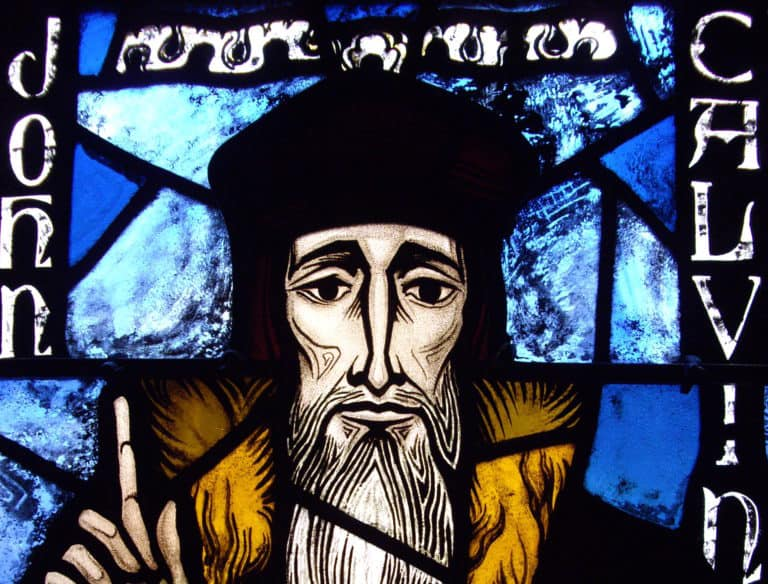
A few days ago, I posted a quote on my social media feed from the reformer John Calvin. Now, the quote in question said nothing about the doctrines or concepts that are usually associated with that name; actually, it had to with the usefulness of catechism in the transmission of the faith to the next generation. However, within a short amount of time, a recent acquaintance of mine messaged me with concern that if churches saw me posting quotes from this particular figure, then they would not ask me to preach. I am sure his concern was well intended, but since moving back to the Bible Belt five years ago, I have been constantly perplexed by the reactions that Calvin and his teaching seems to provoke.

On another occasion a few years ago, I was interviewing with a church in another state. They had received my resume from a state convention, and so they reached out to set up a virtual interview. After logging on, we exchanged pleasantries and said a word of prayer, but before asking me for my testimony or personal background, the first question they asked right out of the gate was “What do you believe about Calvinism?” Examples like this could be multiplied, but the fact remains that the slightest scent of affinity for John Calvin or for the doctrines known as “Calvinism” often provokes a visceral reaction in most churches in this area. There is a ubiquitous disdain for these concepts, especially in the more rural churches, and to be quite honest, it boggles my mind.

Reasonable disagreement on the question of God’s sovereignty and man’s ability when it comes to our salvation is understandable; this is a debate that has ebbed and flowed for the entire history of the church, but this kind of revulsion is simply beyond the pale. And so, in the space that remains, I would like to suggest four possible reasons for why rural Bible Belt Christians are so put off by so-called “Calvinism”.

First, there seems to be widespread misunderstanding when it comes what so-called “Calvinists” actually believe. Because of this, those beliefs are regularly mischaracterized and misrepresented in ways that no reasonable student of Reformed theology would ever agree with. Accusations that “Calvinists” do not believe in evangelism or that “Calvinism” makes God the author of sin are such tired critiques that they almost need no response. Answers to these questions and many more are readily available from reputable and godly scholars in both printed and electronic forms, but it is easier to label and dismiss someone’s beliefs than to listen and engage the merits of those beliefs. Whether you agree with the concepts or not, if you cannot explain those concepts in ways that their adherents would agree with, then you probably shouldn’t be critiquing them to begin with. As I have suggested in another post, this is how we show grace to those with whom we disagree.

Another reason why Bible Belt Christians harbor such vehement resentment for so-called “Calvinism” is that many rural churches have been hurt by pastors who held these beliefs in an unhealthy, unchristian manor. Time and time again, I have heard stories about how “Calvinism split our church”, and this absolutely saddens my soul. However, I would suggest that the essential cause of the pain had more to do with the character of the pastor in question and less to do with the theological concepts that he espoused. In most cases, “Calvinism” is simply a symptom of the problem, not the root cause. Pastors are called to the highest standards of Christlikeness, and a consistent attitude of combativeness or divisiveness driven by the nagging need to always be right should be a direct and immediate disqualification from pastoral ministry. The glaring absence of Christlikeness coupled with biased preaching that beats its preferred theological hobby horse every week, regardless of what it may be, is a recipe for heartache every time.

A third possible reason for the emotional overreaction to “Calvinism” in the Bible Belt might be linked to the lasting influence of Revivalism in this area. The theological example of men like Billy Graham and Adrian Rogers casts a long shadow over those who were directly influenced by their ministries. These were faithful, godly men whose proclamation of the Gospel led many to faith in Christ. For these Christians, the lasting memories of multi-night revivals with altars filled with throngs of people coming to faith in Christ represent the good ole’ days of the church. Even to this day, there is a deeply felt and inherent longing in many churches to experience those highs once again, and the assumption is that if we just preach the way that they preached, believe the way that they believed, program the way that they programmed, then we can reproduce the same results. Unfortunately, the culture has changed significantly since the heyday of these ministries, and the methods that worked then are unlikely to work in the same way now. However, as they did so well, so also must we proclaim the Gospel boldly and invite people to repent and believe, whatever that may look like.

Lastly, I think a final and more fundamental reason for the vitriolic reaction to so-called “Calvinism” has do with the conflict between the sovereignty of God and the ability of man. Again, my purpose is not answer that age old question, but simply to point out that the exaltation of God’s sovereignty, which is a basic principle in Reformed theology, is a direct affront to our own innate sinful desire to exalt ourselves. The suggestion that there is nothing that I can do to save myself or to turn myself toward God and away from sin apart from His gracious intervention is an insult to my own prideful sense of self. No one wants to admit that they are so deeply corrupted and enslaved to their own sin that they cannot lift themselves up by their own volitional, moral and spiritual effort. Except this is exactly what the Gospel teaches us. Whether we hold to the theology of so-called “Calvinism” or not, we must admit that we cannot, nay will not, save ourselves, even if we were given the opportunity. We are completely and totally dependent upon God to save us from sin and from ourselves, and this He did by sending His Son to die on the cross and rise again. This is what all Christians must believe.

In the final analysis, whether a person agrees or disagrees with John Calvin and his theology is not the point. We must be willing to listen to and learn from one another “as iron sharpens iron”; we must learn to discuss our differences with grace and understanding. And if we must disagree, then may the content of our disagreement be concerned with the Scriptures and with what they teach us about God and mankind, about sin and salvation, because these are the questions that matter in eternity. As our Lord Jesus said, “The time is fulfilled, and the kingdom of God has come near. Repent and believe the good news!” (Mark 1.15)


On Why Christians Still Need the Gospel

TEXT

11 For the grace of God has appeared, bringing salvation for all people, 12 instructing us to deny godlessness and worldly lusts and to live in a sensible, righteous, and godly way in the present age, 13 while we wait for the blessed hope, the appearing of the glory of our great God and Savior, Jesus Christ. 14 He gave himself for us to redeem us from all lawlessness and to cleanse for himself a people for his own possession, eager to do good works.

Text: Titus 2.11-14
Series: Revival
Church: First Baptist Church, Mammoth Spring, AR
Date: August 31, 2022


On Remembering the Gospel

Text

Remember Jesus Christ, risen from the dead and descended from David, according to my gospel, for which I suffer to the point of being bound like a criminal. But the word of God is not bound. 10 This is why I endure all things for the elect: so that they also may obtain salvation, which is in Christ Jesus, with eternal glory. 11 This saying is trustworthy:

For if we died with him,
we will also live with him;
12 if we endure, we will also reign with him;
if we deny him, he will also deny us;
13 if we are faithless, he remains faithful,
for he cannot deny himself.

~2 Timothy 2.8-13

Title: On 2 Timothy 2.8-13
Series: Revival
Church: First Baptist Church, DeValls Bluff, AR
Date: March 16, 2022


On Titus 2.11-15

Text:
11 For the grace of God has appeared, bringing salvation for all people, 12 instructing us to deny godlessness and worldly lusts and to live in a sensible, righteous, and godly way in the present age, 13 while we wait for the blessed hope, the appearing of the glory of our great God and Savior, Jesus Christ. 14 He gave himself for us to redeem us from all lawlessness and to cleanse for himself a people for his own possession, eager to do good works. 15 Proclaim these things; encourage and rebuke with all authority. Let no one disregard you.

Title: On Titus 2.11-15
Church: Moro Baptist Church, Moro, AR
Date: December 29, 2019


Slow To Write

"let every person be quick to hear, slow to speak, slow to anger."

lovegavehope

Just another WordPress.com site

Jared Cornutt

Pastor | Speaker | Writer

Denny Burk

A commentary on theology, politics, and culture

G3 Ministries

Events + Resources for the Local Church

Biblical Reasoning

Biblical and Systematic Theology According to the Scriptures

RetroChristianity

Reclaiming the Forgotten Faith

SBC Voices

Southern Baptist News & Opinion

Lucid Theology

Thoughts on words, books, theology, and life.

Baptist21

A pastor-led voice for Baptists in the 21st century

Center For Baptist Renewal

The Personal and Professional Blog of Phillip Powers

The Pastor's Well - Pastor Well

The Personal and Professional Blog of Phillip Powers

Articles - AlbertMohler.com

The Personal and Professional Blog of Phillip Powers

The Gospel Coalition

The Personal and Professional Blog of Phillip Powers