Tag Archives: Grace

On the Old Testament’s Relevance for New Testament Believers

TEXT
“Are these things true?” the high priest asked.

“Brothers and fathers,” he replied, “listen: The God of glory appeared to our father Abraham when he was in Mesopotamia, before he settled in Haran, and said to him: Leave your country and relatives, and come to the land that I will show you. “Then he left the land of the Chaldeans and settled in Haran. From there, after his father died, God had him move to this land in which you are now living. He didn’t give him an inheritance in it—not even a foot of ground—but he promised to give it to him as a possession, and to his descendants after him, even though he was childless. God spoke in this way: His descendants would be strangers in a foreign country, and they would enslave and oppress them for four hundred years. I will judge the nation that they will serve as slaves, God said. After this, they will come out and worship me in this place. And so he gave Abraham the covenant of circumcision. After this, he fathered Isaac and circumcised him on the eighth day. Isaac became the father of Jacob, and Jacob became the father of the twelve patriarchs.

“The patriarchs became jealous of Joseph and sold him into Egypt, but God was with him 10 and rescued him out of all his troubles. He gave him favor and wisdom in the sight of Pharaoh, king of Egypt, who appointed him ruler over Egypt and over his whole household. 11 Now a famine and great suffering came over all of Egypt and Canaan, and our ancestors could find no food. 12 When Jacob heard there was grain in Egypt, he sent our ancestors there the first time. 13 The second time, Joseph revealed himself to his brothers, and Joseph’s family became known to Pharaoh. 14 Joseph invited his father Jacob and all his relatives, seventy-five people in all, 15 and Jacob went down to Egypt. He and our ancestors died there, 16 were carried back to Shechem, and were placed in the tomb that Abraham had bought for a sum of silver from the sons of Hamor in Shechem.

17 “As the time was approaching to fulfill the promise that God had made to Abraham, the people flourished and multiplied in Egypt 18 until a different king who did not know Joseph ruled over Egypt. 19 He dealt deceitfully with our race and oppressed our ancestors by making them abandon their infants outside so that they wouldn’t survive. 20 At this time Moses was born, and he was beautiful in God’s sight. He was cared for in his father’s home for three months. 21 When he was put outside, Pharaoh’s daughter adopted and raised him as her own son. 22 So Moses was educated in all the wisdom of the Egyptians and was powerful in his speech and actions.

23 “When he was forty years old, he decided to visit his own people, the Israelites. 24 When he saw one of them being mistreated, he came to his rescue and avenged the oppressed man by striking down the Egyptian. 25 He assumed his people would understand that God would give them deliverance through him, but they did not understand. 26 The next day he showed up while they were fighting and tried to reconcile them peacefully, saying, ‘Men, you are brothers. Why are you mistreating each other?’ 27 “But the one who was mistreating his neighbor pushed Moses aside, saying: Who appointed you a ruler and a judge over us? 28 Do you want to kill me, the same way you killed the Egyptian yesterday?

29 “When he heard this, Moses fled and became an exile in the land of Midian, where he became the father of two sons. 30 After forty years had passed, an angel appeared to him in the wilderness of Mount Sinai, in the flame of a burning bush. 31 When Moses saw it, he was amazed at the sight. As he was approaching to look at it, the voice of the Lord came: 32 I am the God of your ancestors—the God of Abraham, of Isaac, and of Jacob. Moses began to tremble and did not dare to look. 33 “The Lord said to him: Take off the sandals from your feet, because the place where you are standing is holy ground. 34 I have certainly seen the oppression of my people in Egypt; I have heard their groaning and have come down to set them free. And now, come, I will send you to Egypt. 35 “This Moses, whom they rejected when they said, Who appointed you a ruler and a judge?—this one God sent as a ruler and a deliverer through the angel who appeared to him in the bush. 36 This man led them out and performed wonders and signs in the land of Egypt, at the Red Sea, and in the wilderness for forty years.

37 “This is the Moses who said to the Israelites: God will raise up for you a prophet like me from among your brothers. 38 He is the one who was in the assembly in the wilderness, with the angel who spoke to him on Mount Sinai, and with our ancestors. He received living oracles to give to us. 39 Our ancestors were unwilling to obey him. Instead, they pushed him aside, and in their hearts turned back to Egypt. 40 They told Aaron: Make us gods who will go before us. As for this Moses who brought us out of the land of Egypt, we don’t know what’s happened to him. 41 They even made a calf in those days, offered sacrifice to the idol, and were celebrating what their hands had made. 42 God turned away and gave them up to worship the stars of heaven, as it is written in the book of the prophets: House of Israel, did you bring me offerings and sacrifices for forty years in the wilderness? 43 You took up the tent of Moloch and the star of your god Rephan, the images that you made to worship. So I will send you into exile beyond Babylon.

44 “Our ancestors had the tabernacle of the testimony in the wilderness, just as he who spoke to Moses commanded him to make it according to the pattern he had seen. 45 Our ancestors in turn received it and with Joshua brought it in when they dispossessed the nations that God drove out before them, until the days of David. 46 He found favor in God’s sight and asked that he might provide a dwelling place for the God of Jacob. 47 It was Solomon, rather, who built him a house, 48 but the Most High does not dwell in sanctuaries made with hands, as the prophet says: 49 Heaven is my throne, and the earth my footstool. What sort of house will you build for me? says the Lord, or what will be my resting place? 50 Did not my hand make all these things?

51 “You stiff-necked people with uncircumcised hearts and ears! You are always resisting the Holy Spirit. As your ancestors did, you do also. 52 Which of the prophets did your ancestors not persecute? They even killed those who foretold the coming of the Righteous One, whose betrayers and murderers you have now become. 53 You received the law under the direction of angels and yet have not kept it.”

~Acts 7.1-53

Title: On the Value and Relevance of the Old Testament
Text: Acts 7.1-53
Series: The Book of Acts
Church: Redeemer Baptist Church, Jonesboro, AR
Date: April 7, 2024


On Praying Through Psalm 8

TEXT

For the choir director: on the Gittith. A psalm of David.

Lord, our Lord,
how magnificent is your name throughout the earth!
You have covered the heavens with your majesty.
From the mouths of infants and nursing babies,
you have established a stronghold
on account of your adversaries
in order to silence the enemy and the avenger.

When I observe your heavens,
the work of your fingers,
the moon and the stars,
which you set in place,
what is a human being that you remember him,
a son of man that you look after him?
You made him little less than God
and crowned him with glory and honor.
You made him ruler over the works of your hands;
you put everything under his feet:
all the sheep and oxen,
as well as the animals in the wild,
the birds of the sky,
and the fish of the sea
that pass through the currents of the seas.

Lord, our Lord,
how magnificent is your name throughout the earth!

~Psalm 8

Series: Praying through the Psalms
Text: Psalm 8.1-9
Church: South Caraway Baptist Church, Jonesboro, AR
Date: May 17, 2023


On Christ Our Blessing

TEXT

Blessed is the God and Father of our Lord Jesus Christ, who has blessed us with every spiritual blessing in the heavens in Christ. For he chose us in him, before the foundation of the world, to be holy and blameless in love before him. He predestined us to be adopted as sons through Jesus Christ for himself, according to the good pleasure of his will, to the praise of his glorious grace that he lavished on us in the Beloved One.

~Ephesians 1.3-6

Title: On the Blessings of Election and Predestination in Christ
Text: Ephesians 1.3-6
Series: The Letter to the Ephesians
Church: South Caraway Baptist Church, Jonesboro, AR
Date: May 8, 2023


On How Christ Makes all the Difference

TEXT

Paul, an apostle of Christ Jesus by God’s will:
To the faithful saints in Christ Jesus at Ephesus.
Grace to you and peace from God our Father and the Lord Jesus Christ.

~Ephesians 1.1-2

Title: On a Historical, Literary, and Theological Overview of Ephesians
Text: Ephesians 1.1-2
Series: The Letter to the Ephesians
Church: South Caraway Baptist Church, Jonesboro, AR
Date: April 30, 2023


On Psalm 119.89-96 (Lamed)

89 Lord, your word is forever;
it is firmly fixed in heaven.
90 Your faithfulness is for all generations;
you established the earth, and it stands firm.
91 Your judgments stand firm today,
for all things are your servants.
92 If your instruction had not been my delight,
I would have died in my affliction.
93 I will never forget your precepts,
for you have given me life through them.
94 I am yours; save me,
for I have studied your precepts.
95 The wicked hope to destroy me,
but I contemplate your decrees.
96 I have seen a limit to all perfection,
but your command is without limit.

The twelfth stanza of Psalm 119 (ל/Lamed) begins with a beautiful affirmation of the permanence and timelessness of God’s Word. “Lord, your Word is forever; it is firmly fixed in heaven.” (verse 89) It is not just another curiosity that has been passed down to us from antiquity; no, it is the living and abiding Word of the one true and living God. In theology, this is called the doctrine of inspiration, namely that God speaks through the human authors of the Biblical documents, such that their words are His very words. This is why the Bible has lasting relevance and authority even beyond the audiences to whom it was originally written. As our psalmist puts it, “Your judgments stand firm today. for all things are your servants.” (verse 91) Contrary to the opinions of modern culture, the Word of God is still the right and true prescription for human flourishing; the virtues it sanctions and the vices it prohibits are not outdated holdovers from people and places now long past. No, the Bible is special revelation from God in which He reveals the problem of humanity’s sin and the way of salvation that comes by grace through faith in the person and work of Jesus Christ.

Now, in verse 90, we read “Your faithfulness is for all generations; you established the earth, and it stands firm.” As we have noted in previous posts, most of the verses in Psalm 119 contain some synonym for God’s Word, e.g. laws, commands, instructions, precepts, etc., and so here we have “your faithfulness” (אֱמֽוּנָתֶךָ). It seems clear that this word is meant to stand in parallel relationship with “your word” (verse 89) and “your judgments” (verse 91); interestingly, the Septuagint (LXX) translates this word as “your truth” (ἡ ἀλήθειά σου). The point of all of this is to say that the abiding authority of God’s Word is grounded in who He is, i.e. in His unchanging character. He is faithful; He keeps His promises. Whatever He says, He will most certainly do. His Word is a reflection of who He is: His holiness, His grace, His power, His love, and even His incomprehensibility. This is why our psalmist writes in verse 96, “I have seen a limit to all perfection, but your command is without limit,” or as it reads in the NET Bible, “your commands are beyond full comprehension.” The God of the Bible is infinite; He is a mystery whose depths can never fully be exhausted. So also is His Word.

However, this does not mean that we should not read or study the Word of God. Yes, the depths of the Bible’s riches are inexhaustible, but they are also perspicuous and clear. I have previously written on this topic, here. But suffice it to say that in the act of inspiration, the infinite God condescended to our finite capacities for understanding. He is infinite in power, wisdom, and goodness, and we are His creatures, finite in our ability to comprehend His perfections. But He chose to reveal Himself in and through the Word so that we might know Him and be reconciled to Him. So yes, the Bible is so clear that any human being, regardless of their intellectual aptitude or educational achievement, can read it and understand their sin and their need for a savior; it is also, at the same time, a limitless source of mystery and wonder, such that even the finest minds throughout human history have been unable to fully explain all of its secrets.

For our psalmist, this means that the Word of God must be continuously read, studied, and contemplated. As he says in verse 93, “I will never forget your precepts, for you have given me life through them.” Here again, not only do we see that abiding authority of God’s Word, but we also see its all encompassing sufficiency. Our psalmist understands that every need of the human soul is provided for in the inspired Word of God. In verse 92, we read, “If your instruction had not been my delight, I would have died in my affliction.” The word “delight” conveys the idea of contentment, satisfaction, or pleasure. In other words, our psalmist understands that even in the midst of turmoil, adversity, and heartache, there is a joy, a “peace that passes all understanding” that is available when we rest in the promises of God’s Word. The spiritual disciplines of the Word (study, meditation, memorization) are the God prescribed antidote for our anxiety, our fear, our depression, our despair. Again, our psalmist writes in verse 95, “The wicked hope to destroy me, but I contemplate your decrees.”

This devotion, this diligence in the discipline of the Word, this affection for the perfections of God’s Law, is a distinguishing characteristic of those who belong to Him. As our psalmist writes in verse 94. “I am yours; save me, for I have studied your precepts.” We are a people of the Book. Our faith is not based on a human philosophy or mere reflections on the divine; no, it is based on the inspired, inerrant, authoritative, sufficient revelation of God Himself. In His Word, He has clearly and finally revealed the one and only path unto salvation, and He has called His people to walk upon it until we reach glory. So, when our psalmist prays “save me”, he is not simply expressing his desire to be saved from the penalty of sin. Rather, he is praying for the ongoing work of salvation to be applied in his life through sanctification, that God would save him from the power of sin through His sufficient Word. In the same breath, he is also expressing that most fundamental of Christian hopes, namely that one day he would be saved from the very presence of sin entirely, a hope that is grounded in the promises of God’s Word. In other words, our psalmist understands that the full experience of our salvation comes to us through the Word by the Spirit. Therefore, we should never cease to be amazed at the riches of His word, and we should constantly devote ourselves to its discipline.

For further study:
Introduction
Psalm 119.1-8
Psalm 119.9-16
Psalm 119.17-24
Psalm 119.25-32
Psalm 119.33-40
Psalm 119.41-48
Psalm 119.49-56
Psalm 119.57-64
Psalm 119.65-72
Psalm 119.73-80
Psalm 119.81-88


On the Crucifixion and Why It Matters at Christmas

TEXT

32 Two others—criminals—were also led away to be executed with him. 33 When they arrived at the place called The Skull, they crucified him there, along with the criminals, one on the right and one on the left. 34 Then Jesus said, “Father, forgive them, because they do not know what they are doing.” And they divided his clothes and cast lots.

35 The people stood watching, and even the leaders were scoffing: “He saved others; let him save himself if this is God’s Messiah, the Chosen One!” 36 The soldiers also mocked him. They came offering him sour wine 37 and said, “If you are the king of the Jews, save yourself!”

38 An inscription was above him: This Is the King of the Jews.

~Luke 23.32-38

Title: On the Crucifixion and Why It Matters at Christmas
Text: Luke 23.32-38
Series: Who is Jesus? A Study of the Gospel of Luke
Church: South Caraway Baptist Church, Jonesboro, AR
Date: December 18, 2022


On Psalm 119.73-80 (Yod)

73 Your hands made me and formed me;
give me understanding
so that I can learn your commands.
74 Those who fear you will see me and rejoice,
for I put my hope in your word.
75 I know, Lord, that your judgments are just
and that you have afflicted me fairly.
76 May your faithful love comfort me
as you promised your servant.
77 May your compassion come to me
so that I may live,
for your instruction is my delight.
78 Let the arrogant be put to shame
for slandering me with lies;
I will meditate on your precepts.
79 Let those who fear you,
those who know your decrees, turn to me.
80 May my heart be blameless regarding your statutes
so that I will not be put to shame.

In the tenth stanza of Psalm 119 ( י/yod), our psalmist continues to reflect on the compassion, comfort, and hope that comes to us through God’s Word. As we read in verses 76 and 77, “May your faithful love comfort me as you promised your servant. May your compassion come to me so that I may live.” This is perhaps what is most challenging about this entire psalm, and yet, at the same time, it is the most encouraging. In every stanza of the psalm, the psalmist is relentless in affirming that the Word of God is the primary means by which we experience God’s grace. The comfort, the peace, the hope, the love, the wisdom that we so desperately need day by day is readily available if we would just open our Bibles and read. And yet, so many Christians today live and long for the mountain top experience, that emotional or spiritual high that thrills and exhilarates in the moment. But our psalmist is clear; lasting transformation happens through the ordinary disciplines of the Spirit and the Word, those repeated rhythms of grace that bring us back time and again to the foot of the cross.

Of course, the God of the Bible is free to dispense His grace by whatever means and in whatever ways He so chooses. Sometimes He does carry us to the top of the mountain of religious experience, but more often than not He meets us in the regular moments of faithfulness in our day to day lives. And this is exactly the point, namely that as our creator, He knows exactly what we need to grow in godliness. As our psalmist says here in verse 73, “Your hands made me and formed me; give me understanding so that I can learn your commands.” God has ordained the regular disciplines of the Spirit as the primary means by which we are transformed by His Word; steady, plodding faithfulness in the disciplines of the Spirit is His preferred method of transformation. By way of analogy, we understand that the regular intake of a well balanced diet leads to general health and well being; on the other hand, a diet of large and rich meals eaten only sporadically and intermittently would not provide the nutrition that we need to grow physically. So, also the regular intake of the Word through the classic spiritual disciplines leads to our growth and transformation into the image of Christ.

Another way that the psalmist challenges our experiential expectations is that he affirms that these rhythms are not to be solitary or individual affairs. As we read in verse 74, “Those who fear you will see me and rejoice, for I put my hope in your word”, so also in verse 79, “Let those who fear you, those who know your decrees, turn to me.” While daily devotional reading is a crucial part of the Christian life, God’s grace also comes when we gather with other Christians around the Word. The vision of the New Testament is that the regular gathering of the Christian community, i.e. the church, would be saturated in the Word. The simple fact of the matter is that no one person has exhaustive and complete knowledge of God’s Word; we need each other’s perspectives and experiences to help us grasp God’s Word more fully. As Proverbs 27.17 reminds us, “Iron sharpens iron, and one person sharpens another. Or as we read in Colossians 3.16, “Let the word of Christ dwell richly among you, in all wisdom teaching and admonishing one another through psalms, hymns, and spiritual songs, singing to God with gratitude in your hearts.” In other words, the Spirit of God brings the people of God together by the Word of God that they might grow in the grace of God.

This principle, namely the necessity of each other as we grow in godliness, is even more pressing when we are facing the difficulties and hardships of life. As our psalmist writes in verse 75, “I know, Lord, that your judgments are just and that you have afflicted me fairly.” Now, this verse deserves extensive treatment all on its own, and perhaps we can return to this thought another time. But the Bible is clear that God uses the trials in our lives to bring us to the end of ourselves, so that we have no other choice but to rely upon Him and his Word. As Elihu says in Job 33.29-30, “God certainly does all these things two or three times to a person in order to turn him back from the Pit, so he may shine with the light of life.” After all of the discussion between Job and his three friends, Elihu comes along to minister the grace of God’s Word to Job in his trials, and in the same way, when we are facing hardships and heartaches, we need the Word infused grace of God’s people to help us persevere in godliness. As our psalmist prays in verse 78, “Let the arrogant be put to shame for slandering me with lies; I will meditate on your precepts.” and again in verse 80, “May my heart be blameless regarding your statutes so that I will not be put to shame.”

With all of being said, the main point is that we are fundamentally dependent upon God’s grace; it is a posture that we called to live in, one of dependence, of trust, of faith. And the good news is that God has already provided all that we need through His Son by His Spirit in His Word. As the apostle Peter writes, “His divine power has given us everything required for life and godliness through the knowledge of him who called us by his own glory and goodness.” (2 Peter 1.3) The resources of His grace come to us through the ordinary means of faith, those classic spiritual disciplines, whose efficacy has been witnessed in every generation of believers. Scripture, prayer, community. These are the primary ways in which God renews and transforms, disciplines and heals. Of course, when God takes us to the mountain top, we should revel in it and enjoy Him to the utmost. But rather than living for the next spiritual or emotional high, we must learn to embrace the grace of the ordinary, to celebrate the small moments of God’s faithfulness, and to pursue steady and intentional growth in Christ through His Word moment by moment, day by day.

For further study:
Introduction
Psalm 119.1-8
Psalm 119.9-16
Psalm 119.17-24
Psalm 119.25-32
Psalm 119.33-40
Psalm 119.41-48
Psalm 119.49-56
Psalm 119.57-64
Psalm 119.65-72


On the Parable of the Unforgiving Servant

TEXT

21 Then Peter approached him and asked, “Lord, how many times must I forgive my brother or sister who sins against me? As many as seven times?” 22 “I tell you, not as many as seven,” Jesus replied, “but seventy times seven.

23 “For this reason, the kingdom of heaven can be compared to a king who wanted to settle accounts with his servants. 24 When he began to settle accounts, one who owed ten thousand talents was brought before him. 25 Since he did not have the money to pay it back, his master commanded that he, his wife, his children, and everything he had be sold to pay the debt. 26 “At this, the servant fell facedown before him and said, ‘Be patient with me, and I will pay you everything.’ 27 Then the master of that servant had compassion, released him, and forgave him the loan.

28 “That servant went out and found one of his fellow servants who owed him a hundred denarii. He grabbed him, started choking him, and said, ‘Pay what you owe!’ 29 “At this, his fellow servant fell down and began begging him, ‘Be patient with me, and I will pay you back.’ 30 But he wasn’t willing. Instead, he went and threw him into prison until he could pay what was owed. 

31 When the other servants saw what had taken place, they were deeply distressed and went and reported to their master everything that had happened. 32 Then, after he had summoned him, his master said to him, ‘You wicked servant! I forgave you all that debt because you begged me. 33 Shouldn’t you also have had mercy on your fellow servant, as I had mercy on you?’ 34 And because he was angry, his master handed him over to the jailers to be tortured until he could pay everything that was owed. 35 So also my heavenly Father will do to you unless every one of you forgives his brother or sister from your heart.”

Text: Matthew 18.21-35
Series: Supply Preaching
Church: Fellowship Baptist Church, Marion, AR
Date: September 11, 2022


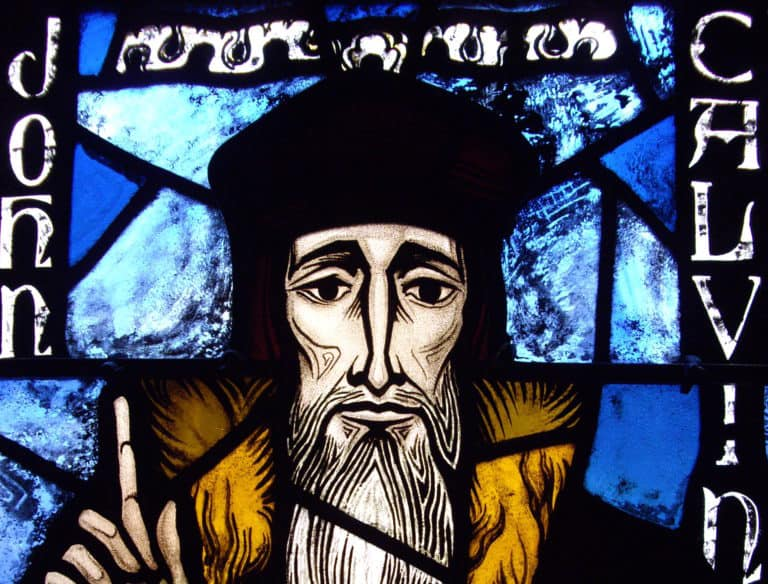
On the Theological Bogeyman of Calvinism

A few days ago, I posted a quote on my social media feed from the reformer John Calvin. Now, the quote in question said nothing about the doctrines or concepts that are usually associated with that name; actually, it had to with the usefulness of catechism in the transmission of the faith to the next generation. However, within a short amount of time, a recent acquaintance of mine messaged me with concern that if churches saw me posting quotes from this particular figure, then they would not ask me to preach. I am sure his concern was well intended, but since moving back to the Bible Belt five years ago, I have been constantly perplexed by the reactions that Calvin and his teaching seems to provoke.

On another occasion a few years ago, I was interviewing with a church in another state. They had received my resume from a state convention, and so they reached out to set up a virtual interview. After logging on, we exchanged pleasantries and said a word of prayer, but before asking me for my testimony or personal background, the first question they asked right out of the gate was “What do you believe about Calvinism?” Examples like this could be multiplied, but the fact remains that the slightest scent of affinity for John Calvin or for the doctrines known as “Calvinism” often provokes a visceral reaction in most churches in this area. There is a ubiquitous disdain for these concepts, especially in the more rural churches, and to be quite honest, it boggles my mind.

Reasonable disagreement on the question of God’s sovereignty and man’s ability when it comes to our salvation is understandable; this is a debate that has ebbed and flowed for the entire history of the church, but this kind of revulsion is simply beyond the pale. And so, in the space that remains, I would like to suggest four possible reasons for why rural Bible Belt Christians are so put off by so-called “Calvinism”.

First, there seems to be widespread misunderstanding when it comes what so-called “Calvinists” actually believe. Because of this, those beliefs are regularly mischaracterized and misrepresented in ways that no reasonable student of Reformed theology would ever agree with. Accusations that “Calvinists” do not believe in evangelism or that “Calvinism” makes God the author of sin are such tired critiques that they almost need no response. Answers to these questions and many more are readily available from reputable and godly scholars in both printed and electronic forms, but it is easier to label and dismiss someone’s beliefs than to listen and engage the merits of those beliefs. Whether you agree with the concepts or not, if you cannot explain those concepts in ways that their adherents would agree with, then you probably shouldn’t be critiquing them to begin with. As I have suggested in another post, this is how we show grace to those with whom we disagree.

Another reason why Bible Belt Christians harbor such vehement resentment for so-called “Calvinism” is that many rural churches have been hurt by pastors who held these beliefs in an unhealthy, unchristian manor. Time and time again, I have heard stories about how “Calvinism split our church”, and this absolutely saddens my soul. However, I would suggest that the essential cause of the pain had more to do with the character of the pastor in question and less to do with the theological concepts that he espoused. In most cases, “Calvinism” is simply a symptom of the problem, not the root cause. Pastors are called to the highest standards of Christlikeness, and a consistent attitude of combativeness or divisiveness driven by the nagging need to always be right should be a direct and immediate disqualification from pastoral ministry. The glaring absence of Christlikeness coupled with biased preaching that beats its preferred theological hobby horse every week, regardless of what it may be, is a recipe for heartache every time.

A third possible reason for the emotional overreaction to “Calvinism” in the Bible Belt might be linked to the lasting influence of Revivalism in this area. The theological example of men like Billy Graham and Adrian Rogers casts a long shadow over those who were directly influenced by their ministries. These were faithful, godly men whose proclamation of the Gospel led many to faith in Christ. For these Christians, the lasting memories of multi-night revivals with altars filled with throngs of people coming to faith in Christ represent the good ole’ days of the church. Even to this day, there is a deeply felt and inherent longing in many churches to experience those highs once again, and the assumption is that if we just preach the way that they preached, believe the way that they believed, program the way that they programmed, then we can reproduce the same results. Unfortunately, the culture has changed significantly since the heyday of these ministries, and the methods that worked then are unlikely to work in the same way now. However, as they did so well, so also must we proclaim the Gospel boldly and invite people to repent and believe, whatever that may look like.

Lastly, I think a final and more fundamental reason for the vitriolic reaction to so-called “Calvinism” has do with the conflict between the sovereignty of God and the ability of man. Again, my purpose is not answer that age old question, but simply to point out that the exaltation of God’s sovereignty, which is a basic principle in Reformed theology, is a direct affront to our own innate sinful desire to exalt ourselves. The suggestion that there is nothing that I can do to save myself or to turn myself toward God and away from sin apart from His gracious intervention is an insult to my own prideful sense of self. No one wants to admit that they are so deeply corrupted and enslaved to their own sin that they cannot lift themselves up by their own volitional, moral and spiritual effort. Except this is exactly what the Gospel teaches us. Whether we hold to the theology of so-called “Calvinism” or not, we must admit that we cannot, nay will not, save ourselves, even if we were given the opportunity. We are completely and totally dependent upon God to save us from sin and from ourselves, and this He did by sending His Son to die on the cross and rise again. This is what all Christians must believe.

In the final analysis, whether a person agrees or disagrees with John Calvin and his theology is not the point. We must be willing to listen to and learn from one another “as iron sharpens iron”; we must learn to discuss our differences with grace and understanding. And if we must disagree, then may the content of our disagreement be concerned with the Scriptures and with what they teach us about God and mankind, about sin and salvation, because these are the questions that matter in eternity. As our Lord Jesus said, “The time is fulfilled, and the kingdom of God has come near. Repent and believe the good news!” (Mark 1.15)


On Psalm 119.57-64 (Heth)

57 The Lord is my portion;
I have promised to keep your words.
58 I have sought your favor with all my heart;
be gracious to me according to your promise.
59 I thought about my ways
and turned my steps back to your decrees.
60 I hurried, not hesitating
to keep your commands.
61 Though the ropes of the wicked
were wrapped around me,
I did not forget your instruction.
62 I rise at midnight to thank you
for your righteous judgments.
63 I am a friend to all who fear you,
to those who keep your precepts.
64 Lord, the earth is filled with your faithful love;
teach me your statutes.

The eight stanza of Psalm 119 (ח/heth – sounds like the ch in Bach, you have to get a little phlegm in the back of your throat when you say it), but this stanza begins with the line “The Lord is my portion.” This is an image that occurs frequently throughout the Old Testament, and especially in the Book of Psalms. The word typically refers to a share or a portion of land received by inheritance. In an agrarian society like ancient Israel, owning land was a source of economic, political, and societal security. Those who owned land had standing and influence. But here, our psalmist affirms that the Lord is his portion. “The Lord” here (printed in all caps on most versions) represents the personal covenant name of God, i.e. יהוה, Yahweh; this is the name that He revealed to Moses from the burning bush, “I am who I am” (Exodus 3.14). In other words, our psalmist understands that Yahweh, the one true and living God, the personal covenant keeping God, is the only one in whom we may find safety, security, stability, satisfaction, and contentment in this life. As the old hymn goes, “All other ground is sinking sand.”

This principle is not unlike that famous slogan of pastor and author John Piper, “God is most glorified in us when we are most satisfied in Him.” Or as question 1 of the Westminster Shorter Catechism states, “Man’s chief end is to glorify God, and to enjoy Him forever.” This is the point, namely that glad and joyful obedience to the Word of God springs forth from a heart that is perfectly satisfied and wholly content in Him. This is why our psalmist says in verse 57, “I have promised to keep your words.” And again in verse 60, “I hurried, not hesitating to keep your commands.” And again in verse 62, I rise at midnight to thank you for your righteous judgments.” Of course, the counter point is equally true, that when we begin to look for sources of satisfaction and contentment outside of Him, we quickly fall into sin. The world we live in is constantly offering us a plethora of competing products and services intended to satisfy and fulfill; this is the essence of an advertisement rich consumeristic society. But, these options overpromise and under deliver, because nothing can satisfy and fill the deepest longings of the human heart like the God who made it. This is why our psalmist writes in verse 59, “I thought about my ways and turned my steps back to your decrees.” Or again in verse 61, Though the ropes of the wicked were wrapped around me, I did not forget your instruction.

But not only does this inner contentment in God free us from the allure of sinful temptations, but its also changes our entire outlook on life, as our psalmist writes in verse 64, “Lord, the earth is filled with your faithful love; teach me your statutes.” Of course, this world is polluted, even overrun, by sin everywhere we turn, such that even the stoutest of hearts might be shaken with fear, but when our hearts are completely secure in God, then we may have that rest which Jesus promised His disciples. Then, we may have confidence that sin is not the end of the story, that evil will not win the day, because we know that where sin abounds grace abounds even more, that where the darkness seems to consume, there the light of God’s grace and love can still shine through. And this hopeful confidence energizes the desire to live in faithful obedience. But more than that, it also empowers us to live in authentic community with others. As our psalmist puts it in verse 63, “I am a friend to all who fear you, to those who keep your precepts.” In other words, when we our hearts are completely whole in God, then we are set free to love others without the need to receive anything in return. We can love others for their sake and nor for our own, because we are complete in the love of Christ. This is the essential foundation for Christian community, that we love each other even as Christ loves us, and we can only do this when are completely satisfied and wholly loved in Christ by God.

Only that life which is lived in willing and fervent obedience to God’s Word can experience genuine human flourishing to the fullest degree, and this kind of obedience can only come from a heart that is perfectly content and satisfied in God and Him alone. As our psalmist writes in verse 58, “I have sought your favor with all my heart; be gracious to me according to your promise.” This is no works based attempt to merit God’s grace. Rather, it is the reflection of a heart that understands and trusts in the promise of God. It is the perspective of a soul that is perfectly at rest in the good news of the Gospel, that pursues faithful obedience to God and His Word from the wholeness that is only available by His grace. It is by grace because Christ has already completely fulfilled God’s law; He lived a life of perfect obedience to the Father. The good news of the gospel is that He has taken our disobedience upon himself, and in a glorious exchange, He has given us His obedient righteousness. And this is why He says, “Come to me, all of you who are weary and burdened, and I will give you rest. Take up my yoke and learn from me, because I am lowly and humble in heart, and you will find rest for your souls. For my yoke is easy and my burden is light.” (Matthew 11.28-30)

For further study:
Introduction
Psalm 119.1-8
Psalm 119.9-16
Psalm 119.17-24
Psalm 119.25-32
Psalm 119.33-40
Psalm 119.41-48
Psalm 119.49-56


Slow To Write

"let every person be quick to hear, slow to speak, slow to anger."

lovegavehope

Just another WordPress.com site

Jared Cornutt

Pastor | Speaker | Writer

Denny Burk

A commentary on theology, politics, and culture

G3 Ministries

Events + Resources for the Local Church

Biblical Reasoning

Biblical and Systematic Theology According to the Scriptures

RetroChristianity

Reclaiming the Forgotten Faith

SBC Voices

Southern Baptist News & Opinion

Lucid Theology

Thoughts on words, books, theology, and life.

Baptist21

A pastor-led voice for Baptists in the 21st century

Center For Baptist Renewal

The Personal and Professional Blog of Phillip Powers

The Pastor's Well - Pastor Well

The Personal and Professional Blog of Phillip Powers

Articles - AlbertMohler.com

The Personal and Professional Blog of Phillip Powers

The Gospel Coalition

The Personal and Professional Blog of Phillip Powers