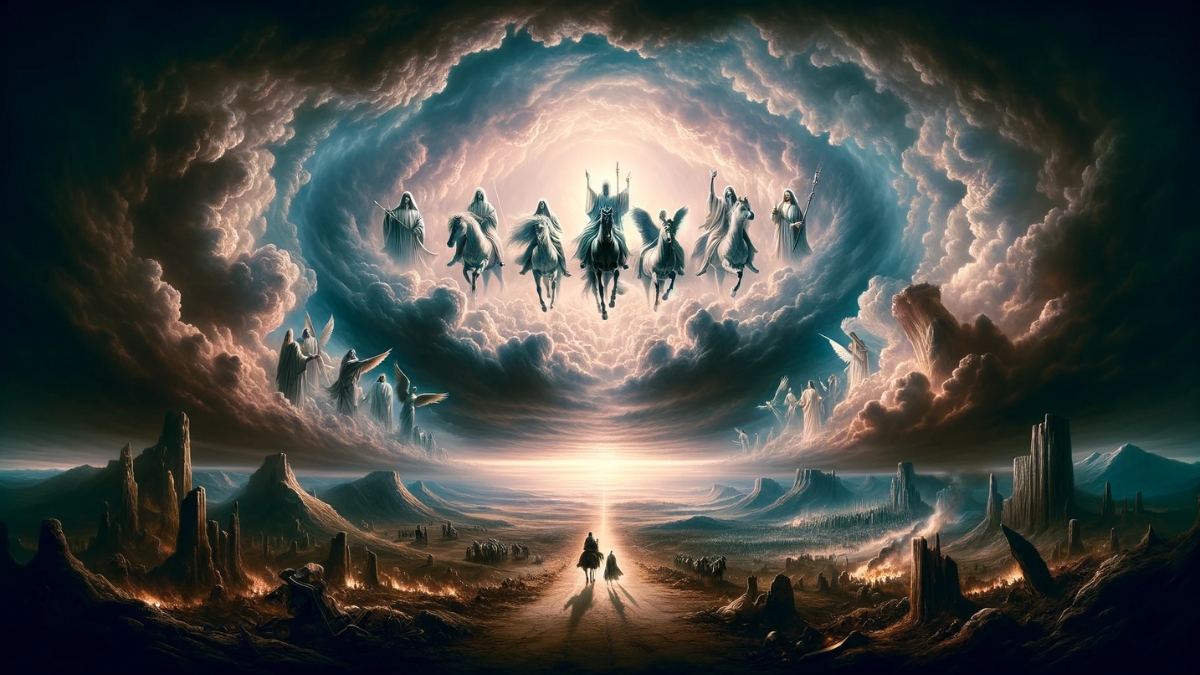
In a frequently repeated statement, Ernst Käsemann famously said that “Apocalyptic was the mother of all Christian theology.” Not as well-known is that two years later, Käsemann clarified what he actually meant by “apocalyptic”: for him, it referred to “eschatology,” or in his words, “the expectation of an imminent Parousia.” Personally, I would define apocalyptic eschatology a bit more broadly. Apocalyptic eschatology is the belief that this present age is irredeemably corrupted by sin, that God is coming to intervene in a final judgment on the wicked, and that at that time he will vindicate the righteous and deliver them into a new of age of eschatological salvation that is both personal in the sense of resurrection and cosmic in the sense of renewal. The question remains, however, as to how this perspective might rightly be considered to be the “mother of all Christian theology,” and in the space that remains, I would simply like to offer a few brief explanations for this claim.
First, apocalyptic eschatology revolves around the final, climactic visitation of God to the earth. In the Old Testament, this visitation was often referred to as “the Day of the Lord.” In fact, there were many “days of the Lord” in the Old Testament, all of which function as typological portends of the final Day of the Lord when God comes in eschatological glory and power. Christian theology believes that this final Day of the Lord began when God came to earth in the incarnate Lord Jesus Christ. He was to be called Emmanuel, which is translated “God with us.” (Matthew 1.23). And the Lord Jesus himself said of Jerusalem, “you did not recognize the time when God visited you.” (Luke 19.44) This is exactly the point, namely that the coming of Christ in his incarnation was the beginning of the apocalyptic visitation of God to the earth. Of course, we know that He is coming again in glory and power to bring to consummation that which he began in His first coming, but the point here is that in Christ, God himself came in climactic apocalyptic visitation.
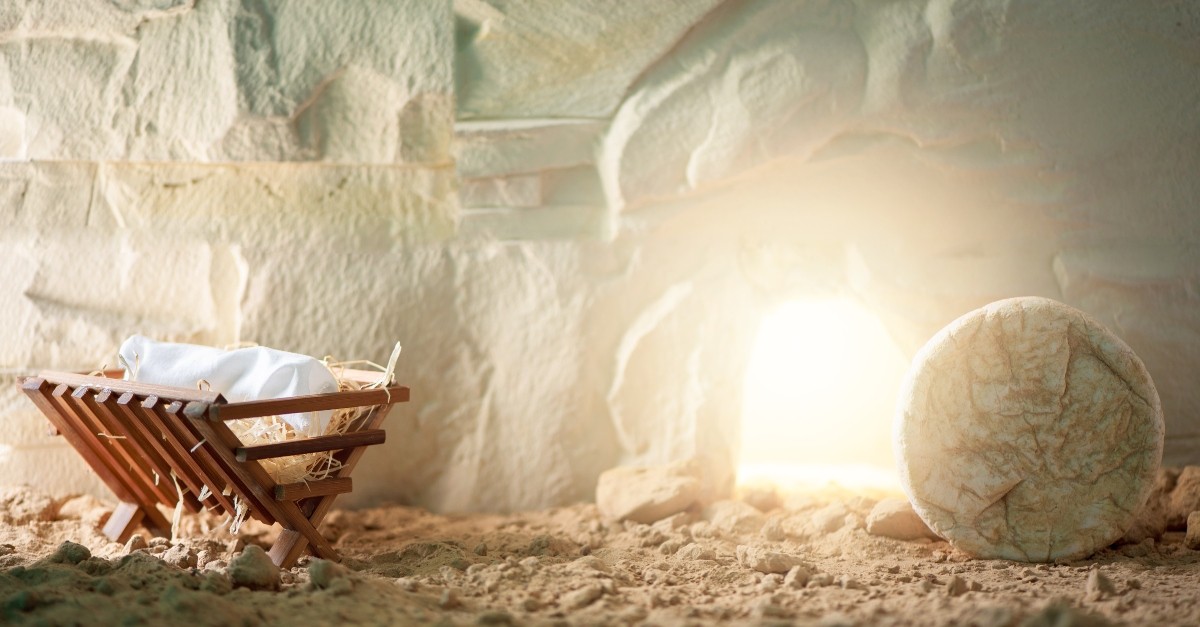
And this brings me to the second reason why apocalyptic eschatology is the mother of all Christian theology, namely that the first coming of Christ to the earth as a baby in a manger marked the beginning of the end of this corrupt present age. In New Testament theology, this is commonly referred to as the already and the not yet, namely that God’s plan for the final redemption of his people has already begun in Christ but it is not yet complete. Consequently, we live in this in between time of already and not yet, already saved, already filled with the eschatological spirit, already living under the blessings of God’s eschatological salvation in part, but we await the time when Christ will come again to consummate, or to bring to completion, that which he began by his death, resurrection and ascension. This is why Peter, in his Pentecost sermon, can say, “And it will be in the last days, says God, that I will pour out my Spirit on all people.” (Acts 2.17). The underlined phrase marks a change that Peter has applied to his source text (Joel 2.28), which simply says, “After this.” Peter understood that in Christ the last days had begun, and we have been living “in the [apocalyptic] last days” now for 2000 years.
But what about the final judgment of the wicked? Isn’t this something that is still yet future? How can we say that the apocalyptic judgment of the wicked began in Christ at his first coming? The answer is that this is exactly what we must say, as Jesus says in John 12.31-32, “Now is the judgment of this world. Now the ruler of this world will be cast out. As for me, if I am lifted up from the earth I will draw all people to myself.” The verb here, “lift up”, means to lift up on high, to exalt, or to raise to dignity and honor. This is why it is so ironic that John goes on to add the explanatory note, “He said this to indicate what kind of death he was about to die.” (John 12.33) The death of Jesus on the cross is nothing less than his enthronement. By his death, he judges the wickedness of this world and its ruler; He exposes the sinfulness and the ultimate fate of those that would reject him. This is why we can say that the final judgment began in Jesus, because a person’s response to the crucified and risen Christ will determine their eternal fate. In the death of Christ, judgment has begun, and it will be meted out when “the lamb who was slain,” as the Revelation calls him, returns in glory and power.
Finally, apocalyptic eschatology is the mother of all Christian theology because in Christ eschatological salvation has come. Salvation is inherently and irreducibly an eschatological concept. Saved from what, we might ask? We are saved from the eschatological wrath of God toward sin. And in Christ this salvation has broken into this present age and been made available to all those who respond to Christ in faith. This is why Peter refers to Joel’s prophecy to explain the coming of the Spirit at Pentecost, as we saw above. We have been filled with the eschatological Spirit, the seal and sign of the new age. We are new creatures, the fruit of a new creation, in Christ because of the Spirit. This is why the Apostle Paul can say, “Blessed is the God and Father of our Lord Jesus Christ, who has blessed us with every spiritual blessing in the heavens in Christ.” (Ephesians 1.3) Every spiritual blessing, every blessing of the age to come is already ours in Christ. We have been saved. We are being saved. And we will be saved. Apocalyptic salvation has already begun in Christ, and we are partakers of it by His indwelling Spirit.
So, I agree with the sentiments of Ernst Käsemann as expressed above. Apocalyptic eschatology is the mother of all Christian theology, because in Christ the apocalyptic visitation of God has come. All of the rest of our theology must be derived from this point, that the climactic work of God for the salvation of His people and His world has come in Christ. This is the Gospel; this is the good news of our salvation. In Christ, God himself has broken into this present age to redeem his people from their sin and set us free from its bondage, its corruption, even its very presence. And this is why we can have hope.
Full preterism, or consistent eschatology as it is sometimes called, is the belief that all of the Bible’s prophecies regarding the consummation of God’s plan for the redemption of humanity, including but not limited to the second coming of Jesus, the resurrection, final judgment, and the establishment of the new heavens and the new earth, occurred in 70 AD when the Romans destroyed the temple in Jerusalem. This event in their understanding marked the eschatological transition from the Old Covenant to the New Covenant, meaning that no further fulfillment is necessary. The new has come; it is really and truly here to its fullest extent. There is no need for any further act of God to complete his redemptive purposes in the world.
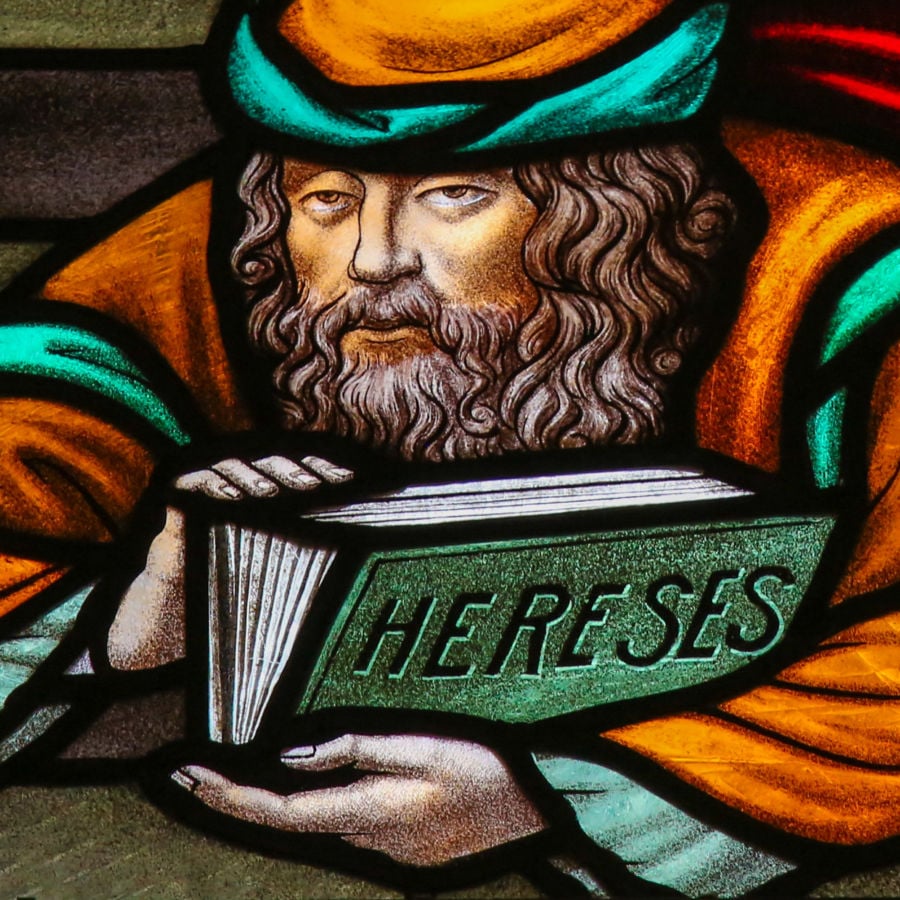
Now, let me be clear, this position is complete and utter heresy. It is a false gospel, because it denies the essential orthodox belief that “He will come again to judge the living and the dead” (Apostle’s Creed). It denies “the resurrection of the dead and the life of the world to come” (Nicene Creed). These denials among others put the views of full preterism wholly outside the boundaries of historic Christian orthodoxy. In the space that remains here, I would simply like to outline a few of the methodological and theological errors that are typical of this view, and then I will conclude by reaffirming the orthodox Christian hope.
The first error of full preterism is that they have a conspiracy theory view of hermeneutical method. In other words, their interpretations are based on a string of loosely related or even unrelated texts that are tied together by the occurrence of similar words. Of course, they would claim that they are following the principle of sola scriptura, namely that “scripture interprets scripture,” but I would submit that this is a theological conviction for biblical interpretation not a hermeneutical method for biblical interpretation. (See my post here). In stringing texts together the way that they do, they completely disregard concerns for the text’s historical and theological context and the author’s flow of thought. Instead, they flatten out the distinctive emphases of particular texts by smashing them together to say that same thing. More often than not, their exegesis comes across like someone throwing paint against a wall and then concluding they’ve painted Mona Lisa.
A second error of full preterism is that they hold to a gnostic view of the human person. Gnosticism is a heresy from the second century CE that suggests that Christ came to save us from this evil material world so that we could throw off the limits of our physical bodies and exist eternally as pure spirit. Of course, there is much more to it than this simple definition, but its weakness is that it disregards God’s design for human beings as embodied souls. We were made with a body and a soul, and to exist without either one of these is to be incomplete from the biblical point of view. This is why the resurrection of the body is such a primary doctrine; we are not merely transformed spiritually, we will be transformed physically when He comes again. Full preterism denies the future bodily resurrection of both the righteous and the wicked, and they suppose that when we die, we either go to heaven or hell to continue on as a “spiritual” being for eternity.
Thirdly, full preterism has an adoptionistic view of the incarnation. Adoptionism, or dynamic monarchianism, is a heresy from the third century CE that suggests that the divine logos came upon the man Jesus as his baptism, left him at his crucifixion, but then came upon him again at his resurrection. In other words, the man Jesus was “adopted” by God at his resurrection. The view of full preterism is not unlike adoptionistic Christology because they seem to believe the body of Jesus was only necessary during his earthly life. Often they suggest that his body was burnt up, or maybe it disappeared, at His ascension, so that He no longer has a body in heaven now. In other words, the son “adopted” a body for as long as he needed it, but then, when he no longer needed it, he discarded it. Along with the gnostic notions discussed above, this position negates the necessity of the resurrection. Why did Jesus even have to be resurrected from the dead with a body? Why not just rise as pure spirit? Here again, this view cannot explain the glorified body of Jesus, because it makes the incarnation temporary.
A fourth error that is part of the full preterist view is that they seem to have a fatalistic view of human history. Since they view this world as it is now as the “new heavens and new earth,” they have no expectation for any kind of renewal or transformation of the created order. According to this view, sin, death, disease, heartache, and the like will continue in perpetuity, eternally, without end. The only escape from the harsh realities of this world is when we die and go to heaven. But a renewed earth free of the corruption of sin and death is not in the purview of full preterism. This is fatalistic, because it essentially says that this is how the world is and this is how it will be. Nothing will ever get better, paradise will never be restored. Among others problems, this perspective denies the original purity and goodness of God’s creation and God’s intent to restore creation to that state of purity and goodness.
The final error that I see with full preterism, and perhaps the greatest, is that it offers a hopeless view of the Gospel. The reason for this is that it does not offer a final and full defeat of sin. Sure, the penalty of sin has been paid on the cross, and Satan has been defeated. But according to the full preterists, Satan and sin continue to run free forever. There is no final end to sin; there is no final defeat of Satan, no final judgment of the wicked. These things continue into perpetuity. The fact of the matter is that this is not the Gospel. Christ came, yes to pay the penalty for our sin, but also to free us from sin, and not only us, but the entirety of His creation. This is why the creation groans with yearning for the revelation of the sons of God (Romans 8.19-22). We look forward to a world that will be free of the domination and corruption of sin, free of the decay of death, where there will be no more tears, no more pains, no more heartaches. This is hope. This is the Gospel. And so we say, “Amen! Come, Lord Jesus!” (Revelation 22.20)
TEXT 7 “Are these things true?” the high priest asked.
2 “Brothers and fathers,” he replied, “listen: The God of glory appeared to our father Abraham when he was in Mesopotamia, before he settled in Haran, 3 and said to him: Leave your country and relatives, and come to the land that I will show you.4 “Then he left the land of the Chaldeans and settled in Haran. From there, after his father died, God had him move to this land in which you are now living. 5 He didn’t give him an inheritance in it—not even a foot of ground—but he promised to give it to him as a possession, and to his descendants after him, even though he was childless. 6 God spoke in this way: His descendants would be strangers in a foreign country, and they would enslave and oppress them for four hundred years.7 I will judge the nation that they will serve as slaves, God said. After this, they will come out and worship me in this place.8 And so he gave Abraham the covenant of circumcision. After this, he fathered Isaac and circumcised him on the eighth day. Isaac became the father of Jacob, and Jacob became the father of the twelve patriarchs.
9 “The patriarchs became jealous of Joseph and sold him into Egypt, but God was with him 10 and rescued him out of all his troubles. He gave him favor and wisdom in the sight of Pharaoh, king of Egypt, who appointed him ruler over Egypt and over his whole household. 11 Now a famine and great suffering came over all of Egypt and Canaan, and our ancestors could find no food. 12 When Jacob heard there was grain in Egypt, he sent our ancestors there the first time. 13 The second time, Joseph revealed himself to his brothers, and Joseph’s family became known to Pharaoh. 14 Joseph invited his father Jacob and all his relatives, seventy-five people in all, 15 and Jacob went down to Egypt. He and our ancestors died there, 16 were carried back to Shechem, and were placed in the tomb that Abraham had bought for a sum of silver from the sons of Hamor in Shechem.
17 “As the time was approaching to fulfill the promise that God had made to Abraham, the people flourished and multiplied in Egypt 18 until a different king who did not know Joseph ruled over Egypt. 19 He dealt deceitfully with our race and oppressed our ancestors by making them abandon their infants outside so that they wouldn’t survive. 20 At this time Moses was born, and he was beautiful in God’s sight. He was cared for in his father’s home for three months. 21 When he was put outside, Pharaoh’s daughter adopted and raised him as her own son. 22 So Moses was educated in all the wisdom of the Egyptians and was powerful in his speech and actions.
23 “When he was forty years old, he decided to visit his own people, the Israelites. 24 When he saw one of them being mistreated, he came to his rescue and avenged the oppressed man by striking down the Egyptian. 25 He assumed his people would understand that God would give them deliverance through him, but they did not understand. 26 The next day he showed up while they were fighting and tried to reconcile them peacefully, saying, ‘Men, you are brothers. Why are you mistreating each other?’ 27 “But the one who was mistreating his neighbor pushed Moses aside, saying: Who appointed you a ruler and a judge over us?28 Do you want to kill me, the same way you killed the Egyptian yesterday?
29 “When he heard this, Moses fled and became an exile in the land of Midian, where he became the father of two sons. 30 After forty years had passed, an angel appeared to him in the wilderness of Mount Sinai, in the flame of a burning bush. 31 When Moses saw it, he was amazed at the sight. As he was approaching to look at it, the voice of the Lord came: 32 I am the God of your ancestors—the God of Abraham, of Isaac, and of Jacob. Moses began to tremble and did not dare to look. 33 “The Lord said to him: Take off the sandals from your feet, because the place where you are standing is holy ground.34 I have certainly seen the oppression of my people in Egypt; I have heard their groaning and have come down to set them free. And now, come, I will send you to Egypt.35 “This Moses, whom they rejected when they said, Who appointed you a ruler and a judge?—this one God sent as a ruler and a deliverer through the angel who appeared to him in the bush. 36 This man led them out and performed wonders and signs in the land of Egypt, at the Red Sea, and in the wilderness for forty years.
37 “This is the Moses who said to the Israelites: Godwill raise up for you a prophet like me from among your brothers.38 He is the one who was in the assembly in the wilderness, with the angel who spoke to him on Mount Sinai, and with our ancestors. He received living oracles to give to us. 39 Our ancestors were unwilling to obey him. Instead, they pushed him aside, and in their hearts turned back to Egypt. 40 They told Aaron: Make us gods who will go before us. As for this Moses who brought us out of the land of Egypt, we don’t know what’s happened to him.41 They even made a calf in those days, offered sacrifice to the idol, and were celebrating what their hands had made. 42 God turned away and gave them up to worship the stars of heaven, as it is written in the book of the prophets: House of Israel, did you bring me offerings and sacrificesfor forty years in the wilderness?43 You took up the tent of Molochand the star of your god Rephan,the images that you made to worship.So I will send you into exile beyond Babylon.
44 “Our ancestors had the tabernacle of the testimony in the wilderness, just as he who spoke to Moses commanded him to make it according to the pattern he had seen. 45 Our ancestors in turn received it and with Joshua brought it in when they dispossessed the nations that God drove out before them, until the days of David. 46 He found favor in God’s sight and asked that he might provide a dwelling place for the God of Jacob. 47 It was Solomon, rather, who built him a house, 48 but the Most High does not dwell in sanctuaries made with hands, as the prophet says: 49 Heaven is my throne,and the earth my footstool.What sort of house will you build for me?says the Lord,or what will be my resting place?50 Did not my hand make all these things?
51 “You stiff-necked people with uncircumcised hearts and ears! You are always resisting the Holy Spirit. As your ancestors did, you do also. 52 Which of the prophets did your ancestors not persecute? They even killed those who foretold the coming of the Righteous One, whose betrayers and murderers you have now become. 53 You received the law under the direction of angels and yet have not kept it.”
~Acts 7.1-53
Title: On the Value and Relevance of the Old Testament Text: Acts 7.1-53 Series: The Book of Acts Church: Redeemer Baptist Church, Jonesboro, AR Date: April 7, 2024
The New Testament is clear that the Christian Gospel rises and falls on the historical factuality of this truth, that Jesus Christ truly lived, truly died, and truly rose again. There simply is no way around it; as the Apostle Paul writes, “If there is no resurrection of the dead, then not even Christ has been raised; and if Christ has not been raised, then our proclamation is in vain, and so is your faith. … And if Christ has not been raised, your faith is worthless; you are still in your sins.” (1 Cor 15.13-14, 17) Jesus had to truly die in our place to satisfy the wrath of God toward sin, and he had to truly be raised from the dead in victory over sin and death. The work of Christ in His death and resurrection is the means by which he secures our salvation; His death achieves for us our forgiveness, and His resurrections assures us of our life eternal.
However, the crucifixion and resurrection of Jesus is more than simply a historical event; it is more than merely a transaction between the Father and the Son. No, the logic of the Gospel is that the work of Christ in his crucifixion is the pattern for our life as well. By faith, we are united with Christ; we have died with him to sin and we have been raised with him in newness of life. (Romans 6.4-5) This is the logic of the Gospel, namely that His death becomes our death and his resurrection becomes our resurrection. In the space that follows, I would like to spend just a few brief moments reflecting on the implications of this essential principle of the Christian Gospel.
On the one hand, we participate in his death and resurrection spiritually, which means we experience it through the indwelling of His Holy Spirit. This happens at the point of conversion; when someone trusts in Christ, they die with Him to the tyranny and slavery of sin, they die with Him to the old self and its fleshly desires. “For we know that our old self was crucified with him so that the body ruled by sin might be rendered powerless so that we may no longer be enslaved to sin.” (Romans 6.6) Consequently, they are, then, indwelt by the Holy Spirit who gives life. As Paul goes on to write, “Now if Christ is in you, the body is dead because of sin, but the Spirit gives life because of righteousness.” (Romans 8.10) We are renewed and transformed by the Spirit that we might walk in righteousness and holiness before God and others in this life. This is what it means to be resurrected with Him spiritually; as Paul says elsewhere, “Therefore, if anyone is in Christ, he is a new creation; the old has passed away, and see, the new has come!” (2 Cor 5.17) This is the good news of the Gospel.
However, we must also affirm that we will participate in his death and resurrection physically. This is also essential to the logic of the Gospel. Death is the consequence of sin and its corruption in a fallen creation. As the author of Hebrews writes, “it is appointed for people to die once—and after this, judgment.” Every human being, saved and unsaved, will die physically, but those who die in Christ will also be resurrected physically. The Apostle Paul writes, “the dead in Christ will rise,” (1 Thess. 4.16) or again, “the dead will be raised incorruptible, and we will be changed.” (1 Cor 15.52) In the same way that he was raised in a glorified and perfected physical body, so also we will be raised in a glorified and perfected body. “We know that when he appears, we will be like him because we will see him as he is.” (1 John 3.2) This is the hope; this is the promise. This is the logic of the Gospel. “Just as we have borne the image of the man of dust, we will also bear the image of the man of heaven.” (1 Cor 15.49)
Of course, we may be tempted to conclude that the position that I have sketched out here is hopelessly illogical. How can it be possible that we must die and be raised both spiritually and physically? This seems like a contradiction in terms. How can Paul claim that we have been raised with Christ but then claim that we will one day be raised with Christ. I believe the answer to this apparent contradiction lies in the New Testament reality of the already and the not yet. In fact, I believe that this hermeneutical principle is fundamental for understanding the New Testament in general. In Christ, the last days have already been inaugurated. The fulfillment of God’s work of salvation has begun in the person and work of Christ. Christ has been raised from the dead as the “firstfruits”, and he has given us the eschatological indwelling of the Spirit. We already live the life of the age to come, aka eternal life, and we stand redeemed under the promise of the New Covenant.
And yet, we understand that the full consequences of the redeeming work of Christ have not yet been completely realized. We await the day when he will come again in power and glory to do away with sin once and for all, and it is then that we will be raised in glorified bodies. This is how the Apostle Paul describes the order of the resurrection, “Christ, the firstfruits; afterward, at his coming, those who belong to Christ.” (1 Cor 15.23) Yes, those who are in Christ by faith have already been made new; we are already regenerated by the indwelling Spirit,. But we await the day when our faith will be made sight. “We ourselves have the Spirit as the firstfruits, [yet] we also groan within ourselves, eagerly waiting for adoption, the redemption of our bodies.” (Romans 8.23) Christ is risen; he came up out of the grave – physically, bodily, gloriously, and one day we too will be raised from the dead physically, bodily, and gloriously.
The point of all this is to say that the inherent logic of Christ’s resurrection requires the physical bodily resurrection of believers. To deny this truth is to deny the gospel itself. We cannot have a gospel, we cannot have a salvation, we cannot have a redemption, that does not find its completion in the physical bodily resurrection of those who have been united with Christ by faith. One article I recently read sums up this truth by saying, “The end of the work of God, as regards man, is the glorification of his restored and sanctified nature—body and soul—in eternity. Without this, salvation and restitution would be incomplete. The adoption cannot be consummated without the redemption of the body.” Or to put it more sharply, a gospel that denies the physical resurrection of believers at the physical second coming of Christ is a false gospel, as the Apostle Paul would say, “If anyone is preaching to you a gospel contrary to what you received, a curse be on him!” (Galatians 1.9)
15 This is why, since I heard about your faith in the Lord Jesus and your love for all the saints, 16 I never stop giving thanks for you as I remember you in my prayers. 17 I pray that the God of our Lord Jesus Christ, the glorious Father, would give you the Spirit of wisdom and revelation in the knowledge of him. 18 I pray that the eyes of your heart may be enlightened so that you may know what is the hope of his calling, what is the wealth of his glorious inheritance in the saints, 19 and what is the immeasurable greatness of his power toward us who believe, according to the mighty working of his strength.
20 He exercised this power in Christ by raising him from the dead and seating him at his right hand in the heavens— 21 far above every ruler and authority, power and dominion, and every title given, not only in this age but also in the one to come. 22 And he subjected everything under his feet and appointed him as head over everything for the church, 23 which is his body, the fullness of the one who fills all things in every way.
~Ephesians 1.15-23
Title: On the Ground of Christian Hope Text: Ephesians 1.15-23 Series: The Letter to the Ephesians Church: South Caraway Baptist Church, Jonesboro, AR Date: May 28, 2023
1 Paul, an apostle of Christ Jesus by God’s will: To the faithful saints in Christ Jesus at Ephesus. 2 Grace to you and peace from God our Father and the Lord Jesus Christ.
~Ephesians 1.1-2
Title: On a Historical, Literary, and Theological Overview of Ephesians Text: Ephesians 1.1-2 Series: The Letter to the Ephesians Church: South Caraway Baptist Church, Jonesboro, AR Date: April 30, 2023
The events of Holy Week stand as the climax of the public ministry of Jesus in the Gospel accounts. All four of the Gospel writers devote almost half of their material to these events. Clearly, they intended for this story to stand at the center of our reflection on the person and work of Jesus. However, for most modern Christians, the events of Holy Week receive only a passing nod. Of course, we look forward to Easter and the cultural dressings that accompany it, and most churches emphasize the resurrection of Jesus on Easter Sunday, whether through song, sermon, or drama. But other than that, the final week of our Lord’s life mostly goes unacknowledged in the reflection and devotion of many people who call themselves His followers. As the Apostle James would say, “My brothers and sisters, these things should not be this way.” (James 3.10) The person and work of our Lord Jesus Christ should be the central focus of our reflection, not only during Holy Week, but every week of the year, because He is the never ending source of the sustaining grace that we need to live as His followers. So, in the space that follows, I would like to briefly sketch out the daily events of Holy week, so that we may grow in our understanding of what He accomplished on our behalf.
Palm Sunday On Palm Sunday, Jesus made His triumphant entry into Jerusalem. This was His official presentation before the Jerusalem religious establishment as the long-awaited Messianic King. Matthew informs us that this event is the fulfillment of the prophecy of Zechariah 9.9 (Matthew 21.4-5), and we have this confirmed by the shouts of the Galilean pilgrims who sang “Hosanna” (Mark 11.9-10). However, as elated and joyous as the crowds were that day, we know that there is darkness on the horizon. Even as He was approaching the Holy City, He paused to weep over their lack of faith (Luke 19.41-44). It is likely that many of those who joined in the procession that day expected that this would be the day when Jesus would overthrow the Romans and establish Israel as an independent kingdom, and yet His disciples knew that He had already predicted three times that He would be crucified in Jerusalem. So, even as the disciples celebrated the arrival of Messiah, they waited with bated breath as His public ministry began to approach its primary purpose.
Monday The last thing Jesus did on Sunday before retiring to Bethany for the night was to inspect the Temple (Mark 11.11), and in the subsequent scenes, the Gospel writers make it clear what He found there. On Monday, as they were heading back into the city, Jesus happened upon a fig tree that appeared to be fruitful, but finding it empty, He cursed it. It subsequently withered. In between these scenes, we have the familiar story of the temple cleansing. The implication is clear; the temple (and the Jerusalem religious establishment that it represents) was fruitless and empty. Though it had all the right external dressings, it was empty of any and all spiritual substance. And so, in what can only be described as a public act of prophetic judgment, Jesus clears the temple and begins to teach the people. This act was the final straw for the Jewish religious leaders, and from that point on, they began to look intently for a way to kill Him.
Tuesday, the “Day of Controversy” On Tuesday of His passion, Jesus returned to the “scene of the crime”, so to speak, and as He was walking through the Temple, various factions representing the leadership of the Jewish religious establishment began to question him. The first question that they ask is the most telling and sets the tone for the rest of the day. “By what authority are you doing these things? Who gave you this authority to do these things?” they asked, in what was clearly an accusatory manor. It is obvious that their questions were not in earnest, and each successive interaction reveals their scheme with more clarity. But as the “Day of Controversy” unfolds, Jesus ably avoids their traps, and in the process, He exposes the true nature of their problem. Time and again, He brings the discussion back to the Scriptures, exposing the stubborn refusal of His opponents to submit to their authority. In other words, their problem is not with Him per se; rather, it is with the authority of God which He represents as Messiah. His is an authority that they all but refuse to submit to, and it is this refusal that ultimately provokes Jesus to condemn of the Temple and all that it represents in the Olivet Discourse. In this discourse, Jesus turns the attention of His disciples away from the religious, political, and nationalistic hopes of the Jewish religious establishment to a hope that culminates in His return in glory to establish the Kingdom of God once and for all.
“Silent” Wednesday Wednesday of Holy Week is known as “Silent Wednesday”, because the Gospels are practically silent as to the activity of Jesus and the Disciples on that day. It is most likely that they spent the day in Bethany with Mary, Martha, and Lazarus enjoying the limited time that they had left to be together. It is also likely that it was on this Wednesday, as they were sharing a meal together in the home of Simon the Leper, that the woman with the alabaster jar came to anoint Jesus (Mark 14.3-10). Immediately, Judas raised the alarm that this valuable commodity had been wasted when it could have been sold and the profits given to the poor. But, when his concerns were seemingly dismissed by Jesus, it was the final straw. Apparently, this event was the breaking point for Judas, and immediately, he went out to plot with the Jewish religious leaders to betray Jesus for 30 pieces of silver. This is why this day is also known as “Spy” Wednesday.
Maundy Thursday (See also “On Maundy Thursday”) On Thursday morning, Jesus instructed His disciples on where they could prepare to celebrate the Passover, and later that evening, Jesus arrived at the location where He would celebrate His Last Supper with them. The evening began with Jesus donning the apparel of a servant and washing the disciples feet. Using this action as an object lesson, Jesus went on to teach them in the Upper Room Discourse (John 13-17) about a New Commandment, “that you should love one another.” This is why we call it “Maundy” Thursday; the name comes from the Latin mandatum which means command, “a new commandment.” During the course of the evening, Jesus predicted that the disciples would betray Him (even Peter would do so three times before the rooster crowed), and Judas left to prepare for his act of betrayal. The evening concluded with the sharing of the bread and cup as symbols of His body that was about to be broken and His blood that was about to be shed for the forgiveness of sins as the inauguration of the New Covenant. After their meal, they adjourned to the Garden of Gethsemane, and while the disciples slept, Jesus prayed three times that “this cup” (by which He meant His passion) would pass from Him. Shortly thereafter, the mob arrived, Judas completed his betrayal with a kiss, and Jesus was arrested.
Good Friday After His arrest, Jesus was carried away to the house of the High Priest where He was subjected to a sham trial in the darkness of night. The fix was in, as they say, as one by one witnesses were brought in to make false accusations against Him, and yet, throughout it all, He remained quiet. At first light, they brought Him before the Roman authorities, because the Jewish religious leaders lacked the authority to put anyone to death, and after being examined and found innocent by both Pontius Pilate and Herod Antipas, the religious leaders stirred up the crowd to call for His death. So, Pilate offered them a choice; he would release Barabbas the murderer or Jesus, the so-called King of the Jews. Again, the religious leaders stirred up the crowd, and they called for the release of Barabbas and for the crucifixion of Jesus. Pilate gave them what they asked for; he turned Jesus over to the Romans soldiers to be mocked and beaten, and then they led him away to be crucified. At the top of Golgotha, they nailed him to a cross and crucified him between two criminals. The soldiers cast lots for His clothes, and the Jewish religious leaders mocked him. At about three in the afternoon, He cried out with a loud voice “It is finished” and yielded up His Spirit to His Father. The Roman soldiers pierced His side with a spear to confirm that He was dead. Joseph of Arimathea requested His body and buried it in his own personal tomb before the start of the Sabbath at sundown.
Holy Saturday The Gospels are mostly silent as to the details of Holy Saturday. Of course, it was the Jewish sabbath, a day dedicated to rest and to the worship of God, but for the followers of Jesus, this day was probably not very restful, to say the least. After all, they had just watched in horror as their beloved Master was wrongfully accused, unjustly convicted, and tragically executed. Jesus was dead, and it appeared that all their hopes had died with Him. He was supposed to be the Messiah, the prophesied and anointed King who would establish the Kingdom of God on earth, and He had been murdered, seemingly defeated by the worldly powers that be. Sure, he had predicted His own death and resurrection, but it is clear that they had no understanding of what that might mean until after all these things had taken place. On this Saturday, they were most likely overcome with grief and despair, and on top of that, there was the fear that what happened to Him might yet happen to them as well. And so, it is most likely that they spent the day locked behind closed doors cowering in terror. It was a dark day indeed, and yet, we know looking back that His death would not be the final word, that light and hope were still on the horizon. But this is the nature of Christian discipleship; sometimes we must endure the depths of the darkness before we ever begin to see the light of hope.
Resurrection Sunday On the first day of the week, Sunday morning, at daybreak, Mary Magdalene, Mary the mother of James, and Salome went to the tomb to anoint His body for burial; there hadn’t been time to do so on Friday due to the haste of getting Him buried before the start of the Sabbath. As they made their way to the tomb, they began to wonder how they might roll the stone away. However, when they arrived, they found the stone had already been rolled away, and when they looked inside the tomb, they were met by an angelic being who informed them of what had taken place. “Don’t be alarmed,” he told them. “You are looking for Jesus of Nazareth, who was crucified. He has risen! He is not here.” (Mark 16.6) Immediately, and with the angel’s express instruction, they returned to the city to inform the disciples of what they had seen. Of course, Peter, along with John ran off to see it for themselves, and finding it as the women had said, they were amazed at what this could mean. But Mary Magdalene stayed behind at the tomb, crying and confused. A man approached her, and at first, she did not recognize Him, assuming Him to be the gardener. “Sir, if you’ve carried him away, tell me where you’ve put him, and I will take him away.” (John 20.15) But when He called her by name, she immediately understood that this man was none other than her Lord and Savior. Later that day, He appeared to all of them in the upper room, even though the door was still locked, comforted them with the peace of His presence, and commissioned them to proclaim all that they had seen and heard.
If you are like me, and you have been raised in church, this may seem like the same ole’ story that has been told and retold too many times to count, but we must remember that this is the greatest story that has ever been told. These events are the pendulum upon which the course and destiny of human history hangs. The story of Jesus, especially His death and resurrection, are the foundation of God’s redemptive work in the world, and it is the very soul of our salvation. As followers of Jesus, we must never tire of hearing it, telling it, reading it, and singing it; we must never cease to be amazed at the wondrous work of Jesus on our behalf. And so this Holy week, let us echo the words of that great hymn writer, who wrote,
Tell me the story of Jesus Write on my heart every word Tell me the story most precious Sweetest that ever was heard
When it comes to a church’s life together, there are two pillars around which the rest of the annual calendar swings, i.e. Christmas and Easter. These are the high points in the church’s worship every year. Many churches still commemorate these holidays with special programs, musical and dramatic presentations of the Biblical story, and a focus on inviting the community in for high attendance, after all these are the only days that the CEOs come to church anyway (Christmas and Easter Onlys). It is clear that these holidays hold a special place in the devotion of most Christians. They focus our reflection on the primary movements of the story of redemption, how God the Son came to earth incarnate as a baby in a manger and how he died on the cross for sin and rose again some thirty years later. Even though they are mostly overcome by the cultural consumerism that so obviously characterizes our society these days, they are still a meaningful season in the worship of the church.
However, the question remains, “why do we celebrate these annual holidays anyway?” After all, there is no explicit command in the Scriptures to commemorate the nativity and/or the passion of our Lord Jesus Christ annually by a special holiday. In the New Testament, the church’s worship moved away from the annual calendar marked by special holidays and feasts that characterized the worship of the Jews in the Old Testament, and they moved to a weekly calendar marked by the gathering of the saints on the Lord’s Day for the preaching of the Word and the breaking of bread. Further, the Regulative Principle for Worship (RPW) states that only those elements that are clearly prescribed in the Scriptures should be included in the church’s worship. A strict application of this principle would mean that since Christmas and Easter are not explicitly prescribed by the New Testament, then we are in error when we make them a primary emphasis or central component in our devotion and worship, whether corporately or individually.
We do know that the church began to celebrate these holidays fairly early on in her existence. Within a century or so of the life and death of Jesus and His first followers, the church began to include these annual feasts as a regular part of the worship calendar. Of course, critics often suggest that these festivals were borrowed and adapted from the pagan world; however, these criticisms tend to fall apart quickly under close historical scrutiny. After examining the evidence, one author recently concluded that “no modern Christmas [or Easter] tradition can draw a straight line to any clear and decisive pagan origin.” While there has certainly been growth over the centuries in the lore and cultural traditions that surround these holidays, none of this is original and/or essential to the Christian celebration of them. Rather, it is evident that Christians recognized very early on in their history how important it was to commemorate the two decisive moments in redemptive history, namely the birth and death/resurrection of the one who is called Christ.
Of course, tradition alone is not a sufficient enough reason to justify the continued celebration of Christmas and Easter, but neither is it a sufficient reason for discontinuing the observance of them either. All traditions are not bad; in fact, some are quite helpful in the formation of our faith and practice. I have previously written on the question of tradition here, but suffice it to say that there is great wisdom in learning from the faith and practice of our Christian forebears, both from what they did well and from what they did not do well. So, perhaps the proper question should not be whether the celebration of Christmas and Easter is right or wrong, but whether it is wise and good. Does the annual observance of these holidays have spiritual value for the growth of the followers of Jesus in conformity to His image? And if this is the question, then we must answer in the affirmative. The fact of the matter is that we are a people who are quick to forget, quick to move on, quick to believe that we have outgrown our need for the Gospel. But there is nothing more foundational, nothing more crucial, for our formation in Christlikeness than to be reminded regularly of exactly what Christ has done on our behalf.
His incarnation and resurrection are the primary aspects of His redemptive work; they tell the story of how God the Son came to earth as a child, lived a sinless life, died on the cross for sin, and then rose again. In fact, the Apostle Paul instructs us in Second Timothy, chapter 2, verse 8, “Remember Jesus Christ, risen from the dead and descended from David, according to my gospel.” Or again, in the Letter to the Romans, that Jesus Christ “was a descendant of David according to the flesh and was appointed to be the powerful Son of God according to the Spirit of holiness by the resurrection of the dead.” Throughout the New Testament, these movements – the incarnation and the resurrection – are the hinge pins upon which the Gospel swings. And as followers of Jesus, we take great joy in celebrating these glorious acts of redemption each and every year, because it reminds us of the beautiful salvation that we have in Christ. It reminds us who we are, and it reminds us of why we are here. The church is a body of believers whose existence and purpose are defined by the redemptive work of God in Christ. Therefore, it is right and good that we celebrate these movements of God’s grace, not only every week, but as a matter of purposeful reflection every year on Christmas and Easter.
This, however, would seem to be the challenge in our modern culture, focusing our worship on Christ during these holidays and not becoming distracted by the cultural baggage that is so obviously associated with them. Just last month, I was chided vociferously on social media for suggesting that Santa Claus is neither necessary nor useful in the Christian enjoyment of the Christmas holiday. It would seem that in this particular cultural milieu Christians will need to be purposeful and strategic in how they celebrate going forward. We must make it clear that Christmas and Easter are about Christ and Christ alone, and if that means dispensing with some of the traditional festivities that have become associated with these holidays, then so be it. The celebration of Christmas and Easter should be a time when those who follow Jesus can celebrate anew the wonder and glory of what Christ has done for us in the Gospel. May we never grow tired of celebrating this timeless story each and every year.
21 Then Peter approached him and asked, “Lord, how many times must I forgive my brother or sister who sins against me? As many as seven times?” 22 “I tell you, not as many as seven,” Jesus replied, “but seventy times seven.
23 “For this reason, the kingdom of heaven can be compared to a king who wanted to settle accounts with his servants. 24 When he began to settle accounts, one who owed ten thousand talents was brought before him. 25 Since he did not have the money to pay it back, his master commanded that he, his wife, his children, and everything he had be sold to pay the debt. 26 “At this, the servant fell facedown before him and said, ‘Be patient with me, and I will pay you everything.’ 27 Then the master of that servant had compassion, released him, and forgave him the loan.
28 “That servant went out and found one of his fellow servants who owed him a hundred denarii. He grabbed him, started choking him, and said, ‘Pay what you owe!’ 29 “At this, his fellow servant fell down and began begging him, ‘Be patient with me, and I will pay you back.’ 30 But he wasn’t willing. Instead, he went and threw him into prison until he could pay what was owed.
31 When the other servants saw what had taken place, they were deeply distressed and went and reported to their master everything that had happened. 32 Then, after he had summoned him, his master said to him, ‘You wicked servant! I forgave you all that debt because you begged me. 33 Shouldn’t you also have had mercy on your fellow servant, as I had mercy on you?’ 34 And because he was angry, his master handed him over to the jailers to be tortured until he could pay everything that was owed. 35 So also my heavenly Father will do to you unless every one of you forgives his brother or sister from your heart.”
Text: Matthew 18.21-35 Series: Supply Preaching Church: Fellowship Baptist Church, Marion, AR Date: September 11, 2022
The study of Eschatology in the church is usually met with two distinct responses. On the one hand, some become so consumed with an over fascination that it drives them to unhealthy speculations, and on the other hand, others are so filled with apathy and distaste that they would rather neglect its doctrines altogether. Recently, I heard about one church that spent eighteen months studying the Book of Revelation, and there is nothing wrong with that per se. However, to the external observer, it could appear as if this subject is more important than the Gospel itself. This is perhaps part of the reason why this area of theological reflection is so often met with such varied and disparate responses; we have failed to demonstrate clearly how these truths are connected to the saving work that God has accomplished in and through His Son, Jesus Christ. We have become so bogged down in controversial matters like tribulations, raptures, millenniums, antichrists, and the like, that we have lost the point that these events bring the promises of the Gospel to completion.
At its core, the Gospel is about how God has solved, is solving, and will solve the problem of sin. Of course, sin is first and foremost a personal individual problem; human beings are corrupted by and enslaved to sin, and because of this, they deserve to spend eternity in hell under the wrath of God. However, in the Gospel, Jesus Christ took upon himself the punishment that we deserve; He died in our place, satisfied the wrath of God, and declared, “It is finished!” Now, by grace through faith in Him, we are forgiven of our sin, clothed in His righteousness, and promised eternal life. But sin is also a cosmic problem, because all of creation has been polluted by and cursed because of sin. As the Scriptures explain,
For the creation eagerly waits with anticipation for God’s sons to be revealed. For the creation was subjected to futility—not willingly, but because of him who subjected it—in the hope that the creation itself will also be set free from the bondage to decay into the glorious freedom of God’s children.
~Romans 8.19-21
In the beginning, when God created the world, all was very good, but with the fall of mankind, sin and its consequences have hopelessly poisoned God’s good creation. This world reeks with the stench of death and decay; where there was once life and beauty, there is now sickness and death. But in the gospel, God is making all things new; he is restoring and recreating the paradise that was lost. In the Book of Revelation, chapters 21-22, we read of a new heaven and new earth which is completely free of sickness and death, heartache and pain, tear and loss. It is a world that is completely free from the stain of sin in every way. It is not just the Garden of Eden restored, it is the Garden of Eden made better.
In other words, the Gospel is inherently and irreducibly eschatological, because not only have we been set free from the penalty of sin, not only are we being set free from the power of sin, but one day we will be set free from the very presence of sin. Until then, we live in the tension of the already but not yet, already forgiven of our sin, already free from sin’s tyranny, but not yet free from its temptations and habituations in our daily lives. We rightly long for the day when the problem of sin and its effects will be no more; this is our blessed hope. And this is why the study of Eschatology should not be viewed as a distraction from the proclamation of the Gospel. On the contrary, the doctrines of Eschatology are so intricately and intimately woven into the fabric of the Gospel, that if we neglect or ignore them, we truncate the Gospel message, empty it of its power, misconstrue the nature of its promises.
This is not to say that the study of Eschatology is always done correctly. Certainly, there are many who have engaged this subject matter in improper or unhealthy ways that have shifted the focus or missed the mark. Eschatology is one of those areas in the study of which it is possible to miss the forest for the trees. There are many details and questions that fall into this category that could become a distraction. However, this does not mean that we should omit the study of it altogether, because Eschatology is fundamentally about hope, the hope of a world free from sin. This is the wonder of our salvation, not only that we have been forgiven of our sin and have received eternal life, but that the work of Christ in salvation has put something into motion that will completely transform the world as we know it.
For the grace of God has appeared, bringing salvation for all people, instructing us to deny godlessness and worldly lusts and to live in a sensible, righteous, and godly way in the present age, while we wait for the blessed hope, the appearing of the glory of our great God and Savior, Jesus Christ.