6 If you point these things out to the brothers and sisters, you will be a good servant of Christ Jesus, nourished by the words of the faith and the good teaching that you have followed. 7 But have nothing to do with pointless and silly myths. Rather, train yourself in godliness.8 For the training of the body has limited benefit, but godliness is beneficial in every way, since it holds promise for the present life and also for the life to come. 9 This saying is trustworthy and deserves full acceptance. 10 For this reason we labor and strive, because we have put our hope in the living God, who is the Savior of all people, especially of those who believe.
~1 Timothy 3.14-16
Title: On Our Training for Godliness Text: 1 Timothy 4.6-10 Series: 1 Timothy: God’s Design for a Healthy Church Church: Redeemer Baptist Church, Jonesboro, AR Date: October 19, 2025
14 I write these things to you, hoping to come to you soon. 15 But if I should be delayed, I have written so that you will know how people ought to conduct themselves in God’s household, which is the church of the living God, the pillar and foundation of the truth. 16 And most certainly, the mystery of godliness is great:
He was manifested in the flesh, vindicated in the Spirit, seen by angels, preached among the nations, believed on in the world, taken up in glory.
~1 Timothy 3.14-16
Title: On Our Conduct in the Local Church Text: 1 Timothy 3.14-16 Series: 1 Timothy: God’s Design for a Healthy Church Church: Redeemer Baptist Church, Jonesboro, AR Date: October 5, 2025
Thirty-some years ago, the Christian band D.C. Talk released a song entitled “Luv is a verb”; it was a song that resonated with the biblical truth that love is more than simply a feeling. Genuine love, true biblical love is demonstrated through acts of giving and service, putting the needs of others before our own, and seeking their good as a matter of first priority. As we read in Romans 5.8, “But God proves his own love for us in that while we were still sinners, Christ died for us.” Or again, in 1 John 4.10, “Love consists in this: not that we loved God, but that he loved us and sent his Son to be the atoning sacrifice for our sins.” Or even in the most memorable of verses, in John 3.16, “For God loved the world in this way: He gave his one and only Son, so that everyone who believes in him will not perish but have eternal life.” The love of God toward sinners is the exemplar par excellence of true love. He loves, and so he gave. He acted for the good of those he loved, even when they didn’t love him. It is a love that is unconditional and undeserved, and it is a love that acts. Love, true biblical love, is indeed a actoin. It is a verb.
Of course, this understanding of love stands in stark contradiction to the sentiments of popular culture. For many, love is a feeling. It is something that is primarily felt in the warm fuzzies of attraction and desire. It is sensual, passionate, and oftentimes fleeting. People fall out of love just as easily and as quickly as the fall into love. The feelings of love ebb and flow like the tides of the ocean, and the more the feelings of love wane in a relationship, the more desperately we chase them. “Follow you’re heart”, we are told, but the scriptures remind us that our hearts are deceitful and wicked (Jeremiah 17.9). Christians rightly react to the idea that love is no more than an emotion. Love is commitment, love is service, love is a choice. Love is something we are called to give even if it is not returned in kind. We are called to love each other, even to love our enemies.
However, I think that this contrast sets up a false dichotomy. It is true that love is more than a mere emotion, but it is certainly not less than that. Emotions are good; they are God-given capacities, part of what it means to be made in the image of God. Even God has emotions, though His are perfect and completely without sin or selfishness. He is compassionate, merciful, gracious, and loving. “God is love” (1 John 4.8). Our emotions are a good and essential part of what makes us human, but as with our other capacities, they are fallen, corrupted by the sin. But they should not be rejected as if they are sinful in and of themselves, or somehow illegitimate partners in our sanctification. Just like our other human capacities, they need to be redeemed, reordered, transformed by the Spirit. This is why one of the fruit of the Spirit is, among others, love.
Therefore, I would submit that true biblical love is both action and affection; it is both something that we do and something that we feel. Of course, the question must be raised regarding what to do when we just aren’t feeling. Are we still required to love when the affections aren’t there. I would suggest yes, because, contrary to cultural sentiments, our emotions are not to be our guiding principle. We submit our emotions to the Word of God, to the work of the Spirit, such that they begin to follow our volition. So, yes, we are called to love others through acts of self-giving service and sacrifice, but we are also called to like others, as well. This, too, is part of the biblical command to love.
But how would this relate to a command like we find in Matthew 5.44, where we read, “But I tell you, love your enemies and pray for those who persecute you.” In this case, I think we have to be reminded that “our struggle is not against flesh and blood, but against the rulers, against the authorities, against the cosmic powers of this darkness, against evil, spiritual forces in the heavens.” (Ephesians 6.12). Our “enemies” are human beings made in the image of God who are enslaved and corrupted by sin, and but by the grace of God, there go we. So, we can have compassion and empathy for those who oppose us. We don’t have to agree with them or condone their actions; we don’t have to lower our defenses and pretend like no separation exists between us. But we cannot hate them outright; we cannot wish for their pain and destruction all the while trying to love them through acts of service and sacrifice. We must have some level of compassion and empathy, even for those who we consider “enemies”, because they too are made in the image of God. They have dignity, value, and worth, and we must loving actions toward them must be grounded in compassion rather than anger and animosity.
The point here is that feelings follow actions. If we set ourselves to love others through acts of service, I think we will be amazed at the affections that will well up for them in our hearts. No, biblical love is not some dry, emotionless, unfeeling command that we are called to obey. We are called to obey, but to do so holistically, with our whole selves. As Jesus reminds us, the greatest commandments are these, to “love the Lord your God with all your heart, with all your soul, and with all your mind” and to “love your neighbor as yourself.” (Matthew 22.37-40) When we do this, we will find ourselves become more and more like the one who is love in himself. So, “Dear friends, let us love one another, because love is from God, and everyone who loves has been born of God and knows God. The one who does not love does not know God, because God is love.” (1 John 4.7-8)
In a frequently repeated statement, Ernst Käsemann famously said that “Apocalyptic was the mother of all Christian theology.” Not as well-known is that two years later, Käsemann clarified what he actually meant by “apocalyptic”: for him, it referred to “eschatology,” or in his words, “the expectation of an imminent Parousia.” Personally, I would define apocalyptic eschatology a bit more broadly. Apocalyptic eschatology is the belief that this present age is irredeemably corrupted by sin, that God is coming to intervene in a final judgment on the wicked, and that at that time he will vindicate the righteous and deliver them into a new of age of eschatological salvation that is both personal in the sense of resurrection and cosmic in the sense of renewal. The question remains, however, as to how this perspective might rightly be considered to be the “mother of all Christian theology,” and in the space that remains, I would simply like to offer a few brief explanations for this claim.
First, apocalyptic eschatology revolves around the final, climactic visitation of God to the earth. In the Old Testament, this visitation was often referred to as “the Day of the Lord.” In fact, there were many “days of the Lord” in the Old Testament, all of which function as typological portends of the final Day of the Lord when God comes in eschatological glory and power. Christian theology believes that this final Day of the Lord began when God came to earth in the incarnate Lord Jesus Christ. He was to be called Emmanuel, which is translated “God with us.” (Matthew 1.23). And the Lord Jesus himself said of Jerusalem, “you did not recognize the time when God visited you.” (Luke 19.44) This is exactly the point, namely that the coming of Christ in his incarnation was the beginning of the apocalyptic visitation of God to the earth. Of course, we know that He is coming again in glory and power to bring to consummation that which he began in His first coming, but the point here is that in Christ, God himself came in climactic apocalyptic visitation.
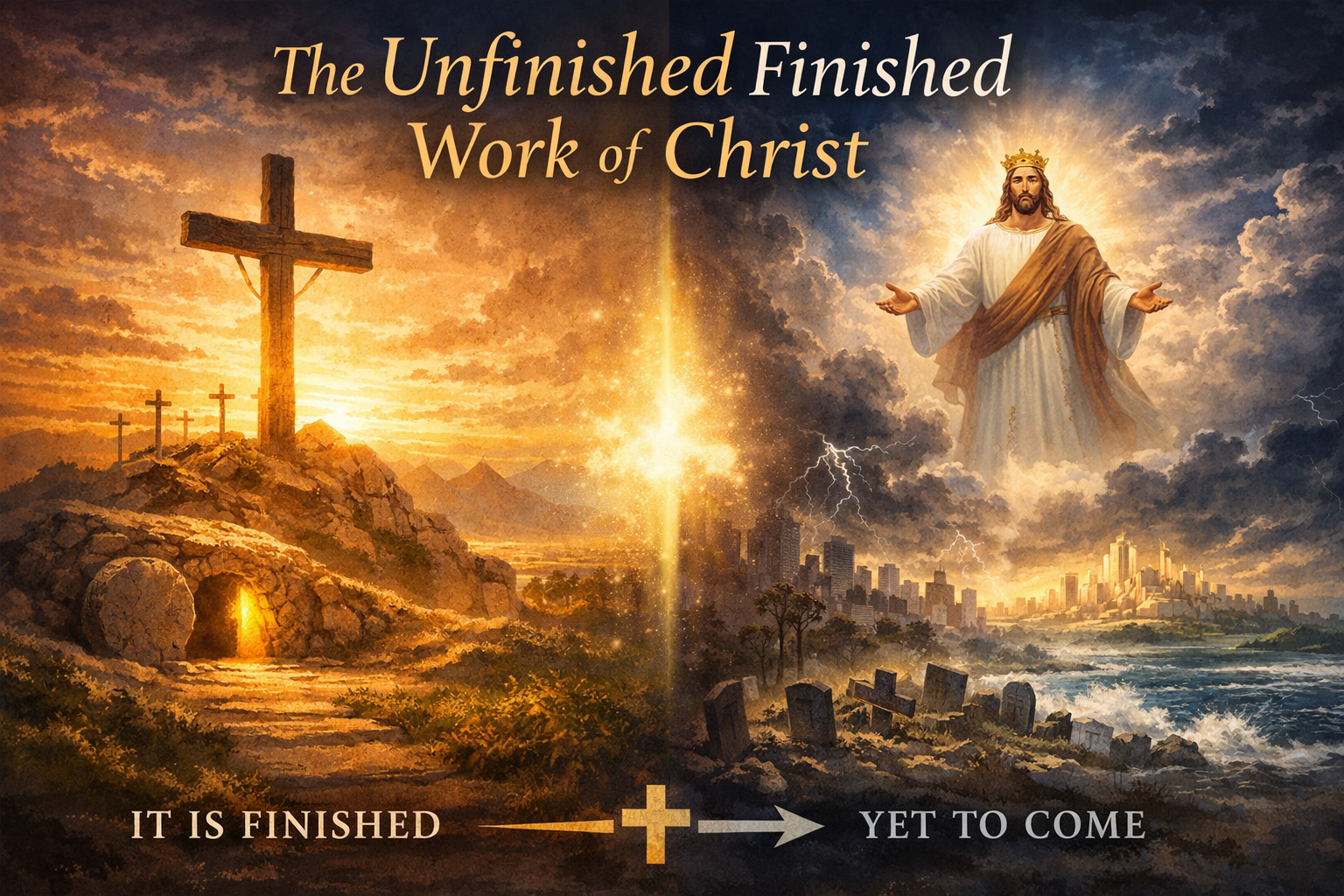
And this brings me to the second reason why apocalyptic eschatology is the mother of all Christian theology, namely that the first coming of Christ to the earth as a baby in a manger marked the beginning of the end of this corrupt present age. In New Testament theology, this is commonly referred to as the already and the not yet, namely that God’s plan for the final redemption of his people has already begun in Christ but it is not yet complete. Consequently, we live in this in between time of already and not yet, already saved, already filled with the eschatological spirit, already living under the blessings of God’s eschatological salvation in part, but we await the time when Christ will come again to consummate, or to bring to completion, that which he began by his death, resurrection and ascension. This is why Peter, in his Pentecost sermon, can say, “And it will be in the last days, says God, that I will pour out my Spirit on all people.” (Acts 2.17). The underlined phrase marks a change that Peter has applied to his source text (Joel 2.28), which simply says, “After this.” Peter understood that in Christ the last days had begun, and we have been living “in the [apocalyptic] last days” now for 2000 years.
But what about the final judgment of the wicked? Isn’t this something that is still yet future? How can we say that the apocalyptic judgment of the wicked began in Christ at his first coming? The answer is that this is exactly what we must say, as Jesus says in John 12.31-32, “Now is the judgment of this world. Now the ruler of this world will be cast out. As for me, if I am lifted up from the earth I will draw all people to myself.” The verb here, “lift up”, means to lift up on high, to exalt, or to raise to dignity and honor. This is why it is so ironic that John goes on to add the explanatory note, “He said this to indicate what kind of death he was about to die.” (John 12.33) The death of Jesus on the cross is nothing less than his enthronement. By his death, he judges the wickedness of this world and its ruler; He exposes the sinfulness and the ultimate fate of those that would reject him. This is why we can say that the final judgment began in Jesus, because a person’s response to the crucified and risen Christ will determine their eternal fate. In the death of Christ, judgment has begun, and it will be meted out when “the lamb who was slain,” as the Revelation calls him, returns in glory and power.
Finally, apocalyptic eschatology is the mother of all Christian theology because in Christ eschatological salvation has come. Salvation is inherently and irreducibly an eschatological concept. Saved from what, we might ask? We are saved from the eschatological wrath of God toward sin. And in Christ this salvation has broken into this present age and been made available to all those who respond to Christ in faith. This is why Peter refers to Joel’s prophecy to explain the coming of the Spirit at Pentecost, as we saw above. We have been filled with the eschatological Spirit, the seal and sign of the new age. We are new creatures, the fruit of a new creation, in Christ because of the Spirit. This is why the Apostle Paul can say, “Blessed is the God and Father of our Lord Jesus Christ, who has blessed us with every spiritual blessing in the heavens in Christ.” (Ephesians 1.3) Every spiritual blessing, every blessing of the age to come is already ours in Christ. We have been saved. We are being saved. And we will be saved. Apocalyptic salvation has already begun in Christ, and we are partakers of it by His indwelling Spirit.
So, I agree with the sentiments of Ernst Käsemann as expressed above. Apocalyptic eschatology is the mother of all Christian theology, because in Christ the apocalyptic visitation of God has come. All of the rest of our theology must be derived from this point, that the climactic work of God for the salvation of His people and His world has come in Christ. This is the Gospel; this is the good news of our salvation. In Christ, God himself has broken into this present age to redeem his people from their sin and set us free from its bondage, its corruption, even its very presence. And this is why we can have hope.
1. Those who are united to Christ and effectually called and regenerated have a new heart and a new spirit created in them through the power of Christ’s death and resurrection. They are also further sanctified, really and personally, through the same power, by his Word and Spirit dwelling in them. The dominion of the whole body of sin is destroyed, and the various evil desires that arise from it are more and more weakened and put to death. At the same time, those called and regenerated are more and more enlivened and strengthened in all saving graces so that they practice true holiness, without which no one will see the Lord.
2. This sanctification extends throughout the whole person, though it is never completed in this life. Some corruption remains in every part. From this arises a continual and irreconcilable war, with the desires of the flesh against the Spirit and the Spirit against the flesh.
3. In this war, the remaining corruption may greatly prevail for a time. Yet through the continual supply of strength from the sanctifying Spirit of Christ, the regenerate part overcomes. So the saints grow in grace, perfecting holiness in the fear of God. They pursue a heavenly life, in gospel obedience to all the commands that Christ as Head and King has given them in his Word.
Series: The 1689 Baptist Confession of Faith Church: Redeemer Baptist Church, Jonesboro, AR Date: February 28, 2024
1. God has granted that all those who are justified would receive the grace of adoption, in and for the sake of his only Son Jesus Christ. By this they are counted among the children of God and enjoy the freedom and privileges of that relationship. They inherit his name, receive the spirit of adoption, have access to the throne of grace with boldness, and are enabled to cry “Abba, Father!” They are given compassion, protected, provided for, and chastened by him as a father. Yet they are never cast off but are sealed for the day of redemption and inherit the promises as heirs of everlasting salvation.
~Second London Baptist Confession (1689), 12.1
Series: The 1689 Baptist Confession of Faith Church: Redeemer Baptist Church, Jonesboro, AR Date: February 21, 2024
7 Dear friends, let us love one another, because love is from God, and everyone who loves has been born of God and knows God. 8 The one who does not love does not know God, because God is love. 9 God’s love was revealed among us in this way: God sent his one and only Son into the world so that we might live through him. 10 Love consists in this: not that we loved God, but that he loved us and sent his Son to be the atoning sacrifice for our sins. 11 Dear friends, if God loved us in this way, we also must love one another. 12 No one has ever seen God. If we love one another, God remains in us and his love is made complete in us. 13 This is how we know that we remain in him and he in us: He has given us of his Spirit. 14 And we have seen and we testify that the Father has sent his Son as the world’s Savior. 15 Whoever confesses that Jesus is the Son of God—God remains in him and he in God. 16 And we have come to know and to believe the love that God has for us.
God is love, and the one who remains in love remains in God, and God remains in him. 17 In this, love is made complete with us so that we may have confidence in the day of judgment, because as he is, so also are we in this world. 18 There is no fear in love; instead, perfect love drives out fear, because fear involves punishment. So the one who fears is not complete in love. 19 We love because he first loved us. 20 If anyone says, “I love God,” and yet hates his brother or sister, he is a liar. For the person who does not love his brother or sister whom he has seen cannot love God whom he has not seen. 21 And we have this command from him: The one who loves God must also love his brother and sister.
~1 John 4.7-21
Title: On Love as the Heart of Christmas Text: 1 John 4.7-21 Church: South Caraway Baptist Church, Jonesboro, AR Date: December 17, 2023
6. The whole counsel of God concerning everything essential for his own glory and man’s salvation, faith, and life is either explicitly stated or by necessary inference contained in the Holy Scriptures. Nothing is ever to be added to the Scriptures, either by new revelation of the Spirit or by human traditions.
Nevertheless, we acknowledge that the inward illumination of the Spirit of God is necessary for a saving understanding of what is revealed in the Word. We recognize that some circumstances concerning the worship of God and government of the church are common to human actions and organizations and are to be ordered by the light of nature and Christian wisdom, following the general rules of the Word, which must always be observed.
7. Some things in Scripture are clearer than others, and some people understand the teachings more clearly than others. However, the things that must be known, believed, and obeyed for salvation are so clearly set forth and explained in one part of Scripture or another that both the educated and uneducated may achieve a sufficient understanding of them by properly using ordinary measures.
~Second London Baptist Confession (1689), 1.6, 1.7
Series: The 1689 Baptist Confession of Faith Church: South Caraway Baptist Church, Jonesboro, AR Date: October 11, 2023
5. The testimony of the church of God may stir and persuade us to adopt a high and reverent respect for the Holy Scriptures. Moreover, the heavenliness of the contents, the power of the system of truth, the majesty of the style, the harmony of all the parts, the central focus on giving all glory to God, the full revelation of the only way of salvation, and many other incomparable qualities and complete perfections, all provide abundant evidence that the Scriptures are the Word of God. Even so, our full persuasion and assurance of the infallible truth and divine authority of the Scriptures comes from the internal work of the Holy Spirit bearing witness by and with the Word in our hearts.
~Second London Baptist Confession (1689), 1.5
Series: The 1689 Baptist Confession of Faith Church: South Caraway Baptist Church, Jonesboro, AR Date: September 27, 2023
1 The elder: To the elect lady and her children, whom I love in the truth—and not only I, but also all who know the truth— 2 because of the truth that remains in us and will be with us forever. 3 Grace, mercy, and peace will be with us from God the Father and from Jesus Christ, the Son of the Father, in truth and love.
4 I was very glad to find some of your children walking in truth, in keeping with a command we have received from the Father. 5 So now I ask you, dear lady—not as if I were writing you a new command, but one we have had from the beginning—that we love one another. 6 This is love: that we walk according to his commands. This is the command as you have heard it from the beginning: that you walk in love.
7 Many deceivers have gone out into the world; they do not confess the coming of Jesus Christ in the flesh. This is the deceiver and the antichrist. 8 Watch yourselves so that you don’t lose what we have worked for, but that you may receive a full reward. 9 Anyone who does not remain in Christ’s teaching but goes beyond it does not have God. The one who remains in that teaching, this one has both the Father and the Son. 10 If anyone comes to you and does not bring this teaching, do not receive him into your home, and do not greet him; 11 for the one who greets him shares in his evil works.
12 Though I have many things to write to you, I don’t want to use paper and ink. Instead, I hope to come to you and talk face to face so that our joy may be complete. 13 The children of your elect sister send you greetings.
~2 John 1-13
Title: On Christian Living in the Last Hour Text: 2 John 1-13 Church: South Caraway Baptist Church, Jonesboro, AR Date: September 24, 2023