4. The authority of the Holy Scriptures obligates belief in them. This authority does not depend on the testimony of any person or church but on God the author alone, who is truth itself. Therefore, the Scriptures are to be received because they are the Word of God.
~Second London Baptist Confession (1689), 1.4
Series: The 1689 Baptist Confession of Faith Church: South Caraway Baptist Church, Jonesboro, AR Date: September 20, 2023
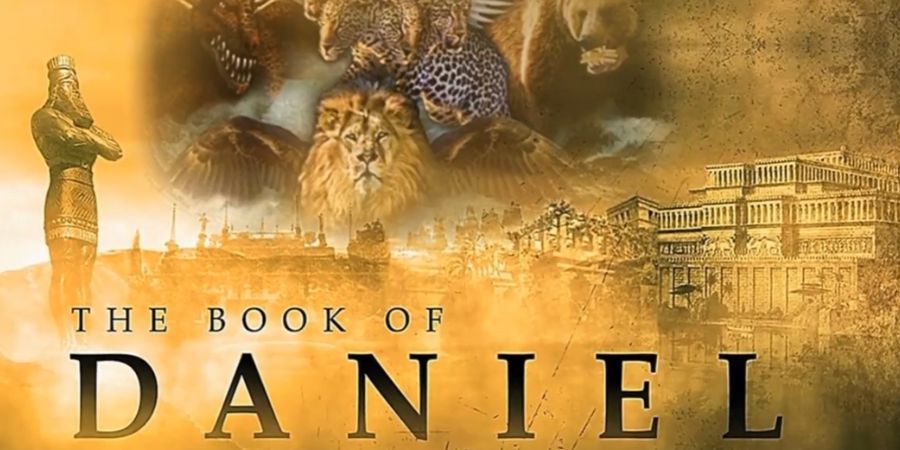
The unfortunate reality today is that the bulk of biblical scholarship on the Book of Daniel is mired in the abyss of higher critical presuppositions, not the least of which is a thoroughgoing rejection of predictive biblical prophecy as such. Because of this the Book of Daniel is viewed as a composite work that was compiled in the middle second century BCE in the midst of the Maccabean Crisis. This view would seem to be supported by the linguistic and generic divisions that exist within the text. Linguistically, chapters 2 thru 7 are written in Aramaic while chapter 1 and chapters 8 thru 12 are written in Hebrew; similarly, though not an exact correspondence, chapters 1 thru 6 comprise the court tails while chapters 7 thru 12 consist of the visionary material. The conclusion then of most biblical scholarship on Daniel is that the eschatological expectations of Daniel are essentially a contradictory hodgepodge of ex eventu (after the fact) depictions of the actions of the Seleucid King Antiochus IV Epiphanes.
Of course, to defend the book’s 6th century Danielic authorship would go beyond the limits of this medium, but in the space that follows I would like to briefly demonstrate the essential unity of Daniel’s visions. The clearest indication of this unity comes in the correspondence between Nebuchadnezzar’s dream in chapter 2 and in Daniel’s vision in chapter 7. While these chapters come from seemingly disparate parts of the book, they both present a sequence of four kingdoms followed by the establishment of the Kingdom of God. Of course, critical scholarship widely identifies these kingdoms as Babylon, Media, Persia, and Greece. This is mostly because they understand the actions of the fourth kingdom, and particularly the little horn, to be fulfilled in the actions of Antiochus IV Epiphanes during the Maccabean Crisis from 167-164 CE. I will come back to the identification of these kingdoms in a little bit, but suffice it to say here that it is difficult to see how Daniel’s expectation for the establishment Kingdom of God is fulfilled in this time period. The subsequent period of Hasmonean independence which followed was a far cry from the grandeur of Daniel’s expectations.
This is especially so when we turn our attention to Daniel chapter 9; in that chapter, Daniel is praying about the end of the exile, and he receives an answer from the angel Gabriel, which reads,
Seventy weeks are decreed about your people and your holy city—to bring the rebellion to an end, to put a stop to sin, to atone for iniquity, to bring in everlasting righteousness, to seal up vision and prophecy, and to anoint the most holy place.
Daniel 9.24
It seems rather clear that these seventy weeks span the timeframe from Daniel’s day (“from the issuing of the decree to restore and rebuild Jerusalem” in verse 25) to the time of final consummation, the time of “everlasting righteousness”. Because of this, we may presume then that the seventy weeks of Daniel 9 cover the same span of time as the visions of Daniel 2 and 7.
Now, the key to identifying the four kingdoms mentioned in Daniel’s sequence would seem to come in Daniel chapter 8. In that chapter, Daniel sees a vision of a ram with two horns, one longer than the other, and a goat whose large horn was broken off and replaced by four smaller horns. Again, the angel Gabriel gives the interpretation.
The two-horned ram that you saw represents the kings of Media and Persia. The shaggy goat represents the king of Greece, and the large horn between his eyes represents the first king. The four horns that took the place of the broken horn represent four kingdoms. They will rise from that nation, but without its power.
Daniel 8.20-22
This interpretation indicates that the second kingdom in Daniel’s sequence should be understood as the unified Kingdom of the Medes and Persians. It is described as a ram with two horns, one longer than the other (8.3) and as a bear which was raised up on one side (7.5). The third kingdom, then, should be understood as the Kingdom of Greece which is represented, of course, by Alexander the Great and the Diadochi, the four generals who followed him. They are variously described as a goat whose large horn was broken off and replaced by four smaller horns (8.8) and as a leopard with four wings and four heads (7.6).
This understanding is confirmed in Daniel chapter 11, where we read,
Three more kings will arise in Persia, and the fourth will be far richer than the others. By the power he gains through his riches, he will stir up everyone against the kingdom of Greece. Then a warrior king will arise; he will rule a vast realm and do whatever he wants. But as soon as he is established, his kingdom will be broken up and divided to the four winds of heaven, but not to his descendants; it will not be the same kingdom that he ruled, because his kingdom will be uprooted and will go to others besides them.
Daniel 11.3-4
The rest of chapter 11, then, goes on to detail the various campaigns of the “King of the North” and the “King of the South”, which describes the various conflicts between the Seleucids and the Ptolemies during the Third and Second century BCE respectively. The point of all this is to say that Daniel’s sequence of four kingdoms is best understood to refer to the progression of empires from Babylon to Medo-Persia to Greece and finally to Rome*. Of course, it must be noted that while the Roman Empire corresponds to Daniel’s fourth kingdom, it doesn’t completely fulfill it. That fulfillment comes ultimately in the eschatological kingdom of the beast, which is described in Book of Revelation, but this is a topic for another time.
By way of conclusion, then, Daniel’s visions reveal a remarkable and multifaceted unity in their expectation despite their seeming disparities. Daniel chapters 2, 7, and 9 give the overarching flow from Daniel’s day to the establishment of God’s Kingdom, and chapters 8 and 11 zoom in on the specific actions of the second and especially the third kingdom. More importantly, this understanding lays the foundation for the typological connection that Daniel draws between the third and fourth kingdoms, specifically between the actions of Antiochus IV Epiphanes and the eschatological little horn of the fourth kingdom. In addition, it helps us see how Daniel’s eschatological paradigm serves as the foundation for the message and ministry of Jesus, especially the Olivet Discourse, and for the message of the New Testament, particularly the Book of Revelation.
Of course, the most important aspect of all of this is the certain promise of God’s victory over His enemies and the enemies of His people. Our hope rests not in earthly powers, nations, or empires, but in the Kingdom of God and in His promised Messiah. That Messiah came incarnate 2000 years ago. He lived a perfect life, and then, He died on the cross for sin and rose again. Forty days later, He ascended to be seated at the right hand of the Father, and He left us this promise, that in the same way he ascended, he will also one day descend in glory and power (Acts 1.11). This is our glorious hope, and so we pray, “Amen, Come, Lord Jesus! (Revelation 22.20)
For further study, see: Hamilton, James M. With the Clouds of Heaven: The Book of Daniel in Biblical Theology. New Studies in Biblical Theology. Downers Grove, IL: InterVarsity, 2014
All of these are given by the inspiration of God to be the standard of faith and life.
3. The books commonly called the Apocrypha were not given by divine inspiration and so are not part of the canon or standard of the Scriptures. Therefore, they have no authority for the church of God and are not to be recognized or used in any way different from other human writings.
~Second London Baptist Confession (1689), 1.2 & 1.3
Series: The 1689 Baptist Confession of Faith Church: South Caraway Baptist Church, Jonesboro, AR Date: September 6, 2023
8 For you were once darkness, but now you are light in the Lord. Walk as children of light— 9 for the fruit of the light consists of all goodness, righteousness, and truth— 10 testing what is pleasing to the Lord. 11 Don’t participate in the fruitless works of darkness, but instead expose them. 12 For it is shameful even to mention what is done by them in secret. 13 Everything exposed by the light is made visible, 14 for what makes everything visible is light. Therefore it is said:
Get up, sleeper, and rise up from the dead, and Christ will shine on you.
15 Pay careful attention, then, to how you walk—not as unwise people but as wise— 16 making the most of the time, because the days are evil. 17 So don’t be foolish, but understand what the Lord’s will is. 18 And don’t get drunk with wine, which leads to reckless living, but be filled by the Spirit: 19 speaking to one another in psalms, hymns, and spiritual songs, singing and making music with your heart to the Lord, 20 giving thanks always for everything to God the Father in the name of our Lord Jesus Christ, 21 submitting to one another in the fear of Christ.
~Ephesians 5.8-21
Title: On the Value of a Distinctively Christian Life Text: Ephesians 5.8-21 Series: The Letter to the Ephesians Church: South Caraway Baptist Church, Jonesboro, AR Date: August 20, 2023
4 Therefore I, the prisoner in the Lord, urge you to walk worthy of the calling you have received, 2 with all humility and gentleness, with patience, bearing with one another in love, 3 making every effort to keep the unity of the Spirit through the bond of peace. 4 There is one body and one Spirit—just as you were called to one hope at your calling— 5 one Lord, one faith, one baptism, 6 one God and Father of all, who is above all and through all and in all.
7 Now grace was given to each one of us according to the measure of Christ’s gift. 8 For it says:
When he ascendedon high, he took the captives captive; he gave gifts to people.
9 But what does “he ascended” mean except that he also descended to the lower parts of the earth? 10 The one who descended is also the one who ascended far above all the heavens, to fill all things. 11 And he himself gave some to be apostles, some prophets, some evangelists, some pastors and teachers, 12 to equip the saints for the work of ministry, to build up the body of Christ, 13 until we all reach unity in the faith and in the knowledge of God’s Son, growing into maturity with a stature measured by Christ’s fullness. 14 Then we will no longer be little children, tossed by the waves and blown around by every wind of teaching, by human cunning with cleverness in the techniques of deceit. 15 But speaking the truth in love, let us grow in every way into him who is the head—Christ. 16 From him the whole body, fitted and knit together by every supporting ligament, promotes the growth of the body for building itself up in love by the proper working of each individual part.
~Ephesians 4.1-16
Title: On How Christians are Different Text: Ephesians 4.1-16 Series: The Letter to the Ephesians Church: South Caraway Baptist Church, Jonesboro, AR Date: July 23, 2023
Navigating the eschatological frenzy can sometimes be quite daunting and intimidating. There are many questions, and to the dismay of many earnest students of the Bible, not many answers. Because of this, eschatological discussions among Christians often end up resulting in more confusion than clarity. This is especially true when those who affirm a particular position begin to misrepresent and/or caricature those who hold different conclusions than their own. We have seen this dynamic play out most recently in some social media forums, where some who hold the post-millennial position have begun to criticize the pre-millennial position as having a fundamentally pessimistic and defeatist outlook on the future, or even an essentially negative assessment of the power of the Gospel to save people and transform lives.
For those who are not aware, the post-millennial position holds that the millennial reign of Christ is the gradual result of the church’s mission. Through making disciples of all nations, the mission of the church will eventually result in a time when millennial conditions will characterize the whole earth. Christ is reigning at the right hand of the Father, and He reigns on earth through the ministry of His church. After an extended period of time of such conditions, Christ will return to judge the world, and the final state will begin. This, they suggest, is an essentially optimistic and hopeful assessment of the success of the Gospel, because it expects the gospel to be so effective in transforming lives, that it will organically result in a kind of utopian experience of the Kingdom of God on earth before Jesus comes again.
Consequently, they charge that the pre-millennial position expects conditions across the world to continue to deteriorate until Jesus comes again to establish His Kingdom on earth. Over time, sin will abound more and more, persecution of the righteous will become ever more intense, and things will progressively get worse until they reach their climax in the events of the Great Tribulation. Scripturally, this point of view might be based on verses like Second Timothy 3.1-5, which reads in part, “But know this: Hard times will come in the last days.” (See also Matthew 24.4-14) However, the question must be asked whether this is an accurate representation of the pre-millennial view. As someone who holds to the position in question, I would suggest that this portrayal of the pre-millennial view is partial at best and a dishonest caricature at worst. So, in the space that follows, I would like to offer two considerations that might help to bring clarity to this discussion.
First, every eschatological position must affirm that sin will remain present and active in the world until Jesus comes again to defeat it once and for all. The devil continues to prowl around like a lion seeking whom he might devour (1 Peter 5.8); spiritual warfare continues to be an ever present reality in the lives of followers of Jesus (Ephesians 6.10-18). The created order continues to groan under the burden of the curse even as it waits for the day of redemption (Romans 8.18-25). This is not some kind of pessimistic defeatism; no, this is simply theological realism. This is the tension that is the already and not yet. Yes, the death of Jesus on the cross made full and complete atonement for sin, and He cried out from the cross, “It is finished.” Those who trust in Him can be forgiven; in Christ, we have been saved from the punishment of sin. But we are not yet saved from the presence of sin, and we won’t be until Jesus comes again in glory and victory. But, a day is coming, a glorious day, when sin and death, pain and sorrow, brokenness and loss will be done away with once and for all (1 Corinthians 15.51-57, Revelation 21.3-4); a day is coming when the enemy will be finally and completely defeated and thrown into the lake of fire for eternity to torment the people of God no longer. (Revelation 20.7-10). And what a day that will be!
Secondly, we must affirm that Christians should be neither overly pessimistic nor naively optimistic; these emotions have zero connection to the idea of Christian hope. Christians should be a people of unshakable hope, but our hope is not some vague well wish that things might eventually get better. No, Christian hope is the firm conviction that what God has promised He will most certainly do. He has promised that He will come again to receive us to himself, that where He is we may be also; He has promised that He will come again to right every wrong, to heal every pain, to put a final and eternal end to sin and death. And it is because of this promise that we can face the difficulties and the ugliness of the world with honesty and compassion and perseverance. As the Apostle Paul puts it in 2 Corinthians, chapter 4, verses 8-10, “We are afflicted in every way but not crushed; we are perplexed but not in despair; we are persecuted but not abandoned; we are struck down but not destroyed.” He goes on to explain in verse 14 of that text, “For we know that the one who raised the Lord Jesus will also raise us with Jesus and present us with you.” This is Christian hope; it is neither a defeated pessimism nor a naïve optimism. Rather, it is a resolute conviction of future glory in the face of difficulty and hardship. It understand the reality of sin; it does not turn away from the ugliness and brokenness of this world. Instead, it holds onto the promise and power of the Gospel that Christ is our only hope, our only rescue, from the penalty, the power, and one day even the presence of sin.
Eschatology is the doctrine of hope; it is the biblical vision of the victory that we have in Christ. It should not be a source of conflict or consternation among Bible believing Christians. Of course, there are interpretive details over which we may continue to disagree, and “iron sharpens iron, and one person sharpens another.” (Proverbs 27.17) And there are other interpretations out there that must be recognized and dismissed as the rank heresy that they are. This is why we must redouble and retriple our commitment to the tutelage of the Word of God. It is the Bible that defines the contours of our eschatological expectation, not our emotional perception of its outlook on the future, whether we consider that be optimistic or pessimistic. Christians should be people of firm and committed hope, because we know that Christ has promised to return bodily. As He said, “Look, I am coming soon, and my reward is with me to repay each person according to his work.” (Revelation 22.12) He is our hope, and this is something all Christians can agree on.
1 The fool says in his heart, “There’s no God.” They are corrupt; they do vile deeds. There is no one who does good. 2 The Lord looks down from heaven on the human race to see if there is one who is wise, one who seeks God. 3 All have turned away; all alike have become corrupt. There is no one who does good, not even one.
4 Will evildoers never understand? They consume my people as they consume bread; they do not call on the Lord.
5 Then they will be filled with dread, for God is with those who are righteous. 6 You sinners frustrate the plans of the oppressed, but the Lord is his refuge.
7 Oh, that Israel’s deliverance would come from Zion! When the Lord restores the fortunes of his people, let Jacob rejoice, let Israel be glad.
~Psalm 14
Series: Praying through the Psalms Text: Psalm 14.1-7 Church: South Caraway Baptist Church, Jonesboro, AR Date: June 28, 2023
19 So, then, you are no longer foreigners and strangers, but fellow citizens with the saints, and members of God’s household, 20 built on the foundation of the apostles and prophets, with Christ Jesus himself as the cornerstone. 21 In him the whole building, being put together, grows into a holy temple in the Lord. 22 In him you are also being built together for God’s dwelling in the Spirit.
~Ephesians 2.19-22
Title: On the Security, Preservation, and Success of the Church Text: Ephesians 2.19-22 Series: The Letter to the Ephesians Church: South Caraway Baptist Church, Jonesboro, AR Date: June 25, 2023
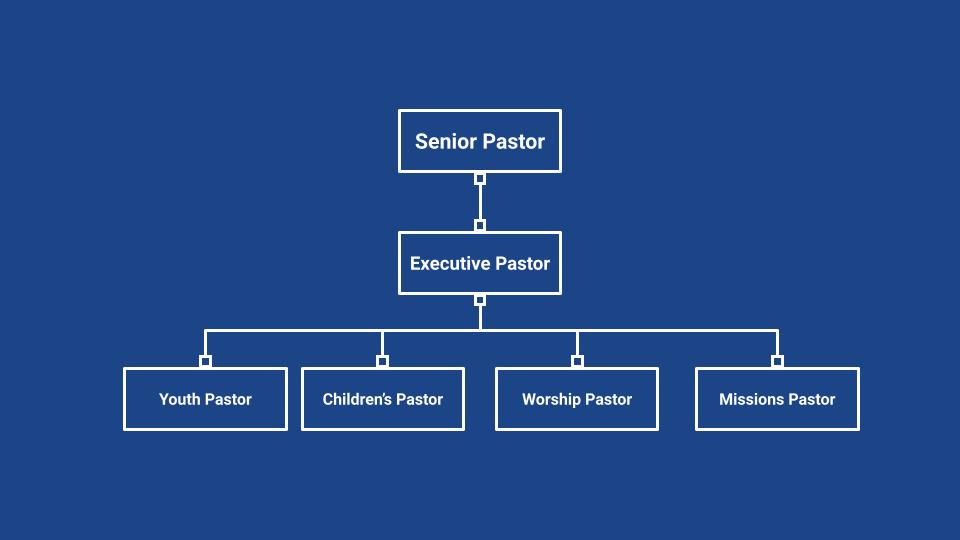
Language really is a funny thing, because so often how words are used determines what they mean regardless of their actual definition. Or to put it another way, meaning is dictated by connotation more than by actual denotation. This is especially so when it comes to current discussions in the Southern Baptist Convention about who can and cannot serve as pastor. Over the past several decades, the titles and types of pastors on church staffs all across this country have proliferated exponentially. We now have Senior Pastors, Lead Pastors, Teaching Pastors, Executive Pastors, Assistant Pastors, Associate Pastors, Youth Pastors, Children’s Pastors, Worship Pastors, Discipleship Pastors, Missions Pastors, Small Group Pastors, Assimilation Pastors, and on and on the list could go ad infinitum. Just a quick perusal of any ministry job board shows that we have practically become enamored with pastoral titles.
Of course, there is a certain wisdom to this structure. No one pastor is omnicompetent in every area of ministry, and as survey after survey has proven, expecting a single or solo pastor to be such quickly leads to burnout among other things. So, dividing pastoral duties among a group of leaders allows the pastoral staff to share the load of ministry responsibilities. This is in keeping with the vision of the body that is painted in 1 Corinthians 12.12-31. In that passage, we read “For just as the body is one and has many parts, and all the parts of that body, though many, are one body—so also is Christ.” The point is that dividing ministry responsibilities according to age groups (youth, children, seniors) or according to ministry focus (missions, discipleship, pastoral care) is an efficient way for a pastoral staff to share the many and varied tasks of church ministry. This division of labor maximizes the personality strengths, training, and experience of each individual pastor by allowing them to prioritize and focus on the ministry tasks for which they are best equipped.
The difficulty, however, is that the Bible never mentions associate or assistant pastors of any kind. In fact, the word “pastor”, which is the most commonly used title for ministry leaders today, is not even the primary designation used to refer to church leadership roles in the New Testament. In those sacred pages, we read more often of bishops (overseers) and elders, but we must affirm that these three terms, i.e. pastor, bishop, and elder, are meant to be viewed as synonymous terms, all of which refer to the ministerial leaders of the local church. Of course, this claim is not without its critics. Those who claim that women can serve as pastors are quick to claim that the role and function of pastor/teacher is separate and distinct from the role of bishop/elder. And so, the logic goes, women can serve in the role of pastor/teacher (e.g. as children’s pastor, women’s pastor, missions pastor, etc.) under the supervisory authority of the senior or lead pastor and/or elders.
Unfortunately, a thorough examination of the scriptural evidence would go beyond the limits of this space, but a quick examination of one particular passage will serve to demonstrate the thesis that the role of pastor, bishop (overseer), and elder are in fact the same role. In 1 Peter, chapter 5, verses 2, the Apostle Peter gives the following exhortation to the elders (c.f. 5.1) of the churches that he is writing to, “shepherd(or pastor, same word) the flock of God among you, exercising oversight, not under compulsion but voluntarily, according to the will of God”. Peter goes on to show that elders exercise these responsibilities under the authority of Jesus Christ, the Chief Shepherd (or “Senior Pastor”, c.f. 5.4), who is the “shepherd (or pastor) and guardian (or bishop) of your souls” (2.25). This is not the only text that relates these ideas, but it is reasonably clear from this text that the responsibility for oversight and pastoring belongs primarily to those who serve as elders. If this analysis is sound, then the qualifications and restrictions that pertain to one must equally pertain to the others.
This is why we must reevaluate our use of pastor as a title for ministry leadership, particularly as it relates to the role of women leaders in the church. The application of the title “pastor” to women leaders who serve, for example, in the area of children or missions is careless at best and a complete disregard of the prescriptions of Scripture at worst. Further, we must affirm that changing the title from “pastor” to “director” while leaving the ministry responsibilities the same is merely wordplay. The New Testament is never interested in titles solely for the sake of titles; the biblical titles for leadership always refer first and foremost to the functions of leadership. And it is the function of bishop, elder, and pastor that is restricted to qualified men according to the Scriptures. Here again, this does not mean that women cannot participate in the ministry of the church, but it does mean that women should not serve in the role or function of pastor.
At the very least, this means that we desperately need to reevaluate our (over)usage of the title pastor. As the 2000 Baptist Faith & Message states, “[The church’s] scriptural officers are pastors and deacons. While both men and women are gifted for service in the church, the office of pastor is limited to men as qualified by Scripture.” There are two and only two offices of leadership in the church, i.e. pastors and deacons, and the office and function of pastors is limited to qualified men. This is the design of God given in His inspired, authoritative, and sufficient Word, and it cannot be dismissed simply because we find it to be distasteful or out of step with modern cultural concerns. We must obey the Scriptures; we cannot play fast and loose with words, change their meanings, or fit them to our own preferred usage. Words have power and meaning, and we must use them in ways that are scripturally faithful.
This article is also published at SBCvoices, here.
1 I have taken refuge in the Lord. How can you say to me, “Escape to the mountains like a bird! 2 For look, the wicked string bows; they put their arrows on bowstrings to shoot from the shadows at the upright in heart. 3 When the foundations are destroyed, what can the righteous do?”
4 The Lord is in his holy temple; the Lord—his throne is in heaven. His eyes watch; his gaze examines everyone. 5 The Lord examines the righteous, but he hates the wicked and those who love violence. 6 Let him rain burning coals and sulfur on the wicked; let a scorching wind be the portion in their cup. 7 For the Lord is righteous; he loves righteous deeds. The upright will see his face.
~Psalm 11
Series: Praying through the Psalms Text: Psalm 11.1-7 Church: South Caraway Baptist Church, Jonesboro, AR Date: June 7, 2023








 Faith seeking Understanding