Category Archives: Bible Exposition

On Praying Through Psalm 2

TEXT

Why do the nations rage
and the peoples plot in vain?
The kings of the earth take their stand,
and the rulers conspire together
against the Lord and his Anointed One:
“Let’s tear off their chains
and throw their ropes off of us.”

The one enthroned in heaven laughs;
the Lord ridicules them.
Then he speaks to them in his anger
and terrifies them in his wrath:
“I have installed my king
on Zion, my holy mountain.”

I will declare the Lord’s decree.
He said to me, “You are my Son;
today I have become your Father.
Ask of me,
and I will make the nations your inheritance
and the ends of the earth your possession.
You will break them with an iron scepter;
you will shatter them like pottery.”

10 So now, kings, be wise;
receive instruction, you judges of the earth.
11 Serve the Lord with reverential awe
and rejoice with trembling.
12 Pay homage to the Son or he will be angry
and you will perish in your rebellion,
for his anger may ignite at any moment.
All who take refuge in him are happy.

~Psalm 2

Series: Praying through the Psalms
Text: Psalm 2.1-12
Church: South Caraway Baptist Church, Jonesboro, AR
Date: April 5, 2023


On Faithfulness in the Face of Evil

TEXT

When Mordecai learned all that had occurred, he tore his clothes, put on sackcloth and ashes, went into the middle of the city, and cried loudly and bitterly. He went only as far as the King’s Gate, since the law prohibited anyone wearing sackcloth from entering the King’s Gate. There was great mourning among the Jewish people in every province where the king’s command and edict reached. They fasted, wept, and lamented, and many lay in sackcloth and ashes.

Esther’s female servants and her eunuchs came and reported the news to her, and the queen was overcome with fear. She sent clothes for Mordecai to wear so that he would take off his sackcloth, but he did not accept them. Esther summoned Hathach, one of the king’s eunuchs who attended her, and dispatched him to Mordecai to learn what he was doing and why. So Hathach went out to Mordecai in the city square in front of the King’s Gate. Mordecai told him everything that had happened as well as the exact amount of money Haman had promised to pay the royal treasury for the slaughter of the Jews.

Mordecai also gave him a copy of the written decree issued in Susa ordering their destruction, so that Hathach might show it to Esther, explain it to her, and command her to approach the king, implore his favor, and plead with him personally for her people. Hathach came and repeated Mordecai’s response to Esther.

10 Esther spoke to Hathach and commanded him to tell Mordecai, 11 “All the royal officials and the people of the royal provinces know that one law applies to every man or woman who approaches the king in the inner courtyard and who has not been summoned—the death penalty—unless the king extends the gold scepter, allowing that person to live. I have not been summoned to appear before the king for the last thirty days.” 12 Esther’s response was reported to Mordecai.

13 Mordecai told the messenger to reply to Esther, “Don’t think that you will escape the fate of all the Jews because you are in the king’s palace. 14 If you keep silent at this time, relief and deliverance will come to the Jewish people from another place, but you and your father’s family will be destroyed. Who knows, perhaps you have come to your royal position for such a time as this.”

15 Esther sent this reply to Mordecai: 16 “Go and assemble all the Jews who can be found in Susa and fast for me. Don’t eat or drink for three days, night or day. I and my female servants will also fast in the same way. After that, I will go to the king even if it is against the law. If I perish, I perish.” 17 So Mordecai went and did everything Esther had commanded him.

~Esther 4.1-17

Title: On Faithfulness in the Face of Evil
Text: Esther 4.1-17
Series: The Book of Esther
Church: South Caraway Baptist Church, Jonesboro, AR
Date: March 19, 2023


On the Spiritual Discipline of Contentment

If there was one word that might be used to describe the culture that we live in, it would most likely be “discontent”; we are a people who have forgotten what it means to be content with what we have. We are constantly inundated with media and ad campaigns that promise satisfaction and fulfillment through some new product or service. On top of that, the proliferation of social media has caused the disease of comparison to rise to pandemic levels, such that we are unconsciously driven by a nagging need to have more and better than our “friends”. Whether because of materialistic consumerism or the sickness of comparison, we have become a culture that has completely forgotten how to be content. However, for those who are in Christ, the Scriptures remind us that “godliness with contentment is great gain.” (1 Timothy 6.6) In other words, our submission to the kingship of Christ, our citizenship in His Kingdom, is exhibited in our contentment with all that He has and has not blessed us with.

This is exactly the point that Jesus makes in the “Sermon on the Mount” in Matthew, chapters 5-7. The Sermon on the Mount is essentially the manifesto of Jesus’ Kingdom; it is Jesus’ vision for what life in His Kingdom should look like. In it, He describes the attitudes, the habits of character, and the behaviors that should identify His people. And this is exactly the point, namely that the Kingdom of God is not something that is just a future hope to be realized. It is that, but during His earthly ministry, by His death, resurrection, and ascension, Jesus inaugurated the Kingdom of God, and now, He is seated at the right hand of the Father, ruling over His people through the indwelling presence of His Spirit. This is often described by the phrase “already but not yet”, which is a short hand way of saying that the Kingdom of God is already inaugurated but not yet consummated. And because we are currently living under the benevolent and gracious rule of King Jesus, we are able to cultivate the spiritual discipline of contentment. As Jesus himself says,

Therefore I tell you: Don’t worry about your life, what you will eat or what you will drink; or about your body, what you will wear. … But seek first the kingdom of God and his righteousness, and all these things will be provided for you. 

Matthew 6.25, 33

In these verses, Jesus encourages His disciples to replace their worry and anxiety with contentment because His good Father knows their needs before they even ask Him. Even as He cares for the birds of the sky and lilies of the field, how much more will He certainly care for those who have been united with His Son by faith. “Therefore don’t worry about tomorrow, because tomorrow will worry about itself. Each day has enough trouble of its own.” (Matthew 6.34) But, of course, this is easier said than done. Worry and anxiety are subtle; they are feelings that often well up inside of us unexpectedly and unnoticed. How, then, can we prevent ourselves from being overcome by these stumbling blocks? Is there a spiritual inoculation that will help us fight against their infection? I would submit that there is, and I believe Jesus identifies it for us in the section that immediately precedes His discussion of contentment.

In the first half of Matthew, chapter 6, Jesus discusses the spiritual disciplines of giving, prayer, and fasting. Of course, He lays out the primary principle for the practice of these disciplines in verse 1 of the chapter, “Be careful not to practice your righteousness in front of others to be seen by them. Otherwise, you have no reward with your Father in heaven.” However, there is a reason why He follows up His discussion of these by commands us not to worry. These spiritual disciplines are the primary means by which we cultivate the inner quietude of peace and contentment. When we give sacrificially of our material possessions for the blessing of others and devote ourselves the pursuit of God rather than material comforts through prayer and fasting, we will find ourselves being more and more content with what we do or do not have. In other words, spiritual contentment is borne out of soul that is fully satisfied in its own communion with the one true and living God.

In the piety of American Evangelicalism, the discipline of contentment among the disciples of Jesus is a glaring whole in our cultivation of Christlikeness. Sadly, we often look more like citizens of this world than citizens of the already but not yet Kingdom of God. We are driven by the felt needs of the moment instead of walking in satisfied contentment with our God, and it shows. We would do well to reconsider what it means to live under the reign of Christ and submit our material resources and our physical needs to the one who taught us to pray, “Give us this day our daily bread.” (Matthew 6.11) This is the secret to the cultivation of contentment. As the Apostle Paul said,

 I don’t say this out of need, for I have learned to be content in whatever circumstances I find myself. I know how to make do with little, and I know how to make do with a lot. In any and all circumstances I have learned the secret of being content—whether well fed or hungry, whether in abundance or in need. I am able to do all things through him who strengthens me.

Philippians 4.11-13

On Psalm 119.81-88 (Kaf)

81 I long for your salvation;
I put my hope in your word.
82 My eyes grow weary
looking for what you have promised;
I ask, “When will you comfort me?”
83 Though I have become like a wineskin dried by smoke,
I do not forget your statutes.
84 How many days must your servant wait?
When will you execute judgment on my persecutors?
85 The arrogant have dug pits for me;
they violate your instruction.
86 All your commands are true;
people persecute me with lies—help me!
87 They almost ended my life on earth,
but I did not abandon your precepts.
88 Give me life in accordance with your faithful love,
and I will obey the decree you have spoken.

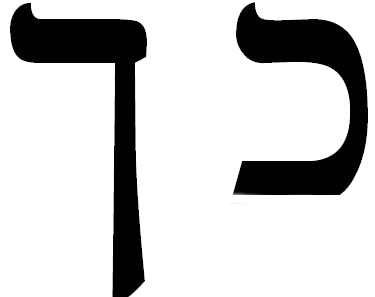
We now come to the eleventh stanza of Psalm 119 (Kaf/Kaph – כ‎, final form – ך), and with this stanza, we are halfway through the longest chapter in the Bible. This is somewhat appropriate since the theme of this stanza concerns waiting. “How many days must your servant wait?” (verse 84a) In the same way that this psalm requires endurance and perseverance to read and work through, so also the life of faith requires endurance and perseverance. Or, to borrow the title of Eugene Peterson’s book on the Psalms of Ascent (120-134), the Christian life is A Long Obedience in the Same Direction. As the subtitle of the book states, Peterson uses these psalms to reflect on “discipleship in an instant society”. As a culture, we are addicted to instant gratification, and the proliferation of social media with its “likes” and “follows” has only made this incessant need more consuming. We desperately need to relearn what it means to wait, to persevere in faith, to appreciate delayed fulfillment. But, of course, waiting is not easy; it is not fun. Most of the time, it is hard, and this is the struggle that our psalmist is wrestling with in these verses.

It would seem that he is facing intense persecution for his devotion to God and His ways. As he writes in verse 86, “people persecute me with lies; they almost ended my life on earth.” This is because “they violate your instruction, but I did not abandon your precepts.” (verse 85) Clearly, the psalmist is facing opposition, ridicule, even the threat of physical harm because of his commitment to the Word and ways of God. Sadly, this is the reality of living in the already but not yet. As believers in Christ, we are already citizens of His kingdom; we live by a set of standards and convictions, principles and values, that stand in complete contradiction to the kingdom of this world. This inevitably leads to conflict with those who are on the outside of the faith, which results in ridicule, ostracism, and eventually outright persecution. The more that we obey the Word of God, the more that we will face criticism for it. As the Apostle Paul puts it in Second Timothy, chapter 3, verse 12, “In fact, all who want to live a godly life in Christ Jesus will be persecuted.” This is a lived reality for our psalmist.

And so, understandably, our psalmist cries out to God, “How many days must your servant wait? When will you execute judgment on my persecutors? When will you comfort me?” (verse 84) This prayer has been the prayer of the people of God for the entirety of history. Every moment, we wonder, “How long, O Lord? How long until you will come to do away with sin, vindicate your people, fulfill your promises, and establish your perfect rule on earth? How long?!” This is our heart’s deepest and truest longing, as our psalmist says, “I long for your salvation.” Of course, salvation here, as our psalmist envisions it, is a much more robust concept than we usually understand. As a post-reformation, post-enlightenment, westernized people, we have been conditioned to understand salvation in individualistic terms. We generally think of salvation as the forgiveness of sin, the removal of guilt, and inheritance of eternal life (when we die). But for our psalmist, salvation is vindication; it the victory of God over those who would oppose Him and His people. However, these two understandings of salvation are not in contradiction. The Bible presents the work of Christ in redeeming His people as a both/and, as an already/not yet. We have already received the forgiveness of sin resulting in eternal life, but we are also waiting for the day when Christ will come again to defeat sin and Satan once and for all and establish His Kingdom on earth.

This is our blessed hope, and as our psalmist writes, “I put my hope in your word.” Our psalmist understands that hope is the source of the strength that is necessary for waiting, and the promises of God found in His Word are the foundation of hope. It is hope that empowers our psalmist’s unflinching obedience in spite of the persecution that he is facing. This is why he prays in verse 88, “Give me life in accordance with your faithful love, and I will obey the decree you have spoken.” The word that is translated as “faithful love” here is the Hebrew word חֶסֶד (hesed), and according to Darrell Bock, it encompasses “all the positive attributes of God: love, covenant faithfulness, mercy, grace, kindness, loyalty–in short, acts of devotion and loving-kindness that go beyond the requirements of duty.” It is variously translated as “faithful love, lovingkindness, loyalty, etc.”, and it refers to His promise keeping devotion to His covenant people. Our psalmist is confident that God will keep the promises of His Word, because that is who He is. He is a promise keeping God, and this is the ground of hope for our psalmist. It is what empowers him to step out in obedience expecting that it will result in the abundant life.

In many ways, the Christian life is a life lived in between, a life of the already but not yet, a life of waiting. We understandably wonder how long we will have to wait for the promises of God to be fulfilled, but there is a question that is more important than this. And that question is simply this: how shall we wait? Will we wait in faithfulness and obedience strengthened by our confident hope in the promises of God’s Word? Or will we give in to the pressures of the world as it seeks to conform us to itself? There will certainly be times when our waiting will be difficult, when continuing in faithfulness will feel pointless, when our hope will appear to be in vain. But these are the times that we must renew our faith in God and the promises are found in His Word and live in light of them. Then and only then will hear those most blessed words on that final day when our Lord Jesus says, “Well done, good and faithful servant! You were faithful over a few things; I will put you in charge of many things. Share your master’s joy.” (Matthew 24.23)

For further study:
Introduction
Psalm 119.1-8
Psalm 119.9-16
Psalm 119.17-24
Psalm 119.25-32
Psalm 119.33-40
Psalm 119.41-48
Psalm 119.49-56
Psalm 119.57-64
Psalm 119.65-72
Psalm 119.73-80


On the Message of Habakkuk

TEXT

The pronouncement that the prophet Habakkuk saw.

How long, Lord, must I call for help
and you do not listen
or cry out to you about violence
and you do not save?
Why do you force me to look at injustice?
Why do you tolerate wrongdoing?
Oppression and violence are right in front of me.
Strife is ongoing, and conflict escalates.
This is why the law is ineffective
and justice never emerges.
For the wicked restrict the righteous;
therefore, justice comes out perverted.

~Habakkuk 1.1-4

16 I heard, and I trembled within;
my lips quivered at the sound.
Rottenness entered my bones;
I trembled where I stood.
Now I must quietly wait for the day of distress
to come against the people invading us.
17 Though the fig tree does not bud
and there is no fruit on the vines,
though the olive crop fails
and the fields produce no food,
though the flocks disappear from the pen
and there are no herds in the stalls,
18 yet I will celebrate in the Lord;
I will rejoice in the God of my salvation!
19 The Lord my Lord is my strength;
he makes my feet like those of a deer
and enables me to walk on mountain heights!

For the choir director: on stringed instruments.

~Habakkuk 3.16-19

Text: Habakkuk 1.1-4, 3.16-19
Series: Supply Preaching
Church: Fitzgerald Crossing Baptist Church, Wynne, AR
Date: January 15, 2023


On How the Death of Jesus Changed Everything

TEXT

44 It was now about noon, and darkness came over the whole land until three, 45 because the sun’s light failed. The curtain of the sanctuary was split down the middle. 46 And Jesus called out with a loud voice, “Father, into your hands I entrust my spirit.” Saying this, he breathed his last.

47 When the centurion saw what happened, he began to glorify God, saying, “This man really was righteous!” 48 All the crowds that had gathered for this spectacle, when they saw what had taken place, went home, striking their chests. 49 But all who knew him, including the women who had followed him from Galilee, stood at a distance, watching these things.

~Luke 23.44-49

Title: On How the Death of Jesus Changed Everything
Text: Luke 23.44-49
Series: Who is Jesus? A Study of the Gospel of Luke
Church: South Caraway Baptist Church, Jonesboro, AR
Date: January 1, 2023


On the Crucifixion and Why It Matters at Christmas

TEXT

32 Two others—criminals—were also led away to be executed with him. 33 When they arrived at the place called The Skull, they crucified him there, along with the criminals, one on the right and one on the left. 34 Then Jesus said, “Father, forgive them, because they do not know what they are doing.” And they divided his clothes and cast lots.

35 The people stood watching, and even the leaders were scoffing: “He saved others; let him save himself if this is God’s Messiah, the Chosen One!” 36 The soldiers also mocked him. They came offering him sour wine 37 and said, “If you are the king of the Jews, save yourself!”

38 An inscription was above him: This Is the King of the Jews.

~Luke 23.32-38

Title: On the Crucifixion and Why It Matters at Christmas
Text: Luke 23.32-38
Series: Who is Jesus? A Study of the Gospel of Luke
Church: South Caraway Baptist Church, Jonesboro, AR
Date: December 18, 2022


On a Christmas Joy That Lasts

TEXT

Nevertheless, there will be no more gloom for those who were in distress. In the past he humbled the land of Zebulun and the land of Naphtali, but in the future he will honor Galilee of the nations, by the Way of the Sea, beyond the Jordan—

The people walking in darkness
    have seen a great light;
on those living in the land of deep darkness
    a light has dawned.
You have enlarged the nation
    and increased their joy;
they rejoice before you
    as people rejoice at the harvest,
as warriors rejoice
    when dividing the plunder.
For as in the day of Midian’s defeat,
    you have shattered
the yoke that burdens them,
    the bar across their shoulders,
    the rod of their oppressor.
Every warrior’s boot used in battle
    and every garment rolled in blood
will be destined for burning,
    will be fuel for the fire.
For to us a child is born,
    to us a son is given,
    and the government will be on his shoulders.
And he will be called
    Wonderful Counselor, Mighty God,
    Everlasting Father, Prince of Peace.
Of the greatness of his government and peace
    there will be no end.
He will reign on David’s throne
    and over his kingdom,
establishing and upholding it
    with justice and righteousness
    from that time on and forever.
The zeal of the Lord Almighty
    will accomplish this.

~Isaiah 9.1-7

Title: On a Christmas Joy That Lasts
Series: Supply Preaching
Church: Cherry Valley Baptist Church, Cherry Valley, AR
Date: December 11, 2022


On Historical Context and Purpose in the Book of Revelation

It is commonly accepted wisdom among most Christians that the Book of Revelation is the hardest book of the Bible to interpret and understand, and it certainly does stand out as one of the most unique books of the New Testament. Those who do attempt to read it are immediately confronted by literary forms, images and symbols, and pastoral concerns that are so unlike their own lived experiences that they tend to put it down faster than they picked it up. Couple this with the myriad of disagreements that exist over the meaning of all these details, and it seems easier to simply leave this book of the Bible to the domain of trained Biblical scholars. However, the book itself affirms, “Blessed is the one who reads aloud the words of this prophecy, and blessed are those who hear the words of this prophecy and keep what is written in it, because the time is near.” (Revelation 1.3) So, when we neglect and ignore this final book of the Bible, we miss out on the blessing that it very clearly promises. But how do we overcome the intimidating and off-putting obstacles that keep us from drinking deeply from its pages?

When we are met with an interpretive challenge like the Book of Revelation, we must return to our basic hermeneutical convictions, those fundamental interpretive principles that help us navigate the Scriptural waters. And one of those rules that is particularly helpful for understanding the Book of Revelation is this: A text without a context is a pretext for a proof text. In other words, when we understand who the biblical author is writing to and why he is writing to them, we are in a better position to understand what he is saying. Or to put it another way, the meaning of the text must be grounded in the inspired intention of the biblical author. He is writing to real people with real needs, and he intends for his message to truly address those needs. If we come up with an interpretation that would make zero sense for the original audience, then we must reevaluate our understanding of the text. Of course, any reconstruction of the historical audience must begin with the details in the text, but historical sources from the time period can add additional detail to our understanding of the audience and their situation.

Fortunately for us, John identifies his intended audience directly; in chapter 1, verse 11, we read, “Write on a scroll what you see and send it to the seven churches: Ephesus, Smyrna, Pergamum, Thyatira, Sardis, Philadelphia, and Laodicea.” We must affirm that these were seven real churches that were located in the Roman province of Asia Minor, or what we would call modern day Turkey. Each one of these seven churches is addressed directly in the letters of chapters 2 and 3, but the author’s concern for these churches cannot be limited to these first few chapters, even if they are primary for understanding the particular needs of these churches. The entire book was written to and for the members of these seven churches of Asia Minor. As to the date of writing, there are two views that are held by biblical scholars. The majority view holds that the book was written during the reign of the Emperor Domitian (81-96 CE); the minority view suggests that the book was written during the reign of the Emperor Nero (54-68 CE). Either of these dates is possible for the book’s composition, but a review of the historical evidence slightly favors the later date, meaning that the Book of Revelation was probably written sometime around 95 CE.

Regardless of which date is preferred, it is clear that these seven churches were facing challenges both internally and externally. These Christians were living in a world that was openly hostile to their faith in Christ, and while there was no official imperial policy of persecution at this time, they were facing intense social pressure in their local communities to compromise their convictions and conform to the Roman way of life. Culturally, they simply had no where to belong. The Jews had rejected them, and the Gentiles would not accept them. They were ostracized marginalized outsiders who did not belong to the world they lived in. And Jesus is writing to them through John to encourage them to persevere in faithfulness, to hold on to the blessed hope that is His appearing. The Revelation is a reminder that they are part of something bigger than themselves, that the victory and vindication that they long for is ahead of them, and that there will be a day when all oppression shall cease. This is the message of Revelation. It is not about beasts and bowls; rather, it is about Christ, our King, who is coming again in glory and power to do away with sin once and for all and establish His perfect Kingdom on earth.

Of course, there are those who would disagree with this assessment of the message of Revelation. Some, particularly those who hold to an early date for the book, would suggest that part or perhaps all of the book was fulfilled in the destruction of Jerusalem in 70 AD. Problems with the early date notwithstanding, it is not clear how this understanding addresses the needs of Christians living in the Roman province of Asia Minor. As noted above, they were facing persecution from the Jews living in those cities, but Jerusalem was not the primary enemy that they were facing. In fact, the Book of Revelation makes it clear that while earthly enemies may affect us, they are not our ultimate foe anyway. Therefore, the destruction Jerusalem would hold little promise for bringing their persecution to an end and accomplishing the victory that the book promises. Further, it isn’t clear how the book’s descriptions of “all the nations”, “all those who live on the face of the earth”, and “the whole earth” can refer only to the people of Israel or the citizens of Jerusalem. So, while this view attempts to maintain the book’s relevance for the original audience by positing all fulfillment in the first century, in actuality, it does the exact opposite. In fact, it completely undercuts the hope and blessing that the book promises its readers, both in the first century and today.

The Book of Revelation paints a glorious and beautiful picture of the hope that is ours in Christ Jesus. It is the promise of a world that is free from the contamination of sin, free from the heavy burden of the curse, free from all opposition to Christ and His people. As Christians, we must remember that this is our blessed hope. This world’s troubles and difficulties are not the end of our story; no, we are part of something that is bigger than ourselves, an eternal story that far surpasses our momentary lives here on earth. Moreover, the Book of Revelation teaches us that our sufferings, our difficulties, our heartaches, they matter deeply to God. He takes note of every wrong, every insult that we suffer, and one day, He will right those wrongs and vindicate His people. This is the central message of Revelation. Of course, the difference is in the details as they say, and there are still many details within the pages of Revelation that we must wrestle with. But this is the point, we must wrestle with them. We cannot ignore or neglect this last book of the Bible simply because it is too challenging, too difficult, too different. We must explore with our minds and our hearts what the Spirit is saying to His church. We must pray that He will give us ears to hear, and when we engage this book in earnest, we may be confident that we will find the strength to persevere and hold fast in hope.

For further study, see
Osborne, Grant R. Revelation. Baker Exegetical Commentary on the New Testament. Grand Rapids, MI: Baker Academic, 2002.


On Peter’s Denials and the Grace of God

TEXT

54 They seized him, led him away, and brought him into the high priest’s house. Meanwhile Peter was following at a distance. 55 They lit a fire in the middle of the courtyard and sat down together, and Peter sat among them. 56 When a servant saw him sitting in the light, and looked closely at him, she said, “This man was with him too.” 57 But he denied it: “Woman, I don’t know him.” 58 After a little while, someone else saw him and said, “You’re one of them too.” “Man, I am not!” Peter said. 59 About an hour later, another kept insisting, “This man was certainly with him, since he’s also a Galilean.” 60 But Peter said, “Man, I don’t know what you’re talking about!” Immediately, while he was still speaking, a rooster crowed. 61 Then the Lord turned and looked at Peter. So Peter remembered the word of the Lord, how he had said to him, “Before the rooster crows today, you will deny me three times.” 62 And he went outside and wept bitterly.

~Luke 22.54-62

Title: On Peter’s Denials and the Grace of God
Text: Luke 22.54-62
Series: Who is Jesus? A Study of the Gospel of Luke
Church: South Caraway Baptist Church, Jonesboro, AR
Date: November 13, 2022


Slow To Write

"let every person be quick to hear, slow to speak, slow to anger."

lovegavehope

Just another WordPress.com site

Jared Cornutt

Pastor | Speaker | Writer

Denny Burk

A commentary on theology, politics, and culture

G3 Ministries

Events + Resources for the Local Church

Biblical Reasoning

Biblical and Systematic Theology According to the Scriptures

RetroChristianity

Reclaiming the Forgotten Faith

SBC Voices

Southern Baptist News & Opinion

Lucid Theology

Thoughts on words, books, theology, and life.

Baptist21

A pastor-led voice for Baptists in the 21st century

Center For Baptist Renewal

The Personal and Professional Blog of Phillip Powers

The Pastor's Well - Pastor Well

The Personal and Professional Blog of Phillip Powers

Articles - AlbertMohler.com

The Personal and Professional Blog of Phillip Powers

The Gospel Coalition

The Personal and Professional Blog of Phillip Powers