1 The word of the Lord that came to Hosea son of Beeri during the reigns of Uzziah, Jotham, Ahaz, and Hezekiah, kings of Judah, and of Jeroboam son of Jehoash, king of Israel.
2 When the Lord first spoke to Hosea, he said this to him:
Go and marry a woman of promiscuity, and have children of promiscuity, for the land is committing blatant acts of promiscuity by abandoning the Lord.
3 So he went and married Gomer daughter of Diblaim, and she conceived and bore him a son. 4 Then the Lord said to him:
Name him Jezreel, for in a little while I will bring the bloodshed of Jezreel on the house of Jehu and put an end to the kingdom of the house of Israel. 5 On that day I will break the bow of Israel in Jezreel Valley.
6 She conceived again and gave birth to a daughter, and the Lord said to him:
Name her Lo-ruhamah, for I will no longer have compassion on the house of Israel. I will certainly take them away. 7 But I will have compassion on the house of Judah, and I will deliver them by the Lord their God. I will not deliver them by bow, sword, or war, or by horses and cavalry.
8 After Gomer had weaned Lo-ruhamah, she conceived and gave birth to a son. 9 Then the Lord said:
Name him Lo-ammi, for you are not my people, and I will not be your God. 10 Yet the number of the Israelites will be like the sand of the sea, which cannot be measured or counted. And in the place where they were told: You are not my people, they will be called: Sons of the living God. 11 And the Judeans and the Israelites will be gathered together. They will appoint for themselves a single ruler and go up from the land. For the day of Jezreel will be great. 2 Call your brothers: My People and your sisters: Compassion.
Title: On the Love and Justice of God Text: Hosea 1.1-2.1; 3.1-5 Series: Hosea: A Love Story Like No Other Church: Redeemer Baptist Church, Jonesboro, AR Date: March 9, 2025
26 In the sixth month, the angel Gabriel was sent by God to a town in Galilee called Nazareth, 27 to a virgin engaged to a man named Joseph, of the house of David. The virgin’s name was Mary. 28 And the angel came to her and said, “Greetings, favored woman! The Lord is with you.” 29 But she was deeply troubled by this statement, wondering what kind of greeting this could be. 30 Then the angel told her, “Do not be afraid, Mary, for you have found favor with God. 31 Now listen: You will conceive and give birth to a son, and you will name him Jesus. 32 He will be great and will be called the Son of the Most High, and the Lord God will give him the throne of his father David. 33 He will reign over the house of Jacob forever, and his kingdom will have no end.”
34 Mary asked the angel, “How can this be, since I have not had sexual relations with a man?” 35 The angel replied to her, “The Holy Spirit will come upon you, and the power of the Most High will overshadow you. Therefore, the holy one to be born will be called the Son of God. 36 And consider your relative Elizabeth—even she has conceived a son in her old age, and this is the sixth month for her who was called childless. 37 For nothing will be impossible with God.” 38 “See, I am the Lord’s servant,” said Mary. “May it happen to me as you have said.” Then the angel left her.
Title: On Jesus was Born to Reign Text: Isaiah 9.6-7, Luke 1. 26-38, Matthew 2.1-12, Revelation 11.15-19 Series: Promises Fulfilled Church: Redeemer Baptist Church, Jonesboro, AR Date: December 29, 2024
17 After they passed through Amphipolis and Apollonia, they came to Thessalonica, where there was a Jewish synagogue. 2 As usual, Paul went into the synagogue, and on three Sabbath days reasoned with them from the Scriptures, 3 explaining and proving that it was necessary for the Messiah to suffer and rise from the dead: “This Jesus I am proclaiming to you is the Messiah.” 4 Some of them were persuaded and joined Paul and Silas, including a large number of God-fearing Greeks, as well as a number of the leading women.
5 But the Jews became jealous, and they brought together some wicked men from the marketplace, formed a mob, and started a riot in the city. Attacking Jason’s house, they searched for them to bring them out to the public assembly. 6 When they did not find them, they dragged Jason and some of the brothers before the city officials, shouting, “These men who have turned the world upside down have come here too, 7 and Jason has welcomed them. They are all acting contrary to Caesar’s decrees, saying that there is another king—Jesus.” 8 The crowd and city officials who heard these things were upset. 9 After taking a security bond from Jason and the others, they released them.
~ Acts 17.1-9
Title: On the Rejection of the Gospel at Thessalonica Text: Acts 17.1-9 Series: The Book of Acts Church: Redeemer Baptist Church, Jonesboro, AR Date: September 8, 2024
137 You are righteous, Lord, and your judgments are just. 138 The decrees you issue are righteous and altogether trustworthy. 139 My anger overwhelms me because my foes forget your words. 140 Your word is completely pure, and your servant loves it. 141 I am insignificant and despised, but I do not forget your precepts. 142 Your righteousness is an everlasting righteousness, and your instruction is true. 143 Trouble and distress have overtaken me, but your commands are my delight. 144 Your decrees are righteous forever. Give me understanding, and I will live.
In keeping with the Hebrew alphabet acrostic form, the next stanza of Psalm 119 begins with the Hebrew letter tsade (צ), and it revolves around the Hebrew word for righteousness (צֶדֶק/ṣeḏeq). The word itself occurs in one form another some five times in these eight verses. It is a word that is rich with significance, both for our understanding of God and our relationship with Him, and for our our understanding of ourselves and our relationships with one another. Literally, it refers to something that is straight, like “straight paths” (Psalm 23.3, where the same word is used), but more often than not, it also carries the figurative sense of upright, true, normal, and just. Clearly, it is in this sense that we read, “You are righteous, Lord, and your judgments are just.” (Verse 137) There are few statements that define the character of God in this way, e.g. God is holy, God is perfect, God is Spirit, God is love. So also, here, we read that God is righteous. In other words, righteousness is a perfection of his being; it is essential to His essence. It is an attribute of His divine character. He is righteous, i.e. morally perfect and true, in every way, in what He thinks, in what He feels, in what He says, in what He does. It is impossible for Him to be otherwise, it is who He is. He is righteous. Of course, this is why His judgments are just, where the word used is a synonym for the word in question.
Of course, righteousness is more than simply who He is in himself; His righteousness extends to everything that He does. “Your decrees are righteous forever. Give me understanding, and I will live.” (Verse 144) This is an important affirmation especially in the context of the Old Testament. The Old Testament is filled with divine actions and events that make no sense to our modern minds, that stand as an affront to our modern sensibilities. The most often cited example of this is God’s command to the Israelites to exterminate the Canaanites in the conquest of the Promised Land. According to our Psalmist, even this deed of God is righteous. Of course, we may immediately ask, “how can this be?” I think it is important that we understand that we cannot understand the rightness of God’s ways by our own standards. Our perception of right and wrong and fundamentally flawed by sin. This is why our psalmist prays, “Give me understanding.” The only way we can hope to understand the righteousness of God and His ways is by divine illumination. This comes as a result of the Holy Spirit’s indwelling. As the Apostle Paul puts it in 1 Corinthians 2.14, “But the person without the Spirit does not receive what comes from God’s Spirit, because it is foolishness to him; he is not able to understand it since it is evaluated spiritually.”
Of course, the question for our psalmist remains, “how can we, as fallen individuals, experience or participate in the righteousness of God?” As our psalmist confesses, “I am insignificant and despised, but I do not forget your precepts.” (Verse 141) Compared to God’s righteousness, our righteousness is nothing more than “filthy rags” (Isaiah 64.6). We are sinners, and even our best attempts at cultivating our own righteousness fall short of the standard of righteousness that God is in himself (Romans 3.23). For our psalmist, however, the answer to this question is simple; it is to live in submission before and obedience to the Word of God. As he says in verse 140, “Your word is completely pure, and your servant loves it.” Now, we must be careful here, because this answer could come across as a legalistic effort to earn righteousness. I don’t believe that is what our psalmist is saying. As we have already seen, even our best efforts at attaining righteousness are tinged with sin. No, our psalmist understands that righteousness is something that is imputed from God to us. This is why he says in verse 144, “Your decrees are righteous forever. Give me understanding, and I will live.” In other words, he understands that the righteousness of God comes to us by the transformative revelation of God. This is why he prays for understanding.
As New Testament believers, we know that that ultimate revelation of God’s righteousness came to earth in the person and work of Jesus Christ; He was God incarnate in all the fullness of His being. “He made the one who did not know sin to be sin for us, so that in him we might become the righteousness of God.” (2 Corinthians 5.21) Ours is an alien righteousness; it is not our own. It is imputed to us by grace through faith because of Christ’s death and resurrection. This is why the Apostle Paul could write,
For I am not ashamed of the gospel, because it is the power of God for salvation to everyone who believes, first to the Jew, and also to the Greek. For in it the righteousness of God is revealed from faith to faith, just as it is written: The righteous will live by faith. (Romans 1.16-17)
Our justification, our right standing before God, is by grace alone through faith alone in Christ alone. And I think even our psalmist knew that. Old Testament saints were made righteous in the same way that New Testament believers are made righteous, that is by faith. This principle is confirmed in the example of Abraham, “Abram believed the Lord, and he credited it to him as righteousness .” (Genesis 15.6, c.f. Romans 4 and Galatians 3) The point of all this is to say that righteousness is a perfection of God’s eternal being, and by grace we who believe in Christ have been covered in that same righteousness. This is the beauty of the Gospel. “It is from him that you are in Christ Jesus, who became wisdom from God for us—our righteousness, sanctification, and redemption—in order that, as it is written: Let the one who boasts, boast in the Lord.“ (1 Corinthians 1.30-31)
Thirty-some years ago, the Christian band D.C. Talk released a song entitled “Luv is a verb”; it was a song that resonated with the biblical truth that love is more than simply a feeling. Genuine love, true biblical love is demonstrated through acts of giving and service, putting the needs of others before our own, and seeking their good as a matter of first priority. As we read in Romans 5.8, “But God proves his own love for us in that while we were still sinners, Christ died for us.” Or again, in 1 John 4.10, “Love consists in this: not that we loved God, but that he loved us and sent his Son to be the atoning sacrifice for our sins.” Or even in the most memorable of verses, in John 3.16, “For God loved the world in this way: He gave his one and only Son, so that everyone who believes in him will not perish but have eternal life.” The love of God toward sinners is the exemplar par excellence of true love. He loves, and so he gave. He acted for the good of those he loved, even when they didn’t love him. It is a love that is unconditional and undeserved, and it is a love that acts. Love, true biblical love, is indeed a actoin. It is a verb.
Of course, this understanding of love stands in stark contradiction to the sentiments of popular culture. For many, love is a feeling. It is something that is primarily felt in the warm fuzzies of attraction and desire. It is sensual, passionate, and oftentimes fleeting. People fall out of love just as easily and as quickly as the fall into love. The feelings of love ebb and flow like the tides of the ocean, and the more the feelings of love wane in a relationship, the more desperately we chase them. “Follow you’re heart”, we are told, but the scriptures remind us that our hearts are deceitful and wicked (Jeremiah 17.9). Christians rightly react to the idea that love is no more than an emotion. Love is commitment, love is service, love is a choice. Love is something we are called to give even if it is not returned in kind. We are called to love each other, even to love our enemies.
However, I think that this contrast sets up a false dichotomy. It is true that love is more than a mere emotion, but it is certainly not less than that. Emotions are good; they are God-given capacities, part of what it means to be made in the image of God. Even God has emotions, though His are perfect and completely without sin or selfishness. He is compassionate, merciful, gracious, and loving. “God is love” (1 John 4.8). Our emotions are a good and essential part of what makes us human, but as with our other capacities, they are fallen, corrupted by the sin. But they should not be rejected as if they are sinful in and of themselves, or somehow illegitimate partners in our sanctification. Just like our other human capacities, they need to be redeemed, reordered, transformed by the Spirit. This is why one of the fruit of the Spirit is, among others, love.
Therefore, I would submit that true biblical love is both action and affection; it is both something that we do and something that we feel. Of course, the question must be raised regarding what to do when we just aren’t feeling. Are we still required to love when the affections aren’t there. I would suggest yes, because, contrary to cultural sentiments, our emotions are not to be our guiding principle. We submit our emotions to the Word of God, to the work of the Spirit, such that they begin to follow our volition. So, yes, we are called to love others through acts of self-giving service and sacrifice, but we are also called to like others, as well. This, too, is part of the biblical command to love.
But how would this relate to a command like we find in Matthew 5.44, where we read, “But I tell you, love your enemies and pray for those who persecute you.” In this case, I think we have to be reminded that “our struggle is not against flesh and blood, but against the rulers, against the authorities, against the cosmic powers of this darkness, against evil, spiritual forces in the heavens.” (Ephesians 6.12). Our “enemies” are human beings made in the image of God who are enslaved and corrupted by sin, and but by the grace of God, there go we. So, we can have compassion and empathy for those who oppose us. We don’t have to agree with them or condone their actions; we don’t have to lower our defenses and pretend like no separation exists between us. But we cannot hate them outright; we cannot wish for their pain and destruction all the while trying to love them through acts of service and sacrifice. We must have some level of compassion and empathy, even for those who we consider “enemies”, because they too are made in the image of God. They have dignity, value, and worth, and we must loving actions toward them must be grounded in compassion rather than anger and animosity.
The point here is that feelings follow actions. If we set ourselves to love others through acts of service, I think we will be amazed at the affections that will well up for them in our hearts. No, biblical love is not some dry, emotionless, unfeeling command that we are called to obey. We are called to obey, but to do so holistically, with our whole selves. As Jesus reminds us, the greatest commandments are these, to “love the Lord your God with all your heart, with all your soul, and with all your mind” and to “love your neighbor as yourself.” (Matthew 22.37-40) When we do this, we will find ourselves become more and more like the one who is love in himself. So, “Dear friends, let us love one another, because love is from God, and everyone who loves has been born of God and knows God. The one who does not love does not know God, because God is love.” (1 John 4.7-8)
According to the Christian calendar, Thursday, May 9, 2024 marked the celebration of our Lord’s ascension, because it marks 40 days after the celebration of His resurrection, which we celebrated on March 31, 2024. (See Acts 1.1-11) But for many Christians, who are not part of more liturgically minded traditions, I would surmise that this “holiday” likely came and went without any fireworks or fanfare. For most folks, it was probably just another Thursday, which like all Thursdays was likely filled with the normal day to day responsibilities of professional and personal life. The question, then, that must be answered here is why celebrate the Ascension at all? Should it be considered a “holiday” on the pale with Christmas and Easter? Or is just another ritualistic trapping of church tradition that has been held over from ages now past? In the space that remains, I would like to suggest that Ascension Day is in fact a Christian “holiday”, because it is an opportunity to reflection on and celebrate another aspect of the person and work of Christ, particularly his session at the right hand of the Father.
Etymologically, the word “holiday” comes from the Old English word hāligdæg, which literally means “holy day”, and it was originally used to refer solely to days that were set aside for religious observance. These original “holy-days” are laid out in in the church’s annual calendar. For more on the traditional Christian calendar, see my post here. The point, however, is that a holiday is first and foremost a time for celebration and reflection on what Christ has done on our behalf. Of course, this significance is mostly all but lost on the secular society in which we now live, but as Christians, we have an opportunity to recover this particular significance, especially on days that otherwise have no cultural significance. I would submit that the Ascension is just such an opportunity.
But it is necessary to ask what an Ascension holiday would even celebrate. Sadly, for most Christians, the ascension of our Lord Jesus is somewhat of an after thought. It pales in significance to other aspects of His work, e.g. crucifixion, resurrection, return. While all of those are primary for understanding the person and work of Christ, the ascension is no less significant for our reflection on what Christ has accomplished for our salvation. The ascension celebrates the enthronement of Christ at the right hand of the Father. It is the fulfillment of the most quoted Old Testament verse in the New Testament, Psalm 110:1, which says “The Lord says to my lord: ‘Sit at my right hand until I make your enemies a footstool for your feet.’” He is now seated at the right hand of God, reigning in power until such a time as He should come again to finally defeat sin and establish His kingdom on earth.
The reality that Jesus is seated at the right hand of God is rich with significance for the devotion, reflection, and worship of Christians today. From this, we understand that Christ intercedes for his people (Hebrews 7:23-25), that he rules over and guides His church (Ephesians 1:20-23), that He will come again to receive us unto Himself (John 14:2-4). The present session of Christ is vital for our understanding of the ongoing ministry of the resurrected Christ, but so many churches, so many Christians for that matter, give it such short shrift. The Ascension holiday calls us back to an understanding of Christian time, to the perspective that all of the cycles and rhythms of life should revolve around the Gospel. Jesus Christ – His person and His work – should stand at the center of Christian living, and holidays like Ascension Day, just like Easter and Christmas, call us to focus on the centrality and necessity of Christ and His work.
Of course, there is no prescribed ritual or formula for observing the Ascension. It could be as simple as a private devotion, giving some time to the reading of relevant biblical texts, to meditation and prayer. On the other hand, it could be observed with a church service dedicated to the theme in which we sing and pray together and hear a sermon on some aspect of its significance. It may mean that someone who is a member of a church that does not observe the holiday looks for a more liturgically oriented church that does. It is perfectly fine to visit and participate in other Christian worship traditions, but, of course, we must use discernment in this. Families could set aside a time for family bible study and worship in which the story and significance of the ascension is related to children or other family members. It could even include the observance of the Lord’s supper, for Jesus promised us, “I will not drink from this fruit of the vine from now on until that day when I drink it new with you in my Father’s kingdom” (Matthew 26.29). And when we observe the Lord’s Supper, we “proclaim the Lord’s death until he comes.” (1 Corinthians 11.26)
The point of all this is to say that Ascension Day is another opportunity to extol the worth of Christ Jesus, to proclaim his powerful name, to relish in His sustaining grace that is constantly at work on our behalf. And there simply is no other person in our lives who deserves to be celebrated in this way. We celebrate birthdays, anniversaries, and other Hallmark holidays; these things order our lives. Wouldn’t it be better to order our lives around the person and work of Christ, so that we are constantly reminded of the great salvation in which we share. I think so.
For further study, see: Schreiner, Patrick. The Ascension of Christ: Recovering a Neglected Doctrine. Bellingham, WA: Lexham Press, 2020.
In a frequently repeated statement, Ernst Käsemann famously said that “Apocalyptic was the mother of all Christian theology.” Not as well-known is that two years later, Käsemann clarified what he actually meant by “apocalyptic”: for him, it referred to “eschatology,” or in his words, “the expectation of an imminent Parousia.” Personally, I would define apocalyptic eschatology a bit more broadly. Apocalyptic eschatology is the belief that this present age is irredeemably corrupted by sin, that God is coming to intervene in a final judgment on the wicked, and that at that time he will vindicate the righteous and deliver them into a new of age of eschatological salvation that is both personal in the sense of resurrection and cosmic in the sense of renewal. The question remains, however, as to how this perspective might rightly be considered to be the “mother of all Christian theology,” and in the space that remains, I would simply like to offer a few brief explanations for this claim.
First, apocalyptic eschatology revolves around the final, climactic visitation of God to the earth. In the Old Testament, this visitation was often referred to as “the Day of the Lord.” In fact, there were many “days of the Lord” in the Old Testament, all of which function as typological portends of the final Day of the Lord when God comes in eschatological glory and power. Christian theology believes that this final Day of the Lord began when God came to earth in the incarnate Lord Jesus Christ. He was to be called Emmanuel, which is translated “God with us.” (Matthew 1.23). And the Lord Jesus himself said of Jerusalem, “you did not recognize the time when God visited you.” (Luke 19.44) This is exactly the point, namely that the coming of Christ in his incarnation was the beginning of the apocalyptic visitation of God to the earth. Of course, we know that He is coming again in glory and power to bring to consummation that which he began in His first coming, but the point here is that in Christ, God himself came in climactic apocalyptic visitation.
And this brings me to the second reason why apocalyptic eschatology is the mother of all Christian theology, namely that the first coming of Christ to the earth as a baby in a manger marked the beginning of the end of this corrupt present age. In New Testament theology, this is commonly referred to as the already and the not yet, namely that God’s plan for the final redemption of his people has already begun in Christ but it is not yet complete. Consequently, we live in this in between time of already and not yet, already saved, already filled with the eschatological spirit, already living under the blessings of God’s eschatological salvation in part, but we await the time when Christ will come again to consummate, or to bring to completion, that which he began by his death, resurrection and ascension. This is why Peter, in his Pentecost sermon, can say, “And it will be in the last days, says God, that I will pour out my Spirit on all people.” (Acts 2.17). The underlined phrase marks a change that Peter has applied to his source text (Joel 2.28), which simply says, “After this.” Peter understood that in Christ the last days had begun, and we have been living “in the [apocalyptic] last days” now for 2000 years.
But what about the final judgment of the wicked? Isn’t this something that is still yet future? How can we say that the apocalyptic judgment of the wicked began in Christ at his first coming? The answer is that this is exactly what we must say, as Jesus says in John 12.31-32, “Now is the judgment of this world. Now the ruler of this world will be cast out. As for me, if I am lifted up from the earth I will draw all people to myself.” The verb here, “lift up”, means to lift up on high, to exalt, or to raise to dignity and honor. This is why it is so ironic that John goes on to add the explanatory note, “He said this to indicate what kind of death he was about to die.” (John 12.33) The death of Jesus on the cross is nothing less than his enthronement. By his death, he judges the wickedness of this world and its ruler; He exposes the sinfulness and the ultimate fate of those that would reject him. This is why we can say that the final judgment began in Jesus, because a person’s response to the crucified and risen Christ will determine their eternal fate. In the death of Christ, judgment has begun, and it will be meted out when “the lamb who was slain,” as the Revelation calls him, returns in glory and power.
Finally, apocalyptic eschatology is the mother of all Christian theology because in Christ eschatological salvation has come. Salvation is inherently and irreducibly an eschatological concept. Saved from what, we might ask? We are saved from the eschatological wrath of God toward sin. And in Christ this salvation has broken into this present age and been made available to all those who respond to Christ in faith. This is why Peter refers to Joel’s prophecy to explain the coming of the Spirit at Pentecost, as we saw above. We have been filled with the eschatological Spirit, the seal and sign of the new age. We are new creatures, the fruit of a new creation, in Christ because of the Spirit. This is why the Apostle Paul can say, “Blessed is the God and Father of our Lord Jesus Christ, who has blessed us with every spiritual blessing in the heavens in Christ.” (Ephesians 1.3) Every spiritual blessing, every blessing of the age to come is already ours in Christ. We have been saved. We are being saved. And we will be saved. Apocalyptic salvation has already begun in Christ, and we are partakers of it by His indwelling Spirit.
So, I agree with the sentiments of Ernst Käsemann as expressed above. Apocalyptic eschatology is the mother of all Christian theology, because in Christ the apocalyptic visitation of God has come. All of the rest of our theology must be derived from this point, that the climactic work of God for the salvation of His people and His world has come in Christ. This is the Gospel; this is the good news of our salvation. In Christ, God himself has broken into this present age to redeem his people from their sin and set us free from its bondage, its corruption, even its very presence. And this is why we can have hope.
Full preterism, or consistent eschatology as it is sometimes called, is the belief that all of the Bible’s prophecies regarding the consummation of God’s plan for the redemption of humanity, including but not limited to the second coming of Jesus, the resurrection, final judgment, and the establishment of the new heavens and the new earth, occurred in 70 AD when the Romans destroyed the temple in Jerusalem. This event in their understanding marked the eschatological transition from the Old Covenant to the New Covenant, meaning that no further fulfillment is necessary. The new has come; it is really and truly here to its fullest extent. There is no need for any further act of God to complete his redemptive purposes in the world.
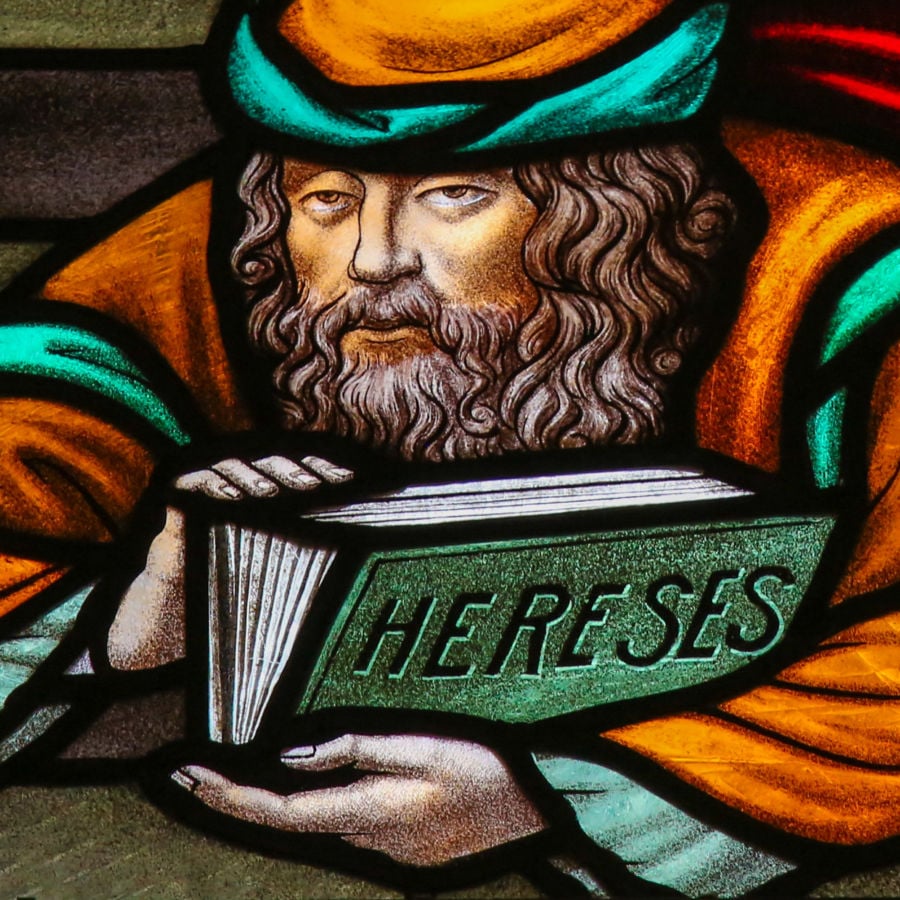
Now, let me be clear, this position is complete and utter heresy. It is a false gospel, because it denies the essential orthodox belief that “He will come again to judge the living and the dead” (Apostle’s Creed). It denies “the resurrection of the dead and the life of the world to come” (Nicene Creed). These denials among others put the views of full preterism wholly outside the boundaries of historic Christian orthodoxy. In the space that remains here, I would simply like to outline a few of the methodological and theological errors that are typical of this view, and then I will conclude by reaffirming the orthodox Christian hope.
The first error of full preterism is that they have a conspiracy theory view of hermeneutical method. In other words, their interpretations are based on a string of loosely related or even unrelated texts that are tied together by the occurrence of similar words. Of course, they would claim that they are following the principle of sola scriptura, namely that “scripture interprets scripture,” but I would submit that this is a theological conviction for biblical interpretation not a hermeneutical method for biblical interpretation. (See my post here). In stringing texts together the way that they do, they completely disregard concerns for the text’s historical and theological context and the author’s flow of thought. Instead, they flatten out the distinctive emphases of particular texts by smashing them together to say that same thing. More often than not, their exegesis comes across like someone throwing paint against a wall and then concluding they’ve painted Mona Lisa.
A second error of full preterism is that they hold to a gnostic view of the human person. Gnosticism is a heresy from the second century CE that suggests that Christ came to save us from this evil material world so that we could throw off the limits of our physical bodies and exist eternally as pure spirit. Of course, there is much more to it than this simple definition, but its weakness is that it disregards God’s design for human beings as embodied souls. We were made with a body and a soul, and to exist without either one of these is to be incomplete from the biblical point of view. This is why the resurrection of the body is such a primary doctrine; we are not merely transformed spiritually, we will be transformed physically when He comes again. Full preterism denies the future bodily resurrection of both the righteous and the wicked, and they suppose that when we die, we either go to heaven or hell to continue on as a “spiritual” being for eternity.
Thirdly, full preterism has an adoptionistic view of the incarnation. Adoptionism, or dynamic monarchianism, is a heresy from the third century CE that suggests that the divine logos came upon the man Jesus as his baptism, left him at his crucifixion, but then came upon him again at his resurrection. In other words, the man Jesus was “adopted” by God at his resurrection. The view of full preterism is not unlike adoptionistic Christology because they seem to believe the body of Jesus was only necessary during his earthly life. Often they suggest that his body was burnt up, or maybe it disappeared, at His ascension, so that He no longer has a body in heaven now. In other words, the son “adopted” a body for as long as he needed it, but then, when he no longer needed it, he discarded it. Along with the gnostic notions discussed above, this position negates the necessity of the resurrection. Why did Jesus even have to be resurrected from the dead with a body? Why not just rise as pure spirit? Here again, this view cannot explain the glorified body of Jesus, because it makes the incarnation temporary.
A fourth error that is part of the full preterist view is that they seem to have a fatalistic view of human history. Since they view this world as it is now as the “new heavens and new earth,” they have no expectation for any kind of renewal or transformation of the created order. According to this view, sin, death, disease, heartache, and the like will continue in perpetuity, eternally, without end. The only escape from the harsh realities of this world is when we die and go to heaven. But a renewed earth free of the corruption of sin and death is not in the purview of full preterism. This is fatalistic, because it essentially says that this is how the world is and this is how it will be. Nothing will ever get better, paradise will never be restored. Among others problems, this perspective denies the original purity and goodness of God’s creation and God’s intent to restore creation to that state of purity and goodness.
The final error that I see with full preterism, and perhaps the greatest, is that it offers a hopeless view of the Gospel. The reason for this is that it does not offer a final and full defeat of sin. Sure, the penalty of sin has been paid on the cross, and Satan has been defeated. But according to the full preterists, Satan and sin continue to run free forever. There is no final end to sin; there is no final defeat of Satan, no final judgment of the wicked. These things continue into perpetuity. The fact of the matter is that this is not the Gospel. Christ came, yes to pay the penalty for our sin, but also to free us from sin, and not only us, but the entirety of His creation. This is why the creation groans with yearning for the revelation of the sons of God (Romans 8.19-22). We look forward to a world that will be free of the domination and corruption of sin, free of the decay of death, where there will be no more tears, no more pains, no more heartaches. This is hope. This is the Gospel. And so we say, “Amen! Come, Lord Jesus!” (Revelation 22.20)
97 How I love your instruction! It is my meditation all day long. 98 Your command makes me wiser than my enemies, for it is always with me. 99 I have more insight than all my teachers because your decrees are my meditation. 100 I understand more than the elders because I obey your precepts. 101 I have kept my feet from every evil path to follow your word. 102 I have not turned from your judgments, for you yourself have instructed me. 103 How sweet your word is to my taste— sweeter than honey in my mouth. 104 I gain understanding from your precepts; therefore I hate every false way.
The question of the Law and its relevance for New Testament believers is a question that has boggled the minds of Christians ever since the first disciples. As New Covenent believers, we understand that Christ has fulfilled the Law, and this in every way. No part of the Law has been left unfulfilled by Christ. Paul even says that the Law has been “abolished” in the work of Christ (Eph 2.15). And yet, we also understand that the Law, as part of the Old Testament Scriptures, is profitable and valuable for “training in righteousness.” (2 Tim 3.16) Genuine believers love the Word of God, and they yearn to be transformed by its truths. The Law, however, appears to be so difficult, so out of touch, so unrelated to life in Christ, we naturally wonder what transformative relevance it might still have.
More than that, we are well aware of what the New Testament says about the Law, particularly in the Pauline Epistles. For example, we understand that “the letter [of the Law] kills, but the Spirit gives life” (2 Cor 3.6), and that “[we] are not under the law but under grace.” (Rom 6.14) We all stand condemned by the law, for “it is clear that no one is justified before God by the law.” (Gal 3.11) We have been taught that the purpose of the Law is to expose our failures to live up the righteous standards of God, to convicts us of our sin, and to reveal our need for a savior. In other words, if the Law has a role in the faith of New Testament believers, then it is largely negative, convicting, and condemning.
But this does not seem to be the attitude of our psalmist here in Psalm 119; he views the law positively and with deep adoration and affection. In this stanza, he writes “How I love your instruction” (verse 97), and “How sweet your word is to my taste—sweeter than honey in my mouth.” (verse 103) Of course, we could simply conclude that this psalmist is writing before the advent of Christ, and so perhaps his words are no longer relevant for how we should relate to the Old Testament Law. For Old Testament believers, the Law was the basis for their covenant relationship with God. It was the gift of God’s grace to make them His people and enter into a covenant with them. Clearly, we have something greater. We are under the Law of Christ. (1 Cor 9:21)
But I believe this perspective would fail to do justice to the words of our psalmist. Believers in both the Old and the New Testament are united by the principle of faith; they are a part of us. So, the attitude of our psalmist throughout Psalm 119, but especially here in the mem (מ, pronounced maym) stanza, is particularly instructive for us. We too should learn to love God’s Law, to meditate upon it all day long. We should find in it words of wisdom and life and understanding about the ways of right and wrong as they are determined by the one who gave it. We should read Old Testament books like Leviticus and Deuteronomy, and let them be like sweet honey in the mouths of our soul, because they reveal the one whom our soul loves.
The bottom line is this, that the Old Testament, especially the Law, is good and valuable and profitable and transformative for God’s people of all times. It does not merely convict us and condemn us and reveal to us that we deserve hell and need salvation; it also reveals the character, the virtues, and perfections of the one who is true and pure and holy. We must learn to appreciate these positive aspects of the Law’s role in our lives as Christians, because if we do not, we cut ourselves off from the sustaining and nourishing benefits that come through its pages. No, we are not bound under the covenant mediating authority of the Law; it is not the basis of our relationship with God in Christ by the Spirit. But it is part of God’s revelation of himself, and as such, it continues to have value and relevance for those of who are in Christ, much as the writer of Psalm 119 affirms.
The New Testament is clear that the Christian Gospel rises and falls on the historical factuality of this truth, that Jesus Christ truly lived, truly died, and truly rose again. There simply is no way around it; as the Apostle Paul writes, “If there is no resurrection of the dead, then not even Christ has been raised; and if Christ has not been raised, then our proclamation is in vain, and so is your faith. … And if Christ has not been raised, your faith is worthless; you are still in your sins.” (1 Cor 15.13-14, 17) Jesus had to truly die in our place to satisfy the wrath of God toward sin, and he had to truly be raised from the dead in victory over sin and death. The work of Christ in His death and resurrection is the means by which he secures our salvation; His death achieves for us our forgiveness, and His resurrections assures us of our life eternal.
However, the crucifixion and resurrection of Jesus is more than simply a historical event; it is more than merely a transaction between the Father and the Son. No, the logic of the Gospel is that the work of Christ in his crucifixion is the pattern for our life as well. By faith, we are united with Christ; we have died with him to sin and we have been raised with him in newness of life. (Romans 6.4-5) This is the logic of the Gospel, namely that His death becomes our death and his resurrection becomes our resurrection. In the space that follows, I would like to spend just a few brief moments reflecting on the implications of this essential principle of the Christian Gospel.
On the one hand, we participate in his death and resurrection spiritually, which means we experience it through the indwelling of His Holy Spirit. This happens at the point of conversion; when someone trusts in Christ, they die with Him to the tyranny and slavery of sin, they die with Him to the old self and its fleshly desires. “For we know that our old self was crucified with him so that the body ruled by sin might be rendered powerless so that we may no longer be enslaved to sin.” (Romans 6.6) Consequently, they are, then, indwelt by the Holy Spirit who gives life. As Paul goes on to write, “Now if Christ is in you, the body is dead because of sin, but the Spirit gives life because of righteousness.” (Romans 8.10) We are renewed and transformed by the Spirit that we might walk in righteousness and holiness before God and others in this life. This is what it means to be resurrected with Him spiritually; as Paul says elsewhere, “Therefore, if anyone is in Christ, he is a new creation; the old has passed away, and see, the new has come!” (2 Cor 5.17) This is the good news of the Gospel.
However, we must also affirm that we will participate in his death and resurrection physically. This is also essential to the logic of the Gospel. Death is the consequence of sin and its corruption in a fallen creation. As the author of Hebrews writes, “it is appointed for people to die once—and after this, judgment.” Every human being, saved and unsaved, will die physically, but those who die in Christ will also be resurrected physically. The Apostle Paul writes, “the dead in Christ will rise,” (1 Thess. 4.16) or again, “the dead will be raised incorruptible, and we will be changed.” (1 Cor 15.52) In the same way that he was raised in a glorified and perfected physical body, so also we will be raised in a glorified and perfected body. “We know that when he appears, we will be like him because we will see him as he is.” (1 John 3.2) This is the hope; this is the promise. This is the logic of the Gospel. “Just as we have borne the image of the man of dust, we will also bear the image of the man of heaven.” (1 Cor 15.49)
Of course, we may be tempted to conclude that the position that I have sketched out here is hopelessly illogical. How can it be possible that we must die and be raised both spiritually and physically? This seems like a contradiction in terms. How can Paul claim that we have been raised with Christ but then claim that we will one day be raised with Christ. I believe the answer to this apparent contradiction lies in the New Testament reality of the already and the not yet. In fact, I believe that this hermeneutical principle is fundamental for understanding the New Testament in general. In Christ, the last days have already been inaugurated. The fulfillment of God’s work of salvation has begun in the person and work of Christ. Christ has been raised from the dead as the “firstfruits”, and he has given us the eschatological indwelling of the Spirit. We already live the life of the age to come, aka eternal life, and we stand redeemed under the promise of the New Covenant.
And yet, we understand that the full consequences of the redeeming work of Christ have not yet been completely realized. We await the day when he will come again in power and glory to do away with sin once and for all, and it is then that we will be raised in glorified bodies. This is how the Apostle Paul describes the order of the resurrection, “Christ, the firstfruits; afterward, at his coming, those who belong to Christ.” (1 Cor 15.23) Yes, those who are in Christ by faith have already been made new; we are already regenerated by the indwelling Spirit,. But we await the day when our faith will be made sight. “We ourselves have the Spirit as the firstfruits, [yet] we also groan within ourselves, eagerly waiting for adoption, the redemption of our bodies.” (Romans 8.23) Christ is risen; he came up out of the grave – physically, bodily, gloriously, and one day we too will be raised from the dead physically, bodily, and gloriously.
The point of all this is to say that the inherent logic of Christ’s resurrection requires the physical bodily resurrection of believers. To deny this truth is to deny the gospel itself. We cannot have a gospel, we cannot have a salvation, we cannot have a redemption, that does not find its completion in the physical bodily resurrection of those who have been united with Christ by faith. One article I recently read sums up this truth by saying, “The end of the work of God, as regards man, is the glorification of his restored and sanctified nature—body and soul—in eternity. Without this, salvation and restitution would be incomplete. The adoption cannot be consummated without the redemption of the body.” Or to put it more sharply, a gospel that denies the physical resurrection of believers at the physical second coming of Christ is a false gospel, as the Apostle Paul would say, “If anyone is preaching to you a gospel contrary to what you received, a curse be on him!” (Galatians 1.9)













 Faith seeking Understanding