Christmas really is one of my most favorite times of the year. I love the decorations, the gifts, the parties, and the church Christmas programs, but most of all I love the music. The traditional Christmas carols, the sacred Christmas hymns, they just give me all the feels when it comes to Christmas; in the car, at home, at church, you will almost always find me listening to Christmas music during the month of December. And one of my most favorite Christmas songs is the song “Mary, Did You Know?”, and my most favorite arrangement of the song is performed by Mark Lowry with the acapella group Voctave singing backup (posted above). Mark Lowry wrote the lyrics in 1985 when he was asked to write a script for a church Christmas play, and the lyrics were put to music in 1991 by Buddy Greene. Of course, it has been recorded by many varied recording artists over the years, both secular and sacred, and it is sung and played regularly during Christmas programs in churches all across the United States and, no doubt, around the world.
However, every year it seems, I read some renewed or repeated criticism of the song on social media. Some attempt to dismiss the song theologically, citing the Annunciation and the Magnificat as evidence that “she knew”. I have even seen some who have attempted to go line by line through the song to give a yes or no answer to each rhetorical question. Similarly, those in the Roman Catholic tradition take issue with the suggestion that Mary needed to be “delivered” and “made new” because of their (erroneous) beliefs about the sinlessness of Mary. Others argue that the song is mawkish, sappy, and infantilizing, that it is “the most sexist Christmas song ever written,” or that it “treats her like a clueless child.” Still others dismiss the song simply because it is overplayed and/or poorly performed by well-meaning church members during the Christmas season as “special” music. And to be honest, when I read criticisms like these, I just shake my head and wonder how we have lost our wonder at the miracle of the incarnation.
Biblically, it is true that Luke presents Mary as a paragon of faith. When she is confronted by the angel Gabriel with the news that she will conceive by the Holy Spirit and give birth to the Son of God, she responds with simple faith, “See, I am the Lord’s servant. May it happen to me as you have said.” (Luke 1.38) And her Magnificat (Luke 1.46-55) clearly indicates that she understood that this was a pivotal moment in the unfolding of God’s plan of redemption for the world. However, we also know that at one point during his earthly ministry, she came with her other children to try to hide Jesus away because they thought he was an embarrassment to the family. (Mark 3:31-35, parallels Matthew 12.46-50, Luke 8.19-21) Time and again, the Gospels detail how the first followers of Jesus struggled to fully understanding the significance of who he was and what he had come to do, and we should assume that Mary would have been no different. We know that Mary treasured and pondered all these things in her heart, but the Bible is clear that the first followers of Jesus, including Mary and his brothers, grew in their understanding of the person and work of Jesus over the course of his life and ministry and that they did not understand him in full until after his resurrection and the coming of the Spirit.
The point is that we should not underestimate the richness of what it means for God to become flesh. When Jesus was born in the Bethlehem 2000 years ago, there was already plenty of theological and cultural expectations as to what he was supposed to be and do. But Jesus turned those expectations on their heads, and he demonstrated that he is a Messiah who cannot be fit into a preconceived box. And as his followers, we should never lose our wonder at this fact. Jesus will always be more than we could possibly hope to comprehend; we will never have him fully figured out. Even when we reach glory, we are told that “He had a name written that no one knows except himself.” (Revelation 19.12) This means that even then there will be more to learn and understand about him when he returns as glorious king. We must never lose our wonder at the person and work of Jesus. Even the things we think we know about him pale in comparison to the fullness of his glory.
And so, when we hear the song “Mary, Did You Know?” this Christmas season, we shouldn’t try to dissect it theologically. We shouldn’t dismiss it because of its musical style, its tone and perspective, or even its emotionality. We should allow it to spur our reflections, to feed our wonder, to drive us to worship the God who became flesh for our sakes, who suffered and died in our place, and who is coming again to receive us unto himself. The song is an artistic, poetic reflection on the miracle of Christmas and the sheer mystery of the incarnation. Mary was in a unique position to feel the weight and wonder of it all, and at Christmas, it is right for us to enter into her experience, to ponder anew what it must have been like, and to fall down in worship of the God who became flesh. This Christmas, let us rekindle our wonder. Let us stand in awe and silence, and let us rejoice in the fact that we have a savior who came to heal our brokenness, to free us from sin, and to restore in us the joy of living in his presence. He is Emmanuel; He is God with us!
Several months ago, Matthew Barrett, then a professor at Midwestern Baptist Theological Seminary, announced that he was leaving the SBC to become Anglican. Shortly thereafter, he took a position as Research Professor of Theology at Trinity Anglican Seminary, and he and his family joined St. Aidan’s Anglican Church in Kansas City. He detailed his reasons for making this change in an article on his blog/newsletter, Anselm House. Basically, he suggests that the SBC “officially rejected” Nicene orthodoxy, that the SBC values image over external (read episcopal) authority, and that the “baptist” hermeneutic is ultimately individualistic in its rejection of infant baptism. Though I find these criticisms to be greatly flawed and wholly inaccurate as representations of Baptist theology and ecclesiology, it is not my purpose to respond to them here. This has already been done by several others who are more capable than me. (For example, see Denny Burke’s response here.)
Rather, I would like to respond to another component of Barrett’s argument for Anglicanism, that being the beauty and and antiquity of its liturgy. After giving a rather glowing description of the elements and order of an Anglican worship service, including pictures, he goes on to write, “What a comfort to tell our kids, “The way we are worshipping is how Christians have worshipped across history. It’s really, really old. You are participating in the church universal.”” Now, let me just say that I have no small appreciation for high church liturgy. I have previously written on the use and value of the lectionary, the Christian calendar, and church tradition. I think there is much that modern churches, with their consumeristic performance based, emotion driven worship services, could learn from these practices. However, to say that “Anglicanism is the most beautiful representation of classical Christianity” is surely to place preferences of form over matters of substance.
The fact of the matter is that the early church’s worship was simple; it revolved around Word and Table, fellowship and prayer. As we read in Acts 2.42, “They devoted themselves to the apostles’ teaching, to the fellowship, to the breaking of bread, and to prayer.” Beyond this, we simply do not know what worship services in the early church consisted of. We have scattered liturgical details and other descriptions throughout the New Testament, but we do not have an official liturgy for the early church. Did they sing psalms? Probably. Did they read the Scriptures? Definitely. Did they pray together? Likely. Did they observe the ordinances of baptism an the Lord’s Supper? Clearly. Did they recite early kinds of creedal statements? Possibly. Of course, as the church grew, more formal liturgies were understandably developed, especially in the second and third centuries, and by the fourth century, there seems to have been a common or shared understanding of what the worship of the church should include and how it should progress. But, contrary to Dr. Barrett’s claim above, there is simply no proof that the Anglican liturgy is “how Christians have worshipped across history.” No doubt there are many similarities, but there is likely just as many differences that vary across place and time.
However, the more basic point that needs to be underscored here, I believe, is that the church’s worship, no matter what form or style it is expressed in, is beautiful. When God’s people gather together to sing His praise, to hear from His Word, to intercede in prayer for one another, to commemorate the Gospel is baptism and eucharist, there is simply nothing that is more beautiful, nothing more majestic, nothing more glorious. The voices of the saints singing and praying and confessing and expositing the great works of God in Christ as one gathered and united body in the Spirit is the most beautiful thing in this world. Of course, as I noted above, this beauty has sadly been lost in many churches today; we have turned the church’s worship into a show. We have exchanged beauty for spectacle, truth for emotion, participation for entertainment, and this is especially so in churches that do not come stand in the line of high church traditions. But, the point is that it is narrow minded and arrogant to suggest that one particular form or tradition of worship is the most beautiful, the most ancient, the most formation to the exclusion of all others.
In the Book of Revelation, John writes, “After this I looked, and there was a vast multitude from every nation, tribe, people, and language, which no one could number, standing before the throne and before the Lamb” (Revelation 7.9). This vision of the diversified and redeemed people of God standing before the heavenly throne praising God should help us to understand the beauty of the church’s worship. We do not all sing with one voice, we do not all worship in the same way. Every tradition, every culture, every community has its own way of worshiping God, and this is beautiful. The glory of God in Christ cannot be wholly encapsulated in just one worship tradition, but wherever there are genuine believers who are gathered together to worship God in Spirit an truth, this is beautiful. Every church has its own liturgy, whether it be formal or informal, but when we prioritize the form of our worship over the object of our worship, then we have missed the mark. Christ is the focus of our worship, there is no way that we could ever find enough ways to magnify and exult in His glory.
Is the Roman Catholic Church a Gospel-denying church? This question was the theme of a recent debate between Allen S. Nelson IV, pastor of Providence Baptist Church in Perryville, AR, and Father Stephen Hart, pastor/priest at Sacred Heart Church in Morrilton, AR. (A video of the debate can be found on the YouTube page of Providence Baptist Church, here.) While it is true that both participants had strong moments in the two hour event, it is not my purpose to evaluate their performances or to name a winner. I think that Pastor Nelson was at his best when he was pushing the details of the official teachings of the Roman Catholic Church as stated in their published documents, and Father Hart was at his best when he was giving the Catholic understanding of relevant New Testament texts. In the final analysis, though, I suspect that most people went away from the event feeling confirmed in the positions they held coming in and believing that their preferred candidate had won the evening. In the space that follows, I would simply like to suggest four important takeaways that were clarified for me.
First, the debate made it clear that the Roman Catholic Church generally misunderstands the New Testament concept of justification. Lexically, the δικαι- word group (words that are usually translated in the NT as righteousness and/or justified) refers to a forensic or legal status of innocence or guiltlessness. In his commentary on Romans in the NICNT series, Douglas Moo writes, “To justify signifies, according to forensic usage, to acquit a guilty one and declare him or her righteous.” (86) As we read in Romans 5.19, “For just as through one man’s disobedience the many were made sinners, so also through the one man’s obedience the many will be made righteous (δικαίωμα).” In other words, it is a once-for-all gavel dropping declaration that a person is not guilty of their sin before God because of their faith in the atoning work of Christ. And what is important is that this status cannot be changed because of our sin, nor can it be augmented by good works. From beginning to end, it is a gift that is given by faith alone and that is preserved, maintained, and completed by God through His Spirit. As the Apostle Paul writes, “I am sure of this, that he who started a good work in you will carry it on to completion until the day of Christ Jesus.” (Phil. 1.6) Or again, in Romans 8.29-30, we read, “For those he foreknew he also predestined to be conformed to the image of his Son, so that he would be the firstborn among many brothers and sisters. And those he predestined, he also called; and those he called, he also justified; and those he justified, he also glorified.”
However, the RCC insists that this declaration of righteousness, being God’s powerful word, must be effectual, and include thereby moral transformation. For example, the Council of Trent defines justification as that “which is not remission of sins merely, but also the sanctification and renewal of the inward man.” (Chapter 7) Trent goes on to argue that “by mortifying the members of their own flesh, and by presenting them as instruments of justice unto sanctification, they, through the observance of the commandments of God and of the Church, faith co-operating with good works, increase in that justice which they have received through the grace of Christ, and are still further justified.” (Chapter 10) And so, it logically follows when Trent resolves that, “If any one saith, that the justice received is not preserved and also increased before God through good works; but that the said works are merely the fruits and signs of Justification obtained, but not a cause of the increase thereof; let him be anathema.” (Canon 24) Of course, the Council of Trent, first convened in 1545, was the Church’s response to the Protestant Reformation, and so one can’t help but wonder if there isn’t some amount of reactionism that has influenced their positions on these matters. Nevertheless, it seems clear from these statements that Trent’s understanding of justification goes well beyond the New Testament understanding of the term.
Secondly, and the statements above demonstrates this, but the debate made it clear that the Roman Catholic Church confuses the doctrine of justification with the doctrines of regeneration and sanctification. Regeneration (aka new birth or “being born again”) refers to that work of the Spirit in which a person is given spiritual life. In other words, the Spirit transforms an individual from a state of spiritual death to a state of new creation in Christ, thus, enabling them to repent, believe, and live in accordance with God’s will. By the same token, sanctification is simply the lifelong process by which a person is gradually transformed more and more into the image of Christ, becomes more holy, and learns to walk in obedience to the law of Christ. As we read in Hebrews 10.14, “For by one offering he has perfected forever those who are being sanctified.” (ESV/LSB) Note especially in this verse that we are perfected forever, and yet we are being sanctified. The point is that these are logically distinct aspects of the salvation process (ordo salutis), even if in actual experience they are sometimes indistinguishable.
But in the teaching of the RCC, all of this inheres within the doctrine of justification. As we saw above, the Catholic church defines justification as that “which is not remission of sins merely, but also the sanctification and renewal of the inward man.” Whatever the reason for this lack of theological precision may be, this indiscriminate intermingling of categories leads inevitably to the conclusion that a person’s justification is dependent upon their sanctification. Or to put it another way, the Roman Catholic view seems that imply that while justification is begun by faith, it is continued, maintained, and eventually confirmed by good works. This is perhaps why Trent envisages the possibility that a person’s initial justification can be lost. In Chapter 14, Trent reads, “As regards those who, by sin, have fallen from the received grace of Justification, they may be again justified, when, God exciting them, through the sacrament of Penance they shall have attained to the recovery, by the merit of Christ, of the grace lost.” If a person’s justification can be lost by their disobedience, then it necessarily follows that it must be maintained (or should I say earned) by their obedience. Whatever the case, it is clear that in the Catholic understanding, the determining factor in a person’s justification is their obedience, i.e. their good “works”, and not their faith.
Now, I would be remiss if I did not also submit the opposing position to equal scrutiny, and so, before I conclude this article, I would like to offer two areas of weakness in our position that I believe were exposed in the aforementioned debate. And let me hasten to add that these points should not be received as any kind of criticism of Pastor Nelson; based on the limited interaction I have had with him, I find him to be a biblically faithful, theologically astute individual. But, as it regards the way that our views are typically represented in these discussions, I think there are two important takeaways for us to consider.
The first takeaway for those holding our perspective might be stated thus, namely that Protestants have a tendency to underemphasize the importance, nay even the necessity, of good works. In our zeal to proclaim and defend that time honored Reformation principle sola fide, or justification by faith alone, we inadvertently imply that living a life of obedience that issues forth in good works is some kind of optional add-on. We suggest, though perhaps unintentionally, that the Gospel’s call to live a life of ongoing discipleship to Jesus is something that is reserved for the religious elite, those who are really serious about their faith, those who are truly devout, so-called ‘super Christians’. But the Apostle James is clear on this point when he writes, “You see that a person is justified by works and not by faith alone.” (James 2.24) Of course, this is not a contradiction of the Apostle Paul, nor is it inconsistent with the Reformation’s emphasis on faith alone rightly understood (contra Luther). Rather, it is a reminder that the kind of faith that justifies is a faith that works. In other words, the principle of sola fide does not mean that a person can believe in Jesus and then live in whatever manner they so choose. This kind of “easy-believism’ is in truth no faith at all. In fact, it is demonic (James 2.19), and it does not and cannot save. A faith that saves, a faith that justifies, is a faith that works, and on this point, James and Paul are in complete agreement.
There is a sense in which our works will play a role at the final judgment. Jesus himself says in Matthew 16.27, “For the Son of Man is going to come with his angels in the glory of his Father, and then he will reward each according to what he has done. ” And in Second Corinthians 5.10, we read, “For we must all appear before the judgment seat of Christ, so that each may be repaid for what he has done in the body, whether good or evil.” Or again, in Romans 2.6-8, Paul writes (quoting Proverbs 24.12 et al.), “He will repay each one according to his works: eternal life to those who by persistence in doing good seek glory, honor, and immortality; but wrath and anger to those who are self-seeking and disobey the truth while obeying unrighteousness.” And finally, in Hebrews 12.14, we are told to “Pursue … holiness [because] without it no one will see the Lord.” This does not mean that we are “saved” by or because of our works, but it does mean that living a life of obedience to God validates or proves that our faith is indeed a saving faith. The message of the Gospel is built on both the indicatives of what Jesus has done for us and imperatives that we are called to obey for Him. We receive the indicatives by faith, and we obey the imperatives because of what we have received by faith. The order matters here. If we put the imperatives of the Gospel before the indicatives of the Gospel, then we distort the Gospel into a salvation by works. In the logic of the Gospel, the indicatives precede and enable the imperatives. But the point is that they are both necessary parts of the gospel.
And this brings me to the second weakness of the Protestant position that I believe was exposed in the debate, namely that Protestants have a tendency to reduce the Gospel to its lowest common denominator. There can be no doubt that justification by faith is an important, even essential, foundation for our salvation, but the Gospel is so much more than justification by faith. The Gospel is the good news that in the person and work of Jesus Christ God has entered into his creation to redeem his people by dying for their sin as an atonement and by defeating death through His resurrection and to renew his creation by establishing his rule on earth, so that through the Spirit they can walk in perfect conformity to His ways and experience the blessings of His ongoing presence in and among them. It is this vision of a renewed humanity living in a renewed world in which God is eternally present to bless that is the goal of the biblical narrative (Revelation 21-22). This is why we must constantly remind ourselves that even though we have already been saved (justification), we are still being saved (sanctification), and yet one day we will be saved (glorification). And all of this is received and experienced by and through faith, but this faith must be a faith by which we walk in conformity to the way and will of Christ.
So, is the Roman Catholic Church a Gospel-denying church? I don’t know, but it does seem to me that their official teachings, whether explicitly or implicitly, confuse important concepts and components of the Gospel, and in doing so, it has the potential to lead even the most sincere and devout parishioner to believe that they are saved by living a morally upright and generally good and charitable life. Can a person be genuinely saved in the Roman Catholic Church? I think yes, but I would suspect that this is in spite of its official dogmas and teachings. And beyond their doctrine of salvation, there are many other tenets and teachings of the Roman Catholic tradition that I consider to be in clear contradiction to the teaching of Scripture. However, that is a question for another time. I will simply close this post with the words of the Apostle Paul, because I think they sum up the issues discussed in this article particularly well. “For you are saved by grace through faith, and this is not from yourselves; it is God’s gift— not from works, so that no one can boast. For we are his workmanship, created in Christ Jesus for good works, which God prepared ahead of time for us to do.” (Ephesians 2.8-10)
21 After these events, Paul resolved by the Spirit to pass through Macedonia and Achaia and go to Jerusalem. “After I’ve been there,” he said, “It is necessary for me to see Rome as well.” 22 After sending to Macedonia two of those who assisted him, Timothy and Erastus, he himself stayed in Asia for a while.
23 About that time there was a major disturbance about the Way. 24 For a person named Demetrius, a silversmith who made silver shrines of Artemis, provided a great deal of business for the craftsmen. 25 When he had assembled them, as well as the workers engaged in this type of business, he said, “Men, you know that our prosperity is derived from this business. 26 You see and hear that not only in Ephesus, but in almost all of Asia, this man Paul has persuaded and misled a considerable number of people by saying that gods made by hand are not gods. 27 Not only do we run a risk that our business may be discredited, but also that the temple of the great goddess Artemis may be despised and her magnificence come to the verge of ruin—the very one all of Asia and the world worship.”
28 When they had heard this, they were filled with rage and began to cry out, “Great is Artemis of the Ephesians!” 29 So the city was filled with confusion, and they rushed all together into the amphitheater, dragging along Gaius and Aristarchus, Macedonians who were Paul’s traveling companions. 30 Although Paul wanted to go in before the people, the disciples did not let him. 31 Even some of the provincial officials of Asia, who were his friends, sent word to him, pleading with him not to venture into the amphitheater. 32 Some were shouting one thing and some another, because the assembly was in confusion, and most of them did not know why they had come together. 33 Some Jews in the crowd gave instructions to Alexander after they pushed him to the front. Motioning with his hand, Alexander wanted to make his defense to the people. 34 But when they recognized that he was a Jew, they all shouted in unison for about two hours, “Great is Artemis of the Ephesians!”
35 When the city clerk had calmed the crowd down, he said, “People of Ephesus! What person is there who doesn’t know that the city of the Ephesians is the temple guardian of the great Artemis, and of the image that fell from heaven? 36 Therefore, since these things are undeniable, you must keep calm and not do anything rash. 37 For you have brought these men here who are not temple robbers or blasphemers of our goddess. 38 So if Demetrius and the craftsmen who are with him have a case against anyone, the courts are in session, and there are proconsuls. Let them bring charges against one another. 39 But if you seek anything further, it must be decided in a legal assembly. 40 In fact, we run a risk of being charged with rioting for what happened today, since there is no justification that we can give as a reason for this disturbance.” 41 After saying this, he dismissed the assembly.
~Acts 19.21-41
Title: On the Priorities of the Gospel Text: Acts 19.21-41 Series: The Book of Acts Church: Redeemer Baptist Church, Jonesboro, AR Date: October 20, 2024
It is common in Biblical studies to suggest that the doctrine of the resurrection is a late development in Old Testament theology. Of course, the clearest Old Testament affirmation of this belief is found in Daniel 12.2, where we read, “Many who sleep in the dust of the earth will awake, some to eternal life, and some to disgrace and eternal contempt.” While the dating of Daniel is a much debated question, this verse certainly stands as a clear affirmation of the doctrine of a general resurrection possibly from as early as the exilic period. But is it possible that the doctrine of resurrection has a much longer presence in the Old Testament. I would suggest that it does, and I would base this suggestion, at least in part, on the words of David in Psalm 16, verse 10, where we read, “For you will not abandon me to Sheol; you will not allow your faithful one to see decay.” In this psalm, David is seeking divine protection because he has remained loyal to God, and he is praising God for his rich blessings with full confidence God will vindicate him and deliver him from death.
Now, this particular verse is quoted twice in the in the Book of Acts in defense of the resurrection of Jesus, once by Peter in Acts 2.27, and once again by Paul in Acts 13.35. Of course, their appeal to this verse raises all kinds of questions regarding the interpretive methods of Luke and the other apostles, but suffice it to say here that there is no need to suggest that they have misinterpreted it. They haven’t read something into it that wasn’t actually there in the first place. No, they have rightly understood the implications of David’s words, and by way of typological prediction, they have applied these words to the Messianic Son of David, Jesus the Christ. David genuinely believed that that God could and would deliver him even from death, so while the doctrine of resurrection is not spelled out explicitly, we have ample reason to believe that David held some conception of physical life after death. This is why he says, “you will not allow your faithful one to see decay.”
However, Peter’s explanation here deserves our attention. In Acts 2.29, he says, “Brothers and sisters, I can confidently speak to you about the patriarch David: He is both dead and buried, and his tomb is with us to this day.” Likewise, Paul explains similarly in Acts 13.36-37, “For David, after serving God’s purpose in his own generation, fell asleep, was buried with his fathers, and decayed,but the one God raised up did not decay.” Jesus was only in the grave for three days; there simply wasn’t enough time for his physical body to see decay. But David’s bones turned to dust a long time ago, as it is written, “All are going to the same place; all come from dust, and all return to dust.” (Ecclesiastes 3.20) This dusty fate is part of God’s curse on human sin, as we read in Genesis 3.19, “For you are dust, and you will return to dust.” It is a fate that awaits us all. So, we must ask the question: was David wrong in his expectation that his body would not see decay? Was he wrong in his hope for a bodily resurrection?
The answer to these questions must be a resounding, “May it never be.” David was not wrong to believe that God could and would deliver him even from the depths of death itself, and even though his physical body has long returned to the dust from whence it came, one day, his body will be raised new, perfectly whole and completely glorified. This is the hope of resurrection; it is the hope of de-dustification. As the Apostle Paul writes in Romans 8.11, “And if the Spirit of him who raised Jesus from the dead lives in you, then he who raised Christ from the dead will also bring your mortal bodies to life through his Spirit who lives in you.” Or again, in Philippians 3.21, “He will transform the body of our humble condition into the likeness of his glorious body, by the power that enables him to subject everything to himself.” If God can create man from the dust and breath the breath (the Hebrew word is the same word sometimes translated Spirit) of life into him so that he becomes a living soul, then he can certainly raise our bodies from the dust and give them eternal physical life by His Spirit.
In other words, far from being some late postulate in Old Testament theology, the idea of resurrection has a long standing place in Old Testament thought. It goes back at least to the time of David and the monarchy, some 1000 years before the time of Daniel and the exile, and it possibly goes back farther than that (but that is a topic for another time.) The point here is simply the Christian hope, nay, the biblical hope, is for nothing less than the perfected glory of bodily resurrection. As Jesus himself says, “a time is coming when all who are in the graves will hear his voice and come out—those who have done good things, to the resurrection of life, but those who have done wicked things, to the resurrection of condemnation.” (John 5.28-29) Maranatha!
137 You are righteous, Lord, and your judgments are just. 138 The decrees you issue are righteous and altogether trustworthy. 139 My anger overwhelms me because my foes forget your words. 140 Your word is completely pure, and your servant loves it. 141 I am insignificant and despised, but I do not forget your precepts. 142 Your righteousness is an everlasting righteousness, and your instruction is true. 143 Trouble and distress have overtaken me, but your commands are my delight. 144 Your decrees are righteous forever. Give me understanding, and I will live.
In keeping with the Hebrew alphabet acrostic form, the next stanza of Psalm 119 begins with the Hebrew letter tsade (צ), and it revolves around the Hebrew word for righteousness (צֶדֶק/ṣeḏeq). The word itself occurs in one form another some five times in these eight verses. It is a word that is rich with significance, both for our understanding of God and our relationship with Him, and for our our understanding of ourselves and our relationships with one another. Literally, it refers to something that is straight, like “straight paths” (Psalm 23.3, where the same word is used), but more often than not, it also carries the figurative sense of upright, true, normal, and just. Clearly, it is in this sense that we read, “You are righteous, Lord, and your judgments are just.” (Verse 137) There are few statements that define the character of God in this way, e.g. God is holy, God is perfect, God is Spirit, God is love. So also, here, we read that God is righteous. In other words, righteousness is a perfection of his being; it is essential to His essence. It is an attribute of His divine character. He is righteous, i.e. morally perfect and true, in every way, in what He thinks, in what He feels, in what He says, in what He does. It is impossible for Him to be otherwise, it is who He is. He is righteous. Of course, this is why His judgments are just, where the word used is a synonym for the word in question.
Of course, righteousness is more than simply who He is in himself; His righteousness extends to everything that He does. “Your decrees are righteous forever. Give me understanding, and I will live.” (Verse 144) This is an important affirmation especially in the context of the Old Testament. The Old Testament is filled with divine actions and events that make no sense to our modern minds, that stand as an affront to our modern sensibilities. The most often cited example of this is God’s command to the Israelites to exterminate the Canaanites in the conquest of the Promised Land. According to our Psalmist, even this deed of God is righteous. Of course, we may immediately ask, “how can this be?” I think it is important that we understand that we cannot understand the rightness of God’s ways by our own standards. Our perception of right and wrong and fundamentally flawed by sin. This is why our psalmist prays, “Give me understanding.” The only way we can hope to understand the righteousness of God and His ways is by divine illumination. This comes as a result of the Holy Spirit’s indwelling. As the Apostle Paul puts it in 1 Corinthians 2.14, “But the person without the Spirit does not receive what comes from God’s Spirit, because it is foolishness to him; he is not able to understand it since it is evaluated spiritually.”
Of course, the question for our psalmist remains, “how can we, as fallen individuals, experience or participate in the righteousness of God?” As our psalmist confesses, “I am insignificant and despised, but I do not forget your precepts.” (Verse 141) Compared to God’s righteousness, our righteousness is nothing more than “filthy rags” (Isaiah 64.6). We are sinners, and even our best attempts at cultivating our own righteousness fall short of the standard of righteousness that God is in himself (Romans 3.23). For our psalmist, however, the answer to this question is simple; it is to live in submission before and obedience to the Word of God. As he says in verse 140, “Your word is completely pure, and your servant loves it.” Now, we must be careful here, because this answer could come across as a legalistic effort to earn righteousness. I don’t believe that is what our psalmist is saying. As we have already seen, even our best efforts at attaining righteousness are tinged with sin. No, our psalmist understands that righteousness is something that is imputed from God to us. This is why he says in verse 144, “Your decrees are righteous forever. Give me understanding, and I will live.” In other words, he understands that the righteousness of God comes to us by the transformative revelation of God. This is why he prays for understanding.
As New Testament believers, we know that that ultimate revelation of God’s righteousness came to earth in the person and work of Jesus Christ; He was God incarnate in all the fullness of His being. “He made the one who did not know sin to be sin for us, so that in him we might become the righteousness of God.” (2 Corinthians 5.21) Ours is an alien righteousness; it is not our own. It is imputed to us by grace through faith because of Christ’s death and resurrection. This is why the Apostle Paul could write,
For I am not ashamed of the gospel, because it is the power of God for salvation to everyone who believes, first to the Jew, and also to the Greek. For in it the righteousness of God is revealed from faith to faith, just as it is written: The righteous will live by faith. (Romans 1.16-17)
Our justification, our right standing before God, is by grace alone through faith alone in Christ alone. And I think even our psalmist knew that. Old Testament saints were made righteous in the same way that New Testament believers are made righteous, that is by faith. This principle is confirmed in the example of Abraham, “Abram believed the Lord, and he credited it to him as righteousness .” (Genesis 15.6, c.f. Romans 4 and Galatians 3) The point of all this is to say that righteousness is a perfection of God’s eternal being, and by grace we who believe in Christ have been covered in that same righteousness. This is the beauty of the Gospel. “It is from him that you are in Christ Jesus, who became wisdom from God for us—our righteousness, sanctification, and redemption—in order that, as it is written: Let the one who boasts, boast in the Lord.“ (1 Corinthians 1.30-31)
One of the most important advances in Biblical Studies in the last 100 years has clearly been the discovery of the Dead Sea Scrolls. Thanks to the curiosity of a young Bedouin shepherd, the first scrolls were discovered at Qumran in 1947. Over the next ten years, hundreds of papyrus fragments were found in some eleven caves in the area containing various biblical and extra biblical writings dating from 200 BCE to 100 CE. The general consensus has been that these represent the religious views of a sect of early Judaism known as the Essenes, known previously only through the writings of Josephus. Over the past 50 years, the study of these scrolls has provided valuable insight in the religious thought world of Jesus, Paul, and the first Christians, and comparative studies are now basically the norm in New Testament monographs and the other academic publications.
In this post, I am not interested in the content of the Dead Sea Scrolls, as fascinating as the material may be; I am more interested in the textual transmission of the scrolls, particularly as that might be compared to the textual transmission of the biblical text. It is truly a wonder of God’s providence that the Dead Sea Scrolls were preserved they way that they were. They were likely buried in the caves prior to the Jewish War (66-70 CE), and then subsequently abandoned when the Essene community was destroyed by the Romans. Thanks to the arid and dry climate of the area around the Dead Sea, these scrolls were preserved in glass jars for over 2000 years. However, they do show the signs of their age. They mostly consist of fragmentary pieces, and even the larger documents are missing significant parts due to decay (see the picture above, for one example). This means that translating the scrolls into English for modern study is mostly piecemeal at best. Large portions of the text must be reconstructed through textual emendation and scholarly conjecture, in order to make the text readable and understandable.
For example, one paragraph from The Temple Scroll (11QT) reads,
On the fifteenth day of the month …[the corresponding] grain offering [and drink offering, all on] the altar, an offering by fire, of s[oothing odour to YHWH. On] the second [day:] twelve young bulls, [two rams, four]teen [lambs] and on he-goat [for a sin offerin]g [and the corresponding gr]ai[n-offering and drink-offering] according to the statue concerning the young bulls, the ram[s], the lambs [and] the he-goat; it is an offering by fire, of soothing odour to YHWH.
The braketed text in the quote above indicates where the text has been conjecturally emended and filled in by the translator. The point is that as valuable as the scrolls are, the condition of the text is partial, fragmentary, and dependent on scholarly interpretation and emendation.
By contrast, the textual tradition of the biblical text is far more substantial and stable. The earliest portions of the New Testament that are extant today can be dated to within in a century of the actual writing of the documents themselves, and the earliest complete manuscripts that we have today are removed by only 2 or 3 centuries from the time of the New Testament. Further, we have over 5000 extant manuscript witnesses to the text of the Bible, in addition to ancient versions, liturgies, and quotations in the church fathers. The point is that through the discipline of text criticism (see my post here), we can reconstruct the text of scripture with 99% accuracy, and any questions that do remain are mostly of peripheral concerns and have no bearing on the actual meaning of the text. Unlike the Dead Sea Scrolls, the biblical text is not fragmentary and dependent on emendation; no, it is stable, clear, and firm in it is manuscript foundations.
This then is an even greater wonder of God’s providence as he has preserved His Word throughout the centuries. He has graciously and providentially watched over His Word, and He has not left himself without a witness. This should give us a great amount of confidence and faith in the textual foundations of our faith. The text of the Bible has been preserved and passed down by God’s providence through the ages, so that we might have reliable witness to His revelation of Himself in Christ. Where would we be if the text of the Bible had been hidden in desert caves for over 2000 years? I shudder to think of the possibilities. When we read the Bible, we should give great thanks that God has not left us as blind to grope in the darkness hoping we might find Him. No, he has spoken clearly, firmly, and faithfully, so that we might know Him even as we are known. Thanks be to God!
For further study, see: Geza Vermes, trans. The Complete Dead Sea Scrolls in English. Revised Edition. London: Penguin Books, 2011.
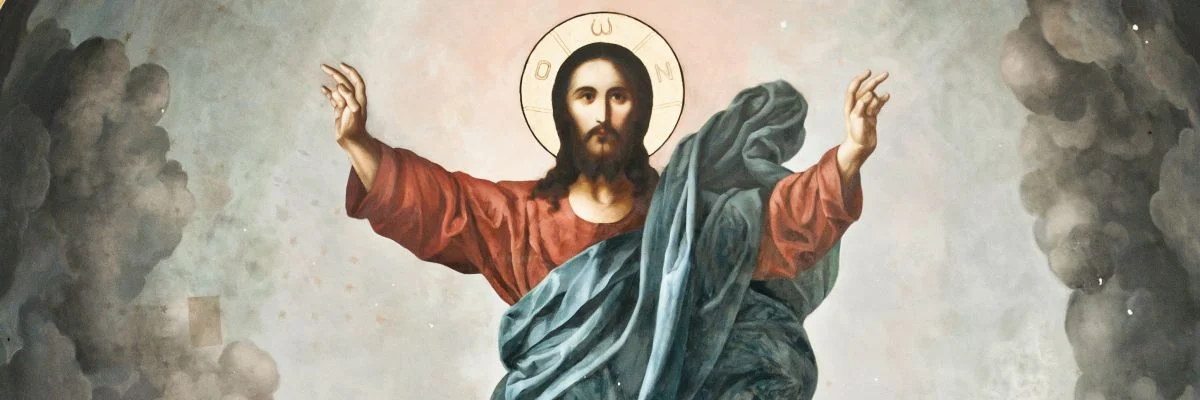
According to the Christian calendar, Thursday, May 9, 2024 marked the celebration of our Lord’s ascension, because it marks 40 days after the celebration of His resurrection, which we celebrated on March 31, 2024. (See Acts 1.1-11) But for many Christians, who are not part of more liturgically minded traditions, I would surmise that this “holiday” likely came and went without any fireworks or fanfare. For most folks, it was probably just another Thursday, which like all Thursdays was likely filled with the normal day to day responsibilities of professional and personal life. The question, then, that must be answered here is why celebrate the Ascension at all? Should it be considered a “holiday” on the pale with Christmas and Easter? Or is just another ritualistic trapping of church tradition that has been held over from ages now past? In the space that remains, I would like to suggest that Ascension Day is in fact a Christian “holiday”, because it is an opportunity to reflection on and celebrate another aspect of the person and work of Christ, particularly his session at the right hand of the Father.
Etymologically, the word “holiday” comes from the Old English word hāligdæg, which literally means “holy day”, and it was originally used to refer solely to days that were set aside for religious observance. These original “holy-days” are laid out in in the church’s annual calendar. For more on the traditional Christian calendar, see my post here. The point, however, is that a holiday is first and foremost a time for celebration and reflection on what Christ has done on our behalf. Of course, this significance is mostly all but lost on the secular society in which we now live, but as Christians, we have an opportunity to recover this particular significance, especially on days that otherwise have no cultural significance. I would submit that the Ascension is just such an opportunity.
But it is necessary to ask what an Ascension holiday would even celebrate. Sadly, for most Christians, the ascension of our Lord Jesus is somewhat of an after thought. It pales in significance to other aspects of His work, e.g. crucifixion, resurrection, return. While all of those are primary for understanding the person and work of Christ, the ascension is no less significant for our reflection on what Christ has accomplished for our salvation. The ascension celebrates the enthronement of Christ at the right hand of the Father. It is the fulfillment of the most quoted Old Testament verse in the New Testament, Psalm 110:1, which says “The Lord says to my lord: ‘Sit at my right hand until I make your enemies a footstool for your feet.’” He is now seated at the right hand of God, reigning in power until such a time as He should come again to finally defeat sin and establish His kingdom on earth.
The reality that Jesus is seated at the right hand of God is rich with significance for the devotion, reflection, and worship of Christians today. From this, we understand that Christ intercedes for his people (Hebrews 7:23-25), that he rules over and guides His church (Ephesians 1:20-23), that He will come again to receive us unto Himself (John 14:2-4). The present session of Christ is vital for our understanding of the ongoing ministry of the resurrected Christ, but so many churches, so many Christians for that matter, give it such short shrift. The Ascension holiday calls us back to an understanding of Christian time, to the perspective that all of the cycles and rhythms of life should revolve around the Gospel. Jesus Christ – His person and His work – should stand at the center of Christian living, and holidays like Ascension Day, just like Easter and Christmas, call us to focus on the centrality and necessity of Christ and His work.
Of course, there is no prescribed ritual or formula for observing the Ascension. It could be as simple as a private devotion, giving some time to the reading of relevant biblical texts, to meditation and prayer. On the other hand, it could be observed with a church service dedicated to the theme in which we sing and pray together and hear a sermon on some aspect of its significance. It may mean that someone who is a member of a church that does not observe the holiday looks for a more liturgically oriented church that does. It is perfectly fine to visit and participate in other Christian worship traditions, but, of course, we must use discernment in this. Families could set aside a time for family bible study and worship in which the story and significance of the ascension is related to children or other family members. It could even include the observance of the Lord’s supper, for Jesus promised us, “I will not drink from this fruit of the vine from now on until that day when I drink it new with you in my Father’s kingdom” (Matthew 26.29). And when we observe the Lord’s Supper, we “proclaim the Lord’s death until he comes.” (1 Corinthians 11.26)
The point of all this is to say that Ascension Day is another opportunity to extol the worth of Christ Jesus, to proclaim his powerful name, to relish in His sustaining grace that is constantly at work on our behalf. And there simply is no other person in our lives who deserves to be celebrated in this way. We celebrate birthdays, anniversaries, and other Hallmark holidays; these things order our lives. Wouldn’t it be better to order our lives around the person and work of Christ, so that we are constantly reminded of the great salvation in which we share. I think so.
For further study, see: Schreiner, Patrick. The Ascension of Christ: Recovering a Neglected Doctrine. Bellingham, WA: Lexham Press, 2020.
In a frequently repeated statement, Ernst Käsemann famously said that “Apocalyptic was the mother of all Christian theology.” Not as well-known is that two years later, Käsemann clarified what he actually meant by “apocalyptic”: for him, it referred to “eschatology,” or in his words, “the expectation of an imminent Parousia.” Personally, I would define apocalyptic eschatology a bit more broadly. Apocalyptic eschatology is the belief that this present age is irredeemably corrupted by sin, that God is coming to intervene in a final judgment on the wicked, and that at that time he will vindicate the righteous and deliver them into a new of age of eschatological salvation that is both personal in the sense of resurrection and cosmic in the sense of renewal. The question remains, however, as to how this perspective might rightly be considered to be the “mother of all Christian theology,” and in the space that remains, I would simply like to offer a few brief explanations for this claim.
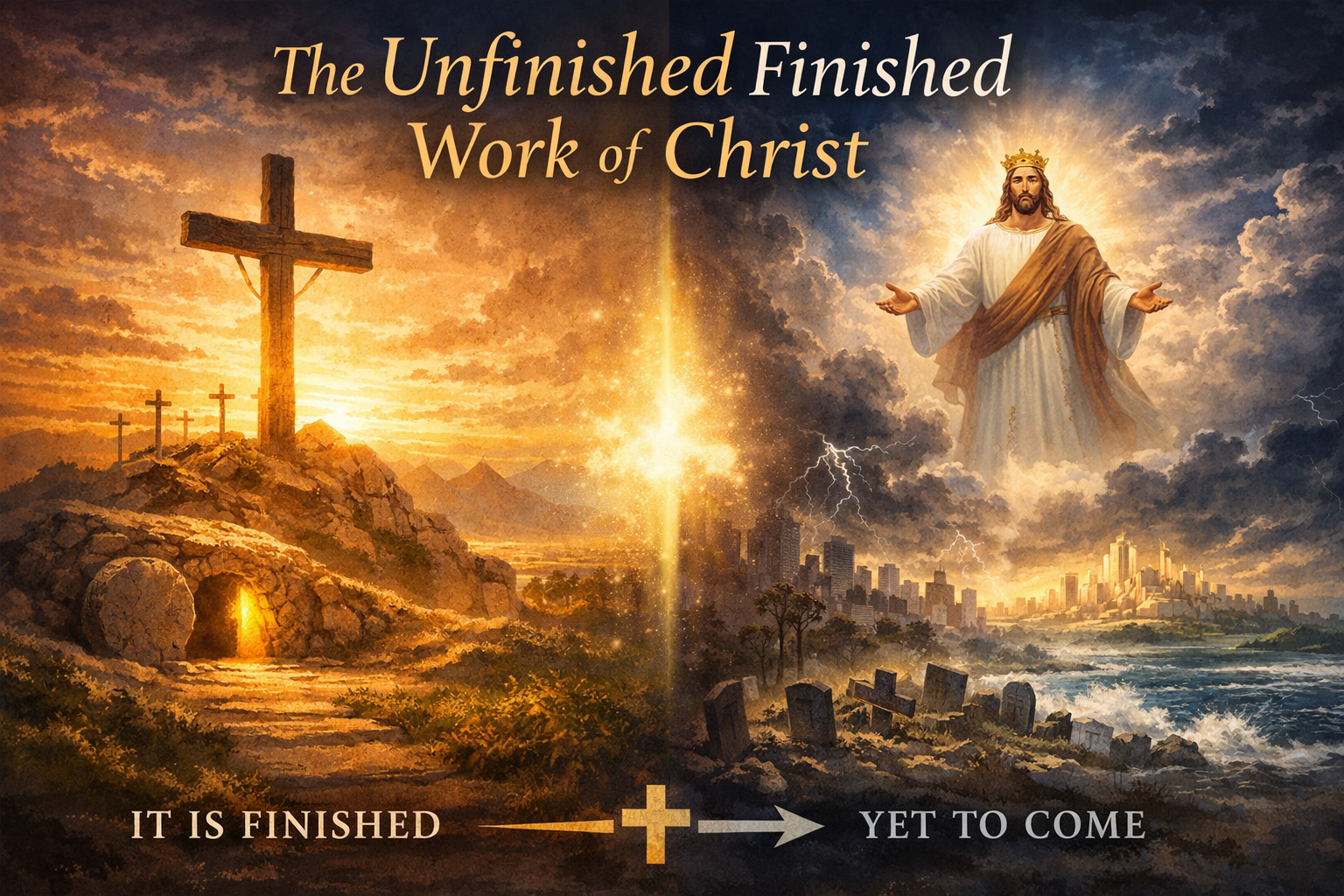
First, apocalyptic eschatology revolves around the final, climactic visitation of God to the earth. In the Old Testament, this visitation was often referred to as “the Day of the Lord.” In fact, there were many “days of the Lord” in the Old Testament, all of which function as typological portends of the final Day of the Lord when God comes in eschatological glory and power. Christian theology believes that this final Day of the Lord began when God came to earth in the incarnate Lord Jesus Christ. He was to be called Emmanuel, which is translated “God with us.” (Matthew 1.23). And the Lord Jesus himself said of Jerusalem, “you did not recognize the time when God visited you.” (Luke 19.44) This is exactly the point, namely that the coming of Christ in his incarnation was the beginning of the apocalyptic visitation of God to the earth. Of course, we know that He is coming again in glory and power to bring to consummation that which he began in His first coming, but the point here is that in Christ, God himself came in climactic apocalyptic visitation.
And this brings me to the second reason why apocalyptic eschatology is the mother of all Christian theology, namely that the first coming of Christ to the earth as a baby in a manger marked the beginning of the end of this corrupt present age. In New Testament theology, this is commonly referred to as the already and the not yet, namely that God’s plan for the final redemption of his people has already begun in Christ but it is not yet complete. Consequently, we live in this in between time of already and not yet, already saved, already filled with the eschatological spirit, already living under the blessings of God’s eschatological salvation in part, but we await the time when Christ will come again to consummate, or to bring to completion, that which he began by his death, resurrection and ascension. This is why Peter, in his Pentecost sermon, can say, “And it will be in the last days, says God, that I will pour out my Spirit on all people.” (Acts 2.17). The underlined phrase marks a change that Peter has applied to his source text (Joel 2.28), which simply says, “After this.” Peter understood that in Christ the last days had begun, and we have been living “in the [apocalyptic] last days” now for 2000 years.
But what about the final judgment of the wicked? Isn’t this something that is still yet future? How can we say that the apocalyptic judgment of the wicked began in Christ at his first coming? The answer is that this is exactly what we must say, as Jesus says in John 12.31-32, “Now is the judgment of this world. Now the ruler of this world will be cast out. As for me, if I am lifted up from the earth I will draw all people to myself.” The verb here, “lift up”, means to lift up on high, to exalt, or to raise to dignity and honor. This is why it is so ironic that John goes on to add the explanatory note, “He said this to indicate what kind of death he was about to die.” (John 12.33) The death of Jesus on the cross is nothing less than his enthronement. By his death, he judges the wickedness of this world and its ruler; He exposes the sinfulness and the ultimate fate of those that would reject him. This is why we can say that the final judgment began in Jesus, because a person’s response to the crucified and risen Christ will determine their eternal fate. In the death of Christ, judgment has begun, and it will be meted out when “the lamb who was slain,” as the Revelation calls him, returns in glory and power.
Finally, apocalyptic eschatology is the mother of all Christian theology because in Christ eschatological salvation has come. Salvation is inherently and irreducibly an eschatological concept. Saved from what, we might ask? We are saved from the eschatological wrath of God toward sin. And in Christ this salvation has broken into this present age and been made available to all those who respond to Christ in faith. This is why Peter refers to Joel’s prophecy to explain the coming of the Spirit at Pentecost, as we saw above. We have been filled with the eschatological Spirit, the seal and sign of the new age. We are new creatures, the fruit of a new creation, in Christ because of the Spirit. This is why the Apostle Paul can say, “Blessed is the God and Father of our Lord Jesus Christ, who has blessed us with every spiritual blessing in the heavens in Christ.” (Ephesians 1.3) Every spiritual blessing, every blessing of the age to come is already ours in Christ. We have been saved. We are being saved. And we will be saved. Apocalyptic salvation has already begun in Christ, and we are partakers of it by His indwelling Spirit.
So, I agree with the sentiments of Ernst Käsemann as expressed above. Apocalyptic eschatology is the mother of all Christian theology, because in Christ the apocalyptic visitation of God has come. All of the rest of our theology must be derived from this point, that the climactic work of God for the salvation of His people and His world has come in Christ. This is the Gospel; this is the good news of our salvation. In Christ, God himself has broken into this present age to redeem his people from their sin and set us free from its bondage, its corruption, even its very presence. And this is why we can have hope.
Full preterism, or consistent eschatology as it is sometimes called, is the belief that all of the Bible’s prophecies regarding the consummation of God’s plan for the redemption of humanity, including but not limited to the second coming of Jesus, the resurrection, final judgment, and the establishment of the new heavens and the new earth, occurred in 70 AD when the Romans destroyed the temple in Jerusalem. This event in their understanding marked the eschatological transition from the Old Covenant to the New Covenant, meaning that no further fulfillment is necessary. The new has come; it is really and truly here to its fullest extent. There is no need for any further act of God to complete his redemptive purposes in the world.
Now, let me be clear, this position is complete and utter heresy. It is a false gospel, because it denies the essential orthodox belief that “He will come again to judge the living and the dead” (Apostle’s Creed). It denies “the resurrection of the dead and the life of the world to come” (Nicene Creed). These denials among others put the views of full preterism wholly outside the boundaries of historic Christian orthodoxy. In the space that remains here, I would simply like to outline a few of the methodological and theological errors that are typical of this view, and then I will conclude by reaffirming the orthodox Christian hope.
The first error of full preterism is that they have a conspiracy theory view of hermeneutical method. In other words, their interpretations are based on a string of loosely related or even unrelated texts that are tied together by the occurrence of similar words. Of course, they would claim that they are following the principle of sola scriptura, namely that “scripture interprets scripture,” but I would submit that this is a theological conviction for biblical interpretation not a hermeneutical method for biblical interpretation. (See my post here). In stringing texts together the way that they do, they completely disregard concerns for the text’s historical and theological context and the author’s flow of thought. Instead, they flatten out the distinctive emphases of particular texts by smashing them together to say that same thing. More often than not, their exegesis comes across like someone throwing paint against a wall and then concluding they’ve painted Mona Lisa.
A second error of full preterism is that they hold to a gnostic view of the human person. Gnosticism is a heresy from the second century CE that suggests that Christ came to save us from this evil material world so that we could throw off the limits of our physical bodies and exist eternally as pure spirit. Of course, there is much more to it than this simple definition, but its weakness is that it disregards God’s design for human beings as embodied souls. We were made with a body and a soul, and to exist without either one of these is to be incomplete from the biblical point of view. This is why the resurrection of the body is such a primary doctrine; we are not merely transformed spiritually, we will be transformed physically when He comes again. Full preterism denies the future bodily resurrection of both the righteous and the wicked, and they suppose that when we die, we either go to heaven or hell to continue on as a “spiritual” being for eternity.
Thirdly, full preterism has an adoptionistic view of the incarnation. Adoptionism, or dynamic monarchianism, is a heresy from the third century CE that suggests that the divine logos came upon the man Jesus as his baptism, left him at his crucifixion, but then came upon him again at his resurrection. In other words, the man Jesus was “adopted” by God at his resurrection. The view of full preterism is not unlike adoptionistic Christology because they seem to believe the body of Jesus was only necessary during his earthly life. Often they suggest that his body was burnt up, or maybe it disappeared, at His ascension, so that He no longer has a body in heaven now. In other words, the son “adopted” a body for as long as he needed it, but then, when he no longer needed it, he discarded it. Along with the gnostic notions discussed above, this position negates the necessity of the resurrection. Why did Jesus even have to be resurrected from the dead with a body? Why not just rise as pure spirit? Here again, this view cannot explain the glorified body of Jesus, because it makes the incarnation temporary.
A fourth error that is part of the full preterist view is that they seem to have a fatalistic view of human history. Since they view this world as it is now as the “new heavens and new earth,” they have no expectation for any kind of renewal or transformation of the created order. According to this view, sin, death, disease, heartache, and the like will continue in perpetuity, eternally, without end. The only escape from the harsh realities of this world is when we die and go to heaven. But a renewed earth free of the corruption of sin and death is not in the purview of full preterism. This is fatalistic, because it essentially says that this is how the world is and this is how it will be. Nothing will ever get better, paradise will never be restored. Among others problems, this perspective denies the original purity and goodness of God’s creation and God’s intent to restore creation to that state of purity and goodness.
The final error that I see with full preterism, and perhaps the greatest, is that it offers a hopeless view of the Gospel. The reason for this is that it does not offer a final and full defeat of sin. Sure, the penalty of sin has been paid on the cross, and Satan has been defeated. But according to the full preterists, Satan and sin continue to run free forever. There is no final end to sin; there is no final defeat of Satan, no final judgment of the wicked. These things continue into perpetuity. The fact of the matter is that this is not the Gospel. Christ came, yes to pay the penalty for our sin, but also to free us from sin, and not only us, but the entirety of His creation. This is why the creation groans with yearning for the revelation of the sons of God (Romans 8.19-22). We look forward to a world that will be free of the domination and corruption of sin, free of the decay of death, where there will be no more tears, no more pains, no more heartaches. This is hope. This is the Gospel. And so we say, “Amen! Come, Lord Jesus!” (Revelation 22.20)