26 In the sixth month, the angel Gabriel was sent by God to a town in Galilee called Nazareth, 27 to a virgin engaged to a man named Joseph, of the house of David. The virgin’s name was Mary. 28 And the angel came to her and said, “Greetings, favored woman! The Lord is with you.” 29 But she was deeply troubled by this statement, wondering what kind of greeting this could be. 30 Then the angel told her, “Do not be afraid, Mary, for you have found favor with God. 31 Now listen: You will conceive and give birth to a son, and you will name him Jesus. 32 He will be great and will be called the Son of the Most High, and the Lord God will give him the throne of his father David. 33 He will reign over the house of Jacob forever, and his kingdom will have no end.”
34 Mary asked the angel, “How can this be, since I have not had sexual relations with a man?” 35 The angel replied to her, “The Holy Spirit will come upon you, and the power of the Most High will overshadow you. Therefore, the holy one to be born will be called the Son of God. 36 And consider your relative Elizabeth—even she has conceived a son in her old age, and this is the sixth month for her who was called childless. 37 For nothing will be impossible with God.” 38 “See, I am the Lord’s servant,” said Mary. “May it happen to me as you have said.” Then the angel left her.
Title: On Jesus was Born to Reign Text: Isaiah 9.6-7, Luke 1. 26-38, Matthew 2.1-12, Revelation 11.15-19 Series: Promises Fulfilled Church: Redeemer Baptist Church, Jonesboro, AR Date: December 29, 2024
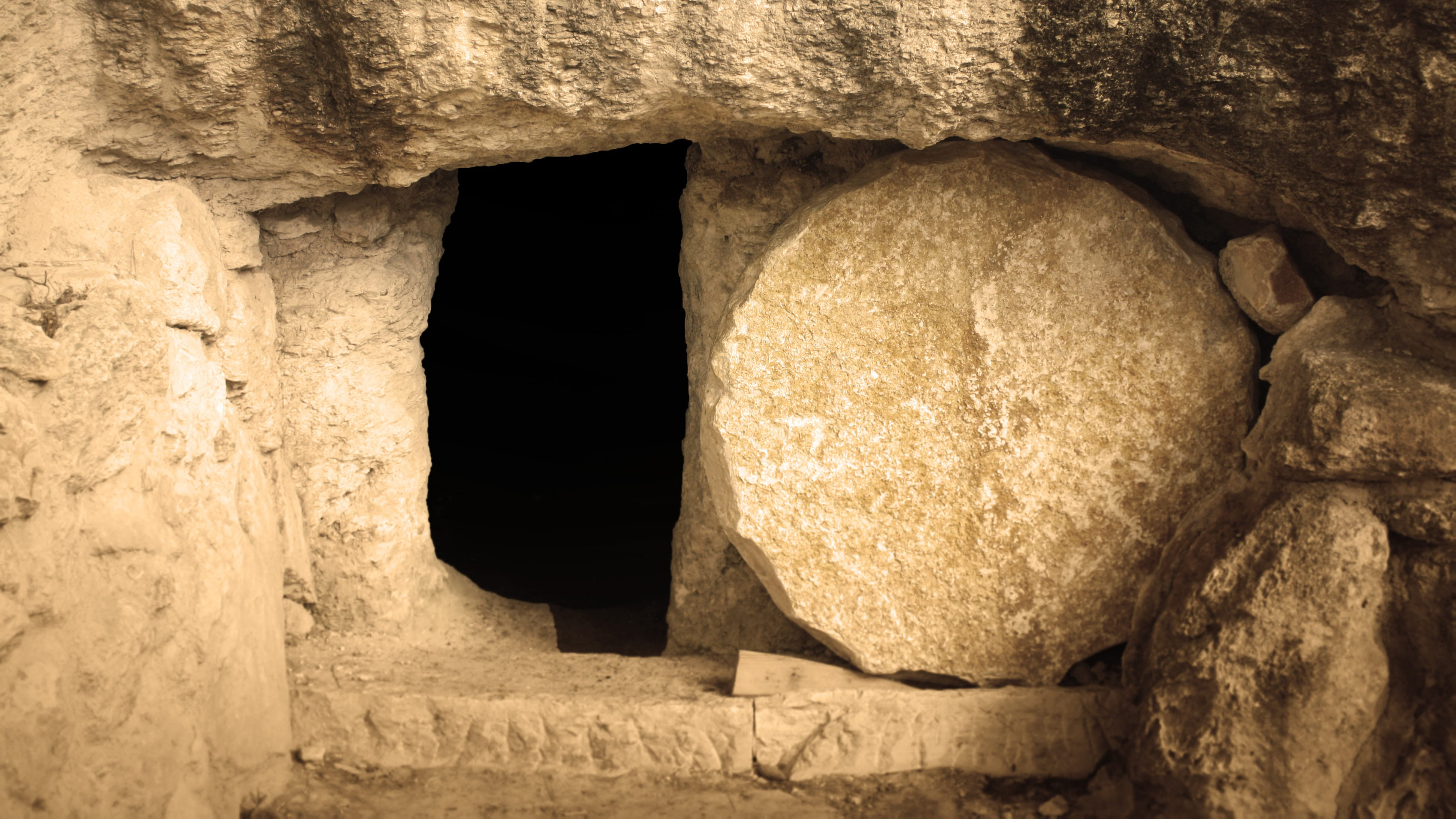
It is common in Biblical studies to suggest that the doctrine of the resurrection is a late development in Old Testament theology. Of course, the clearest Old Testament affirmation of this belief is found in Daniel 12.2, where we read, “Many who sleep in the dust of the earth will awake, some to eternal life, and some to disgrace and eternal contempt.” While the dating of Daniel is a much debated question, this verse certainly stands as a clear affirmation of the doctrine of a general resurrection possibly from as early as the exilic period. But is it possible that the doctrine of resurrection has a much longer presence in the Old Testament. I would suggest that it does, and I would base this suggestion, at least in part, on the words of David in Psalm 16, verse 10, where we read, “For you will not abandon me to Sheol; you will not allow your faithful one to see decay.” In this psalm, David is seeking divine protection because he has remained loyal to God, and he is praising God for his rich blessings with full confidence God will vindicate him and deliver him from death.
Now, this particular verse is quoted twice in the in the Book of Acts in defense of the resurrection of Jesus, once by Peter in Acts 2.27, and once again by Paul in Acts 13.35. Of course, their appeal to this verse raises all kinds of questions regarding the interpretive methods of Luke and the other apostles, but suffice it to say here that there is no need to suggest that they have misinterpreted it. They haven’t read something into it that wasn’t actually there in the first place. No, they have rightly understood the implications of David’s words, and by way of typological prediction, they have applied these words to the Messianic Son of David, Jesus the Christ. David genuinely believed that that God could and would deliver him even from death, so while the doctrine of resurrection is not spelled out explicitly, we have ample reason to believe that David held some conception of physical life after death. This is why he says, “you will not allow your faithful one to see decay.”
However, Peter’s explanation here deserves our attention. In Acts 2.29, he says, “Brothers and sisters, I can confidently speak to you about the patriarch David: He is both dead and buried, and his tomb is with us to this day.” Likewise, Paul explains similarly in Acts 13.36-37, “For David, after serving God’s purpose in his own generation, fell asleep, was buried with his fathers, and decayed,but the one God raised up did not decay.” Jesus was only in the grave for three days; there simply wasn’t enough time for his physical body to see decay. But David’s bones turned to dust a long time ago, as it is written, “All are going to the same place; all come from dust, and all return to dust.” (Ecclesiastes 3.20) This dusty fate is part of God’s curse on human sin, as we read in Genesis 3.19, “For you are dust, and you will return to dust.” It is a fate that awaits us all. So, we must ask the question: was David wrong in his expectation that his body would not see decay? Was he wrong in his hope for a bodily resurrection?
The answer to these questions must be a resounding, “May it never be.” David was not wrong to believe that God could and would deliver him even from the depths of death itself, and even though his physical body has long returned to the dust from whence it came, one day, his body will be raised new, perfectly whole and completely glorified. This is the hope of resurrection; it is the hope of de-dustification. As the Apostle Paul writes in Romans 8.11, “And if the Spirit of him who raised Jesus from the dead lives in you, then he who raised Christ from the dead will also bring your mortal bodies to life through his Spirit who lives in you.” Or again, in Philippians 3.21, “He will transform the body of our humble condition into the likeness of his glorious body, by the power that enables him to subject everything to himself.” If God can create man from the dust and breath the breath (the Hebrew word is the same word sometimes translated Spirit) of life into him so that he becomes a living soul, then he can certainly raise our bodies from the dust and give them eternal physical life by His Spirit.
In other words, far from being some late postulate in Old Testament theology, the idea of resurrection has a long standing place in Old Testament thought. It goes back at least to the time of David and the monarchy, some 1000 years before the time of Daniel and the exile, and it possibly goes back farther than that (but that is a topic for another time.) The point here is simply the Christian hope, nay, the biblical hope, is for nothing less than the perfected glory of bodily resurrection. As Jesus himself says, “a time is coming when all who are in the graves will hear his voice and come out—those who have done good things, to the resurrection of life, but those who have done wicked things, to the resurrection of condemnation.” (John 5.28-29) Maranatha!
105 Your word is a lamp for my feet and a light on my path. 106 I have solemnly sworn to keep your righteous judgments. 107 I am severely afflicted; Lord, give me life according to your word. 108 Lord, please accept my freewill offerings of praise, and teach me your judgments. 109 My life is constantly in danger, yet I do not forget your instruction. 110 The wicked have set a trap for me, but I have not wandered from your precepts. 111 I have your decrees as a heritage forever; indeed, they are the joy of my heart. 112 I am resolved to obey your statutes to the very end.
The fourteenth stanza of Psalm 119 starts with the letter נ (nun/pronounced like noon). Yes, that is right; the fourteenth stanza out of twenty-two. Remember, Psalm 119 is an acrostic psalm in which every stanza starts with the next letter of the Hebrew alphabet. It truly is a wonder of our psalmist could write 22 stanzas, 186 verses, extolling the perfections of God’s Word. There is no repetition, no redundancies; no, every stanza addresses some new or different aspect of God’s Law than the one before. His heart was clearly enamored – no, that’s not right – it was consumed with love, affection, devotion for the precepts of God. They were his very life, the only nourishment that could satisfy the pangs of his soul. This attitude should challenge and convict us. Modern Christians struggle to devote 15 minutes of their day to reading the bible; I know, because I am one of them. Why do our souls not hunger and thirst for the nourishment, the soul satisfying pleasures of the Word of God? This is the question that Psalm 119 is asking us.
In this stanza, our psalmist begins with those famous words, “Thy word is a lamp unto my feet, and a light unto my path” (verse 105, KJV). If you were raised in church like I was, then you probably just sang the lyrics to yourself. The fact that someone set these words to music captures the right sentiment, I think. The Psalms were originally prayers and songs that were meant for Israel’s corporate worship, so in singing them, we are no doubt emulating the practice of our psalmist. However, the connection between song and lyric and the affections of the heart is one that is often so underappreciated in modern worship services. Music has a way of touching us, of forming us, in the most vulnerable recesses of our hearts. What we sing, what we shout, these are the things that are planted in the memory of our hearts. This is why we should sing songs that are biblically faithful. As our psalmist goes on to write here, “I have solemnly sworn to keep your righteous judgments.” (verse 106). He is clear in these verses that his greatest affection, his first and foremost guiding principle for life, is the revelation of God in his Word.
And it would appear that he is in particular need of this guidance, as he goes on to write, “I am severely afflicted” (verses 107), and again, “My life is constantly in danger” (verse 109). And in the next verse, “The wicked have set a trap for me” (verse 110). Of course, we do not know the nature of this particular psalmists troubles; we have no narrative of his life to appeal to for background information. But it would appear that he is deeply troubled; he is facing some kind of opposition, some kind of persecution or threat, possibly even up to and including his very life. There are several occasions in the Book of Psalms where David faces similar circumstances, so we may reasonably infer that this was no light or temporary concern for our psalmist. And yet, in the midst of this trail, he continues to affirm his allegiance to the commands and ordinances of God. “I do not forget your instruction” (verse 109); “I have not wandered from your precepts” (verse 110). In fact, he goes on to say in the last verse of the stanza, “I am resolved to obey your statutes to the very end” (verse 112). Here again, we don’t know if the persecution he was facing was directly caused by his commitment to the God and His Word, but we do know that he was resolved, committed, and steadfast in keeping that Word until the very end, no matter what opposition he may face.
Where does a person find this kind of strength, this kind of steadfast loyalty to keeping the Word of God? I think we have our psalmists answer in verse 111, “I have your decrees as a heritage forever; indeed, they are the joy of my heart.” The word “heritage,” or perhaps “possession,” implies the idea of an inheritance; it is a surety of future prosperity. It is the reward that awaits the firstborn. And for our psalmist, the inheritance that he is anticipating is nothing less than the promises of the Word of God. It is the words of Lord Jesus, when he says, “Well done good and faithful servant, enter into the joy of your master.” It is a certainty, a sure and firm hope, of future glories, even in the midst of present difficulties and hardships. The Word of God is our hope, and it is the joy of our hearts. Hope and joy; two out of three of the great triad of Christian virtues. These are the defining characteristics of those who trust in God’s word – unshakable hope, indomitable joy. Clearly, our psalmist had these in his heart, and no matter what troubles or heartaches may come, he was able to persevere because of he found his hope and his joy in the abiding Words of the living God.
This stanza, nay this entire psalm for that matter, is a wonder to me. It challenges and convicts my soul in ways that I am still trying to define even after writing on these first fourteen stanzas. I wonder why God would put a psalm like this one in the Bible; it seems somewhat self-congratulatory – 186 verses on the soul satisfying perfections of His own Word. But perhaps, he put it here because he know that in it he has provided the salve for every every need of the human heart. So often, we look for our comfort, our peace, our security, our hop, our joy in all the wrong places. This is sin. But if we could learn to emulate the attitude and affections of our psalmist, if we would truly begin to hide his Word in our hearts, then we might be able say with the psalmist, “I have not wandered from your precepts.” In His goodness, God has provided the solution to every problem, the cure for every heartache, the peace and comfort for every trial. It is Him, God himself; He is the only one who can answer the deepest longings of our souls. And he has done this in His Word. May we learn to emulate the conviction of our psalmist and find our peace, our hope, and our comfort in His Word.
TEXT 7 “Are these things true?” the high priest asked.
2 “Brothers and fathers,” he replied, “listen: The God of glory appeared to our father Abraham when he was in Mesopotamia, before he settled in Haran, 3 and said to him: Leave your country and relatives, and come to the land that I will show you.4 “Then he left the land of the Chaldeans and settled in Haran. From there, after his father died, God had him move to this land in which you are now living. 5 He didn’t give him an inheritance in it—not even a foot of ground—but he promised to give it to him as a possession, and to his descendants after him, even though he was childless. 6 God spoke in this way: His descendants would be strangers in a foreign country, and they would enslave and oppress them for four hundred years.7 I will judge the nation that they will serve as slaves, God said. After this, they will come out and worship me in this place.8 And so he gave Abraham the covenant of circumcision. After this, he fathered Isaac and circumcised him on the eighth day. Isaac became the father of Jacob, and Jacob became the father of the twelve patriarchs.
9 “The patriarchs became jealous of Joseph and sold him into Egypt, but God was with him 10 and rescued him out of all his troubles. He gave him favor and wisdom in the sight of Pharaoh, king of Egypt, who appointed him ruler over Egypt and over his whole household. 11 Now a famine and great suffering came over all of Egypt and Canaan, and our ancestors could find no food. 12 When Jacob heard there was grain in Egypt, he sent our ancestors there the first time. 13 The second time, Joseph revealed himself to his brothers, and Joseph’s family became known to Pharaoh. 14 Joseph invited his father Jacob and all his relatives, seventy-five people in all, 15 and Jacob went down to Egypt. He and our ancestors died there, 16 were carried back to Shechem, and were placed in the tomb that Abraham had bought for a sum of silver from the sons of Hamor in Shechem.
17 “As the time was approaching to fulfill the promise that God had made to Abraham, the people flourished and multiplied in Egypt 18 until a different king who did not know Joseph ruled over Egypt. 19 He dealt deceitfully with our race and oppressed our ancestors by making them abandon their infants outside so that they wouldn’t survive. 20 At this time Moses was born, and he was beautiful in God’s sight. He was cared for in his father’s home for three months. 21 When he was put outside, Pharaoh’s daughter adopted and raised him as her own son. 22 So Moses was educated in all the wisdom of the Egyptians and was powerful in his speech and actions.
23 “When he was forty years old, he decided to visit his own people, the Israelites. 24 When he saw one of them being mistreated, he came to his rescue and avenged the oppressed man by striking down the Egyptian. 25 He assumed his people would understand that God would give them deliverance through him, but they did not understand. 26 The next day he showed up while they were fighting and tried to reconcile them peacefully, saying, ‘Men, you are brothers. Why are you mistreating each other?’ 27 “But the one who was mistreating his neighbor pushed Moses aside, saying: Who appointed you a ruler and a judge over us?28 Do you want to kill me, the same way you killed the Egyptian yesterday?
29 “When he heard this, Moses fled and became an exile in the land of Midian, where he became the father of two sons. 30 After forty years had passed, an angel appeared to him in the wilderness of Mount Sinai, in the flame of a burning bush. 31 When Moses saw it, he was amazed at the sight. As he was approaching to look at it, the voice of the Lord came: 32 I am the God of your ancestors—the God of Abraham, of Isaac, and of Jacob. Moses began to tremble and did not dare to look. 33 “The Lord said to him: Take off the sandals from your feet, because the place where you are standing is holy ground.34 I have certainly seen the oppression of my people in Egypt; I have heard their groaning and have come down to set them free. And now, come, I will send you to Egypt.35 “This Moses, whom they rejected when they said, Who appointed you a ruler and a judge?—this one God sent as a ruler and a deliverer through the angel who appeared to him in the bush. 36 This man led them out and performed wonders and signs in the land of Egypt, at the Red Sea, and in the wilderness for forty years.
37 “This is the Moses who said to the Israelites: Godwill raise up for you a prophet like me from among your brothers.38 He is the one who was in the assembly in the wilderness, with the angel who spoke to him on Mount Sinai, and with our ancestors. He received living oracles to give to us. 39 Our ancestors were unwilling to obey him. Instead, they pushed him aside, and in their hearts turned back to Egypt. 40 They told Aaron: Make us gods who will go before us. As for this Moses who brought us out of the land of Egypt, we don’t know what’s happened to him.41 They even made a calf in those days, offered sacrifice to the idol, and were celebrating what their hands had made. 42 God turned away and gave them up to worship the stars of heaven, as it is written in the book of the prophets: House of Israel, did you bring me offerings and sacrificesfor forty years in the wilderness?43 You took up the tent of Molochand the star of your god Rephan,the images that you made to worship.So I will send you into exile beyond Babylon.
44 “Our ancestors had the tabernacle of the testimony in the wilderness, just as he who spoke to Moses commanded him to make it according to the pattern he had seen. 45 Our ancestors in turn received it and with Joshua brought it in when they dispossessed the nations that God drove out before them, until the days of David. 46 He found favor in God’s sight and asked that he might provide a dwelling place for the God of Jacob. 47 It was Solomon, rather, who built him a house, 48 but the Most High does not dwell in sanctuaries made with hands, as the prophet says: 49 Heaven is my throne,and the earth my footstool.What sort of house will you build for me?says the Lord,or what will be my resting place?50 Did not my hand make all these things?
51 “You stiff-necked people with uncircumcised hearts and ears! You are always resisting the Holy Spirit. As your ancestors did, you do also. 52 Which of the prophets did your ancestors not persecute? They even killed those who foretold the coming of the Righteous One, whose betrayers and murderers you have now become. 53 You received the law under the direction of angels and yet have not kept it.”
~Acts 7.1-53
Title: On the Value and Relevance of the Old Testament Text: Acts 7.1-53 Series: The Book of Acts Church: Redeemer Baptist Church, Jonesboro, AR Date: April 7, 2024
1 I have taken refuge in the Lord. How can you say to me, “Escape to the mountains like a bird! 2 For look, the wicked string bows; they put their arrows on bowstrings to shoot from the shadows at the upright in heart. 3 When the foundations are destroyed, what can the righteous do?”
4 The Lord is in his holy temple; the Lord—his throne is in heaven. His eyes watch; his gaze examines everyone. 5 The Lord examines the righteous, but he hates the wicked and those who love violence. 6 Let him rain burning coals and sulfur on the wicked; let a scorching wind be the portion in their cup. 7 For the Lord is righteous; he loves righteous deeds. The upright will see his face.
~Psalm 11
Series: Praying through the Psalms Text: Psalm 11.1-7 Church: South Caraway Baptist Church, Jonesboro, AR Date: June 7, 2023
A psalm of David when he fled from his son Absalom.
1 Lord, how my foes increase! There are many who attack me. 2 Many say about me, “There is no help for him in God.” Selah
3 But you, Lord, are a shield around me, my glory, and the one who lifts up my head. 4 I cry aloud to the Lord, and he answers me from his holy mountain. Selah
5 I lie down and sleep; I wake again because the Lord sustains me. 6 I will not be afraid of thousands of people who have taken their stand against me on every side.
7 Rise up, Lord! Save me, my God! You strike all my enemies on the cheek; you break the teeth of the wicked. 8 Salvation belongs to the Lord; may your blessing be on your people. Selah
~Psalm 3
Series: Praying through the Psalms Text: Psalm 3.1-8 Church: South Caraway Baptist Church, Jonesboro, AR Date: April 12, 2023
There is the view which misinterprets silence as a ceremonial gesture, as a mystical desire to get beyond the Word. This is to miss the essential relationship of silence to the Word. Silence is the simple stillness of the individual under the Word of God. Silence is nothing else but waiting for God’s Word and coming from God’s word with a blessing. … Silence before the Word leads to right hearing and thus also right speaking of the Word of God at the right time. … Let none expect from silence anything but a direct encounter with the Word of God, for the sake of which he has entered into silence.
~Dietrich Bonhoeffer, Life Together
Topic: Silence and Solitude Series: Spiritual Disciplines of the Christian Life Church: South Caraway Baptist Church, Jonesboro, AR Date: February 08, 2023





 Faith seeking Understanding