Tag Archives: Sufficiency

On Psalm 119.105-112 (Nun)

105 Your word is a lamp for my feet
and a light on my path.
106 I have solemnly sworn
to keep your righteous judgments.
107 I am severely afflicted;
Lord, give me life according to your word.
108 Lord, please accept my freewill offerings of praise,
and teach me your judgments.
109 My life is constantly in danger,
yet I do not forget your instruction.
110 The wicked have set a trap for me,
but I have not wandered from your precepts.
111 I have your decrees as a heritage forever;
indeed, they are the joy of my heart.
112 I am resolved to obey your statutes
to the very end.

The fourteenth stanza of Psalm 119 starts with the letter נ (nun/pronounced like noon). Yes, that is right; the fourteenth stanza out of twenty-two. Remember, Psalm 119 is an acrostic psalm in which every stanza starts with the next letter of the Hebrew alphabet. It truly is a wonder of our psalmist could write 22 stanzas, 186 verses, extolling the perfections of God’s Word. There is no repetition, no redundancies; no, every stanza addresses some new or different aspect of God’s Law than the one before. His heart was clearly enamored – no, that’s not right – it was consumed with love, affection, devotion for the precepts of God. They were his very life, the only nourishment that could satisfy the pangs of his soul. This attitude should challenge and convict us. Modern Christians struggle to devote 15 minutes of their day to reading the bible; I know, because I am one of them. Why do our souls not hunger and thirst for the nourishment, the soul satisfying pleasures of the Word of God? This is the question that Psalm 119 is asking us.

In this stanza, our psalmist begins with those famous words, “Thy word is a lamp unto my feet, and a light unto my path” (verse 105, KJV). If you were raised in church like I was, then you probably just sang the lyrics to yourself. The fact that someone set these words to music captures the right sentiment, I think. The Psalms were originally prayers and songs that were meant for Israel’s corporate worship, so in singing them, we are no doubt emulating the practice of our psalmist. However, the connection between song and lyric and the affections of the heart is one that is often so underappreciated in modern worship services. Music has a way of touching us, of forming us, in the most vulnerable recesses of our hearts. What we sing, what we shout, these are the things that are planted in the memory of our hearts. This is why we should sing songs that are biblically faithful. As our psalmist goes on to write here, “I have solemnly sworn to keep your righteous judgments.” (verse 106). He is clear in these verses that his greatest affection, his first and foremost guiding principle for life, is the revelation of God in his Word.

And it would appear that he is in particular need of this guidance, as he goes on to write, “I am severely afflicted” (verses 107), and again, “My life is constantly in danger” (verse 109). And in the next verse, “The wicked have set a trap for me” (verse 110). Of course, we do not know the nature of this particular psalmists troubles; we have no narrative of his life to appeal to for background information. But it would appear that he is deeply troubled; he is facing some kind of opposition, some kind of persecution or threat, possibly even up to and including his very life. There are several occasions in the Book of Psalms where David faces similar circumstances, so we may reasonably infer that this was no light or temporary concern for our psalmist. And yet, in the midst of this trail, he continues to affirm his allegiance to the commands and ordinances of God. “I do not forget your instruction” (verse 109); I have not wandered from your precepts” (verse 110). In fact, he goes on to say in the last verse of the stanza, “I am resolved to obey your statutes to the very end” (verse 112). Here again, we don’t know if the persecution he was facing was directly caused by his commitment to the God and His Word, but we do know that he was resolved, committed, and steadfast in keeping that Word until the very end, no matter what opposition he may face.

Where does a person find this kind of strength, this kind of steadfast loyalty to keeping the Word of God? I think we have our psalmists answer in verse 111, “I have your decrees as a heritage forever; indeed, they are the joy of my heart.” The word “heritage,” or perhaps “possession,” implies the idea of an inheritance; it is a surety of future prosperity. It is the reward that awaits the firstborn. And for our psalmist, the inheritance that he is anticipating is nothing less than the promises of the Word of God. It is the words of Lord Jesus, when he says, “Well done good and faithful servant, enter into the joy of your master.” It is a certainty, a sure and firm hope, of future glories, even in the midst of present difficulties and hardships. The Word of God is our hope, and it is the joy of our hearts. Hope and joy; two out of three of the great triad of Christian virtues. These are the defining characteristics of those who trust in God’s word – unshakable hope, indomitable joy. Clearly, our psalmist had these in his heart, and no matter what troubles or heartaches may come, he was able to persevere because of he found his hope and his joy in the abiding Words of the living God.

This stanza, nay this entire psalm for that matter, is a wonder to me. It challenges and convicts my soul in ways that I am still trying to define even after writing on these first fourteen stanzas. I wonder why God would put a psalm like this one in the Bible; it seems somewhat self-congratulatory – 186 verses on the soul satisfying perfections of His own Word. But perhaps, he put it here because he know that in it he has provided the salve for every every need of the human heart. So often, we look for our comfort, our peace, our security, our hop, our joy in all the wrong places. This is sin. But if we could learn to emulate the attitude and affections of our psalmist, if we would truly begin to hide his Word in our hearts, then we might be able say with the psalmist, “I have not wandered from your precepts.” In His goodness, God has provided the solution to every problem, the cure for every heartache, the peace and comfort for every trial. It is Him, God himself; He is the only one who can answer the deepest longings of our souls. And he has done this in His Word. May we learn to emulate the conviction of our psalmist and find our peace, our hope, and our comfort in His Word.

For further study:
Introduction
Psalm 119.1-8
Psalm 119.9-16
Psalm 119.17-24
Psalm 119.25-32
Psalm 119.33-40
Psalm 119.41-48
Psalm 119.49-56
Psalm 119.57-64
Psalm 119.65-72
Psalm 119.73-80
Psalm 119.81-88
Psalm 119.89-96
Psalm 119.97-104


On Psalm 119.89-96 (Lamed)

89 Lord, your word is forever;
it is firmly fixed in heaven.
90 Your faithfulness is for all generations;
you established the earth, and it stands firm.
91 Your judgments stand firm today,
for all things are your servants.
92 If your instruction had not been my delight,
I would have died in my affliction.
93 I will never forget your precepts,
for you have given me life through them.
94 I am yours; save me,
for I have studied your precepts.
95 The wicked hope to destroy me,
but I contemplate your decrees.
96 I have seen a limit to all perfection,
but your command is without limit.

The twelfth stanza of Psalm 119 (ל/Lamed) begins with a beautiful affirmation of the permanence and timelessness of God’s Word. “Lord, your Word is forever; it is firmly fixed in heaven.” (verse 89) It is not just another curiosity that has been passed down to us from antiquity; no, it is the living and abiding Word of the one true and living God. In theology, this is called the doctrine of inspiration, namely that God speaks through the human authors of the Biblical documents, such that their words are His very words. This is why the Bible has lasting relevance and authority even beyond the audiences to whom it was originally written. As our psalmist puts it, “Your judgments stand firm today. for all things are your servants.” (verse 91) Contrary to the opinions of modern culture, the Word of God is still the right and true prescription for human flourishing; the virtues it sanctions and the vices it prohibits are not outdated holdovers from people and places now long past. No, the Bible is special revelation from God in which He reveals the problem of humanity’s sin and the way of salvation that comes by grace through faith in the person and work of Jesus Christ.

Now, in verse 90, we read “Your faithfulness is for all generations; you established the earth, and it stands firm.” As we have noted in previous posts, most of the verses in Psalm 119 contain some synonym for God’s Word, e.g. laws, commands, instructions, precepts, etc., and so here we have “your faithfulness” (אֱמֽוּנָתֶךָ). It seems clear that this word is meant to stand in parallel relationship with “your word” (verse 89) and “your judgments” (verse 91); interestingly, the Septuagint (LXX) translates this word as “your truth” (ἡ ἀλήθειά σου). The point of all of this is to say that the abiding authority of God’s Word is grounded in who He is, i.e. in His unchanging character. He is faithful; He keeps His promises. Whatever He says, He will most certainly do. His Word is a reflection of who He is: His holiness, His grace, His power, His love, and even His incomprehensibility. This is why our psalmist writes in verse 96, “I have seen a limit to all perfection, but your command is without limit,” or as it reads in the NET Bible, “your commands are beyond full comprehension.” The God of the Bible is infinite; He is a mystery whose depths can never fully be exhausted. So also is His Word.

However, this does not mean that we should not read or study the Word of God. Yes, the depths of the Bible’s riches are inexhaustible, but they are also perspicuous and clear. I have previously written on this topic, here. But suffice it to say that in the act of inspiration, the infinite God condescended to our finite capacities for understanding. He is infinite in power, wisdom, and goodness, and we are His creatures, finite in our ability to comprehend His perfections. But He chose to reveal Himself in and through the Word so that we might know Him and be reconciled to Him. So yes, the Bible is so clear that any human being, regardless of their intellectual aptitude or educational achievement, can read it and understand their sin and their need for a savior; it is also, at the same time, a limitless source of mystery and wonder, such that even the finest minds throughout human history have been unable to fully explain all of its secrets.

For our psalmist, this means that the Word of God must be continuously read, studied, and contemplated. As he says in verse 93, “I will never forget your precepts, for you have given me life through them.” Here again, not only do we see that abiding authority of God’s Word, but we also see its all encompassing sufficiency. Our psalmist understands that every need of the human soul is provided for in the inspired Word of God. In verse 92, we read, “If your instruction had not been my delight, I would have died in my affliction.” The word “delight” conveys the idea of contentment, satisfaction, or pleasure. In other words, our psalmist understands that even in the midst of turmoil, adversity, and heartache, there is a joy, a “peace that passes all understanding” that is available when we rest in the promises of God’s Word. The spiritual disciplines of the Word (study, meditation, memorization) are the God prescribed antidote for our anxiety, our fear, our depression, our despair. Again, our psalmist writes in verse 95, “The wicked hope to destroy me, but I contemplate your decrees.”

This devotion, this diligence in the discipline of the Word, this affection for the perfections of God’s Law, is a distinguishing characteristic of those who belong to Him. As our psalmist writes in verse 94. “I am yours; save me, for I have studied your precepts.” We are a people of the Book. Our faith is not based on a human philosophy or mere reflections on the divine; no, it is based on the inspired, inerrant, authoritative, sufficient revelation of God Himself. In His Word, He has clearly and finally revealed the one and only path unto salvation, and He has called His people to walk upon it until we reach glory. So, when our psalmist prays “save me”, he is not simply expressing his desire to be saved from the penalty of sin. Rather, he is praying for the ongoing work of salvation to be applied in his life through sanctification, that God would save him from the power of sin through His sufficient Word. In the same breath, he is also expressing that most fundamental of Christian hopes, namely that one day he would be saved from the very presence of sin entirely, a hope that is grounded in the promises of God’s Word. In other words, our psalmist understands that the full experience of our salvation comes to us through the Word by the Spirit. Therefore, we should never cease to be amazed at the riches of His word, and we should constantly devote ourselves to its discipline.

For further study:
Introduction
Psalm 119.1-8
Psalm 119.9-16
Psalm 119.17-24
Psalm 119.25-32
Psalm 119.33-40
Psalm 119.41-48
Psalm 119.49-56
Psalm 119.57-64
Psalm 119.65-72
Psalm 119.73-80
Psalm 119.81-88


On Something Old, Something New (Part 1)

Question: How do we connect the Old and New Testaments?
Series: Wednesday Night Bible Study – Q & A
Church: South Caraway Baptist Church, Jonesboro, AR
Date: July 13, 2022


On Biblical Interpretation and the Analogy of Faith

The reality is that no one comes to the interpretation of Scripture with a completely blank slate; we all have some amount of pre-understanding that we bring with us when we read the Bible. This pre-understanding is formed through our education and our experiences, the combination of which overtime becomes part of the lenses through which we read Holy Scripture. Most of the time, our pre-understanding is helpful, because it forms a foundation from which we are able to engage the text and grasp its meaning; however, sometimes our pre-understanding can be a hindrance, if and when we are unwilling to submit it to the authority of the Biblical text. This is why the interpretive process is sometimes referred to as a “hermeneutical spiral”, because even as our pre-understanding helps us to understand the text, so in turn, the text shapes and forms our pre-understanding to be conformed with Biblical truth.

For those of us who are committed to the principle that the Bible is God’s Word, part of that pre-understanding includes our theological convictions about the nature of Bible. The inspiration, inerrancy, authority, sufficiency, perspicuity, et al. are foundational truths which ground Evangelical biblical interpretation. The truth that the one true and living God has spoken through His Word in ways that we may understand and apply is what makes our attempts to understand the Bible so significant. We are reading God’s very word. And it is precisely because we are reading God’s word that we hold to a conviction known as the “analogy of faith,” or the idea that scripture interprets scripture. It is a hermeneutical conviction that has been passed down to us from our Reformation forebears, and it is the veritable corner stone of Protestant biblical interpretation. However, in application, it has caused much confusion, because more often than not it is treated as an interpretive method rather than as a theological conviction.

The “analogy of faith”, sometimes also referred to as the “analogy of scripture,” is primarily a theological conviction about the unity and coherence of Biblical truth. It is grounded in the truth that the Bible, though it was written by many diverse human authors over several centuries, actually has only one primary author, i.e. the one true and living God. He has spoken clearly through His Word for the purpose that it may be understood, and He is not the author of confusion. Therefore, the overarching story of the Bible, its primary message and its central tenets, is essentially clear, consistent, and consonant with itself. There are no actual contradictions in the Biblical text, and if there is an apparent contradiction, then the problem lies with our understanding of the text and not with the text itself. So, the principle that scripture interprets scripture merely means that when multiple passages say something on a particular topic (either explicitly or implicitly), then what those passages say about that topic will be complementary and not contradictory.

On the other hand, the “analogy of faith” is not primarily a hermeneutical method; it does not necessarily tell us how to interpret the Bible. It does not permit us to ignore the social, cultural, or historical context of a passage, nor does it allow us to disregard the literary and grammatical conventions by which it is communicated. It also does not require that the various human authors of Holy Scripture say exactly the same thing in exactly the same way. In other words, we must allow for diversity of nuance, differences in emphasis, and uniqueness in application among the biblical authors. Our interpretation must be grounded in the meaning that the Spirit inspired human author intended to convey to his primary audience. We must follow his flow of thought, consider his purpose for writing, analyze his meaning on his terms. These are the essential building blocks of a sound interpretive method.

The “analogy of faith” also does not give us the license to move haphazardly through the Scriptures connecting passages that are otherwise unconnected. When the biblical authors quote directly from or make clear allusion to other passages, we may consider their relationship, but the principle that scripture interprets scripture does not mean that particularities and distinctions between passages can be minimized or ignored. Individual passages must be engaged on their own merits within their immediate context. This is because biblical meaning flows outward from smaller units of thought to wider units of thought, starting with the sentence, then the paragraph, then the pericope, then the section, the book, books by the same author, books in the same testament, and finally the whole Bible. To reverse this process is to impose meaning on the scriptures from the top down; it is reading meaning into the scriptures that may not otherwise be present or supported by the passage.

The composition and preservation of the Bible is nothing less than a manifestation of God’s providence and sovereignty. It was written over the course of 2000 years by several dozen different authors in three different languages across three continents, and yet, its central truths and primary message are remarkably consistent and harmonious. Its message is so simple that a child could understand it, and yet so profound that the greatest minds throughout history have failed to exhaust its mysteries. And God has ordained that it should be the primary means by which we might come to know Him and His will for our lives. The good news of the Gospel is that He wants to be known, and He has revealed Himself in the Bible so that we may read, understand, and be transformed. If we will simply seek Him in, by, and through His Word, then we may be sure that He will be found.

For further study, see also:
On Sola Scriptura and the Use of Bible Study Resources
On Biblical Interpretation and the Holy Spirit
On Hermeneutics & Interpreting the Bible


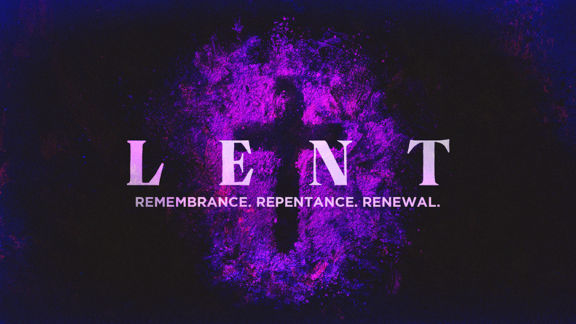
On Common Objections to the Observation of Lent

Well, as they say, it is that time of year again. No, I am not talking about tax season; I am talking about the season in the traditional Christian calendar which is set aside for the purpose of self-reflection, examination, confession, and repentance. I am talking about that time of the year when we are asked to set aside the creature comforts that we are so dependent on and to cultivate that pure and singular dependence upon Christ through His Spirit. It is that time of year when Christians from all around the world from many varied theological and cultural backgrounds are invited to set their gaze on the cross of our Lord Jesus and the price that He paid for our sin, even as they begin to anticipate that victorious day when we will celebrate His resurrection from the dead. I am talking about the season of Lent. (For more on this season and its usefulness in the Christian life, see my post here.)

However, in most non-liturgical, low-church traditions, especially down here in the good ole’ Bible belt, the idea of observing the season of Lent is most often met with hostility and a host of objections as to why Christians should not observe this ancient practice. In this post, I would like to consider just a few of these, so that we may perhaps have a clearer understanding as to the benefits and the dangers of observing the season of Lent.

One of the primary objections that is most often given against the practice of Lent, as well as any other practice that might remotely be considered liturgical, is that it comes to us from the traditions of the Roman Catholic Church. There is a deep seated antipathy, an unstated but ever present aversion to any and all things Roman Catholic, that lives just under the surface in many Protestant denominations, and this is much to our shame. (This may be a symptom of a wider problem, i.e. the hubris of denominational tribalism that treats all those outside of our own tradition with skepticism and disdain.) Now, I will be the first to admit that there are many facets of Roman Catholic theology that I find troublesome and concerning, many aspects of their belief and practice that are hard to square with the teaching of the Bible, but we do ourselves a great disservice when we dismiss their contributions to the Christian faith altogether.

After all, the Roman Catholic Church was the only church for the first 1500 years of Christian history, and though they might have gone astray along the way, they actually got many things right. From their centuries long faithfulness comes classic formulations of doctrines like the trinity, the hypostatic union, etc., and for these we must be ever grateful. But not only in matters of doctrinal orthodoxy, but in the details of faithful orthopraxy, their contributions must be considered, and not merely dismissed. They have given us a rich and beautiful liturgical tradition which we would do well to consider in our own attempts to be faithful worshippers of Christ. Practices like the lectionary and the calendar are just some of the contributions that come to us from that tradition. I believe the season of Lent to be one of these contributions from which our faith and practice could benefit deeply. In other words, we don’t have to throw the baby out with the bathwater, so to speak.

A second objection that is somewhat connected with the first has do with the purpose of the season of Lent. In some traditions, Lent is presented as a way of “earning” God’s forgiveness, as a meritorious act by which we might deserve God’s grace, even as a kind of penance. In this light, the observance of Lent is made to be a mandatory practice for all of those who call themselves Christians. Clearly, this flies in the face of the clear teaching of the Bible. Our sins were once and for all completely forgiven when we placed our faith in Christ. This is what it means to be justified. There are no actions that we can take to earn or deserve more grace from God, because He has already poured out grace upon grace to us through the person and work of Jesus Christ. We are not required to do any works of penance for our sins, because the once and for all punishment for our sins fell on the shoulders of Jesus Christ as He was nailed to the cross to die. The payment for sin has been made in full; nothing more is necessary.

However, the repentance that God requires is more than a one time event; on the contrary, it is the lifelong discipline of a follower of Christ as we turn from our sin daily. This is the first of Martin Luther’s 95 Theses, that “When our Lord and Master Jesus Christ said, “Repent” (Mt 4:17), he willed the entire life of believers to be one of repentance.” Repentance is a habit, and setting aside a season for intentional reflection and cultivation of that habit can be quite beneficial in the life of the Christian. Especially as we prepare ourselves for the festivities of Holy Week, which culminate in the events of Good Friday and Easter Sunday, this season can aid us in our sanctification by exposing our sin and then reminding us anew of the wonder of the atoning work of our Savior and the victory that we have over sin through His resurrection. So, while the season of Lent should not be observed as a means to earning God’s grace, it can help us to understand and appreciate the grace that we have already received in new and fresh ways.

A final objection that is often raised in this conversation is that the practice of Lent is nowhere explicitly commanded in Holy Scripture. And if I am being honest, this is the strongest objection to be considered, because we all want to be biblical in the practice and expression of our faith. This is often expressed as a formulation of the regulative principle for worship (RPW), which states, “The acceptable way of worshiping the true God, is instituted by himself, and so limited by his own revealed will, that he may not be worshiped according to the imagination and devices of men, nor the suggestions of Satan, under any visible representations, or any other way not prescribed in the Holy Scriptures.” (2nd London Baptist Confession, 1689) Anyone who believes that the Bible is the inspired inerrant Word of the one true and living God must affirm this as being true. And so, if lent is nowhere commanded in Holy Scripture, then why would we concern ourselves with observing it. Aren’t the Scriptures sufficient for all matters of faith and practice?

We are required to answer this question in the affirmative. (2 Timothy 3.16-17) YES, the Scriptures are sufficient. But just because something is not expressly commanded in Scripture does not mean that it is not beneficial for our faith and practice. There are many things we do in the practice of our faith, both personally and corporately, that are not directly commanded in Scripture. For example, the Scriptures do not command us to have Vacation Bible Schools during the summer, but almost every church I know and have been a part of has a VBS. The point is simply that no one follows the RPW absolutely; in fact, to do so would be impossible. The Scriptures give us general guidelines, and we are called to use our Holy Spirit guided Biblically informed wisdom in the specific applications of those guidelines. (cf. Romans 12.1-2) In the case of Lent, the Bible clearly emphasizes the importance and priority of repentance, and it is up to us, with the help of Scripture and tradition, to cultivate repentance in our lives.

In the final analysis, we must conclude that the decision to observe the season of Lent, whether that observance is personal or corporate, it must remain at the level of Christian freedom. For those who have come out of liturgically rigorous traditions bordering on the legalistic, where observing Lent was a matter of obligation, then I would advise against it. Instead, I would encourage you to relish in the finished work of Christ. However, for others, and I would surmise that this is most of my readers, observing Lent can be an opportunity to cultivate the spiritual discipline of repentance, to intentionally reflect on the condition of our souls, to identify those unacknowledged and unadmitted sins, and to turn again toward Christ in faithful obedience. We are hardly in danger of taking our repentance too seriously, and the season of Lent can help us appreciate anew the reality and significance of sin and its ongoing power in our lives, even as we anticipate the day when we will finally be set free from its very presence. And oh, how we long for that day! Even so, Lord Jesus, come quickly!


Slow To Write

"let every person be quick to hear, slow to speak, slow to anger."

lovegavehope

Just another WordPress.com site

Jared Cornutt

Pastor | Speaker | Writer

Denny Burk

A commentary on theology, politics, and culture

G3 Ministries

Events + Resources for the Local Church

Biblical Reasoning

Biblical and Systematic Theology According to the Scriptures

RetroChristianity

Reclaiming the Forgotten Faith

SBC Voices

Southern Baptist News & Opinion

Lucid Theology

Thoughts on words, books, theology, and life.

Baptist21

A pastor-led voice for Baptists in the 21st century

Center For Baptist Renewal

The Personal and Professional Blog of Phillip Powers

The Pastor's Well - Pastor Well

The Personal and Professional Blog of Phillip Powers

Articles - AlbertMohler.com

The Personal and Professional Blog of Phillip Powers

The Gospel Coalition

The Personal and Professional Blog of Phillip Powers