Tag Archives: Holy Scripture

On the Dead Sea Scrolls and the Reliability of the Bible

One of the most important advances in Biblical Studies in the last 100 years has clearly been the discovery of the Dead Sea Scrolls. Thanks to the curiosity of a young Bedouin shepherd, the first scrolls were discovered at Qumran in 1947. Over the next ten years, hundreds of papyrus fragments were found in some eleven caves in the area containing various biblical and extra biblical writings dating from 200 BCE to 100 CE. The general consensus has been that these represent the religious views of a sect of early Judaism known as the Essenes, known previously only through the writings of Josephus. Over the past 50 years, the study of these scrolls has provided valuable insight in the religious thought world of Jesus, Paul, and the first Christians, and comparative studies are now basically the norm in New Testament monographs and the other academic publications.

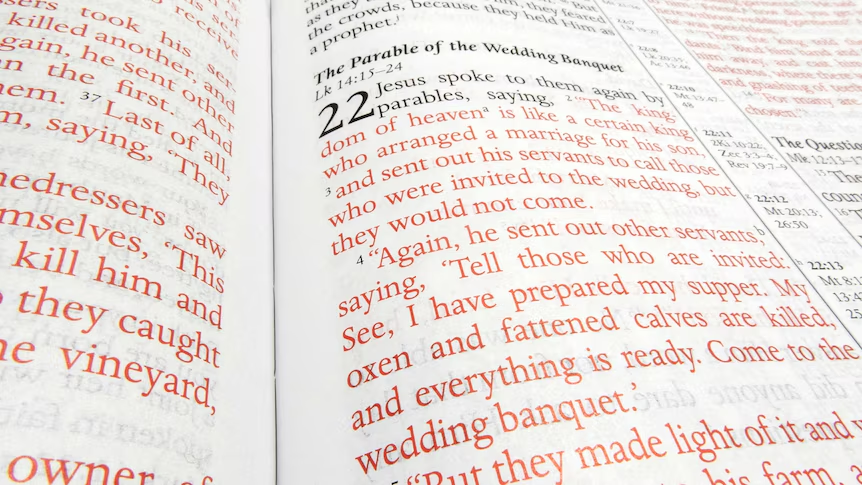
In this post, I am not interested in the content of the Dead Sea Scrolls, as fascinating as the material may be; I am more interested in the textual transmission of the scrolls, particularly as that might be compared to the textual transmission of the biblical text. It is truly a wonder of God’s providence that the Dead Sea Scrolls were preserved they way that they were. They were likely buried in the caves prior to the Jewish War (66-70 CE), and then subsequently abandoned when the Essene community was destroyed by the Romans. Thanks to the arid and dry climate of the area around the Dead Sea, these scrolls were preserved in glass jars for over 2000 years. However, they do show the signs of their age. They mostly consist of fragmentary pieces, and even the larger documents are missing significant parts due to decay (see the picture above, for one example). This means that translating the scrolls into English for modern study is mostly piecemeal at best. Large portions of the text must be reconstructed through textual emendation and scholarly conjecture, in order to make the text readable and understandable.

For example, one paragraph from The Temple Scroll (11QT) reads,

On the fifteenth day of the month …[the corresponding] grain offering [and drink offering, all on] the altar, an offering by fire, of s[oothing odour to YHWH. On] the second [day:] twelve young bulls, [two rams, four]teen [lambs] and on he-goat [for a sin offerin]g [and the corresponding gr]ai[n-offering and drink-offering] according to the statue concerning the young bulls, the ram[s], the lambs [and] the he-goat; it is an offering by fire, of soothing odour to YHWH.

The braketed text in the quote above indicates where the text has been conjecturally emended and filled in by the translator. The point is that as valuable as the scrolls are, the condition of the text is partial, fragmentary, and dependent on scholarly interpretation and emendation.

By contrast, the textual tradition of the biblical text is far more substantial and stable. The earliest portions of the New Testament that are extant today can be dated to within in a century of the actual writing of the documents themselves, and the earliest complete manuscripts that we have today are removed by only 2 or 3 centuries from the time of the New Testament. Further, we have over 5000 extant manuscript witnesses to the text of the Bible, in addition to ancient versions, liturgies, and quotations in the church fathers. The point is that through the discipline of text criticism (see my post here), we can reconstruct the text of scripture with 99% accuracy, and any questions that do remain are mostly of peripheral concerns and have no bearing on the actual meaning of the text. Unlike the Dead Sea Scrolls, the biblical text is not fragmentary and dependent on emendation; no, it is stable, clear, and firm in it is manuscript foundations.

This then is an even greater wonder of God’s providence as he has preserved His Word throughout the centuries. He has graciously and providentially watched over His Word, and He has not left himself without a witness. This should give us a great amount of confidence and faith in the textual foundations of our faith. The text of the Bible has been preserved and passed down by God’s providence through the ages, so that we might have reliable witness to His revelation of Himself in Christ. Where would we be if the text of the Bible had been hidden in desert caves for over 2000 years? I shudder to think of the possibilities. When we read the Bible, we should give great thanks that God has not left us as blind to grope in the darkness hoping we might find Him. No, he has spoken clearly, firmly, and faithfully, so that we might know Him even as we are known. Thanks be to God!

For further study, see:
Geza Vermes, trans. The Complete Dead Sea Scrolls in English. Revised Edition. London: Penguin Books, 2011.


On the Testimonium and the Word

TEXT

5. The testimony of the church of God may stir and persuade us to adopt a high and reverent respect for the Holy Scriptures. Moreover, the heavenliness of the contents, the power of the system of truth, the majesty of the style, the harmony of all the parts, the central focus on giving all glory to God, the full revelation of the only way of salvation, and many other incomparable qualities and complete perfections, all provide abundant evidence that the Scriptures are the Word of God. Even so, our full persuasion and assurance of the infallible truth and divine authority of the Scriptures comes from the internal work of the Holy Spirit bearing witness by and with the Word in our hearts.

~Second London Baptist Confession (1689), 1.5

Series: The 1689 Baptist Confession of Faith
Church: South Caraway Baptist Church, Jonesboro, AR
Date: September 27, 2023

For further study, see also:
On the Spirit and the Word
On Biblical Interpretation and the Holy Spirit


On the Authority of Scripture

TEXT

4. The authority of the Holy Scriptures obligates belief in them. This authority does not depend on the testimony of any person or church but on God the author alone, who is truth itself. Therefore, the Scriptures are to be received because they are the Word of God.

~Second London Baptist Confession (1689), 1.4

Series: The 1689 Baptist Confession of Faith
Church: South Caraway Baptist Church, Jonesboro, AR
Date: September 20, 2023


On the Ground of Christian Hope

TEXT

15 This is why, since I heard about your faith in the Lord Jesus and your love for all the saints, 16 I never stop giving thanks for you as I remember you in my prayers. 17 I pray that the God of our Lord Jesus Christ, the glorious Father, would give you the Spirit of wisdom and revelation in the knowledge of him. 18 I pray that the eyes of your heart may be enlightened so that you may know what is the hope of his calling, what is the wealth of his glorious inheritance in the saints, 19 and what is the immeasurable greatness of his power toward us who believe, according to the mighty working of his strength.

20 He exercised this power in Christ by raising him from the dead and seating him at his right hand in the heavens— 21 far above every ruler and authority, power and dominion, and every title given, not only in this age but also in the one to come. 22 And he subjected everything under his feet and appointed him as head over everything for the church, 23 which is his body, the fullness of the one who fills all things in every way.

~Ephesians 1.15-23

Title: On the Ground of Christian Hope
Text: Ephesians 1.15-23
Series: The Letter to the Ephesians
Church: South Caraway Baptist Church, Jonesboro, AR
Date: May 28, 2023


On Inspiration and Authorial Intent

Despite the claims of postmodern literary critics, it is reasonably certain that the meaning of any given document or literary work is grounded in and governed by its author. To put it another way, the meaning of the text is limited by the message that the writer of that text intended to communicate. This principle has been the foundation of biblical interpretation for most of the modern period, and rightly so. The Word of God comes to us through human authors who were writing to historical audiences, so we must work within the boundaries of literary and historical context in order to understand it. The problem, however, is that an overemphasis on authorial intent could relegate our interpretive efforts to nothing more than an exercise in historical investigation. But, the Word of God is more than a historical artifact; it is living and active, and its truths are just as relevant today as they were when they were first written. Over the last twenty years or so, more and more emphasis has been given to the intent of the divine author in an attempt to arrive at a more robustly theological interpretation.

However, this too has led to certain hermeneutical problems, particularly when the supposed divine intent in a given text is set in competition with or in contradiction to the human intent. This appears to be the underlying assumption of a question that was posed on Twitter a few days ago (pictured above). A pastor on Twitter recently asked, “Did the human authors have perfect/sinless intentions while writing Scripture?” Of course, Twitter polls are probably not the best resource for scholarly research, but the results are nevertheless concerning. Some 73% of respondents answered the question in the negative, meaning that almost three quarters of those who answered the poll believe that the human authors of the Bible had sinful intentions when they wrote the words of Holy Scripture. While the relationship between the human and the divine in the writing of Holy Scripture may be complex, we must conclude that this answer is out of bounds for those who believe that the Bible is the Word of God. How can sinful words be received as the Word of a sinless and righteous God? This is a contradiction in terms. As we read in Second Peter, chapter 1, verse 21, “instead men spoke from God as they were carried along by the Holy Spirit.”

Based on this text, we must affirm that there is no divine intent apart from the words of the human author. In other words, our interpretive efforts must deal directly with the words of Holy Scripture; we must labor to understand the genre, the syntax, the vocabulary, the grammatical relationships, and the literary flow of thought of the documents themselves. This is the fundamental work of biblical interpretation. There is no such thing as meaning that is separate from the text; there is no mystical or hidden Word that may be sought apart from the words on the page. Whatever the timeless supernatural theological implications of the text may be, these truths must be grounded in and derived from the actual words of Holy Scripture. In theology, this doctrine is known as verbal plenary inspiration, meaning that the quality of inspiration extends to very words that comprise the text and not just the ideas that stand behind those words. In the act of inspiration, God so worked in through and with the human authors of Holy Scripture, such that their words are His very words, thus they are without error in every way.

If their words are His words, then we may conclude that their intent is His intent as well. The difficulty, however, lies in the reality that the God of the Bible is infinite in His understanding, that He sees more and knows more than the human authors could possibly comprehend when they were writing. So, there is a sense in which the divine intent is so much more than what the human authors could understand; some have referred to this as the sensus plenior, or the fuller sense of the text. In their book Introduction to Biblical Interpretation, Klein, Blomberg, and Hubbard identify the problem with this idea, namely that “we have no objective criteria to posit the existence of a sensus, or to determine where it might exist, or how one might proceed to unravel its significance. In other words, if the human author of a text did not intend and was unaware of a deeper level of meaning, how can we be confident today that we can detect it?” To put it another way, if we understand textual meaning as something that is grounded in authorial intent, then we must assume a certain amount of similitude, if not even near identity, between the intent of both the Divine and the human author. Otherwise, we would never be able to understand what God is saying to us in any real or meaningful way.

In the final analysis, we must conclude that there is no competition or contradiction between the intent of the human the divine authors of Holy Scripture. While it is possible that the Spirit intended more than human authors, He certainly did not intend less than what they intended to communicate to their audiences through the words that they wrote. In other words, authorial intent in the Bible must be viewed as finely woven tapestry in which the human and divine is so interlaced and knitted together, such that any attempts to divide or separate them would in effect destroy its beauty and grandeur. As interpreters, we must hold these facets of the text in harmony and proceed with conviction the Bible is the very Word of God. B.B. Warfield puts it this way in his book The Inspiration and Authority of the Bible, “The Scriptures, in other words, are conceived by the writers of the New Testament as through and through God’s book, in every part expressive of His mind, given through men after a fashion which does no violence to their nature as men, and constitutes the book also men’s book as well as God’s, in every part expressive of the mind of its human authors.”

For further study, see:
Warfield, B.B. “The Divine and the Human in the Bible.” Pages 542-548 in Selected Shorter Writings, 2 Vols.


On Psalm 119.89-96 (Lamed)

89 Lord, your word is forever;
it is firmly fixed in heaven.
90 Your faithfulness is for all generations;
you established the earth, and it stands firm.
91 Your judgments stand firm today,
for all things are your servants.
92 If your instruction had not been my delight,
I would have died in my affliction.
93 I will never forget your precepts,
for you have given me life through them.
94 I am yours; save me,
for I have studied your precepts.
95 The wicked hope to destroy me,
but I contemplate your decrees.
96 I have seen a limit to all perfection,
but your command is without limit.

The twelfth stanza of Psalm 119 (ל/Lamed) begins with a beautiful affirmation of the permanence and timelessness of God’s Word. “Lord, your Word is forever; it is firmly fixed in heaven.” (verse 89) It is not just another curiosity that has been passed down to us from antiquity; no, it is the living and abiding Word of the one true and living God. In theology, this is called the doctrine of inspiration, namely that God speaks through the human authors of the Biblical documents, such that their words are His very words. This is why the Bible has lasting relevance and authority even beyond the audiences to whom it was originally written. As our psalmist puts it, “Your judgments stand firm today. for all things are your servants.” (verse 91) Contrary to the opinions of modern culture, the Word of God is still the right and true prescription for human flourishing; the virtues it sanctions and the vices it prohibits are not outdated holdovers from people and places now long past. No, the Bible is special revelation from God in which He reveals the problem of humanity’s sin and the way of salvation that comes by grace through faith in the person and work of Jesus Christ.

Now, in verse 90, we read “Your faithfulness is for all generations; you established the earth, and it stands firm.” As we have noted in previous posts, most of the verses in Psalm 119 contain some synonym for God’s Word, e.g. laws, commands, instructions, precepts, etc., and so here we have “your faithfulness” (אֱמֽוּנָתֶךָ). It seems clear that this word is meant to stand in parallel relationship with “your word” (verse 89) and “your judgments” (verse 91); interestingly, the Septuagint (LXX) translates this word as “your truth” (ἡ ἀλήθειά σου). The point of all of this is to say that the abiding authority of God’s Word is grounded in who He is, i.e. in His unchanging character. He is faithful; He keeps His promises. Whatever He says, He will most certainly do. His Word is a reflection of who He is: His holiness, His grace, His power, His love, and even His incomprehensibility. This is why our psalmist writes in verse 96, “I have seen a limit to all perfection, but your command is without limit,” or as it reads in the NET Bible, “your commands are beyond full comprehension.” The God of the Bible is infinite; He is a mystery whose depths can never fully be exhausted. So also is His Word.

However, this does not mean that we should not read or study the Word of God. Yes, the depths of the Bible’s riches are inexhaustible, but they are also perspicuous and clear. I have previously written on this topic, here. But suffice it to say that in the act of inspiration, the infinite God condescended to our finite capacities for understanding. He is infinite in power, wisdom, and goodness, and we are His creatures, finite in our ability to comprehend His perfections. But He chose to reveal Himself in and through the Word so that we might know Him and be reconciled to Him. So yes, the Bible is so clear that any human being, regardless of their intellectual aptitude or educational achievement, can read it and understand their sin and their need for a savior; it is also, at the same time, a limitless source of mystery and wonder, such that even the finest minds throughout human history have been unable to fully explain all of its secrets.

For our psalmist, this means that the Word of God must be continuously read, studied, and contemplated. As he says in verse 93, “I will never forget your precepts, for you have given me life through them.” Here again, not only do we see that abiding authority of God’s Word, but we also see its all encompassing sufficiency. Our psalmist understands that every need of the human soul is provided for in the inspired Word of God. In verse 92, we read, “If your instruction had not been my delight, I would have died in my affliction.” The word “delight” conveys the idea of contentment, satisfaction, or pleasure. In other words, our psalmist understands that even in the midst of turmoil, adversity, and heartache, there is a joy, a “peace that passes all understanding” that is available when we rest in the promises of God’s Word. The spiritual disciplines of the Word (study, meditation, memorization) are the God prescribed antidote for our anxiety, our fear, our depression, our despair. Again, our psalmist writes in verse 95, “The wicked hope to destroy me, but I contemplate your decrees.”

This devotion, this diligence in the discipline of the Word, this affection for the perfections of God’s Law, is a distinguishing characteristic of those who belong to Him. As our psalmist writes in verse 94. “I am yours; save me, for I have studied your precepts.” We are a people of the Book. Our faith is not based on a human philosophy or mere reflections on the divine; no, it is based on the inspired, inerrant, authoritative, sufficient revelation of God Himself. In His Word, He has clearly and finally revealed the one and only path unto salvation, and He has called His people to walk upon it until we reach glory. So, when our psalmist prays “save me”, he is not simply expressing his desire to be saved from the penalty of sin. Rather, he is praying for the ongoing work of salvation to be applied in his life through sanctification, that God would save him from the power of sin through His sufficient Word. In the same breath, he is also expressing that most fundamental of Christian hopes, namely that one day he would be saved from the very presence of sin entirely, a hope that is grounded in the promises of God’s Word. In other words, our psalmist understands that the full experience of our salvation comes to us through the Word by the Spirit. Therefore, we should never cease to be amazed at the riches of His word, and we should constantly devote ourselves to its discipline.

For further study:
Introduction
Psalm 119.1-8
Psalm 119.9-16
Psalm 119.17-24
Psalm 119.25-32
Psalm 119.33-40
Psalm 119.41-48
Psalm 119.49-56
Psalm 119.57-64
Psalm 119.65-72
Psalm 119.73-80
Psalm 119.81-88


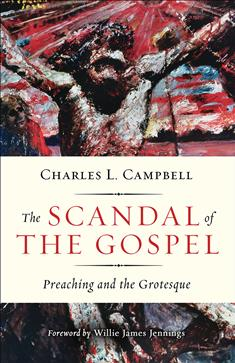
On Preaching and the Grotesque: A Book Review

Campbell, Charles L. The Scandal of the Gospel: Preaching and the Grotesque. Louisville, KY: Westminster John Knox, 2021.

Painters have their colors and canvas, sculptors have their clay, and preachers have their words. And words are powerful. As the Bible so often indicates, words have the power to build up and to tear down, and this is especially so in the ministry of preaching, as Charles L. Campbell discusses in his latest book, The Scandal of the Gospel: Preaching and the Grotesque. Campbell is James T. and Alice Mead Cleland Professor Emeritus of Homiletics at Duke Divinity School. He is a past president of the Academy of Homiletics, a highly sought-after lecturer, and he is well published in the field.  Most of the content for this latest book comes from his 2018 Lyman Beecher Lectures at Yale Divinity School; only the fourth chapter contains new material.

In the forward, Campbell explains that he is not seeking any consistency or system; rather, he says that he is “simply trying to make some homiletical connections between preaching and the grotesque” (p. xiv). This concept of the grotesque subsequently stands at the center of the book. The term is borrowed from the world of visual art, where it originally referred to paintings found in ancient Roman grottos, i.e. grotto-esque. These “murals presented unsettling, disorienting hybrids that transgressed accepted categories. They distorted what was considered ‘normal’ or ‘beautiful.’ They messed with accepted patterns. They were, as they came to be called, ‘grotesque’” (p. 6). This description encapsulates the homiletical vision that Campbell sets forth in these chapters, i.e. preaching that is unsettling, disorienting, that transgresses accepted categories and norms, that is “grotesque.”

In the first chapter Campbell considers how this concept of the grotesque fits with the scandal of the Gospel. Taking his cue from 1 Corinthians 1:23, he explains that the Gospel confronts with the destabilizing pairings of opposites: God-cross, life-death, repulsion-fascination, horror-hope. A God that is violently crucified on a cruel Roman cross is inherently “grotesque.” In chapter 2, Campbell explores how the grotesque is often weaponized in the act of preaching. Specifically, when one compares sociological and/or theological opponents with non-human objects, one is using the grotesque to dehumanize and minimize them in order to maintain one’s own particular understanding of order. In chapter 3, Campbell offers an alternative to this kind of weaponization by explaining how the grotesque creates preaching that is “open, protruding, irregular, secreting, multiple, and changing” (p. 55). Preaching that is grotesque welcomes input and insights from a variety of voices, and not merely biblical and theological ones. It is preaching that “becomes real when truth happens among the cacophony and incongruities of diverse voices and diverse lives” (p. 57). Finally, in chapter 4, Campbell imagines how the grotesque could be employed in preaching to address the environmental crisis.

Campbell’s application of the grotesque to the discipline of preaching is provocative to say the least because it stands in such stark contrast to the kind of preaching that is the focus of Campbell’s critiques. Sermons that offer simplistic principles for improving marriage, managing finances, or raising godly children attempt to “give people a nice focused nugget to carry home – not the shocking unresolved contradictions of the grotesque gospel” (p.11).  This kind of preaching is neat, clean, even idealistic. The problem, however, is that “when we rush to order, when we avoid the interval of the grotesque, our preaching may become shallow, unreal, clichéd. We don’t go deep enough. We’re not honest enough. And we end up falsifying both the gospel and life itself – we end up imposing false patterns” (p. 12). Life is so often the opposite of the neat and clean categories we attempt to impose on it from the pulpit. It is complex and messy; it is “grotesque.” Campbell would have readers embrace these tensions rather than attempting to resolve them.

Though he rightly critiques this “humanistic” (his label) approach to preaching, the alternative that he proposes is inherently more so. Grotesque preaching is “shaped by the dynamic and open life of Jesus’ grotesque body. Grotesque preaching calls the church to be open to the world and calls the pulpit to be open to different bodies and new voices” (p. 56). It springs forth from the lived experiences of people rather than from the authoritative Word of God. What is glaringly absent from Campbell’s vision for preaching is how it relates to the principle of “Thus saith the Lord.” Christian preaching springs forth from the fact that God has spoken. The Apostle Paul instructed his protégé Timothy to “Preach the Word” (2 Timothy 4.2). God has spoken; therefore, we speak. In other words, the purpose of Christian preaching is to exposit the declared Word, “giving the meaning so that the people could understand what was read” (Nehemiah 8.8). It is not merely to listen to people’s stories or to appreciate the diversities and complexities of the human experience.

In the final analysis, Campbell’s invitation for preachers to approach the complexities, difficulties, and tensions of life with greater compassion is a welcomed alternative to the idealistic naiveté that characterizes most preaching today. That being said, his alternative is essentially void of the very resources that God has provided to address those complexities and difficulties. In other words, grotesque preaching, as Campbell envisions it, comes off merely as a way to exalt and platform human experiences over the Word of God. However, it is ultimately powerless as a homiletical method for proclaiming the inspired Word of the one true and living God. In my view, preachers would be better served by attending to the text of Holy Scripture, giving its meaning through systematic exposition, than by any clever attempts to be “grotesque.”

This Book Review was originally published in the Journal of Biblical and Theological Studies, here.


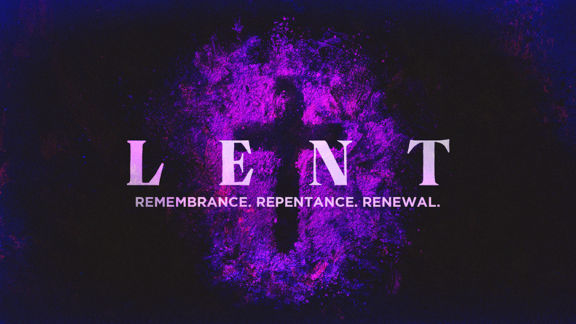
On Common Objections to the Observation of Lent

Well, as they say, it is that time of year again. No, I am not talking about tax season; I am talking about the season in the traditional Christian calendar which is set aside for the purpose of self-reflection, examination, confession, and repentance. I am talking about that time of the year when we are asked to set aside the creature comforts that we are so dependent on and to cultivate that pure and singular dependence upon Christ through His Spirit. It is that time of year when Christians from all around the world from many varied theological and cultural backgrounds are invited to set their gaze on the cross of our Lord Jesus and the price that He paid for our sin, even as they begin to anticipate that victorious day when we will celebrate His resurrection from the dead. I am talking about the season of Lent. (For more on this season and its usefulness in the Christian life, see my post here.)

However, in most non-liturgical, low-church traditions, especially down here in the good ole’ Bible belt, the idea of observing the season of Lent is most often met with hostility and a host of objections as to why Christians should not observe this ancient practice. In this post, I would like to consider just a few of these, so that we may perhaps have a clearer understanding as to the benefits and the dangers of observing the season of Lent.

One of the primary objections that is most often given against the practice of Lent, as well as any other practice that might remotely be considered liturgical, is that it comes to us from the traditions of the Roman Catholic Church. There is a deep seated antipathy, an unstated but ever present aversion to any and all things Roman Catholic, that lives just under the surface in many Protestant denominations, and this is much to our shame. (This may be a symptom of a wider problem, i.e. the hubris of denominational tribalism that treats all those outside of our own tradition with skepticism and disdain.) Now, I will be the first to admit that there are many facets of Roman Catholic theology that I find troublesome and concerning, many aspects of their belief and practice that are hard to square with the teaching of the Bible, but we do ourselves a great disservice when we dismiss their contributions to the Christian faith altogether.

After all, the Roman Catholic Church was the only church for the first 1500 years of Christian history, and though they might have gone astray along the way, they actually got many things right. From their centuries long faithfulness comes classic formulations of doctrines like the trinity, the hypostatic union, etc., and for these we must be ever grateful. But not only in matters of doctrinal orthodoxy, but in the details of faithful orthopraxy, their contributions must be considered, and not merely dismissed. They have given us a rich and beautiful liturgical tradition which we would do well to consider in our own attempts to be faithful worshippers of Christ. Practices like the lectionary and the calendar are just some of the contributions that come to us from that tradition. I believe the season of Lent to be one of these contributions from which our faith and practice could benefit deeply. In other words, we don’t have to throw the baby out with the bathwater, so to speak.

A second objection that is somewhat connected with the first has do with the purpose of the season of Lent. In some traditions, Lent is presented as a way of “earning” God’s forgiveness, as a meritorious act by which we might deserve God’s grace, even as a kind of penance. In this light, the observance of Lent is made to be a mandatory practice for all of those who call themselves Christians. Clearly, this flies in the face of the clear teaching of the Bible. Our sins were once and for all completely forgiven when we placed our faith in Christ. This is what it means to be justified. There are no actions that we can take to earn or deserve more grace from God, because He has already poured out grace upon grace to us through the person and work of Jesus Christ. We are not required to do any works of penance for our sins, because the once and for all punishment for our sins fell on the shoulders of Jesus Christ as He was nailed to the cross to die. The payment for sin has been made in full; nothing more is necessary.

However, the repentance that God requires is more than a one time event; on the contrary, it is the lifelong discipline of a follower of Christ as we turn from our sin daily. This is the first of Martin Luther’s 95 Theses, that “When our Lord and Master Jesus Christ said, “Repent” (Mt 4:17), he willed the entire life of believers to be one of repentance.” Repentance is a habit, and setting aside a season for intentional reflection and cultivation of that habit can be quite beneficial in the life of the Christian. Especially as we prepare ourselves for the festivities of Holy Week, which culminate in the events of Good Friday and Easter Sunday, this season can aid us in our sanctification by exposing our sin and then reminding us anew of the wonder of the atoning work of our Savior and the victory that we have over sin through His resurrection. So, while the season of Lent should not be observed as a means to earning God’s grace, it can help us to understand and appreciate the grace that we have already received in new and fresh ways.

A final objection that is often raised in this conversation is that the practice of Lent is nowhere explicitly commanded in Holy Scripture. And if I am being honest, this is the strongest objection to be considered, because we all want to be biblical in the practice and expression of our faith. This is often expressed as a formulation of the regulative principle for worship (RPW), which states, “The acceptable way of worshiping the true God, is instituted by himself, and so limited by his own revealed will, that he may not be worshiped according to the imagination and devices of men, nor the suggestions of Satan, under any visible representations, or any other way not prescribed in the Holy Scriptures.” (2nd London Baptist Confession, 1689) Anyone who believes that the Bible is the inspired inerrant Word of the one true and living God must affirm this as being true. And so, if lent is nowhere commanded in Holy Scripture, then why would we concern ourselves with observing it. Aren’t the Scriptures sufficient for all matters of faith and practice?

We are required to answer this question in the affirmative. (2 Timothy 3.16-17) YES, the Scriptures are sufficient. But just because something is not expressly commanded in Scripture does not mean that it is not beneficial for our faith and practice. There are many things we do in the practice of our faith, both personally and corporately, that are not directly commanded in Scripture. For example, the Scriptures do not command us to have Vacation Bible Schools during the summer, but almost every church I know and have been a part of has a VBS. The point is simply that no one follows the RPW absolutely; in fact, to do so would be impossible. The Scriptures give us general guidelines, and we are called to use our Holy Spirit guided Biblically informed wisdom in the specific applications of those guidelines. (cf. Romans 12.1-2) In the case of Lent, the Bible clearly emphasizes the importance and priority of repentance, and it is up to us, with the help of Scripture and tradition, to cultivate repentance in our lives.

In the final analysis, we must conclude that the decision to observe the season of Lent, whether that observance is personal or corporate, it must remain at the level of Christian freedom. For those who have come out of liturgically rigorous traditions bordering on the legalistic, where observing Lent was a matter of obligation, then I would advise against it. Instead, I would encourage you to relish in the finished work of Christ. However, for others, and I would surmise that this is most of my readers, observing Lent can be an opportunity to cultivate the spiritual discipline of repentance, to intentionally reflect on the condition of our souls, to identify those unacknowledged and unadmitted sins, and to turn again toward Christ in faithful obedience. We are hardly in danger of taking our repentance too seriously, and the season of Lent can help us appreciate anew the reality and significance of sin and its ongoing power in our lives, even as we anticipate the day when we will finally be set free from its very presence. And oh, how we long for that day! Even so, Lord Jesus, come quickly!


Slow To Write

"let every person be quick to hear, slow to speak, slow to anger."

lovegavehope

Just another WordPress.com site

Jared Cornutt

Pastor | Speaker | Writer

Denny Burk

A commentary on theology, politics, and culture

G3 Ministries

Events + Resources for the Local Church

Biblical Reasoning

Biblical and Systematic Theology According to the Scriptures

RetroChristianity

Reclaiming the Forgotten Faith

SBC Voices

Southern Baptist News & Opinion

Lucid Theology

Thoughts on words, books, theology, and life.

Baptist21

A pastor-led voice for Baptists in the 21st century

Center For Baptist Renewal

The Personal and Professional Blog of Phillip Powers

The Pastor's Well - Pastor Well

The Personal and Professional Blog of Phillip Powers

Articles - AlbertMohler.com

The Personal and Professional Blog of Phillip Powers

The Gospel Coalition

The Personal and Professional Blog of Phillip Powers