17 After they passed through Amphipolis and Apollonia, they came to Thessalonica, where there was a Jewish synagogue. 2 As usual, Paul went into the synagogue, and on three Sabbath days reasoned with them from the Scriptures, 3 explaining and proving that it was necessary for the Messiah to suffer and rise from the dead: “This Jesus I am proclaiming to you is the Messiah.” 4 Some of them were persuaded and joined Paul and Silas, including a large number of God-fearing Greeks, as well as a number of the leading women.
5 But the Jews became jealous, and they brought together some wicked men from the marketplace, formed a mob, and started a riot in the city. Attacking Jason’s house, they searched for them to bring them out to the public assembly. 6 When they did not find them, they dragged Jason and some of the brothers before the city officials, shouting, “These men who have turned the world upside down have come here too, 7 and Jason has welcomed them. They are all acting contrary to Caesar’s decrees, saying that there is another king—Jesus.” 8 The crowd and city officials who heard these things were upset. 9 After taking a security bond from Jason and the others, they released them.
~ Acts 17.1-9
Title: On the Rejection of the Gospel at Thessalonica Text: Acts 17.1-9 Series: The Book of Acts Church: Redeemer Baptist Church, Jonesboro, AR Date: September 8, 2024
1. God has granted that all those who are justified would receive the grace of adoption, in and for the sake of his only Son Jesus Christ. By this they are counted among the children of God and enjoy the freedom and privileges of that relationship. They inherit his name, receive the spirit of adoption, have access to the throne of grace with boldness, and are enabled to cry “Abba, Father!” They are given compassion, protected, provided for, and chastened by him as a father. Yet they are never cast off but are sealed for the day of redemption and inherit the promises as heirs of everlasting salvation.
~Second London Baptist Confession (1689), 12.1
Series: The 1689 Baptist Confession of Faith Church: Redeemer Baptist Church, Jonesboro, AR Date: February 21, 2024
8 For you were once darkness, but now you are light in the Lord. Walk as children of light— 9 for the fruit of the light consists of all goodness, righteousness, and truth— 10 testing what is pleasing to the Lord. 11 Don’t participate in the fruitless works of darkness, but instead expose them. 12 For it is shameful even to mention what is done by them in secret. 13 Everything exposed by the light is made visible, 14 for what makes everything visible is light. Therefore it is said:
Get up, sleeper, and rise up from the dead, and Christ will shine on you.
15 Pay careful attention, then, to how you walk—not as unwise people but as wise— 16 making the most of the time, because the days are evil. 17 So don’t be foolish, but understand what the Lord’s will is. 18 And don’t get drunk with wine, which leads to reckless living, but be filled by the Spirit: 19 speaking to one another in psalms, hymns, and spiritual songs, singing and making music with your heart to the Lord, 20 giving thanks always for everything to God the Father in the name of our Lord Jesus Christ, 21 submitting to one another in the fear of Christ.
~Ephesians 5.8-21
Title: On the Value of a Distinctively Christian Life Text: Ephesians 5.8-21 Series: The Letter to the Ephesians Church: South Caraway Baptist Church, Jonesboro, AR Date: August 20, 2023
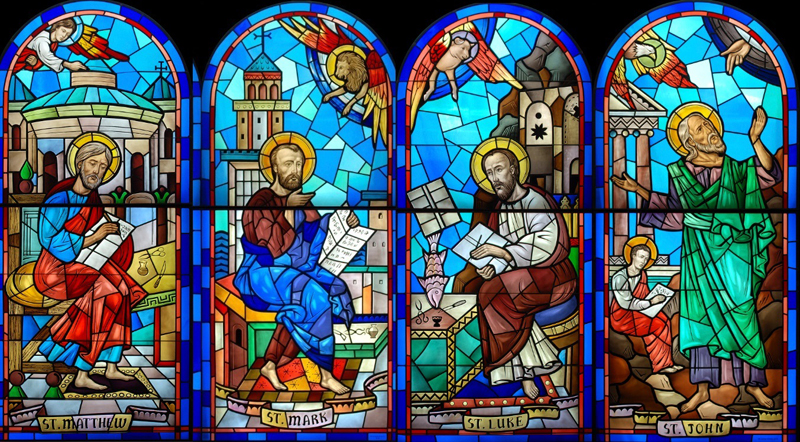
It is truly a manifestation of the grace of God that there are four accounts of the life of Jesus in the New Testament. They are rightly called theological history, because each one of them details the life of Jesus in a way that emphasizes and highlights particular aspects of who He is and what He has done for His people. While any one of them may have been sufficient on their own to convey the pertinent historical facts of His life, the four of them together paint a beautiful multilayered tapestry that has sparked the reflection and devotion of His followers now for two millennia. In the space that follows, I will sketch out the contours of that tapestry by discussing the particular emphases of each Gospel.
According to the documentary hypothesis, Mark wrote his gospel first based on the memoirs of the Apostle Peter. The vast majority of Mark’s gospel is reproduced in both Matthew and Luke, but this does not mean that Mark’s Gospel is incomplete, redundant, or lacking in historical and theological value. This value is seen clearly in the very first verse of his work, “The beginning of the Gospel of Jesus Christ, the Son of God.” Functioning somewhat like a title or purpose statement, this verse is packed with theological significance. It tells us that Mark’s work is a “gospel”, a word that means good news; it also states clearly that this good news has to do with Jesus, the messianic Son of God. That this is the primary way that Mark wants his audience to see Jesus is confirmed following His death, when a Roman Centurion says, “Truly, this man was the Son of God.”
However, what makes Mark’s gospel so compelling is that this truth is hidden throughout most of the Gospel. The so-called messianic secret, in which Jesus repeatedly instructs people not to make His identity known, stands in stark contrast to the bold affirmations at the beginning and end of Mark’s Gospel. This is probably because Mark wants his readers to understand that the messianic identity of Jesus is defined by His death on the cross for sin. Almost half of Mark’s gospel is dedicated to the events of Passion week. Whereas the first ten chapters are quickly paced and action oriented, the final six slow down to something like a snail’s pace in detailing the events of the final seven days of Jesus’ life. This is why many have considered Mark’s gospel to be an apology or a defense of the cross that was likely written for Christians in Rome shortly before the persecutions of Nero.
Of course, though chronologically prior, the Gospel of Mark is not ordered first in the New Testament canon; that pride of place belongs to the Gospel of Matthew, and it is easy to understand why. Not only does Matthew’s Gospel begin with a genealogy that traces the lineage of Jesus through David to Abraham, it also includes an infancy narrative that captivates those who read it. However, this is part of Matthew’s unique purpose to show that Jesus is the Son of David, Son of Abraham. Not only does this connect the New Testament back to the Old Testament, it also would have been particularly important if Matthew was writing to Jewish Christians, as many suppose. For Matthew, Jesus is the fulfillment of God’s covenant promises, both to Abraham and to David; he is the long awaited Davidic messiah, heir to the throne of God’s Kingdom, and the one who mediates the blessings of the Abrahamic Covenant.
More than that though, for Matthew, Jesus is a new and better Moses. This is evident in the many ways that the events of the first four chapters recapitulate the life of Moses. On top of this, Matthew has structured His gospel around five primary discourses, a fact that likely refers back to the five books of Moses. In the same way that Moses was the mediator of the Law under the Old Covenant, likewise, Jesus is the mediator of the “law” under the New Covenant. This is confirmed in the Great Commission, where Jesus commands His disciples to “teach all that I have commanded you.” The phrase “all that I have commanded you” most naturally refers back to the content of the five primary discourses in Matthew’s Gospel. Because of this, many consider Matthew’s Gospel to be a handbook on discipleship, a manual that instructs us in what it means to follow Jesus.
The Gospel of Luke rounds out the “Synoptic Gospels”, and like Matthew, it begins with a beautiful retelling of the Christmas story. However, what stands out in Luke’s infancy narrative is the role of the Holy Spirit. Of course, many consider Luke to be the theologian of the Spirit par excellence in the New Testament, not least of which is due to the continued role that the Spirit plays in Luke’s second volume, the Book of Acts, otherwise known as the Acts of the Holy Spirit. Luke’s emphasis on the role of the Spirit is largely due to his desire to present Jesus as the Spirit anointed messiah. This is confirmed in chapter 4 of Luke’s Gospel, when Jesus reads a passage from the Book of Isaiah, which says in part “The Spirit is upon me.” After He sits down, He says, “Today, this scripture is fulfilled in your hearing.” In other words, Luke wants us to see that Jesus is the spirit anointed Messiah who has finally come to pour out the blessings of the Messianic jubilee. According to the passage from Isaiah, chapter 61, these blessings are primarily manifested in the compassionate healing of those who are blind, deaf, mute, etc, and throughout Jesus’ ministry, Luke repeatedly details the compassion that Jesus demonstrated during his healing ministry. For Luke in particular, Jesus is a man of sorrows, well acquainted with grief, bearing the burdens and ailments of many.
In addition to this, a large portion of Luke’s unique material is dedicated to Jesus’ final journey toward Jerusalem. In Luke, chapter 9, we read that “He set his face like flint to go to Jerusalem;” this simply means that the final journey of Jesus to Jerusalem to be crucified was purposeful and intentional on the part of Jesus, so that “the scriptures might be fulfilled.” The fulfillment of God’s plan for salvation history is a primary emphasis in both Luke’s Gospel and in the Book of Acts. In other words, Jesus was not a victim of circumstance or the maniacal plots of evil men; He was delivered up according to the predetermined plan of God from before the foundations of the world. Luke wants his audience to understand that everything that happened during the life of Jesus from his birth to his death, resurrection, ascension, and session is the fulfillment of God’s eternal plan to redeem humanity from their sins. In fact, in the final chapter of Luke’s gospel, we read on more than one occasion that “all that was written in the Law, the Prophets, and the Psalms must be fulfilled.”
Last, but certainly not least, is the Gospel of John, and the relationship between John and the synoptics is a question that has bewildered many throughout the centuries. This is mostly because John begins His gospel with a striking description of the eternal Word, God the Son, who came incarnate and “dwelt among us”. Clearly, “the disciple whom Jesus loved” wants his readers to understand that this Jesus was no ordinary man; He is the incarnate God man, the Word made flesh, and as he indicates at the end of His gospel, “These things are written so that you may believe that Jesus is the Christ, and by believing, have life in His name.” The deity of Jesus practically jumps off of the page in John’s gospel, not the least of which is because of the several “I am” statements that are found throughout the book, the most profound of which is “Before Abraham was, I am.” Of course, these “I am” statements refer back to the divine name which was revealed to Moses at the burning bush, and so indicate a startling awareness in the mind of Jesus of His own divinity.
Of course, in the service of this purpose, John structures His gospel around seven specific miracles, or, as he calls them, “signs.” If John did, in fact, write two to three decades after the synoptics, then it seems clear that he did not believe it necessary to record all that Jesus began to do and teach; he even confesses that to do so would require more books than could be humanly conceived. But these seven signs were singled out by John because they advance His thesis that Jesus is the Christ. From the turning of water into wine to the raising of Lazarus from the dead, every one of these signs demonstrate a particular aspect of Jesus messianic identity and so prove that He is the Christ, the one who gives and sustains life in all those who are filled with His Spirit.
In the final analysis, it seems clear that if one of these four gospels were lost or removed from the canon, the followers of Jesus would be at a severe disadvantage. Each and every one of them is necessary for us to appreciate the multi-faceted beauty of the person and work of Him who is called Christ. From the earliest centuries of the Christian movement, these four evangelists have stood together in chorus, singing not in unison but in harmony, and because of this, the followers of Jesus have a sure and certain foundation upon which they can stand as they attempt to follow Christ and be more like Him.
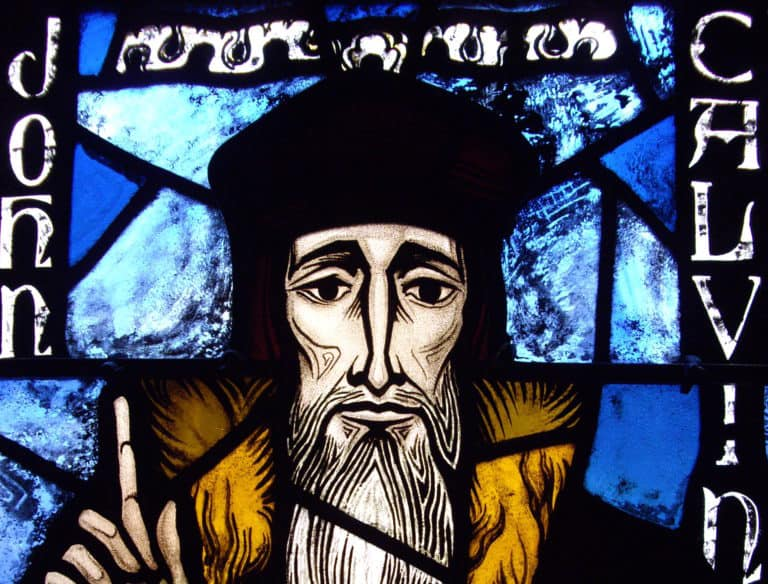
A few days ago, I posted a quote on my social media feed from the reformer John Calvin. Now, the quote in question said nothing about the doctrines or concepts that are usually associated with that name; actually, it had to with the usefulness of catechism in the transmission of the faith to the next generation. However, within a short amount of time, a recent acquaintance of mine messaged me with concern that if churches saw me posting quotes from this particular figure, then they would not ask me to preach. I am sure his concern was well intended, but since moving back to the Bible Belt five years ago, I have been constantly perplexed by the reactions that Calvin and his teaching seems to provoke.
On another occasion a few years ago, I was interviewing with a church in another state. They had received my resume from a state convention, and so they reached out to set up a virtual interview. After logging on, we exchanged pleasantries and said a word of prayer, but before asking me for my testimony or personal background, the first question they asked right out of the gate was “What do you believe about Calvinism?” Examples like this could be multiplied, but the fact remains that the slightest scent of affinity for John Calvin or for the doctrines known as “Calvinism” often provokes a visceral reaction in most churches in this area. There is a ubiquitous disdain for these concepts, especially in the more rural churches, and to be quite honest, it boggles my mind.
Reasonable disagreement on the question of God’s sovereignty and man’s ability when it comes to our salvation is understandable; this is a debate that has ebbed and flowed for the entire history of the church, but this kind of revulsion is simply beyond the pale. And so, in the space that remains, I would like to suggest four possible reasons for why rural Bible Belt Christians are so put off by so-called “Calvinism”.
First, there seems to be widespread misunderstanding when it comes what so-called “Calvinists” actually believe. Because of this, those beliefs are regularly mischaracterized and misrepresented in ways that no reasonable student of Reformed theology would ever agree with. Accusations that “Calvinists” do not believe in evangelism or that “Calvinism” makes God the author of sin are such tired critiques that they almost need no response. Answers to these questions and many more are readily available from reputable and godly scholars in both printed and electronic forms, but it is easier to label and dismiss someone’s beliefs than to listen and engage the merits of those beliefs. Whether you agree with the concepts or not, if you cannot explain those concepts in ways that their adherents would agree with, then you probably shouldn’t be critiquing them to begin with. As I have suggested in another post, this is how we show grace to those with whom we disagree.
Another reason why Bible Belt Christians harbor such vehement resentment for so-called “Calvinism” is that many rural churches have been hurt by pastors who held these beliefs in an unhealthy, unchristian manor. Time and time again, I have heard stories about how “Calvinism split our church”, and this absolutely saddens my soul. However, I would suggest that the essential cause of the pain had more to do with the character of the pastor in question and less to do with the theological concepts that he espoused. In most cases, “Calvinism” is simply a symptom of the problem, not the root cause. Pastors are called to the highest standards of Christlikeness, and a consistent attitude of combativeness or divisiveness driven by the nagging need to always be right should be a direct and immediate disqualification from pastoral ministry. The glaring absence of Christlikeness coupled with biased preaching that beats its preferred theological hobby horse every week, regardless of what it may be, is a recipe for heartache every time.
A third possible reason for the emotional overreaction to “Calvinism” in the Bible Belt might be linked to the lasting influence of Revivalism in this area. The theological example of men like Billy Graham and Adrian Rogers casts a long shadow over those who were directly influenced by their ministries. These were faithful, godly men whose proclamation of the Gospel led many to faith in Christ. For these Christians, the lasting memories of multi-night revivals with altars filled with throngs of people coming to faith in Christ represent the good ole’ days of the church. Even to this day, there is a deeply felt and inherent longing in many churches to experience those highs once again, and the assumption is that if we just preach the way that they preached, believe the way that they believed, program the way that they programmed, then we can reproduce the same results. Unfortunately, the culture has changed significantly since the heyday of these ministries, and the methods that worked then are unlikely to work in the same way now. However, as they did so well, so also must we proclaim the Gospel boldly and invite people to repent and believe, whatever that may look like.
Lastly, I think a final and more fundamental reason for the vitriolic reaction to so-called “Calvinism” has do with the conflict between the sovereignty of God and the ability of man. Again, my purpose is not answer that age old question, but simply to point out that the exaltation of God’s sovereignty, which is a basic principle in Reformed theology, is a direct affront to our own innate sinful desire to exalt ourselves. The suggestion that there is nothing that I can do to save myself or to turn myself toward God and away from sin apart from His gracious intervention is an insult to my own prideful sense of self. No one wants to admit that they are so deeply corrupted and enslaved to their own sin that they cannot lift themselves up by their own volitional, moral and spiritual effort. Except this is exactly what the Gospel teaches us. Whether we hold to the theology of so-called “Calvinism” or not, we must admit that we cannot, nay will not, save ourselves, even if we were given the opportunity. We are completely and totally dependent upon God to save us from sin and from ourselves, and this He did by sending His Son to die on the cross and rise again. This is what all Christians must believe.
In the final analysis, whether a person agrees or disagrees with John Calvin and his theology is not the point. We must be willing to listen to and learn from one another “as iron sharpens iron”; we must learn to discuss our differences with grace and understanding. And if we must disagree, then may the content of our disagreement be concerned with the Scriptures and with what they teach us about God and mankind, about sin and salvation, because these are the questions that matter in eternity. As our Lord Jesus said, “The time is fulfilled, and the kingdom of God has come near. Repent and believe the good news!” (Mark 1.15)
11 For the grace of God has appeared, bringing salvation for all people, 12 instructing us to deny godlessness and worldly lusts and to live in a sensible, righteous, and godly way in the present age, 13 while we wait for the blessed hope, the appearing of the glory of our great God and Savior, Jesus Christ. 14 He gave himself for us to redeem us from all lawlessness and to cleanse for himself a people for his own possession, eager to do good works.
Text: Titus 2.11-14 Series: Revival Church: First Baptist Church, Mammoth Spring, AR Date: August 31, 2022
The study of Eschatology in the church is usually met with two distinct responses. On the one hand, some become so consumed with an over fascination that it drives them to unhealthy speculations, and on the other hand, others are so filled with apathy and distaste that they would rather neglect its doctrines altogether. Recently, I heard about one church that spent eighteen months studying the Book of Revelation, and there is nothing wrong with that per se. However, to the external observer, it could appear as if this subject is more important than the Gospel itself. This is perhaps part of the reason why this area of theological reflection is so often met with such varied and disparate responses; we have failed to demonstrate clearly how these truths are connected to the saving work that God has accomplished in and through His Son, Jesus Christ. We have become so bogged down in controversial matters like tribulations, raptures, millenniums, antichrists, and the like, that we have lost the point that these events bring the promises of the Gospel to completion.
At its core, the Gospel is about how God has solved, is solving, and will solve the problem of sin. Of course, sin is first and foremost a personal individual problem; human beings are corrupted by and enslaved to sin, and because of this, they deserve to spend eternity in hell under the wrath of God. However, in the Gospel, Jesus Christ took upon himself the punishment that we deserve; He died in our place, satisfied the wrath of God, and declared, “It is finished!” Now, by grace through faith in Him, we are forgiven of our sin, clothed in His righteousness, and promised eternal life. But sin is also a cosmic problem, because all of creation has been polluted by and cursed because of sin. As the Scriptures explain,
For the creation eagerly waits with anticipation for God’s sons to be revealed. For the creation was subjected to futility—not willingly, but because of him who subjected it—in the hope that the creation itself will also be set free from the bondage to decay into the glorious freedom of God’s children.
~Romans 8.19-21
In the beginning, when God created the world, all was very good, but with the fall of mankind, sin and its consequences have hopelessly poisoned God’s good creation. This world reeks with the stench of death and decay; where there was once life and beauty, there is now sickness and death. But in the gospel, God is making all things new; he is restoring and recreating the paradise that was lost. In the Book of Revelation, chapters 21-22, we read of a new heaven and new earth which is completely free of sickness and death, heartache and pain, tear and loss. It is a world that is completely free from the stain of sin in every way. It is not just the Garden of Eden restored, it is the Garden of Eden made better.
In other words, the Gospel is inherently and irreducibly eschatological, because not only have we been set free from the penalty of sin, not only are we being set free from the power of sin, but one day we will be set free from the very presence of sin. Until then, we live in the tension of the already but not yet, already forgiven of our sin, already free from sin’s tyranny, but not yet free from its temptations and habituations in our daily lives. We rightly long for the day when the problem of sin and its effects will be no more; this is our blessed hope. And this is why the study of Eschatology should not be viewed as a distraction from the proclamation of the Gospel. On the contrary, the doctrines of Eschatology are so intricately and intimately woven into the fabric of the Gospel, that if we neglect or ignore them, we truncate the Gospel message, empty it of its power, misconstrue the nature of its promises.
This is not to say that the study of Eschatology is always done correctly. Certainly, there are many who have engaged this subject matter in improper or unhealthy ways that have shifted the focus or missed the mark. Eschatology is one of those areas in the study of which it is possible to miss the forest for the trees. There are many details and questions that fall into this category that could become a distraction. However, this does not mean that we should omit the study of it altogether, because Eschatology is fundamentally about hope, the hope of a world free from sin. This is the wonder of our salvation, not only that we have been forgiven of our sin and have received eternal life, but that the work of Christ in salvation has put something into motion that will completely transform the world as we know it.
For the grace of God has appeared, bringing salvation for all people, instructing us to deny godlessness and worldly lusts and to live in a sensible, righteous, and godly way in the present age, while we wait for the blessed hope, the appearing of the glory of our great God and Savior, Jesus Christ.
In a previous post, I began considering how we should understand the death of Jesus, and I argued that the overwhelming testimony of both the Old and New Testament point to a penal substitution view as essential for understanding the Gospel of Jesus Christ. Specifically, I gave a handful of quotations from the various New Testament authors that show that the very first followers of Jesus understood His death in this way. Now, it is only reasonable to suppose that they must have received this understanding from somewhere; they didn’t just come up with it on their own. And it is my thesis that they received this understanding of Jesus’ atonement from Jesus himself.
However, this proposition is not without its critics. One such voice is that which belongs to Brian Zahnd, founder and lead pastor of Word of Life Church in St. Joseph, Missouri and author of a book entitled, Sinners in the Hands of a Loving God: The Scandalous Truth of the Very Good News, where he argues:
“Among the many problems with [a penal substitution] theory of the cross is that it turns God into a petty tyrant and a moral monster. Punishing the innocent in order to forgive the guilty is monstrous logic, atrocious theology, and a gross distortion of the idea of justice. … A theory of the cross that says it was God who desired the torture and murder of Jesus on Good Friday turns the Father of Jesus into a cruel and sadistic monster. It’s salvation by divine sadism.” (101-102)
He has also stated that
“Even if penal substitutionary atonement theory is one of the correct models for interpreting the cross (personally I’m convinced its a pagan idea and an outrageous libel against God) its still not the gospel. The gospel is the story of Jesus – not abstract atonement theories.” (via @BrianZahnd, tweeted 3.20.18, 7:27PM)
And in his blog “How Did Jesus Understand His Death?”, he argues that Jesus understood his death in the vein of the Christus Victor theory of the atonement on the basis of John 12:31-32.
So, in order to understand the meaning of Jesus’ death, we must consider carefully how Jesus understood it and conveyed its significance to His first disciples. It is relatively obvious that Jesus anticipated his death by crucifixion at the hands of the Jewish and Roman authorities. In the Synoptics (Matthew, Mark, and Luke), He predicts his death at least three specific occasions. Those predictions, along with many other allusions, coupled with the obvious animosity between the Jewish religious establishment and Jesus clearly indicate that Jesus was well aware of the fate that awaited Him on that third and final trip to Jerusalem. However, not only did he expect his upcoming execution, he also very clearly saw it as the necessary culmination of His ministry and mission.
In this light then, it is reasonable to expect that He must have reflected on the meaning of His death. And there are three sayings of Jesus that give us some insight into how he understood that meaning. The first saying of Jesus that gives us some insight into how he understood His death is found in Mark 10:45 (also Matthew 20.28), which is known as the ransom saying, because Jesus says, “For even the Son of Man did not come to be served, but to serve, and to give his life as a ransom for many.” The second saying of Jesus that shows how he understood his death is found in the words of institution at the Last Supper (Mark 14:22-25, Matt. 26:26-29, Luke 22:14-20). There Jesus reinterprets the elements of the Passover meal in the light of His upcoming death. And the third saying that is also somewhat conceptually related is found in the prayer of Jesus in the Garden of Gethsemane, when he prayed “Take this cup away from me.” (Mark 14:36. Matt. 26:39,42, Luke 22:42)
These statements indicate that Jesus understood his death as a vicarious substitutionfor many, and it seems reasonably clear that the theological background of these sayings is to be found in that paradigmatic passage from the Old Testament which describes the vicarious substitution of the “suffering servant”. In Isaiah 52:13-53:12, the prophet vividly predicts the vicarious and expiatory suffering of the servant of the Lord for the many. The linguistic and conceptual parallels between the suffering servant song and these sayings of Jesus are quite telling. For example, the idea of a ransom in Mark 10:45, used as a metaphor, parallels the idea of a guilt offering in Isaiah 53:10, and the idea for many echoes the repetitive many in Isaiah 53:11-12. This indicates that Jesus clearly understood himself to be fulfilling the role of the suffering servant in His death on the cross.
Further, in the garden, when Jesus asks His Father to remove “the cup”, He is likely referring to “the cup of God’s wrath” or “judgment” so often described in the Old Testament prophets. And that is why He is able to say in John 12:31, “Now is the judgment of this world.” So, here again it seems fairly evident that Jesus understood His death as the satisfaction of God’s judgment on sin. In light of all this, it is safe to conclude that Jesus viewed His death as a substitutionary and expiatory act that satisfies the just judgment and due penalty for sin before a Holy God. It would seem, then, that the first followers of Jesus drew their penal substitution view of the atonement directly from the words of Jesus himself.
In recent years, it has become rather faddish for critics of traditional atonement theory to dismiss the idea of penal substitution as a form of cosmic child abuse. In other words, these critics assert that it is a morally evil injustice for God to punish His innocent Son for the sins of all other human beings. They further assert that this kind of “redemptive violence” is simply incompatible with a God who is love. Stephen Chalk and Alan Mann, in their book The Lost Message of Jesus, state it this way:
The fact is that the cross isn’t a form of cosmic child abuse—a vengeful Father, punishing his Son for an offence he has not even committed. Understandably, both people inside and outside of the church have found this twisted version of events morally dubious and a huge barrier to faith. Deeper than that, however, is that such a concept stands in total contradiction to the statement “God is love”. If the cross is a personal act of violence perpetrated by God towards humankind but borne by his Son, then it makes a mockery of Jesus’ own teaching to love your enemies and to refuse to repay evil with evil.
Later, they give their understanding of the atonement when they state:
The truth is, the cross is a symbol of love. It is a demonstration of just how far God as Father and Jesus as his Son are prepared to go to prove that love. The cross is a vivid statement of the powerlessness of love.
This moral influence theory of the atonement is not new or original with Chalk and Mann. It was first advanced by a medieval scholastic theologian named Peter Abelard (1079-1142), who
“emphasized the primacy of God’s love and insisted that Christ did not make some sort of sacrificial payment to the Father to satisfy his offended dignity. Rather, Jesus demonstrated to humanity the full extent of God’s love for them” (Millard J. Erickson, Christian Theology, 803)
In other words, on the cross, God showed to what extent He was willing to go to demonstrate the depth of His love for humanity, and His great love so demonstrated should cause human beings to respond in love to God. Certainly, God is love (1 John 4:7-21) and the cross is a demonstration of God’s love (Romans 5:8), but the above definition simply does not go far enough to explain why the cross is effective as a means of salvation for human beings. In what follows, I will give some reasons why this critique, that penal substitutionary atonement is “cosmic child abuse”, is completely unfounded and why a penal substitution view of the atonement is essential to the Gospel of our Lord Jesus Christ.
First, it goes against the overwhelming testimony of Holy Scripture. It is no overstatement to conclude that the nearly unanimous witness of the Biblical authors from beginning to end is that Christ died as a substitute for the sins of humanity. There is not enough space here to quote all the verses that would serve to prove this point, so a few will simply have to suffice. As it relates to the Old Testament, one could argue that the entire sacrificial system was pointing to the death of Jesus, because that system is based upon the foundational assumption that the death of animals can substitute and atone for the sins of human beings. But, the premier text on this topic is the “Suffering Servant Song” of Isaiah 53, which says in part:
But he was pierced because of our rebellion, crushed because of our iniquities; punishment for our peace was on him, and we are healed by his wounds. We all went astray like sheep; we all have turned to our own way; and the Lord has punished him for the iniquity of us all. (verses 5-6)
And, in the New Testament, there are numerous verses that could be quoted to show that the first followers of Jesus understood his death as a substitutionary atonement for sin. Due to space limitations, a few will have to suffice. In 1 Corinthians 15:3, Paul says, “For I passed on to you as most important what I also received: that Christ died for our sins according to the Scriptures.” Also, in 2 Corinthians 5:21, “He made the one who did not know sin to be sin for us, so that in him we might become the righteousness of God.” In Romans 4:25, he says “He was delivered up for our trespasses and raised for our justification.” And not only Paul, but we see that the other writers of the New Testament understood the atonement in this way as well. In 1 Peter 2:24, Peter wrote, “He himself bore our sins in his body on the tree; so that, having died to sins, we might live for righteousness.” And in 1 Peter 3:18, he wrote, “For Christ also suffered for sins once for all, the righteous for the unrighteous, that he might bring you to God.” In 1 John 4:10, John writes, “Love consists in this: not that we loved God, but that he loved us and sent his Son to be the atoning sacrifice (propitiation) for our sins.” And the author of Hebrews, says in Hebrews 2:9, “But we do see Jesus—made lower than the angels for a short time so that by God’s grace he might taste death for everyone.”
In light of all this, we are safe to conclude that the Old and New Testament authors unanimously understand the death of Jesus as a substitute making atonement to God for the sins of humanity.
Second, this view also misunderstands the essential character and nature of God in two ways. First, as it relates to His character, proponents of this kind of moral influence theory exalt God’s love over and against His other attributes, namely His holiness and justice. God’s character attributes cannot be so divided as to pit them against one another. He is a God of love, but he is also and equally a God of holiness and justice. Moreover, His attributes are interrelated, such that his love is just and holy, and his holiness and justice are loving. To pit God’s justice against His love is to recapitulate that ancient heresy attributed to Marcion of Sinope (c. 85-c. 160), who believed the wrathful Hebrew God of the Old Testament was a separate and lower entity than the all-forgiving God of the New Testament. That heresy was rightly condemned by the fathers of early church.
Also, as it relates to the nature of God, this view fundamentally misunderstands the doctrine of the trinity. These critics of the traditional penal substitutionary view seem to assume that the Son was an innocent third party separate and distinct from God the Father. Therefore, they argue that it is unjust for God to punish the Son for the sins of all humanity. However, the Son is not some innocent disconnected third party in this discussion; no, the Son is God himself. The second person of the trinity was incarnated as Jesus of Nazareth, so it was the second person of the Trinity that died on the cross. We must not disconnect God’s threeness (in persons) from his oneness (in essence). After all, Christians are fundamentally monotheists; Holy Scripture clearly teaches that there is one God. So, we must conclude that all three Persons are the same God. In other words, there is one God who eternally exists as three distinct Persons. So, if the second person of the trinity died on the cross for the sins of humanity, then we must say that God himself died on the cross for the sins of humanity. Thus, the Son was a willing participant in the crucifixion, as God took the sins of humanity onto himself.
The atonement, a penal substitutionary atonement, is at the very center of the Christian Gospel, that Jesus Christ bore the sins of humanity on the cross and died in their place to satisfy their deserved punishment before a just and holy God. Let us not shrink from this fact in fear or shame, but embrace it as the glorious demonstration of God’s love that it is.










 Faith seeking Understanding