Tag Archives: Phillip Powers

On the Spiritual Disciplines of Silence and Solitude

Quote

There is the view which misinterprets silence as a ceremonial gesture, as a mystical desire to get beyond the Word. This is to miss the essential relationship of silence to the Word. Silence is the simple stillness of the individual under the Word of God. Silence is nothing else but waiting for God’s Word and coming from God’s word with a blessing. … Silence before the Word leads to right hearing and thus also right speaking of the Word of God at the right time. … Let none expect from silence anything but a direct encounter with the Word of God, for the sake of which he has entered into silence. 

~Dietrich Bonhoeffer, Life Together

Topic: Silence and Solitude
Series: Spiritual Disciplines of the Christian Life
Church: South Caraway Baptist Church, Jonesboro, AR
Date: February 08, 2023


On Psalm 119.81-88 (Kaf)

81 I long for your salvation;
I put my hope in your word.
82 My eyes grow weary
looking for what you have promised;
I ask, “When will you comfort me?”
83 Though I have become like a wineskin dried by smoke,
I do not forget your statutes.
84 How many days must your servant wait?
When will you execute judgment on my persecutors?
85 The arrogant have dug pits for me;
they violate your instruction.
86 All your commands are true;
people persecute me with lies—help me!
87 They almost ended my life on earth,
but I did not abandon your precepts.
88 Give me life in accordance with your faithful love,
and I will obey the decree you have spoken.

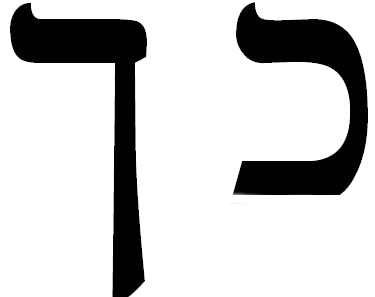
We now come to the eleventh stanza of Psalm 119 (Kaf/Kaph – כ‎, final form – ך), and with this stanza, we are halfway through the longest chapter in the Bible. This is somewhat appropriate since the theme of this stanza concerns waiting. “How many days must your servant wait?” (verse 84a) In the same way that this psalm requires endurance and perseverance to read and work through, so also the life of faith requires endurance and perseverance. Or, to borrow the title of Eugene Peterson’s book on the Psalms of Ascent (120-134), the Christian life is A Long Obedience in the Same Direction. As the subtitle of the book states, Peterson uses these psalms to reflect on “discipleship in an instant society”. As a culture, we are addicted to instant gratification, and the proliferation of social media with its “likes” and “follows” has only made this incessant need more consuming. We desperately need to relearn what it means to wait, to persevere in faith, to appreciate delayed fulfillment. But, of course, waiting is not easy; it is not fun. Most of the time, it is hard, and this is the struggle that our psalmist is wrestling with in these verses.

It would seem that he is facing intense persecution for his devotion to God and His ways. As he writes in verse 86, “people persecute me with lies; they almost ended my life on earth.” This is because “they violate your instruction, but I did not abandon your precepts.” (verse 85) Clearly, the psalmist is facing opposition, ridicule, even the threat of physical harm because of his commitment to the Word and ways of God. Sadly, this is the reality of living in the already but not yet. As believers in Christ, we are already citizens of His kingdom; we live by a set of standards and convictions, principles and values, that stand in complete contradiction to the kingdom of this world. This inevitably leads to conflict with those who are on the outside of the faith, which results in ridicule, ostracism, and eventually outright persecution. The more that we obey the Word of God, the more that we will face criticism for it. As the Apostle Paul puts it in Second Timothy, chapter 3, verse 12, “In fact, all who want to live a godly life in Christ Jesus will be persecuted.” This is a lived reality for our psalmist.

And so, understandably, our psalmist cries out to God, “How many days must your servant wait? When will you execute judgment on my persecutors? When will you comfort me?” (verse 84) This prayer has been the prayer of the people of God for the entirety of history. Every moment, we wonder, “How long, O Lord? How long until you will come to do away with sin, vindicate your people, fulfill your promises, and establish your perfect rule on earth? How long?!” This is our heart’s deepest and truest longing, as our psalmist says, “I long for your salvation.” Of course, salvation here, as our psalmist envisions it, is a much more robust concept than we usually understand. As a post-reformation, post-enlightenment, westernized people, we have been conditioned to understand salvation in individualistic terms. We generally think of salvation as the forgiveness of sin, the removal of guilt, and inheritance of eternal life (when we die). But for our psalmist, salvation is vindication; it the victory of God over those who would oppose Him and His people. However, these two understandings of salvation are not in contradiction. The Bible presents the work of Christ in redeeming His people as a both/and, as an already/not yet. We have already received the forgiveness of sin resulting in eternal life, but we are also waiting for the day when Christ will come again to defeat sin and Satan once and for all and establish His Kingdom on earth.

This is our blessed hope, and as our psalmist writes, “I put my hope in your word.” Our psalmist understands that hope is the source of the strength that is necessary for waiting, and the promises of God found in His Word are the foundation of hope. It is hope that empowers our psalmist’s unflinching obedience in spite of the persecution that he is facing. This is why he prays in verse 88, “Give me life in accordance with your faithful love, and I will obey the decree you have spoken.” The word that is translated as “faithful love” here is the Hebrew word חֶסֶד (hesed), and according to Darrell Bock, it encompasses “all the positive attributes of God: love, covenant faithfulness, mercy, grace, kindness, loyalty–in short, acts of devotion and loving-kindness that go beyond the requirements of duty.” It is variously translated as “faithful love, lovingkindness, loyalty, etc.”, and it refers to His promise keeping devotion to His covenant people. Our psalmist is confident that God will keep the promises of His Word, because that is who He is. He is a promise keeping God, and this is the ground of hope for our psalmist. It is what empowers him to step out in obedience expecting that it will result in the abundant life.

In many ways, the Christian life is a life lived in between, a life of the already but not yet, a life of waiting. We understandably wonder how long we will have to wait for the promises of God to be fulfilled, but there is a question that is more important than this. And that question is simply this: how shall we wait? Will we wait in faithfulness and obedience strengthened by our confident hope in the promises of God’s Word? Or will we give in to the pressures of the world as it seeks to conform us to itself? There will certainly be times when our waiting will be difficult, when continuing in faithfulness will feel pointless, when our hope will appear to be in vain. But these are the times that we must renew our faith in God and the promises are found in His Word and live in light of them. Then and only then will hear those most blessed words on that final day when our Lord Jesus says, “Well done, good and faithful servant! You were faithful over a few things; I will put you in charge of many things. Share your master’s joy.” (Matthew 24.23)

For further study:
Introduction
Psalm 119.1-8
Psalm 119.9-16
Psalm 119.17-24
Psalm 119.25-32
Psalm 119.33-40
Psalm 119.41-48
Psalm 119.49-56
Psalm 119.57-64
Psalm 119.65-72
Psalm 119.73-80


On the Message of Habakkuk

TEXT

The pronouncement that the prophet Habakkuk saw.

How long, Lord, must I call for help
and you do not listen
or cry out to you about violence
and you do not save?
Why do you force me to look at injustice?
Why do you tolerate wrongdoing?
Oppression and violence are right in front of me.
Strife is ongoing, and conflict escalates.
This is why the law is ineffective
and justice never emerges.
For the wicked restrict the righteous;
therefore, justice comes out perverted.

~Habakkuk 1.1-4

16 I heard, and I trembled within;
my lips quivered at the sound.
Rottenness entered my bones;
I trembled where I stood.
Now I must quietly wait for the day of distress
to come against the people invading us.
17 Though the fig tree does not bud
and there is no fruit on the vines,
though the olive crop fails
and the fields produce no food,
though the flocks disappear from the pen
and there are no herds in the stalls,
18 yet I will celebrate in the Lord;
I will rejoice in the God of my salvation!
19 The Lord my Lord is my strength;
he makes my feet like those of a deer
and enables me to walk on mountain heights!

For the choir director: on stringed instruments.

~Habakkuk 3.16-19

Text: Habakkuk 1.1-4, 3.16-19
Series: Supply Preaching
Church: Fitzgerald Crossing Baptist Church, Wynne, AR
Date: January 15, 2023


On the Spiritual Disciplines: An Introduction

TEXT

For this very reason, make every effort to supplement your faith with goodness, goodness with knowledge, knowledge with self-control, self-control with endurance, endurance with godliness, godliness with brotherly affection, and brotherly affection with love. For if you possess these qualities in increasing measure, they will keep you from being useless or unfruitful in the knowledge of our Lord Jesus Christ.

~2 Peter 1.5-8

Topic: Introduction and Overview
Series: Spiritual Disciplines of the Christian Life
Church: South Caraway Baptist Church, Jonesboro, AR
Date: January 11, 2023


On the Annual Celebration of Christmas and Easter

When it comes to a church’s life together, there are two pillars around which the rest of the annual calendar swings, i.e. Christmas and Easter. These are the high points in the church’s worship every year. Many churches still commemorate these holidays with special programs, musical and dramatic presentations of the Biblical story, and a focus on inviting the community in for high attendance, after all these are the only days that the CEOs come to church anyway (Christmas and Easter Onlys). It is clear that these holidays hold a special place in the devotion of most Christians. They focus our reflection on the primary movements of the story of redemption, how God the Son came to earth incarnate as a baby in a manger and how he died on the cross for sin and rose again some thirty years later. Even though they are mostly overcome by the cultural consumerism that so obviously characterizes our society these days, they are still a meaningful season in the worship of the church.

However, the question remains, “why do we celebrate these annual holidays anyway?” After all, there is no explicit command in the Scriptures to commemorate the nativity and/or the passion of our Lord Jesus Christ annually by a special holiday. In the New Testament, the church’s worship moved away from the annual calendar marked by special holidays and feasts that characterized the worship of the Jews in the Old Testament, and they moved to a weekly calendar marked by the gathering of the saints on the Lord’s Day for the preaching of the Word and the breaking of bread. Further, the Regulative Principle for Worship (RPW) states that only those elements that are clearly prescribed in the Scriptures should be included in the church’s worship. A strict application of this principle would mean that since Christmas and Easter are not explicitly prescribed by the New Testament, then we are in error when we make them a primary emphasis or central component in our devotion and worship, whether corporately or individually.

We do know that the church began to celebrate these holidays fairly early on in her existence. Within a century or so of the life and death of Jesus and His first followers, the church began to include these annual feasts as a regular part of the worship calendar. Of course, critics often suggest that these festivals were borrowed and adapted from the pagan world; however, these criticisms tend to fall apart quickly under close historical scrutiny. After examining the evidence, one author recently concluded that “no modern Christmas [or Easter] tradition can draw a straight line to any clear and decisive pagan origin.” While there has certainly been growth over the centuries in the lore and cultural traditions that surround these holidays, none of this is original and/or essential to the Christian celebration of them. Rather, it is evident that Christians recognized very early on in their history how important it was to commemorate the two decisive moments in redemptive history, namely the birth and death/resurrection of the one who is called Christ.

Of course, tradition alone is not a sufficient enough reason to justify the continued celebration of Christmas and Easter, but neither is it a sufficient reason for discontinuing the observance of them either. All traditions are not bad; in fact, some are quite helpful in the formation of our faith and practice. I have previously written on the question of tradition here, but suffice it to say that there is great wisdom in learning from the faith and practice of our Christian forebears, both from what they did well and from what they did not do well. So, perhaps the proper question should not be whether the celebration of Christmas and Easter is right or wrong, but whether it is wise and good. Does the annual observance of these holidays have spiritual value for the growth of the followers of Jesus in conformity to His image? And if this is the question, then we must answer in the affirmative. The fact of the matter is that we are a people who are quick to forget, quick to move on, quick to believe that we have outgrown our need for the Gospel. But there is nothing more foundational, nothing more crucial, for our formation in Christlikeness than to be reminded regularly of exactly what Christ has done on our behalf.

His incarnation and resurrection are the primary aspects of His redemptive work; they tell the story of how God the Son came to earth as a child, lived a sinless life, died on the cross for sin, and then rose again. In fact, the Apostle Paul instructs us in Second Timothy, chapter 2, verse 8, “Remember Jesus Christ, risen from the dead and descended from David, according to my gospel.” Or again, in the Letter to the Romans, that Jesus Christ “was a descendant of David according to the flesh and was appointed to be the powerful Son of God according to the Spirit of holiness by the resurrection of the dead.” Throughout the New Testament, these movements – the incarnation and the resurrection – are the hinge pins upon which the Gospel swings. And as followers of Jesus, we take great joy in celebrating these glorious acts of redemption each and every year, because it reminds us of the beautiful salvation that we have in Christ. It reminds us who we are, and it reminds us of why we are here. The church is a body of believers whose existence and purpose are defined by the redemptive work of God in Christ. Therefore, it is right and good that we celebrate these movements of God’s grace, not only every week, but as a matter of purposeful reflection every year on Christmas and Easter.

This, however, would seem to be the challenge in our modern culture, focusing our worship on Christ during these holidays and not becoming distracted by the cultural baggage that is so obviously associated with them. Just last month, I was chided vociferously on social media for suggesting that Santa Claus is neither necessary nor useful in the Christian enjoyment of the Christmas holiday. It would seem that in this particular cultural milieu Christians will need to be purposeful and strategic in how they celebrate going forward. We must make it clear that Christmas and Easter are about Christ and Christ alone, and if that means dispensing with some of the traditional festivities that have become associated with these holidays, then so be it. The celebration of Christmas and Easter should be a time when those who follow Jesus can celebrate anew the wonder and glory of what Christ has done for us in the Gospel. May we never grow tired of celebrating this timeless story each and every year.

This article is also posted at SBCvoices, here.


On How the Death of Jesus Changed Everything

TEXT

44 It was now about noon, and darkness came over the whole land until three, 45 because the sun’s light failed. The curtain of the sanctuary was split down the middle. 46 And Jesus called out with a loud voice, “Father, into your hands I entrust my spirit.” Saying this, he breathed his last.

47 When the centurion saw what happened, he began to glorify God, saying, “This man really was righteous!” 48 All the crowds that had gathered for this spectacle, when they saw what had taken place, went home, striking their chests. 49 But all who knew him, including the women who had followed him from Galilee, stood at a distance, watching these things.

~Luke 23.44-49

Title: On How the Death of Jesus Changed Everything
Text: Luke 23.44-49
Series: Who is Jesus? A Study of the Gospel of Luke
Church: South Caraway Baptist Church, Jonesboro, AR
Date: January 1, 2023


On the Crucifixion and Why It Matters at Christmas

TEXT

32 Two others—criminals—were also led away to be executed with him. 33 When they arrived at the place called The Skull, they crucified him there, along with the criminals, one on the right and one on the left. 34 Then Jesus said, “Father, forgive them, because they do not know what they are doing.” And they divided his clothes and cast lots.

35 The people stood watching, and even the leaders were scoffing: “He saved others; let him save himself if this is God’s Messiah, the Chosen One!” 36 The soldiers also mocked him. They came offering him sour wine 37 and said, “If you are the king of the Jews, save yourself!”

38 An inscription was above him: This Is the King of the Jews.

~Luke 23.32-38

Title: On the Crucifixion and Why It Matters at Christmas
Text: Luke 23.32-38
Series: Who is Jesus? A Study of the Gospel of Luke
Church: South Caraway Baptist Church, Jonesboro, AR
Date: December 18, 2022


On a Christmas Joy That Lasts

TEXT

Nevertheless, there will be no more gloom for those who were in distress. In the past he humbled the land of Zebulun and the land of Naphtali, but in the future he will honor Galilee of the nations, by the Way of the Sea, beyond the Jordan—

The people walking in darkness
    have seen a great light;
on those living in the land of deep darkness
    a light has dawned.
You have enlarged the nation
    and increased their joy;
they rejoice before you
    as people rejoice at the harvest,
as warriors rejoice
    when dividing the plunder.
For as in the day of Midian’s defeat,
    you have shattered
the yoke that burdens them,
    the bar across their shoulders,
    the rod of their oppressor.
Every warrior’s boot used in battle
    and every garment rolled in blood
will be destined for burning,
    will be fuel for the fire.
For to us a child is born,
    to us a son is given,
    and the government will be on his shoulders.
And he will be called
    Wonderful Counselor, Mighty God,
    Everlasting Father, Prince of Peace.
Of the greatness of his government and peace
    there will be no end.
He will reign on David’s throne
    and over his kingdom,
establishing and upholding it
    with justice and righteousness
    from that time on and forever.
The zeal of the Lord Almighty
    will accomplish this.

~Isaiah 9.1-7

Title: On a Christmas Joy That Lasts
Series: Supply Preaching
Church: Cherry Valley Baptist Church, Cherry Valley, AR
Date: December 11, 2022


On Historical Context and Purpose in the Book of Revelation

It is commonly accepted wisdom among most Christians that the Book of Revelation is the hardest book of the Bible to interpret and understand, and it certainly does stand out as one of the most unique books of the New Testament. Those who do attempt to read it are immediately confronted by literary forms, images and symbols, and pastoral concerns that are so unlike their own lived experiences that they tend to put it down faster than they picked it up. Couple this with the myriad of disagreements that exist over the meaning of all these details, and it seems easier to simply leave this book of the Bible to the domain of trained Biblical scholars. However, the book itself affirms, “Blessed is the one who reads aloud the words of this prophecy, and blessed are those who hear the words of this prophecy and keep what is written in it, because the time is near.” (Revelation 1.3) So, when we neglect and ignore this final book of the Bible, we miss out on the blessing that it very clearly promises. But how do we overcome the intimidating and off-putting obstacles that keep us from drinking deeply from its pages?

When we are met with an interpretive challenge like the Book of Revelation, we must return to our basic hermeneutical convictions, those fundamental interpretive principles that help us navigate the Scriptural waters. And one of those rules that is particularly helpful for understanding the Book of Revelation is this: A text without a context is a pretext for a proof text. In other words, when we understand who the biblical author is writing to and why he is writing to them, we are in a better position to understand what he is saying. Or to put it another way, the meaning of the text must be grounded in the inspired intention of the biblical author. He is writing to real people with real needs, and he intends for his message to truly address those needs. If we come up with an interpretation that would make zero sense for the original audience, then we must reevaluate our understanding of the text. Of course, any reconstruction of the historical audience must begin with the details in the text, but historical sources from the time period can add additional detail to our understanding of the audience and their situation.

Fortunately for us, John identifies his intended audience directly; in chapter 1, verse 11, we read, “Write on a scroll what you see and send it to the seven churches: Ephesus, Smyrna, Pergamum, Thyatira, Sardis, Philadelphia, and Laodicea.” We must affirm that these were seven real churches that were located in the Roman province of Asia Minor, or what we would call modern day Turkey. Each one of these seven churches is addressed directly in the letters of chapters 2 and 3, but the author’s concern for these churches cannot be limited to these first few chapters, even if they are primary for understanding the particular needs of these churches. The entire book was written to and for the members of these seven churches of Asia Minor. As to the date of writing, there are two views that are held by biblical scholars. The majority view holds that the book was written during the reign of the Emperor Domitian (81-96 CE); the minority view suggests that the book was written during the reign of the Emperor Nero (54-68 CE). Either of these dates is possible for the book’s composition, but a review of the historical evidence slightly favors the later date, meaning that the Book of Revelation was probably written sometime around 95 CE.

Regardless of which date is preferred, it is clear that these seven churches were facing challenges both internally and externally. These Christians were living in a world that was openly hostile to their faith in Christ, and while there was no official imperial policy of persecution at this time, they were facing intense social pressure in their local communities to compromise their convictions and conform to the Roman way of life. Culturally, they simply had no where to belong. The Jews had rejected them, and the Gentiles would not accept them. They were ostracized marginalized outsiders who did not belong to the world they lived in. And Jesus is writing to them through John to encourage them to persevere in faithfulness, to hold on to the blessed hope that is His appearing. The Revelation is a reminder that they are part of something bigger than themselves, that the victory and vindication that they long for is ahead of them, and that there will be a day when all oppression shall cease. This is the message of Revelation. It is not about beasts and bowls; rather, it is about Christ, our King, who is coming again in glory and power to do away with sin once and for all and establish His perfect Kingdom on earth.

Of course, there are those who would disagree with this assessment of the message of Revelation. Some, particularly those who hold to an early date for the book, would suggest that part or perhaps all of the book was fulfilled in the destruction of Jerusalem in 70 AD. Problems with the early date notwithstanding, it is not clear how this understanding addresses the needs of Christians living in the Roman province of Asia Minor. As noted above, they were facing persecution from the Jews living in those cities, but Jerusalem was not the primary enemy that they were facing. In fact, the Book of Revelation makes it clear that while earthly enemies may affect us, they are not our ultimate foe anyway. Therefore, the destruction Jerusalem would hold little promise for bringing their persecution to an end and accomplishing the victory that the book promises. Further, it isn’t clear how the book’s descriptions of “all the nations”, “all those who live on the face of the earth”, and “the whole earth” can refer only to the people of Israel or the citizens of Jerusalem. So, while this view attempts to maintain the book’s relevance for the original audience by positing all fulfillment in the first century, in actuality, it does the exact opposite. In fact, it completely undercuts the hope and blessing that the book promises its readers, both in the first century and today.

The Book of Revelation paints a glorious and beautiful picture of the hope that is ours in Christ Jesus. It is the promise of a world that is free from the contamination of sin, free from the heavy burden of the curse, free from all opposition to Christ and His people. As Christians, we must remember that this is our blessed hope. This world’s troubles and difficulties are not the end of our story; no, we are part of something that is bigger than ourselves, an eternal story that far surpasses our momentary lives here on earth. Moreover, the Book of Revelation teaches us that our sufferings, our difficulties, our heartaches, they matter deeply to God. He takes note of every wrong, every insult that we suffer, and one day, He will right those wrongs and vindicate His people. This is the central message of Revelation. Of course, the difference is in the details as they say, and there are still many details within the pages of Revelation that we must wrestle with. But this is the point, we must wrestle with them. We cannot ignore or neglect this last book of the Bible simply because it is too challenging, too difficult, too different. We must explore with our minds and our hearts what the Spirit is saying to His church. We must pray that He will give us ears to hear, and when we engage this book in earnest, we may be confident that we will find the strength to persevere and hold fast in hope.

For further study, see
Osborne, Grant R. Revelation. Baker Exegetical Commentary on the New Testament. Grand Rapids, MI: Baker Academic, 2002.


On the Problem of Eschatological Imminence

I love Christmas music, both the secular and sacred. When I hear it on the radio, in retail stores, or even in church, it just brings back all the wonderful memories of this time of year from my childhood. So, as the song goes, it’s the holiday season, so hoop-de-do and dickory dock. That means that Thanksgiving, Christmas, and New Year’s are right around the corner, and most of us are preoccupied with decorations and presents, parties and planning, and all of the other details that fill our minds during this time of year. But for Christians, this time of year is an invitation to reflect afresh on the coming of our Lord Jesus Christ. Traditionally, the season of Advent consists of the four Sundays that lead up to the celebration of Christmas, and it is a time when we are invited to look back on the first coming of Jesus at the incarnation even while we look forward to the second coming of Jesus. For more on this, see my post here.

However, most discussions of our Lord’s second coming always ends up with the same plaguing question, “So, when is he coming? When will it be?” This is a question that has plagued the people of God since the days of Jesus’ earthly ministry, and even before. We can read in the Psalms and prophets of the Old Testament where the people of God cried out in agony wondering, “Lord, how long will the wicked—how long will the wicked celebrate?” (Psalms 94.3), or “How long will you judge unjustly and show partiality to the wicked?” (Psalm 82.2), or even “How long, Lord, must I call for help and you do not listen or cry out to you about violence and you do not save?” (Habakkuk 1.2). This has been the longing of the people of God throughout history, that He would act finally and climatically to put an end to sin, vindicate His people, and establish His perfect reign on earth.

A quick review of the New Testament and what it says about the second coming of Jesus would seem to indicate that these prayers have been answered. In those hallowed pages, we read promises like, “In the same way, when you see all these things, recognize that he is near—at the door.” (Matthew 24.33), and “Look, I am coming soon, and my reward is with me to repay each person according to his work.” (Revelation 22.12), and  “The God of peace will soon crush Satan under your feet.” (Romans 16.20). Words like soon, near, at hand, quickly seem to indicate that the consummation the people of God had waited for so long was imminent and about to be realized, perhaps even within the first century. The reality, of course, is that those words were written some 2000 years ago, and we are still waiting for the return of Jesus in glory and power. This, then, is the problem. What are we to make of the New Testament’s promises of imminence, in light of the fact that we are still waiting for His coming some two millennia later?

There are really three options for answering this problem; however, one of them is out of bounds for those who hold orthodox convictions about the person of Christ and the nature of the Bible. Essentially, this option simply concludes that Jesus and His followers were wrong in their expectation. In other words, Jesus had promised and they believed that He would return in power and glory in the first century, i.e. within their lifetimes, and they were just wrong. But this solution charges both Jesus and the authors of Holy Scripture with error, which is something orthodoxy simply cannot abide. We confess that the Scriptures are wholly inerrant, that the authors of both the Old and New Testaments were kept from error by the Holy Spirit who inspired them. Their words are the very words of God himself; therefore, if they lied, he lied, but he cannot lie. Moreover, we confess that Jesus was God the Son incarnate, the very embodiment of truth. He lived a sinless life in complete obedience to God’s Law; therefore, He cannot and did not lie in anything He said. So, we cannot conclude that Jesus or the Apostles were in error in any way.

Another solution to the apparent problem of eschatological imminence is to reinterpret what Jesus and the New Testament authors meant by His coming. In other words, they did not understand His coming to mean the visible bodily return of Jesus to the earth in power and glory to judge the wicked and vindicate the righteous at the end of time. Rather, when they referred to His coming, they were simply referring to His coming in judgment on the people of Israel who rejected and murdered him, a judgment that was fulfilled when Jerusalem was destroyed by the Romans in 70 AD. This view is usually referred to as preterism, and there is certainly more to it than the definition given here. But its central tenet is that all of the New Testament’s predictions and descriptions of our Lord’s second coming are fulfilled in the first century. The strength of this view is that it seeks to maintain the relevance of the New Testament’s promises of imminence for the biblical audience, and rightly so. However, the conclusion that His coming refers to something other than a visible bodily coming is anticlimactic and unconvincing to say the least. As the church has confessed for nearly two millennia, so also must we affirm that, “He will come again in glory to judge the living and the dead and his kingdom will have no end.” (Nicene Creed)

The final solution, and the one that is most commonly accepted, is to reconsider what the Bible means by its promises of imminence. In other words, temporal qualifiers like near, soon, quickly, and at hand may not necessitate immediate fulfillment in the lifetime of Jesus and His first followers. This is even more likely when we remember that typological fulfillment is a typical characteristic of God’s comings throughout biblical history. Moreover, this is exactly how the question is answered within the New Testament itself. In Second Peter chapter 3, Peter addresses this very objection, “Where is his ‘coming’ that he promised?” (2 Peter 3.4). He gives a couple of different answers to this objection, the examination of which is beyond the scope of this post. However, in verse 8, he writes, “Dear friends, don’t overlook this one fact: With the Lord one day is like a thousand years, and a thousand years like one day.” In this verse, Peter is saying that eschatological imminence must be considered from the eternal perspective and not from a temporal one; the meaning of words like soon, near, quickly, and at hand must be measured from the perspective of the one who gave the promise to begin with. Of course, some might object that this verse should not be used as a kind of trump card that dismisses the biblical promises of imminence, and they would be right. However, whatever is meant by eschatological imminence, our understanding of those promises must be consistent with the principles outlined in Second Peter chapter 3, because there are no contradictions in the Bible.

In light of this discussion then, we may conclude that the Bible’s promises of eschatological imminence are just as relevant to the people of God today as they were when they were first given. His coming is near; it is at hand. He is coming soon; he is coming quickly. This means that the people of God must live in a constant state of ready expectation and eager anticipation, because this is our blessed hope, “the appearing of the glory of our great God and Savior, Jesus Christ.” (Titus 2.13). And while we wait, may we find ourselves consistently faithful, until we hear those wonderful and precious words, “Well done, good and faithful servant. Enter into the joy of your master.” As our Lord himself said, “Blessed is that servant whom the master finds doing his job when he comes.” (Luke 12.43)


Slow To Write

"let every person be quick to hear, slow to speak, slow to anger."

lovegavehope

Just another WordPress.com site

Jared Cornutt

Pastor | Speaker | Writer

Denny Burk

A commentary on theology, politics, and culture

G3 Ministries

Events + Resources for the Local Church

Biblical Reasoning

Biblical and Systematic Theology According to the Scriptures

RetroChristianity

Reclaiming the Forgotten Faith

SBC Voices

Southern Baptist News & Opinion

Lucid Theology

Thoughts on words, books, theology, and life.

Baptist21

A pastor-led voice for Baptists in the 21st century

Center For Baptist Renewal

The Personal and Professional Blog of Phillip Powers

The Pastor's Well - Pastor Well

The Personal and Professional Blog of Phillip Powers

Articles - AlbertMohler.com

The Personal and Professional Blog of Phillip Powers

The Gospel Coalition

The Personal and Professional Blog of Phillip Powers