Tag Archives: Death

On How Death is Gain when Our Life is Christ

TEXT

21 For me, to live is Christ and to die is gain. 22 Now if I live on in the flesh, this means fruitful work for me; and I don’t know which one I should choose. 23 I am torn between the two. I long to depart and be with Christ—which is far better— 24 but to remain in the flesh is more necessary for your sake. 25 Since I am persuaded of this, I know that I will remain and continue with all of you for your progress and joy in the faith, 26 so that, because of my coming to you again, your boasting in Christ Jesus may abound.

~Philippians 1.21-26

Title: On Death as Gain when Life is Christ
Text: Philippians 1.21-26
Occasion: Celebration of Life for Mr. Bobby Garrison
Church: Redeemer Baptist Church, Jonesboro, AR
Date: November 15, 2025


On the Curse of Death and the Hope of Resurrection

TEXT

12 The iniquity of Ephraim is bound up;
His sin is stored up.
13 The pains of childbirth come upon him;
He is not a wise son,
For it is not the time that he should delay at the opening of the womb.
14 Shall I ransom them from the power of Sheol?
Shall I redeem them from death?
O Death, where are your thorns?
O Sheol, where is your sting?
Compassion will be hidden from My sight.

15 Though he flourishes among the reeds,
An east wind will come,
The wind of the Lord coming up from the wilderness;
And his fountain will become dry
And his spring will be dried up;
It will plunder his treasury of every precious article.
16 Samaria will be held guilty,
For she has rebelled against her God.
They will fall by the sword,
Their little ones will be dashed in pieces,
And their pregnant women will be ripped open.

~Hosea 13.12-16 (NASB95)

Title: On the Curse of Death and the Hope of Resurrection
Text: Hosea 13.12-16
Series: Hosea: A Love Story Like No Other
Church: Redeemer Baptist Church, Jonesboro, AR
Date: July 13, 2025


On Resurrection and De-dustification

It is common in Biblical studies to suggest that the doctrine of the resurrection is a late development in Old Testament theology. Of course, the clearest Old Testament affirmation of this belief is found in Daniel 12.2, where we read, “Many who sleep in the dust of the earth will awake, some to eternal life, and some to disgrace and eternal contempt.” While the dating of Daniel is a much debated question, this verse certainly stands as a clear affirmation of the doctrine of a general resurrection possibly from as early as the exilic period. But is it possible that the doctrine of resurrection has a much longer presence in the Old Testament. I would suggest that it does, and I would base this suggestion, at least in part, on the words of David in Psalm 16, verse 10, where we read, “For you will not abandon me to Sheol; you will not allow your faithful one to see decay.” In this psalm, David is  seeking divine protection because he has remained loyal to God, and he is praising God for his rich blessings with full confidence God will vindicate him and deliver him from death.

Now, this particular verse is quoted twice in the in the Book of Acts in defense of the resurrection of Jesus, once by Peter in Acts 2.27, and once again by Paul in Acts 13.35. Of course, their appeal to this verse raises all kinds of questions regarding the interpretive methods of Luke and the other apostles, but suffice it to say here that there is no need to suggest that they have misinterpreted it. They haven’t read something into it that wasn’t actually there in the first place. No, they have rightly understood the implications of David’s words, and by way of typological prediction, they have applied these words to the Messianic Son of David, Jesus the Christ. David genuinely believed that that God could and would deliver him even from death, so while the doctrine of resurrection is not spelled out explicitly, we have ample reason to believe that David held some conception of physical life after death. This is why he says, “you will not allow your faithful one to see decay.”

However, Peter’s explanation here deserves our attention. In Acts 2.29, he says, “Brothers and sisters, I can confidently speak to you about the patriarch David: He is both dead and buried, and his tomb is with us to this day.” Likewise, Paul explains similarly in Acts 13.36-37, “For David, after serving God’s purpose in his own generation, fell asleep, was buried with his fathers, and decayed, but the one God raised up did not decay.” Jesus was only in the grave for three days; there simply wasn’t enough time for his physical body to see decay. But David’s bones turned to dust a long time ago, as it is written, “All are going to the same place; all come from dust, and all return to dust.” (Ecclesiastes 3.20) This dusty fate is part of God’s curse on human sin, as we read in Genesis 3.19, “For you are dust, and you will return to dust.” It is a fate that awaits us all. So, we must ask the question: was David wrong in his expectation that his body would not see decay? Was he wrong in his hope for a bodily resurrection?

The answer to these questions must be a resounding, “May it never be.” David was not wrong to believe that God could and would deliver him even from the depths of death itself, and even though his physical body has long returned to the dust from whence it came, one day, his body will be raised new, perfectly whole and completely glorified. This is the hope of resurrection; it is the hope of de-dustification. As the Apostle Paul writes in Romans 8.11, “And if the Spirit of him who raised Jesus from the dead lives in you, then he who raised Christ from the dead will also bring your mortal bodies to life through his Spirit who lives in you.” Or again, in Philippians 3.21, “He will transform the body of our humble condition into the likeness of his glorious body, by the power that enables him to subject everything to himself.” If God can create man from the dust and breath the breath (the Hebrew word is the same word sometimes translated Spirit) of life into him so that he becomes a living soul, then he can certainly raise our bodies from the dust and give them eternal physical life by His Spirit.

In other words, far from being some late postulate in Old Testament theology, the idea of resurrection has a long standing place in Old Testament thought. It goes back at least to the time of David and the monarchy, some 1000 years before the time of Daniel and the exile, and it possibly goes back farther than that (but that is a topic for another time.) The point here is simply the Christian hope, nay, the biblical hope, is for nothing less than the perfected glory of bodily resurrection. As Jesus himself says, “a time is coming when all who are in the graves will hear his voice and come out—those who have done good things, to the resurrection of life, but those who have done wicked things, to the resurrection of condemnation.” (John 5.28-29) Maranatha!

For further study, see:
On the Logic of the Resurrection
On Christian Hope: Heaven or Resurrection
On Resurrection and the Path of Glory

See also,
Chase, Mitchell L. Resurrection Hope and the Death of Death. Short Studies in Biblical Theology. Wheaton, IL: Crossway, 2022.


On the Errors of Full Preterism

Full preterism, or consistent eschatology as it is sometimes called, is the belief that all of the Bible’s prophecies regarding the consummation of God’s plan for the redemption of humanity, including but not limited to the second coming of Jesus, the resurrection, final judgment, and the establishment of the new heavens and the new earth, occurred in 70 AD when the Romans destroyed the temple in Jerusalem. This event in their understanding marked the eschatological transition from the Old Covenant to the New Covenant, meaning that no further fulfillment is necessary. The new has come; it is really and truly here to its fullest extent. There is no need for any further act of God to complete his redemptive purposes in the world.

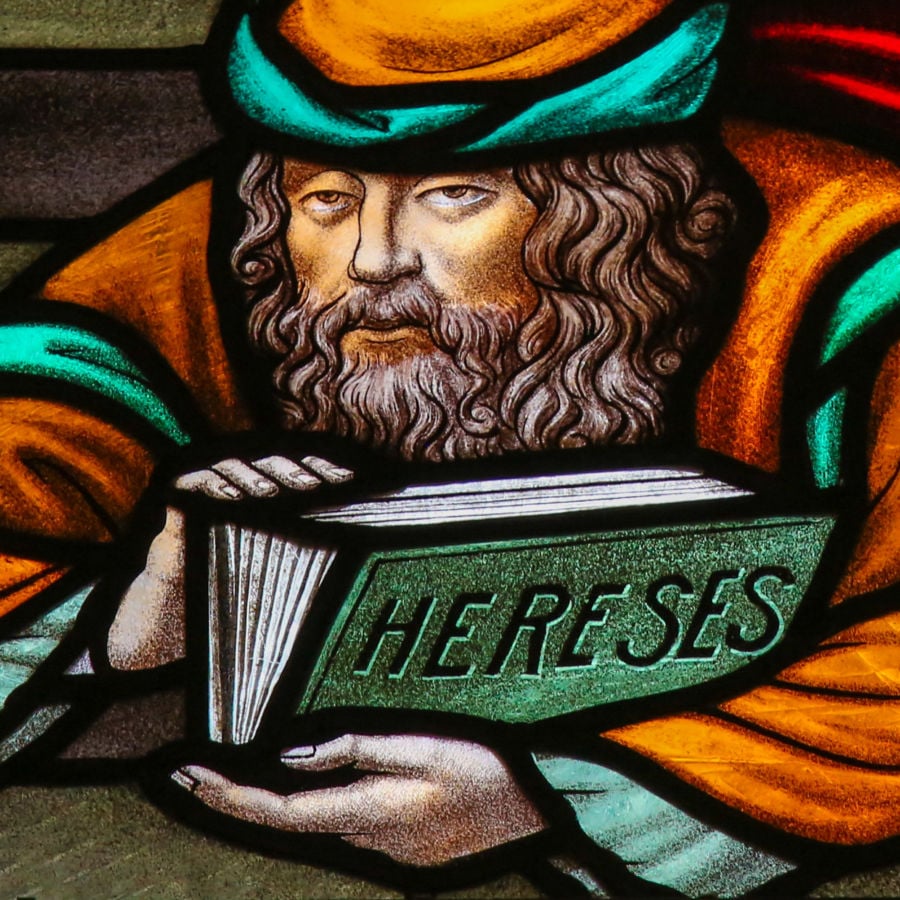
Now, let me be clear, this position is complete and utter heresy. It is a false gospel, because it denies the essential orthodox belief that “He will come again to judge the living and the dead” (Apostle’s Creed). It denies “the resurrection of the dead and the life of the world to come” (Nicene Creed). These denials among others put the views of full preterism wholly outside the boundaries of historic Christian orthodoxy. In the space that remains here, I would simply like to outline a few of the methodological and theological errors that are typical of this view, and then I will conclude by reaffirming the orthodox Christian hope.

The first error of full preterism is that they have a conspiracy theory view of hermeneutical method. In other words, their interpretations are based on a string of loosely related or even unrelated texts that are tied together by the occurrence of similar words. Of course, they would claim that they are following the principle of sola scriptura, namely that “scripture interprets scripture,” but I would submit that this is a theological conviction for biblical interpretation not a hermeneutical method for biblical interpretation. (See my post here). In stringing texts together the way that they do, they completely disregard concerns for the text’s historical and theological context and the author’s flow of thought. Instead, they flatten out the distinctive emphases of particular texts by smashing them together to say that same thing. More often than not, their exegesis comes across like someone throwing paint against a wall and then concluding they’ve painted Mona Lisa.

A second error of full preterism is that they hold to a gnostic view of the human person. Gnosticism is a heresy from the second century CE that suggests that Christ came to save us from this evil material world so that we could throw off the limits of our physical bodies and exist eternally as pure spirit. Of course, there is much more to it than this simple definition, but its weakness is that it disregards God’s design for human beings as embodied souls. We were made with a body and a soul, and to exist without either one of these is to be incomplete from the biblical point of view. This is why the resurrection of the body is such a primary doctrine; we are not merely transformed spiritually, we will be transformed physically when He comes again. Full preterism denies the future bodily resurrection of both the righteous and the wicked, and they suppose that when we die, we either go to heaven or hell to continue on as a “spiritual” being for eternity.

Thirdly, full preterism has an adoptionistic view of the incarnation. Adoptionism, or dynamic monarchianism, is a heresy from the third century CE that suggests that the divine logos came upon the man Jesus as his baptism, left him at his crucifixion, but then came upon him again at his resurrection. In other words, the man Jesus was “adopted” by God at his resurrection. The view of full preterism is not unlike adoptionistic Christology because they seem to believe the body of Jesus was only necessary during his earthly life. Often they suggest that his body was burnt up, or maybe it disappeared, at His ascension, so that He no longer has a body in heaven now. In other words, the son “adopted” a body for as long as he needed it, but then, when he no longer needed it, he discarded it. Along with the gnostic notions discussed above, this position negates the necessity of the resurrection. Why did Jesus even have to be resurrected from the dead with a body? Why not just rise as pure spirit? Here again, this view cannot explain the glorified body of Jesus, because it makes the incarnation temporary.

A fourth error that is part of the full preterist view is that they seem to have a fatalistic view of human history. Since they view this world as it is now as the “new heavens and new earth,” they have no expectation for any kind of renewal or transformation of the created order. According to this view, sin, death, disease, heartache, and the like will continue in perpetuity, eternally, without end. The only escape from the harsh realities of this world is when we die and go to heaven. But a renewed earth free of the corruption of sin and death is not in the purview of full preterism. This is fatalistic, because it essentially says that this is how the world is and this is how it will be. Nothing will ever get better, paradise will never be restored. Among others problems, this perspective denies the original purity and goodness of God’s creation and God’s intent to restore creation to that state of purity and goodness.

The final error that I see with full preterism, and perhaps the greatest, is that it offers a hopeless view of the Gospel. The reason for this is that it does not offer a final and full defeat of sin. Sure, the penalty of sin has been paid on the cross, and Satan has been defeated. But according to the full preterists, Satan and sin continue to run free forever. There is no final end to sin; there is no final defeat of Satan, no final judgment of the wicked. These things continue into perpetuity. The fact of the matter is that this is not the Gospel. Christ came, yes to pay the penalty for our sin, but also to free us from sin, and not only us, but the entirety of His creation. This is why the creation groans with yearning for the revelation of the sons of God (Romans 8.19-22). We look forward to a world that will be free of the domination and corruption of sin, free of the decay of death, where there will be no more tears, no more pains, no more heartaches. This is hope. This is the Gospel. And so we say, “Amen! Come, Lord Jesus!” (Revelation 22.20)

For further study:
On Christian Hope: Heaven or Resurrection
On Eschatology and the Gospel


On Resurrection and the Path of Glory

TEXT
10 My goal is to know him and the power of his resurrection and the fellowship of his sufferings, being conformed to his death, 11 assuming that I will somehow reach the resurrection from among the dead.

~Philippians 3.10-11

Title: On Resurrection and the Path of Glory
Text: Philippians 3.10-11
Church: Redeemer Baptist Church, Jonesboro, AR
Date: March 31, 2024

On Christian Hope: Heaven or Resurrection

It is commonplace in American Christianity to hear people talk about going to heaven when they die. For most people, this is the promise of the Gospel, that if you believe in Jesus for the forgiveness of sin and live a morally good and ethical life for the most part, then you will get to go to heaven when you die. This is usually conceptualized as a kind of purely spiritual (nonmaterial, nonphysical) existence of some kind (think halos, harps, and clouds). However, this is a far cry from the biblical picture of eternal life. First, eternal life is not simply a limitless quantity of life that we experience when we die, though it certainly includes this; rather is a certain quality of life, i.e. the life of the messianic age, that we begin to experience even now in part on this side of glory. But, more importantly, the Christian vision for life after death is for a resurrected embodied life. This is a crucial aspect of the biblical understanding of salvation, but it is so often neglected, ignored, or outright denied. And so, since this is the week in which we celebrate the resurrection of our Lord Jesus, I would like to use the space that follows to explore the biblical foundation of the biblical hope for resurrection.

First, we must affirm that human beings were created as composite wholes, that is with a body and a soul. Some theologians would argue for a tripartite division, i.e. body, soul, and spirit, but the point remains the same, namely that the body is essential for what it means to be human. In Genesis, chapter 2, verse 7, we read, “Then the Lord God formed the man out of the dust from the ground and breathed the breath of life into his nostrils, and the man became a living being.” In other words, when the “spirit of life” (the Hebrew word for “breath” can also be translated as “spirit”) entered into the body made of dust, the first man became a living being. Both components were necessary to complete the first man; therefore, to exist as spirit only would be an incomplete, non-human existence. This is why the incarnation was necessary; as the author of Hebrews argues in chapter 10, verse 5 (quoting Psalm 40.6 LXX), “Therefore, as he was coming into the world, he said: You did not desire sacrifice and offering, but you prepared a body for me.” In order to redeem humanity, it was necessary that the Son of God should become fully human, body and soul, and if He was anything less than fully human, then the redemption He secured would be incomplete. Or to put it another way, that which He did not assume, He cannot redeem. And the only way that the body can be redeemed from death is through resurrection.

Of course, this leads right into the second biblical foundation of our resurrection, namely that Jesus Christ was resurrected bodily from the dead. A cursory reading of the Gospel accounts of our Lord’s passion leads to the inescapable conclusion that Jesus died bodily, He was raised bodily, He ascended bodily, and He will return bodily. He was no mere apparition or ghost; He was not some kind of spirit only being that appeared at random. In the Gospel of Luke, we read that Jesus ate with the disciples after His resurrection, both on the road to Emmaus and in the upper room, and in the Gospel of John, we read that He invited Thomas to touch the holes in His hands and in His side. So, while His resurrected body was different in many ways, there was still a corporeal continuity to His bodily existence both before and after His resurrection. Moreover, and perhaps more importantly, the Apostle Paul argues that the physical bodily resurrection of Jesus is the lynchpin of the Gospel. “And if Christ has not been raised, your faith is worthless; you are still in your sins.” (1 Corinthians 15.17) In other words, the bodily resurrection of Jesus was necessary for our salvation to be complete. It was not only necessary for Him to die physically for our sin, but it was also necessary for Him to be raised physically to new life. The bodily resurrection makes His work of redemption complete, and because He has been raised, He is able to offer resurrection life to those who trust in Him.

Consequently, this is the third biblical foundation for the Christian hope of resurrection, namely that the bodily resurrection of Jesus is the ground and promise for the bodily resurrection of those who have trusted in Him. Because He has been raised bodily, we who have trusted in Him will also be raised bodily. This is the inescapable logic of our union with Christ. As the Apostle Paul argues in the Letter to the Romans, chapter 6, verse 5, “For if we have been united with him in the likeness of his death, we will certainly also be in the likeness of his resurrection.” Or again, in 1 Corinthians, chapter 15, verse 20, “But as it is, Christ has been raised from the dead, the firstfruits of those who have fallen asleep.” The fact that He is the “first fruit” necessarily implies that there will be more fruit to come, and it is clear that the fruit Paul is envisioning in this context is the bodily resurrection of those who have been united with Jesus by faith. So, the promise of the Gospel, the Christian hope, is not merely going to heaven when we die; it is nothing less than resurrection from the dead. “For if we believe that Jesus died and rose again, in the same way, through Jesus, God will bring with him those who have fallen asleep.” (1 Thessalonians 4.14)

So, while the idea of going to heaven when we die sounds nice and comforting, the truth of the matter is that those who ignore or deny the future resurrection of the body really have no hope at all. All they really have is a vague notion of something resembling hope, which is really no better than an empty wish. It has no substance, no grounding in biblical realities at all. Disembodied existence as spirit only is not true life, at least not life the way that God intended it for humanity. God alone is spirit, and we are His creatures. The desire to shed the flesh and exist as pure spirit is a desire that comes from pagan philosophy and not from the Bible. The true biblical Christian hope is far better. It is nothing less than the fullness of embodied life that God always intended for humanity. It is eternal life, resurrected life, in the presence of God forever. In other words, the promise of the Gospel is not so much that we will get to go up to heaven when we die, but that heaven will come down to us when Jesus comes again to establish His kingdom on earth once and for all. This is the blessed hope, the Christian hope.

See also:
Chase, Mitchell L. Resurrection Hope and the Death of Death. Short Studies in Biblical Theology. Wheaton, IL: Crossway, 2022.
Wright, N.T. Surprised by Hope: Rethinking Heaven, the Resurrection, and the Mission of the Church. New York, NY: HarperOne, 2008.


On the Annual Celebration of Christmas and Easter

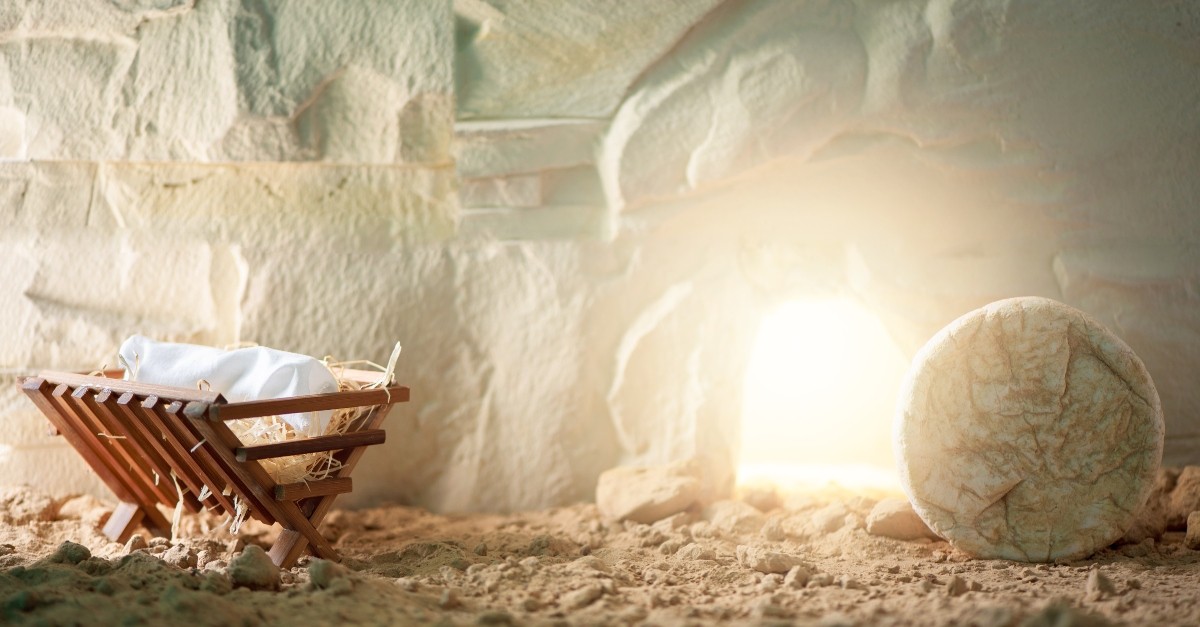
When it comes to a church’s life together, there are two pillars around which the rest of the annual calendar swings, i.e. Christmas and Easter. These are the high points in the church’s worship every year. Many churches still commemorate these holidays with special programs, musical and dramatic presentations of the Biblical story, and a focus on inviting the community in for high attendance, after all these are the only days that the CEOs come to church anyway (Christmas and Easter Onlys). It is clear that these holidays hold a special place in the devotion of most Christians. They focus our reflection on the primary movements of the story of redemption, how God the Son came to earth incarnate as a baby in a manger and how he died on the cross for sin and rose again some thirty years later. Even though they are mostly overcome by the cultural consumerism that so obviously characterizes our society these days, they are still a meaningful season in the worship of the church.

However, the question remains, “why do we celebrate these annual holidays anyway?” After all, there is no explicit command in the Scriptures to commemorate the nativity and/or the passion of our Lord Jesus Christ annually by a special holiday. In the New Testament, the church’s worship moved away from the annual calendar marked by special holidays and feasts that characterized the worship of the Jews in the Old Testament, and they moved to a weekly calendar marked by the gathering of the saints on the Lord’s Day for the preaching of the Word and the breaking of bread. Further, the Regulative Principle for Worship (RPW) states that only those elements that are clearly prescribed in the Scriptures should be included in the church’s worship. A strict application of this principle would mean that since Christmas and Easter are not explicitly prescribed by the New Testament, then we are in error when we make them a primary emphasis or central component in our devotion and worship, whether corporately or individually.

We do know that the church began to celebrate these holidays fairly early on in her existence. Within a century or so of the life and death of Jesus and His first followers, the church began to include these annual feasts as a regular part of the worship calendar. Of course, critics often suggest that these festivals were borrowed and adapted from the pagan world; however, these criticisms tend to fall apart quickly under close historical scrutiny. After examining the evidence, one author recently concluded that “no modern Christmas [or Easter] tradition can draw a straight line to any clear and decisive pagan origin.” While there has certainly been growth over the centuries in the lore and cultural traditions that surround these holidays, none of this is original and/or essential to the Christian celebration of them. Rather, it is evident that Christians recognized very early on in their history how important it was to commemorate the two decisive moments in redemptive history, namely the birth and death/resurrection of the one who is called Christ.

Of course, tradition alone is not a sufficient enough reason to justify the continued celebration of Christmas and Easter, but neither is it a sufficient reason for discontinuing the observance of them either. All traditions are not bad; in fact, some are quite helpful in the formation of our faith and practice. I have previously written on the question of tradition here, but suffice it to say that there is great wisdom in learning from the faith and practice of our Christian forebears, both from what they did well and from what they did not do well. So, perhaps the proper question should not be whether the celebration of Christmas and Easter is right or wrong, but whether it is wise and good. Does the annual observance of these holidays have spiritual value for the growth of the followers of Jesus in conformity to His image? And if this is the question, then we must answer in the affirmative. The fact of the matter is that we are a people who are quick to forget, quick to move on, quick to believe that we have outgrown our need for the Gospel. But there is nothing more foundational, nothing more crucial, for our formation in Christlikeness than to be reminded regularly of exactly what Christ has done on our behalf.

His incarnation and resurrection are the primary aspects of His redemptive work; they tell the story of how God the Son came to earth as a child, lived a sinless life, died on the cross for sin, and then rose again. In fact, the Apostle Paul instructs us in Second Timothy, chapter 2, verse 8, “Remember Jesus Christ, risen from the dead and descended from David, according to my gospel.” Or again, in the Letter to the Romans, that Jesus Christ “was a descendant of David according to the flesh and was appointed to be the powerful Son of God according to the Spirit of holiness by the resurrection of the dead.” Throughout the New Testament, these movements – the incarnation and the resurrection – are the hinge pins upon which the Gospel swings. And as followers of Jesus, we take great joy in celebrating these glorious acts of redemption each and every year, because it reminds us of the beautiful salvation that we have in Christ. It reminds us who we are, and it reminds us of why we are here. The church is a body of believers whose existence and purpose are defined by the redemptive work of God in Christ. Therefore, it is right and good that we celebrate these movements of God’s grace, not only every week, but as a matter of purposeful reflection every year on Christmas and Easter.

This, however, would seem to be the challenge in our modern culture, focusing our worship on Christ during these holidays and not becoming distracted by the cultural baggage that is so obviously associated with them. Just last month, I was chided vociferously on social media for suggesting that Santa Claus is neither necessary nor useful in the Christian enjoyment of the Christmas holiday. It would seem that in this particular cultural milieu Christians will need to be purposeful and strategic in how they celebrate going forward. We must make it clear that Christmas and Easter are about Christ and Christ alone, and if that means dispensing with some of the traditional festivities that have become associated with these holidays, then so be it. The celebration of Christmas and Easter should be a time when those who follow Jesus can celebrate anew the wonder and glory of what Christ has done for us in the Gospel. May we never grow tired of celebrating this timeless story each and every year.

This article is also posted at SBCvoices, here.


Slow To Write

"let every person be quick to hear, slow to speak, slow to anger."

lovegavehope

Just another WordPress.com site

Jared Cornutt

Pastor | Speaker | Writer

Denny Burk

A commentary on theology, politics, and culture

G3 Ministries

Events + Resources for the Local Church

Biblical Reasoning

Biblical and Systematic Theology According to the Scriptures

RetroChristianity

Reclaiming the Forgotten Faith

SBC Voices

Southern Baptist News & Opinion

Lucid Theology

Thoughts on words, books, theology, and life.

Baptist21

A pastor-led voice for Baptists in the 21st century

Center For Baptist Renewal

The Personal and Professional Blog of Phillip Powers

The Pastor's Well - Pastor Well

The Personal and Professional Blog of Phillip Powers

Articles - AlbertMohler.com

The Personal and Professional Blog of Phillip Powers

The Gospel Coalition

The Personal and Professional Blog of Phillip Powers