Category Archives: Practical Theology

On the Annual Celebration of Christmas and Easter

When it comes to a church’s life together, there are two pillars around which the rest of the annual calendar swings, i.e. Christmas and Easter. These are the high points in the church’s worship every year. Many churches still commemorate these holidays with special programs, musical and dramatic presentations of the Biblical story, and a focus on inviting the community in for high attendance, after all these are the only days that the CEOs come to church anyway (Christmas and Easter Onlys). It is clear that these holidays hold a special place in the devotion of most Christians. They focus our reflection on the primary movements of the story of redemption, how God the Son came to earth incarnate as a baby in a manger and how he died on the cross for sin and rose again some thirty years later. Even though they are mostly overcome by the cultural consumerism that so obviously characterizes our society these days, they are still a meaningful season in the worship of the church.

However, the question remains, “why do we celebrate these annual holidays anyway?” After all, there is no explicit command in the Scriptures to commemorate the nativity and/or the passion of our Lord Jesus Christ annually by a special holiday. In the New Testament, the church’s worship moved away from the annual calendar marked by special holidays and feasts that characterized the worship of the Jews in the Old Testament, and they moved to a weekly calendar marked by the gathering of the saints on the Lord’s Day for the preaching of the Word and the breaking of bread. Further, the Regulative Principle for Worship (RPW) states that only those elements that are clearly prescribed in the Scriptures should be included in the church’s worship. A strict application of this principle would mean that since Christmas and Easter are not explicitly prescribed by the New Testament, then we are in error when we make them a primary emphasis or central component in our devotion and worship, whether corporately or individually.

We do know that the church began to celebrate these holidays fairly early on in her existence. Within a century or so of the life and death of Jesus and His first followers, the church began to include these annual feasts as a regular part of the worship calendar. Of course, critics often suggest that these festivals were borrowed and adapted from the pagan world; however, these criticisms tend to fall apart quickly under close historical scrutiny. After examining the evidence, one author recently concluded that “no modern Christmas [or Easter] tradition can draw a straight line to any clear and decisive pagan origin.” While there has certainly been growth over the centuries in the lore and cultural traditions that surround these holidays, none of this is original and/or essential to the Christian celebration of them. Rather, it is evident that Christians recognized very early on in their history how important it was to commemorate the two decisive moments in redemptive history, namely the birth and death/resurrection of the one who is called Christ.

Of course, tradition alone is not a sufficient enough reason to justify the continued celebration of Christmas and Easter, but neither is it a sufficient reason for discontinuing the observance of them either. All traditions are not bad; in fact, some are quite helpful in the formation of our faith and practice. I have previously written on the question of tradition here, but suffice it to say that there is great wisdom in learning from the faith and practice of our Christian forebears, both from what they did well and from what they did not do well. So, perhaps the proper question should not be whether the celebration of Christmas and Easter is right or wrong, but whether it is wise and good. Does the annual observance of these holidays have spiritual value for the growth of the followers of Jesus in conformity to His image? And if this is the question, then we must answer in the affirmative. The fact of the matter is that we are a people who are quick to forget, quick to move on, quick to believe that we have outgrown our need for the Gospel. But there is nothing more foundational, nothing more crucial, for our formation in Christlikeness than to be reminded regularly of exactly what Christ has done on our behalf.

His incarnation and resurrection are the primary aspects of His redemptive work; they tell the story of how God the Son came to earth as a child, lived a sinless life, died on the cross for sin, and then rose again. In fact, the Apostle Paul instructs us in Second Timothy, chapter 2, verse 8, “Remember Jesus Christ, risen from the dead and descended from David, according to my gospel.” Or again, in the Letter to the Romans, that Jesus Christ “was a descendant of David according to the flesh and was appointed to be the powerful Son of God according to the Spirit of holiness by the resurrection of the dead.” Throughout the New Testament, these movements – the incarnation and the resurrection – are the hinge pins upon which the Gospel swings. And as followers of Jesus, we take great joy in celebrating these glorious acts of redemption each and every year, because it reminds us of the beautiful salvation that we have in Christ. It reminds us who we are, and it reminds us of why we are here. The church is a body of believers whose existence and purpose are defined by the redemptive work of God in Christ. Therefore, it is right and good that we celebrate these movements of God’s grace, not only every week, but as a matter of purposeful reflection every year on Christmas and Easter.

This, however, would seem to be the challenge in our modern culture, focusing our worship on Christ during these holidays and not becoming distracted by the cultural baggage that is so obviously associated with them. Just last month, I was chided vociferously on social media for suggesting that Santa Claus is neither necessary nor useful in the Christian enjoyment of the Christmas holiday. It would seem that in this particular cultural milieu Christians will need to be purposeful and strategic in how they celebrate going forward. We must make it clear that Christmas and Easter are about Christ and Christ alone, and if that means dispensing with some of the traditional festivities that have become associated with these holidays, then so be it. The celebration of Christmas and Easter should be a time when those who follow Jesus can celebrate anew the wonder and glory of what Christ has done for us in the Gospel. May we never grow tired of celebrating this timeless story each and every year.

This article is also posted at SBCvoices, here.


On the Fear of God and the Fulfilled Life

TEXT

In addition to the Teacher being a wise man, he constantly taught the people knowledge; he weighed, explored, and arranged many proverbs. 10 The Teacher sought to find delightful sayings and write words of truth accurately. 11 The sayings of the wise are like cattle prods, and those from masters of collections are like firmly embedded nails. The sayings are given by one Shepherd.

12 But beyond these, my son, be warned: there is no end to the making of many books, and much study wearies the body. 13 When all has been heard, the conclusion of the matter is this: fear God and keep his commands, because this is for all humanity. 14 For God will bring every act to judgment, including every hidden thing, whether good or evil.

Text: Ecclesiastes 12.9-14
Series: The Book of Ecclesiastes
Church: South Caraway Baptist Church, Jonesboro, AR
Date: October 2, 2022


On Unrealistic Expectations in Pastoral Ministry

It is no secret that the last few years have been extremely difficult for churches and even more so for pastors. Of course, pastoral ministry is commonly fraught with its own set of unique stresses, but those stresses have grown exponentially over the past few years due to the chaos and turmoil that has so regularly characterized our society. This has led to unprecedented numbers of pastors leaving the ministry, a trend some are now calling the “Great Resignation”. The Barna Group has recently reported that some 42% of pastors have given real, serious consideration to quitting being in full-time ministry within the last year, a number which is up 13 points from 29% just over a year ago. It is a trend that should concern all of us, both pastors and congregants alike. If pastors are called by God and love His church, why are they leaving ministerial service seemingly in droves?

Over at churchanswers.com, Thom Rainer recently shared some of his findings pertaining to this question in an article entitled “Ten Reasons Pastors Are Glad They Quit Vocational Ministry.” It would be redundant to reproduce the entire list here; however, suffice it to say that all of the reasons stated reflect the relief of having a massive burden lifted off of the shoulders. But what exactly is the massive burden that these former pastors were carrying? I believe that it was the unhealthy and unrealistic expectations of the church and its members. So many churches in this country expect their pastors to be superheroes, masters of every skill, having impeccable personality and charisma, able to carry every burden of ministry, always available, never to feel exhausted or drained or burned out. A quick perusal of online advertisements for pastoral openings reveals that for most churches, Jesus Christ himself wouldn’t be qualified; after all, he was a single thirty-something with no children, no experience, and no seminary training.

Whether because of the rise of celebrity pastor culture or due to the influence of values taken from the business/political world, expectations regarding pastoral responsibilities and qualifications in most churches are nearly unattainable. However, the problem is not necessarily that the expectations are wrong; they are usually reflections of a congregation’s felt needs or past hurts, though many of these still go unacknowledged or unspoken. Rather, the problem is that they are all heaped upon one person, i.e. the solo or senior pastor. This is why a plurality of elders leadership model is more healthy, because it shares the responsibilities of leadership among a group of biblically qualified and trained men. A single or solo pastor/elder is unable to be all things to all people at all times; he is not able to be everywhere and everything that the members of the congregation might need him to be. Or to put it another way, he is not omnipotent, omniscient, or omnipresent. He has limitations on his time, his energy, and his resources. A plurality model for elders eliminates these limitations by sharing the burdens of ministry among a group of pastors of equal authority and responsibility.

Of course, this does not mean that there are no qualifications or expectations for those called to serve as pastors. The Bible is clear that a man must be spiritually mature, that he must have proven Christ-like character as well as sound theological and biblical convictions. It is also clear that a pastor’s primary duty is to be devoted to prayer and to the ministry of the Word, to care for and feed the flock of God. In many ways, pastors should be held to a higher standard of faith and practice than the regular church member, but as church members, we must remember that our pastors are still human, that they are members of the same body, that they need the same care, encouragement, prayer, and support that we all need. This is why the Bible so often uses the body metaphor to symbolize the nature of the local church. As a body, the church has one head, and that head is Jesus Christ. Beyond that, the rest of the parts of the body are interdependent, and pastors are just one of the parts of that body. They need the life and nourishment of the body just as much as any other part. As the Apostle Paul puts it,

Now as we have many parts in one body, and all the parts do not have the same function, in the same way we who are many are one body in Christ and individually members of one another.

~Romans 12.4-5

Like any relationship, the relationship between pastors and church members must be grounded in trust, worked out through open and honest communication, and always characterized by grace toward one another, because only when both sides are able to admit their most vulnerable needs without fear of judgment will we be able to build the kind of foundation that can sustain long-term ministry faithfulness. It is the church’s Scriptural responsibility to raise up men from within their body to serve as pastors/elders. However, so many churches in the world today have adopted the mindset that they exist only to be served by their pastors, rather than to serve them. This attitude is the primary reason that good and godly men flee pastoral ministry in droves. They have been used up and beat down over and over; they have been chewed up and spit out too many times. We desperately need to rediscover what it means to build each other up rather than tear each other down, and this applies to pastors as much as it does everyone else. Who is caring for the pastors? Because they desperately need it.

This article is also posted at SBCVoices, here.


On Preaching and the Grotesque: A Book Review

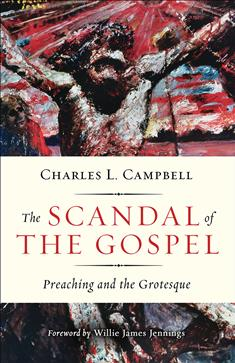
Campbell, Charles L. The Scandal of the Gospel: Preaching and the Grotesque. Louisville, KY: Westminster John Knox, 2021.

Painters have their colors and canvas, sculptors have their clay, and preachers have their words. And words are powerful. As the Bible so often indicates, words have the power to build up and to tear down, and this is especially so in the ministry of preaching, as Charles L. Campbell discusses in his latest book, The Scandal of the Gospel: Preaching and the Grotesque. Campbell is James T. and Alice Mead Cleland Professor Emeritus of Homiletics at Duke Divinity School. He is a past president of the Academy of Homiletics, a highly sought-after lecturer, and he is well published in the field.  Most of the content for this latest book comes from his 2018 Lyman Beecher Lectures at Yale Divinity School; only the fourth chapter contains new material.

In the forward, Campbell explains that he is not seeking any consistency or system; rather, he says that he is “simply trying to make some homiletical connections between preaching and the grotesque” (p. xiv). This concept of the grotesque subsequently stands at the center of the book. The term is borrowed from the world of visual art, where it originally referred to paintings found in ancient Roman grottos, i.e. grotto-esque. These “murals presented unsettling, disorienting hybrids that transgressed accepted categories. They distorted what was considered ‘normal’ or ‘beautiful.’ They messed with accepted patterns. They were, as they came to be called, ‘grotesque’” (p. 6). This description encapsulates the homiletical vision that Campbell sets forth in these chapters, i.e. preaching that is unsettling, disorienting, that transgresses accepted categories and norms, that is “grotesque.”

In the first chapter Campbell considers how this concept of the grotesque fits with the scandal of the Gospel. Taking his cue from 1 Corinthians 1:23, he explains that the Gospel confronts with the destabilizing pairings of opposites: God-cross, life-death, repulsion-fascination, horror-hope. A God that is violently crucified on a cruel Roman cross is inherently “grotesque.” In chapter 2, Campbell explores how the grotesque is often weaponized in the act of preaching. Specifically, when one compares sociological and/or theological opponents with non-human objects, one is using the grotesque to dehumanize and minimize them in order to maintain one’s own particular understanding of order. In chapter 3, Campbell offers an alternative to this kind of weaponization by explaining how the grotesque creates preaching that is “open, protruding, irregular, secreting, multiple, and changing” (p. 55). Preaching that is grotesque welcomes input and insights from a variety of voices, and not merely biblical and theological ones. It is preaching that “becomes real when truth happens among the cacophony and incongruities of diverse voices and diverse lives” (p. 57). Finally, in chapter 4, Campbell imagines how the grotesque could be employed in preaching to address the environmental crisis.

Campbell’s application of the grotesque to the discipline of preaching is provocative to say the least because it stands in such stark contrast to the kind of preaching that is the focus of Campbell’s critiques. Sermons that offer simplistic principles for improving marriage, managing finances, or raising godly children attempt to “give people a nice focused nugget to carry home – not the shocking unresolved contradictions of the grotesque gospel” (p.11).  This kind of preaching is neat, clean, even idealistic. The problem, however, is that “when we rush to order, when we avoid the interval of the grotesque, our preaching may become shallow, unreal, clichéd. We don’t go deep enough. We’re not honest enough. And we end up falsifying both the gospel and life itself – we end up imposing false patterns” (p. 12). Life is so often the opposite of the neat and clean categories we attempt to impose on it from the pulpit. It is complex and messy; it is “grotesque.” Campbell would have readers embrace these tensions rather than attempting to resolve them.

Though he rightly critiques this “humanistic” (his label) approach to preaching, the alternative that he proposes is inherently more so. Grotesque preaching is “shaped by the dynamic and open life of Jesus’ grotesque body. Grotesque preaching calls the church to be open to the world and calls the pulpit to be open to different bodies and new voices” (p. 56). It springs forth from the lived experiences of people rather than from the authoritative Word of God. What is glaringly absent from Campbell’s vision for preaching is how it relates to the principle of “Thus saith the Lord.” Christian preaching springs forth from the fact that God has spoken. The Apostle Paul instructed his protégé Timothy to “Preach the Word” (2 Timothy 4.2). God has spoken; therefore, we speak. In other words, the purpose of Christian preaching is to exposit the declared Word, “giving the meaning so that the people could understand what was read” (Nehemiah 8.8). It is not merely to listen to people’s stories or to appreciate the diversities and complexities of the human experience.

In the final analysis, Campbell’s invitation for preachers to approach the complexities, difficulties, and tensions of life with greater compassion is a welcomed alternative to the idealistic naiveté that characterizes most preaching today. That being said, his alternative is essentially void of the very resources that God has provided to address those complexities and difficulties. In other words, grotesque preaching, as Campbell envisions it, comes off merely as a way to exalt and platform human experiences over the Word of God. However, it is ultimately powerless as a homiletical method for proclaiming the inspired Word of the one true and living God. In my view, preachers would be better served by attending to the text of Holy Scripture, giving its meaning through systematic exposition, than by any clever attempts to be “grotesque.”

This Book Review was originally published in the Journal of Biblical and Theological Studies, here.


On Biblical Interpretation and the Analogy of Faith

The reality is that no one comes to the interpretation of Scripture with a completely blank slate; we all have some amount of pre-understanding that we bring with us when we read the Bible. This pre-understanding is formed through our education and our experiences, the combination of which overtime becomes part of the lenses through which we read Holy Scripture. Most of the time, our pre-understanding is helpful, because it forms a foundation from which we are able to engage the text and grasp its meaning; however, sometimes our pre-understanding can be a hindrance, if and when we are unwilling to submit it to the authority of the Biblical text. This is why the interpretive process is sometimes referred to as a “hermeneutical spiral”, because even as our pre-understanding helps us to understand the text, so in turn, the text shapes and forms our pre-understanding to be conformed with Biblical truth.

For those of us who are committed to the principle that the Bible is God’s Word, part of that pre-understanding includes our theological convictions about the nature of Bible. The inspiration, inerrancy, authority, sufficiency, perspicuity, et al. are foundational truths which ground Evangelical biblical interpretation. The truth that the one true and living God has spoken through His Word in ways that we may understand and apply is what makes our attempts to understand the Bible so significant. We are reading God’s very word. And it is precisely because we are reading God’s word that we hold to a conviction known as the “analogy of faith,” or the idea that scripture interprets scripture. It is a hermeneutical conviction that has been passed down to us from our Reformation forebears, and it is the veritable corner stone of Protestant biblical interpretation. However, in application, it has caused much confusion, because more often than not it is treated as an interpretive method rather than as a theological conviction.

The “analogy of faith”, sometimes also referred to as the “analogy of scripture,” is primarily a theological conviction about the unity and coherence of Biblical truth. It is grounded in the truth that the Bible, though it was written by many diverse human authors over several centuries, actually has only one primary author, i.e. the one true and living God. He has spoken clearly through His Word for the purpose that it may be understood, and He is not the author of confusion. Therefore, the overarching story of the Bible, its primary message and its central tenets, is essentially clear, consistent, and consonant with itself. There are no actual contradictions in the Biblical text, and if there is an apparent contradiction, then the problem lies with our understanding of the text and not with the text itself. So, the principle that scripture interprets scripture merely means that when multiple passages say something on a particular topic (either explicitly or implicitly), then what those passages say about that topic will be complementary and not contradictory.

On the other hand, the “analogy of faith” is not primarily a hermeneutical method; it does not necessarily tell us how to interpret the Bible. It does not permit us to ignore the social, cultural, or historical context of a passage, nor does it allow us to disregard the literary and grammatical conventions by which it is communicated. It also does not require that the various human authors of Holy Scripture say exactly the same thing in exactly the same way. In other words, we must allow for diversity of nuance, differences in emphasis, and uniqueness in application among the biblical authors. Our interpretation must be grounded in the meaning that the Spirit inspired human author intended to convey to his primary audience. We must follow his flow of thought, consider his purpose for writing, analyze his meaning on his terms. These are the essential building blocks of a sound interpretive method.

The “analogy of faith” also does not give us the license to move haphazardly through the Scriptures connecting passages that are otherwise unconnected. When the biblical authors quote directly from or make clear allusion to other passages, we may consider their relationship, but the principle that scripture interprets scripture does not mean that particularities and distinctions between passages can be minimized or ignored. Individual passages must be engaged on their own merits within their immediate context. This is because biblical meaning flows outward from smaller units of thought to wider units of thought, starting with the sentence, then the paragraph, then the pericope, then the section, the book, books by the same author, books in the same testament, and finally the whole Bible. To reverse this process is to impose meaning on the scriptures from the top down; it is reading meaning into the scriptures that may not otherwise be present or supported by the passage.

The composition and preservation of the Bible is nothing less than a manifestation of God’s providence and sovereignty. It was written over the course of 2000 years by several dozen different authors in three different languages across three continents, and yet, its central truths and primary message are remarkably consistent and harmonious. Its message is so simple that a child could understand it, and yet so profound that the greatest minds throughout history have failed to exhaust its mysteries. And God has ordained that it should be the primary means by which we might come to know Him and His will for our lives. The good news of the Gospel is that He wants to be known, and He has revealed Himself in the Bible so that we may read, understand, and be transformed. If we will simply seek Him in, by, and through His Word, then we may be sure that He will be found.

For further study, see also:
On Sola Scriptura and the Use of Bible Study Resources
On Biblical Interpretation and the Holy Spirit
On Hermeneutics & Interpreting the Bible


On the Fatherhood of God & the Discipline of Prayer

TEXT
11 He was praying in a certain place, and when he finished, one of his disciples said to him, “Lord, teach us to pray, just as John also taught his disciples.”

He said to them, “Whenever you pray, say,

Father,
your name be honored as holy.
Your kingdom come.
Give us each day our daily bread.
And forgive us our sins,
for we ourselves also forgive everyone
in debt to us.
And do not bring us into temptation.”

He also said to them, “Suppose one of you has a friend and goes to him at midnight and says to him, ‘Friend, lend me three loaves of bread, because a friend of mine on a journey has come to me, and I don’t have anything to offer him.’ Then he will answer from inside and say, ‘Don’t bother me! The door is already locked, and my children and I have gone to bed. I can’t get up to give you anything.’ I tell you, even though he won’t get up and give him anything because he is his friend, yet because of his friend’s shameless boldness, he will get up and give him as much as he needs.

“So I say to you, ask, and it will be given to you. Seek, and you will find. Knock, and the door will be opened to you. 10 For everyone who asks receives, and the one who seeks finds, and to the one who knocks, the door will be opened. 11 What father among you, if his son asks for a fish, will give him a snake instead of a fish? 12 Or if he asks for an egg, will give him a scorpion? 13 If you then, who are evil, know how to give good gifts to your children, how much more will the heavenly Father give the Holy Spirit to those who ask him?”

Text: Luke 11.1-13
Series: Supply Preaching
Church: South Caraway Baptist Church, Jonesboro, AR
Date: August 9, 2020

See also:
On the Lord’s Prayer – Part 1
On Persistence in Prayer – Part 2
On Persistence in Prayer – Part 3


On the Ministry of the Local Association

Cooperation between local churches has long been a hallmark of Baptist identity. Going all the way back to the earliest English separatists, Baptists have always understood that, though local churches are autonomous, we are better able to accomplish the Great Commission to make disciples of all nations when we partner together. Our history is filled with example after example of local churches that have worked together to fund, train, and send missionaries around the world. In many ways, these precedents are the foundation for the denominational structures that exist today. Whether it is the national convention, the state conventions, or the local associations, all of these entities exist to facilitate the cooperation of like-minded churches for the advancement of the global cause of Christ.

Of course, it goes without saying that the strength and effectiveness of these entities is directly dependent on the participation of local churches. This is particularly true at the level of the local Baptist association; their ministry suffers drastically when local churches do not participate regularly. One factor that has contributed significantly to the weakness of associational ministry is the rise of the mega/multisite church. The overabundance of people and resources in these churches enables them to operate as independent self-sufficient organisms, essentially negating their need to cooperate with other churches in the area. In my own local association, there is a relatively large church, a mega church by all comparative measurements, and while their name appears on the association roster, their participation therein is practically nil save a token monthly financial contribution.

Whatever the reasons, when local churches do not participate in the ministry of the local association, all of the churches that partner with that association suffer. Local associations, especially those in more rural areas, have largely become weak, ineffective, and irrelevant due to the widespread apathy that characterizes attitudes in most local Baptist churches. It has come to the point that we might even begin to wonder why these entities still exist and whether they should continue at all. As the Apostle Paul would say, “May it never be!”. The point is that we desperately need to recover the value of local association ministry, and in the space that remains, I would like to highlight just a few of the ways that participation in the local association benefits the local church.

First, the local association provides pastors the opportunity to build relationships with other pastors. More often than not, pastors cannot find the kinds of relationships that sustain long term ministry success in their own congregations. This should not be the case, of course, but being a pastor can sometimes feel very lonely. Building relationships with other pastors through the local association can help to alleviate that isolation; it is a place where pastors can turn for encouragement, accountability, and mentoring. The latter of these is particularly important for younger first time pastors. The value of being mentored by seasoned, experienced, faithful pastors is a resource that will bear fruit long after those pastors retire. Older pastors have the opportunity to invest in and influence the next generation of pastors through meaningful self-giving relationships, and the best place for these to develop is through the local association. Or to put it more simply, pastors need each other.

A second way in which participation in the local association benefits the local church is by cooperative mission efforts. The simple fact of the matter is that the Great Commission to make disciples of all nations, while it is certainly not less than, it is so much more than the isolated ministry of one local church. Most local churches, the vast majority of which average less than 100 in weekly attendance, simply do not have the financial or people resources to develop an effective mission program. However, when those resources are pooled together with other churches through the local association, we are better able to reach not only our Jerusalem, but our Judea and Samaria, and even to the ends of the earth. This is essentially what the Cooperative Program is all about; in the Southern Baptist Convention, churches pool their resources through the cooperative program primarily for the purpose of national and international missions and theological education. If we truly care about the cause of Christ, then this kind of cooperation must begin at the local level.

Lastly, participation in the ministry of the local association helps churches cultivate a kingdom first mentality. This may be more of a result of the first two, but the point is that participating in the local association reminds us that Christianity is bigger than our little slice of the pie. The Kingdom of God is much more than our particular sphere of influence. However, it is all too easy for churches, particularly those that are experiencing seasons of meaningful ministry, to begin to believe that the work of the Kingdom revolves around the ministry efforts of their particular church. Pride begins to spring up in our hearts, and we develop a kind of competitive attitude where we measure our successes and achievements against other local churches. But, the fact of the matter is that local churches should not be in competition with each other. We are all on the same team, all striving for the same goal, and local association ministry helps keep this reality at the foreground of our ambitions.

I love the local church; I believe in the ministry of the local church. The local church is the primary avenue of God’s work in the world to bring people to faith in His Son and transform them into His image. But the Kingdom of God is bigger than individual churches; the Great Commission is bigger than individual churches. And denominational organizations from the local association all the way up to the national convention exist to facilitate and support the cooperation of likeminded churches for the cause of Christ. Denominations are not perfect, because they are made up of people that are not perfect. They can be frustrating, ineffective, and even disappointing at times, but when local association ministry is done well, it makes it all worth it.

Note: This post was originally posted at SBCvoices, here.


On Pastoral Tenure as Covenant

I recently read an article about an Oklahoma pastor who is retiring after serving in the same church for 60 years. And let me just begin by saying that this is the kind of pastor that deserves the platform though he would probably never ask for it. So often, we platform the personalities that are the most visible, those pastors who have the largest churches, who have published the most books, who speak regularly on the conference circuit. It would seem we have missed the mark. Our measures of ministry success reflect all of the values and metrics of the world and none of the values of God, who says in His Word that, “Humans do not see what the Lord sees, for humans see what is visible, but the Lord sees the heart.” (1 Samuel 16.7) This pastor exemplifies the kind of nameless faithfulness that is the backbone of Christ’s church; pastors serving tirelessly in insignificant and forgotten places, loving people who are regular and ordinary, proclaiming the Word of God week in and week out. He never published any books; he wasn’t asked to speak at anyone’s conference. He held no denominational influence or power beyond his local association. May his tribe increase!

However, this story is not simply about a pastor who served in the same place for six decades. According to the pastor in question, and I quote, “A lot of it has to do with a church that has kept a pastor for years.” This, it would seem, is the key to long term pastoral tenure; it is churches that keep pastors. A pastor’s theological fidelity and moral integrity notwithstanding, churches bear a God given responsibility to keep the pastors that God has called to care for their souls. (c.f. Hebrews 13.17) According to research, the average pastoral tenure has risen over the years, from 3.6 years in 1996 to 6 years in 2016, but it is clear that the constant churning of pastoral leadership in churches all across this county is at least one major contributor to the weakness of American Christianity. Every pastor I know, myself included, has been hurt by churches who prematurely requested their resignation at the first sign of disagreement, disappointment, or difficulty. Sadly, these stories are often filled with the tears of betrayal, of broken trust, and of shattered confidences.

The point is that we need a better paradigm for thinking about the relationship between pastors and congregations. An employer/employee model that is driven by consumeristic expectations fundamentally lacks the virtues of grace that should define the church’s life together. This is why I believe we must recover the biblical idea of covenant, because covenants move us beyond a “what’s in it for me, what have you done for me lately” mindset by forcing us to consider our own responsibility for maintaining the relationship. There are many examples of covenants in the Bible: Abrahamic, Mosaic, Davidic, and New to name just a few. But I would suggest that it is the marital covenant that stands as the closest parallel to the relationship between a pastor and a congregation. Consider the following similarities.

During the “dating” period, the pastoral candidate and the interviewing church put their best foot forward. Both parties accentuate their assets and their strengths and conceal their weaknesses. For the most part, this “get to know you” phase is full of excitement and anticipation of the possible match and its attendant benefits, and each subsequent interaction merely adds to the perception that this is a “match made in heaven.” Both parties wonder if the other might be “the one God intended”. The votes are totaled; the call is accepted. And the relationship moves into the “honeymoon phase”; it is a time that is filled with great idealism and blissful naiveté. Both the pastor and the congregation view each other through “rose colored glasses”; neither party can do any wrong in the eyes of the other. As the relationship grows, every new experience, every new situation is an opportunity to relish in the seeming perfections of the other.

Eventually, however, the difficulties come. The rose petals fall off; the idealism fades. What was once endearing is now annoying; what was once a source of great fulfillment now causes great frustration. Differences in opinion and perspective on all sorts of issues seem nearly insurmountable. The waves of conflict and division threaten to tear the relationship apart, and sadly, in many cases, it does. Marriages end in divorce, and pastors resign, sometimes of their own volition, other times at the behest of church leaders. It is a cycle that is all too familiar, but it need not be so. As in marriage, so also in the church, both parties have a decision to make as to how they will navigate this season. Instead of separation, they can choose to remain committed to each other. They can choose to work through their differences by listening, by showing grace, by compromise. They can persevere and come out on the other side together and stronger for it. Churches can choose to keep their pastors, and pastors can choose to love and serve the church that God has called them to.

This is what relationships should look like within the Body of Christ. We do not give up each other when relationships get hard; we do not throw in the proverbial towel because circumstances are difficult or challenging. We choose love, we choose grace, we choose hope. We covenant together for the sake of the Gospel, for the growth of each other in Christlikeness, for the glory of God. It has been said that most pastors, and I would include most churches, overestimate what can be accomplished in the span of three years, but underestimate what can be accomplished in the span of ten years. So, rather than aiming for some set of five year goals that are ultimately unrealistic, let us strive for that biblical standard of godly faithfulness over time. And when we do this, we can rest assured that we will one day hear those most blessed of commendations from our Lord Jesus, “Well done, good and faithful servant! Share your master’s joy!”

This post was also posted at SBCvoices, here.


On Theological Discourse and the Example of Jesus

In many ways, the nature of theological discourse, especially when it comes to navigating areas of disagreement, is like a crucible. It very quickly burns away every veneer, every façade, every pretense, and it reveals in no uncertain terms the condition of a person’s heart. It exposes the quality of person’s character in ways that no other interpersonal endeavor seems to. In my last post, I suggested that no matter how stark our disagreements may be, we must still engage our opponents Christianly. We must cultivate the virtues of Christ-likeness even when we are required to address questions of Biblical interpretation about which we hold strong convictions or for which we have the most zeal. Our Lord Jesus Christ is the exemplar par excellence when it comes to interacting with people with whom we have sharp and pointed disagreements, and as His disciples, we would do well to consider His conduct in these matters and do likewise.

Of course, a cursory reading of the Gospels quickly reveals that Jesus was not afraid of theological debate. There were many occasions where things got quite heated in the discussions that He had with the religious leaders of His day, and Jesus certainly did not hold back in His rebuke of them. He variously referred to them as a “brood of vipers” (Matt 12.34, 23.33), as “hypocrites” (Luke 12.56, 13.15), even as “sons of their father the devil”(John 8.44). To our modern ears, this sounds overly harsh and smacks of contempt. Moreover, it appears to be nothing more than a kind of ad hominem attack, which is a logical fallacy that attacks the person rather than engages the substance of their argument. However, Jesus was a master of language and rhetorical strategy; therefore, He cannot be charged with any kind of personal malice or fallacious argumentation. Upon further study of these exchanges, it becomes clear that Jesus’ disagreements with the Jewish religious were, in fact, quite substantive, and that these disagreements were a large part of the motivations that led the Jewish leaders to plot for His death by crucifixion.

Further reflection on these scenes is beyond the scope of this article; however, the question remains: to what extent are Jesus’ interchanges with the Jewish religious leaders exemplary for our approach to navigating disagreements in theological discourse? Does our pursuit of Christlikeness require that we emulate the rhetorical strategies of Jesus against the Pharisees? Are we supposed to treat our theological opponents with the same attitude and method as Jesus? In answer to these questions, I would like to offer the following thesis: Jesus’ interactions with the Jewish religious leaders of His day are not an example for how we should address our disagreements in modern theological discourse. And in the space remaining, I would like to offer three reasons in support of this conclusion.

First, Jesus had the proper authority to rebuke. The question of Jesus’ authority was the driving force in the majority of His conflict with the Jewish religious leaders. In Mark, chapter 1, and verse 22, we read that the people “were astonished at his teaching because he was teaching them as one who had authority, and not like the scribes.” Jesus possessed inherent authority as Messiah, and this was a direct threat to the Jewish religious establishment. This was the primary point of contention between Jesus and the religious leaders. In fact, the differences in biblical interpretation that separated them were not even that significant by comparison. The religious leaders rejected the messianic claim of Jesus, and that rejection pushed them to conspire for His death as early as Mark chapter 3. So, in truth, the conflict between Jesus and the religious leaders was never really a theological one to begin with. It was through and through a question of authority and submission, specifically the messianic authority of Jesus and the refusal of the Jewish leaders to submit to Him. Therefore, we must conclude that the rebukes that He spoke against them were aimed, not at their theological disagreements, but rather, they were meant to provoke the religious leaders to repentance and submission.

Secondly, Jesus had the necessary character to rebuke. We confess that Jesus is the second person of the Trinity incarnate, fully God and fully man, born of the virgin Mary, born without sin. He was “tempted in every way as we are, yet without sin” (Hebrews 4.15). He lived a sinless life in perfect obedience to the Father. He was not given to vices like pride and arrogance, contempt, scorn, guile, etc. Even in His anger, He was without sin. This means that the rebukes that He levied against the Jewish religious leaders came from a heart that was perfectly righteous and holy. He was genuinely driven by love for God and by love for His opponents; He championed the truth for the sake of the truth, not for personal gain or one-upmanship. His motives were never mixed, never polluted, never turned toward self, but always meant to bring His opponents to repentance and faith. This is the ideal to which we must aspire; however, on this side of glory, we can never be certain that our motives are perfectly pure. As long as we live in this fallen world, our attitudes will necessarily be mixed with sin, which is why we be ever conscious, always examining the motives of our hearts before venturing to rebuke those with whom we disagree. We should submit ourselves to the examination of the Spirit, praying as the psalmist taught us, “Search me, God, and know my heart; test me and know my concerns. See if there is any offensive way in me; lead me in the everlasting way.” (Psalm 139.23-24)

And lastly, Jesus had the ideal context to rebuke. It goes without saying that the world has changed since the days of Jesus and His first followers. His was a culture that was primarily oral, where theological discourse was a public affair, where disagreements were hammered out in face to face dialogue in front of a crowd of onlookers. By contrast, ours is a culture that is primary literary, where theological discourse is a written affair, where disagreements are hammered out in books and journal articles that are subject to peer review and the editorial process. Of course, the proliferation of social media has all but circumvented those processes; avenues for both formal and informal review are nearly nonexistent in the facebook realm, the twitterspace, and the blogosphere. But there is a big difference between discussing our theological differences in face to face conversation and taking anonymous potshots from behind a computer screen. When Jesus launched His rebukes against the Jewish religious leaders, He was operating in a open and public context that required active listening and clear argumentation. It was a context that had natural checks and balances in the form of the watching crowds. He knew His opponents, and they knew Him; there was no hiding. The point is this: context matters. In other words, context determines how we navigate our theological disagreements. How we discuss these matters in face to face dialogue is very different from how we handle them on social media or in the pages of published scholarship.

In conclusion, there is a vast difference between the rebukes that Jesus levied against those who had rejected Him as their Messiah and navigating our theological disagreements within the body of Christ. And what we must affirm is that Christians are called to navigate their disagreements with attitudes and approaches that are counter to the ways of the world at large. We are called to be different, we are called to righteousness and holiness. We are called to the way of love. It is natural and easy to love those with whom we agree, but it is whole other challenge to love those with whom we disagree, even when that disagreement is relatively minor. We must learn to love others theologically. The example of our Lord Jesus Christ demands nothing less than this.

For further study:
Smith, Brandon D. “Loving Others Theologically”, posted at mereorthodoxy.com, July 10, 2018.


On Theological Discourse, False Teaching, and the Ministry of Rebuke

In my previous post, I began to outline the general contours of a biblical ethic for theological discourse. The ability to discuss questions of theology and biblical interpretation Christianly, especially where there is disagreement, is a primary indication of a person’s maturity in Christ. However, so often in this current cultural climate, godly virtues like humility, gentleness, kindness, love, and grace are glaringly absent from most (online) theological discourse. In addition to that, the proliferation of social media has created a practical cacophony of voices making it nearly impossible to know which ones are faithful and true. As Christians, we are called to contend passionately for the truth, which necessarily includes calling out those errors which are in direct contradiction to the clear teaching of the Bible. And so, the question remains, how can we contend for theological truth without being unnecessarily contentious?

The fact is that false teaching has always been a plague on the people of God. From Mosaic prescriptions that lay out the consequences for those making false prophecies to the writing prophets and their warnings about those who offer false promises of peace and security in the face of judgment to the warnings of the New Testament Gospels and epistles even to Revelation’s descriptions of an eschatological false prophet, the Bible is consistent in calling the people of God to be on guard, always watching our lives and our doctrine closely. However, we are also responsible for the lives and doctrine of each other within the community of faith. We bear a mutual responsibility for each other’s souls as we pursue biblical faithfulness, and when a brother or sister wanders off the path of truth, when they are swept up by the deceptions of false teaching, then we are called to the ministry of a loving rebuke that we may point them back to faithfulness.

The challenge, however, comes in identifying exactly what is and what is not false teaching. It has become common practice it seems to label our theological opponents with ideological and emotionally charged epithets that end up causing more confusion than clarity, which results in even more division. Labels like false teacher, heretic, liberal, etc. simply cannot be thrown around carelessly. Merely holding a different theological conclusion than someone else does not mean that they deserve to be identified as a false teacher. This is why we need a clear definition of what false teaching is. False teaching is any teaching that contradicts the primary and essential truths of the Bible. It is any doctrine that stands contrary to the fundamental essence of the Gospel. This has been the common understanding throughout the history of the church, but it would seem that in the current cultural climate many people have forgotten how to distinguish between friend and foe.

We desperately need to recover the discipline of theological triage. The ability to appreciate what is primary and what is secondary or tertiary is an ability that seems all but lost in most theological discourse. The threat of false teaching only applies at the level of the primary, those core truths that if compromised place one outside of the Christian faith. Historically, these primary doctrines have been defined by the classic creeds of the early church. These creeds (e.g. Apostle’s, Nicene/Constantinopolitan, Athanasian, etc.) were forged in the crucible of theological controversy, so they are helpful in identifying what does and does not constitute false teaching. Of course, they do not replace or supersede the authority and sufficiency of Scripture, but they can be helpful in clarifying the contours of Christian orthodoxy. Clearly, as it was then so also now, any teaching or doctrine that falls outside of these bounds is rightly called heresy or false teaching, and anyone who holds, affirms, or promotes this kind of doctrine must be rebuked for their error. With that being said, in what follows, I would like to outline a few biblical priorities that we must keep in mind as we engage each other in these matters.

The first priority is the priority of the local church. The local church is the primary locus of God’s redemptive and sanctifying work, and this includes the ministry of rebuke. It is in the local church that we are taught sound doctrine. It is in the local church where we submit to pastor-elders who keep watch over our souls. It is in the local church where we hold each other accountable and consider how we might provoke one another to love and good deeds. All of the commands that instruct us to correct and rebuke false teaching are addressed to the local church. This means that the local church is the right and proper context for hammering out our theological differences, for wrestling with the text of Scripture. It should be a safe place where people can ask questions, where they can express their understanding of particular issues and questions without fear of judgment or ridicule, and when necessary, where they can be pointed back to the way of biblical truth by correction or rebuke. In other words, it is not our job as pastors or as church members to police the theology of all Christians everywhere. Rather, it is our job to maintain biblical faithfulness within the context of the local church community where God has placed us.

The second priority is the priority of relationships. Relationships matter. What we must realize is that the Great Commandment to love God and to love people is not two but one. These are two sides of the same coin, to halves of one whole. Loving God necessarily includes loving others, and we can only do this in personal intimate friendships. When these relationships are grounded in mutual love for God and for each another, then and only then can we be assured of a person’s intent, that they are for our good and not for our harm, that they only wants what’s best for us. This unwavering trust is the currency that must be spent in speaking words of rebuke to one another. Outside of this basic assurance of a person’s good intentions, our rebukes will almost always come across as harsh, demeaning, belittling, and divisive. This is why the greater the relational distance that exists between us and our theological opponents, the greater amount of grace we must be willing to show them. This means giving the benefit of the doubt; it means taking our opponents at their word. And it means attributing questions or concerns first to misunderstanding, differing emphases, or lack of clarity before immediately impugning, slandering, and mischaracterizing someone’s biblical fidelity and devotion.

The third priority in the ministry of rebuke is the priority of repentance. Repentance, restoration, reconciliation. This must be the guiding principle, the primary purpose, in every church discipline situation. This is especially so when it comes to the ministry of rebuke. There may be occasions where a stern rebuke is necessary and warranted, but we are not simply trying to win arguments for the sake of being right. We are not engaged in a game where we need to win theological points to defeat our opponents. If false teaching is any doctrine or belief that would invalidate the Gospel, then we cannot pretend that these questions have no consequence. We are engaged in a spiritual battle for the soul, that we might turn them to Christ. This is why doctrine matters; this is why we must contend for the faith. It can never merely be a question of who is right and who is wrong. Every theological conversation must be guided by the primary desire of both parties to be more like Christ, to submit more to Christ, to trust more in Christ. This is why we must be ready and willing to repent and seek forgiveness, and it is why we must engage our theological differences in ways that invite others to do likewise.

And finally, the fourth priority for our theological discourse is the priority of Christlikeness. We are called to demonstrate the virtues of Christian character in every situation, in every interaction, in every conversation. Even when we must speak hard words, we are not permitted to speak them harshly. We cannot give into attitudes like hate, bitterness, or pride. We cannot treat our theological opponents, no matter the severity of their error, with derision or disregard or contempt. We must always seek to “speak the truth in love” even when that truth is confronting. Of course, there are plenty of examples in the Gospels where Jesus had to deliver hard words, and to our ears, his confrontations with the Pharisees may seem downright combative or argumentative. I will consider these examples and how they relate to theological discourse in my next post; however, suffice it say here that tone matters. Even when we must confront those who are descending into grave theological error, we must endeavor to deliver our rebukes with the virtues of Christ-like character, not the least of which are grace, humility, and love.

This post was also posted at SBCvoices, here.


Slow To Write

"let every person be quick to hear, slow to speak, slow to anger."

lovegavehope

Just another WordPress.com site

Jared Cornutt

Pastor | Speaker | Writer

Denny Burk

A commentary on theology, politics, and culture

G3 Ministries

Events + Resources for the Local Church

Biblical Reasoning

Biblical and Systematic Theology According to the Scriptures

RetroChristianity

Reclaiming the Forgotten Faith

SBC Voices

Southern Baptist News & Opinion

Lucid Theology

Thoughts on words, books, theology, and life.

Baptist21

A pastor-led voice for Baptists in the 21st century

Center For Baptist Renewal

The Personal and Professional Blog of Phillip Powers

The Pastor's Well - Pastor Well

The Personal and Professional Blog of Phillip Powers

Articles - AlbertMohler.com

The Personal and Professional Blog of Phillip Powers

The Gospel Coalition

The Personal and Professional Blog of Phillip Powers