1 The elder: To the elect lady and her children, whom I love in the truth—and not only I, but also all who know the truth— 2 because of the truth that remains in us and will be with us forever. 3 Grace, mercy, and peace will be with us from God the Father and from Jesus Christ, the Son of the Father, in truth and love.
4 I was very glad to find some of your children walking in truth, in keeping with a command we have received from the Father. 5 So now I ask you, dear lady—not as if I were writing you a new command, but one we have had from the beginning—that we love one another. 6 This is love: that we walk according to his commands. This is the command as you have heard it from the beginning: that you walk in love.
7 Many deceivers have gone out into the world; they do not confess the coming of Jesus Christ in the flesh. This is the deceiver and the antichrist. 8 Watch yourselves so that you don’t lose what we have worked for, but that you may receive a full reward. 9 Anyone who does not remain in Christ’s teaching but goes beyond it does not have God. The one who remains in that teaching, this one has both the Father and the Son. 10 If anyone comes to you and does not bring this teaching, do not receive him into your home, and do not greet him; 11 for the one who greets him shares in his evil works.
12 Though I have many things to write to you, I don’t want to use paper and ink. Instead, I hope to come to you and talk face to face so that our joy may be complete. 13 The children of your elect sister send you greetings.
~2 John 1-13
Title: On Christian Living in the Last Hour Text: 2 John 1-13 Church: South Caraway Baptist Church, Jonesboro, AR Date: September 24, 2023
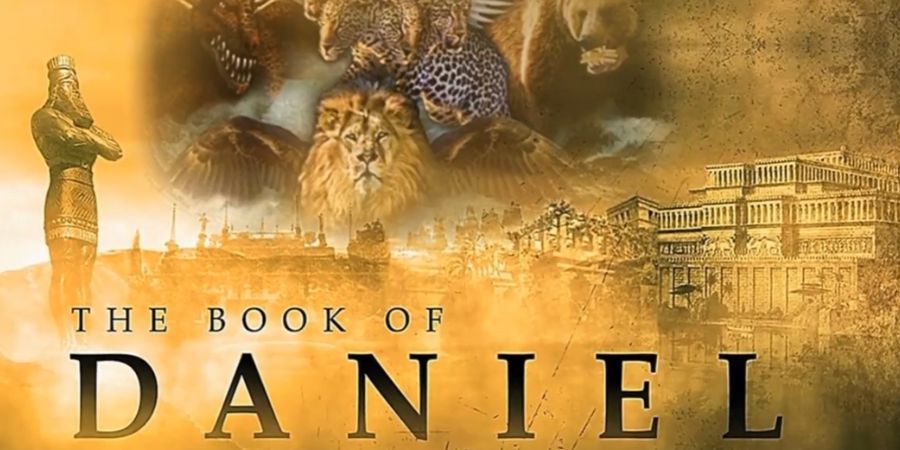
The unfortunate reality today is that the bulk of biblical scholarship on the Book of Daniel is mired in the abyss of higher critical presuppositions, not the least of which is a thoroughgoing rejection of predictive biblical prophecy as such. Because of this the Book of Daniel is viewed as a composite work that was compiled in the middle second century BCE in the midst of the Maccabean Crisis. This view would seem to be supported by the linguistic and generic divisions that exist within the text. Linguistically, chapters 2 thru 7 are written in Aramaic while chapter 1 and chapters 8 thru 12 are written in Hebrew; similarly, though not an exact correspondence, chapters 1 thru 6 comprise the court tails while chapters 7 thru 12 consist of the visionary material. The conclusion then of most biblical scholarship on Daniel is that the eschatological expectations of Daniel are essentially a contradictory hodgepodge of ex eventu (after the fact) depictions of the actions of the Seleucid King Antiochus IV Epiphanes.
Of course, to defend the book’s 6th century Danielic authorship would go beyond the limits of this medium, but in the space that follows I would like to briefly demonstrate the essential unity of Daniel’s visions. The clearest indication of this unity comes in the correspondence between Nebuchadnezzar’s dream in chapter 2 and in Daniel’s vision in chapter 7. While these chapters come from seemingly disparate parts of the book, they both present a sequence of four kingdoms followed by the establishment of the Kingdom of God. Of course, critical scholarship widely identifies these kingdoms as Babylon, Media, Persia, and Greece. This is mostly because they understand the actions of the fourth kingdom, and particularly the little horn, to be fulfilled in the actions of Antiochus IV Epiphanes during the Maccabean Crisis from 167-164 CE. I will come back to the identification of these kingdoms in a little bit, but suffice it to say here that it is difficult to see how Daniel’s expectation for the establishment Kingdom of God is fulfilled in this time period. The subsequent period of Hasmonean independence which followed was a far cry from the grandeur of Daniel’s expectations.
This is especially so when we turn our attention to Daniel chapter 9; in that chapter, Daniel is praying about the end of the exile, and he receives an answer from the angel Gabriel, which reads,
Seventy weeks are decreed about your people and your holy city—to bring the rebellion to an end, to put a stop to sin, to atone for iniquity, to bring in everlasting righteousness, to seal up vision and prophecy, and to anoint the most holy place.
Daniel 9.24
It seems rather clear that these seventy weeks span the timeframe from Daniel’s day (“from the issuing of the decree to restore and rebuild Jerusalem” in verse 25) to the time of final consummation, the time of “everlasting righteousness”. Because of this, we may presume then that the seventy weeks of Daniel 9 cover the same span of time as the visions of Daniel 2 and 7.
Now, the key to identifying the four kingdoms mentioned in Daniel’s sequence would seem to come in Daniel chapter 8. In that chapter, Daniel sees a vision of a ram with two horns, one longer than the other, and a goat whose large horn was broken off and replaced by four smaller horns. Again, the angel Gabriel gives the interpretation.
The two-horned ram that you saw represents the kings of Media and Persia. The shaggy goat represents the king of Greece, and the large horn between his eyes represents the first king. The four horns that took the place of the broken horn represent four kingdoms. They will rise from that nation, but without its power.
Daniel 8.20-22
This interpretation indicates that the second kingdom in Daniel’s sequence should be understood as the unified Kingdom of the Medes and Persians. It is described as a ram with two horns, one longer than the other (8.3) and as a bear which was raised up on one side (7.5). The third kingdom, then, should be understood as the Kingdom of Greece which is represented, of course, by Alexander the Great and the Diadochi, the four generals who followed him. They are variously described as a goat whose large horn was broken off and replaced by four smaller horns (8.8) and as a leopard with four wings and four heads (7.6).
This understanding is confirmed in Daniel chapter 11, where we read,
Three more kings will arise in Persia, and the fourth will be far richer than the others. By the power he gains through his riches, he will stir up everyone against the kingdom of Greece. Then a warrior king will arise; he will rule a vast realm and do whatever he wants. But as soon as he is established, his kingdom will be broken up and divided to the four winds of heaven, but not to his descendants; it will not be the same kingdom that he ruled, because his kingdom will be uprooted and will go to others besides them.
Daniel 11.3-4
The rest of chapter 11, then, goes on to detail the various campaigns of the “King of the North” and the “King of the South”, which describes the various conflicts between the Seleucids and the Ptolemies during the Third and Second century BCE respectively. The point of all this is to say that Daniel’s sequence of four kingdoms is best understood to refer to the progression of empires from Babylon to Medo-Persia to Greece and finally to Rome*. Of course, it must be noted that while the Roman Empire corresponds to Daniel’s fourth kingdom, it doesn’t completely fulfill it. That fulfillment comes ultimately in the eschatological kingdom of the beast, which is described in Book of Revelation, but this is a topic for another time.
By way of conclusion, then, Daniel’s visions reveal a remarkable and multifaceted unity in their expectation despite their seeming disparities. Daniel chapters 2, 7, and 9 give the overarching flow from Daniel’s day to the establishment of God’s Kingdom, and chapters 8 and 11 zoom in on the specific actions of the second and especially the third kingdom. More importantly, this understanding lays the foundation for the typological connection that Daniel draws between the third and fourth kingdoms, specifically between the actions of Antiochus IV Epiphanes and the eschatological little horn of the fourth kingdom. In addition, it helps us see how Daniel’s eschatological paradigm serves as the foundation for the message and ministry of Jesus, especially the Olivet Discourse, and for the message of the New Testament, particularly the Book of Revelation.
Of course, the most important aspect of all of this is the certain promise of God’s victory over His enemies and the enemies of His people. Our hope rests not in earthly powers, nations, or empires, but in the Kingdom of God and in His promised Messiah. That Messiah came incarnate 2000 years ago. He lived a perfect life, and then, He died on the cross for sin and rose again. Forty days later, He ascended to be seated at the right hand of the Father, and He left us this promise, that in the same way he ascended, he will also one day descend in glory and power (Acts 1.11). This is our glorious hope, and so we pray, “Amen, Come, Lord Jesus! (Revelation 22.20)
For further study, see: Hamilton, James M. With the Clouds of Heaven: The Book of Daniel in Biblical Theology. New Studies in Biblical Theology. Downers Grove, IL: InterVarsity, 2014
8 For you were once darkness, but now you are light in the Lord. Walk as children of light— 9 for the fruit of the light consists of all goodness, righteousness, and truth— 10 testing what is pleasing to the Lord. 11 Don’t participate in the fruitless works of darkness, but instead expose them. 12 For it is shameful even to mention what is done by them in secret. 13 Everything exposed by the light is made visible, 14 for what makes everything visible is light. Therefore it is said:
Get up, sleeper, and rise up from the dead, and Christ will shine on you.
15 Pay careful attention, then, to how you walk—not as unwise people but as wise— 16 making the most of the time, because the days are evil. 17 So don’t be foolish, but understand what the Lord’s will is. 18 And don’t get drunk with wine, which leads to reckless living, but be filled by the Spirit: 19 speaking to one another in psalms, hymns, and spiritual songs, singing and making music with your heart to the Lord, 20 giving thanks always for everything to God the Father in the name of our Lord Jesus Christ, 21 submitting to one another in the fear of Christ.
~Ephesians 5.8-21
Title: On the Value of a Distinctively Christian Life Text: Ephesians 5.8-21 Series: The Letter to the Ephesians Church: South Caraway Baptist Church, Jonesboro, AR Date: August 20, 2023
4 Therefore I, the prisoner in the Lord, urge you to walk worthy of the calling you have received, 2 with all humility and gentleness, with patience, bearing with one another in love, 3 making every effort to keep the unity of the Spirit through the bond of peace. 4 There is one body and one Spirit—just as you were called to one hope at your calling— 5 one Lord, one faith, one baptism, 6 one God and Father of all, who is above all and through all and in all.
7 Now grace was given to each one of us according to the measure of Christ’s gift. 8 For it says:
When he ascendedon high, he took the captives captive; he gave gifts to people.
9 But what does “he ascended” mean except that he also descended to the lower parts of the earth? 10 The one who descended is also the one who ascended far above all the heavens, to fill all things. 11 And he himself gave some to be apostles, some prophets, some evangelists, some pastors and teachers, 12 to equip the saints for the work of ministry, to build up the body of Christ, 13 until we all reach unity in the faith and in the knowledge of God’s Son, growing into maturity with a stature measured by Christ’s fullness. 14 Then we will no longer be little children, tossed by the waves and blown around by every wind of teaching, by human cunning with cleverness in the techniques of deceit. 15 But speaking the truth in love, let us grow in every way into him who is the head—Christ. 16 From him the whole body, fitted and knit together by every supporting ligament, promotes the growth of the body for building itself up in love by the proper working of each individual part.
~Ephesians 4.1-16
Title: On How Christians are Different Text: Ephesians 4.1-16 Series: The Letter to the Ephesians Church: South Caraway Baptist Church, Jonesboro, AR Date: July 23, 2023
1 The fool says in his heart, “There’s no God.” They are corrupt; they do vile deeds. There is no one who does good. 2 The Lord looks down from heaven on the human race to see if there is one who is wise, one who seeks God. 3 All have turned away; all alike have become corrupt. There is no one who does good, not even one.
4 Will evildoers never understand? They consume my people as they consume bread; they do not call on the Lord.
5 Then they will be filled with dread, for God is with those who are righteous. 6 You sinners frustrate the plans of the oppressed, but the Lord is his refuge.
7 Oh, that Israel’s deliverance would come from Zion! When the Lord restores the fortunes of his people, let Jacob rejoice, let Israel be glad.
~Psalm 14
Series: Praying through the Psalms Text: Psalm 14.1-7 Church: South Caraway Baptist Church, Jonesboro, AR Date: June 28, 2023
19 So, then, you are no longer foreigners and strangers, but fellow citizens with the saints, and members of God’s household, 20 built on the foundation of the apostles and prophets, with Christ Jesus himself as the cornerstone. 21 In him the whole building, being put together, grows into a holy temple in the Lord. 22 In him you are also being built together for God’s dwelling in the Spirit.
~Ephesians 2.19-22
Title: On the Security, Preservation, and Success of the Church Text: Ephesians 2.19-22 Series: The Letter to the Ephesians Church: South Caraway Baptist Church, Jonesboro, AR Date: June 25, 2023
1 I have taken refuge in the Lord. How can you say to me, “Escape to the mountains like a bird! 2 For look, the wicked string bows; they put their arrows on bowstrings to shoot from the shadows at the upright in heart. 3 When the foundations are destroyed, what can the righteous do?”
4 The Lord is in his holy temple; the Lord—his throne is in heaven. His eyes watch; his gaze examines everyone. 5 The Lord examines the righteous, but he hates the wicked and those who love violence. 6 Let him rain burning coals and sulfur on the wicked; let a scorching wind be the portion in their cup. 7 For the Lord is righteous; he loves righteous deeds. The upright will see his face.
~Psalm 11
Series: Praying through the Psalms Text: Psalm 11.1-7 Church: South Caraway Baptist Church, Jonesboro, AR Date: June 7, 2023
15 This is why, since I heard about your faith in the Lord Jesus and your love for all the saints, 16 I never stop giving thanks for you as I remember you in my prayers. 17 I pray that the God of our Lord Jesus Christ, the glorious Father, would give you the Spirit of wisdom and revelation in the knowledge of him. 18 I pray that the eyes of your heart may be enlightened so that you may know what is the hope of his calling, what is the wealth of his glorious inheritance in the saints, 19 and what is the immeasurable greatness of his power toward us who believe, according to the mighty working of his strength.
20 He exercised this power in Christ by raising him from the dead and seating him at his right hand in the heavens— 21 far above every ruler and authority, power and dominion, and every title given, not only in this age but also in the one to come. 22 And he subjected everything under his feet and appointed him as head over everything for the church, 23 which is his body, the fullness of the one who fills all things in every way.
~Ephesians 1.15-23
Title: On the Ground of Christian Hope Text: Ephesians 1.15-23 Series: The Letter to the Ephesians Church: South Caraway Baptist Church, Jonesboro, AR Date: May 28, 2023
For the choir director: on the Gittith. A psalm of David.
1 Lord, our Lord, how magnificent is your name throughout the earth! You have covered the heavens with your majesty. 2 From the mouths of infants and nursing babies, you have established a stronghold on account of your adversaries in order to silence the enemy and the avenger.
3 When I observe your heavens, the work of your fingers, the moon and the stars, which you set in place, 4 what is a human being that you remember him, a son of man that you look after him? 5 You made him little less than God and crowned him with glory and honor. 6 You made him ruler over the works of your hands; you put everything under his feet: 7 all the sheep and oxen, as well as the animals in the wild, 8 the birds of the sky, and the fish of the sea that pass through the currents of the seas.
9 Lord, our Lord, how magnificent is your name throughout the earth!
~Psalm 8
Series: Praying through the Psalms Text: Psalm 8.1-9 Church: South Caraway Baptist Church, Jonesboro, AR Date: May 17, 2023
In my previous post, I argued that our hermeneutic for interpreting the Bible must be grounded in the conviction that what God intended to say in the Scriptures is accurately and faithfully conveyed in what the human authors actually wrote, and for most of the Bible, this seems to be rather clear. The question, however, arises when we come to texts in the New Testament that seem to interpret the Old Testament against the grain of the author’s intent. If we believe that “scripture interprets scripture” (see my post, here), then it would makes sense to suggest that we should follow the interpretive principles of the Apostles, and if they were not bound by a strict conception of authorial intent, then perhaps we should jettison this hermeneutical ground in our interpretive efforts as well. This then is the point that must be proven, namely that the New Testament authors did in fact disregard the human author’s intent when they interpreted the Old Testament. Of course, to examine every place where the New Testament author’s quote from or allude to the Old Testament would require far more space than is available here, and this work has already been done by many fine scholars in the field. I recommend Commentary on the New Testament use of the Old Testament, edited by G.K. Beale and D.A. Carson. But in lieu of that, I would like to explore one text as a test case for the thesis that the New Testament authors ignored the principle of authorial intent in their use of the Old Testament, that being Matthew’s use of Hosea 11.1 in chapter 2, verse 15 of his Gospel.
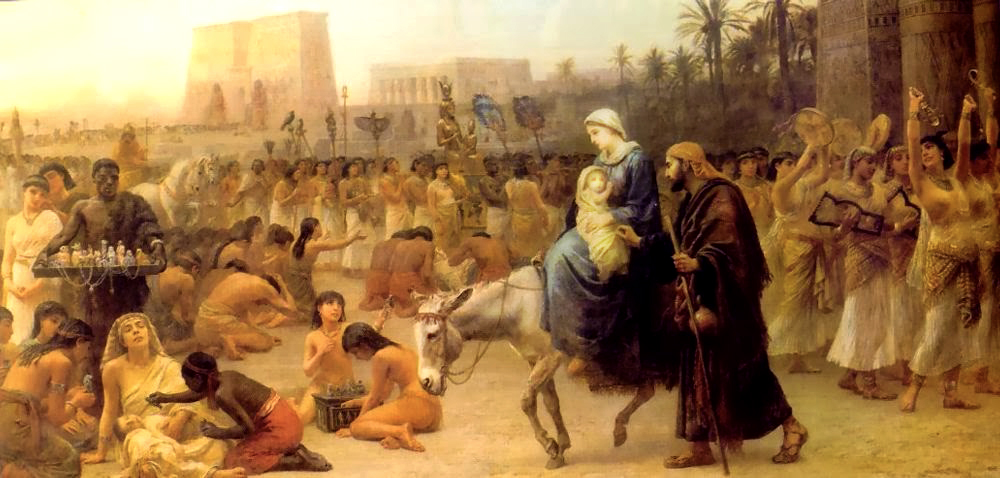
After they were gone, an angel of the Lord appeared to Joseph in a dream, saying, “Get up! Take the child and his mother, flee to Egypt, and stay there until I tell you. For Herod is about to search for the child to kill him.” So he got up, took the child and his mother during the night, and escaped to Egypt. He stayed there until Herod’s death, so that what was spoken by the Lord through the prophet might be fulfilled: Out of Egypt I called my Son.
~Matthew 2.13-15
The book of the prophet Hosea is a story of love and betrayal; set against the backdrop of Hosea’s own marriage to the adulteress Gomer, throughout the book, God repeatedly rebukes the northern Kingdom of Israel for scorning His grace, rejecting His love, forgetting His covenant, and playing the whore with the false gods of Baal. And so, in chapter 11, and verse 1, we read, “When Israel was a child, I loved him, and out of Egypt I called my son.” In these verses, God is looking back on the Exodus experience of His people as the initial overture of His love for Israel; as He goes on to say in verse 4 of that chapter, “I led them with human cords, with ropes of love. To them I was like one who eases the yoke from their jaws; I bent down to give them food.” It is clear that these verses are operating on the paternal imagery of parenthood. In the same way that parents nurture their newborn children, so also God nurtured His “son” Israel by bringing them out of Egyptian slavery, providing for them in the wilderness, and leading them into a land flowing with milk and honey. Even in spite of their repeated betrayal, God goes on to say in verse 8, “How can I give you up, Ephraim? How can I surrender you, Israel? How can I make you like Admah? How can I treat you like Zeboiim? I have had a change of heart; my compassion is stirred!” This chapter is a beautiful picture of the tenderness and mercy of God toward His rebellious son, and even though, the people of Israel will suffer His discipline, it holds out the hope that God has not ceased loving His people.
Now, in chapter 2 of the first canonical Gospel, Matthew connects the flight of the Holy family to Egypt to the words of Hosea 11.1, “so that what was spoken by the Lord through the prophet might be fulfilled: Out of Egypt I have called my Son“ (quoting Hosea 11.1b). But if the prophet Hosea wasn’t making a direct messianic prediction in the text in question, as we saw above, then how can the Egyptian flight of Mary, Joseph, and Jesus properly be considered a fulfillment? The answer is that this is a fulfillment by way of typology not prediction. Part of Matthew’s portrayal of Jesus is to show that He is the long awaited “prophet like Moses” (c.f. Deut 18.15-19), and he demonstrates this by highlighting the ways that Jesus recapitulates the story of Moses. A few examples should suffice. When Moses was born, Pharaoh killed all the Hebrew boys; when Jesus was born, Herod killed all the Jewish boys. According to 1 Corinthians 10.1-2, Moses had a baptism experience in the Red Sea, and Jesus was baptized in the Jordan River. Moses and the Israelites spent forty years in the wilderness; Jesus spent forty days in the wilderness. Moses went up on Mount Sinai to receive the Law; Jesus went up on a mountain to give the law (Sermon on the Mount). There are five books of Moses (Pentateuch); there are five discourses of Jesus’ sermons in the Gospel of Matthew. And “out of Egypt, I called my Son.” Based on this evidence, it is reasonably clear that the fulfillment that Matthew sees in the text of Hosea 11.1 is typological. Even as Israel was God’s typological “son”, Jesus is the true and better messianic Son of God.
In the final analysis, rather than violating the principle of authorial intent in his use of Hosea 11.1, the typological connection drawn by Matthew actually affirms the authorial intent of Hosea. And still, the question remains, “what of God’s intent in Hosea 11.1? When He inspired Hosea to write “out of Egypt, I called my son,” did he know that Matthew would take it in a different direction?” Of course, it is a theological truism to say that God knew the theological connections that Matthew would draw when He inspired Hosea to write, and so it is not wrong to say God “intended” more than Hosea understood at the time. However, this doesn’t mean that His intent stands in contradiction to or competition with the intent of Hosea. We must assume that God’s intent in Hosea 11 was to spark His people to repentance by reminding them of the great depths of His love that was demonstrated in the events of the Exodus, especially because the words of Hosea 11 are reported by the prophet as the very words spoken by God. (This is the Lord’s declaration, Hosea 11.11) Whatever “fuller sense” that we may understand from Hosea’s words, it must be grounded in the inspired intent of the human author, and this is exemplified in Matthew’s use of the text to explain the flight to Egypt.
But there is something that Matthew’s use of the Old Testament can teach us about our own interpretive efforts, namely that our hermeneutic for understanding of the Old Testament must reckon with the person and work of Christ. As Jesus himself affirms, “everything written about me in the Law of Moses, the Prophets, and the Psalms must be fulfilled.” (Luke 24.44) In other words, we have not done our full interpretive work in the Old Testament if we fail to consider how the text points to or is fulfilled in Jesus. If our understanding of the Old Testament would be accepted in a Jewish synagogue, then we haven’t understood the text Christianly. However, this does not mean that we can disregard the principle of authorial intent; we must still labor within the boundaries of literary and historical context before we can consider the broader canonical and theological implications. At the very least, our understanding of the human author’s intent must function as the true and necessary foundation upon which we stand as we seek the illumination of the Spirit in understanding the theological and applicational implications of the text for our lives in Christ. This is a thoroughly Christian understanding of how to interpret the Bible.




 Faith seeking Understanding