26 In the sixth month, the angel Gabriel was sent by God to a town in Galilee called Nazareth, 27 to a virgin engaged to a man named Joseph, of the house of David. The virgin’s name was Mary. 28 And the angel came to her and said, “Greetings, favored woman! The Lord is with you.” 29 But she was deeply troubled by this statement, wondering what kind of greeting this could be. 30 Then the angel told her, “Do not be afraid, Mary, for you have found favor with God. 31 Now listen: You will conceive and give birth to a son, and you will name him Jesus. 32 He will be great and will be called the Son of the Most High, and the Lord God will give him the throne of his father David. 33 He will reign over the house of Jacob forever, and his kingdom will have no end.”
34 Mary asked the angel, “How can this be, since I have not had sexual relations with a man?” 35 The angel replied to her, “The Holy Spirit will come upon you, and the power of the Most High will overshadow you. Therefore, the holy one to be born will be called the Son of God. 36 And consider your relative Elizabeth—even she has conceived a son in her old age, and this is the sixth month for her who was called childless. 37 For nothing will be impossible with God.” 38 “See, I am the Lord’s servant,” said Mary. “May it happen to me as you have said.” Then the angel left her.
Title: On Jesus was Born to Reign Text: Isaiah 9.6-7, Luke 1. 26-38, Matthew 2.1-12, Revelation 11.15-19 Series: Promises Fulfilled Church: Redeemer Baptist Church, Jonesboro, AR Date: December 29, 2024
137 You are righteous, Lord, and your judgments are just. 138 The decrees you issue are righteous and altogether trustworthy. 139 My anger overwhelms me because my foes forget your words. 140 Your word is completely pure, and your servant loves it. 141 I am insignificant and despised, but I do not forget your precepts. 142 Your righteousness is an everlasting righteousness, and your instruction is true. 143 Trouble and distress have overtaken me, but your commands are my delight. 144 Your decrees are righteous forever. Give me understanding, and I will live.
In keeping with the Hebrew alphabet acrostic form, the next stanza of Psalm 119 begins with the Hebrew letter tsade (צ), and it revolves around the Hebrew word for righteousness (צֶדֶק/ṣeḏeq). The word itself occurs in one form another some five times in these eight verses. It is a word that is rich with significance, both for our understanding of God and our relationship with Him, and for our our understanding of ourselves and our relationships with one another. Literally, it refers to something that is straight, like “straight paths” (Psalm 23.3, where the same word is used), but more often than not, it also carries the figurative sense of upright, true, normal, and just. Clearly, it is in this sense that we read, “You are righteous, Lord, and your judgments are just.” (Verse 137) There are few statements that define the character of God in this way, e.g. God is holy, God is perfect, God is Spirit, God is love. So also, here, we read that God is righteous. In other words, righteousness is a perfection of his being; it is essential to His essence. It is an attribute of His divine character. He is righteous, i.e. morally perfect and true, in every way, in what He thinks, in what He feels, in what He says, in what He does. It is impossible for Him to be otherwise, it is who He is. He is righteous. Of course, this is why His judgments are just, where the word used is a synonym for the word in question.
Of course, righteousness is more than simply who He is in himself; His righteousness extends to everything that He does. “Your decrees are righteous forever. Give me understanding, and I will live.” (Verse 144) This is an important affirmation especially in the context of the Old Testament. The Old Testament is filled with divine actions and events that make no sense to our modern minds, that stand as an affront to our modern sensibilities. The most often cited example of this is God’s command to the Israelites to exterminate the Canaanites in the conquest of the Promised Land. According to our Psalmist, even this deed of God is righteous. Of course, we may immediately ask, “how can this be?” I think it is important that we understand that we cannot understand the rightness of God’s ways by our own standards. Our perception of right and wrong and fundamentally flawed by sin. This is why our psalmist prays, “Give me understanding.” The only way we can hope to understand the righteousness of God and His ways is by divine illumination. This comes as a result of the Holy Spirit’s indwelling. As the Apostle Paul puts it in 1 Corinthians 2.14, “But the person without the Spirit does not receive what comes from God’s Spirit, because it is foolishness to him; he is not able to understand it since it is evaluated spiritually.”
Of course, the question for our psalmist remains, “how can we, as fallen individuals, experience or participate in the righteousness of God?” As our psalmist confesses, “I am insignificant and despised, but I do not forget your precepts.” (Verse 141) Compared to God’s righteousness, our righteousness is nothing more than “filthy rags” (Isaiah 64.6). We are sinners, and even our best attempts at cultivating our own righteousness fall short of the standard of righteousness that God is in himself (Romans 3.23). For our psalmist, however, the answer to this question is simple; it is to live in submission before and obedience to the Word of God. As he says in verse 140, “Your word is completely pure, and your servant loves it.” Now, we must be careful here, because this answer could come across as a legalistic effort to earn righteousness. I don’t believe that is what our psalmist is saying. As we have already seen, even our best efforts at attaining righteousness are tinged with sin. No, our psalmist understands that righteousness is something that is imputed from God to us. This is why he says in verse 144, “Your decrees are righteous forever. Give me understanding, and I will live.” In other words, he understands that the righteousness of God comes to us by the transformative revelation of God. This is why he prays for understanding.
As New Testament believers, we know that that ultimate revelation of God’s righteousness came to earth in the person and work of Jesus Christ; He was God incarnate in all the fullness of His being. “He made the one who did not know sin to be sin for us, so that in him we might become the righteousness of God.” (2 Corinthians 5.21) Ours is an alien righteousness; it is not our own. It is imputed to us by grace through faith because of Christ’s death and resurrection. This is why the Apostle Paul could write,
For I am not ashamed of the gospel, because it is the power of God for salvation to everyone who believes, first to the Jew, and also to the Greek. For in it the righteousness of God is revealed from faith to faith, just as it is written: The righteous will live by faith. (Romans 1.16-17)
Our justification, our right standing before God, is by grace alone through faith alone in Christ alone. And I think even our psalmist knew that. Old Testament saints were made righteous in the same way that New Testament believers are made righteous, that is by faith. This principle is confirmed in the example of Abraham, “Abram believed the Lord, and he credited it to him as righteousness .” (Genesis 15.6, c.f. Romans 4 and Galatians 3) The point of all this is to say that righteousness is a perfection of God’s eternal being, and by grace we who believe in Christ have been covered in that same righteousness. This is the beauty of the Gospel. “It is from him that you are in Christ Jesus, who became wisdom from God for us—our righteousness, sanctification, and redemption—in order that, as it is written: Let the one who boasts, boast in the Lord.“ (1 Corinthians 1.30-31)
6. The whole counsel of God concerning everything essential for his own glory and man’s salvation, faith, and life is either explicitly stated or by necessary inference contained in the Holy Scriptures. Nothing is ever to be added to the Scriptures, either by new revelation of the Spirit or by human traditions.
Nevertheless, we acknowledge that the inward illumination of the Spirit of God is necessary for a saving understanding of what is revealed in the Word. We recognize that some circumstances concerning the worship of God and government of the church are common to human actions and organizations and are to be ordered by the light of nature and Christian wisdom, following the general rules of the Word, which must always be observed.
7. Some things in Scripture are clearer than others, and some people understand the teachings more clearly than others. However, the things that must be known, believed, and obeyed for salvation are so clearly set forth and explained in one part of Scripture or another that both the educated and uneducated may achieve a sufficient understanding of them by properly using ordinary measures.
~Second London Baptist Confession (1689), 1.6, 1.7
Series: The 1689 Baptist Confession of Faith Church: South Caraway Baptist Church, Jonesboro, AR Date: October 11, 2023
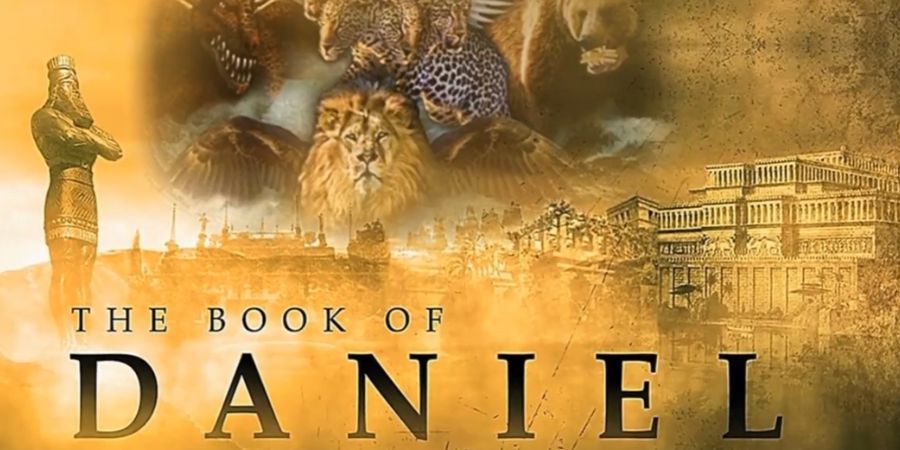
The unfortunate reality today is that the bulk of biblical scholarship on the Book of Daniel is mired in the abyss of higher critical presuppositions, not the least of which is a thoroughgoing rejection of predictive biblical prophecy as such. Because of this the Book of Daniel is viewed as a composite work that was compiled in the middle second century BCE in the midst of the Maccabean Crisis. This view would seem to be supported by the linguistic and generic divisions that exist within the text. Linguistically, chapters 2 thru 7 are written in Aramaic while chapter 1 and chapters 8 thru 12 are written in Hebrew; similarly, though not an exact correspondence, chapters 1 thru 6 comprise the court tails while chapters 7 thru 12 consist of the visionary material. The conclusion then of most biblical scholarship on Daniel is that the eschatological expectations of Daniel are essentially a contradictory hodgepodge of ex eventu (after the fact) depictions of the actions of the Seleucid King Antiochus IV Epiphanes.
Of course, to defend the book’s 6th century Danielic authorship would go beyond the limits of this medium, but in the space that follows I would like to briefly demonstrate the essential unity of Daniel’s visions. The clearest indication of this unity comes in the correspondence between Nebuchadnezzar’s dream in chapter 2 and in Daniel’s vision in chapter 7. While these chapters come from seemingly disparate parts of the book, they both present a sequence of four kingdoms followed by the establishment of the Kingdom of God. Of course, critical scholarship widely identifies these kingdoms as Babylon, Media, Persia, and Greece. This is mostly because they understand the actions of the fourth kingdom, and particularly the little horn, to be fulfilled in the actions of Antiochus IV Epiphanes during the Maccabean Crisis from 167-164 CE. I will come back to the identification of these kingdoms in a little bit, but suffice it to say here that it is difficult to see how Daniel’s expectation for the establishment Kingdom of God is fulfilled in this time period. The subsequent period of Hasmonean independence which followed was a far cry from the grandeur of Daniel’s expectations.
This is especially so when we turn our attention to Daniel chapter 9; in that chapter, Daniel is praying about the end of the exile, and he receives an answer from the angel Gabriel, which reads,
Seventy weeks are decreed about your people and your holy city—to bring the rebellion to an end, to put a stop to sin, to atone for iniquity, to bring in everlasting righteousness, to seal up vision and prophecy, and to anoint the most holy place.
Daniel 9.24
It seems rather clear that these seventy weeks span the timeframe from Daniel’s day (“from the issuing of the decree to restore and rebuild Jerusalem” in verse 25) to the time of final consummation, the time of “everlasting righteousness”. Because of this, we may presume then that the seventy weeks of Daniel 9 cover the same span of time as the visions of Daniel 2 and 7.
Now, the key to identifying the four kingdoms mentioned in Daniel’s sequence would seem to come in Daniel chapter 8. In that chapter, Daniel sees a vision of a ram with two horns, one longer than the other, and a goat whose large horn was broken off and replaced by four smaller horns. Again, the angel Gabriel gives the interpretation.
The two-horned ram that you saw represents the kings of Media and Persia. The shaggy goat represents the king of Greece, and the large horn between his eyes represents the first king. The four horns that took the place of the broken horn represent four kingdoms. They will rise from that nation, but without its power.
Daniel 8.20-22
This interpretation indicates that the second kingdom in Daniel’s sequence should be understood as the unified Kingdom of the Medes and Persians. It is described as a ram with two horns, one longer than the other (8.3) and as a bear which was raised up on one side (7.5). The third kingdom, then, should be understood as the Kingdom of Greece which is represented, of course, by Alexander the Great and the Diadochi, the four generals who followed him. They are variously described as a goat whose large horn was broken off and replaced by four smaller horns (8.8) and as a leopard with four wings and four heads (7.6).
This understanding is confirmed in Daniel chapter 11, where we read,
Three more kings will arise in Persia, and the fourth will be far richer than the others. By the power he gains through his riches, he will stir up everyone against the kingdom of Greece. Then a warrior king will arise; he will rule a vast realm and do whatever he wants. But as soon as he is established, his kingdom will be broken up and divided to the four winds of heaven, but not to his descendants; it will not be the same kingdom that he ruled, because his kingdom will be uprooted and will go to others besides them.
Daniel 11.3-4
The rest of chapter 11, then, goes on to detail the various campaigns of the “King of the North” and the “King of the South”, which describes the various conflicts between the Seleucids and the Ptolemies during the Third and Second century BCE respectively. The point of all this is to say that Daniel’s sequence of four kingdoms is best understood to refer to the progression of empires from Babylon to Medo-Persia to Greece and finally to Rome*. Of course, it must be noted that while the Roman Empire corresponds to Daniel’s fourth kingdom, it doesn’t completely fulfill it. That fulfillment comes ultimately in the eschatological kingdom of the beast, which is described in Book of Revelation, but this is a topic for another time.
By way of conclusion, then, Daniel’s visions reveal a remarkable and multifaceted unity in their expectation despite their seeming disparities. Daniel chapters 2, 7, and 9 give the overarching flow from Daniel’s day to the establishment of God’s Kingdom, and chapters 8 and 11 zoom in on the specific actions of the second and especially the third kingdom. More importantly, this understanding lays the foundation for the typological connection that Daniel draws between the third and fourth kingdoms, specifically between the actions of Antiochus IV Epiphanes and the eschatological little horn of the fourth kingdom. In addition, it helps us see how Daniel’s eschatological paradigm serves as the foundation for the message and ministry of Jesus, especially the Olivet Discourse, and for the message of the New Testament, particularly the Book of Revelation.
Of course, the most important aspect of all of this is the certain promise of God’s victory over His enemies and the enemies of His people. Our hope rests not in earthly powers, nations, or empires, but in the Kingdom of God and in His promised Messiah. That Messiah came incarnate 2000 years ago. He lived a perfect life, and then, He died on the cross for sin and rose again. Forty days later, He ascended to be seated at the right hand of the Father, and He left us this promise, that in the same way he ascended, he will also one day descend in glory and power (Acts 1.11). This is our glorious hope, and so we pray, “Amen, Come, Lord Jesus! (Revelation 22.20)
For further study, see: Hamilton, James M. With the Clouds of Heaven: The Book of Daniel in Biblical Theology. New Studies in Biblical Theology. Downers Grove, IL: InterVarsity, 2014
15 This is why, since I heard about your faith in the Lord Jesus and your love for all the saints, 16 I never stop giving thanks for you as I remember you in my prayers. 17 I pray that the God of our Lord Jesus Christ, the glorious Father, would give you the Spirit of wisdom and revelation in the knowledge of him. 18 I pray that the eyes of your heart may be enlightened so that you may know what is the hope of his calling, what is the wealth of his glorious inheritance in the saints, 19 and what is the immeasurable greatness of his power toward us who believe, according to the mighty working of his strength.
20 He exercised this power in Christ by raising him from the dead and seating him at his right hand in the heavens— 21 far above every ruler and authority, power and dominion, and every title given, not only in this age but also in the one to come. 22 And he subjected everything under his feet and appointed him as head over everything for the church, 23 which is his body, the fullness of the one who fills all things in every way.
~Ephesians 1.15-23
Title: On the Ground of Christian Hope Text: Ephesians 1.15-23 Series: The Letter to the Ephesians Church: South Caraway Baptist Church, Jonesboro, AR Date: May 28, 2023
20 Then I saw an angel coming down from heaven holding the key to the abyss and a great chain in his hand. 2 He seized the dragon, that ancient serpent who is the devil and Satan, and bound him for a thousand years. 3 He threw him into the abyss, closed it, and put a seal on it so that he would no longer deceive the nations until the thousand years were completed. After that, he must be released for a short time.
4 Then I saw thrones, and people seated on them who were given authority to judge. I also saw the souls of those who had been beheaded because of their testimony about Jesus and because of the word of God, who had not worshiped the beast or his image, and who had not accepted the mark on their foreheads or their hands. They came to life and reigned with Christ for a thousand years. 5 The rest of the dead did not come to life until the thousand years were completed.
This is the first resurrection. 6 Blessed and holy is the one who shares in the first resurrection! The second death has no power over them, but they will be priests of God and of Christ, and they will reign with him for a thousand years.
7 When the thousand years are completed, Satan will be released from his prison 8 and will go out to deceive the nations at the four corners of the earth, Gog and Magog, to gather them for battle. Their number is like the sand of the sea. 9 They came up across the breadth of the earth and surrounded the encampment of the saints, the beloved city. Then fire came down from heaven and consumed them. 10 The devil who deceived them was thrown into the lake of fire and sulfur where the beast and the false prophet are, and they will be tormented day and night forever and ever.
Text: Revelation 20.1-10 Series: Eschatology: A Study of the End Times Church: South Caraway Baptist Church, Jonesboro, AR Date: October 5, 2022
As most churches usually do, we begin our Sunday school class every week with a time for sharing prayer requests. And just personally, I am so glad that we do this. I have actually heard pastors criticize this practice, complaining that the requests are always the same, i.e. praying for someone’s illness or medical condition. The complaint, as it usually goes, has to do with the perceived depth of these requests, as if they are not important enough, not spiritual enough, to occupy our time and concern. What a shame! Sharing burdens with one another, no matter how trivial they may seem, is the beauty and the power of the body of Christ. But I digress; we will save that topic for another time. Over the last several weeks, I have been amazed to see and hear how many of the prayer requests that have been shared that have to do with COVID. Every week there is someone else who has been diagnosed with COVID. Every week there is someone else who has been hospitalized due to COVID. Every week there is someone else who has passed away from COVID.
Every time I hear one of these requests, along with the many others that are shared, I find myself taken by a twinge of grief. There is a sadness that is appropriate to the suffering of those that we love, and we must allow ourselves to feel it. The Scriptures encourage us to “rejoice with those who rejoice; weep with those who weep,” to “carry one another’s burdens; in this way you will fulfill the law of Christ.” (Romans 12.15, Galatians 6.2) However, we must not allow ourselves to be overtaken by this grief, whether it be that of others or even our own. When we allow our pain to become all-consuming, we fall quickly into feelings of depression, despair, and hopelessness. As Christians we must remember that we do “not grieve like the rest, who have no hope.” (1 Thessalonians 4.13) Grief, sadness, heartache; these are not the end of our story. “For our momentary light affliction is producing for us an absolutely incomparable eternal weight of glory.” (2 Corinthians 4.17)
This is the point, namely that what we are waiting for so far outshines our present difficulties as to almost make them seem trivial by comparison. They are not trivial, of course; we feel them acutely. But we know that when our Lord returns, all of our griefs, all of our groanings, will prove to have been worth it. “We wait for the blessed hope, the appearing of the glory of our great God and Savior, Jesus Christ.” (Titus 2.13) What I am trying to say is that this vibrant hope, this anxious expectation, should characterize the disciples of Jesus; it should stand at the very foundation of our faith. We should all be anticipating and desiring that day when our Lord Jesus will return to establish His Kingdom on this earth once and for all, when He will do away with sin and sickness and death, and when He will welcome us into His glorious presence to remain for all eternity. However, for many Christians, it would seem, this glorious hope is the farthest thing from their minds, and their lives sadly reflect the want of it.
For the most part, our eschatological reflection in the church is either entirely absent or hopelessly mired in frivolous speculation about secondary and tertiary details that result in even more confusion. This is not to say that questions regarding the rapture or the millennium are unimportant, but it is to say that having the right answers to these questions is not the basis of our hope. Our hope is grounded in the promise of our Lord Jesus Christ, who said, “If I go away and prepare a place for you, I will come again and take you to myself, so that where I am you may be also.” (John 14.3) This promise is the sure and firm foundation for our hope, especially when we are facing times of difficulty, sadness, and grief. And so, “Let us hold on to the confession of our hope without wavering, since he who promised is faithful.” (Hebrews 10.23.)
Throughout its history and even today, the body of Christ is beautifully and abundantly diverse, but one of the things that has united all Christians at all times and in all places is our vibrant hope that looks expectantly forward to the return of our Lord Jesus Christ. We are called to be a people who “love His appearing.” (c.f. 2 Timothy 4.8) And when the darkness of grief threatens to choke out every flicker of joy, on those days we must redouble our conviction, we must fan the flame of our expectation, we must set our gaze once again upon that day when “He will wipe away every tear from their eyes, [when] Death will be no more; grief, crying, and pain will be no more.” This is our blessed hope, and in it we find the strength to persevere, to endure every circumstance. Our waiting, our groaning, is not in vain. “He who testifies about these things says, “Yes, I am coming soon.” [And we say], Amen! Come, Lord Jesus!” (Revelation 22.20)







 Faith seeking Understanding