Tag Archives: Perseverance

On Psalm 119.121-128 (Ayin)

121 I have done what is just and right;
do not leave me to my oppressors.
122 Guarantee your servant’s well-being;
do not let the arrogant oppress me.
123 My eyes grow weary looking for your salvation
and for your righteous promise.
124 Deal with your servant based on your faithful love;
teach me your statutes.
125 I am your servant; give me understanding
so that I may know your decrees.
126 It is time for the Lord to act,
for they have violated your instruction.
127 Since I love your commands
more than gold, even the purest gold,
128 I carefully follow all your precepts
and hate every false way.

The sixteenth stanza of Psalm 119 (ע/ayin) deals with the age old dilemma of faith; it is a question that the people of God have been asking for four millenia. “How long, O Lord?” How long will the wicked prosper? How long will sin and evil endure? How long until you come again to judge the wicked and vindicate the righteous, O Lord? Is it all worth it? Is my obedience and my faithfulness and my suffering worthwhile in the grand scheme of your eternal plan, O Lord? These are the perennial questions of faith. In the face of ever growing evil and the ongoing glorification of sin and wickedness, we are left to wonder if our struggles to walk in faith and obedience are worth it? If we are honest with ourselves, these are questions that even the most faithful of Christians have asked themselves at some point or another. Our psalmist puts it this way: “My eyes grow weary looking for your salvation and for your righteous promise.” (Verse 123)

This is perhaps what is most refreshing about the Word of God, especially in the Psalms but equally so throughout the canon of Scripture, namely that it is real and honest about the human predicament. The Scriptures do not whitewash the ugly and painful realities of human experience; rather, they acknowledge them with an honesty that is both brutal and refreshing. Moreover, they speak to the complexities of maintaining faith and hope in the face of such realities that would otherwise drive us to depression and despair. This is why our psalmist can say, “It is time for the Lord to act, for they have violated your instruction.” (Verse 126) Even though he feels the weariness and the temptations to despair, our psalmist holds on to his hope that God will act, that He will judge those who have violated His instruction. Our psalmist sees this hope as both good and right; it is both good and right that the wicked should finally be punished.

And it is this hope that drives our psalmist to maintain his faith in steadfast obedience to God and His word. He says, “I have done what is just and right; do not leave me to my oppressors,” (Verse 121) and he says, “I carefully follow all your precepts and hate every false way.” (Verse 128) His hope in God and his justice drives his perseverance in faith and obedience. He is convinced that his obedience is not meaningless, that the persecution and suffering that he has endured in not random or without purpose. No, our every effort to walk by faith and obedience, our every difficulty and heartache for the sake of God and His Word, will be ultimately vindicated and rewarded. We look forward to those gracious words of our Lord Jesus, when He will say, “Well done, good and faithful servant! Enter into your master’s joy.” This is why our psalmist can pray, “Deal with your servant based on your faithful love; teach me your statutes.” (Verse 124)

The word here translated “faithful love” is a central and primary concept in the Old Testament’s conception of God. It’s closest New Testament equivalent is the word “grace.” This attribute of God’s character is enshrined in the covenantal formula,

The Lord—the Lord is a compassionate and gracious God, slow to anger and abounding in faithful love and truth, maintaining faithful love to a thousand generations, forgiving iniquity, rebellion, and sin. But he will not leave the guilty unpunished, bringing the consequences of the fathers’ iniquity on the children and grandchildren to the third and fourth generation. (Exodus 34:6-7)

This covenantal formula is the basis for all of the Old Testament’s theology, and it forms the foundation of our psalmist’s faith in this stanza of Psalm 119. The God of the Bible is a God who is longsuffering and gracious toward those who submit to Him in faith, but He is just and holy toward those who reject His sovereign rule over their lives.

And it is this faith that leads him to pray, “Guarantee your servant’s well-being; do not let the arrogant oppress me.” (Verse 122) Literally translated, the line reads, “Be surety for your servant for good.” The idea is that God himself is the surety, the earnest money, the down payment, of good for his servant. In other words, our good, our blessing, our prosperity and human flourishing flows only from God and His promises. This is why we must trust in Him and walk in His ways. As our psalmist puts it, “Since I love your commands more than gold, even the purest gold, I carefully follow all your precepts.” Our fulfillment, our purpose, our joy and happiness is only available when we submit ourselves to God Word, when we walk in God’s ways, even if when it feels like everyone is going in the other direction. Christian perseverance is driven by a faith full of hope. When and only when we walk in this hope will we experience genuine human flourishing and fulfillment.

For further study:
Introduction
Psalm 119.1-8
Psalm 119.9-16
Psalm 119.17-24
Psalm 119.25-32
Psalm 119.33-40
Psalm 119.41-48
Psalm 119.49-56
Psalm 119.57-64
Psalm 119.65-72
Psalm 119.73-80
Psalm 119.81-88
Psalm 119.89-96
Psalm 119.97-104
Psalm 119.105-112
Psalm 119.113-120


On Psalm 119.105-112 (Nun)

105 Your word is a lamp for my feet
and a light on my path.
106 I have solemnly sworn
to keep your righteous judgments.
107 I am severely afflicted;
Lord, give me life according to your word.
108 Lord, please accept my freewill offerings of praise,
and teach me your judgments.
109 My life is constantly in danger,
yet I do not forget your instruction.
110 The wicked have set a trap for me,
but I have not wandered from your precepts.
111 I have your decrees as a heritage forever;
indeed, they are the joy of my heart.
112 I am resolved to obey your statutes
to the very end.

The fourteenth stanza of Psalm 119 starts with the letter נ (nun/pronounced like noon). Yes, that is right; the fourteenth stanza out of twenty-two. Remember, Psalm 119 is an acrostic psalm in which every stanza starts with the next letter of the Hebrew alphabet. It truly is a wonder of our psalmist could write 22 stanzas, 186 verses, extolling the perfections of God’s Word. There is no repetition, no redundancies; no, every stanza addresses some new or different aspect of God’s Law than the one before. His heart was clearly enamored – no, that’s not right – it was consumed with love, affection, devotion for the precepts of God. They were his very life, the only nourishment that could satisfy the pangs of his soul. This attitude should challenge and convict us. Modern Christians struggle to devote 15 minutes of their day to reading the bible; I know, because I am one of them. Why do our souls not hunger and thirst for the nourishment, the soul satisfying pleasures of the Word of God? This is the question that Psalm 119 is asking us.

In this stanza, our psalmist begins with those famous words, “Thy word is a lamp unto my feet, and a light unto my path” (verse 105, KJV). If you were raised in church like I was, then you probably just sang the lyrics to yourself. The fact that someone set these words to music captures the right sentiment, I think. The Psalms were originally prayers and songs that were meant for Israel’s corporate worship, so in singing them, we are no doubt emulating the practice of our psalmist. However, the connection between song and lyric and the affections of the heart is one that is often so underappreciated in modern worship services. Music has a way of touching us, of forming us, in the most vulnerable recesses of our hearts. What we sing, what we shout, these are the things that are planted in the memory of our hearts. This is why we should sing songs that are biblically faithful. As our psalmist goes on to write here, “I have solemnly sworn to keep your righteous judgments.” (verse 106). He is clear in these verses that his greatest affection, his first and foremost guiding principle for life, is the revelation of God in his Word.

And it would appear that he is in particular need of this guidance, as he goes on to write, “I am severely afflicted” (verses 107), and again, “My life is constantly in danger” (verse 109). And in the next verse, “The wicked have set a trap for me” (verse 110). Of course, we do not know the nature of this particular psalmists troubles; we have no narrative of his life to appeal to for background information. But it would appear that he is deeply troubled; he is facing some kind of opposition, some kind of persecution or threat, possibly even up to and including his very life. There are several occasions in the Book of Psalms where David faces similar circumstances, so we may reasonably infer that this was no light or temporary concern for our psalmist. And yet, in the midst of this trail, he continues to affirm his allegiance to the commands and ordinances of God. “I do not forget your instruction” (verse 109); I have not wandered from your precepts” (verse 110). In fact, he goes on to say in the last verse of the stanza, “I am resolved to obey your statutes to the very end” (verse 112). Here again, we don’t know if the persecution he was facing was directly caused by his commitment to the God and His Word, but we do know that he was resolved, committed, and steadfast in keeping that Word until the very end, no matter what opposition he may face.

Where does a person find this kind of strength, this kind of steadfast loyalty to keeping the Word of God? I think we have our psalmists answer in verse 111, “I have your decrees as a heritage forever; indeed, they are the joy of my heart.” The word “heritage,” or perhaps “possession,” implies the idea of an inheritance; it is a surety of future prosperity. It is the reward that awaits the firstborn. And for our psalmist, the inheritance that he is anticipating is nothing less than the promises of the Word of God. It is the words of Lord Jesus, when he says, “Well done good and faithful servant, enter into the joy of your master.” It is a certainty, a sure and firm hope, of future glories, even in the midst of present difficulties and hardships. The Word of God is our hope, and it is the joy of our hearts. Hope and joy; two out of three of the great triad of Christian virtues. These are the defining characteristics of those who trust in God’s word – unshakable hope, indomitable joy. Clearly, our psalmist had these in his heart, and no matter what troubles or heartaches may come, he was able to persevere because of he found his hope and his joy in the abiding Words of the living God.

This stanza, nay this entire psalm for that matter, is a wonder to me. It challenges and convicts my soul in ways that I am still trying to define even after writing on these first fourteen stanzas. I wonder why God would put a psalm like this one in the Bible; it seems somewhat self-congratulatory – 186 verses on the soul satisfying perfections of His own Word. But perhaps, he put it here because he know that in it he has provided the salve for every every need of the human heart. So often, we look for our comfort, our peace, our security, our hop, our joy in all the wrong places. This is sin. But if we could learn to emulate the attitude and affections of our psalmist, if we would truly begin to hide his Word in our hearts, then we might be able say with the psalmist, “I have not wandered from your precepts.” In His goodness, God has provided the solution to every problem, the cure for every heartache, the peace and comfort for every trial. It is Him, God himself; He is the only one who can answer the deepest longings of our souls. And he has done this in His Word. May we learn to emulate the conviction of our psalmist and find our peace, our hope, and our comfort in His Word.

For further study:
Introduction
Psalm 119.1-8
Psalm 119.9-16
Psalm 119.17-24
Psalm 119.25-32
Psalm 119.33-40
Psalm 119.41-48
Psalm 119.49-56
Psalm 119.57-64
Psalm 119.65-72
Psalm 119.73-80
Psalm 119.81-88
Psalm 119.89-96
Psalm 119.97-104


On Christian Living in the Last Hour

TEXT

The elder: To the elect lady and her children, whom I love in the truth—and not only I, but also all who know the truth— because of the truth that remains in us and will be with us forever. Grace, mercy, and peace will be with us from God the Father and from Jesus Christ, the Son of the Father, in truth and love.

I was very glad to find some of your children walking in truth, in keeping with a command we have received from the Father. So now I ask you, dear lady—not as if I were writing you a new command, but one we have had from the beginning—that we love one another. This is love: that we walk according to his commands. This is the command as you have heard it from the beginning: that you walk in love.

Many deceivers have gone out into the world; they do not confess the coming of Jesus Christ in the flesh. This is the deceiver and the antichrist. Watch yourselves so that you don’t lose what we have worked for, but that you may receive a full reward. Anyone who does not remain in Christ’s teaching but goes beyond it does not have God. The one who remains in that teaching, this one has both the Father and the Son. 10 If anyone comes to you and does not bring this teaching, do not receive him into your home, and do not greet him; 11 for the one who greets him shares in his evil works.

12 Though I have many things to write to you, I don’t want to use paper and ink. Instead, I hope to come to you and talk face to face so that our joy may be complete. 13 The children of your elect sister send you greetings.

~2 John 1-13

Title: On Christian Living in the Last Hour
Text: 2 John 1-13
Church: South Caraway Baptist Church, Jonesboro, AR
Date: September 24, 2023


On Psalm 119.81-88 (Kaf)

81 I long for your salvation;
I put my hope in your word.
82 My eyes grow weary
looking for what you have promised;
I ask, “When will you comfort me?”
83 Though I have become like a wineskin dried by smoke,
I do not forget your statutes.
84 How many days must your servant wait?
When will you execute judgment on my persecutors?
85 The arrogant have dug pits for me;
they violate your instruction.
86 All your commands are true;
people persecute me with lies—help me!
87 They almost ended my life on earth,
but I did not abandon your precepts.
88 Give me life in accordance with your faithful love,
and I will obey the decree you have spoken.

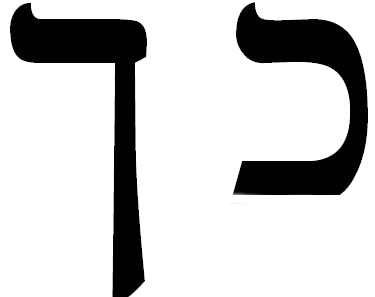
We now come to the eleventh stanza of Psalm 119 (Kaf/Kaph – כ‎, final form – ך), and with this stanza, we are halfway through the longest chapter in the Bible. This is somewhat appropriate since the theme of this stanza concerns waiting. “How many days must your servant wait?” (verse 84a) In the same way that this psalm requires endurance and perseverance to read and work through, so also the life of faith requires endurance and perseverance. Or, to borrow the title of Eugene Peterson’s book on the Psalms of Ascent (120-134), the Christian life is A Long Obedience in the Same Direction. As the subtitle of the book states, Peterson uses these psalms to reflect on “discipleship in an instant society”. As a culture, we are addicted to instant gratification, and the proliferation of social media with its “likes” and “follows” has only made this incessant need more consuming. We desperately need to relearn what it means to wait, to persevere in faith, to appreciate delayed fulfillment. But, of course, waiting is not easy; it is not fun. Most of the time, it is hard, and this is the struggle that our psalmist is wrestling with in these verses.

It would seem that he is facing intense persecution for his devotion to God and His ways. As he writes in verse 86, “people persecute me with lies; they almost ended my life on earth.” This is because “they violate your instruction, but I did not abandon your precepts.” (verse 85) Clearly, the psalmist is facing opposition, ridicule, even the threat of physical harm because of his commitment to the Word and ways of God. Sadly, this is the reality of living in the already but not yet. As believers in Christ, we are already citizens of His kingdom; we live by a set of standards and convictions, principles and values, that stand in complete contradiction to the kingdom of this world. This inevitably leads to conflict with those who are on the outside of the faith, which results in ridicule, ostracism, and eventually outright persecution. The more that we obey the Word of God, the more that we will face criticism for it. As the Apostle Paul puts it in Second Timothy, chapter 3, verse 12, “In fact, all who want to live a godly life in Christ Jesus will be persecuted.” This is a lived reality for our psalmist.

And so, understandably, our psalmist cries out to God, “How many days must your servant wait? When will you execute judgment on my persecutors? When will you comfort me?” (verse 84) This prayer has been the prayer of the people of God for the entirety of history. Every moment, we wonder, “How long, O Lord? How long until you will come to do away with sin, vindicate your people, fulfill your promises, and establish your perfect rule on earth? How long?!” This is our heart’s deepest and truest longing, as our psalmist says, “I long for your salvation.” Of course, salvation here, as our psalmist envisions it, is a much more robust concept than we usually understand. As a post-reformation, post-enlightenment, westernized people, we have been conditioned to understand salvation in individualistic terms. We generally think of salvation as the forgiveness of sin, the removal of guilt, and inheritance of eternal life (when we die). But for our psalmist, salvation is vindication; it the victory of God over those who would oppose Him and His people. However, these two understandings of salvation are not in contradiction. The Bible presents the work of Christ in redeeming His people as a both/and, as an already/not yet. We have already received the forgiveness of sin resulting in eternal life, but we are also waiting for the day when Christ will come again to defeat sin and Satan once and for all and establish His Kingdom on earth.

This is our blessed hope, and as our psalmist writes, “I put my hope in your word.” Our psalmist understands that hope is the source of the strength that is necessary for waiting, and the promises of God found in His Word are the foundation of hope. It is hope that empowers our psalmist’s unflinching obedience in spite of the persecution that he is facing. This is why he prays in verse 88, “Give me life in accordance with your faithful love, and I will obey the decree you have spoken.” The word that is translated as “faithful love” here is the Hebrew word חֶסֶד (hesed), and according to Darrell Bock, it encompasses “all the positive attributes of God: love, covenant faithfulness, mercy, grace, kindness, loyalty–in short, acts of devotion and loving-kindness that go beyond the requirements of duty.” It is variously translated as “faithful love, lovingkindness, loyalty, etc.”, and it refers to His promise keeping devotion to His covenant people. Our psalmist is confident that God will keep the promises of His Word, because that is who He is. He is a promise keeping God, and this is the ground of hope for our psalmist. It is what empowers him to step out in obedience expecting that it will result in the abundant life.

In many ways, the Christian life is a life lived in between, a life of the already but not yet, a life of waiting. We understandably wonder how long we will have to wait for the promises of God to be fulfilled, but there is a question that is more important than this. And that question is simply this: how shall we wait? Will we wait in faithfulness and obedience strengthened by our confident hope in the promises of God’s Word? Or will we give in to the pressures of the world as it seeks to conform us to itself? There will certainly be times when our waiting will be difficult, when continuing in faithfulness will feel pointless, when our hope will appear to be in vain. But these are the times that we must renew our faith in God and the promises are found in His Word and live in light of them. Then and only then will hear those most blessed words on that final day when our Lord Jesus says, “Well done, good and faithful servant! You were faithful over a few things; I will put you in charge of many things. Share your master’s joy.” (Matthew 24.23)

For further study:
Introduction
Psalm 119.1-8
Psalm 119.9-16
Psalm 119.17-24
Psalm 119.25-32
Psalm 119.33-40
Psalm 119.41-48
Psalm 119.49-56
Psalm 119.57-64
Psalm 119.65-72
Psalm 119.73-80


On How the Death of Jesus Changed Everything

TEXT

44 It was now about noon, and darkness came over the whole land until three, 45 because the sun’s light failed. The curtain of the sanctuary was split down the middle. 46 And Jesus called out with a loud voice, “Father, into your hands I entrust my spirit.” Saying this, he breathed his last.

47 When the centurion saw what happened, he began to glorify God, saying, “This man really was righteous!” 48 All the crowds that had gathered for this spectacle, when they saw what had taken place, went home, striking their chests. 49 But all who knew him, including the women who had followed him from Galilee, stood at a distance, watching these things.

~Luke 23.44-49

Title: On How the Death of Jesus Changed Everything
Text: Luke 23.44-49
Series: Who is Jesus? A Study of the Gospel of Luke
Church: South Caraway Baptist Church, Jonesboro, AR
Date: January 1, 2023


On Psalm 119.49-56 (Zayin)

49 Remember your word to your servant;
you have given me hope through it.
50 This is my comfort in my affliction:
Your promise has given me life.
51 The arrogant constantly ridicule me,
but I do not turn away from your instruction.
52 Lord, I remember your judgments from long ago
and find comfort.
53 Fury seizes me because of the wicked
who reject your instruction.
54 Your statutes are the theme of my song
during my earthly life.
55 Lord, I remember your name in the night,
and I obey your instruction.
56 This is my practice:
I obey your precepts.

Zayin (ז) is the seventh letter of the Hebrew alphabet; accordingly, this is now the seventh stanza of Psalm 119. In this stanza, our psalmist begins to reflect on the relationship between hope and perseverance in the face of intense grief. This is a topic that I have written on recently here, but the main point is that the Christian hope is grounded in the promises of God’s Word. As our psalmist writes, “Remember your word to your servant; you have given me hope through it.” The God of the Bible is eternal, without beginning or end, and so, He always remembers His Word. And not only does He remember His Word, He always keeps it. He is a God of His Word, because His Word is the revelation of Himself. Therefore, His Word is certain and sure, and this is why Christians should be people of unconquerable hope.

In the New Testament, hope is one of a triad of primary virtues that distinguish the followers of Christ. As the scriptures so poetically remind us, “Now these three remain: faith, hope, and love—but the greatest of these is love.” (1 Corinthians 13.13). Of course, hope is one of the most powerful emotions in all the human experience, and it is hope, along with faith and love, that is the primary source of motivation and strength in the Christian life. For our psalmist, it is his comfort in affliction (verse 50), his courage in the face of ridicule (verse 51), his zeal in the face of sinfulness (verse 53), and his joy in the regular responsibilities of life (verse 54). This hope, a hope that is firmly grounded the promises of God’s Word by faith, gives our psalmist the strength to persevere in obedience no matter what obstacles or difficulties may come against him(verses 55-56).

However, in trusting in His promises, we are not simply left to some kind of blind faith. In many ways the story of the Bible is a record of promises that have been kept. As our psalmist puts it, “Lord, I remember your judgments from long ago and find comfort” (verse 52). The Word of God is the evidence that God keeps His promises. In his the two book set that surveys of the Bible’s message, Mark Dever describes the Old and New Testaments as “Promises Made” and “Promises Kept” respectively. And the gospel writers, in particular, are at great pains to demonstrate that “these things happened so that the Scriptures would be fulfilled.” (John 19.36, among others) This is the unanimous affirmation of the Bible’s authors, that “whatever was written in the past was written for our instruction, so that we may have hope through endurance and through the encouragement from the Scriptures.” (Romans 15.4)

This is the point, namely that our hope is not in vain, because we know beyond any shadow of doubt that God keeps His Word in every detail. In fact, He has already kept it by sending His Son incarnate to die on the cross for sin and rise again. This is why the author of Hebrews writes, “Now faith is the reality of what is hoped for, the proof of what is not seen.” (Hebrews 11.1) When it is all said and done, Christians are people of hope, and our hope cannot be extinguished no matter what difficulties or hardships may come our way. “We wait for the blessed hope, the appearing of the glory of our great God and Savior, Jesus Christ.” (Titus 2.13) While we wait, let us learn from our the commitment of our psalmist, “This is my practice: I obey your precepts.” (verse 56).

For further study:
Introduction/Overview
Psalm 119.1-8
Psalm 119.9-16
Psalm 119.17-24
Psalm 119.25-32
Psalm 119.33-40
Psalm 119.41-48


Slow To Write

"let every person be quick to hear, slow to speak, slow to anger."

lovegavehope

Just another WordPress.com site

Jared Cornutt

Pastor | Speaker | Writer

Denny Burk

A commentary on theology, politics, and culture

G3 Ministries

Events + Resources for the Local Church

Biblical Reasoning

Biblical and Systematic Theology According to the Scriptures

RetroChristianity

Reclaiming the Forgotten Faith

SBC Voices

Southern Baptist News & Opinion

Lucid Theology

Thoughts on words, books, theology, and life.

Baptist21

A pastor-led voice for Baptists in the 21st century

Center For Baptist Renewal

The Personal and Professional Blog of Phillip Powers

The Pastor's Well - Pastor Well

The Personal and Professional Blog of Phillip Powers

Articles - AlbertMohler.com

The Personal and Professional Blog of Phillip Powers

The Gospel Coalition

The Personal and Professional Blog of Phillip Powers