On Sola Scriptura and the Use of Bible Study Resources

Five hundred years ago, the leaders of the Protestant Reformation championed the refrain sola scriptura, that scripture alone is the ultimate and final authority for all questions pertaining to Christian faith and practice. It is a refrain that continues to ring out today in Bible believing churches all over the world. The perspicuity, sufficiency, and authority of the Bible are convictions that are foundational for the overall health and wellbeing of the church, and this is especially so when these truths are under the kind of direct attack that they have suffered in this current cultural climate. It is no understatement to say that the trends of the culture are moving against the authority and sufficiency of Holy Scripture. Therefore, it is imperative for every new generation of Christians to affirm, proclaim and defend these truths.

However, in my experience, there is widespread misunderstanding about what the doctrine of sola scriptura actually means. Many Christians commonly confuse the doctrine of sola scriptura, or “scripture alone”, with a position that might be called solo scriptura, or “scripture only”. Solo scriptura is the position that Holy Scripture is the only valid resource for matters of Christian faith and practice, and usually, it holds that other kinds of extra biblical resources are unnecessary, nay even inappropriate. According to this perspective, biblical commentaries, historical studies, biblical and systematic theologies are typically viewed as distractions or obstacles in the study of the Bible rather than as aids in the process. These resources are typically viewed as merely the opinions of men, and so they are deemed to be inappropriate for the Christian who truly wants to hear the voice God in His Word.

Now, I think that the believers who hold this kind opinion are genuine in their desire to know and obey the Word of God, and this should be applauded. But, to eschew all extra biblical resources out of some supposed devotion to the primacy of Holy Scripture is fundamentally short sighted and unwise. This is primarily because God has gifted his church with pastors and teachers (Ephesians 4.11), and these gifts have been preserved for us in the form of commentaries, theologies, and the like that have been passed down through the ages. Moreover, the Proverbs remind us that “A fool’s way is right in his own eyes, but whoever listens to counsel is wise” (Proverbs 12.15), and “Without guidance, a people will fall, but with many counselors there is deliverance” (Proverbs 11.14). In other words, it is in keeping with Biblical wisdom to listen to the counsel of those who have studied the Bible before us. Or to put it another way, “[Interpretations] fail when there is no counsel, but with many advisers they succeed” (Proverbs 15.22).

Of course, the doctrine of sola scriptura rightly affirms that these extra biblical resources do not stand above the Bible in any kind of authoritative or determinative way. The Bible is norma normans non normata; it is the norming norm that is itself not normed. On the other hand, biblical commentaries, systematic theologies, and the like are norma normata, or “normed norms”, in the process of biblical interpretation. They are the guard rails that keep us from falling into the canyon of interpretive subjectivism, but they are ultimately subservient to that final authority which is the inspired and inerrant Word of the one true and living God. This is the doctrine of sola scriptura rightly understood; it is the affirmation that scripture the final and highest authority on matters pertaining to Christian life and practice, but it is not the only authority on these matters.

So, when it comes to reading and studying the Bible, Christians are right to avail themselves of the plethora of resources both modern and ancient that are available today. This includes but is not limited to biblical commentaries, biblical, systematic, and historical theologies, socio-cultural background studies, linguistic and literary aids, and many others. These are valuable helps in the interpretive process. However, as helpful as these kinds of books are, we must remember that nothing can substitute for simply reading the Bible; this is the God-ordained means by which we are transformed into His image by the renewing of our minds. As Charles Spurgeon once said, “Visit many good books, but live in the Bible. ” Or as the Bible itself reminds us,

“But beyond these, my son, be warned: there is no end to the making of many books, and much study wearies the body. When all has been heard, the conclusion of the matter is this: fear God and keep his commands, because this is for all humanity.” 

~Ecclesiastes 12.12-13

For more on this topic, see also:
On the Use and Benefit of Tradition
On Hermeneutics & Interpreting the Bible


On an Introduction to Ephesians

TEXT

1 Paul, an apostle of Christ Jesus by God’s will:
To the faithful saints in Christ Jesus at Ephesus.
Grace to you and peace from God our Father and the Lord Jesus Christ.

Title: On an Introduction to Ephesians
Series: John Newton Pastors Conference
Church: Grace Baptist Church, West Memphis, AR
Date: May 20, 2022


On the Parable of the Rich Man and Lazarus

TEXT
19 “There was a rich man who would dress in purple and fine linen, feasting lavishly every day. 20 But a poor man named Lazarus, covered with sores, was lying at his gate. 21 He longed to be filled with what fell from the rich man’s table, but instead the dogs would come and lick his sores. 22 One day the poor man died and was carried away by the angels to Abraham’s side. The rich man also died and was buried. 23 And being in torment in Hades, he looked up and saw Abraham a long way off, with Lazarus at his side. 24 ‘Father Abraham!’ he called out, ‘Have mercy on me and send Lazarus to dip the tip of his finger in water and cool my tongue, because I am in agony in this flame!’

25 “‘Son,’ Abraham said, ‘remember that during your life you received your good things, just as Lazarus received bad things, but now he is comforted here, while you are in agony. 26 Besides all this, a great chasm has been fixed between us and you, so that those who want to pass over from here to you cannot; neither can those from there cross over to us.’

27 “‘Father,’ he said, ‘then I beg you to send him to my father’s house— 28 because I have five brothers—to warn them, so that they won’t also come to this place of torment.’

29 “But Abraham said, ‘They have Moses and the prophets; they should listen to them.’

30 “‘No, father Abraham,’ he said. ‘But if someone from the dead goes to them, they will repent.’

31 “But he told him, ‘If they don’t listen to Moses and the prophets, they will not be persuaded if someone rises from the dead.’”

~Luke 16.19-31

Title: On the Parable of the Rich Man and Lazarus
Series: Who is Jesus? A Study of the Gospel of Luke
Church: South Caraway Baptist Church, Jonesboro, AR
Date: May 08, 2022


On the Ministry of the Local Association

Cooperation between local churches has long been a hallmark of Baptist identity. Going all the way back to the earliest English separatists, Baptists have always understood that, though local churches are autonomous, we are better able to accomplish the Great Commission to make disciples of all nations when we partner together. Our history is filled with example after example of local churches that have worked together to fund, train, and send missionaries around the world. In many ways, these precedents are the foundation for the denominational structures that exist today. Whether it is the national convention, the state conventions, or the local associations, all of these entities exist to facilitate the cooperation of like-minded churches for the advancement of the global cause of Christ.

Of course, it goes without saying that the strength and effectiveness of these entities is directly dependent on the participation of local churches. This is particularly true at the level of the local Baptist association; their ministry suffers drastically when local churches do not participate regularly. One factor that has contributed significantly to the weakness of associational ministry is the rise of the mega/multisite church. The overabundance of people and resources in these churches enables them to operate as independent self-sufficient organisms, essentially negating their need to cooperate with other churches in the area. In my own local association, there is a relatively large church, a mega church by all comparative measurements, and while their name appears on the association roster, their participation therein is practically nil save a token monthly financial contribution.

Whatever the reasons, when local churches do not participate in the ministry of the local association, all of the churches that partner with that association suffer. Local associations, especially those in more rural areas, have largely become weak, ineffective, and irrelevant due to the widespread apathy that characterizes attitudes in most local Baptist churches. It has come to the point that we might even begin to wonder why these entities still exist and whether they should continue at all. As the Apostle Paul would say, “May it never be!”. The point is that we desperately need to recover the value of local association ministry, and in the space that remains, I would like to highlight just a few of the ways that participation in the local association benefits the local church.

First, the local association provides pastors the opportunity to build relationships with other pastors. More often than not, pastors cannot find the kinds of relationships that sustain long term ministry success in their own congregations. This should not be the case, of course, but being a pastor can sometimes feel very lonely. Building relationships with other pastors through the local association can help to alleviate that isolation; it is a place where pastors can turn for encouragement, accountability, and mentoring. The latter of these is particularly important for younger first time pastors. The value of being mentored by seasoned, experienced, faithful pastors is a resource that will bear fruit long after those pastors retire. Older pastors have the opportunity to invest in and influence the next generation of pastors through meaningful self-giving relationships, and the best place for these to develop is through the local association. Or to put it more simply, pastors need each other.

A second way in which participation in the local association benefits the local church is by cooperative mission efforts. The simple fact of the matter is that the Great Commission to make disciples of all nations, while it is certainly not less than, it is so much more than the isolated ministry of one local church. Most local churches, the vast majority of which average less than 100 in weekly attendance, simply do not have the financial or people resources to develop an effective mission program. However, when those resources are pooled together with other churches through the local association, we are better able to reach not only our Jerusalem, but our Judea and Samaria, and even to the ends of the earth. This is essentially what the Cooperative Program is all about; in the Southern Baptist Convention, churches pool their resources through the cooperative program primarily for the purpose of national and international missions and theological education. If we truly care about the cause of Christ, then this kind of cooperation must begin at the local level.

Lastly, participation in the ministry of the local association helps churches cultivate a kingdom first mentality. This may be more of a result of the first two, but the point is that participating in the local association reminds us that Christianity is bigger than our little slice of the pie. The Kingdom of God is much more than our particular sphere of influence. However, it is all too easy for churches, particularly those that are experiencing seasons of meaningful ministry, to begin to believe that the work of the Kingdom revolves around the ministry efforts of their particular church. Pride begins to spring up in our hearts, and we develop a kind of competitive attitude where we measure our successes and achievements against other local churches. But, the fact of the matter is that local churches should not be in competition with each other. We are all on the same team, all striving for the same goal, and local association ministry helps keep this reality at the foreground of our ambitions.

I love the local church; I believe in the ministry of the local church. The local church is the primary avenue of God’s work in the world to bring people to faith in His Son and transform them into His image. But the Kingdom of God is bigger than individual churches; the Great Commission is bigger than individual churches. And denominational organizations from the local association all the way up to the national convention exist to facilitate and support the cooperation of likeminded churches for the cause of Christ. Denominations are not perfect, because they are made up of people that are not perfect. They can be frustrating, ineffective, and even disappointing at times, but when local association ministry is done well, it makes it all worth it.

Note: This post was originally posted at SBCvoices, here.


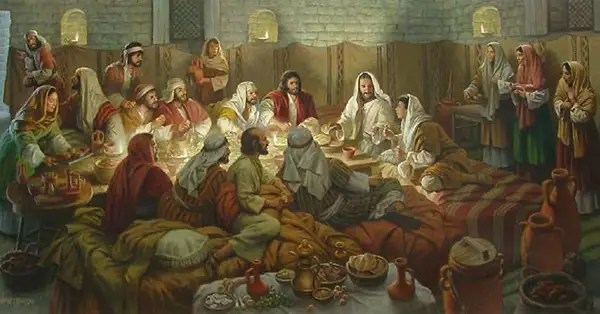
On Maundy Thursday

A couple of weeks ago, Christians around the world celebrated the death and resurrection of our Lord Jesus Christ. It is a holiday that transcends all denominational lines, theological differences, national borders, language barriers, and time zones. Holy Week. Palm Sunday, Good Friday, Resurrection Sunday, these annual “holy-days” tell the story, that “old, old story, how a Savior came from glory, how He gave His life on Calvary, to save a wretch like me.” It is a time in which we pause to remember, when we focus our reflection, our worship on the good news that makes the Christian gospel unique, timeless, powerful, namely that Christ is risen. He is risen indeed. Each and every day of that week, from Palm Sunday through Resurrection Sunday, is absolutely rich, robust with significance for Christian faith and practice. However, there is one day of that week that is often neglected in the hustle and bustle that usually accompanies preparations for Easter Sunday.

On Thursday evening of our Lord’s Passion, Jesus gathered with His disciples in the upper room. The evening began with a beautiful act of loving service as Jesus washed the disciples feet. This seemingly simple moment subsequently shaped the entire evening as Jesus went on to teach them, saying, “I give you a new command: Love one another. Just as I have loved you, you are also to love one another.” (John 13.34). He then explained that this love would be the primary characteristic that would identify them as His disciples (verse 35). Of course, He would go on that evening to define this love by His own sacrificial death which would occur the following day on Good Friday (John 15.13). This is most likely why he referred to it as a “new command”. It wasn’t new in the sense that it had never been taught; in fact, the OT taught clearly that God’s people should “love your neighbor as yourself” (Lev 19.18). However, the love that Jesus was calling the disciples to that night was something more, something different, something new. This is why we traditionally refer to this day as Maundy, which comes from the Latin mandatum meaning command, “a new command.”

The evening continued around the table as they shared the Passover meal, and it concluded with the passing of the bread and cup, which Jesus reinterpreted as symbols of His body that would be broken and His blood that would be shed for the forgiveness of sins to inaugurate the New Covenant (Matthew 26.26-30). This Lord’s Supper subsequently became central to the worship of the early church. As Christians gathered each week for worship and Word, they would do so around the table; they would share a meal together which would of course include the breaking of bread and passing of the cup (c.f. Acts 2.46). This meal would eventually become known as the Agape Feast or “love feast”, so called after the new commandment that Jesus gave the disciples that Thursday night. It was a time when the followers of Christ could come together to experience the grace of fellowship that is available through the Holy Spirit.

In the modern church, this kind of observance is sadly lacking. Though a few traditions have revived the practice (for one example, click here), for the most part it is widely neglected. We are so caught up in the busyness of our own lives, that we fail to take the time to enjoy the fellowship that binds us together. Even immediate families today barely have the time to share an evening meal together, and when they do, they can hardly be bothered to look up from their screens to interact with one another. But for Jesus and His earliest followers, spending the time to share a meal together around the table was a precious gift of God. Unrushed fellowship over the course of a meal where mutual love to can be shared with one another was foundational in the weekly rhythms of the early church; it was paramount for their life together as disciples of Jesus.

We desperately need to recover this timeless grace, the age old spiritual discipline of table. Of course, this should begin with the weekly observance of the Lord’s Supper as a part of the church’s worship. This ordinance should stand at the center, alongside the preaching of the Word, as we gather together for mutual edification and encouragement every Sunday. It should not be relegated to the end of the service as an obligatory addendum. (For more on this, see my post here.) But it need not end there; it should extend from the weekly worship gathering to homes as brothers and sisters in Christ show each other the grace of hospitality, opening up their homes, sharing meals, loving one another, and doing life together. This is Jesus’ vision for Christian community, that we would love another, even as He loves us, and this is nowhere more on display than we we gather around the table.


On Remembering the Gospel

Text

Remember Jesus Christ, risen from the dead and descended from David, according to my gospel, for which I suffer to the point of being bound like a criminal. But the word of God is not bound. 10 This is why I endure all things for the elect: so that they also may obtain salvation, which is in Christ Jesus, with eternal glory. 11 This saying is trustworthy:

For if we died with him,
we will also live with him;
12 if we endure, we will also reign with him;
if we deny him, he will also deny us;
13 if we are faithless, he remains faithful,
for he cannot deny himself.

~2 Timothy 2.8-13

Title: On 2 Timothy 2.8-13
Series: Revival
Church: First Baptist Church, DeValls Bluff, AR
Date: March 16, 2022


On Psalm 119.57-64 (Heth)

57 The Lord is my portion;
I have promised to keep your words.
58 I have sought your favor with all my heart;
be gracious to me according to your promise.
59 I thought about my ways
and turned my steps back to your decrees.
60 I hurried, not hesitating
to keep your commands.
61 Though the ropes of the wicked
were wrapped around me,
I did not forget your instruction.
62 I rise at midnight to thank you
for your righteous judgments.
63 I am a friend to all who fear you,
to those who keep your precepts.
64 Lord, the earth is filled with your faithful love;
teach me your statutes.

The eight stanza of Psalm 119 (ח/heth – sounds like the ch in Bach, you have to get a little phlegm in the back of your throat when you say it), but this stanza begins with the line “The Lord is my portion.” This is an image that occurs frequently throughout the Old Testament, and especially in the Book of Psalms. The word typically refers to a share or a portion of land received by inheritance. In an agrarian society like ancient Israel, owning land was a source of economic, political, and societal security. Those who owned land had standing and influence. But here, our psalmist affirms that the Lord is his portion. “The Lord” here (printed in all caps on most versions) represents the personal covenant name of God, i.e. יהוה, Yahweh; this is the name that He revealed to Moses from the burning bush, “I am who I am” (Exodus 3.14). In other words, our psalmist understands that Yahweh, the one true and living God, the personal covenant keeping God, is the only one in whom we may find safety, security, stability, satisfaction, and contentment in this life. As the old hymn goes, “All other ground is sinking sand.”

This principle is not unlike that famous slogan of pastor and author John Piper, “God is most glorified in us when we are most satisfied in Him.” Or as question 1 of the Westminster Shorter Catechism states, “Man’s chief end is to glorify God, and to enjoy Him forever.” This is the point, namely that glad and joyful obedience to the Word of God springs forth from a heart that is perfectly satisfied and wholly content in Him. This is why our psalmist says in verse 57, “I have promised to keep your words.” And again in verse 60, “I hurried, not hesitating to keep your commands.” And again in verse 62, I rise at midnight to thank you for your righteous judgments.” Of course, the counter point is equally true, that when we begin to look for sources of satisfaction and contentment outside of Him, we quickly fall into sin. The world we live in is constantly offering us a plethora of competing products and services intended to satisfy and fulfill; this is the essence of an advertisement rich consumeristic society. But, these options overpromise and under deliver, because nothing can satisfy and fill the deepest longings of the human heart like the God who made it. This is why our psalmist writes in verse 59, “I thought about my ways and turned my steps back to your decrees.” Or again in verse 61, Though the ropes of the wicked were wrapped around me, I did not forget your instruction.

But not only does this inner contentment in God free us from the allure of sinful temptations, but its also changes our entire outlook on life, as our psalmist writes in verse 64, “Lord, the earth is filled with your faithful love; teach me your statutes.” Of course, this world is polluted, even overrun, by sin everywhere we turn, such that even the stoutest of hearts might be shaken with fear, but when our hearts are completely secure in God, then we may have that rest which Jesus promised His disciples. Then, we may have confidence that sin is not the end of the story, that evil will not win the day, because we know that where sin abounds grace abounds even more, that where the darkness seems to consume, there the light of God’s grace and love can still shine through. And this hopeful confidence energizes the desire to live in faithful obedience. But more than that, it also empowers us to live in authentic community with others. As our psalmist puts it in verse 63, “I am a friend to all who fear you, to those who keep your precepts.” In other words, when we our hearts are completely whole in God, then we are set free to love others without the need to receive anything in return. We can love others for their sake and nor for our own, because we are complete in the love of Christ. This is the essential foundation for Christian community, that we love each other even as Christ loves us, and we can only do this when are completely satisfied and wholly loved in Christ by God.

Only that life which is lived in willing and fervent obedience to God’s Word can experience genuine human flourishing to the fullest degree, and this kind of obedience can only come from a heart that is perfectly content and satisfied in God and Him alone. As our psalmist writes in verse 58, “I have sought your favor with all my heart; be gracious to me according to your promise.” This is no works based attempt to merit God’s grace. Rather, it is the reflection of a heart that understands and trusts in the promise of God. It is the perspective of a soul that is perfectly at rest in the good news of the Gospel, that pursues faithful obedience to God and His Word from the wholeness that is only available by His grace. It is by grace because Christ has already completely fulfilled God’s law; He lived a life of perfect obedience to the Father. The good news of the gospel is that He has taken our disobedience upon himself, and in a glorious exchange, He has given us His obedient righteousness. And this is why He says, “Come to me, all of you who are weary and burdened, and I will give you rest. Take up my yoke and learn from me, because I am lowly and humble in heart, and you will find rest for your souls. For my yoke is easy and my burden is light.” (Matthew 11.28-30)

For further study:
Introduction
Psalm 119.1-8
Psalm 119.9-16
Psalm 119.17-24
Psalm 119.25-32
Psalm 119.33-40
Psalm 119.41-48
Psalm 119.49-56


On Theological Foundations for Mission

TEXT

17 The seventy-two returned with joy, saying, “Lord, even the demons submit to us in your name.” 18 He said to them, “I watched Satan fall from heaven like lightning. 19 Look, I have given you the authority to trample on snakes and scorpions and over all the power of the enemy; nothing at all will harm you. 20 However, don’t rejoice that the spirits submit to you, but rejoice that your names are written in heaven.”

21 At that time he rejoiced in the Holy Spirit and said, “I praise you, Father, Lord of heaven and earth, because you have hidden these things from the wise and intelligent and revealed them to infants. Yes, Father, because this was your good pleasure. 22 All things have been entrusted to me by my Father. No one knows who the Son is except the Father, and who the Father is except the Son, and anyone to whom the Son desires to reveal him.”

23 Then turning to his disciples he said privately, “Blessed are the eyes that see the things you see! 24 For I tell you that many prophets and kings wanted to see the things you see but didn’t see them; to hear the things you hear but didn’t hear them.”

~Luke 10.17-24

Title: On Luke 10.17-24
Series: Who is Jesus? A Study of the Gospel of Luke
Church: South Caraway Baptist Church, Jonesboro, AR
Date: October 24, 2021


On Psalm 119.49-56 (Zayin)

49 Remember your word to your servant;
you have given me hope through it.
50 This is my comfort in my affliction:
Your promise has given me life.
51 The arrogant constantly ridicule me,
but I do not turn away from your instruction.
52 Lord, I remember your judgments from long ago
and find comfort.
53 Fury seizes me because of the wicked
who reject your instruction.
54 Your statutes are the theme of my song
during my earthly life.
55 Lord, I remember your name in the night,
and I obey your instruction.
56 This is my practice:
I obey your precepts.

Zayin (ז) is the seventh letter of the Hebrew alphabet; accordingly, this is now the seventh stanza of Psalm 119. In this stanza, our psalmist begins to reflect on the relationship between hope and perseverance in the face of intense grief. This is a topic that I have written on recently here, but the main point is that the Christian hope is grounded in the promises of God’s Word. As our psalmist writes, “Remember your word to your servant; you have given me hope through it.” The God of the Bible is eternal, without beginning or end, and so, He always remembers His Word. And not only does He remember His Word, He always keeps it. He is a God of His Word, because His Word is the revelation of Himself. Therefore, His Word is certain and sure, and this is why Christians should be people of unconquerable hope.

In the New Testament, hope is one of a triad of primary virtues that distinguish the followers of Christ. As the scriptures so poetically remind us, “Now these three remain: faith, hope, and love—but the greatest of these is love.” (1 Corinthians 13.13). Of course, hope is one of the most powerful emotions in all the human experience, and it is hope, along with faith and love, that is the primary source of motivation and strength in the Christian life. For our psalmist, it is his comfort in affliction (verse 50), his courage in the face of ridicule (verse 51), his zeal in the face of sinfulness (verse 53), and his joy in the regular responsibilities of life (verse 54). This hope, a hope that is firmly grounded the promises of God’s Word by faith, gives our psalmist the strength to persevere in obedience no matter what obstacles or difficulties may come against him(verses 55-56).

However, in trusting in His promises, we are not simply left to some kind of blind faith. In many ways the story of the Bible is a record of promises that have been kept. As our psalmist puts it, “Lord, I remember your judgments from long ago and find comfort” (verse 52). The Word of God is the evidence that God keeps His promises. In his the two book set that surveys of the Bible’s message, Mark Dever describes the Old and New Testaments as “Promises Made” and “Promises Kept” respectively. And the gospel writers, in particular, are at great pains to demonstrate that “these things happened so that the Scriptures would be fulfilled.” (John 19.36, among others) This is the unanimous affirmation of the Bible’s authors, that “whatever was written in the past was written for our instruction, so that we may have hope through endurance and through the encouragement from the Scriptures.” (Romans 15.4)

This is the point, namely that our hope is not in vain, because we know beyond any shadow of doubt that God keeps His Word in every detail. In fact, He has already kept it by sending His Son incarnate to die on the cross for sin and rise again. This is why the author of Hebrews writes, “Now faith is the reality of what is hoped for, the proof of what is not seen.” (Hebrews 11.1) When it is all said and done, Christians are people of hope, and our hope cannot be extinguished no matter what difficulties or hardships may come our way. “We wait for the blessed hope, the appearing of the glory of our great God and Savior, Jesus Christ.” (Titus 2.13) While we wait, let us learn from our the commitment of our psalmist, “This is my practice: I obey your precepts.” (verse 56).

For further study:
Introduction/Overview
Psalm 119.1-8
Psalm 119.9-16
Psalm 119.17-24
Psalm 119.25-32
Psalm 119.33-40
Psalm 119.41-48


On Psalm 119.41-48 (Waw)

Waw

41 Let your faithful love come to me, Lord,
your salvation, as you promised.
42 Then I can answer the one who taunts me,
for I trust in your word.
43 Never take the word of truth from my mouth,
for I hope in your judgments.
44 I will always obey your instruction,
forever and ever.
45 I will walk freely in an open place
because I study your precepts.
46 I will speak of your decrees before kings
and not be ashamed.
47 I delight in your commands,
which I love.
48 I will lift up my hands to your commands,
which I love,
and will meditate on your statutes.

The sixth stanza of Psalm 119 (ו/waw – though modern Hebrew pronounces it vav) begins with, “Let your faithful love come to me, Lord, your salvation, as you promised.” Literally translated, it reads “according to Your word.” (NASB). Here we learn a fundamental truth for living the Christian life, namely that the primary way in which we receive and experience the love of God is through the Word of God. It is in, by, and through His Word that He communicates His love to us, and it is in, by, and through the Spirit working through the Word that we receive that love. In other words, our communion with God is always by the Spirit through the Word, and outside of the Word of God, there is no other way to know Him.

Experientialism and emotionalism have taken the place of word-centered formation when it comes to how we understand and experience growth as disciples of Christ. Simply put, there is a lot of craziness out there that flies under the banner of Christian spirituality, a lot of amorphous mystical speculations that are passed off as piety and devotion. What Christians need most in their spiritual life is to return to those classic word-centered spiritual disciplines that have been the staple of the spiritual life for God’s people going all the way back to the time when this psalm was written. It is only upon the firm foundation of God’s Word that we can come to know and experience the fullness of God’s everlasting love.

When we stand complete and secure upon the love of God through His word, then and only then are we able to step out with courage and obedience. As the psalmist goes on here to say, “Then I can answer the one who taunts me. [Then] I will always obey, [then] I will walk freely, [then] I will speak … before kings.” It is only from a place of safety and wholeness in the love of God that we are then able to walk in faithfulness to its principles and precepts. And when we are secure in His love, we know that even if we fail, even if we stumble, we remain secure in the love of God. This kind of security, this certainty, is more than a feeling or emotion; it is a confident assurance based on the promises that are found in God’s Word.

This is why our psalmist concludes this stanza with his love for the Word of God. “I will delight in your commands which I love. I will lift up my hands to your commands which I love.” These are the distinctive characteristics which identify those who are loved by God, those who are genuinely saved by faith, namely that they find their deepest sense of satisfaction and fulfillment in knowing and doing the Word of God. When we know the love of God in Christ through the Spirit, we will be people of His Word, and if we are not people of His Word, then the danger is that we have not in fact received the everlasting, never ending love of Christ. May we learn from our psalmist and find ourselves complete in God’s love as it comes to us through His everlasting and inspired Word.

For further study:
Introduction and Overview
Psalm 119.1-8
Psalm 119.9-16
Psalm 119.17-24
Psalm 119.25-32
Psalm 119.33-40


Slow To Write

"let every person be quick to hear, slow to speak, slow to anger."

lovegavehope

Just another WordPress.com site

Jared Cornutt

Pastor | Speaker | Writer

Denny Burk

A commentary on theology, politics, and culture

G3 Ministries

Events + Resources for the Local Church

Biblical Reasoning

Biblical and Systematic Theology According to the Scriptures

RetroChristianity

Reclaiming the Forgotten Faith

SBC Voices

Southern Baptist News & Opinion

Lucid Theology

Thoughts on words, books, theology, and life.

Baptist21

A pastor-led voice for Baptists in the 21st century

Center For Baptist Renewal

The Personal and Professional Blog of Phillip Powers

The Pastor's Well - Pastor Well

The Personal and Professional Blog of Phillip Powers

Articles - AlbertMohler.com

The Personal and Professional Blog of Phillip Powers

The Gospel Coalition

The Personal and Professional Blog of Phillip Powers