Several months ago, Matthew Barrett, then a professor at Midwestern Baptist Theological Seminary, announced that he was leaving the SBC to become Anglican. Shortly thereafter, he took a position as Research Professor of Theology at Trinity Anglican Seminary, and he and his family joined St. Aidan’s Anglican Church in Kansas City. He detailed his reasons for making this change in an article on his blog/newsletter, Anselm House. Basically, he suggests that the SBC “officially rejected” Nicene orthodoxy, that the SBC values image over external (read episcopal) authority, and that the “baptist” hermeneutic is ultimately individualistic in its rejection of infant baptism. Though I find these criticisms to be greatly flawed and wholly inaccurate as representations of Baptist theology and ecclesiology, it is not my purpose to respond to them here. This has already been done by several others who are more capable than me. (For example, see Denny Burke’s response here.)
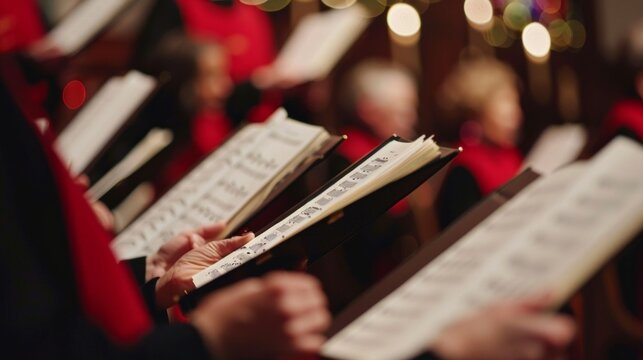
Rather, I would like to respond to another component of Barrett’s argument for Anglicanism, that being the beauty and and antiquity of its liturgy. After giving a rather glowing description of the elements and order of an Anglican worship service, including pictures, he goes on to write, “What a comfort to tell our kids, “The way we are worshipping is how Christians have worshipped across history. It’s really, really old. You are participating in the church universal.”” Now, let me just say that I have no small appreciation for high church liturgy. I have previously written on the use and value of the lectionary, the Christian calendar, and church tradition. I think there is much that modern churches, with their consumeristic performance based, emotion driven worship services, could learn from these practices. However, to say that “Anglicanism is the most beautiful representation of classical Christianity” is surely to place preferences of form over matters of substance.
The fact of the matter is that the early church’s worship was simple; it revolved around Word and Table, fellowship and prayer. As we read in Acts 2.42, “They devoted themselves to the apostles’ teaching, to the fellowship, to the breaking of bread, and to prayer.” Beyond this, we simply do not know what worship services in the early church consisted of. We have scattered liturgical details and other descriptions throughout the New Testament, but we do not have an official liturgy for the early church. Did they sing psalms? Probably. Did they read the Scriptures? Definitely. Did they pray together? Likely. Did they observe the ordinances of baptism an the Lord’s Supper? Clearly. Did they recite early kinds of creedal statements? Possibly. Of course, as the church grew, more formal liturgies were understandably developed, especially in the second and third centuries, and by the fourth century, there seems to have been a common or shared understanding of what the worship of the church should include and how it should progress. But, contrary to Dr. Barrett’s claim above, there is simply no proof that the Anglican liturgy is “how Christians have worshipped across history.” No doubt there are many similarities, but there is likely just as many differences that vary across place and time.
However, the more basic point that needs to be underscored here, I believe, is that the church’s worship, no matter what form or style it is expressed in, is beautiful. When God’s people gather together to sing His praise, to hear from His Word, to intercede in prayer for one another, to commemorate the Gospel is baptism and eucharist, there is simply nothing that is more beautiful, nothing more majestic, nothing more glorious. The voices of the saints singing and praying and confessing and expositing the great works of God in Christ as one gathered and united body in the Spirit is the most beautiful thing in this world. Of course, as I noted above, this beauty has sadly been lost in many churches today; we have turned the church’s worship into a show. We have exchanged beauty for spectacle, truth for emotion, participation for entertainment, and this is especially so in churches that do not come stand in the line of high church traditions. But, the point is that it is narrow minded and arrogant to suggest that one particular form or tradition of worship is the most beautiful, the most ancient, the most formation to the exclusion of all others.
In the Book of Revelation, John writes, “After this I looked, and there was a vast multitude from every nation, tribe, people, and language, which no one could number, standing before the throne and before the Lamb” (Revelation 7.9). This vision of the diversified and redeemed people of God standing before the heavenly throne praising God should help us to understand the beauty of the church’s worship. We do not all sing with one voice, we do not all worship in the same way. Every tradition, every culture, every community has its own way of worshiping God, and this is beautiful. The glory of God in Christ cannot be wholly encapsulated in just one worship tradition, but wherever there are genuine believers who are gathered together to worship God in Spirit an truth, this is beautiful. Every church has its own liturgy, whether it be formal or informal, but when we prioritize the form of our worship over the object of our worship, then we have missed the mark. Christ is the focus of our worship, there is no way that we could ever find enough ways to magnify and exult in His glory.
1 The fool says in his heart, “There’s no God.” They are corrupt; they do vile deeds. There is no one who does good. 2 The Lord looks down from heaven on the human race to see if there is one who is wise, one who seeks God. 3 All have turned away; all alike have become corrupt. There is no one who does good, not even one.
4 Will evildoers never understand? They consume my people as they consume bread; they do not call on the Lord.
5 Then they will be filled with dread, for God is with those who are righteous. 6 You sinners frustrate the plans of the oppressed, but the Lord is his refuge.
7 Oh, that Israel’s deliverance would come from Zion! When the Lord restores the fortunes of his people, let Jacob rejoice, let Israel be glad.
~Psalm 14
Series: Praying through the Psalms Text: Psalm 14.1-7 Church: South Caraway Baptist Church, Jonesboro, AR Date: June 28, 2023
1 I have taken refuge in the Lord. How can you say to me, “Escape to the mountains like a bird! 2 For look, the wicked string bows; they put their arrows on bowstrings to shoot from the shadows at the upright in heart. 3 When the foundations are destroyed, what can the righteous do?”
4 The Lord is in his holy temple; the Lord—his throne is in heaven. His eyes watch; his gaze examines everyone. 5 The Lord examines the righteous, but he hates the wicked and those who love violence. 6 Let him rain burning coals and sulfur on the wicked; let a scorching wind be the portion in their cup. 7 For the Lord is righteous; he loves righteous deeds. The upright will see his face.
~Psalm 11
Series: Praying through the Psalms Text: Psalm 11.1-7 Church: South Caraway Baptist Church, Jonesboro, AR Date: June 7, 2023
15 This is why, since I heard about your faith in the Lord Jesus and your love for all the saints, 16 I never stop giving thanks for you as I remember you in my prayers. 17 I pray that the God of our Lord Jesus Christ, the glorious Father, would give you the Spirit of wisdom and revelation in the knowledge of him. 18 I pray that the eyes of your heart may be enlightened so that you may know what is the hope of his calling, what is the wealth of his glorious inheritance in the saints, 19 and what is the immeasurable greatness of his power toward us who believe, according to the mighty working of his strength.
20 He exercised this power in Christ by raising him from the dead and seating him at his right hand in the heavens— 21 far above every ruler and authority, power and dominion, and every title given, not only in this age but also in the one to come. 22 And he subjected everything under his feet and appointed him as head over everything for the church, 23 which is his body, the fullness of the one who fills all things in every way.
~Ephesians 1.15-23
Title: On the Ground of Christian Hope Text: Ephesians 1.15-23 Series: The Letter to the Ephesians Church: South Caraway Baptist Church, Jonesboro, AR Date: May 28, 2023
For the choir director: on the Gittith. A psalm of David.
1 Lord, our Lord, how magnificent is your name throughout the earth! You have covered the heavens with your majesty. 2 From the mouths of infants and nursing babies, you have established a stronghold on account of your adversaries in order to silence the enemy and the avenger.
3 When I observe your heavens, the work of your fingers, the moon and the stars, which you set in place, 4 what is a human being that you remember him, a son of man that you look after him? 5 You made him little less than God and crowned him with glory and honor. 6 You made him ruler over the works of your hands; you put everything under his feet: 7 all the sheep and oxen, as well as the animals in the wild, 8 the birds of the sky, and the fish of the sea that pass through the currents of the seas.
9 Lord, our Lord, how magnificent is your name throughout the earth!
~Psalm 8
Series: Praying through the Psalms Text: Psalm 8.1-9 Church: South Caraway Baptist Church, Jonesboro, AR Date: May 17, 2023
A psalm of David when he fled from his son Absalom.
1 Lord, how my foes increase! There are many who attack me. 2 Many say about me, “There is no help for him in God.” Selah
3 But you, Lord, are a shield around me, my glory, and the one who lifts up my head. 4 I cry aloud to the Lord, and he answers me from his holy mountain. Selah
5 I lie down and sleep; I wake again because the Lord sustains me. 6 I will not be afraid of thousands of people who have taken their stand against me on every side.
7 Rise up, Lord! Save me, my God! You strike all my enemies on the cheek; you break the teeth of the wicked. 8 Salvation belongs to the Lord; may your blessing be on your people. Selah
~Psalm 3
Series: Praying through the Psalms Text: Psalm 3.1-8 Church: South Caraway Baptist Church, Jonesboro, AR Date: April 12, 2023
1 Why do the nations rage and the peoples plot in vain? 2 The kings of the earth take their stand, and the rulers conspire together against the Lord and his Anointed One: 3 “Let’s tear off their chains and throw their ropes off of us.”
4 The one enthroned in heaven laughs; the Lord ridicules them. 5 Then he speaks to them in his anger and terrifies them in his wrath: 6 “I have installed my king on Zion, my holy mountain.”
7 I will declare the Lord’s decree. He said to me, “You are my Son; today I have become your Father. 8 Ask of me, and I will make the nations your inheritance and the ends of the earth your possession. 9 You will break them with an iron scepter; you will shatter them like pottery.”
10 So now, kings, be wise; receive instruction, you judges of the earth. 11 Serve the Lord with reverential awe and rejoice with trembling. 12 Pay homage to the Son or he will be angry and you will perish in your rebellion, for his anger may ignite at any moment. All who take refuge in him are happy.
~Psalm 2
Series: Praying through the Psalms Text: Psalm 2.1-12 Church: South Caraway Baptist Church, Jonesboro, AR Date: April 5, 2023
If there was one word that might be used to describe the culture that we live in, it would most likely be “discontent”; we are a people who have forgotten what it means to be content with what we have. We are constantly inundated with media and ad campaigns that promise satisfaction and fulfillment through some new product or service. On top of that, the proliferation of social media has caused the disease of comparison to rise to pandemic levels, such that we are unconsciously driven by a nagging need to have more and better than our “friends”. Whether because of materialistic consumerism or the sickness of comparison, we have become a culture that has completely forgotten how to be content. However, for those who are in Christ, the Scriptures remind us that “godliness with contentment is great gain.” (1 Timothy 6.6) In other words, our submission to the kingship of Christ, our citizenship in His Kingdom, is exhibited in our contentment with all that He has and has not blessed us with.
This is exactly the point that Jesus makes in the “Sermon on the Mount” in Matthew, chapters 5-7. The Sermon on the Mount is essentially the manifesto of Jesus’ Kingdom; it is Jesus’ vision for what life in His Kingdom should look like. In it, He describes the attitudes, the habits of character, and the behaviors that should identify His people. And this is exactly the point, namely that the Kingdom of God is not something that is just a future hope to be realized. It is that, but during His earthly ministry, by His death, resurrection, and ascension, Jesus inaugurated the Kingdom of God, and now, He is seated at the right hand of the Father, ruling over His people through the indwelling presence of His Spirit. This is often described by the phrase “already but not yet”, which is a short hand way of saying that the Kingdom of God is already inaugurated but not yet consummated. And because we are currently living under the benevolent and gracious rule of King Jesus, we are able to cultivate the spiritual discipline of contentment. As Jesus himself says,
Therefore I tell you: Don’t worry about your life, what you will eat or what you will drink; or about your body, what you will wear. … But seek first the kingdom of God and his righteousness, and all these things will be provided for you.
Matthew 6.25, 33
In these verses, Jesus encourages His disciples to replace their worry and anxiety with contentment because His good Father knows their needs before they even ask Him. Even as He cares for the birds of the sky and lilies of the field, how much more will He certainly care for those who have been united with His Son by faith. “Therefore don’t worry about tomorrow, because tomorrow will worry about itself. Each day has enough trouble of its own.” (Matthew 6.34) But, of course, this is easier said than done. Worry and anxiety are subtle; they are feelings that often well up inside of us unexpectedly and unnoticed. How, then, can we prevent ourselves from being overcome by these stumbling blocks? Is there a spiritual inoculation that will help us fight against their infection? I would submit that there is, and I believe Jesus identifies it for us in the section that immediately precedes His discussion of contentment.
In the first half of Matthew, chapter 6, Jesus discusses the spiritual disciplines of giving, prayer, and fasting. Of course, He lays out the primary principle for the practice of these disciplines in verse 1 of the chapter, “Be careful not to practice your righteousness in front of others to be seen by them. Otherwise, you have no reward with your Father in heaven.” However, there is a reason why He follows up His discussion of these by commands us not to worry. These spiritual disciplines are the primary means by which we cultivate the inner quietude of peace and contentment. When we give sacrificially of our material possessions for the blessing of others and devote ourselves the pursuit of God rather than material comforts through prayer and fasting, we will find ourselves being more and more content with what we do or do not have. In other words, spiritual contentment is borne out of soul that is fully satisfied in its own communion with the one true and living God.
In the piety of American Evangelicalism, the discipline of contentment among the disciples of Jesus is a glaring whole in our cultivation of Christlikeness. Sadly, we often look more like citizens of this world than citizens of the already but not yet Kingdom of God. We are driven by the felt needs of the moment instead of walking in satisfied contentment with our God, and it shows. We would do well to reconsider what it means to live under the reign of Christ and submit our material resources and our physical needs to the one who taught us to pray, “Give us this day our daily bread.” (Matthew 6.11) This is the secret to the cultivation of contentment. As the Apostle Paul said,
I don’t say this out of need, for I have learned to be content in whatever circumstances I find myself. I know how to make do with little, and I know how to make do with a lot. In any and all circumstances I have learned the secret of being content—whether well fed or hungry, whether in abundance or in need. I am able to do all things through him who strengthens me.
Recently, I was following a thread on a friends Facebook post where the participants were discussing their disagreement on a question of biblical interpretation. The specific issue under debate is not important at the moment, and I’ll just say that I was surprised to find that this particular exchange was more graceful than these kinds of forums usually are. However, with that being said, after reading through the various points and counterpoints being made, I came across one response that made me pause. Figuring that the minds of the other participants were unlikely to change, one commenter attempted to conclude the discussion by saying:
“When it all comes down to it we should rely on The Holy Spirit of God to reveal His truths to us!! Don’t take what man has to say about it!!”
~Unnamed Facebook Commenter
In my previous post, I examined the question of “man-made” bible study resources, and I concluded that there is great wisdom in listening to the voices of those who have studied the Bible before us. We were never intended to approach Bible study as if we are the “lone ranger” of Bible interpretation, carving a path that has somehow never been carved before. Commentaries, theologies, and the like are part of God’s gift to the church (Ephesians 4.11-13); they are part of that “great cloud of witnesses” within which we pursue Christian maturity and godliness (Hebrews 12.1). However, even greater than these is the gift that is God’s Spirit. In the New Covenant, we who have been united with Christ by faith have been indwelt by God’s very Spirit, and He is the one who writes the Word upon our hearts and moves us to obey it (Jeremiah 31.33, Ezekiel 36.27). This is what makes Christian biblical interpretation unique; we have God’s Spirit (1 Corinthians 2.10-16).
Unfortunately, there is great misunderstanding as to the exact nature of the Spirit’s role in biblical interpretation, and in the space that follows, I would like to explore the contours of the Spirit’s work in Bible interpretation. According to the view represented by the Facebook comment above, all we need to do is read the Bible and then open our hearts and minds so that the Spirit can tell us what the Scripture means. This approach is essentially a recapitulation of the ancient heresy of Gnosticism. In other words, it suggests that Biblical knowledge comes to us by some kind of secret mystical experiential revelation from the Spirit apart from the text. But this is not the way that the Spirit works. Revelation is fixed, and the canon is closed. Moreover, the Spirit will not do for us what God has equipped us to do for ourselves. He has given us rational minds with the ability to read and comprehend His revealed Word. This is why we are repeatedly commanded to read, study, and grow in the knowledge of the Scriptures.
The Spirit’s work in biblical interpretation is not primarily revelatory; He does not impart the content of biblical meaning. Rather, His work pertains more to our accepting and obeying the principles that are revealed in the Scriptures. This is what is known in theology as the doctrine of illumination.
The Spirit convinces God’s people of the truth of the biblical message, and then convicts and enables them to live consistently with that truth. The Spirit does not inform us of Scripture’s meaning.
~Klein, Blomberg, & Hubbard, Introduction to Biblical Interpretation
The Spirit illuminates our hearts to accept the truth of God’s Word, and He helps to conform our will in submission to that Word through conviction. This illumination comes to us not through some mystical experiential supra-rational revelation, but through the classic word-centered spiritual disciplines. In other words, once we have done our exegetical work in the text, then we must do our closet work (ala Matt 6.6) through memorization, meditation, and prayer. When we engage in these rhythms of the Spirit, we put ourselves in a posture where He can use the fruits of our study to sift our souls. As the Scripture says,
“For the word of God is living and effective and sharper than any double-edged sword, penetrating as far as the separation of soul and spirit, joints and marrow. It is able to judge the thoughts and intentions of the heart.”
Hebrews 4.12
Under the New Covenant, one of the primary roles of the Spirit is to mediate the knowledge of God, but this ministry cannot, nay must not, be separated from the Word of God. Throughout all of Holy Scripture, the Spirit of God and the Word of God work together to transform the people of God into the image of God. More often than not, this transformation happens in ways and means that are consistent with the way God has made us. We do not seek any secret mystical revelation of God’s Word; rather, we use all of the natural and supernatural resources that God has given us to understand His revelation of Himself to us through His Word.
TEXT 11 He was praying in a certain place, and when he finished, one of his disciples said to him, “Lord, teach us to pray, just as John also taught his disciples.”
2 He said to them, “Whenever you pray, say,
Father, your name be honored as holy. Your kingdom come. 3 Give us each day our daily bread. 4 And forgive us our sins, for we ourselves also forgive everyone in debt to us. And do not bring us into temptation.”
5 He also said to them, “Suppose one of you has a friend and goes to him at midnight and says to him, ‘Friend, lend me three loaves of bread, 6 because a friend of mine on a journey has come to me, and I don’t have anything to offer him.’ 7 Then he will answer from inside and say, ‘Don’t bother me! The door is already locked, and my children and I have gone to bed. I can’t get up to give you anything.’ 8 I tell you, even though he won’t get up and give him anything because he is his friend, yet because of his friend’s shameless boldness, he will get up and give him as much as he needs.
9 “So I say to you, ask, and it will be given to you. Seek, and you will find. Knock, and the door will be opened to you. 10 For everyone who asks receives, and the one who seeks finds, and to the one who knocks, the door will be opened. 11 What father among you, if his son asks for a fish, will give him a snake instead of a fish? 12 Or if he asks for an egg, will give him a scorpion? 13 If you then, who are evil, know how to give good gifts to your children, how much more will the heavenly Father give the Holy Spirit to those who ask him?”
Text: Luke 11.1-13 Series: Supply Preaching Church: South Caraway Baptist Church, Jonesboro, AR Date: August 9, 2020





 Faith seeking Understanding
On Biblical Interpretation and the Holy Spirit
Recently, I was following a thread on a friends Facebook post where the participants were discussing their disagreement on a question of biblical interpretation. The specific issue under debate is not important at the moment, and I’ll just say that I was surprised to find that this particular exchange was more graceful than these kinds of forums usually are. However, with that being said, after reading through the various points and counterpoints being made, I came across one response that made me pause. Figuring that the minds of the other participants were unlikely to change, one commenter attempted to conclude the discussion by saying:
In my previous post, I examined the question of “man-made” bible study resources, and I concluded that there is great wisdom in listening to the voices of those who have studied the Bible before us. We were never intended to approach Bible study as if we are the “lone ranger” of Bible interpretation, carving a path that has somehow never been carved before. Commentaries, theologies, and the like are part of God’s gift to the church (Ephesians 4.11-13); they are part of that “great cloud of witnesses” within which we pursue Christian maturity and godliness (Hebrews 12.1). However, even greater than these is the gift that is God’s Spirit. In the New Covenant, we who have been united with Christ by faith have been indwelt by God’s very Spirit, and He is the one who writes the Word upon our hearts and moves us to obey it (Jeremiah 31.33, Ezekiel 36.27). This is what makes Christian biblical interpretation unique; we have God’s Spirit (1 Corinthians 2.10-16).
Unfortunately, there is great misunderstanding as to the exact nature of the Spirit’s role in biblical interpretation, and in the space that follows, I would like to explore the contours of the Spirit’s work in Bible interpretation. According to the view represented by the Facebook comment above, all we need to do is read the Bible and then open our hearts and minds so that the Spirit can tell us what the Scripture means. This approach is essentially a recapitulation of the ancient heresy of Gnosticism. In other words, it suggests that Biblical knowledge comes to us by some kind of secret mystical experiential revelation from the Spirit apart from the text. But this is not the way that the Spirit works. Revelation is fixed, and the canon is closed. Moreover, the Spirit will not do for us what God has equipped us to do for ourselves. He has given us rational minds with the ability to read and comprehend His revealed Word. This is why we are repeatedly commanded to read, study, and grow in the knowledge of the Scriptures.
The Spirit’s work in biblical interpretation is not primarily revelatory; He does not impart the content of biblical meaning. Rather, His work pertains more to our accepting and obeying the principles that are revealed in the Scriptures. This is what is known in theology as the doctrine of illumination.
The Spirit illuminates our hearts to accept the truth of God’s Word, and He helps to conform our will in submission to that Word through conviction. This illumination comes to us not through some mystical experiential supra-rational revelation, but through the classic word-centered spiritual disciplines. In other words, once we have done our exegetical work in the text, then we must do our closet work (ala Matt 6.6) through memorization, meditation, and prayer. When we engage in these rhythms of the Spirit, we put ourselves in a posture where He can use the fruits of our study to sift our souls. As the Scripture says,
Under the New Covenant, one of the primary roles of the Spirit is to mediate the knowledge of God, but this ministry cannot, nay must not, be separated from the Word of God. Throughout all of Holy Scripture, the Spirit of God and the Word of God work together to transform the people of God into the image of God. More often than not, this transformation happens in ways and means that are consistent with the way God has made us. We do not seek any secret mystical revelation of God’s Word; rather, we use all of the natural and supernatural resources that God has given us to understand His revelation of Himself to us through His Word.
For further study:
On the Spirit and the Word
Share this:
2 Comments | tags: Bible Study Resources, Closet Work, Commentaries, Exegetical Work, Gnosticism, Holy Spirit, Illumination, Meditation, Memorization, New Covenant, Phillip Powers, Prayer, Spiritual Disciplines, Theologies | posted in Biblical Theology, Hermeneutics, Spiritual Formation